Two Kingdom Tuesday: Machen Was All Wet

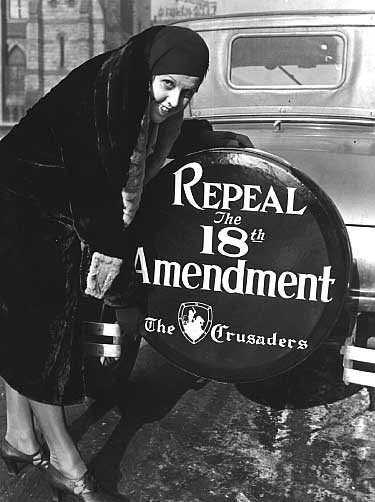
The resolution endorsing the Eighteenth Amendment or the Volstead Act was introduced to the Presbytery of New Brunswick at the very end of the meting on April 13, 1926. The attendance, which had been large during the early part of the session, had dwindled until only a very few persons were present – y estimate would be ten or twelve, exclusive of the officers, though I believe someone else estimates the number at about five. Under these conditions, the resolution was put to a viva voce vote. I voted “No”; but I did not speak to the motion or in any way ask that my vote should be recorded. . . .

It is a misrepresentation to say that by this vote I expressed any opinion on the merits of the Eighteenth Amendment or the Volstead Act – and still less on the general question of Prohibition. On the contrary, my vote was directed against a policy which places the church in its corporate capacity, as distinguished from the activities of its members, on record with regard to such political questions. And I also thought it improper for so small a group of men as were then in attendance to attempt to express the attitude of a court of the church with regard to such an important question. . . .

Such are the facts about my vote. I desire now to say one or two things about my attitude regarding the issues involved.

In the first place, no one has a greater horror of the evils of drunkenness than I or a greater detestation of any corrupt traffic which has sought to make profit out of this terrible sin. It is clearly the duty of the church to combat this evil

With regard to the exact form, however, in which the power of civil government is to be used in this battle, there may be different of opinion. Zeal for temperance, for example, would hardly justify an order that all drunkards should be summarily butchered. The end in that case would not justify the means. Some men hold that the Eighteenth Amendment and the Volstead Act are not a wise method of dealing with the problem of intemperance, and that indeed those measures, in the effort to accomplish moral good, are really causing moral harm. I am not expressing any opinion on this question now, and did not do so by my vote in the Presbytery of New Brunswick. But I do maintain that those who hold the view that I have just mentioned have a perfect right to their opinion, so far as the law of our church is concerned, and should not be coerced in any way by ecclesiastical authority. The church has a right to exercise discipline where authority for condemnation of an act can be found in Scripture, but it has no such right in other cases. And certainly Scripture authority cannot be found in the particular matter of the Eighteenth Amendment and the Volstead Act.

Moreover, the church, I hold, ought to refrain from entering, in its corporate capacity, into the political field. Chapter XXXI, Article iv, of the Confession of Faith reads as follows:

Synods and councils are to handle, or conclude nothing, but that which is ecclesiastical: and are not to intermeddle with civil affairs which concern the commonwealth, unless by way of humble petition in cases extraordinary; or, by way of advice, for satisfaction of conscience, if they be thereunto required by the civil magistrate.

This section, I think, established a very great principle which was violated by the Presbyter of New Brunswick. . . .

In making of itself, moreover, in so many instances primarily an agency of law enforcement, and thus engaging in the duties of the police, the church, I am constrained to think, is in danger of losing sight of its proper function, which is that of bringing to bear upon human soul the sweet and gracious influences of the gospel. Important indeed are the function of the police, and members of the church, in their capacity as citizens, should aid by every proper means within their power in securing the discharge of those functions. But the duty of the church in its corporate capacity is of quite a different nature. (J. Gresham Machen, “Statement on the Eighteenth Amendment”)

To Ask and Tell, or Not to Ask and Tell: This is the Contradiction

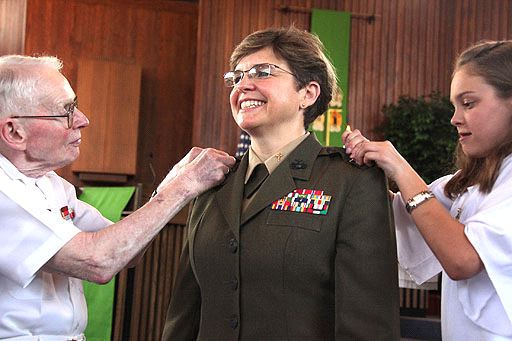
Rabbi Bret is baaaaaaack from vacation (apparently) and he didn’t waste anytime piling on his favorite virus – the infectious disease known as Radical 2K. He reports that the URCNA Synod has decided to send a letter to the U.S. Armed Services official, drafted by the Presbyterian and Reformed Joint Commission on Chaplains and Miltary Personnel (PRJC), that petitions the Pentagon to to hold the line on the current military policy – “don’t ask, don’t tell.”

In the current state of affairs, the various branches of the military do not inquire about the sexual orientation of personnel. But if the Obama administration has its way, “don’t ask, don’t tell” will cease and instead gays and lesbians will be able to come out of the closet. According to the PJRC letter, such a change of policy might force conservative Protestant chaplains to resign because their teaching and preaching of God’s word, especially on homosexuality, will open them to the charge of discrimination. The new policy might even force chaplains those passages in Scripture where God condemns homosexuality.

Bret interprets this URCNA decision as a major smack down of two-kingdom theology.

Despite the ongoing assault against Biblical Christianity from Westminster West Seminary and it’s specious Radical Two Kingdom Theology the URCNA rightly voted to weigh in on a “common realm” issue with an almost unanimous vote to resist, by way of appeal, the US Military’s overturning of “don’t ask, don’t tell.” Apparently the Synodical body was not persuaded by the R2Kt ratiocination and argumentation that the Church has no business speaking beyond the realm of the Church. With this vote there can be no doubt that the URCNA has implicitly rejected, root and branch, the foreign theology now commonly referred to as “R2K.”

One would have thought that after a well-deserved break from pastoral duties and service at Synod the good rabbi would not be so quick to hyperventilate about the meaning of this news. I can think of any number of better indications than this letter that the URC has repudiated 2k. Do the formation of a study committee or an actual report with recommendations against 2k come to mind? But if this gets Bret through the night without having to use his inhaler, so be it.

At the same time, Bret may want to regroup and consider that the policy that PRC now favors – “don’t ask, don’t tell” – was precisely the one they opposed back when President Clinton introduced it during his first weeks in office. Maybe Bret was running for Senate or doing something time consuming like that, but Reformed communions like the OPC and PCA both sent letters in 1993 informing the president of the Bible’s teaching about homosexuality. These communications were supposed to provide the official cover for Reformed and Presbyterian chaplains whose consciences might be violated by openly gay soldiers and officers taking up duties under their charge. In a contest between church and state, supposedly, the chaplains could now appeal to the explicit teaching of their own communions.

What is important to remember, though, is that these letters, also hatched by the Presbyterian and Reformed chaplains, came in reaction to the policy that the PRJC now supports. In which case, in the name of biblical Christianity, the PRJC has reversed course and determined that “don’t ask, don’t tell” is just fine and that Obama will damage the military and the nation if he tinkers with allowing gays now in the closet, to come out.

So the question for Bret and supporters of the PRJC is this: is this what healthy 1k looks like? Can the church really change its mind about the policies the Bible requires? Or is it simply the case that the Bible opposes whatever a Democratic president proposes? (Could a GOP Study Bible be in the offing?)

Even more troubling is the propensity for the chaplains from Reformed communions to manifest their opposition to homosexuality to the exclusion of other sins that the Bible also condemns. I wonder why PRJC doesn’t instruct the president about the idolatry of Mormon worship or the blasphemy of the Roman Catholic Mass? Surely there are Mormons and Roman Catholics out of the closet in the military. Some of them are likely chaplains. Does PRJC think that Clinton and Obama understand the regulative principle of worship but need help with the seventh commandment? Or is it that PRJC thinks sexual sins are more eggregious than false worship?

It could be a tough call since the Westminster Standards allow that not all sins are equally offensive. But if sexual sins are more objectionable than liturgical infidelity (you’d have trouble proving that from Israel’s experience), then why not go after porn in the military, or divorce, or adultery among heteros? I personally don’t buy the logic – on display in spades in American Beauty – that the biggest homophobes are really gay. But if PRJC wanted to avoid that sort of canard from the Hollywood left, why not send a letter or two to the president about stealing and lying?

Mind you, I understand at least some of the difficulties that gay rights create for our society and the Armed Services. Rabbi Bret is well within his duties as a citizen to register his concerns. But I sure wish he’d get his facts straight (no pun intended) about biblical teaching and the PRJC’s flip-flop on don’t ask, don’t tell.

Why I Love MY Communion (It's All About ME AGAIN!)

You inherit odd habits when you grow up in a fundamentalist Baptist home (the advantages should not be minimized either). In my case, my parents were devoted listeners to Christian radio, a practice that I keep alive as part of my Sabbath routine. Instead of listening about balls and babes on sports-talk radio while brewing coffee, on Sundays I turn on the local Christian station (and actually hear, depending on the hour, Hugh Hewitt summarize the weeks headlines, which is not what I want to hear when I’m preparing to enter the heavenlies).

Yesterday, I heard Cliff Barrows and his sidekick on the Hour of Decision make available Charles Sheldon’s In His Steps, the original source for the “What-Would-Jesus-Do” craze of fifteen years or so ago. For donations of – I can’t remember the level – contributors would receive a copy of Sheldon’s novel. What the folks at the BGEA failed to mention was that Sheldon was a Social Gospeler and a proto-liberal Congregationalist minister. I guess it would take too much time away from soul-winning to acquire the discernment necessary for refusing to promote Sheldon’s novel. But then again, if you are committed to spreading the good news of Jesus Christ you might want to warn people away from proclamations, no matter how much cloaked in the aura of Jesus, that were very influential in turning the mainline Protestant churches in the United States away from the very good news of Jesus Christ.

While I was listening to the radio promo, I couldn’t help but think of a book that the OPC is featuring as part of its effort to educate its members. Stuart Robinson is not nearly as popular as Sheldon, though without the WWJD bracelets Sheldon may not be much of a celebrity either. But the Louisville Presbyterian pastor wrote one of the best books on Presbyterian ecclesiology and he did so from a redemptive historical perspective even before Geerhardus Vos was a glint in his father’s eye. In 1858, four years before Vos’ birth, Robinson wrote The Church of God As An Essential Element of the Gospel, a book that combines two-kingdom, spirituality of the church, and jure divino Presbyterianism in a suprisingly compact and potent combination. To the OPC’s credit, its Committee on Christian Education has reprinted the book with a helpful introduction by pastor, A. Craig Troxel, and is selling it in hard cover for modest price.

I know many evangelicals think that conservative Reformed Protestant are mean, critical, and belong to denominations that do a lot of things wrong. But do these not so winsome and complaining evangelicals ever factor in the bad things that parachurch organizations do in the name of the gospel? This is not a rhetorical question.