
What most critics of Christian nationalism, do not understand is that ChristNats believe in the spirituality of the church. Listen to George Sayour’s interview with Timon Cline and hear the younger interlocutor say that no… More

Reformed Faith and Practice
What most critics of Christian nationalism, do not understand is that ChristNats believe in the spirituality of the church. Listen to George Sayour’s interview with Timon Cline and hear the younger interlocutor say that no… More
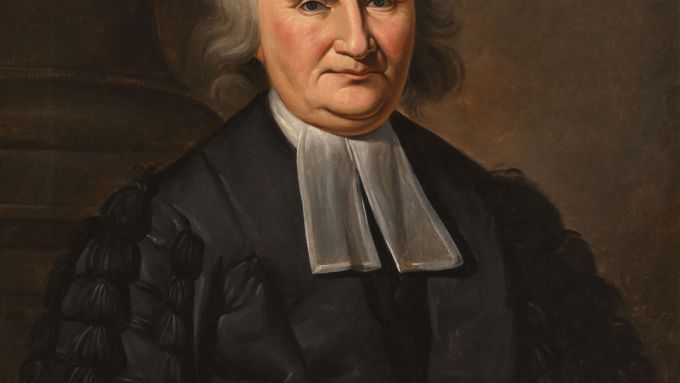
Resistance to the American revisions to the Westminster Standards takes different forms. All objections to the American Presbyterian church’s changes proceed from discomfort with political liberalism of the John Locke variety, even if the focus… More
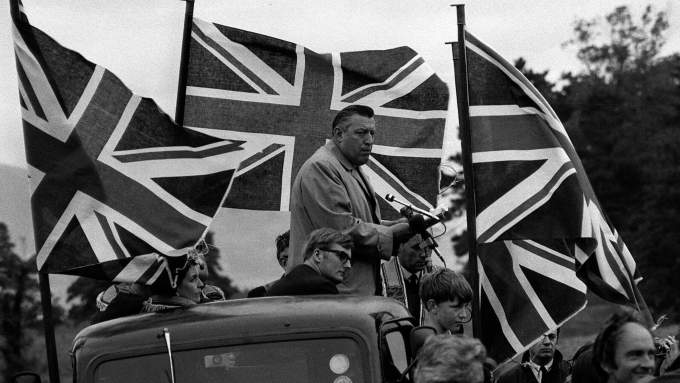
The parallels between Ulster and American Protestants striving to protect their cultural and political heritage is striking. Some of the similarities may be lost because Ulster Protestants use the language of “unionism” instead of “nationalism.”… More
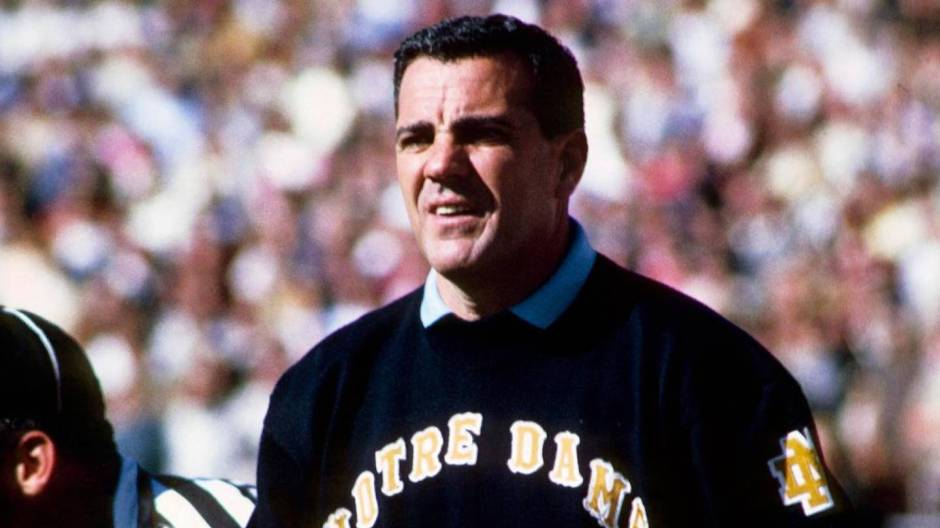
A seminar at the University of Notre Dame over the weekend reminded me of thoughts that went into Still Protesting and my objections to the conversion stories of evangelicals becoming Roman Catholic a decade or so ago. The seminar itself was about a new book about the Claretians (official name: Congregation of Missionaries Sons of the Immaculate Heart of the Blessed Virgin Mary), an order started in mid-19th-century Spain that evolved into an order that evangelized and ministered to Hispanics and Latinos in North America. The gathering of academics also occurred on a campus that Christian Smith, one of the greatest sociologists of religion in the United States, had left roughly nine months earlier.
The reason for connecting a seminar on one of the many religious orders that dot the Roman Catholic landscape and Christian Smith’s departure from Notre Dame is a suspicion that many Protestant converts to Rome do not know what they are getting into. Aside from the twists and turns of the development of doctrine and debates about continuity and discontinuity in the wake of Vatican II (not to mention whether the Eastern or Western churches have a better claim to antiquity), the Roman Catholic Church is a kaleidescope of institutions, many of which with a high degree of autonomy, with the papacy as the tube holding the mirrors, colored fillers, and eyepiece together. Of course, gaining recognition from the Vatican requires some conformity among religious and priests within a specific order. But in the case of the Claretians, they developed their own materials, their own forms of devotion, moved from place to place (sometimes to be banned by the local bishop), and developed a distinct set of allegiances among Spanish-speaking Roman Catholics in Mexico, Texas, and later Chicago that ran in grooves distinct from “the” teaching of the Vatican, or the national parishes (that ministered, for instance, to Poles, Italians, Germans), and other religious orders.
Aside from the institutional configuration of the Claretians’ work — how did the superior coordinate with local bishops or the various agencies of the Vatican? — I had questions about the degree to which the order cultivated a generic Roman Catholic piety or an alternative that nurtured a high degree of attachment to the Claretians specifically. In other words, if a Latino-American wound up moving from a Claretian parish to a place that only had diocesan clergy, would he or she find a home? Or would the Claretian-formed Roman Catholic feel at odds with other Roman Catholics?
These questions are ones that apply to Protestants perhaps as much as Roman Catholics. If someone grows up Baptist, will he make an easy transition to Lutheranism if he moves to a town where (as if) there are no Baptist congregations? And what about the Presbyterian church planter who tries to establish a congregation in a town that already has Methodist, Baptist, Lutheran, and Anglican congregations? Who coordinates among the Protestant communions to decide whether the Presbyterian is allowed to start another Protestant congregation? American Protestants have no umbrella institutional authority to make such calls. Roman Catholics do. It is the papacy.
But here’s the kicker, without the Roman pontiff, Roman Catholicism is as diverse and as entrepreneurial as Protestantism. That may seem like a big difference, as if Rome has a kind of authority that Protestants lack. But often it seems that the pope acts more like a back stop than an actual potentate executing real power over Roman Catholic ministries. Roman Catholics can choose to operate a host of orders and ministries and they can develop all sorts of different kinds of piety and forms of devotion. The one thing that keeps them “united” are the international offices housed in Vatican City.
Maybe that makes Rome superior to Protestantism, but in the welter of modern society with its religious freedoms, the papacy hardly stacks up to be a weight against individualism, relativism, and creative destruction. Rome’s unity is on paper or fills aspirations. It hardly generates a disciplined, uniform, constraining church.
This is where Christian Smith’s departure from Notre Dame deserves mention. He has himself had a long track record of leaving parts of his background loudly. His break with his own academic discipline of sociology and its “sacred project” was as courageous as it was smart:
Sociology’s sacred project champions emancipation, autonomy, equality, justice, inclusion, diversity, open-mindedness, progress, tolerance, and cosmopolitanism. But, whether or not it helps achieve those in the outside world, within sociology itself, and in higher education broadly, in the end that sacred project actually tends to produce sectarian narrowness, exclusion, uniformity, silencing, self-censorship, lack of debate, the negative sanctioning of nonconformists, and the debilitation of rigorous thought. In short, it reproduces in its own image that which it opposes and seeks to transform in the world beyond.
This critique did not mean he stopped teaching sociology or writing. It did, though, signal his own repudiation of his guild’s orthodoxy.
What he did with sociology, he also applied to his own evangelical Protestant faith. In two books, Smith explained why he left Protestantism for Rome. One was The Bible Made Impossible: Why Biblicism Is Not a Truly Evangelical Reading of Scripture (2011). In the other, How To Go From Being A Good Evangelical To A Committed Catholic In Ninety-Five Difficult Steps (2011), Smith walked through and deconstructed Protestant objections to Roman Catholicism, such as a wooden and literalistic hermeneutic:
For Protestants, the words are the truth. That is why one must get them exactly right. For Catholics, by contrast, words formulate expressions of truth. There is not in Catholicism, a literal, exact univocal correspondence or identity between words and truth. Much of truth, especially truth that directly concerns God, is in Catholicism a mystery. Ultimately the truth is God. And God is not words.
That objection, in some ways, makes his departure from Notre Dame surprising. Smith’s reason for leaving (and retiring with a bang!) has the earmarks of a Protestant expecting a Roman Catholic institution to adhere to the words it professes. Instead of words, Smith faulted Notre Dame for neglecting books (which is adjacent to Protestant logocentrism):
A Catholic university is Catholic only insofar as its scholars, however diverse their frameworks and methods, maintain a serious engagement with the Catholic intellectual tradition. The central and animating question should be: What do the Catholic tradition and the many scholarly disciplines have to say to one another?
Smith judged that Notre Dame talked a good game but did not carry out its academic mission in light of Rome’s intellectual tradition (which would likely be a set of authors, texts, and theological themes).
It’s not just that the university hasn’t reached its potential, it’s that it hasn’t seriously tried. Sustained engagement with the Catholic intellectual tradition happens in pockets, but leaders avoid the institutional efforts that would make this engagement consistent and integrated.
What might such efforts look like? . . . Notre Dame should advance its Catholic mission by means of standards and programs that involve truth-in-advertising, judicious hiring, incentives for faculty to learn about the Catholic intellectual tradition, and accountability for the expectation that faculty contribute to the Catholic mission.
Smith was clearly not expecting a university to have the same kind of uniformity as the church. He was not advocating for hiring only Roman Catholics (otherwise Notre Dame would not have hired him before his conversion). He had hoped that Notre Dame’s faculty would teach or conduct their scholarship in light of the Roman Catholic intellectual tradition even if they did not themselves belong to the church. But if Smith had this kind of standard for a university, imagine what he must have found when he encountered the variety of Roman Catholic options within the church itself, from its clergy to the laity, from the German bishops to the folk piety of the faithful in Central America.
An irony of Smith’s departure from Notre Dame is that his reason for leaving has on it the fingerprints of his education as an undergraduate at Gordon College. When he graduated from the evangelical college on Boston’s North Shore, Gordon had almost three decades of practice with integrating faith and learning. Whether it came from the inspiration of Neo-Calvinists at Calvin College or emerged more organically among evangelical faculty in philosophy who tried to implement a curriculum in which students thought about the arts and sciences from a Christian perspective, Smith’s undergraduate education undoubtedly planted the seeds of conducting the work of a Christian college or university in ways that reinforced Christian conviction among professors, students, and maybe even student-athletes (at least before Name, Image, and Likeness).
As it turns out, the integration of faith and learning is a lot harder to do than either Gordon faculty or Notre Dame administrators imagined. Academic subjects may line up with Christian truths only some of the time (the history of the Civil War does not automatically reinforce the Great Commission or Presbyterian polity). Christian faculty themselves may apply Christian teaching differently (the Good Samaritan supports open borders but Pauline teaching on the magistrate leads to defending ICE).
You might have thought a sociologist would have been alert to the diversity of the Roman Catholic Church and to differences among university faculty even at a confessional institution. A sociologist might have also detected that like the Claretians, Notre Dame has its own piety, one broad enough to include the reflections of Alisdair MacIntyre and the strategy of Knute Rockne.
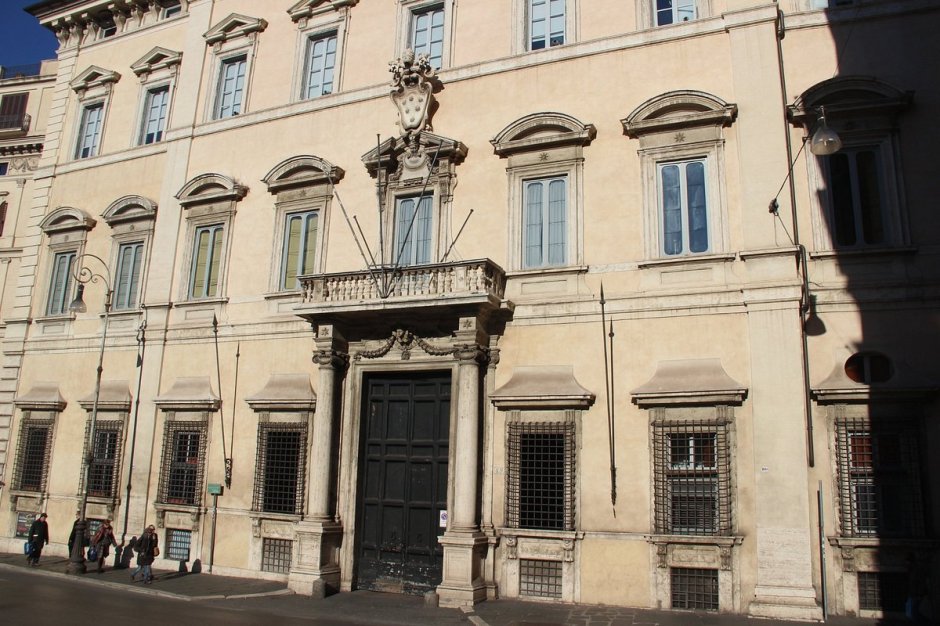
About a decade ago, while in Rome for a seminar and some sight-seeing on the side, I worshiped at St. Andrew’s Church, Rome (a reminder of which came from discovering a short pamphlet on the congregation’s history). What follows are a couple paragraphs from the congregation’s booklet on the early history of Presbyterianism in Rome. Not only is the illegality of Presbyterian worship striking, but so to is the kind of cooperation that ministry overseas encourages among Protestants from different communions. (For another example, consider the example of Seceders, Church of Scotlanders, and Free Church Presbyterians at odds and then cooperating to for the Presbyterian Church of Canada.)
The Church in a House
The experiment began in the Apostolic manner in “a hired house” and in a room holding thirty-five people. Being within the walls of Rome, meeting for Protestant worship within a house constituted an illegal act. In March 1862 Mr. Laughton reported to Edinburgh that “as he” he had not “been interfered with by the police.” This small, valiant group of Presbyterians, drawn mainly from Scotland and America, continued in their clandestine worship under the shadow of the Inquisition until 1864. By drawing their visiting chaplains from the three Presbyterian churches then prevailing in Scotland, they gave within the walls of Rome, historic instance of non-Roman ecumenical cooperation.
In 1864 Dr. James Lewis of Leith was appointed the first permanent minster. By then the activities of the Scots Kirk had attracted the attention of the police, and those who came to worship were warned to carry no Bibles openly, and to leave the house in twos and threes. Despite the fact that no advertising was allowed, the congregation grew, and had to move to a larger room in Via del Babuino.
The Church in the Garden
The story of that achievement is full of adventure. As Dr. Lewis used to say while the church was being built “It is more in danger from the bombs of Italian troops than from the Bulls of the Pope.” When the building was opened on the second Sunday of 1871, Rome had been freed from Vatican control four months earlier, on 20th September, 1870. As the worshipers entered their new sanctuary on Italian territory, they could enjoy the scent of violets from the surrounding fields and a clear view of St. Peter’s across the Tiber, looking lovely but lonely, its Pontiff a prisoner within his own Vatican walls.
The ministry of that church was limited by a twenty year lease, by the growing congregation for which it was proving inadequate, and perhaps above all, by the death of Dr. Lewis a year after its completion. From 1872 until the appointment of Dr. J. Gordon Gray in 1881, the church was supplied by a succession of distinguished ministers from all three Scottish churches for about three months at a time. It was a spectacle of Presbyterian brethren dwelling and working together in unity; something which could not be said of all churches then in Rome.

Reactions to the terrorist attack then and now (25 years later) have been hard to miss or experience. One conferee this past weekend in Baltimore who gathered to honor H. L. Mencken’s cynical wit (and more), could hardly bottle up tears after stopping at the Flight 93 National Memorial on the way to Charm City.
Tallying Christian responses has also put the recent discussions of Christian nationalism in perspective. As it turns out, Protestants who have a high view of politics and nations (who are also invariabley pietist) rushed to find Christian meaning in 9/11. Confessionalists, in contrast, were reluctant to use Christian doctrine to make sense of the United States’ loss and suffering.
(Sure, this could come across as a case of confessionalists taking a victory lap at the expense of pietists. It might also be instructive about the way a high view of the church deescalates the importance of nations.)
John Fea surveyed evangelical responses to 9/11 from twenty-five years ago in a piece for Christianity Today. The opposition of Religious Right leaders like Jerry Falwell and Pat Robertson to immorality and secularism was clearly a forerunner to recent calls from ChristNats for laws against blashpemy and Sabbath breaking.
It took only two days for Jerry Falwell, founder of the Moral Majority and Liberty University’s chancellor, to publicize his interpretation of the attacks. On Thursday morning, he appeared on televangelist Pat Robertson’s 700 Club and blamed the attacks on all his culture war enemies.
“I really believe,” he said, “that the pagans, and the abortionists, and the feminists, and the gays and the lesbians who are actively trying to make that an alternative lifestyle, the ACLU, People for the American Way, all of them who have tried to secularize America—I point the finger in their face and say, ‘You helped this happen.’”
. . . A few days later, as the nation watched George Bush’s National Day of Prayer and Remembrance at the National Cathedral, Falwell spoke to cable news trying to walk back his comments. He told CNN, in the outlet’s paraphrase, that “only the hijackers and terrorists were responsible for the deadly attacks”—but even then he could not stop talking about his enemies.
Falwell again accused the ACLU of having “secularize[d] America” and “removed our nation from its relationship with Christ on which it was founded,” thereby causing God to “lift the veil of protection which has allowed no one to attack America on our soil since 1812.” (The editors of Christianity Today later quipped that Falwell spoke “as if America enjoyed a spotless record of righteousness until the 1960s.”)
. . . Many evangelicals, whatever they thought of Falwell’s specific targets, seemed to share his underlying assumption: God was sending the United States a message through September 11. This was the old rhetoric of the Puritan jeremiad, sermons that called Massachusetts Bay to repentance in the wake of a society-wide tragedy. Puritans believed God used Indian raids, earthquakes, and losses of charters to punish the colonies’ inhabitants. Now, in these attacks, some evangelicals were sure God was again punishing his new chosen people.
Radio psychologist James Dobson pointed to America’s “pride and arrogance,” the “killing [of] 40 million unborn babies,” and the “mainstreaming of pornography.” He told his readers to “accept the truth that this nation will suffer in many ways for departing from the principles of righteousness.”
At the Nicotine Theological Journal, the editors adopted a different stance. One article, “God Damn Mr. Laden,” questioned the ubiquity of the phrase, “God bless America”:
The phrase, “God damn,” is one that devout Christians are not supposed to utter. Depending on how it’s said, it violates the Third Commandment which, as the Heidelberg Catechism puts it, forbids blaspheming and misusing the name of God “by cursing, perjury, or unnecessary oaths.” “God damn” would appear to fall into the category of cursing. That may explain why the only time I’ve heard a minister of the gospel say these words, and with noted effect, was when describing Jesus Christ on the cross, who bearing the sins of his people, was at that moment a “God-damned sinner.” The rest of those in the congregation that Sunday morning shifted nervously.
The recent terrorist attack on the World Trade Center and the Pentagon, combined with the response of many Americans with a show of flags and the singing of “God Bless America,” have raised questions about Third Commandment and taking the Lord’s name in vain. Why is it wrong to say “God damn” but okay to say “God bless”? Surely the latter phrase isn’t a form of cursing by the lights of Heidelberg’s authors. But does “God bless” qualify, as Q&A 99 goes on to say, as the use of God’s holy name “with reverence and awe.” When it is as common as hand-painted messages on the rear windows of cars mixed with America’s civil religion of national messianism, the phrase “God bless” could legitimately be counted as a kind of cuss word. And yet few Christians seem to be aware that the Third Commandment requires the careful invoking of God’s name. In fact, because the idea that God has a special affection for the United States runs so deep in the American Protestant soul, responding to the terrorist attack with the phrase, “God bless,” is as natural as the Irish Catholic uttering “glory be” in reaction to a marvelous or unusual occurrence.
Another piece, “Faulty Towers,” noticed that invocations of Augustinianism were less coherent than what biblical theology gleans from the story of the Tower of Babel:
In reading some Internet “pastoral letters,” one common irony emerges. Pastors are frequently invoking the name of Augustine, and yet Augustine is being cited on behalf of some very un-Augustinian sentiments about American destiny and its role in the unfolding of the kingdom. Consider two messages from PCA pastors. “America is not the new Israel,” writes Larry Ball (on PCAnews.com), but “America has been special to God.” Now God is judging us, because “we have ejected the Christian God from our schools by denying prayer and refusing to teach his law.” Chief among American culprits was the immoral and heretical former administration (which seems to cast some doubt on God’s timing). America is a “cesspool of immorality and lawlessness . . . America has lost her peace because America has lost her righteousness.” It should not surprise us that God has used ungodly people to judge us, because that is the way he chose to judge Israel. America is not Israel, but she’s pretty darn close.
Slightyly more nuanced are the pastoral reflections from Tim Keller, a PCA pastor who ministers in Manhattan. He commends the mayor and governor for their public vision of the “resurrection” of New York City. “I personally believe that this is the right way for NYC to deal with its grief. It must reflect the gospel dynamic of death-into-resurrection at a civic level. Through this New York could become less a place of individualistic achievement and more of a community. Through this Americans could become on the one hand humbler and more sensitive to the injustice and pain in the world and yet more committed to and (rightly) proud of our nation than ever before. In summary, we could become stronger through this weakness, not just in spite of it. That is the basic gospel dynamic.”
This is as profoundly anti-Augustinian as you can get. To whatever extent New York City recovers, it is not in any sense being resurrected or redeemed. It remains the city of man, and therefore, at best, an instrument of God’s restraining grace. It does not reflect any reestablished role of America’s special purpose, nor is its recovery marking the breakthrough either of the gospel or the kingdom.
Is it too much to suggest that the better biblical metaphor to recall is the Tower of Babel in Genesis 11? In a consistently Augustinian understanding, the fall of the Tower of Babel was both judgment and blessing upon the city of man. In Meredith Kline’s words, it was a blessing in the sense that God was frustrating the “apostate ideology infecting the city of man,” frustrating their dialogue and “so ungluing the bonds of their ecumenical union.”
To close by saying that 9/11 stands above theological posturing may seem like a kind way to avoid using the tragedy to score religious points. In fact, the point of drawing on theology to interpret events in the life of a nation is to indicate that no success or failure of a political body is independent of theological interpretation. In which case, the choice of theological material for assessing dramatic events in the life of a nation is telling.
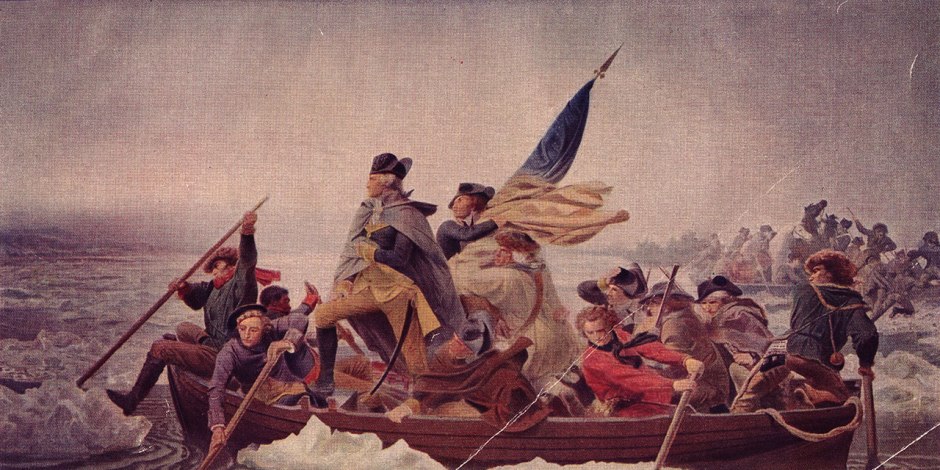
If George Washington were alive today, what a shining mark he would be for the whole camorra of uplifters, forward-lookers and professional patriots! He was the Rockefeller of his time, the richest man in the United States, a promoter of stock companies, a land-grabber, an exploiter of mines and timber. He was a bitter opponent of foreign alliances, and denounced their evils in harsh, specific terms. He had a liking for all forthright and pugnacious men, and a contempt for lawyers, schoolmasters and all other such obscurantists. He was not pious. He drank whisky whenever he felt chilly, and kept a jug of it handy. He knew far more profanity than Scripture, and used and enjoyed it more. He had no belief in the infallible wisdom of the common people, but regarded them as inflammatory dolts, and tried to save the republic from them. He advocated no sure cure for all the sorrows of the world, and doubted that such a panacea existed. He took no interest in the private morals of his neighbors.
Inhabiting These States today, George would be ineligible for any office of honor or profit. The Senate would never dare confirm him; the President would not think of nominating him. He would be on trial in all the yellow journals for belonging to the Invisible Government, the Hell Hounds of Plutocracy, the Money Power, the Interests. The Sherman Act would have him in its toils; he would be under indictment by every grand jury south of the Potomac; the triumphant prohibitionists of his native state would be denouncing him (he had a still at Mount Vernon) as a debaucher of youth, a recruiting officer for insane asylums, a poisoner of the home. The suffragettes would be on his trail, with sentinels posted all along the Accotink road. The initiators and referendors would be bawling for his blood. The young college men of the Nation and the New Republic would be lecturing him weekly. He would be used to scare children in Kansas and Arkansas. The chautauquas would shiver whenever his name was mentioned….
And what a chance there would be for that ambitious young district attorney who thought to shadow him on his peregrinations—and grab him under the Mann Act! (“PATER PATRIÆ,” Damn! A Book of Calumny 1918)
What is it about the younger generation of manly Protestants who dabble in Christian nationalism and write for outlets like American Reformer and Davenant? With all of the calls for Protestant ressourcement (the last syllable pronounced “maw”!), the awareness of the past among some of these writers is surprisingly limited when it comes to recent history. The case of evangelical elites as scholars with standing in the mainstream academy is a case in point.
A couple of recent complaints about the failure of evangelical institutions to hire and sustain scholars of distinction echo Aaron Renn’s argument about the absence of evangelical elites. [link to first article. One asserts that evangelical colleges do not snatch up “credentialed, talented, and scholarly” Protestants as they should. Why didn’t said institutions either snatch them up for themselves or work to propel them to “mainstream” posts? The piece goes into accusation mode:
You, Evangelical elite, are not retaining potential talent, those people who fit the bill, who are “200% respectable,” as Renn put it. If you fail in this regard, you will not be able to reproduce or extend your rule. You aspire to elite status, you take all your cues from the broad mainstream elite world, but you neither staff your own colleges (i.e., elite production) nor staff those outside your predominantly clerical institutions.
The other complaint faults evangelicals for failing to think in theological categories about their scholarly work:
The bottom line is that Catholic intellectuals tend to assume that all theology is relevant to all areas of intellectual endeavor. If it’s not obvious how, it’s still worth assuming it nevertheless until it becomes apparent. On the other hand, theology for the evangelical scholar tends to be a sort of God-of-the-gaps, an occasional mortar to stick in crumbling joinery.
What both of these writers, as well as Aaron Renn, miss is that as recently as twenty-five years ago evangelical scholars were actually elites in American universities. The October 2000 issue of The Atlantic Monthly devoted a cover story to scholars at (then) Calvin College and Wheaton College as part of “The Opening of the Evangelical Mind.” Part of Alan Wolfe’s conclusion after covering the breadth of evangelical colleges and scholarship was a warning:
So long as they continue to marginalize themselves, evangelicals will be unable to equal the accomplishments of the generation that brought us Marsden, Noll, Plantinga, and Wolterstorff. That would be the true scandal of the evangelical mind.
That negative judgment should not obscure the recognition that evangelical institutions actually had nurtured elite scholars in philosophy, history, and sociology (for starters). To be sure, Wolfe faults evangelicalism for separatism and parochialism which could support those calling for more and better evangelical elites. Someone could say that with all the accomplishments of the generation of scholars associated with Mark Noll and George Marsden, they were still unable to create a set of institutions that reliably produce elite professionals.
And yet, those calling for evangelical scholars today do not consider the effort to create an evangelical mind that began roughly in the 1970s (I am currently writing a book about this, tentatively titled, The Rise and Fall of the Evangelical Mind). That collective endeavor which went from Gordon College in the East to Westmont College in the West, and depended on the Rust Belt center of gravity at Calvin, Wheaton, and Notre Dame (thanks to a Protestant provost), lasted all the way until 2015 or so (which coincides with Renn’s point about the start of the Negative World). Today’s proponents of Protestant scholarship could well consider the earlier building blocks of the evangelical mind and how it unraveled.
But the failure to consider the recent past is not the fault alone of the recent advocates of an evangelical elite. Even those who promoted the creation of an evangelical mind, complete with a Kuyperian w(orld-and-life-vie)-w had not studied the efforts of mainline Protestants in the 1950s who themselves argued for a Protestant mind. Those Christian scholars were remarkably successful in creating religion departments at colleges and universities where undergraduates studied Scripture, ethics, and church history. That endeavor also ran out of gas eventually, partly because the professionalization of religion as an academic discipline inevitably watered down the aggressively Protestant character of religious studies. But this is another case from which advocates of an evangelical elite might learn about the arguments, scholarship, and institutions that made a Protestant mind possible.
Despite the lessons that history might teach about the creation of an evangelical elite now, a fundamental hiccup in the ideal, whether mainline Protestant, evangelical, or Christian nationalist, is the distinction between the sacred and the secular that pietists (high and low brow) refuse. Simply put, teaching Sunday school and preaching is different from teaching an undergraduate seminar at a private college. The church is not the academy. The credentials the Christian ministry requires – a seminary degree and ordination – is not the same as the gate by which scholars may enter the academy – a terminal degree and accreditation. The church is a private and voluntary institution in ways the academic is public and involuntary (through government oversight and regulation).
Some proponents of aggressive Protestantism may object to the academy’s use of standards other than the ones that govern the church. They could argue that all institutions should submit to Christ (which is the academic version of Christian nationalism). But that is not how the world of universities and specialized research works. Nor is the lack of a Christian vision the reason that Protestants use for using evaluating academic, medical, and legal experts whether or not they are Christian.
What makes scholarship special is its capacity to make sense of most parts of the world, not that it is based on the Christian faith of the scholar. To suggest that Christians need Christian scholars so that believers can have trustworthy learning is as pietistic as it is fundamentalist.
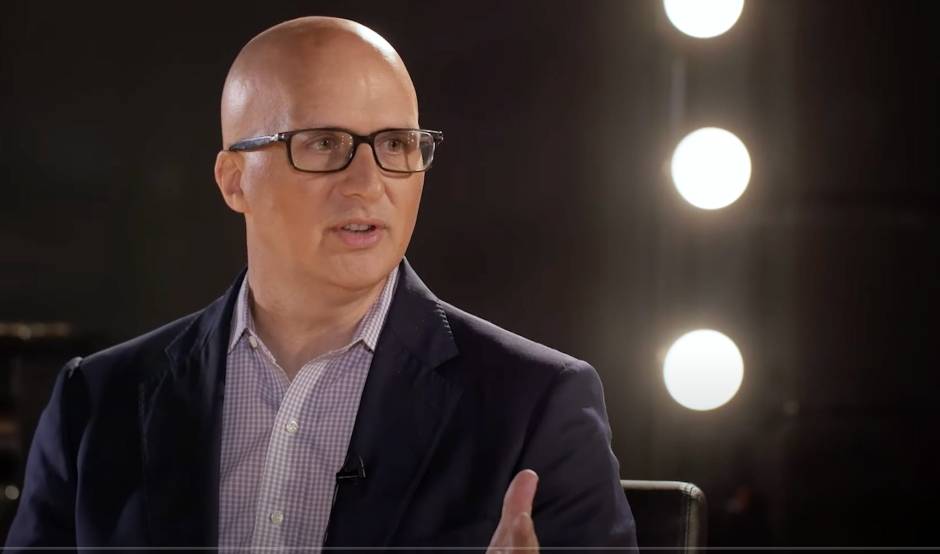
Trying to situate Aaron Renn on the landscape of twenty-first century American Protestantism is a tall order. The Indiana native, who consults on urban planning and opines about churches, describes himself as a writer who covers “the human, cultural, and institutional foundations of American flourishing during an era of transition.” (Full disclosure: as someone who considers himself an urbanist, I regularly read and benefit from Renn’s social media links and commentary on urban planning, politics, and economies.)
Renn came to the attention of many with his First Things article (Feb. 2022) on the three worlds of evangelicalism, a scheme that identified 2014 as the beginning of an era when being Christian in America was no longer an asset but a defect. This was around the same time that he helped to found “American Reformer” as an outlet for aggressively Protestant reflection about politics and society. Over time, “American Reformer” became a platform for pronouncements on Christian nationalism, though Renn never seemed to embrace the label. His outlook about the importance of Christians establishing culture-shaping institutions is clearly compatible with Christian nationalism but Renn himself has not waded into those turbulent and sometimes dirty waters.
One other part of Renn’s body of work so far to attract attention is his lament about the absence of evangelical elites. Again at First Things (where the editor, Rusty Reno, features an odd selection of Protestant writers), Renn wrote the provocative article, “The Problem with the Evangelical Elite” (December 2025). The problem comes at readers fast and hard in Renn’s opening paragraph:
The problem with the evangelical elite is that there isn’t one. All too few evangelical Christians hold senior positions in the ―culture-shap―ing domains of American ―society. Evangelicals don’t run movie studios or serve as editors in chief of major newspapers or as presidents of elite universities. There are no evangelicals on the Supreme Court. There are hardly any leading evangelical academics or artists. There are few evangelicals at commanding heights of finance. The prominent evangelicals in Silicon Valley can be counted on one hand. There are not even many evangelicals leading influential conservative think tanks and publications, despite the fact that evangelicals are one of the largest and most critical voting blocs in the Republican coalition.
Renn goes on to offer an explanation for the problem. Evangelicals stress soul-winning over vocation and lack institutions that incubate leaders in business, law, technology, and higher education. But his analysis comes with a reason to be concerned about the lack of evangelical elites. Renn views the United States as a society coded Protestant. Consequently, for the country to go forward in a healthy way, it needs people who come from America’s historic religious heritage. “America needs Protestants to take on the leadership burdens of society,” he writes, “and in view of the dramatic decline of mainline Protestantism, they must come from evangelical ranks.”
Renn does concede the presence of evangelicals in certain elite positions but deems this inadequate for providing real leadership. The one place where evangelicals produce “elites” is in Christian ministry. Renn writes, “evangelicals overwhelmingly fund and support people who focus on Christian ministry” and create “pathways to sponsorship for missionaries, church planters, and campus ministers.” They do not do the same for “people engaged in secular domains and activities.” Renn used Grok to supply the receipts. When asked about the top evangelical leaders, AI supplied the names of “fifteen evangelical elites” that was “100 percent pastors and other professional Christians.” A similar query for Roman Catholics produced a list where only 20 percent were clergy.
Renn’s nonchalance about evangelical pastors and theologians may explain why he pays so little attention to the communions that belong to NAPARC. He does not say this explicitly, but it comes through in the people he does interview on his podcast. He has hosted leaders of the Reconquista in mainline Protestantism, both Jake Dell (another contributor to First Things), a Congregationalist in Woodbury, Connecticut, and Richard Ackerman of Redeemed Zoomer fame, as an apologist for the PCUSA. In fact, when Rusty Reno interviewed Renn as a follow up to his article on evangelical elites for the First Things podcast, the Hoosier consultant praised the Social Gospel, political Progressives, and the mainline churches that spread those movements a century ago. This is not meant to score points by brushing Renn with the guilt of Progressivism and the Social Gospel. It is, though, an observation that suggests Renn has a soft spot for Protestants whose theology and practice did not measure up even as they transformed (for a time) American society.
NAPARC does register occasionally on Renn’s radar. At “American Reformer,” Renn wrote positively about two PCA pastors who have articulated a “positive vision for America.” One is C. R. Wiley’s First Presbyterian Church of Battle Ground, Washington. Renn observes that this church is “creating well-paying jobs and paying taxes, turning vacant downtown buildings into a farmers’ market and bakery, and building an architecturally significant new church that provides needed community and conference-center space.” More than a church, First Presbyterian is also building community.
The other NAPARC exception is the exceptional Tim Keller. Renn argues that Keller’s book Every Good Endeavor explains the doctrine of vocation in a way that “comprehends the exercise of power—that validates and valorizes people who reform public policy, invent new technologies, become presidents of elite universities, acquire major media properties or foundations, organize research teams, or serve as Supreme Court justices.”
Renn also credits Keller’s last white paper, “The Decline and Renewal of the American Church,” with calling for the “creation of a think tank, the endowment of chairs at top universities, the creation of grants for young Christian scholars, and the establishment of a Christian equivalent to the Federalist Society.” This is the sort of infrastructure necessary to cultivate evangelical elites. In his “American Reformer” article, Renn added “people today could learn from figures like Keller, who built an influential institution grounded in an expansive vision of the future.” The New York City PCA pastor was doing what Protestant leaders “have done throughout our national history,” namely, created “the institutions and norms that are absent today.”
What is especially odd about Renn’s reflections on Protestant churches and American society is that the institution-building conservative Protestants performed after liberalism and the Social Gospel captured the mainline denominations – creating seminaries, denominations, colleges, magazines, publishing companies – don’t register on Renn’s elite Protestant meter. Of course, they should not because these conservative Protestant institutions are not producing the leaders of Silicon Valley or qualifying for nominations to the U.S. Supreme Court. But for a man who pays attention to institutions, it is surprising that Renn pays so little to the institutions that comprise NAPARC — the very institutions that shaped Renn’s beloved Keller. Instead, he himself starts new institutions like “American Reformer.”
The other odd part of Renn’s institutional analysis is a failure to see where churches becoming leaders in the community leads. This is a lesson that ChristNats should also consider. The mainline churches a century ago abandoned the teaching of orthodox pastors and theologians who were not obvious leaders in their communities but leaders in the church, charged with trying to remain true to the teachings of Scripture and the practices of their communions. What led to the failure of Protestantism in the United States at elite levels was the loss of Protestant faith at elite levels. Mainline Protestants remained moral and culturally Protestant (especially in opposition to Roman Catholicism and in support of American exceptionalism). But in the words of H. L. Mencken, they tried “to get rid of all the logical difficulties of religion” and were left with “ a row of hollow platitudes, as empty as of psychological force. . . as so many nursery rhymes.”
Aaron Renn is a smart fellow and well worth reading about urban planning, economic development, rents, architecture, traffic rotaries, and mass transit, but he has apparently yet to consider the paradox that haunts Christianity. Christ taught in Matthew 16:25: “For whoever would save his life will lose it, but whoever loses his life for my sake will find it.” That verse need not relegate Christians to a perpetual underclass of underachievers. But Christ’s words suggest a paradoxical relationship between Christian devotion and cultural success that moved John Newton to write in his famous hymn, “Glorious Things of Thee Are Spoken”:
Fading is the worldling’s pleasures,
all his boasted pomp and show;
solid joys and lasting treasures
none but Zion’s children know.
Every honest student of church history has seen near term success turn into fool’s gold of apostasy. Surely, Renn could offer a few warnings about the dangers of elite Christianity.

Part one is here.
In the seventh chapter of The Case for Christian Nationalism, Stephen Wolfe tries really hard to sound like David VanDrunen. That is, he traffics strongly – two lanes worth – in the two-kingdom distinction between Christ’s rule as creator and redeemer. 2kers employ that distinction to elaborate how Christ’s rule over the state is different from his rule over the church even if both governments derive their power from the same Lord.
This distinction between creation and redemption, between civil authority and church power, also often explains 2kers’ willingness to affirm the legitimacy of civil authorities who are not professing Christians. Because pagans and Christians both use natural law to govern society, requiring civil magistrates to be Christian shows hesitation about the integrity of the creational and redemptive spheres, not to mention having doubts about Christ’s capacity to rule the civil sphere through the magistrates he providentially appoints.
These distinctions and worries inform Wolfe’s discussion of “The Christian Prince.” He sounds the most 2k when he quotes Calvin and Rutherford approvingly. Calvin distinguishes between one government which pertains to eternal life (spiritual) and the other which “pertains only to civil institutions and the external regulations of manners.” [301] Rutherford echoes Calvin when he contrasts civil and spiritual power. The civil authority is “coactive by the Sword, the other free, voluntary by the Word.” [303] Wolfe carries this distinction forward when he insists that “no ecclesiastical institution wields civil-like power over itself or over its members.” Churches are subject to civil authorities in such matters as building codes and emergency orders. But the church’s divine ministry – preaching, the sacraments, church discipline – “are outside the civil jurisdiction.”
Those distinctions between earthly and eternal matters, between repairing potholes and baptizing babies, are ones that Wolfe tries to explain and affirm. He acknowledges that discussions of church and state cannot escape 2k’s host of contrasts – “civil/spiritual, natural/gracious, earthly/heavenly, power/grace, or outward/inward.” He does not include sacred/secular but it is another in the 2k toolkit, however much Kuyperians have demeaned the distinction with the bumper-sticker phrase, “every square inch.” (Don’t the Dutch use the metric system?)
But Wolfe ties himself in knots when he tries to find ways for the Christian Prince to order civil affairs so that his subjects will – trigger warning – gain eternal life. For instance, he writes, “Christ’s mediatorial reign does extend to all things in a way, in that all things ought to be ordered to the spiritual kingdom.” He adds that the civil kingdom, “by its nature, is obligated to order the people to the things of eternal life” and those things are only found in “Christ’s spiritual kingdom.” For this reason, Christ’s “spiritual reign extends to the civil kingdom.” “Christ as spiritual Head of his church has instituted what the civil kingdom ought to order itself to.” [306]
At that point, Wolfe takes away the 2k that he had previously offered by way of Calvin and Rutherford. Instead of keeping the distinctions between creation and redemption intact, Wolfe collapses them.
Maybe the best example comes a page later after trying to give the civil kingdom spiritual significance. He does so by distinguishing Christians as church members versus Christians as the people of God:
Since the spiritual kingdom does not possess civil power, the civil kingdom cannot arise out of the spiritual kingdom. Nor does the civil kingdom arise out of the visible church (strictly speaking), for the visible church is the externalized spiritual kingdom. Civil power is indeed divine in origin but still natural to man as man. It is an instrument of human institutions. It originates in God, the creator, and is devolved through human consent.
So far, so 2k.
Hence, a Christian people can erect a civil kingdom, though not as the visible church but as the people of God. It is worth citing Franciscus Junius again: ‘For to the extent that we may be Christians, we do not cease being humans, but we are Christian human beings.’ A civil kingdom, instituted by a group of the people of God, is fundamentally human, follows natural principles, and possesses the same kind of civil power as all civil kingdoms. Yet, as I’ve repeatedly stressed, the fact that it is fundamentally human does not (like the family) preclude it from being Christian.
That last series of sentences reveals the main problem. Wolfe can acknowledge the legitimacy of “all civil kingdoms,” Christian or not, because their origins are creational or natural. But simply leaving civil authority on the relatively stable basis of the created order is not sufficient for Wolfe who wants – you may have heard – a Christian civil government (or nation). For that reason, he equivocates — just because the government formed by Christians is fundamentally human and natural does not mean it cannot be Christian.
This is a problem as the heart of Wolfe’s proposal. The civil government’s true purpose really is what is unusual if not controversial about Wolfe’s argument. He grants to the Christian prince a Christian mission:
The Christian prince is a civil ruler (as divinely ordained in nature) who possess and uses powers (both civil and interpersonal) to order his people to commodious temporal life and to eternal life in Christ.
That is Wolfe’s own definition. He adds, “if the prince must order his people to eternal life (by natural duty), and eternal life is attained only in Christ, the prince ought to order his people to eternal life in Christ.” Wolfe explains that the prince does this by laws, custom, personal example – not through word and sacrament.
This is a view of the prince that has no basis in the New Testament. Paul and Peter understood that the pagan emperors were divinely appointed to administer the laws of nature, but they would have been gobsmacked to think the Roman governors, Jewish kings, or Rome’s emperors were called to direct people to eternal life.
Wolfe invokes Calvin’s preface to the Institutes where he appeals to Francis I, King of France, to ensure that God’s glory and truth be preserved on earth. What Wolfe does not do is cite exchanges between Calvin and Geneva’s city government. When Calvin went beyond what the Christian councilors wanted on powers of excommunication, the Christian magistrates of Geneva told Calvin to take a hike.
The question Wolfe needs to answer is how he comes up with the idea that civil government’s purpose is to direct people to eternal life. Is it because he needs all things in life to be explicitly devout and reassuring? It is because he has lost confidence in the church as the means of carrying out the plan of salvation? Is it simply a function of the status envy that haunts members of NAPARC churches when they realize how small and marginal their denominations are?
Whatever the reason, the Christian prince that Wolfe defines and advocates would have been inconceivable to Jesus and the apostles for accomplishing the Great Commission.

Christian nationalists (hereafter ChristNats) tell us that the modern church has lost its way, not on the gospel or worship (though I wish they’d pay attention to the songs Protestants sing). Contemporary Presbyterians, ChristNats tell us, have lost the teaching of the Reformed churches on politics. Dating the instance of this loss can be tricky.
Did it happen with the American Founding, which many scholars associate with Lockean liberalism? Even if the American instance of political liberalism was a break with Christendom, ChristNats insist that the Founders were aggressively Protestant. That means that for most of the nineteenth century America still had a Christian government even though Covenanters were dissatisfied and wanted an amendment to the U.S. Constitution to make it truly Christian.
Sometimes ChristNats say positive things about Progressives, mainline Protestants, and the Social Gospel because those Americans were still trying for a Christian government.
This chronology leads many ChristNats to locate the origins of American Presbyterians’ loss of political moxie in the period after World War II, the so-called POSTWAR consensus (“postwar” capitalized because the United States has been involved in many wars resulting in many “POSTWAR!!!” eras).
Whatever the timing, ChristNats insist that contemporary Presbyterians “do the reading” of older Protestant theologians on politics and government. Such immersion in the sources will awaken people in the churches to a truly Christian understanding of government and ideally lead to a healthier society. Substituting Christian politics for POSTWAR liberalism will restore order, decency, and stability at least to the United States if not to all countries where Protestantism was the dominant faith.
This way of framing of Christian Nationalism – as the product of having done did the reading – could well confuse readers of Stephen Wolfe who was the first out of the blocks with a case for a recovery of Christian politics. His 2022 book, The Case for Christian Nationalism ignited discussions that prompted the PCA to commission a report on Christian nationalism. In the run-up to the 2026 General Assembly, Wolfe along with Zachary Garris and Sean McGowan wrote Report on Reformed Christian Politics in which the authors provided greater precision and historical examples in support of Wolfe’s 2022 book. Both of these publications promise instruction about a proper understanding of government based on Protestant sources older than the corruptions introduced by twentieth-century Presbyterians cooking, like frogs in the kettle, of American liberalism.
What is striking about this recent explanation of traditional Protestant politics is how difficult it is to understand. If someone wanted a guide to an unfamiliar subject, the teacher might use a primer or basic guide that walked a student through the elementary categories before subsequent lessons handling conceptually challenging material.
This relatively simple approach is exactly what readers find in the Westminster Confession chapter twenty-three on the civil magistrate, whether the 1646 original or the 1788 revision. The four paragraphs outline the foundational truths of Reformed politics as follows:
Each of the confession’s paragraphs say more, but the basic outline is straightforward. It explains where the authority of civil government comes from (God), reassures that Christians may actually bear the sword if called to serve in government, distinguishes the godly origins of the magistrate from the church’s spiritual responsibilities, and calls for Christians to be good subjects. In other words, God grants the sword, Christians may wield the sword, the sword is not redemptive, and believers are obligated to submit to the sword.
Some political theorists may quibble with the outline. But it is clear. And it represents the way seventeenth-century English and Scottish Protestants distilled their thoughts about government when speaking to fellow Christians in the pews and in Parliament. It is, in other words, a decent introduction for those who have not done the reading.
Compare this outline then to what Stephen Wolfe produced in the 2026 Report on Christian Politics. Keep in mind that in the book’s first chapter, Wolfe tries to clarify his argument from the 2022 Case for Christian Nationalism. As the introduction to Report explains, this “chapter, in part, is a philosophical argument for our main proposition: that civil government must promote true religion. The author grounds this claim in nature and follows the proper principia of practical philosophy (viz., nature and reason) while also demonstrating how revealed theology further specifies political conclusions, making possible a distinctly Christian politics that promotes the Christian religion.”
That is quite a wind up.
Here is the pitch, or the subheadings of the first chapter, “Reformed Political Theory”:
I. Distinguishing Theology, Ethics, Politics
II. The Definition of Politics
III. The Fundamental Principles of Civil Order and Common and Natural
A. Commonness
B. Nature and Grace
C. Natural Religion as Necessary to Commonwealths
D. The Magistrate’s Cognizance of True Religion
E. Civil Powers over Pastors
F. The Magistrate as Mediator
G. Civil Law
IV. Natural Affection
A. Affection, Duty, Action
B. Does Grace Relativize Nature?
C. Brothers and Sisters in Christ
D. How Grace Does Not Relativize Nature
V. Civil Power is Granted to Rulers Solely by the Consent of the People
A. Consent
B. Nations are Real
C. Nationalism
VI. Civil Politics as a Prudential Art
A. Religious Toleration
B. Christian America
That, as the kids used to say, is a mouthful.
Wolfe’s outline is also several steps removed from the basic categories of seventeenth-century Protestants. That could sound like a gotcha – see! SEE??!! – Wolfe is not a confessional Protestant. Since he is not an officer of a Reformed communion, we have no reason to expect him to hold to the Westminster Standards or Three Forms of Unity.
But what we might reasonably expect is for a recovery of Protestant politics to start with Reformed Politics 101, not with a seminar in political philosophy with flourishes of theological reflections on nature and grace, creation and redemption.
Perhaps the Westminster Divines were thinking all of Wolfe’s thoughts before him when they came up with the basic categories on the civil magistrate to be subscribed by church officers. Perhaps they would agree with Wolfe on “Commonness” or the “Magistrate’s Cognizance of True Religion” before then boiling down ideas about civil government for a confession of faith.
But chances are that Wolfe may be guilty of imbibing too much of the POSTWAR!!! consensus that he laments. If so, the cause of such error stems from spending too much time in graduate school and learning the ways that political theorists, steeped in the ways of American higher education downstream from the POSTWAR!!! consensus.
Wolfe was not wrong to go to graduate school. He is certainly not wrong to bring his training to bear on debates about Christian government and social decay. But his proposals are hardly thinking political thoughts after Althusius and Rutherford. The Case for Christian Nationalism and the Report on Christian Politics have a lot of twenty-first-century fingerprints on them. If Wolfe and other ChristNats want to recover the sources, then why not try to figure out why the Westminster Divines ordered their thoughts about the civil magistrate the way that they did?

Christian nationalists do not seem to consider that Christian magistrates or the laws that they write and enforce could ever have unintended consequences. If the advocates of Christian government ever read about the PREWAR consensus, the period that runs from 1870 to 1940, not only might they encounter Machen, the Presbyterian controversy, Progressivism, and liberal Presbyterianism, they might also have second thoughts when pining for a Christian government and laws that support Christian norms.
One example of Christian government encouraging religion for the public good is prayer and Bible reading in public schools. For some Protestants, these practices look wholesome and straightforward: a little dip into the Bible and a prayer at the beginning of the school day; what could possibly go wrong?
Machen supplied an answer:
I think I am just about as strongly opposed to the reading of the Bible in state-controlled schools as any atheist could be.
For one thing, the reading of the Bible is very difficult to separate from propaganda about the Bible. I remember, for example, a book of selections from the Bible for school reading, which was placed in my hands some time ago. Whether it is used now I do not know, but it is typical of what will inevitably occur if the Bible is read in public schools. Under the guise of being a book of selections for Bible-reading, it really presupposed the current naturalistic view of the Old Testament Scriptures.
But even where such errors are avoided, even where the Bible itself is read, and not in one of the mistranslations but in the Authorized Version, the Bible still may be so read as to obscure and even contradict its true message. When, for example, the great and glorious promises of the Bible to the redeemed children of God are read as though they belonged of right to man as man, have we not an attack upon the very heart and core of the Bible’s teaching? What could be more terrible, for example, from the Christian point of view, than the reading of the Lord’s Prayer to non-Christian children, as though they could use it without becoming Christians, as though persons who have never been purchased by the blood of Christ could possibly say to God, ‘Our Father, which art in Heaven’? The truth is that a garbled Bible may be a falsified Bible; and when any hope is held out to lost humanity from the so-called ethical portions of the Bible apart from its great redemptive core, then the Bible is represented as saying the direct opposite of what it really says. (On the Necessity of the Christian School)
Somehow Christian nationalists would have us believe that even of public school superintendants might garble the Bible, the Speaker of the House or the Secretary of State will not?
To borrow a line from Harry Emerson Fosdick, “what incredible folly.”

Did any American author write as forthrightly about death?
If it were possible for all of us to make our exits at great moments, swiftly, cleanly, decorously, and in fine attitudes, then the experience would be something to face heroically and with high and beautiful words. But we commonly go off in no such gorgeous, poetical way. Instead, we die in raucous prose--of arterio-sclerosis, of diabetes, of toxemia, of a noisome perforation in the ileo-caecal region, of carcinoma of the liver. The abominable acidosis . . . sneaks upon us, gradually paralyzing the adrenals, flabbergasting the thyroid, crippling the poor old liver, and throwing its fog upon the brain. Thus the ontogenetic process is recapitulated in reverse order, and we pass into the mental obscurity of infancy, and then into the blank unconsciousness of the prenatal state, and finally into the condition of undifferentiated protoplasm. A man does not die quickly and brilliantly, like a lightning stroke; he passes out by inches, hesitatingly and, one may almost add, gingerly. It is hard to say just when he is fully dead. Long after his heart has ceased to beat and his lungs have ceased to swell him up with the vanity of his species, there are remote and obscure parts of him that still live on, quite unconcerned about the central catastrophe. Dr. Alexis Carrel has cut them out and kept them alive for months. The hair keeps on growing for a long while. Every time another one of the corpses of Barbarossa or King James I is examined it is found that the hair is longer than it was the last time. No doubt there are many parts of the body, and perhaps even whole organs, which wonder what it is all about when they find that they are on the way to the crematory. Burn a man's mortal remains, and you inevitably burn a good portion of him alive, and no doubt that portion sends alarmed messages to the unconscious brain, like dissected tissue under anæsthesia, and the resultant shock brings the deceased before the hierarchy of heaven in a state of collapse, with his face white, sweat bespangling his forehead and a great thirst upon him. It would not be pulling the nose of reason to argue that many a cremated Sunday-school super-intendent thus confronting the ultimate tribunal in the aspect of a man taken with the goods, has been put down as suffering from an uneasy conscience when what actually ailed him was simply surgical shock. The cosmic process is not only incurably idiotic; it is also indecently unjust. . . .

the finish of a civilian in a luxurious hospital, with trained nurses fluttering over him and his pastor whooping and heaving for him at the foot of his bed, is often quite as terrible as any form of exitus witnessed in war. It is, in fact, always an unpleasant business. Let the poets disguise it all they may and the theologians obscure the issue with promises of post-mortem felicity, the plain truth remains that it gives one pause to reflect that, on some day not far away, one must yield supinely to acidosis, sink into the mental darkness of an idiot, and so suffer a withdrawal from these engaging scenes. "No. 8," says the nurse in faded pink, tripping down the corridor with a hooch of rye for the diabetic in No. 2, "has just passed out." "Which is No. 8?" asks the new nurse. "The one whose wife wore that awful hat this afternoon?" ... But all the authorities, it is pleasant to know, report that the final scene is placid enough. . . . The dying man doesn't struggle much and he isn't much afraid. As his alkalies give out he succumbs to a blest stupidity. His mind fogs. His will power vanishes. He submits decently. He scarcely gives a damn. (Exeunt Omnes, 1921)

