Roman Catholicism is the Biggest Christian Tent of All

A seminar at the University of Notre Dame over the weekend reminded me of thoughts that went into Still Protesting and my objections to the conversion stories of evangelicals becoming Roman Catholic a decade or so ago. The seminar itself was about a new book about the Claretians (official name: Congregation of Missionaries Sons of the Immaculate Heart of the Blessed Virgin Mary), an order started in mid-19th-century Spain that evolved into an order that evangelized and ministered to Hispanics and Latinos in North America. The gathering of academics also occurred on a campus that Christian Smith, one of the greatest sociologists of religion in the United States, had left roughly nine months earlier.

The reason for connecting a seminar on one of the many religious orders that dot the Roman Catholic landscape and Christian Smith’s departure from Notre Dame is a suspicion that many Protestant converts to Rome do not know what they are getting into. Aside from the twists and turns of the development of doctrine and debates about continuity and discontinuity in the wake of Vatican II (not to mention whether the Eastern or Western churches have a better claim to antiquity), the Roman Catholic Church is a kaleidescope of institutions, many of which with a high degree of autonomy, with the papacy as the tube holding the mirrors, colored fillers, and eyepiece together. Of course, gaining recognition from the Vatican requires some conformity among religious and priests within a specific order. But in the case of the Claretians, they developed their own materials, their own forms of devotion, moved from place to place (sometimes to be banned by the local bishop), and developed a distinct set of allegiances among Spanish-speaking Roman Catholics in Mexico, Texas, and later Chicago that ran in grooves distinct from “the” teaching of the Vatican, or the national parishes (that ministered, for instance, to Poles, Italians, Germans), and other religious orders.

Aside from the institutional configuration of the Claretians’ work — how did the superior coordinate with local bishops or the various agencies of the Vatican? — I had questions about the degree to which the order cultivated a generic Roman Catholic piety or an alternative that nurtured a high degree of attachment to the Claretians specifically. In other words, if a Latino-American wound up moving from a Claretian parish to a place that only had diocesan clergy, would he or she find a home? Or would the Claretian-formed Roman Catholic feel at odds with other Roman Catholics?

These questions are ones that apply to Protestants perhaps as much as Roman Catholics. If someone grows up Baptist, will he make an easy transition to Lutheranism if he moves to a town where (as if) there are no Baptist congregations? And what about the Presbyterian church planter who tries to establish a congregation in a town that already has Methodist, Baptist, Lutheran, and Anglican congregations? Who coordinates among the Protestant communions to decide whether the Presbyterian is allowed to start another Protestant congregation? American Protestants have no umbrella institutional authority to make such calls. Roman Catholics do. It is the papacy.

But here’s the kicker, without the Roman pontiff, Roman Catholicism is as diverse and as entrepreneurial as Protestantism. That may seem like a big difference, as if Rome has a kind of authority that Protestants lack. But often it seems that the pope acts more like a back stop than an actual potentate executing real power over Roman Catholic ministries. Roman Catholics can choose to operate a host of orders and ministries and they can develop all sorts of different kinds of piety and forms of devotion. The one thing that keeps them “united” are the international offices housed in Vatican City.

Maybe that makes Rome superior to Protestantism, but in the welter of modern society with its religious freedoms, the papacy hardly stacks up to be a weight against individualism, relativism, and creative destruction. Rome’s unity is on paper or fills aspirations. It hardly generates a disciplined, uniform, constraining church.

This is where Christian Smith’s departure from Notre Dame deserves mention. He has himself had a long track record of leaving parts of his background loudly. His break with his own academic discipline of sociology and its “sacred project” was as courageous as it was smart:

Sociology’s sacred project champions emancipation, autonomy, equality, justice, inclusion, diversity, open-mindedness, progress, tolerance, and cosmopolitanism. But, whether or not it helps achieve those in the outside world, within sociology itself, and in higher education broadly, in the end that sacred project actually tends to produce sectarian narrowness, exclusion, uniformity, silencing, self-censorship, lack of debate, the negative sanctioning of nonconformists, and the debilitation of rigorous thought. In short, it reproduces in its own image that which it opposes and seeks to transform in the world beyond.

This critique did not mean he stopped teaching sociology or writing. It did, though, signal his own repudiation of his guild’s orthodoxy.

What he did with sociology, he also applied to his own evangelical Protestant faith. In two books, Smith explained why he left Protestantism for Rome. One was The Bible Made Impossible: Why Biblicism Is Not a Truly Evangelical Reading of Scripture (2011). In the other, How To Go From Being A Good Evangelical To A Committed Catholic In Ninety-Five Difficult Steps (2011), Smith walked through and deconstructed Protestant objections to Roman Catholicism, such as a wooden and literalistic hermeneutic:

For Protestants, the words are the truth. That is why one must get them exactly right. For Catholics, by contrast, words formulate expressions of truth. There is not in Catholicism, a literal, exact univocal correspondence or identity between words and truth. Much of truth, especially truth that directly concerns God, is in Catholicism a mystery. Ultimately the truth is God. And God is not words.

That objection, in some ways, makes his departure from Notre Dame surprising. Smith’s reason for leaving (and retiring with a bang!) has the earmarks of a Protestant expecting a Roman Catholic institution to adhere to the words it professes. Instead of words, Smith faulted Notre Dame for neglecting books (which is adjacent to Protestant logocentrism):

A Catholic university is Catholic only insofar as its scholars, however diverse their frameworks and methods, maintain a serious engagement with the Catholic intellectual tradition. The central and animating question should be: What do the Catholic tradition and the many scholarly disciplines have to say to one another?

Smith judged that Notre Dame talked a good game but did not carry out its academic mission in light of Rome’s intellectual tradition (which would likely be a set of authors, texts, and theological themes).

It’s not just that the university hasn’t reached its potential, it’s that it hasn’t seriously tried. Sustained engagement with the Catholic intellectual tradition happens in pockets, but leaders avoid the institutional efforts that would make this engagement consistent and integrated.

What might such efforts look like? . . . Notre Dame should advance its Catholic mission by means of standards and programs that involve truth-in-advertising, judicious hiring, incentives for faculty to learn about the Catholic intellectual tradition, and accountability for the expectation that faculty contribute to the Catholic mission. 

Smith was clearly not expecting a university to have the same kind of uniformity as the church. He was not advocating for hiring only Roman Catholics (otherwise Notre Dame would not have hired him before his conversion). He had hoped that Notre Dame’s faculty would teach or conduct their scholarship in light of the Roman Catholic intellectual tradition even if they did not themselves belong to the church. But if Smith had this kind of standard for a university, imagine what he must have found when he encountered the variety of Roman Catholic options within the church itself, from its clergy to the laity, from the German bishops to the folk piety of the faithful in Central America.

An irony of Smith’s departure from Notre Dame is that his reason for leaving has on it the fingerprints of his education as an undergraduate at Gordon College. When he graduated from the evangelical college on Boston’s North Shore, Gordon had almost three decades of practice with integrating faith and learning. Whether it came from the inspiration of Neo-Calvinists at Calvin College or emerged more organically among evangelical faculty in philosophy who tried to implement a curriculum in which students thought about the arts and sciences from a Christian perspective, Smith’s undergraduate education undoubtedly planted the seeds of conducting the work of a Christian college or university in ways that reinforced Christian conviction among professors, students, and maybe even student-athletes (at least before Name, Image, and Likeness).

As it turns out, the integration of faith and learning is a lot harder to do than either Gordon faculty or Notre Dame administrators imagined. Academic subjects may line up with Christian truths only some of the time (the history of the Civil War does not automatically reinforce the Great Commission or Presbyterian polity). Christian faculty themselves may apply Christian teaching differently (the Good Samaritan supports open borders but Pauline teaching on the magistrate leads to defending ICE).

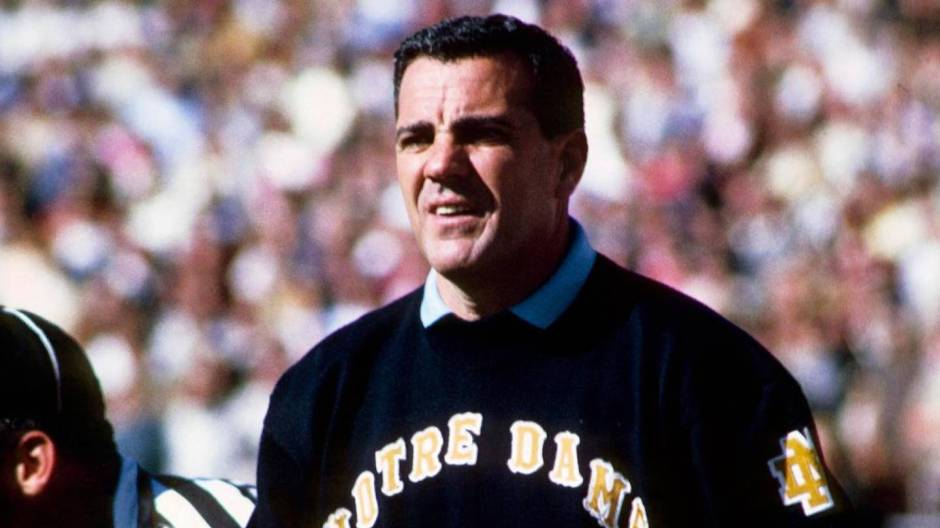
You might have thought a sociologist would have been alert to the diversity of the Roman Catholic Church and to differences among university faculty even at a confessional institution. A sociologist might have also detected that like the Claretians, Notre Dame has its own piety, one broad enough to include the reflections of Alisdair MacIntyre and the strategy of Knute Rockne.
Presbyterians Going to Rome as Presbyterians

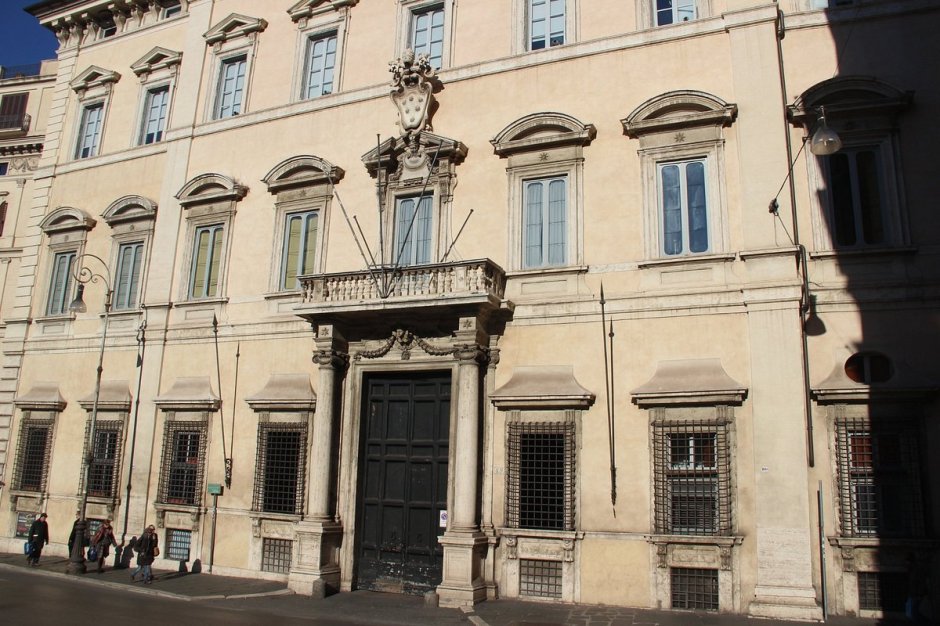
About a decade ago, while in Rome for a seminar and some sight-seeing on the side, I worshiped at St. Andrew’s Church, Rome (a reminder of which came from discovering a short pamphlet on the congregation’s history). What follows are a couple paragraphs from the congregation’s booklet on the early history of Presbyterianism in Rome. Not only is the illegality of Presbyterian worship striking, but so to is the kind of cooperation that ministry overseas encourages among Protestants from different communions. (For another example, consider the example of Seceders, Church of Scotlanders, and Free Church Presbyterians at odds and then cooperating to for the Presbyterian Church of Canada.)

The Church in a House

The experiment began in the Apostolic manner in “a hired house” and in a room holding thirty-five people. Being within the walls of Rome, meeting for Protestant worship within a house constituted an illegal act. In March 1862 Mr. Laughton reported to Edinburgh that “as he” he had not “been interfered with by the police.” This small, valiant group of Presbyterians, drawn mainly from Scotland and America, continued in their clandestine worship under the shadow of the Inquisition until 1864. By drawing their visiting chaplains from the three Presbyterian churches then prevailing in Scotland, they gave within the walls of Rome, historic instance of non-Roman ecumenical cooperation.

In 1864 Dr. James Lewis of Leith was appointed the first permanent minster. By then the activities of the Scots Kirk had attracted the attention of the police, and those who came to worship were warned to carry no Bibles openly, and to leave the house in twos and threes. Despite the fact that no advertising was allowed, the congregation grew, and had to move to a larger room in Via del Babuino.

The Church in the Garden

The story of that achievement is full of adventure. As Dr. Lewis used to say while the church was being built “It is more in danger from the bombs of Italian troops than from the Bulls of the Pope.” When the building was opened on the second Sunday of 1871, Rome had been freed from Vatican control four months earlier, on 20th September, 1870. As the worshipers entered their new sanctuary on Italian territory, they could enjoy the scent of violets from the surrounding fields and a clear view of St. Peter’s across the Tiber, looking lovely but lonely, its Pontiff a prisoner within his own Vatican walls.

The ministry of that church was limited by a twenty year lease, by the growing congregation for which it was proving inadequate, and perhaps above all, by the death of Dr. Lewis a year after its completion. From 1872 until the appointment of Dr. J. Gordon Gray in 1881, the church was supplied by a succession of distinguished ministers from all three Scottish churches for about three months at a time. It was a spectacle of Presbyterian brethren dwelling and working together in unity; something which could not be said of all churches then in Rome.

The Last Time a Pope Died (III)

From the October 2005 issue of the Nicotine Theological Journal

The Pastor with the Funny Hat

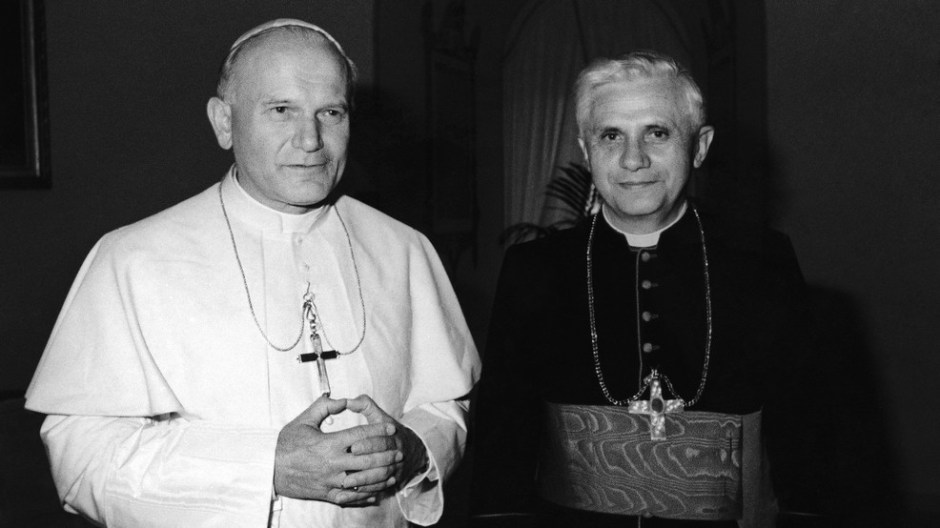
With the passing of John Paul II Protestants might be able to breathe a sigh of relief. For at least fifteen years, the papacy, through John Paul’s skillful handling of his responsibilities, has emerged as arguably the most prominent voice opposing the sins of modernity. As the veteran evangelical apologist, Norman Geisler, put it, John Paul stood up to the three main foes of evangelicalism, namely, “relativism, pluralism, and naturalism.” The best evidence of this opposition was the pope’s defense of the culture of life, which in the words of Southern Baptist theologian, Timothy George, “provided a moral impetus that [evangelicals] didn’t have internally within our community.” The papacy’s understanding of the sacredness of human life, its teaching on sexual ethics, in addition to any number of other declarations or encyclicals affirming the absolute truth of Christianity, made Roman Catholicism an attractive option for young (and sometimes old) Protestants in search of a church that would stand up for the truth, for what Francis Schaeffer used to call “true truth.” While mainline Protestant denominations descended farther into the abyss of moral relativism thanks to their fear of giving offense, and while evangelicals floundered about trying to find hipper ways to super-size their churches, John Paul II was a popular figure, seemingly approachable like the affectionate grandfather, who also refused to equivocate on some of the most important fronts of the culture war.

At his death, several pundits and journalists assessed the way in which John Paul II changed the face of Christianity around the world, improved the health of Roman Catholicism in the United States, and fundamentally altered the relations between Protestants and Roman Catholics, at least in America. Seldom mentioned is how little the Vatican changed during the deceased pope’s tenure and how much the surrounding situation did, thus significantly altering perceptions of the pope and his accomplishments. Back in 1979 during the pope’s first visit to the United States, evangelicals were still worked up about the doctrine of biblical inerrancy, even having the Roman Catholic conservative, William F. Buckley, give the opening address at one of the assemblies of the International Council on Biblical Inerrancy. The Bible was then thought to be the bulwark against relativism, materialism, and atheism, and its cultural significance was such that a prominent conservative spokesman, even from the wrong church, could offer encouraging words to conservative evangelicals.

But in the quarter of a century since then, the Bible seems to have run out of gas for Protestants as an authoritative guide to truth. Instead, the imposing voice of one person in a high-profile office (which happens to be in Vatican City) appears to be more effective in countering the drift of secularism and relativism. After all, the Bible’s truth can be fairly relative depending on the eye of the beholder. Much harder is it for one person to equivocate. This has always been the dilemma of Protestantism – its tendency to speak in multiple and conflicting voices compared to the relative unity of the papacy (some of us still remember church history lectures on the difficulties of Avignon and Rome). Before, Protestants would band together in either the National Association of Evangelicals or the National Council of Churches to try to achieve clarity. Today, the conservative ones seem to be willing to rely on the extraordinary ability and connections of the bishop of Rome.

Yet, for all of John Paul II”s gifted use of his bully pulpit, was he opposing secularism and relativism any more than my local Orthodox Presbyterian pastor? My minister has been no less clear over the course of his ten-year (and still counting) tenure in denouncing relativism and secularism. Nor was he any less forthright in condemning sexual immodesty or immorality. In fact, if anyone in our congregation had slept around or received (or performed) an abortion, discipline would definitely have followed. My pastor may not have had Continental philosophy informing his sermons or speeches at session, presbytery, or General Assembly meetings, but this may have made him even more accessible and clear than John Paul II.

Equally important to consider is whether the pope’s courage in opposing relativism, secularism and sexual license was any more effective than my pastor’s. To be sure, the local Orthodox Presbyterian minister never attracts the front pages of the New York, London, Paris, Rome or even Glenside, Pa. dailies. But that may be a blessing. It may also be a lesson that the much vaunted Roman Catholic doctrine of subsidiarity teaches. That idea says that authorities of higher rank should not do what is necessary for lesser authorities to perform. This is partly an argument, for instance, against a federal welfare system that is inefficient, impersonal, and creates a culture of dependence by either upending the work of local charities and government social programs, or by taking over duties that families and individuals themselves should perform.

The doctrine of subsidiarity, likewise, should warn against becoming dependent on the worldwide, highly orchestrated statements of one church official when what is needed is the week-in-week-out teaching and counsel of local pastors who minister to their flocks. Indeed, it is ironic to this Protestant that many young evangelicals convert to Rome because of the pope’s moral stature and careful reflection and yet find themselves in parishes and dioceses where the application of his moral teaching is very often lacking. Without wanting to beat a proud denominational breast, it does seem probable that any number of small, insignificant and seemingly sectarian denominations like the OPC or the Presbyterian Church in America or the Lutheran Church Missouri Synod or the Reformed Episcopal Church (to try to be ecumenical) are more disciplined in their sexual practices than American Roman Catholics despite those Protestant denominations’ meager public statements or formal teachings. This is not to say that John Paul II’s encyclicals are without merit – far from it. But the point stands that an encyclical is only as effective as the willingness of the local priest or bishop to apply such truth.

Golfers have a saying that you drive for show and putt for dough, which is the duffer’s way of saying that the church universal may be great on paper but is only as faithful as the local church. John Paul II used his powers as the head of the Roman Catholic church to raise the visibility of the universal church’s power and wisdom. Seldom noticed is the unintended consequence of making local clergy, church members and even Protestants dependent on a universal voice when what is most needed is the fidelity of local clergy and church members. The Protestant Reformation was partly a reaction by local churches against religious dependence on Rome. If only evangelicals were more concerned about their ecclesiological heritage and the difficult responsibilities it includes than they seem to be in seeking encouragement and affirmation from a pastor who is as far removed from their churches as Tiger Woods’ drives are from mine.

DGH

The Last Time a Pope Died (II)

From the October 2005 issue of the Nicotine Theological Journal

Where’s the Pope?

The question of pope John Paul II’s present location is, to say the least, a controversial one, not so much between Protestants and Roman Catholics as among Protestants. Has his soul been “made perfect in holiness and immediately pass(ed) into glory” while his body “being still united to Christ – rests in (its) (grave) till the resurrection”? (WSC 37). Or, has his soul been “cast into hell, where (he) remain(s) in torments and utter darkness, reserved to the judgment of the great day”? (WCF 32.1) We are shut up to these two possibilities because “Besides these two places, for souls separated from their bodies, the Scripture acknowledgeth none” (WCF 32.1).

Even to entertain the possibility that the pope is not in heaven can get you fired. Pittsburgh Christian talk radio host (WORD- 101.5FM) Marty Mintor found that out on Friday, April 8, when he was called into general manager Chuck Gratner’s office after his 3:00 to 6:00 P.M. show and told he was being let go. His offense? Innocuous enough. In response to a caller’s question about whether the pope was in heaven, he said that many evangelical Christians believe that one must be a “born-again believer” to go to heaven, but added that “the question of whether a person is born again is something personal, something between an individual and the Creator.” He also “made it clear that the discussion was not an attack on the character of the pope but, rather, a look at the teachings — not only of John Paul, but the Catholic Church in general.” No Knox or Calvin (or Ian Paisley or Bob Jones) he. But he had to go because he was “alienating the listeners.” Gratner said, “We ended our relationship” with Mintor because of differences in how he conducted his show. WORD-FM needs to function in this city in support of the entire church — that means everybody — and not focus on “denominational issues.”

One must resist the temptation to engage Mr. Mintor and Mr. Gratner’s soteriology and ecclesiology, which reflect much that is wrong with evangelicalism, and confine oneself to the fact that these two evangelicals disagreed about whether one could, as a talk radio host, even allow for the possibility that the pope is not in heaven. Not even Al Mohler, for all his excellent analysis of the pope’s and the Church’s errors, noting that John Paul II was a vigorous proponent of the cult of Mary and that he taught that the work of Christ made up for what was lacking in human merit and that he rejected justification by faith, could summon up the strength to say, “The pope, having held these errors, is not in heaven.”

Of course, in one sense no one can know with absolute certainty about anyone’s eternal destiny. We must of necessity leave those ultimate judgments in the hands of an all-knowing God. Nevertheless, we as individuals do make such measured judgments. (Anybody uncomfortable with saying that Hitler is in hell and that Calvin is in heaven?) And the church is given the power of the keys by which she excludes or includes in the kingdom of heaven applying, the standards given by the king of the church.

In my Presbyterian denomination we have standards of admission into membership in the visible church (“out of which there is no ordinary possibility of salvation”) that are consistent with historic Presbyterianism’s commitment to exclude from the church none that Christ includes. Thus we ask for a credible profession of faith. We do not claim that all who make credible professions will be in heaven (we are fallible even in the use of our lawful powers), but we do treat them as such so long as they are communicants in good standing (their professions remain credible). Moreover, we do not regard as unbelievers those who are members of erring churches of Christ. Again, it is the gospel (whether the church is evangelical) and the credible profession (communicants in good standing) that determine whom we invite to share in the common Table of our Lord.

Now a simple question: could the pope have been received into a Presbyterian church holding to the historic Reformed standards of communicant membership? Could he have been invited to the Lord’s Table (where the Lord Himself welcomes and feeds His people) in a Presbyterian church practicing the Reformed fencing of table? Hence, if we regard as heaven-bound those whom we receive into communicant membership and those whom other evangelical churches receive, then do we not regard the others to be, so far as we know, hell-bound? When we apply the liberal and charitable standards by which Presbyterian churches have judged who are Christians, the pope was not one. He did not “acknowledge himself to be a sinner in the sight of God justly deserving his displeasure and without hope save in his sovereign mercy.” He did not “acknowledge Jesus Christ to be the son of God and Savior of sinners and receive and rest upon him alone as he is offered in the Gospel.” He held no membership in an evangelical church on earth.

He was a good man, a courageous man, a pious man, an admirable man, a man who did much good in his lifetime. But do we not agree that such things are not sufficient to make one acceptable to God? Do we not still believe “nothing in my hand I bring, simply to thy cross I cling”? Do we not still believe that a man is justified by faith apart from all human righteousness, or devotion, accomplishment?

A little Protestant girl and a little Roman Catholic boy found themselves walking together toward their homes wearing their Sunday best (yes, I know that is now a meaningless description, but bear with me). They came to a low spot in the road where spring rains had partially flooded the road. There was no way that they could get across to the other side without getting wet. “If I get my new Sunday dress wet my Mom’s going to skin me alive,” said the little girl. “My Mom’ll tan my hide too if I get my new Sunday suit wet,” replied the little boy. “I tell you what I think I’ll do,” said the little girl. “I’m gonna pull off all my clothes and hold them over my head and wade across.” “That’s a good idea,” replied the little boy. “I’m going to do the same thing with my suit.”

So they both undressed and waded across to the other side without getting their clothes wet. They were standing there in the sun waiting to drip dry before putting their clothes back on when the little boy finally remarked, “You know, I never did realize before just how much difference there really is between a Protestant and a Catholic.” Yep. I wish the pope were in heaven, but I have reasons for fearing otherwise.

William H. Smith is a minister in the Presbyterian Church in America

The Last Time a Pope Died

From the October 2005 issue of the Nicotine Theological Journal

The Faith of Modernism

When John Paul II was elected pope in 1978, some American evangelical observers of Rome referred to him as “J2P2.” About ten years later that nickname receded, an indication of a significant transition in his pontificate: this pope was becoming even more popular than Star Wars. It is easy to see now why American evangelicals fell in love with pope John Paul II. He was instrumental in the defeat of Communism, courageous in defense of traditional marriage, and relentless in his advocacy of the culture of life.

Why didn’t Paul VI a enjoy similar press? After all, a re-reading of his widely lampooned Humanae Vitae reveals it to be a brilliant, if flawed, critique of our technological age. But Paul VI’s tired and melancholy demeanor lacked the vigorous and telegenic charisma of John Paul II, a master of modern media.

Timothy George compared the winsome attractiveness of John Paul II to the ultimate American evangelical icon, Billy Graham. “Many of the things said of the pope you’d say of Billy Graham,” George recently told Christianity Today. “From an evangelical base he’s tried to reach out and be embracing and yet be faithful to the gospel. And you put those two together, Billy Graham and the pope, you have there the winsome, visible face of world Christianity in the last half century.”

Again, this is understandable, and there is much for Protestants to be thankful for in this remarkable 25-year pontificate. But can it be said from a Protestant perspective that John Paul II’s legacy was marked by theological progress? How ought we to evaluate what Mark Noll described as Roman Catholicism’s “dramatically altered relations with Protestant evangelicals”? Are we led to imagine that the Reformation is over? There are reasonable grounds for skepticism on the part of Protestant confessionalists.

This is not to question the pope’s openness to the theory of evolution, as some Protestant fundamentalists and Roman Catholic traditionalists have. John Paul II hardly endorsed Darwinism; he merely invited Christians to engage in legitimate scientific inquiry without succumbing to scientism. No, John Paul II was clean here, although it was left for his successor, Benedict XVI, to state the matter with greater theological precision when he emphasized that “we are not some casual and meaningless product of evolution.”

In following through with the work of Vatican II, John Paul proclaimed the church’s openness to the future. But should Protestants be encouraged when “aggiornamento” replaces the take-no-prisoners exclusivism of pre-Vatican II Rome with the universalism of Vatican II? A perusal of Crossing the Threshold of Hope should dispel any doubt that John Paul II is a modernist, especially with regard to his attitude toward other religions. John Paul II seems to articulate his own version of Open Theism here: salvation is open to all “people of good will” (though only Rome possesses the fullness of that salvation). Jews are older brothers in this vague and universal faith, and he goes on to make frightening concessions to the “deep religiosity” of Buddhists, Hindus, and Moslems, reserving his criticism of the latter to the “fundamentalists” among them. “It will be difficult to deny that this doctrine is extremely open,” he writes. “It cannot be accused of an ecclesiastical exclusivism” (emphasis original).

The old-style Protestant modernist Shailer Mathews insisted that Modernism was not liberalism. Modernists, he wrote, were evangelicals who use the scientific, historical, social method in understanding and applying evangelical Christianity to the needs of living persons. Mathews’ call for Christian accommodation to modern times reads much like John Paul II’s. Perhaps there is no American Protestant he may resemble so much as Charles Briggs, who though conservative by inclination and committed to traditional doctrines such as the virgin birth, sought to bring American Presbyterians into the modern world, introducing them to confessional revision, higher criticism and doctrinal tolerance.

Another similarity between the recent pope and Protestant modernism was his reticence to apply church discipline to Roman Catholic dissenters. Rising to his defense, many have pointed out how imprudent excommunication would have been. Dissent was far too entrenched in the American Roman Catholic higher education, which had become a barren wasteland beyond correction. A crackdown would involve not just the prominent – he could not limit it to the likes of Hans Küng – but would have involved tens of thousands. So the pope was between a rock and a hard place, and his hands were tied.

Somehow that rings hollow for a pope credited with dismantling communism. Where is the sign of contradiction? And whatever happened to his slogan, “Be not afraid”? He’s the POPE, for crying out loud. A more plausible explanation seems to be that discipline was less beyond his power than contrary to his style. So the dirty work was inherited by his successor, Benedict XVI, and Roman Catholic conservatives have already appealed to him to take serious disciplinary action.

Where Noll’s “dramatically altered relations” is most evident is in ways John Paul II’s papacy has encouraged American evangelicals to collapse spiritual warfare into cultural warfare. Under the pope’s leadership and example American Roman Catholics and evangelicals have found common cause in lobbying for the culture of life. This has led to the confusing and divisive work of “Evangelicals and Catholics Together” in 1994 and its successors. To be sure, evangelicals argue that theological differences remain – there’s the whole Mary thing – but these are relegated to the theological periphery. “The disagreements that Protestants have with John Paul II are things that are in addition to the foundations of the faith,” said Southern Baptist Richard Land. In a more theologically literate age, confessional Protestants would call that doctrinal indifference.

In a commonly misunderstood section in his book, Christianity and Liberalism, J. Gresham Machen suggested that Presbyterian orthodoxy had more in common with Rome than with Protestant liberalism. Machen’s predicament was that if forced to choose between Protestant modernism, which had all but abandoned the exclusivity of the Christian religion, and Roman Catholicism, a faith that in the 1920s was still affirming that outside the church there is no ordinary possibility of salvation, the decision would have been to side with the Christian though flawed expression. That choice took on a different dimension after Vatican II when in its effort to engage the modern world the Roman Catholic hierarchy embraced modernism. So with the magisterium of John Paul II, who fleshed out Vatican II’s modernism, Machen would not have been confronted with a choice. For all of his gifts and virtues, John Paul II was a theological modernist. Evangelical adulation of his papacy gives every suggestion of a dance with modernism.

JRM

Yuge, If True!

Pardon the click bait (as if).

Roman Catholics in America (CH 555) will be offered at Westminster California the first week of August (2-5). Listener passes for the general public are available. (Members of the specific public are on their own.) Auditing is also available.

Here is the course description:

This course covers the transformation of Roman Catholics from cultural and religious outsiders (1800-1950) to leading figures in the conservative movement that launched Ronald Reagan, George W. Bush, and even Donald Trump. Students will examine the assumptions that Protestants made about America (that also marginalized Roman Catholics) and the ways post-World War II Roman Catholics Americanized. This transformation of Roman Catholicism is largely responsible for many Protestants converting to Rome. As such, the course has implications for Reformed ministry in contemporary American society.

Every Minor Order Ministry

If you’re ever tempted to think that Rome’s church government is ancient, consider how much it has always been a work in process (with notable interventions from Trent and Vatican II):

On the Sunday of the Word of God this year, Pope Francis solemnly instituted lectors and catechists. They were drawn from nations around the world. The pope gave to each of the lectors a book of the Scriptures, and to the catechists a cross. There were prayers, and he enjoined these servants of the word to bring the Gospel to the world through their ministry. None of this was truly extraordinary, however. What made the event historic was that, for the first time, the rite included women.

It was a long time coming. In 1965, a subcommittee of the Consilium (the body of scholars and churchmen who crafted many of the liturgical reforms after the Second Vatican Council) gathered to study what was then called “minor orders,” including what we now call instituted lectors and acolytes. In Christian antiquity various people held these offices, but gradually they were restricted to seminarians on their way to being ordained to the priesthood. Over time, the priesthood assumed all the roles formerly held by a variety of ministers. The committee acknowledged the possibility of turning the page on this clericalization of ministry, but they did not discuss including women out of deference to those bishops who believed that the minor orders were part of the sacrament of Holy Orders, rendering women ineligible.

Nevertheless, a door was opened by the Consilium’s final report in 1967, which affirmed that the Church has considerable flexibility in reforming the offices below the level of deacon. The minor orders, although rooted in antiquity, can be reconfigured, they argued—some abolished, others added or adapted—to respond to the needs of the Church. The question of who receives them, and whether they are permanent or temporary, was not settled.

By the time of the council, everyone recognized that the Church’s practice of minor orders had become incoherent. The history was venerable, but modern-day seminarians were deriving little benefit from being ordained into these roles. It was more or less a formality they went through, with the rites serving as stepping stones in a cursus honorum that led to priestly ordination—their real goal. They moved through the minor orders quickly, sometimes celebrating two at a time. Some found it embarrassing to receive deputation, in solemn ceremonies, for tasks other people carried out. The role of doorkeeper was, for example, already filled by sacristans and ushers. Altar boys performed the role of acolyte. The priest read the readings at Mass. To be an actual exorcist was an advanced and specialized role quite separate from the “order of exorcist” conferred on them, which really meant nothing. One of the principles of the reform was “truthfulness.” By this canon, the minor orders were failing badly.

Pope St. Paul VI was interested in keeping the minor orders as a part of seminary formation. His focus was on renewing them and establishing a more coherent plan. Pastoral bishops saw this in a wider frame of reference, however, and had more ambitious goals. They wanted to simplify the preparation for priesthood and render it more realistic, but they also kept an eye on the horizon of lay ministry, which was a growing phenomenon. There was considerable interest, especially in mission dioceses, in strengthening lay ministries and finding ways to bless them. There were requests not only to institute women as lectors and acolytes, but also to consider instituting ministries of catechesis and various forms of pastoral service, which were already being filled successfully by women. There was also the question of allowing lay people to preach and conduct worship services in the absence of a priest. Some kind of blessing for music ministers, such as cantors, psalmists, and organists, was on the wish list too.

The topic of minor orders continued to be discussed among the various dicasteries of the Curia during the period immediately following the council, prompted at times by interventions from local churches and from the pope, but the conversation dragged on without resolution, at least in part because there were so many different discussions going on at the same time. It wasn’t even clear where this topic belonged in the flow chart of the reform: Holy Orders? Baptism? Blessings? Clergy formation? Liturgy? Evangelization and mission? All of the above?

In 1972, Pope Paul VI issued his motu proprio, Ministeria quaedam, which put an end to the discussion. He suppressed the orders of doorkeeper, exorcist, and subdeacon. He changed the terminology of “minor orders” to “ministries” and defined the ministry of lector and acolyte as lay ministries. Following an obscure precedent set by the Council of Trent, he added that “ministries can be entrusted to the lay Christian faithful; accordingly, they do not have to be reserved to candidates for the sacrament of Orders” (MQ III). Nevertheless, he reserved the instituted lay ministries of lector and acolyte to males “according to the venerable tradition of the Church” (MQ VII). . . .

What Protestantism Tried to Fix

(By the way, some of Roman Catholicism’s antiquity is not ancient.)

“How the Irish Changed Penance,” by John Rodden, Commonweal Magazine, January 26, 2022

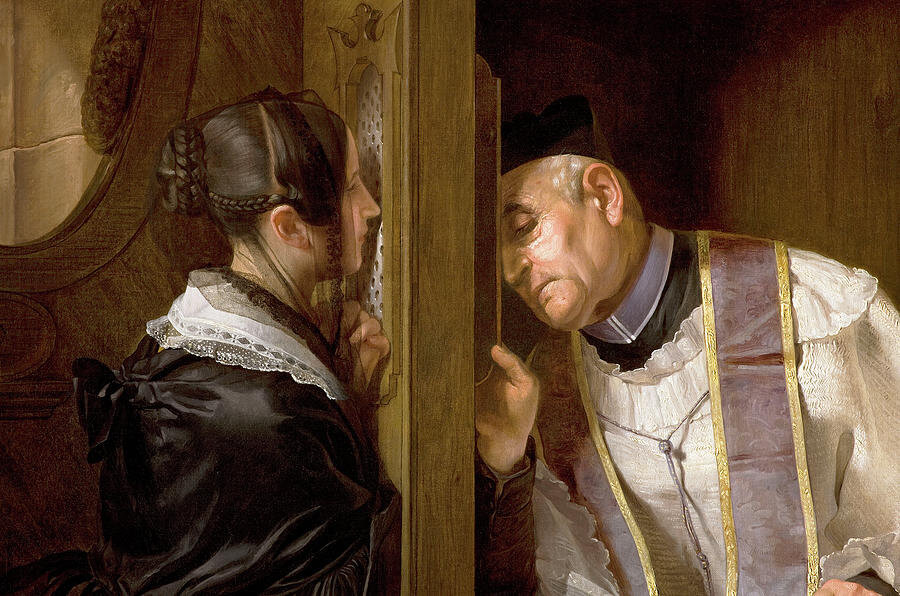
Most Catholics are probably unaware that what we today call the sacrament of Reconciliation existed in a completely different form during the early Christian era. Even those who are aware of this fact may not know that it was a group of Irish monks who were largely responsible for transforming this sacrament into the version with which we’re familiar. It is all too easy to imagine that the seven sacraments have existed in something like their present form from the moment they were instituted. In truth, all of them have changed in important ways over the course of the Church’s history, and none has changed more than the sacrament of penance.

For the Church’s first seven centuries, penance could be received no more than once in a lifetime. That policy dated back to the time of St. Peter. The New Testament tells us that Jesus gave the power of forgiveness to his disciples, but it says almost nothing about how they were to exercise it. In the early Church, the prevailing belief was that baptism was the celebration of the forgiveness of sin, and that the baptized, having turned away from sin, would not need to be forgiven again. As St. Paul wrote, “How can we who died to sin yet live in it? You must think of yourselves as being dead to sin and living for God in Christ Jesus” (Romans 6). 

Nevertheless, the Church Fathers soon realized that they needed a way to deal with post-baptismal sin because many baptized Christians were slipping back into their old way of life. A formal system of public penance was devised to handle such setbacks. Typically, after penitents confessed to the local bishop, they were assigned an onerous penance that lasted several years. During this time they wore sackcloth and garments that scratched or tore the skin, as a modest reminder of Christ’s scourging. They were also required to leave Mass immediately after the homily and forbidden to receive the Eucharist. At least part of their penance consisted of long hours of prayer and fasting. Not until they had completed this long and arduous penitential period were they “reconciled” with the Church and welcomed back into full communion. For the Church’s first seven centuries, penance could be received no more than once in a lifetime.

But reconciled penitents were expected to continue some penitential practices, such as abstinence from sexual intercourse, for the rest of their lives. Those who had been thus reconciled could not be admitted to the clergy or to most public offices. They remained permanently in a somewhat inferior position within the Church, partly for social reasons and partly as an explicit reminder of their lapse. Moreover, such a reconciliation was permitted no more than once in a lifetime, and it was required only for what were regarded as mortal sins, such as murder, adultery, and apostasy. Those guilty of what we now call venial sins were not expected to undergo any formal process; instead, they found forgiveness for their sins by participating in the Eucharist, almsgiving, and seeking forgiveness from those whom they had offended.

Christians who lapsed again into grave sin after they had been formally reconciled found themselves without recourse. “Now,” your local bishop or priest informed you, “you are left to the mercy of God.” The early Church feared that allowing sinners to be sacramentally reconciled more than once would encourage sin. But the rigors of penance and the practice of allowing Christians to receive the sacrament of penance only once had an unforeseen and highly problematic effect. Many people postponed their baptism for decades, because baptism offered forgiveness for a whole lifetime’s worth of sins without the rigors of penance. Plus, those who waited until old age to be baptized were unlikely to lapse thereafter into serious sin more than once. Emperor Constantine, who had declared Christianity the official religion of the Roman Empire in 313, remained a catechumen until his own deathbed baptism in 337. 

By the seventh century, it had become obvious to many that the Church’s rules for penance were not working as they were intended to, but there were still no plans in Rome to reform them. It was precisely at this time that Irish monks began to travel to the European continent to proselytize the heathen Franco-German tribes. At least a century earlier, these monks had developed a different practice of penance within their own communities, adapting a little-known tradition traceable to the first monastic communities in the Egyptian desert. St. John Cassian, who had lived with these desert monks, took their practices with him when he founded a monastery in France. His writings were later taken to Ireland and it is there that they found fertile soil. Traditional public penances of the kind practiced in the early Church were not an option for the desert monks: there were no Christian communities, let alone dioceses, in the Egyptian desert. Like the monks in Ireland after them, they were struggling to overcome venial “faults” in their quest for saintliness, not seeking reconciliation after committing grave offenses such as murder, adultery, and apostasy. The Irish monks refined the work of Cassian, developing a system of confession in which the private recitation of sins was followed by the private performance of penance. Crucially, they not only adopted this practice themselves, but introduced it to the faithful outside the monastery, making it applicable to all sins and available to all sinners.

Then, without formal ecclesiastical approval, the missionary monks shared these more relaxed and flexible practices with the new converts in Europe. As the Catechism of the Catholic Church summarizes it: “During the seventh century Irish missionaries, inspired by the Eastern monastic tradition, took to continental Europe the ‘private’ practice of penance, which does not require public and prolonged completion of penitential works before reconciliation with the Church. From that time on, the sacrament has been performed in secret between penitent and priest.” This was a radical change in the history of the sacraments. Gradually, confession went from being public to private, and from a once-in-a-lifetime rite to an as-often-as-needed practice. The “order of penitents,” segregated from the rest of the community, disappeared. 

The great virtue of the Irish monastic approach was how it aided the monk’s quest for holiness. Regular confession became the supreme weapon of Celtic spirituality in the ceaseless spiritual combat against sin. Irish monks would regularly confess their faults to the presiding abbot of the monastery. As Joseph Stoutzenberger notes in Celebrating the Sacraments, gradually the practice came to include confessing faults to a highly trusted brother monk, who became known as the anamchara (animae carus), or “soul friend.” The abbot or fraternal anamchara would pray with the penitent and prescribe actions to help him overcome his failing. Certain monks renowned for their spiritual advice became popular confessors. Eventually, people outside the monasteries began coming to those monks to confess their sins. Because the whole Irish Church was organized around the monasteries, Irish bishops were sympathetic to the monks’ approach to penance and did not regard it as lax or permissive. They recognized its practical and spiritual advantages and allowed it to continue.

But bishops elsewhere did not look so favorably on this alternative approach. Scholars such as Kate Dooley believe that the condemnation of private confession in Canon 12 at the Third Council of Toledo in 589 referred to the Irish monastic practice. That council reaffirmed the traditional rite, whereby reconciliation could be granted only once in a lifetime.Over time, fewer Christians sought the older form of penance, precisely because it was public, long, and severe.

Undeterred, the Irish monks maintained their alternative practice and disseminated it in their missions abroad. Until the twelfth century, both the traditional rite of public penance and the Irish practice of private confession co-existed uneasily. Over time, however, fewer Christians sought the older form of penance, precisely because it was public, long, and severe. Where the older form was still favored, the faithful often treated penance exactly as previous generations had treated baptism: excommunicated members of the community chose to wait until they were on their deathbeds to be reconciled to the Church because the dying sinner could receive the sacrament without performing grueling public penances.

What if Mary not only Heard but Answered Prayer?

Mary did you know that your baby boy would one day walk on water?

Mary: if he turned the water into wine first, yes.

Mary did you know that your baby boy would save our sons and daughters?

Mary: “daughters” is not an exact rhyme of “water.”

Did you know that your baby boy has come to make you new?

Mary: as I indicated in the Magnificat, I thought God was fulfilling something old. (“as he spoke to our fathers, to Abraham and to his offspring forever”)

This child that you delivered, will soon deliver you.

Mary: I see what you did there.

Mary did you know that your baby boy would give sight to a blind man?

Mary: technically, he was not a baby boy when he healed the blind man.

Mary did you know that your baby boy would calm the storm with his hand?

Mary: ditto.

Did you know that your baby boy has walked where angels trod?

Mary: sometimes, Joseph and I lost track of his whereabouts.

When you kiss your little baby, you kiss the face of God.

Mary: did not know.

Mary did you know that your baby boy is Lord of all creation?

Mary: I had not worked out Trinitarian theology.

Mary did you know that your baby boy would one day rule the nations?

Mary: I was thinking mainly in terms of Israel.

Did you know that your baby boy is heaven’s perfect Lamb? That sleeping child you’re holding is the great I am.

Mary: If I knew then what I know now, of course.

How Roman Catholicism Works

Congregationalism and Presbyterianism have their issues, but at what point do you become Sideshow Bob, repeatedly stepping on the rakes, handles hitting you in the head, groaning in response, if you keep running the church this way?

Once the office of bishop was clearly established in the early Church as the unitary head of a diocese (a Roman administrative unit), that office was filled by someone chosen by local people and priests, then ratified by the neighboring bishops, as a sign of the unity of the Church. Even the unbaptized were eligible, as we know from the oft-told story of St. Ambrose, whom the clergy and people of Milan chose as their bishop while he was still a catechumen. The first bishop of the United States, John Carroll, was elected by the priests of Maryland and confirmed by the pope. Today, we are so used to the pope choosing our bishops for us that we think it was always that way. It wasn’t. In fact, the right of the pope to choose bishops was only settled with the 1917 Code of Canon Law, a papal document that clearly allocated that power to the holder of the papal office.

Arguably, there is some limited lay input in the selection of bishops. When a priest is being considered for appointment as bishop, the papal nuncio sends out what are called apostolic letters to a select group, which may include laypeople from the area, asking their opinion of the candidate based on some very specific questions. Since the papal nuncio does not actually know the laypeople of a diocese, he normally gets their names from the outgoing bishop, which means that the recipients of the letters are usually wealthy donors. Under Popes John Paul II and Benedict XVI, the areas of query in the apostolic letters were: Has the man ever said anything about birth control, abortion, married priests, female priests, the remarriage of divorced Catholics, same-sex marriage? These questions reveal the biases that gave us so many culture-warrior bishops under those popes. Since the election of Pope Francis, the questions focus more on pastoral concerns. But most of the letters still tend to go to influential (i.e. wealthy) people.

Apart from these letters, there is no other lay input into the choice of bishops. The system is still pretty much an old boys’ network. Each diocese in the United States is part of an ecclesiastical province—every diocese in Illinois, for example, is in the province of Chicago; every diocese in Pennsylvania is in the province of Philadelphia. At their annual provincial meetings, the bishops of each province can put the names of priests they favor on a list of potential candidates for bishop. This is called the provincial list, and every so often the bishops update it. When there is a need for a diocesan or auxiliary bishop in the province, the papal nuncio begins the hunt by looking at the candidates on the provincial list. Laypeople do not get to put names on the provincial lists. And the papal nuncio is not even bound by the provincial list: it is only a starting point in putting together his list of potential candidates. On his own initiative, the nuncio may add the names of priests from other provincial lists around the country, or names that aren’t on provincial lists, to create the list of candidates that he sends to the Congregation for Bishops in Rome.

The Congregation for Bishops, currently headed by Cardinal Marc Ouellet of Canada, has thirty or so members, including cardinals who work at the Vatican, plus cardinals and bishops from around the world. The congregation vets the nuncio’s list (called a terna because it has three names on it) and may add different names before sending it to the pope. An American bishop (usually a cardinal) who is a member of the Congregation for Bishops has inordinate influence on who becomes a bishop in the United States. McCarrick’s appointment required no consultation with the body of clergy of New York, and no consultation with the body of the laity, beyond those few apostolic letters.

After receiving the terna, the pope can accept it and select a name from it; he can reject it entirely and ask the congregation for a new terna, with names on it that he suggests; or he can ignore the terna completely and just choose his own man.

That’s the system. Here is how bad apples like McCarrick circulate:

His first appointment as bishop was as an auxiliary in his home archdiocese of New York in 1977, where he had been serving as secretary to Cardinal Terence Cooke since 1971. Cardinal Cooke, with the consent of the other bishops of the province of New York, had his secretary’s name placed on the provincial list. When the apostolic delegate, Archbishop Jean Jadot, went looking for names for a terna for auxiliary bishop of New York, there was McCarrick on the provincial list. The Vatican report says that between 1968, when McCarrick was first considered for auxiliary bishop, until 1977, when he was appointed, fifty-two apostolic letters were sent out, mostly to bishops and priests in the New York area, suggesting that very few apostolic letters were sent to laypeople. With his limited investigation complete, Jadot placed McCarrick’s name on the terna that he sent to Rome. The Congregation for Bishops did its vetting, the list went to Pope Paul VI (who probably had a conversation or two with Cardinal Cooke), and McCarrick was chosen. His appointment required no consultation with the body of clergy of New York, and no consultation with the body of the laity, beyond those few apostolic letters. It mostly required Cardinal Cooke’s patronage.