
 Actually, even if Taylor doesn’t, for the Gospel Coalition Michael Pohlman does notice, and holds open the possibility that multi-site churches may be a fulfilment of the Great Commission. Still, the blog watch on Tim Keller has been remarkably silent about the feature story in USA Today about multi-site churches in which Redeemer NYC figured prominently (especially compared to the reaction from his lecture at Google and the recent story in New York Magazine). In one of the bigger surprises after the USA Today story, Keller’s fiercest on-line critics, the Bayly Brothers, praised the NYC pastor their “hero.”
This could be, as observed previously, an indication of the kind of media outlets that count among those who follow Keller. USA Today and the “700 Club†don’t achieve the same degree of cool as do Google and New York Magazine.
But the silence could also stem from some less than appealing associations that Keller owns thanks to the story — ties that Keller’s proponents would rather not notice. According to USA Today, multi-site churches make sense from the perspective of efficiency and maximizing resources:
It’s a growth strategy that works for churches of any size because it doesn’t require new buildings or fighting for zoning or parking space, says Scott Thumma, professor of sociology of religion at Hartford Seminary, where the institute is based.
“They just rent a couple of extra theaters and high schools and put together a church in a box. Most pastors wouldn’t give this as the primary reason, but clearly it’s a distinct advantage,” says Thumma, co-author of a 2008 study examining eight years of growth and change in megachurches.
Of the USA’s 100 largest churches, 67% now have two or more sites and 60% of the 100 fastest-growing churches also have multiple sites, according to the annual listings of the USA’s largest churches in Outreach magazine’s October issue.
Then there is the pastor from Oklahoma, a multi-site proponent like Keller, who is apparently following the business model of Filene’s Basement. Craig Groeschel’s LifeChurch.tv is “the second-largest church in the USA. By video some 26,776 see his sermons at at 13 meeting sites or campuses from Phoenix to Albany, N.Y.
The report adds, “Groeschel sees the multi-site route as a way to offer a classic evangelical message — “the Bible is true and salvation is only by grace’ — at bargain volume rates. His website boasts that LifeChurch.tv reached 1 million people in July, at a cost of 7 cents each. ‘For us, multisite is only a tool, nothing more,’ he says.â€
Of course, Keller is not using video and the story concludes with a contrast between Keller and Driscoll. Keller prefers taxis and public transportation to Driscoll’s use of video to deliver his sermons.
Not to be missed are differences among Gospel Coalition leaders over multi-site church mechanisms of delivery. While Keller has disavowed video, John Piper’s Bethlehem Baptist uses it for its three-campuses-as-one-congregation model.
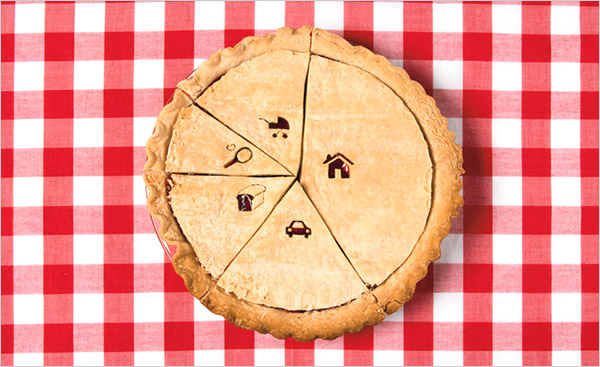
Whatever the reason, it is odd that when an evangelical pastor receives favorable coverage in a national newspaper, the pastor’s supporting cast of bloggers do not mention the article. It could be a valuable discomfort with multi-site churches, or that the story did not include a pie chart.
 Old Life
Interesting. In Redeemer’s case, the multi-site approach is NOT more efficient for us. It would be far cheaper to have all our services in one very large venue. The multi-site model is a transition phase for us. We have a timetable for turning each site into a congregation in its own neighborhood, with its own pastoral leadership. That’s one of the key reasons we don’t do video. I was careful in my interaction with the journalists not to criticize other multi-site churches, since I have never sat down with anyone and asked them their purposes or rationales for them.
LikeLike
Actually, it doesn’t matter what the rationale is for multi-site video proclamation during Lord’s Day worship, nor who’s giving that rationale. It’s wrong.
Why? Because the shepherd of the flock is set apart by the laying on of hands and prayer to serve as the minister of the Word and Sacraments. And both the ministry of the Word and the ministry of the Sacraments are necessarily conjoined works of flesh and blood.
If a flock’s shepherd can do his work virtually, there’s no reason why a Facebook affinity group can’t substitute for church membership. A man may respond that pastoral care is given by on-site pastors–just not the sermon–but such a response only indicates the New Testament doctrine of the union between preaching and pastoral care is on life-support as our church-growth idolatry continues to carry all before it.
LikeLike
Tim Bayly’s is dead right about the implicit gnosticism that underlies the assumptions of the multi-site megachurch. How can Tim Keller effectively have a sacred pastoral relationship with multiple congregations with thousands of people, even if he considers his situation transitional? Is this what Richard Baxter had in mind when he wrote “The Reformed Pastor”? Is this a Presbyterian understanding of polity?
LikeLike
The multi-site bashing gets really old honestly, because I would venture to say that most of the criticism comes from individuals who are ignorant of this church model. Before pursuing membership within a PCA church based on doctrinal reasons my wife and I were members of North Coast Church in Vista, CA. For those of you who are unaware North Coast has been considered one of the pioneers of the multi-site movement. While I may not have agreed with North Coast or its pastors on all accounts I can say without reservation that this was one of the best churches I have ever been a member of.
Very little criticism accounts for the leadership structure of these churches or how shepherding or word ministries actually take place. In my experience it was easier to have access to a pastor on staff at North Coast than it was in congregations of 150-300 that I had attended. This is accomplished through delegation of elder authority to qualified men. Fellowship was broken into far more intimate small group settings which were also under direct pastoral oversight (ie: the pastor over a particular grouping of small groups had pastoral relationships with many if not most of those under his care). My son had a life threatening illness and not only the pastor over our small group but the head pastors and entire elder board lifted us up in constant prayer and support and shepherded us through that trial. Make no mistake shepherding a flock faithfully is not the domain of small churches alone, what spurs this on is a commitment to shepherding a flock no matter the size or layers of leadership by men called and committed to the pastoral ministry as mandated in Scripture.
For the record I am not a big church apologist per se. I grew up in one and have seen the underbelly of these churches when things go awry… it’s ugly. But the assertion that big multi-site church = bad church is a cliche straw-man argument that doesn’t take the facts into account. My wife and I now attend a fine PCA congregation of less than 100 members and we will be pursuing membership this year. All this to say that the big vs small church debate is often framed by mutual ignorance on both sides.
LikeLike
Jed Paschall may have had a good experience in Vista, California, but North Coast Church cannot claim to be Presbyterian in polity and structure. Perhaps that it carries no “Presbyterian” identifier in its name is revealing. Where does the Book of Order authorize the setting up of a local church based upon “small groups” over which authority is “delegated” to elders to oversee? In the Book of Order of every Presbyterian denomination in this country, from PCUSA to OPC, elders (and pastors) are elected by the congregation, and there is no such thing as “head pastor” or even “senior pastor.” Furthermore, authority is not “delegated” by a “head” pastor to small group leaders or even to elders. Furthermore, when someone becomes a member of the church, he is received into a worshiping congregation (not a small group), where he becomes grafted into the sacred pastor-congregation relation that is nurtured in public worship every Lord’s Day.
My point is not to take issue with Mr. Paschall’s experience in California. But Presbyterians are not supposed to be pragmatic in evaluating how to “do” church. We follow a normative theological tradition that expresses itself in polity, in the Book of Order. So any criticism of the pioneers of multi-site churches has little do to with lack of experience in one but because these “new measures” of American evangelicalism aren’t anymore Presbyterian than they were in Charles Finney’s time.
LikeLike
Surely you could tell the journalist about the importance of local congregations with their own pastors even if it stepped on Driscoll’s or Piper’s toes. Whatever the reason for video, can it be healthy? Do we need to know the reasons for eating at McDonald’s before saying it may not be the basis for a good diet?
LikeLike
Jed, I checked out North Coast’s website. Yikes. “Worship Times, Styles, & Options”?!!? There is no arguing with experience, but experience also makes no argument.
Plesae know that the critique of mult-site churches here comes from an inveterate opposition to human enterprises on a large and dehumanizing scale. You may strike up a relationship with the greeter at Wal-Mart. But you’re never going to get to know Sam Walton.
LikeLike
you wrote:
” This could be, as observed previously, an indication of the kind of media outlets that count among those who follow Keller. USA Today and the “700 Club†don’t achieve the same degree of cool as do Google and New York Magazine. ”
I have it on good authority from the cool kids in NYC that USA Today is not cool, neither has it yet developed ironic cachet.
LikeLike
Dr. Hart,
There is definitely merit in evaluating how well multi-site churches measure up to the BCO and Presbyterian polity and whether these kind of churches are appropriate in a Presbyterian context. I’ve got no issue with that. There can most definitely be dehumanizing reality in some large evangelical churches, I have definitely been there. But it does not necessarily follow that all multi-site churches necessarily fail in shepherding the flock in the most important issues regarding life and godliness on this side of glory. I think this has to evaluated by accounting for the diversity in the movement. My issue, notwithstanding my own experience, is that so much criticism is leveled at these churches in total ignorance to how they execute the true marks of the church. Maybe after further review some still wouldn’t make the cut, but I think that some would.
Could you or Bob could clarify for me, since I am simply ignorant on some of these issues: In the BCO (citations would be helpful), how is authority appropriated and practiced among elders? Given the reality Presbyterians are governed at a congregational level by a plurality of elders, how can there not be some form of delegation of responsibilities between teaching and ruling elders, deacons, church staff etc? Are congregational leadership structures that account of layers of authority prohibited in the BCO, or they simply not addressed?
LikeLike
>>USA Today is not cool…
Really? Well if not USA Today, how about the National Inquirer?
>>The multi-site bashing gets really old honestly…
Actually, I have nothing against multi-site churches. It’s churches that replace the preaching of the Word by the pastor of the flock with videos of a man who is the pastor of some other flock or a performance artist/lecturer who has no flock at all that I oppose. It matters not whether the video is fed to one or a hundred churches. It’s wrong.
Size is not the issue. Baxter and Edwards were real pastors preaching to their flocks, and their flocks were very large. In Baxter’s case, he met with everyone in his flock each year for private family consultations, and his congregation was around 1,500. So his sermons were incarnational ministry.
Very large churches can have faithful shepherds and more than one site. No problem at all when the officers have a New Testament theology of ministry.
LikeLike
Jed,
Yes, elders, pastors, and deacons are separate offices. But while church order doesn’t necessarily forbid boutique officers, I don’t know how you can have officers who minister to the entire congregation — aside from multi-sites — if one set of pastors are preachers, some are administrators, some elders teach, other counsel, etc. The idea is for an officer to do everything he is called to do with the entire congregation. Size and location are crucial factors to this.
LikeLike
I agree, a pastor (or teaching elder) cannot always execute all of the functions that are assumed by the office of elder in the context of a large congregation. Any pastor of a large church is kidding himself is he thinks he can do this. Seeing this in a small church context only increases my respect for small church pastors who must manage so many critical priorities (preaching, counseling, administrating etc.) and excel in them all, I can’t think of many vocations more difficult, demanding, or thankless.
But the business development (my professional background) side of me has to question whether or not some level of division of labor (or elder responsibility) isn’t only sensible but biblical (Acts 6 and Exodus 18). I realize I am treading dangerous water here because of the unholy bedfellows that church polity and modern organizational management theories have become, and I am not entirely sure where a good balance, if any, should be struck here. However, should a teaching elder be called to task if the elder responsibilities within a congregation are being faithfully executed by officers other than himself?
Maybe Dr. Keller should hang around for the whole service, and I think that on the basis of an intact liturgy you are on to something here, but word is word and sacrament is sacrament regardless of who or how many are in attendance. Honestly, I have no issue with another elder administering communion because I believe that the efficacy of the sacraments are such that it matters less that they are administered by the preacher than that they are administered faithfully. I will readily admit if I am wrong on this, but from where I sit now, I see nothing wrong with some sense of a division of labor among elders to increase the effectiveness of a church in reaching many who secondarily may not have been reached through other means.
LikeLike
Tim,
We might agree here on more than you think here. Video venues do get tricky on many accounts. I can tell you that at North Coast, there was an elder who presided over each and every site so that even if the word ministry was coming from one or two teaching elders, the other congregational ministries were under specific elder care. With that said, I am still not sure if I would return to a “video venue” model since pursuing membership within the PCA. However, there are some senses where video venues have met a real need. Here in San Diego County, many of our men are deployed in the armed forces to various parts of the globe. North Coast’s video ministry was able to minister to hundreds in Iraq and Afghanistan who would have no access to a congregation otherwise. They ventured where few if any Presbyterian ministries dared to tread, all while not operating under the auspices of the US Chaplaincy, which as a Libertarian, I see is a good thing.
Many criticisms of video venues are definitely valid, but they too must rise and fall on their own merits. If these venues dehumanize church, they betray the incarnational beauty of the church as Christ intended. But, some churches use them differently than others, especially in the administration of word related duties. Baxter-Owen-Edwards were all gifted , godly men that I more often than not agree with, but they lived in vastly different times than we do, and I would not view all of their assumptions as regulative for the church today.
LikeLike
Bob,
To clarify, North Coast is an EFCA congregation that has not bound itself to the BCO. Right or wrong, presbyterian concerns are not even on its radar.
LikeLike
Jed, I think we need to have several drinks and a cigar or two to sort out some of our thoughts here. First, no offense, but I don’t really want business models informing the church. I know you’re only being tentative about this. But the spiritual and human aspects of church life are likely a long way from human resources and business efficiency. Committees are inefficient. Yet, Presbyterianism requires them. Just one example. Plus, human and spiritual development happen in organic as opposed to mechanical/scientific ways.
Another concern is your high view of the sacraments — they happen no matter who is administering them — which you then undercut with the idea of trying to make them more efficient. That simply seems contradictory.
But we likely have a number of other points to work through.
LikeLike
Jed,
Under Presbyterian polity, both elders and pastors are elected by the congregation, and so both offices exercise spiritual authority over the entire congregation (not just components of a congregation or certain functions). Much of that spiritual authority, however, is exercised corporately by the Session as a decision-making body of which the pastor is the moderator. Functions do differ between elder and pastor, as the only the pastor has authority to preach the Word and administer the sacraments. One of the most important functions of the Session (and generally viewed as unimportant by Presbyterians influenced by American evangelicalism) is the maintaining of membership roles, which defines who can actually receive the sacraments that are administered by the pastor. That function also determines who can have a voice and vote in congregational meetings, in the election of officers, and the committee process, important duties of membership and polity that are often ignored by the megachurch or multiple-site church.
Furthermore, in reading the extensive responsibilities of the Session (see for example, the PCUSA Book of Order G-10.0102), how can a Session effectively fulfill them when a congregation is split into multi-sites? How can pastor and elders even know the flock under their care?
LikeLike
Thanks for the citation Bob, I’ll run that down.
LikeLike
Well put DGH. Our modern obsession with efficiency is disturbing when applied to the church. Paul and John both considered face-to-face communication superior to even their divinely inspired writings. (Rom 1:11; 1 Thess 3:10; 2 John 1:12; 3 John 13-14). When reading the NT, one gets the sense that the apostles ached to see fellow Christians face-to-face and that they would have used the unprecedented leisure time that technology affords us to spend more time with fellow believers not less time.
The multi-site technophiles need to ask hard questions to themselves and their congregations. In this present age of material abundance, why do we find it harder to come together than ever? That’s where I would start. Baxter, Edwards, and Boston lived when most people had to devote most of their hours and days to scratching out an existence. Compared to even the less privileged among us, they had it much harder.
Consider this example. The federal minimum wage is $7.25 an hour, so one day’s labor garners $58. For much of the 18th and 19th Centuries it would have taken the average person weeks to produce the amount of beef, butter, bread, milk, and eggs that our modern worker could purchase with his $58. Technology has no doubt improved our lives, but we need to keep it in its place. We should have more time for coming together, not less.
LikeLike
I’m a Copenhagen guy, but I’ll never turn down a good drink, especially a fine Bourbon. Next time you are at WSC we can make that happen, I am only a stone’s throw away from there. I am definitely tentative about the business-church stuff, but I suppose that’s what forums like this are most helpful in discussing.
LikeLike
Jed,
Another difficulty with multiple-site churches, is how do you hold an effective congregational meeting, where members gather to deliberate, under the guidance of the Holy Spirit, upon the election of deacons, elders, and pastors? Whether Presbyterian or congregational, Protestant polity affirms that God works through a decision-making process that involves the gathering of a congregation in real place for purpose of members exercising voice and vote.
Those meetings also determine the extension of calls to pastors and the setting (or changing) of the terms of a pastoral call. Do these meeting even take place in the megachurch or the multi-site church? And are the members of megachurches taught the responsibilities of membership, which may include how to serve on a pastoral nominating committee?
LikeLike
Bob,
I grew up in a mega-church and yes congregational meetings were conducted quarterly and annually per the church’s bylaws, which set forth the rules for the election of elders (and dismissal, though this never happened while I was there). The importance of membership was stressed there. However the meetings were only well attended when a new pastor was to be voted in. There was a elder nomination committee that also selected elder candidates to be placed before the members for election. The sanctuary was large enough to seat 1500 or so, usually this was plenty of space and if there was an unusually large turnout, overflow crowds could be directed to the chapel or the auditorium to a live feed of the meeting. Though it was never an issue there was a forum for objections that someone could make the short walk to the sanctuary to voice them in the live meeting.
The same ran true for North Coast, though their elder process was quite different than the church I grew up in. North Coast has a main campus that has a very large capacity for meetings, so having an orderly well-run congregational meeting was never a major issue. I know for a fact that there was appropriate discipline in these meetings because a pastor was dismissed for misconduct, and this was addressed publicly as prescribed in Scripture.
I have yet to attend a Presbyterian congregational meeting, so I can’t offer a good comparison there. There is definitely logistical issues to overcome in large and multi-site churches for congregational meetings, but they always seemed to run smoothly in my estimation.
LikeLike
Jed, Here’s the OPC’s BCO on the duties of a pastor. I understand why some might think this is more than any one man can do. But in a smaller congregation, where the sheep know the shepherd, it seems more plausible:
“Christ’s undershepherd in a local congregation of God’s people, who joins with the ruling elders in governing the congregation, is called a pastor. It is his charge to feed and tend the flock as Christ’s minister and with the other elders to lead them in all the service of Christ. It is his task to conduct the public worship of God; to pray for and with Christ’s flock as the mouth of the people unto God; to feed the flock by the public reading and preaching of the Word of God, according to which he is to teach, convince, reprove, exhort, comfort, and evangelize, expounding and applying the truth of Scripture with ministerial authority, as a diligent workman approved by God; to administer the sacraments; to bless the people from God; to shepherd the flock and minister the Word according to the particular needs of groups, families, and individuals in the congregation, catechizing by teaching plainly the first principles of the oracles of God to the baptized youth and to adults who are yet babes in Christ, visiting in the homes of the people, instructing and counseling individuals, and training them to be faithful servants of Christ; to minister to the poor, the sick, the afflicted, and the dying; and to make known the gospel to the lost.” (http://www.opc.org/BCO/FG.html)
LikeLike
Lottery Post 2009 Lottery Results Almana: Alibris Seller – Condition: New – This book is printed on demand (allow 1-2 weeks for printing) (Paperback) Lottery Post’s 2009 Lottery Results Almanac United States Edition is an essential part of every lottery player’s library, providing the ….
LikeLike