. . . and along the way denies the teaching and authority of Peter and Paul.
That is, if you use the logic that Tim does in his drive-by post (comments are closed), then you may reach the conclusion that he (and by implication, his brother, David) consider the apostles (except for Matthew) to be unworthy of contemporary Christians’ obedience. Here’s the exact reasoning:
If an officer of Christ’s Church today is not known, as all the Christians were known in the ancient Roman Empire, for taking up the cause of the children being slaughtered, loving the little ones as their Master does, he merits no reading, no listening, no following as a teacher of the church or shepherd of souls.
Tim’s pleasant little introduction to this deduction was another piece of generic slander against two-kingdom and spirituality of the church theology.
Reformed men who promote that hatred of God legislated by the judiciary these past fifty years or so, justifying their cuddly relationships with evil men under the rubric of “two kingdom theology” and “the spirituality of the church,” are unconcerned about the injustice, oppression, and bloodshed of innocents that has long been the foundation of our civil compact here in these United States. They simply don’t give a rip
It’s self evident on any terms a civilized man accepts for the foundation of common law that sending wives, sisters, and mothers off to fight our enemies is evil, but you’ll look in vain for the spirituality of the church men to address the civil magistrate condemning this evil. It’s self evident on any terms a civilized man accepts for the foundation of common law that ripping unborn babies apart in their mothers’ wombs for money, no less is an evil as great as the world has ever known, but you’ll look in vain for the two kingdom men to write about it on their blogs, speak against it in the public square, preach against it in their pulpits, or show up at the killing place to lift a finger to stop it..
Strong stuff. Tim claims that this is the “entire argument,†but he goes on to throw in comparisons with the Third Reich, I guess, just to throw caution to the wind.
Apparently, the Baylys have encyclopedic knowledge of the writings and thoughts of all 2k pastors. I’d have thought this was the kind of comprehension reserved for God. But I guess they have one of those worldviews.
Or maybe they are so right and righteous that they don’t need to be careful with the facts. Have they followed Tennent in donning a the attire and following the diet of John the Baptist?
But one fact they should consider is that the only mention of the slaughter of babies in the New Testament comes in Matthew. I am open to correction since my Bible knowledge could be better. Still, I don’t recall Paul or Peter addressing the slaughter of innocents or abortion in their epistles, let alone women serving as soldiers.
It is also worth mentioning that in the Roman Empire, slavery existed, as did human sacrifice, not to mention infanticide. And yet, the very same apostles who cautioned against the dangers of self-righteousness, also instructed Christians to be subject to the imperial authorities.
So, if the Baylys’ logic holds, since Peter and Paul were not known for condemning the evils the Baylys list, then Christians should pay no heed to the New Testament epistles (for starters). Apparently, Peter and Paul did not give a rip the way Tim and David rip.
Of course, there is a solution to this predicament. It is the teaching of 2k and the spirituality of the church. If the Bible commands something, or if it forbids it, then Christians must follow. If the Bible doesn’t speak to a matter, then Christians have liberty. This is of the essence of sola scriptura and the formal principle of the Reformation. The Roman Church, like the Baylys, tried to bind consciences with their own extra-biblical requirements. In the Baylys’ case, we must not only refrain from certain actions but we must publicly oppose it the way Baylys do – otherwise, you’re not a true minister they way they are. To this logic, the Reformers said that only the Bible should be heeded in matters of conscience because only Christ is Lord of conscience. When it comes to public life, the only real guidance to Christians is to submit to the ordained powers.
So the Baylys fundamentally misunderstand a basic building block of the Reformed faith and are grossly uncharitable in displaying their ignorance.
Of course, they are not wrong to oppose the slaughter of innocents or even women serving in the military. They may do that and likely have plenty of good reasons from the created order and even the sixth commandment (in the case of abortion). They stray when they beat their breast and bray that only those ministers are worthy of hearing are the ones like the Baylys. If they are right about their own example and reasoning, then the apostles – and even Jesus himself – stand condemned.
Strong stuff, indeed.
 Old Life
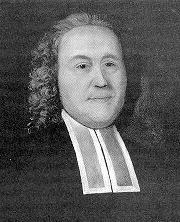
It is a great comfort that the arguments of this generation’s Gilbert Tennent are soundly met with the cool and level-headed reasoning of a contemporary John Thomson.
LikeLike
Ah, yes, those patriarchal brothers Bayly, once again putting the “men†in “mental.â€
LikeLike
Once again the Baylys can sleep warm at night, having warmly wrapped themselves in the blanket of their own self-importance.
LikeLike
Jeremiah 31, Psalm 137, and Deuteronomy 12 all reference the slaughter of children (more or less obliquely and Psalm 137 is approving so I wonder if it really counts) but none of them quite captures the horror of what our society has permitted. It would seem we have replaced Moloch with Choice.
I completely agree, of course, with your assessment of the Bayly situation; there’s nothing in Scripture to suggest we are bound to loudly protest every wrongdoing going on in our society. Would we have any time to evangelize if we were constantly prophesying doom in the streets?
LikeLike
Brothers,
I am new to both blogs so excuse me for not knowing the history or the entirety of what appears to be a continuing discussion. However, I remember an excellent sermon by Dr. John R. DeWitt on National Judgment (actually part of a series on Judgment – of which I have rarely heard preached) which I will venture to humbly submit as an example to pour some further light into the discussion. As you may know Dr. John R. DeWitt is a former professor of systematic theology at RTS and translator of Ridderbos’ “Paul, an outline of his theology.” I take it that all would agree that when the Scripture speaks then God’s servants must lift up their voices to God’s people and to the nations for God surely visits judgments upon the nations.
http://www.sermonaudio.com/sermoninfo.asp?SID=12204201359
LikeLike
Can you imagine how different the book of Acts would look if, instead of building churches and appointing elders, Paul spent more of his time publicly rebuking the evils of the Roman Empire? I mean, he could have organized boycotts of the gladiators, called for an end to the unjust wars of the Romans, called for an end of slavery (many of which were used by the men for sexual gratification) and so on.
But why didn’t Paul do or encourage that? Could it be that those things would have been distractions from the preaching of the Gospel?
LikeLike
Of course the Bayly bros. are factually inaccurate as to their claim about no 2Ker writting or blogging on abortion (their example). David VanDrunen, for starters, speaks out against it in his recent book on Bioethics and the Christian Life. And, I do disagree with them that the only theologians worth listening to are those who publicly rail against abortion. If that were so, I’d lose out on reading a lot of good and wise Christian thinkers; and, I wouldn’t be able to read Dr. Hart’s books either (now that was low, funny, but low 🙂
Anyway, I’m curious about this claim by Hart:
“If the Bible doesn’t speak to a matter, then Christians have liberty.”
On some interpretations of this, this seems obviously false. But let me narrow in on a particular point: does Hart think Christian women have Christian liberty to abort their children?
Now, the Bible does speak to murder, but does it speak to abortion? Does it speak to when life begins? It’s not clear that it does. And so is the conclusion of this view on Christian liberty (this broad-brushed view isn’t the confessions’, as a reading of it clearly indicates) that Christian women are at Christian liberty to have abortions?
LikeLike
And, of course, the confession says those those who practice sin under the pretense of Christian liberty, destroy that liberty. So the prior question to be asked before annointing sundry practices with the wand of liberty, is whether said practice is sinful? But this takes us right back to the beginning of 2K/1K debates and debates about what the Bible speaks to etc.
LikeLike
I wonder why my September 8, 2010 at 12:47 pm comment is “awaiting moderation.” Here it is again:
Of course the Bayly bros. are factually inaccurate as to their claim about no 2Ker writting or blogging on abortion (their example). David VanDrunen, for starters, speaks out against it in his recent book on Bioethics and the Christian Life. And, I do disagree with them that the only theologians worth listening to are those who publicly rail against abortion. If that were so, I’d lose out on reading a lot of good and wise Christian thinkers; and, I wouldn’t be able to read Dr. Hart’s books either (now that was low, funny, but low
Anyway, I’m curious about this claim by Hart:
“If the Bible doesn’t speak to a matter, then Christians have liberty.â€
On some interpretations of this, this seems obviously false. But let me narrow in on a particular point: does Hart think Christian women have Christian liberty to abort their children?
Now, the Bible does speak to murder, but does it speak to abortion? Does it speak to when life begins? It’s not clear that it does. And so is the conclusion of this view on Christian liberty (this broad-brushed view isn’t the confessions’, as a reading of it clearly indicates) that Christian women are at Christian liberty to have abortions?
LikeLike
Anyway, I’m curious about this claim by Hart:
“If the Bible doesn’t speak to a matter, then Christians have liberty.â€
On some interpretations of this, this seems obviously false. But let me narrow in on a particular point: does Hart think Christian women have Christian liberty to abort their children?
Now, the Bible does speak to murder, but does it speak to abortion? Does it speak to when life begins? It’s not clear that it does. And so is the conclusion of this view on Christian liberty (this broad-brushed view isn’t the confessions’, as a reading of it clearly indicates) that Christian women are at Christian liberty to have abortions?
LikeLike
Why is this post getting moderated? September 9, 2010 at 12:00 pm. Can I get an explanation. Hart tried to say moderating is like umpiring, but clearly he hasn’t watched enough baseball to note that there are rules. An ump can call a ball that hit a batter a strike, for instance.
Hart says: “If the Bible doesn’t speak to a matter, then Christians have liberty.â€
On some interpretations of this, this seems obviously false. But let me narrow in on a particular point: does Hart think Christian women have Christian liberty to abort their children?
Now, the Bible does speak to murder, but does it speak to abortion? Does it speak to when life begins? It’s not clear that it does. And so is the conclusion of this view on Christian liberty (this broad-brushed view isn’t the confessions’, as a reading of it clearly indicates) that Christian women are at Christian liberty to have abortions?
LikeLike
Paul,
Find me one 2k advocate who would use it to actually advocate or permit abortion. DVD is a prime example of a 2k proponent who uses NL and bio-ethical argumentation against abortion. Abortion is the violation of the 6th commandment, and any female church member who used 2k arguments to justify an abortion would and should be brought up for church discipline. It’s called “good and necessary consequence” dude. Nobody who is Reformed can shake that off.
LikeLike
Matt: “Can you imagine how different the book of Acts would look if, instead of building churches and appointing elders, Paul spent more of his time publicly rebuking the evils of the Roman Empire? I mean, he could have organized boycotts of the gladiators, called for an end to the unjust wars of the Romans, called for an end of slavery (many of which were used by the men for sexual gratification) and so on.”
Matt, I’m no fan of the Bayls and am a strong 2K advocate — the church qua church should stay out of politics or public policy prescriptions, and should concentrate on gospel proclamation, not discourses on the evils of culture. But I wonder how persuasive the argument you make really is as a norm for individual Christian non-involvement with cultural/political engagement. I don’t use it in support of a 2K position as it seems an argument from silence, which I was always taught was ranked among the formal fallacies in logic and a poor stragegy in rhetoric. I gather the argument is that because Paul and the apostles focused exclusively on gospel proclamation rather than cultural engagement, that is normative for all Christians in all times that Christians should exclusively concentrate on gospel proclamation and say or do nothing about the culture.
How far does one carry that argument? Does this rule out going to a job? The apostles and disciples focused exclusively on gospel proclamation, not earning a living by pursuing a secular calling. Therefore, all Christians should quit their jobs and be street preachers. I dont’ think that follows either. Some activities were unique to the apostolic period, and building a new church is unique and surely required focused, undistracted effort.
For the argument from silence to have validity, I think you’d have to show that the cirumstances of the apostles/disciples and modern Christians are substantially equivalent in all material respects. That is, that modern Christians are establishing the church for the first time at the dawn of a new epoch in redemptive history, within the rubric of a society that had non-participatory government that was hostile to the faith. Missionaries in a foregin land of which they are not citizens may be a rough approximation. Most modern American Christians, however, are two thousand years removed from the dawn of the last days, and in the U.S. are citizens of a democratic republic engaged in self-rule, within a culture that encourages citizen input into affairs of government.
Finally, isn’t the appeal to apostolic example as a ground of Christian non-involvement with the cultural and political order a false dichotomy? Suggesting that individual Christians, in their capacity as citizens, can’t try to imprive the political and cultural orders while also worshiping and serving the Lord. If Christians can walk and chew gum, why can’t they worship and also speak out against abortion, or gay marriage, or poverty or injustice?
LikeLike
Jed,
I am not suggesting that there is one 2K advocate that would “use it to actually advocate or permit abortion” (however, we’ll leave aside that actually many young, fire-breathing 2Kers, of the sort I knew at WSCAL, voted for embryonic stem cell research and also question early stage abortions). You seem to not get my comment. First, I myself pointed out that the Bayly’s were factually wrong as DVD argues against abortion —- but you wouldn’t know that because, for some reason, the posts of mine that included that comment were not allowed to be posted but were “awaiting moderation” for about 24 hours.
Anyway, here’s my argument:
I took DGH’s claim that,
[1] “If the Bible doesn’t speak to a matter, then Christians have liberty.â€
Okay, so let’s derive some conclusions from this:
[2] The Bible doesn’t speak to the matter of abortion.
[C] Therefore, Christians have liberty to have abortions.
Now, [1] is Hart’s premise, and so we’ll assume that it is true. [2] seems correct to me, and so [C] follows necessarily from [1] and [2]. That is, if [1] and [2] are true, then it is not possible for [C] to be false.
Okay, so maybe you’ll deny [2], but you’d need some hidden premises, let’s make them explicit:
[A1] The Bible speaks to murder and says it is not lawful.
[A2] Abortion unlawfully takes the life of a civilly innocent human being at the fetal stage.
[A3] Unlawfully taking the life of civilly innocent human beings is murder.
[A4] Abortion is murder.
Then you can get, with [1] above, this conclusion:
[C*] Therefore, Christians are not at liberty to have abortions.
But here [A2] assumes that human fetuses at any stage are human beings or human persons. So let’s make this assumption explicit:
[A2A] Human fetuses at any stage are human beings and/or human persons.
Now, the question is, does the Bible speak to [A2A]? It is not clear that it does. Given Hart’s [1], then, I am wondering how he can consistently maintain that abortions are not a matter of Christian liberty given that [1] appears to rule out any dogmatic, “thus sayeth,” annointing of [A2A].
So, the question is over the descriptive question, i.e., describing what Hart believes, it is over the logical question of whether his descriptive beliefs are jointly consistent.
So, where am I off?
LikeLike
Dr. Hart,
Since you clearly don’t believe in the Bible (and definitely not the OT). How about some Shakespeare?
“It is the cowish terror of his spirit
That dares not undertake; he’ll not feel wrongs
Which tie him to an answer. “
LikeLike
CVD, the analogy is that both contemporary and early Christians live in a society where their faith is not established. They lived before Constantine, we live after the Constantinian order. So what do we do then? Make the empire Christian? Or go about our lives and seek the welfare of the city?
LikeLike
Clint, I do believe the Bible. I do believe that I should not kill. I do not believe that I need to obey the Baylys who tell me I am unfaithful if I do not stand out on the corner and shout “don’t kill.” Even Bill Shakespeare understood that difference.
LikeLike
Paul, I can see you’re trying very hard. But to my 2k mind the question you pose is simple: it is one thing to say what Christian (Reformed, that is: remember, jurisdiction, jurisdiction, and jurisdiction) Jane may or mayn’t do with her pregnancy, quite another to say how she may vote or even make legislation. So, the answer is that while, yes, she has liberty to vote/make legislation as she sees fit, no, she is not at liberty to have an abortion. The difference has to do with what one does in his/her one body (and mind, for that matter) and how one participates in polity, where one is employed, etc.
LikeLike
Yeah, Zrim, well, so you say. But Dr. Hart claimed that liberty is had on matters the Bible or Confession don’t speak about. I’m just wondering where the scientific treatise on when life begins or the metaphysical analysis of personhood is in the Bible so that concepti fit in.
And, as before, you lost the argument about whether she may vote to allow people to murder other people. It’s odd that you think liberty allows one to vote to make murder legal. But whatevs.
LikeLike
And, as before, you lost the argument about whether she may vote to allow people to murder other people. It’s odd that you think liberty allows one to vote to make murder legal. But whatevs.
Yes, Paul, and I think liberty allows you to vote to castrate states’ rights to govern themselves. But the burden of your voting legalism is enforcement: how do you plan on making sure people vote the way you think they should—er, I mean making sure they vote the way heaven thinks they should? Is it to adopt a Romanist ecclesiology where bread and wine are held closer to the chest if word gets out that they don’t have the church’s politics? What else is on your list of legislative legalisms, or is abortion the only set of politics that gets to play by a different set of rules? Funny how legislative legalism has so much in common with substance use legalism.
LikeLike
Zrim, elders at churches also don’t know if their members are watching porn in the basements, yet that doesn’t mean that they can’t say it’s wrong to watch porn in your basement, and issuing such statements doesn’t require adopting Romanist ecclesiology. So I fail to see the work your response is doing.
LikeLike
Paul, consuming sexually immoral material is something one does in his/her own body, so it’s fair game for admonishment/discipline. But voting is not something immoral done in one’s own body, it’s the way someone expresses his/her views on how public life should be ordered. If you want voting to be fair game then you have quite a burden in front of you since there are myriad of issues with which to contend. Where do you draw the line? Should someone be disciplined for voting no on Prop. 8? What about voting to make medical marijuana legal? Do school millages count?
Or don’t you think there is a difference between persecuting an ideology and admonishing/disciplining a Christian?
LikeLike
Zrim, you didn’t make that distinction earlier, I can only go with what you give me. In any event, it seems to me that to claim it is impossible to do something immoral when one votes is just to beg the very question. Now, I appreciate the digressions (and I did vote to legalize medical marijuana, if you must know), but the question at hand is over voting for abortion. Once we settle that question, I’d be happy to discuss the other ones. But since you said one “may not” claim that it is immoral for Christian Jane to vote for abortion, then I’d like to see a defense of that proposition. Here’s my position: It is immoral for a Christian to vote that some civilly innocent members of society can be murdered. Now, since there’s no morally relevant distinction between a human person that is a conceptus and a human person that is a teenager, your position is that a Christian may vote to murder civilly innocent teenagers (hey, greg Bahnsen would probably give you three cheers;-) Are you seriously suggesting that a Christian may vote this way, and that a pastor may not condemn that vote? If so, I’d sure love to see an argument for that position.
LikeLike
Paul, if your notion of voting for abortion — “to vote that some civilly innocent members of society can be murdered” — were ever on a ballot it would lose in the U.S. and likely anywhere else. I know your worldview is black and white, but the politics of abortion are not so. Even the pro-choice folks do not think they are murdering civilly innocent members of society.
So what imaginary worldview corner are you trying to back us into now?
LikeLike
Paul, you’re going the usual and quite unfortunate route most pro-lifers seem to go, which is to define the set of politics one doesn’t agree with (and I oppose choice politics, too) in its worst possible light. I think it far better to charitably understand another point of view here and still oppose it. And it cuts both ways on this particular issue. You know as well as I do what it’s like to oppose choice politics and be interpreted to favor the oppression of women, etc., etc.
Yours, then, is the flipside of someone saying, “So, want to tell me why you favor misogynist politics that oppress women and their individual right to privacy? Are you seriously suggesting that a Christian may vote this way, and that a pastor may not condemn that vote?” Now, perhaps you’ll say that it’s illogical to morally oppose abortion but favor politics that protect choice, a la John Kerry and crew. And I’ll quite agree with you since I both morally and politically oppose abortion. But since when was it a sin to be illogical? Oh, wait, I forgot, you’re the logician. But here’s where your slavishness to logic misfires again and you, like our Christian choice friends, end up persecuting an ideology instead of admonishing/disciplining a believer.
And, so I’m curious: if I favor the overturning of Roe, because that actually means returning to states their rights to govern themselves (and not to federally outlaw abortion in every nook and cranny of the union like most pro-lifers seem to think), which would end up giving states rights to legalize abortion, and since plenty would, does this put me in your ecclesiastical cross-hairs, along with the choicers?
LikeLike
DGH,
That’s not what we’re talking about. As I’ve read plenty of the most contemporary and scholarly books on abortion, pro and con, I know well that (most) pro choicers don’t think it is a human being, but Zrim does. And so Zrim must believe that a vote “for” abortion is a vote “for” murdering a civilly innocent member of society.
As for my worldview being black and white, please familiarize yourself with the facts:
http://aporeticchristianity.wordpress.com/2010/09/10/why-aporetic-christianity/
Zrim,
It is unhelpful for you to try to poison the well or bring up red herrings. This was your claim:
“what Christian (Reformed, that is: remember, jurisdiction, jurisdiction, and jurisdiction) Jane may or mayn’t do with her pregnancy, quite another to say how she may vote or even make legislation. So, the answer is that while, yes, she has liberty to vote/make legislation as she sees fit, no, she is not at liberty to have an abortion.”
And so I want to see if you believe it. Suppose abortion was made a single issue after it had become a state’s right matter. So we have a proposition: “Abortion will be legal or illedgal in our state.” Is it your position that a Christian “may” for “legal” and the church, if they knew, could say nothing by way of moral condemnation?
I’d appreciate an answer to that question.
“But since when was it a sin to be illogical?”
Apart from your continued shots about my “slavishness to logic” (where’s Jed sticking up for me?), I can present a very strong case supported by older Reformers you’d agree with, for this position. But we’ll leave that for a later discussion.
LikeLike
Zrim (and Paul): Paul, I can see you’re trying very hard. But to my 2k mind the question you pose is simple: it is one thing to say what Christian (Reformed, that is: remember, jurisdiction, jurisdiction, and jurisdiction) Jane may or mayn’t do with her pregnancy, quite another to say how she may vote or even make legislation.
Aren’t there three things?
(1) Is abortion morally permissible?
(2) Should abortion be “safe, legal, and rare”?
(3) Is the fetus a person?
It seems to me that a Christian might not have freedom on (3); in which case, (2) might be constrained also.
LikeLike
And so I want to see if you believe it. Suppose abortion was made a single issue after it had become a state’s right matter. So we have a proposition: “Abortion will be legal or illedgal in our state.†Is it your position that a Christian “may†for “legal†and the church, if they knew, could say nothing by way of moral condemnation? I’d appreciate an answer to that question.
Paul, the grammer seems a little off here. Did you mean to write, “Is it your position that a Christian ‘may’ VOTE for ‘legal’ and the church, if they knew, could say nothing by way of moral condemnation?”
If so, then my answer is yes.
Now how about an answer to my query: if I voted to make it possible for states to decide in a way that I oppose, which is to say, to legalize abortion, am I subject to moral condemnation? I am asking because I want to know how far you want to push the moralizing of politics. I assume you want our legalizer friend to be subject to moral condemnation because h/she has just voted to “legalize murder” and is essentially no different from someone who actually commits murder with his/her own body. But am I any different since I am, so to speak, one rung removed from our legalizer friend? I mean, I’m fine and good with states deciding, even though I know many states would just continue the current legislation which you deem “legalized murder.” Is my “fine and good” outlook just as morally culpable? It seems to me that, by your logic, it really should be.
LikeLike
Jeff, it seems to me that you’re asking if there is a moral dimsension the political question of abortion. Of course there is. But there is a moral dimsension to every political question. So if we’re going to make the moral dimension swallow up the political question of abortion then don’t we have to do that for pretty much any other political question (like, say, immigration and war or tax rates)? If so, ok, but that seems pretty stupid, consistent but stupid. If not, then it seems to me we’re saying that this one political issue gets to play by different rules, which just seems arbitrary and slanted in a way that favor things unfairly for those of us who politically oppose abortion.
LikeLike
Zrim,
“Paul, the grammer seems a little off here. Did you mean to write, “Is it your position that a Christian ‘may’ VOTE for ‘legal’ and the church, if they knew, could say nothing by way of moral condemnation?â€
Yes, I skipped over the word vote. So what’s your answer? Here it is:
“If so, then my answer is yes.
Right, so my initial argument was apropos. You think that a Christian can vote to make it leagal to murder civily innocent members of a society. Since age is morally irrelevant to murder (just like race, sex, and physical ability are), then your position logically implies that you think Christian Jane may also vote to, say, murder Sophia, the cutest 13 yr. old girl in a town, if the town finds her to be an “inconvenience.” Sure, Jane may not murder Sophia, but she can vote for Henry, the local butcher, to do it. That is the logical implication of your argument. I take it to be so obviously false that it merits nothing more for a refutation than to repeat it. But I’m willing to be convinced otherwise.
As to your question, I notice that you have a problem when pro-lifers want to “take it far,” but you want to see how far I take a view while not recognizing the double standard. Moreover, arguments from obvious, paradigm cases are legitimate ways to analyze topics. I know when a pile of sand is a heap, and when it is not. Can I tell you exactly where? No. You can take it away one grain at a time to see “how far I go,” but that doesn’t change the fact that I do know when a heap of sand is a heap and when it isn’t.
But for your questions,
“if I voted to make it possible for states to decide in a way that I oppose, which is to say, to legalize abortion, am I subject to moral condemnation?
To the extent I can make sense of this, I’d say no.
So if we’re going to make the moral dimension swallow up the political question of abortion then don’t we have to do that for pretty much any other political question (like, say, immigration and war or tax rates)?
Let’s look at immigration laws (for some ideas what the Bible does say, see James K. Hoffmeier’s The Immigration Crisis: Immigrants, Aliens, and the Bible; and certainly we can agree that in some way “love thy neighbor” would apply here, and it seems clear that some positions would violate this principle, but let’s not digress too far). Now, let’s assume, ad arguendo, that some takes on this issue would be immoral and some moral. That position, which I hold, is logically consistent with this position: the issue is too detailed and the facts are too many that we cannot make any authoritative declarations as of yet (this assumes a basic presupposition in ethical argumentation that ethical arguments have a normative premise and a factual premise; I’m suggesting we are still debating the factual premise). While we may be able to say some things about moral and immoral positions (at the extreme, paradigm cases), the sitation is just too complicated and so the jury is still out.
However, this isn’t analagous to the abortion situation. The factual premise is the humanity of the child. If you want to claim that that is really an open and debatable premise within conservative/traditional/confessional Christian theism (ahem, Dr. Hart), like I did with immigration, then you wouldn’t be able to say that Christian Jane may not have an abortion.
So I not only find your answer to my question about as obviously false as anything (but I’d be willing to hear reasons to the contrary), I find your attempt at a defeater (through your questions) to be insufficient to ground rational opposition to my initial argument and flawed for the reasons I suggested (though I didn’t go into detail, I can as the discussion progresses).
-Paul
P.S.
But here’s another question: what would you think if Christians held the political position of anarchy and voted for a man who said he would overthrough the government if he were to get elected, defy the constitution, and murder all office holders who stood in his way?
Here’s another one: what would you say if a Christian voted that the government could make the preaching of the word illegal, lock up all pastors, shut down all churches, and burn all bibles?
I am asking because I want to know how far you want to push the amoralizing of politics.
LikeLike
Paul, I get it. The issue is to corner the other guy and make him submit to your worldview. Loving and Christlike. But it’s a worldview. How can we object?
LikeLike
Darryl, no it’s not. But you keep misrepresenting me if that’s what helps you sleep at night. Personally, I like a glass of Duckhorn Merlot; but to each his own.
http://www.duckhorn.com/duckhorndnn/Webstore/tabid/814/CategoryID/47/Default.aspx
LikeLike
Paul, “to each his own”? Sounds awfully pro-choice.
LikeLike
I hope you don’t mind me chiming in here and making a few simple observations.
First, I don’t think anyone here would favor actively voting for something as heinous as abortion on demand. That said, how often do we actually get to vote on such an issue without various other things being tied to it? If a Christian entered a voting booth and there was a simple yes/no option before him, I’m pretty sure he’d know what to do.
Second, it’s not really the minister’s duty to tell his congregation how to vote. His job is to expound the Scriptures clearly and, when appropriate, make application. The validity/usefulness of the occasional topical sermon aside, it’s not often that “issues” as we understand them today are addressed in Scripture. The beauty of God’s word is that it’s broadly applicable to all things in all places at all times, and not tied to a particular cultural milieu. I say let the work of the Holy Spirit in the individual Christian’s life inform his decision-making.
Third, not that I want to over-complicate the conversation, but I’ve observed the tendency among Christians today to harp on some ‘conservative’ issues but completely ignore others that are just as valid- Jason Stellman points out the thousands of deaths caused by our military over the past decades. It seems narrow-minded and sort of pointless to argue about one thing and actively support a foreign policy (which most ‘evangelicals’ do) that invariably includes the destruction of whole communities and the deaths of thousands of people who are just as undeserving as the children yet unborn.
My three cents for what it’s worth.
LikeLike
Paul, it seems to me your whole argument (i.e. that voting can be construed as a personally moral act) depends on your construing of terms in the most uncharitable and utterly ridiculous way possible. Let Robert Bork weigh in:
“I oppose abortion. But an amazing number of people thought that I would outlaw abortion. They didn’t understand that not only did I have no desire to do that, but I had no power to do it. If you overrule Roe v. Wade, abortion does not become illegal. State legislatures take on the subject. The abortion issue has produced divisions and bitterness in our politics that countries don’t have where abortion is decided by legislatures. And both sides go home, after a compromise, and attempt to try again next year. And as a result, it’s not nearly the explosive issue as it is here where the court has grabbed it and taken it away from the voters.â€
Judge Robert Bork in Newsweek, Jun 20, 2009 (from the magazine issue dated Jun 29, 2009).
The quote is good for a variety of things, but here it is helpful to indicate your rhetoric is precisely what this conservative conservative judge is getting at. Bluntly, you (and your choice counterparts) turn the conversation up to impossible screed level where people have to decide between being on the right side of righteousness, or for the devil. How in thee heck does anyone actually get anywhere with those sorts of parameters set? That’s a recipe for the explosiveness, bitterness and division to which Bork refers. It’s the civil version of Tenant telling the confessionalists they were unregenerate (or the Bayly’s saying Hart is unfaithful). The civil bitterness simply gets translated into cultic fear and loathing.
I know, I know, call the logic calvary to save us. But until you rachet down the incendiary stuff all your logic does is prop up insanity.
LikeLike
Darryl,
I know you are but what am I?
Zrim
Predictably, you’re unable to follow your own argument. First, nothing I said was “utterly ridiculous.” Indeed, we can point to history and see worse things happening. Nothing I said was logically impossible. Eveything I said could obtain here. If you’re going to say that it is sometimes a sin to cast a vote a certain way, but other times it isn’t, then you’ve conceeded my point.
Secondly, I showed you the logical implication of your position. You keep complaining about being called anti-rational, but you’re not doing yourself any favors. If one rejects the logical implications of ones statements, one is anti-rational, anti-intellectual. Furthermore, that which implies that which is false, is itself false. Here’s a basic example: If I said that [1] all men are idiots, and if we grant that [2] Zrim is a man, then this implies that [3] Zrim is an idiot. But [3] is clearly false, since Zrim is a brilliant, wise, and intelligent man. This means that [1] is false (by the rule that that which implies that which is false is itself false).
Thirdly, Bork’s comment is irrelevant to what I’ve been arguing. First, justice Bork is not pastor Bork. So you’ve got a hugely relevant disanalogy (and arguments from analogy must not have relevant portions disanalagous). Second, so are you admitting that in the cases I gave it would be immoral to vote for abortion? But my analogy presented a very real situation. Here it is again: Suppose that abortion became a states’ rights issue. This is very conceivable, not “ridiculous” or “screedish.” Now, suppose that a state, call it X, put forth a law to be voted on. The law would make abortion illegal, and any caught doing it or paying someone to do it would be tried by similar laws as murder and murder for hire (both of which can receive the same penality). This scenario is likewise easy to conceive. nothing “ridiculous” about it. So, suppose that Christian Jane resided in X. Is it your position that Is it your position that Christian Jane “may†vote for “keep it legal†and the church, if they knew, could say nothing by way of moral condemnation? I’d appreciate an answer to that question. You’ll note that this question avoids any charge of “utterly ridiculous and uncharitable construals.”
Finally, of course, I have no “incendiary stuff” in my posts. I have been calm and collected. No name calling. It seems, though, that since you have nothing substantive to offer by way of reply to my arguments, all you can do is poison the well by making claims about my points or myself such as: “propping up insanity,” “utterly ridiculous,” “call the logic calvery,” “uncharitable,” “rhetoric,” “impossible screed level,” “slavishness to logic,” a recipe for explosiveness, bitterness and division” etc.
I am asking my questions because I want to apply it to the absolutist 2K statements you make. I think there will be some inconsistency if you answer my questions with the obvious right answer, but that will create tension for your particular 2K view. Since 2K is supposed to be normative and covering any and all christ/culture, church/state, et. issues, then I get to ask the kind of questions I am. People did this with Theonomy, Zrim. They asked theonomists “utterly ridiculous” questions. Questions that had nothing to do with the particular, accidental, and contingent facts of the day. However, the Theonomists made absolutist, normative, all-times-for-all-peoples type claims, and so the “utterly ridiculous” questions the WSCAl guys, and others, asked them was apropos, and everyone knew it.
LikeLike
Evan,
“First, I don’t think anyone here would favor actively voting for something as heinous as abortion on demand.”
Zrim wouldn’t “favor” it, but he says the church could say nothing to a church member who did vote for abortion on demand. Read his answer to my question.
“That said, how often do we actually get to vote on such an issue without various other things being tied to it?”
That’s irrelevant.
“If a Christian entered a voting booth and there was a simple yes/no option before him, I’m pretty sure he’d know what to do.”
That’s factually inaccurate. Not only are there plenty of vocal Christians who would vote to keep it legal, I personally know more than a few 2Kers (WSCAL seminary students) who would and who said they would.
“Second, it’s not really the minister’s duty to tell his congregation how to vote.”
If that vote did come up on the ballot, I sure hope he would, but the question is what to do if it was found out that a member did vote for some people to murder other people.
“His job is to expound the Scriptures clearly and, when appropriate, make application. The validity/usefulness of the occasional topical sermon aside, it’s not often that “issues†as we understand them today are addressed in Scripture.”
Here’s the ironic thing. At this blog with have these proud “Confessionalists,” but they are throwing their Confession out the window on this one. So, here’s my argument for why a Reformed pastor may morally condemn any who would vote for abortion:
**********
WLC
Q. 134. Which is the sixth commandment?
A. The sixth commandment is, Thou shalt not kill.
Q. 135. What are the duties required in the sixth commandment?
A. The duties required in the sixth commandment are, all careful studies, and lawful endeavors, to preserve the life of ourselves and others by resisting all thoughts and purposes, subduing all passions, and avoiding all occasions, temptations, and practices, which tend to the unjust taking away the life of any; by just defense thereof against violence, patient bearing of the hand of God, quietness of mind, cheerfulness of spirit; a sober use of meat, drink, physic, sleep, labor, and recreations; by charitable thoughts, love, compassion, meekness, gentleness, kindness; peaceable, mild and courteous speeches and behavior; forbearance, readiness to be reconciled, patient bearing and forgiving of injuries, and requiting good for evil; comforting and succoring the distressed, and protecting and defending the innocent.
Q. 136. What are the sins forbidden in the sixth commandment?
A. The sins forbidden in the sixth commandment are, all taking away the life of ourselves, or of others, except in case of public justice, lawful war, or necessary defense; the neglecting or withdrawing the lawful and necessary means of preservation of life; sinful anger, hatred, envy, desire of revenge; all excessive passions, distracting cares; immoderate use of meat, drink, labor, and recreations; provoking words, oppression, quarreling, striking, wounding, and whatsoever else tends to the destruction of the life of any.
**********
You would think this case is closed, but apparently the Confession is only appealed to and agreed with at those places “Confessionalists” find convenient.
Notice that, according to this question, it is not only the act of murdering that is condemned, pace Zrim.
If this isn’t clear to Zrim that voting for abortion is a sin, then, frankly, Zrim and I live in different worlds, and there’s no common ground, not even at the level of English language or the Confession.
LikeLike
Paul (aka Pau) has made assertions that are slanderous. His comments have been disapproved and will continue to be if he makes similar assertions about matters like voting.
LikeLike
Paul, since when does a secular vocation outweigh a sacred one? Careful, your medieval skirt is showing. But if a man is right then he’s right, and being a pastor instead of a judge doesn’t trump that. And I don’t know why you asked me the same question again, but yes, Christian Jane has a right to her politics. And what I am calling screedy and incendiary is your construal of choice politics to be “state sanctioned murder.” It’s just as screedy as saying fetus politics is “state sanctioned misogyny.” I don’t understand why you don’t get that. I have pretty conservative views on the political question of may she/mayn’t she (she mayn’t, not even when assaulted), but it’s incendiary, and not a little desperate, to simply cast your opponents as blood thirsty maniacs. I’m sure there are some in the choice ranks, just like there are some misogynists over here in anti-abortionville, but it’s just lame strawmanship to suggest the freaks are the norm.
Re your sixth commandment argument: is the same reasoning that makes certain politics the same as personal acts applied to the other commandments? In other words, what if I vote that men are free to publically worship false gods or ought not be civilly punished for taking his name in vain? Am I personally guilty of idolatry and blasphemy?
LikeLike
Ah, the Brothers Bayly strike again – always entertaining. Fail to preach against abortion and you’re a wolf in sheep’s clothing – classic! In their minds, speak out against abortion in the most graphic and uncharitable way, rail against homosexuality as the worst sin imaginable, slander all you like, but don’t you DARE even think about criticizing the theology of Doug Wilson; there are boundaries, you know…
LikeLike
Darryl, which comments are those? I believe you have publicly lied about me and I’d like you to give an account. You can email me if you’d like.
Zrim, it would be a waste of my time to comment to you because Hart deletes my posts. I’m sure you can understand it is a waste of my time.
LikeLike
Paul, you have made claims about my views and those of others that you either do not know or would need to explain regarding voting. This site will not be a place for you to air your insinuations, or to clarify them. I understand you have a blog. Have at it.
LikeLike
Darryl, what claims did I make about your views and those of others that I either do not know or would need to explain regarding voting? Since you deleted the post, and I didn’t save a copy, I can’t re-paste it. But from my memory, I did not say one word about your voting record. Can you please quote me to that effect?
LikeLike
Paul, I am not going to reproduce what I consider slander.
LikeLike
You could email me, or give us gist. I’m more than happy to recant and repent of slander. As it stands, without proof of your assertion you have slandered me; and you’d need more than a quote too, you’d have to show it was slander (assuming I even know what you are talking about). Besides that, have you noticed all the “slanderous” remarks you have made of my position, what I believe (which is falsified by the public evidence of what I’ve written), and what I think??? You have repeatedly said that I believe this or that absurd and ridiculous thing, yet you didn’t censor yourself. But whatever. Why should you treat me with any fairness or respect, I’m just a peon.
LikeLike
In any event, Darryl, even though it appears we are pretty far apart, I very much appreciated your books A Secular Faith, Deconstructing Evangelicalism, The Lost Soul of American Protestantism, and Defending the Faith. I have read one of them more than once (and am in the process of re-reading a second), and I gave one of them a good rating on Amazon. I have also added your blog on my blog roll because, while I often disagree with you and think you could put matters more carefully, I think you have some very important things to say to the Reformed church in particular (and Christianity in general). Besides that, I hear we also attend the same church occasionaly, and you never know, I may end up taking the Lord’s Supper next to you one day 🙂
-Paul
P.S. I apologize for any slanderous remarks I may have made, though I don’t know what they were, it was not my intention to make any.
LikeLike
Paul, a difference exists between saying x is the implication of y’s view and saying that y holds x. Throughout the exchanges here, you have rarely made that distinction en route to trying to win the debate (and it seems vilify your opponent).
I’ll give you one example: you wrote that I was “pro-choice.” In the context of Baylys’ blogging that is at least inflammatory but because it is untrue it is slanderous.
LikeLike
DGH,
“Paul, a difference exists between saying x is the implication of y’s view and saying that y holds x. Throughout the exchanges here, you have rarely made that distinction en route to trying to win the debate (and it seems vilify your opponent).”
Which is a lie because I have actually made that claim many times. In fact, I made that very distinction in the post you deleted. I said Zrim had a position that was the “logical implication” of his view. You, on the other hand, have been the one to make that distinction. For example, you have said my worldview is that regeneration raises the IQ.
“I’ll give you one example: you wrote that I was “pro-choice.†In the context of Baylys’ blogging that is at least inflammatory but because it is untrue it is slanderous.”
I would like a quote, with reference. I do not believe I did this and the only way I would have is by mixing “choice” with “life,” an unintentional Freudian slip.
So far you have not substantiated your charges of slander, which is slanderous.
LikeLike
I mean you have been the one to *not* make that distinction.
LikeLike
Paul, if you don’t mind, I’d like to make sure my point doesn’t get too far buried.
Your contention seems to be that holding certain politics is tantamount to being personally guilty of certain sins. So, to have choice politics is the same as either performing with one’s own hands or having in one’s own body an actual (elective) abortion. If that’s true then what about having a political outlook that wants to make sure men and women are civilly free to publically worship false gods and practice idolatry, as in making sure Mormons and Catholics and Muslims remain unhampered in the public square, like me? Does this mean I am personally culpable for idolatry?
LikeLike
Hi Zrim,
With trepidation I respond since I keep getting posts held in moderation and it is a waste of my time. I will make a copy of this an email it to you as well, so as not to waste my time.
Thanks for the questions, let me answer them:
“Your contention seems to be that holding certain politics is tantamount to being personally guilty of certain sins.”
Well, we’ve been over this before, I can do it again for you if you’d like. This comment of yours is vague, and vagueness hurts the dialogue rather than helping it. Do you mean to say that there is no possible political viewpoint one could hold that would be personally guilty of sinning? Well that seems quite absurd. Indeed, I can give examples. And rather than show that they are not sinful, you simply call them “ridiculous.” But that’s the point. If you’re going to make the very austere claim that there is no conceivable political viewpoint one could hold that would be sinful, then I can think of many examples to the contrary. Even the Bible condemns certain political viewpoints. In the current dialectical context, I claim that holding the politics of choice is sinful. I backed that up with the Catechism which claims, by the way, that what it says on the moral law is applicable to all.
“So, to have choice politics is the same as either performing with one’s own hands or having in one’s own body an actual (elective) abortion.”
This is ambiguous. “Same” could be used in different senses, for example, numerical identity. But I wouldn’t claim this in that sense. But I believe that being pro-choice, articulating that view point, defending it, and seeking through political means to make sure that it remains a viable option for people, is a murderous activity. I appeal, again, to the Larger Catechism for this.
“If that’s true then what about having a political outlook that wants to make sure men and women are civilly free to publically worship false gods and practice idolatry, as in making sure Mormons and Catholics and Muslims remain unhampered in the public square, like me? Does this mean I am personally culpable for idolatry?”
Okay, here’s the problem with this argument. Let’s note the dialectical situation. I made a positive argument, from premises I took you to accept (i.e., the Confessional statements), and drew a conclusion that voting for abortion would be sinful and those who do so are subject to moral condemnation and possible discipline. Now, even 2Kers david Gadbois agrees, and I have the question out to Stellman as well. So this isn’t some weird “transformationalist” argument. You can call it “the Confessional argument against voting for abortion,” if you’d like.
In response to my positive argument, let’s note that you did not interact with it but instead asked a question. But John Frame offers helpful words here: “Note therefore that when you seek to refute someone’s position, it is never sufficient merely to set forth arguments for an alternative (and incompatible) view. . . .In such situations it is best, then, not only to argue an alternative view but also to refute the arguments that produced the view you are seeking to overthrow.”
Okay, so here’s your major problems, as I see them: (1) You have not demonstrated that the Catechism uses language that would seem to rule out voting for religious liberty; (2) I believe the Bible teaches and allows for religious liberty; (3) I believe the Confession teaches and allows for religious liberty, (4) The Confession does not say “whatsoever does not hinder the practice of false worship” is idolatry. It does say that “whatsoever else tends to the destruction of the life of any” is a violation of the 6th commandment. I take it as obvious that “voting that one person may kill a human fetus or concepti” is soemthing that “tends to the destruction of life,” and since the fetus or concepti is a living human being, it is an “any.” However, if you think that voting for abortion is logically consistent with not doing a “whatsoever tends to the destruction of the life of any,” then I’d love to hear that argument.
And here’s the biggest problem: This proposition is true: Either the Confessions teach that to vote for religious liberty for non-Christians in the public square is a violation of the 1st commandment, or it does not. So, which disjunct would you like to argue for? Notice that I have put you on the horns of a real dilemma. If you argue, which you’d need to to make your case, that the confession does teach that so voting would be sinful, then you’re sinful. If you argue that it does not, then you don’t have a defeater to my argument. That is, heads I win, tails you lose.
LikeLike
To all:
Notice that Darryl Hart used as as part of his evidence for his reasons for deleting my posts the claim that I do not distinguish between a person’s stated view that X, and my claims that their view “logically implies” that X. But this is false. I have made this distinction many times. Now, for the moment, this post of mine in this thread is visible: September 12, 2010 at 7:48 pm, and you can clearly see me claim that the argument I am offering is based off “logical implication.” I submit hart has made false allegations against me, and it at least appears that his beef isn’t with style, it’s with substance.
LikeLike
So, Paul, what you’re saying is that I have to answer my own question for me? I don’t know why this has to be so complicated. You asked me if someone could vote a certain way without being personally condemned. I said yes because I make a distinction between holding political views and committing personal behavior. You seem to say no because you don’t make that distinction. I ask you if you’d condemn me for holding the view that people should be civilly free to committ idolatry, and i don’t get a simple answer with a simple reason. Rather, you seem to say, “If you think the Bible condemns your political outlook then yes, you’re guilty.” Well, I don’t, so I guess I’m not.
As far as “are there any political viewpoints that can be morally condemned,” I don’t know. I go so far as to say that idolatry should be civilly protected (but ecclesiastically condemned). How much worse can things get than the civil protection of idolatry? But maybe here’s where you go back to your old saw and start suggesting things about Hiltler and Mao and whatever else strikes fear and loathing into the hearts of modern westerners. But I don’t think it’s a sin to wear a brown shirt and jackboots and carry a membership card to a dubious political organization; it is a sin to put a bullet in someone’s head.
LikeLike
Steve, no, I’m not saying that. I clearly answered your question, and with some detail. If you’re not going to read what I write just tell me. I thought you wanted an answer because you begged for one.
“You asked me if someone could vote a certain way without being personally condemned. I said yes because I make a distinction between holding political views and committing personal behavior.”
Um, Zrim, you need to do some of the work here too. I NEVER said anything about “holding a political view.” I said something about ACTING on the view, i.e., voting. To claim that a vote isn’t an action or a behavior is just weird.
“You seem to say no because you don’t make that distinction. I ask you if you’d condemn me for holding the view that people should be civilly free to committ idolatry, and i don’t get a simple answer with a simple reason.”
Zrim, I do make a distinction between someone believing something and keeping their belief to themselves and then acting on the belief. Voting to enact laws is in the second. It plays a causal role, Zrim.
Secondly, I CLEARLY implied that I would not hold you responsible for voting for religious freedom because I CLEARLY stated that I do not believe that either the Bible or the Confessions teach that we are to politically hinder people from free exercise/expression of their religion (within bounds, no Satanic sacrifices, for example). How could you not see that I in fact DID answer you? Are you not reading what I write?
LikeLike
Paul, agreed, I am thinking of holding a view and acting upon it to be synonymous. So when I say someone holds choice politics I am also assuming s/he is also acting upon them. While I am civilly opposed, I still don’t hold anything ecclesiastically against anyone for it. To my mind the proper arena to oppose someone civilly is the civil sphere (not very profound but apparently divisive to those who think being political is also being personal). To oppose them ecclesiastically is a form of religious bullying.
Glad I’m not condemned. Thanks for the simple answer (I confess, my eyes glaze over sometimes at your missives, so maybe I miss stuff). But it sounds like you are saying folks outside our jurisdiction may enjoy religious freedom, but folks within mayn’t enjoy political freedom. I am saying folks within mayn’t have personal or religious freedom, but they may have political freedom.
Are we done yet? This is starting to feel like Isner and Mahut at Wimbledon. I’m praying for a rain delay.
LikeLike
Steve Z.
“Paul, agreed, I am thinking of holding a view and acting upon it to be synonymous.”
That’s clearly false, though. There are all sorts of views that we may hold but not act on. Even a lingustic analysis should show you that “holding a view” and “acting on the view that you hold,” is not synomymous. So your argument rests upon a false premise. Indeed, your own view here is that Christian Jane may hold the view that abortion is acceptable, though she may’nt have one, i.e., act on her view.
“So when I say someone holds choice politics I am also assuming s/he is also acting upon them.”
That’s clearly a bad assumption. But apart from the assumption, this doesn’t do anything to show synonymity. It simply is to state that you believe that people act upon the basis of what they believe. But the act and the belief about the act are clearly different.
“While I am civilly opposed, I still don’t hold anything ecclesiastically against anyone for it.”
I’ve never once argued against what the descriptive content of your noetic structure is. I have just given arguments that suggest you’re belief is wrong.
“To my mind the proper arena to oppose someone civilly is the civil sphere (not very profound but apparently divisive to those who think being political is also being personal).”
I didn’t know you thought the Larger Catechism opposed some people’s civil beliefs in the civil sphere. Oh, sorry, you were begging the question.
“Glad I’m not condemned. Thanks for the simple answer (I confess, my eyes glaze over sometimes at your missives, so maybe I miss stuff).”
Missives? I love how you use rhetoric to poison the well.
“But it sounds like you are saying folks outside our jurisdiction may enjoy religious freedom, but folks within mayn’t enjoy political freedom.”
it only sounds like that because you’re being intellectually lazy. Indeed, I specified that both aren’t absolute. I don’t allow “those outside” to sacrifice humans if their religion allows itl; and I don’t allow “those inside” to further the murder of those who can’t debate Steve Zrimiec and defend themselves. I know it’s all balck and white for you, but I can allow and not allow based on the individual circumstances under question.
“I am saying folks within mayn’t have personal or religious freedom, but they may have political freedom.”
I know you are, which, per my argument, puts you at least at odds with the Confession.
“Are we done yet? This is starting to feel like Isner and Mahut at Wimbledon. I’m praying for a rain delay.”
Sure thing. You admit you don’t even read what I write. So why should I bother? You go ahead and have the last word.
LikeLike
Paul (aka Pau), I object to the substance but I also object to the insinuations which in a few cases were explicit. I think you got carried away with your own (attempts at) humor. I don’t mind the drive by snark from folks like Andrew and Benjamin. Yours has been relentless. I have let most of it go. But you crossed the lines with slander and in this forum it is better (in my judgment) not to go round on the merits of your assertions and perhaps invite further slander against people who may not be reading and so are unable to defend themselves, but simply to remove the comments.
No harm, no foul.
LikeLike
As long as it’s on the record that I deny your charge of slander, accuse you of making a false allegation, and point out the only “evidence” you provided was actually slander on your end since you made the false allegation that I don’t claim certain things are “logical implications” while I actually did, and you are the one who claimed I believed things (e.g., worldview is black and white; regeneration raises IQ, etc) instead of saying you thought they were logical implications.
And, yeah, I get carried away with humor. I’m Italian. That’s the way it goes.
LikeLike
But Paul, it’s not funny. Theonomists never are.
LikeLike
Darryl, certainly you don’t mean to call me a theonomost, since that would be slander. You must mean it’s a “logical implication” of what I say. Well, bully! But here’s the hard part: if you’re gonna claim something is a logical implication, then you’ll need to give us the derivation steps.
But if funny is what you’re after, I can do funy: Did you hear that the Baylys’s accused your boy Zrim of slander? Guess you strange bedfellows aint so far apart after all. Not funny? Fuhgeddaboudit.
LikeLike
Paul, if theonomy is not a sin, how is “theonomist” slander?
LikeLike
Tim, David, I mean Darryl, you’re a smart guy, you can figure it out.
LikeLike