
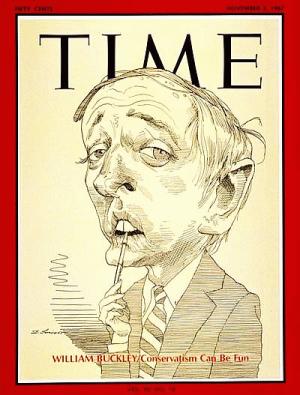
An earlier reference to Ross Douthat’s blog posts on gay marriage was intended to show that people in the mainstream secular media can hear an argument that is laced with Christian norms and not go running to the Supreme Court for an injunction to shut said arguer down. Douthat concluded his series of posts (defending his column in the New York Times) with a lengthy response to Andrew Sullivan, one of gay marriage’s most provocative and intelligent advocates.
The entire post is worth reading, just to see the wider implications of what might seem like a straightforwardly up or down moral matter — whether marriage is for one man and one woman or not. But he ends with an appeal to the nature of conservatism that Protestants who think of themselves as conservative should well consider. The reason has to do with the nature of conservatism, which is not about defending morality and opposing wickedness (the Bayly version) but rather concerns conserving as much as possible what humans (whether Christian or not) have learned and benefited from the past. Douthat writes:
The benefits of gay marriage, to the couples involved and to their families, are front-loaded and obvious, whereas any harm to the overall culture of marriage and childrearing in America will be diffuse and difficult to measure. I suspect that the formal shift away from any legal association between marriage and fertility will eventually lead to further declines in the marriage rate and a further rise in the out-of-wedlock birth rate (though not necessarily the divorce rate, because if few enough people are getting married to begin with, the resulting unions will presumably be somewhat more stable). But these shifts will probably happen anyway, to some extent, because of what straights have already made of marriage. Or maybe the institution’s long decline is already basically complete, and the formal recognition of gay unions may just ratify a new reality, rather than pushing us further toward a post-marital society. Either way, there won’t come a moment when the conservative argument, with all its talk about institutional definitions and marginal effects and the mysteries of culture, will be able to claim vindication against those who read it (as I know many of my readers do) as a last-ditch defense of bigotry.
But this is what conservatism is, in the end: The belief that there’s more to a flourishing society than just the claims of autonomous individuals, the conviction that existing prohibitions and taboos may have a purpose that escapes the liberal mind, the sense that cultural ideals can be as important to human affairs as constitutional rights. Marriage is the kind of institution that the conservative mind is supposed to treasure and defend: Complicated and mysterious; legal and cultural; political and pre-political; ancient and modern; half-evolved and half-created. And given its steady decline across the last few decades, it would be a poor conservatism that did not worry at the blithe confidence with which we’re about to redefine it.
 Old Life
So… why does conservatism beat biblicism?
LikeLike
Because Ross Douthat beats Tim Bayly.
LikeLike
I appreciate Douthat’s argument for at least two reasons.
First, it presents a positive vision of how a conservative sees and thinks about the world. In contrast, Christian transformationalists tend to think in more of a piecemeal fashion, focusing their attention in countering specific social practices that they perceive to be evil. In that way, Christian transformationalists seem to have little cohesive sense of what constitutes “the good life” aside from a shared antipathy toward certain persons or practices. Thus, it becomes difficult to distinguish transformationalism from run-of-the-mill populist resentment. Put another way, Marvin Olasky, despite his erudition, can’t seem to stop channeling Sarah Palin.
Second, Douthat’s argument rightly recognizes that the conservative vision runs counter to the exaltation of individual autonomy. I’m not sure that Christian transformationalists grasp this. In its most visible manifestations (e.g., Focus on the Family, World Magazine, Breakpoint), Christian transformationalism often looks a lot like the knee-jerk reaction of folks who are angry because their personal social practices are no longer viewed as normative (or preferable) within the broader culture. In a sense, transformationalists seem to be primarily interested in regaining their sense of personal social comfort within the world. They’re upset that they are no longer viewed as “good” by their social context, and want to take action to reclaim the stature they once had. In that sense, Christian transformationalism is a fairly individualistic enterprise; it is a social movement whose goal is restoring my personal individual sense of comfort and personal goodness within my social context.
That being said, I doubt that Douthat’s argument will have much effect in slowing certain trends within the culture. But at least he helps us understand what we’re losing. The shrill clamor of transformationalist rhetoric has no such effect. In fact, I feat that such rhetoric may induce folks to run in the opposite direction, if only to escape the noise.
And, yes, Paul, I recognize that you adhere to a “sophisticated” transformationalism that sets you apart and immunizes you from any criticism of the unsophisticated transformationalism espoused by the Baylys, Jim Dobson, Marvin Olasky, Chuck Colson, and the like. So, rest assured, I in no way intended my criticism above to include transformationalist elites, such as yourself and other folks whose “single Christian worldview” may be simultaneously normative and permissive on a particular question.
LikeLike
Bob,
I agree with your assessment of Douthat’s arguments and the plea for a conservative vision. I also agree that much of what you describe as “transformationalism” and its representaives often use rheotoric that is not gracious and can be offputting to nonbelievers. The rhetoric of “take back America” reveals a theology 2k advocates would dissent from.
I’m not so sure, however, that your diagnosis of their motives and psychological outlook is accurate in the case of each of the men you mention. I personally know some of the exemplars you mention, and they don’t fit this picture well at all. The ones I know are not angry about their personal social practices being regarded as not normative, and are not motivated by a desire to regain their personal social comfort. For the men I know, their actions do not spring from a desire to restore their personal individual sense of comfort and personal goodness within their social context. I know their motives, and they are not the ones you identify. I wonder if it may be more productive for us to focus on their theology, and the specific programmatic actions they take rather than speculate about their motives, which you can’t know.
What I suggest to them is that they have flawed premises, that the nation should be restored to the status of God’s special kingdom, and that the language of “take back America for Christ” is a confusion of the kingdoms, that the notion of turning churches into political aciton committees, violates the SOTC, and that more gracious speech in the public square would sell better than the condemnatory, judgmental rhetoric that scares unbelievers. With that said, I suspect that much of their specific, programmatic actions (e.g., some are very active in setting up Crisis Pregnancy Counseling Centers that help young women make good choices and help them place their babies with loving families) you would not find objectionable from a SOTC standpoint.
LikeLike
I like a lot of what Douthat says here. The sense of thinking holistically about human flourishing is lost in the public square. However, I do have an issue with what he says here:
“…cultural ideals can be as important to human affairs as constitutional rights…”
I realize he is speaking to the institute of marriage and family here which is fine and good, and I don’t wish to begrudge him the value of this cultural ideal since I treasure it as well. However we have had and continue to have cultural ideals that have been or currently are at odds with the Constitution; we had cultural ideals that nurtured slavery, that discriminated against race, gender and religion, and those which value human autonomy over human life in the case of abortion. If Douthat’s criteria for preserving the ideal of traditional family is that it runs concurrent with (or as his article implies – trumps) constitutional rights, he is dismissing the legal framework that has allowed our culture to flourish. It is the Constitution properly interpreted and applied that has enabled us to remedy the ills that some of our most horribly misguided ideals have incubated. We have a Constitution that reflects and shapes our cultural ideals, yet it rejects the outworkings of our ideals that do damage our highest ideals of life and liberty.
Carl Trueman said something interesting in a recent blog post over at Ref 21 (“Liberal Democracy in Endgame? 10/5/10 ), and I think it is pertinent to the gay marriage debate:
“[This] is the tragic dilemma Western democracies will increasingly face: can democratic freedoms be preserved in the face of groups who enjoy such freedoms while yet working to destroy them?
So while positively laying out a cohesive vision for the civic good that reflects our cherished ideals is laudable, it is a historically tenuous criteria to establish law upon. The insistence of traditional ideals on the right and accusations of bigotry on the left are important in civic discourse, but these are totally irrelevant to the fundamental question – do gays deserve equal rights and protection for freedom of expression, in this case to marry, under the law as any law abiding adult heteros?
The issue of gay marriage within the church is very different than it is with the issue of it in the culture at large. I don’t see many on the conservative side of the political spectrum which most Christians are, and I am most of the time, understand what is fundamentally at stake here. It isn’t that gay marriage is another step in the overall erosion of conservative (Judeo-Christian, or creational) values here – though this might be the case. What is fundamentally at stake is that in seeking to maintain a ban on these marriages we will abuse and undercut the very freedoms that allow us to be so vocal about the invalidity and cultural danger of gay marriage. Maybe it is because my 30+ years haven’t afforded me enough experience to observe this phenomena, but I have never personally seen more energy exerted by a political constituency to cut off their collective nose to spite their face. There has got to be a better way of opposing gay marriage and articulating the conservative vision (or in the case of churches articulating the Biblical vision) than removing the 1st and 9th Amendment from the Constitution and disregarding the freedoms that provide civic space for such visions. Unfortunately conservatives are just as likely to destroy this Republic as liberals are.
While conservatism still trumps biblicism, especially when it doesn’t conflate politics with the gospel, it still has some issues to deal with when it comes to the transection of cultural ideals and constitutional rights.
LikeLike
Jed, I am surprised that you would react to Douthat this way. He is making an argument very different from the one by most evangelicals on gay marriage. Like them, he is opposed to it. But unlike them he does not think it is simply a matter of the Bible or a function of whether the US is a Christian nation.
And he is also making a point that gay marriage proponents and opponents generally ignore. It is not simply a question of whether it is legal or illegal. It is a question of the kind of society you may have if you tinker with such a basic human institution. In other words, is rights basic or is the social nature of human beings basic. It sounds to me like you have made rights basic. If that’s true, then the game is lost. I also think that means the USA game is lost. The constitution was about more than rights.
LikeLike
It seems to me that the same could be said of the queen mother of social issues amongst biblicists: abortion. Not only do they seem to think Psalm 139 solves the question (nevermind that all Scripture is about Christ), but they agree with their opponents that the issue revolves around the legal question of individual rights, it’s just a matter of whose, when it seems to have much more to do with the social nature of human beings. Granted, that outlook doesn’t do much for those interested in cultural power one way or another, but maybe that’s also part of the point.
LikeLike
This is extremely weak tea. Another game of volleying vague speculations on externalities. Let’s put both the biblicism and culture-cism aside, please.
LikeLike
A more comprehensive human flourishing is certainly not to be reduced to moral order; moral ends and means, nor to a political or legal order, ends and means, least of all to setting them at odds or a failure to distinguish those two and other multiple dimensions of being human in all its coherent diversity. Conservatism (of whatever variety) doesn’t offer a comprehensive vision for human flourishing any more than a biblicism does.
LikeLike
Dr. Hart,
You are right in assessing my take on rights – I believe they are fundamental to our society, and the Constitution allows for the tension between rights and what is *best* for society. Both the right and the left struggle with squaring their visions for a better America while upholding equal rights. Maybe we see things differently here.
I also think that Douthat does avoid the common errors of evangelicals by grounding his argument in cultural ideals as opposed to some kind of biblical mandate. I think he fails on a common point though, and that is privileging certain ideals over the Constitution. Other than this issue, which is a big one as I see it, I generally agree with him.
I especially think he is on to something when he addresses the likelihood that gay marriage won’t actually have the radical impact on the state of marriage in America that some insist. If gay marriage is legalized, I doubt that there will be enough gays marrying to radically alter the fundamental structures of society. Gays are statistically the most promiscuous segment in society. This doesn’t transfer well into healthy monogamous marriages, and the likelihood of divorce along with the costliness of divorce might actually be a deterrent for many who contemplate marriage.
As for conservative ideals, these are best passed on through the family, and vocalized through example. The problem that many conservatives face is practicing what they preach. Conservative ideals are most likely to flourish in a free society. Legislating these ideals might damage them more than it helps them. The presence of competing visions of marriage does not necessitate the erosion of conservative ideals, and it can strengthen them when they understand what is at stake in the broader culture. I just think that it is a dangerous thing to start undermining rights, and the unintended consequences of this could be dire. So while I have more of an issue with biblicists such as the Baylys, I think that there is a fundamental weakness in Douthat’s argument for conservative ideals even if many of his other points are strong.
LikeLike
Why does conservatism beat biblicism?
Because everyone knows what conservatism is, whereas biblicism is just a Protestant swear-word.
Bogey-man beats epithet.
</snark>
LikeLike
dgh: “The entire post is worth reading, just to see the wider implications of what might seem like a straightforwardly up or down moral matter — whether marriage is for one man and one woman or not.”
You’re right in that it is not simply a moral matter. But concerning the moral matter, is it not straightforward whether marriage is for one man and one woman? And how do you know this?
dgh: “The reason has to do with the nature of conservatism, which is not about defending morality and opposing wickedness (the Bayly version) but rather concerns conserving as much as possible what humans (whether Christian or not) have learned and benefited from the past.”
But how do we know that what mankind considers “beneficial” is moral or wicked? Who gets to define “beneficial”? Can we know what is beneficial apart from Scripture?
Also, I agree with your understanding of conservativism, however, shouldn’t the Christian be defending morality and opposing wickedness? Perhaps not the Bayly version, but shouldn’t they do so nonetheless?
P.S. I like that Jeff Ceagle guy, but not in the wrong way, if you know what I mean. Such would be contrary to God’s revelation in Scripture, which is authoritative for marriage in the temporal/civil kingdom.
LikeLike
Jed,
“Rights” are just the name we give the casserole when it comes out of the oven fully cooked. The key question is what (vision for society) goes into it? I think Douthat is right to start with the broad vision.
Behind the “rights” talk that the Supreme Court uses, and legislatures borrow, is a philosophical ideal that is produced in the academic sausage factory. Historically it has been the democratic “liberal society,” but with some American modifications. The American version, in our jurisprudence, has been marked by a number of distinctives, one has been a strong component of the government as enforcer basic moral standards that rest on a shared consensus. The old philosophical ideal of the liberal society is almost completely revised today in the academy, more along a social democrat ideal as found in many European countries. Amon other things, the new ideal has fewer individual rights and more group rights, no morals enforcement of social morals, but much morals enforcement of perceived economic morality and equality, and a strong emphasis on enforcing the elite’s views about race, gender and class as lodestars in the analysis.
LikeLike
CVD,
I find it hard to disagree with any part of Douthat’s conservative vision as a desirable cultural norm. The question isn’t about the right vision if I understand you correctly (the casserole analogy was a bit confusing, and left me with a strange craving for rice, chicken, broccoli and chese), it is about what the constitution says about freedom of expression, which is where I assume the debate will center if it reaches the supreme court.
I believe cultural renewal is an organic resurgence of certain desirable values implicit in the culture (assuming we live in a free society). The better conservatives live out their vision and articulate it positively in the public square, which Douthat masterfully does, the more likely they are to see their vision spread. With the rise of gay rights, and marriage, conservatives have been in a defensive and negative posture from the get go, using legislation as their only recourse to fight against perceived threats to the conservative way of life. They have done this instead of learning how they might live peacefully in a diversifying culture.
As to the academy and Europe, it is going to be very difficult to reshape America into a full blown social democracy. There is a libertine impulse that lies in the heart of the American electorate that is lacking in European democracies. The current Administration has tried to push us in this direction, however, the fact that Democrats are fighting desperately for their political lives in the upcoming election demonstrates the American revulsion for socialist-leaning policy. I know that many elites in the academy and in positions of power and influence are trying to reshape America this way, but with so many centrists and conservatives aware and adverse to this, it is hard to envision a radical reshaping of our society from the top down. As I understand, most cultural movements are of the ground-swell variety as opposed to something implemented by a few at the top.
LikeLike
Bob was snide and sarcastic and snarky with me and Jeff and Jed didn’t condemn him! It really must have been my arguments and not my tone 😉
Anyway, er, Bob; I spoke of sophisticated worldviewism, not transformationalism. You know, of the kind VanDrunen endorses:
“As citizens of the spiritual kingdom they can make radical critiques of all theories, practices, and institutions that are not submissive to the redemptive lordship of Christ; but as citizens of the civil kingdom they can acknowledge the significant benefits that the state brings for earthly life, enjoy the amazing products of human culture, and seek common cause with non-Christians on a variety of social projects.”
Anyway, I like the kind of argument Douthat gives. What some of you 2kers can’t seem to wrap your mind around is that your 2k view of culture and politics and morality is a *Christian* view of those things that *depends on* a certain *metaphysical* view of the world (e.g., nature comes with teleology and normativity embeded in it so you can avoid is/ought fallacies, moral realism, the nature of man, etc). As Zrim now seems able to admit, you guys have a worldview and your 2k is a Christian view of the world. You base it on the Bible. You base the view that you don’t have to appeal to the Bible in all these civil matters, on the Bible.
LikeLike
Jed, if the Supreme Court held to an originalist view of the Constitution, “rights” would be simple to understand and apply. What has happened over the last 50 years or so, as you may know, is that a majority on the Court adopted the “living Constitution” theory of interpretation according to which, in Justice Scalia’s phrase, the Supreme Court is a an ongoing constitutinal convention that can pour any meaning into any vague phrase in the Constitution that suits their political and sociological views (usually center-left to far left). Now, “rights” are whatever fits the majority of the Justice’s view of society and culture. That’s why I say that a cultural view has to precede “rights.”
The gay marriage debate, about which you are concerned for equal rights to marry for gay persons, will be decided in the Court as a matter not of free expression but equal protection and due process, most likely.
I agree with you that it will be hard to implement the full social demoractic agenda in the U.S. as long as it’s up to popular vote. What the academics and left-leaning judges seek to do is reach the desired result through judicial fiat that they could never achieve by popular vote.
LikeLike
As Zrim now seems able to admit, you guys have a worldview and your 2k is a Christian view of the world. You base it on the Bible. You base the view that you don’t have to appeal to the Bible in all these civil matters, on the Bible.
Paul, that has always been admitted. 2k isn’t about denying worldviews, it’s about not making any particular worldview heaven’s view, as in “your thoughts and ways are not mine, my kingdom is not of this world,” etc. See what I did there?
LikeLike
Paul, you cite DVD for the view that Christian citizens can “seek common cause with non-Christians on a variety of social projects.†I think DVD cites the mainstream 2K view represented at WSC, the West Coast distributor for 2k theology. The faculty there generally acknowledges the appropriateness of many kinds of actions by individual Christian citizens that some on this blog decry as “activism,” “culture war,” and “transformationalism.”
With respect to Dr. Hart and Zrim, as you may be aware, their perspective on 2K is vastly more restrictive. They are critical of nearly all public political or cultural engagement by individual Christians, and they are quite pessimistic about the value of achieving any positive good in the civil sphere, as is apparent by their here. This version of 2K is close to the Mennonite 2k theology that espouses “quietism” and “nonresistance” (though Hart’s and Zrim’s theology is otherwise far from Mennonite, of course.) By contrast, with this very restrictive view of 2K, Dr. Michael Horton is quite positive about the degree to which individual Christians can and should be involved in cultural and political engagement as they become co-belligerants with secular or other religious individuals. He praises, for example, the work of William Wilberforce, after his conversion, in laying the political groundwork for abolishing the slave trade in Great Britain, and the work of civil rights activists.
I quite agree with you that a 2K view of culture and politics and morality is a “Christian view” in the sense that we derive it from a Christian reading of Scripture. It is a kind of worldview, though 2K advocates wince at that word due to its connotations.
LikeLike
Paul,
Your point is well taken, I don’t think I have ever said that 2k isn’t a worldview, because by definition it is, and it is derived from a certain interpretation of 1)the NT’s relative silence on politics and2) its primary concern with the advance of the spiritual kingdom. I know this is a very general way of putting things but generally we would argue that where scripture is silent, there is liberty. With the destruction of the Israelite kingdom in 586 BC, and the abrogation of the civil and ceremonial portions of the Law in the NT, we see no prescribed form of governance in the civil kingdom. There are a whole host of interpretive issues that undergird the 2k perspective.
The rub between 2k and worldview proponents happens when worldview-ers insist that there is such thing as a quintessential Christian worldview that covers all areas of life such as art, history, politics, and culture from a distinctly Christian framework. When you hear criticisms of worldview from a 2k perspective, I think it is against those who propose that there is one Christian worldview that is binding on all. Reformed 2kers tend to say that the Scripture is binding, and as the confessions and chatecisms are a faithful rendering of Scripture, these too are binding (though subject to Scripture and open to revision).
LikeLike
CVD,
I get that there are major problems with our judiciary system, as it has moved away from a its original bounds into an activist role that was not contemplated in the constitution.
I’ll assume you are correct about the criteria upon which gay marriage will be decided, but it doesn’t change the thrust of my argument. My concern is over the erosion of rights for the individual, and for groups (such as the religious one I belong to), this trumps my concern over cultural ideals. As I see it, the erosion of individual liberty, and freedom to assemble are crucial to the Republic and a threat to one group is a threat to all.
I have yet to hear a constitutional argument against gay marriage that stands up. The only one that I can think of is that the majority decided by passing Prop. 8. However, does Prop. 8 stand up to Constitutional scrutiny? I don’t think that when this reaches the Supreme Court that you are going to see activism behind the bench, you will find that they are making rather straightforward constitutional arguments. The fact is that most arguments are motivated by a religious POV, and even the better, more sophisticated arguments made by Douthat and John Witte Jr. (who in my opinion makes the best conservative arguments against passing gay marriage into law) still have to explain how their arguments based on cultural value squares up with the Constitution, especially freedom of expression, and the issues of equal protection and due process that you bring up.
LikeLike
Zrim, tell that to Hart. Hart doesn’t like “Christian critiques of X” where X is not a point of theology. Hart doesn’t like the Van Tillian critiques of, say, non-Christian approaches to history or math or epistemology. Hart denied a biblical epistemology (ahem, and so did you). Hart says Christians should listen to the church and memorize the Confessions, while the academy teaches art, physics, math, and n’er the twain shall meet. VanDrunen suggests the opposite. Hart doesn’t like Christians telling quantum physicists about the world, DVD implies there can be radical “Christian” critiques of all these enterprises. I’m suprised I know my Hart better than you.
Anyway, I’m sure I have no clue what you mean. 1+1 will still equal 2 in heaven. Raping and molesting will still be wrong in heaven. Substance dualism (if we say that’s the Confession’s view) will still be true in heaven. Epistemic realism will still be true in heaven. You also think your 2K view of ethics, cultural engagement, &co. are “the” Christian view of those things. You even have to have an epistemology in terms of which man can gain access to the “laws of nature” that are foundational to your view of ethics and by which you escape charges of relativism. That’s either the case or it’s not. You think Luther’s 2 kingdoms is the way reality *is*.
Anyway, love the eisogetical spoof texting of Is. 55:8 and John 18:36, bro. 😉
LikeLike
Jed, I share your concern about individual rights. That’s what I do for a living. Rights for religious persons are a paramount concern.
I think that the case for sustaining Prop 8 is a no brainer. It need only pass the so-called “rational basis” test. Under that test, the state need only (1) articulate a legitimate state interest (e.g., encouraging children, nurturing childen) and (2) show that the law tends to push at least a micron in the direction of serving that purpose. Only one in a thousand laws are ever struck down under rational basis scritiny. If this were not a politicized issue, it would be a no-brainer to sustain the law. Freedom of expression is not at issue (that is a free speech, First Amendment issue) and gay marriage involves equal protection under the 14th Amendment).
LikeLike
Jed, I hear you. Basically, I’m just being snarky and getting all these 2kers to part ways with Darryl “I don;t have a worldview” Hart. I definitely agree with your claim that the problematic element of Christian worldviewsters are those who claim a more encyclopedic domain for it. So, I do think there are Christian implications for those things you mention; however, there is not encyclopedic implications. So there is room for debate and various positions to be held among Christians. I go over some of this here:
http://aporeticchristianity.wordpress.com/2010/09/12/christian-minimalist-and-maximalist/
if you’re interested.
Anyway, speaking of art: a good buddy of mine if getting his PhD under Kevin Vanhoozer right now. He’s writing on a theology of aesthetics, which covers art. He is a WSCAL grad and is Lutheran theology of the cross, Confessionalist, and 2K all the way. So those who think Christianity has *nothing* to say to art, and that there is no (broad) “Christian view” of art, will need to read his dissertation when it’s completed.
LikeLike
Zrim: 2k isn’t about denying worldviews
That’s news. I thought there was an extended discussion on how the very concept of “worldview” was Hegelian and put philosophers in charge of theology; and that therefore the very concept of “worldview” is flawed.
I’m pretty sure I remember that.
LikeLike
CVD, when the point is made that believers can “seek common cause with non-Christians on a variety of social projects†it means, among other things, we can have different interpretations with respect to the goings on in the common sphere. It means we can join with un/believers who are optimistic, or pessimistic, or more realistic about certain social, political or historical phenomenon. I don’t think it’s a fair characterization to say that those of us who are realistic and see the value of, say, voting over activating are “critical of nearly all public political or cultural engagement by individual Christians.†From where I sit, 2k allows me to have much more in common with my pagan neighbor who is skeptical of the bids for cultural power than the believer who is comfortable with it, and it allows you vice versa. I prefer to have relationships with my neighbors to have an affect, you prefer to get them to sign a petition. You think my approach is weak, I think yours is over-bearing. We disagree about how to engage our wider world as much as Republicans and Democrats do over how big government should be. But to suggest that we over here are critical of all political and cultural involvement seems similar to Democrats saying Republicans are anarchists.
If paleo-conservative and political progressives Reformed Christians can peacefully co-exist under the 2k banner then your antagonism against both begins to suggest, at least to me, that the doctrine hasn’t been as well grasped as it might be presumed.
LikeLike
CVD,
It is pretty clear that I am in the minority on this issue, and I understand that there are good arguments against legalizing gay marriage. I believe I understand your rational basis argument, but what happens when rational basis is pitted against a more straightforward constitutional argument? It would be understandable if the overwhelming majority didn’t want to legalize gay marriage, at least in CA, but the vote was won by a 5% majority so it wasn’t a landslide. How are minority rights adequately addressed?
While you and I could argue that homosexual unions would actually harm children, or demonstrably damage the state in some way, I am not so sure a Federal judge will see it that way. The psychological effects of same-sex unions on children will be hard to quantify. Additionally you would have to prove that gay parents were depriving their children of food, shelter, love, etc. Maybe if you had data over a sufficient period of time to indicate that this was the case, you could assert this, but I am unaware of such data.
As a side note, I am becoming wary of this particular discussion because I fear it makes me sound like I am thrilled about gay marriage, or that I am somehow on board with the gay rights movement. The truth is that the only reason why I support repealing Prop. 8 is because I viewed it as a religiously motivated, unconstitutional incursion on the rights of others. I am deeply saddened by the modern homosexual movement, the few friends that I have that are gay are deeply broken people. I believe that the rise of homosexuality in our culture is directly correlative to the disintegration of the family unit. This is not a problem that can be fixed by legislation, and this is where I think many of my Christian brothers are in error. Eliminating rights wont solve the problem, and eliminating rights of one group can become pretext for the loss of rights of others down the road.
LikeLike
Amen, Jeff.
The debate was won. Rather than admit error, it’s now, “we’ve always held to this.” You learn to take what you can get.
LikeLike
Jed, I understand that you’re making a principled argument that doesn’t imply support for gay marriage. Perfectly respectable argument. No one should dis you about that.
You wrote: “…what happens when rational basis is pitted against a more straightforward constitutional argument?” Jed, rational basis is the only constitutional argument. The federal judge who struck down Prop 8 was making a ratinal basis argument. He just misapplied it. An unbiased judge, applying the rational basis test they way court always have, would have to uphold Prop 8. However, Prop 8 is not like any other issue; it is highly politicized, and much of the bench and bar are very sympathetic to gay rights.
LikeLike
Zrim, with all respect, you speak with forked tongue. No fair minded person reading your posts could come away with anything but the conclusion that you are opposed to all political or cultural engagement other than voting. You are almost completely otherwordly. That doesn’t make you a bad person. But you just make yourself appear disingenuous when you run from your own assertions and conclusions. I’ve served up dozens of particular examples of cultural-political engagement from the daily news, and you have opposed every one of them — and they don’t involve “petitioning.”
You persistently engage in simplistic reducios, and straw men. I have never argued for signing petitions. I have never circulated a petition. Yet you persists in telling me I prefer petitions. You see everything in Marxist categories, like power. As Scott Clark argued over at Heidelblog, it’s not about power to try to preserve creation ordinances. Sometimes cultural engagement is just about trying to save lives, help inform pregnant mothers, counseling them, preserving rights from state power.
I can say with confidence and categorically that you have never identified in any post a single activity, other than voting and talking to your neighbor, that you would support or at least not criticize. In recent posts, you even “cautioned” about trying to improve the culture, preferring a more “sober view.” Obvioulsy you’re implying that you oppose even efforts to improve the culture.
There are good arguments for your position, but you instead make broad brush generalities and then deny what you’ve said. When I try to pin you down on any specific, you evade and don’t answer. You persist in pretending that you’re just “reaching different conclusion” as if I ever denied you have the right to a different conclusion. Of course you’re being critical of what you see as “culture wars,” and you see any and all activities other than voting as culture wars. I would just encourage you to think and reflect about whether your positions are not a wild over-reaction against the excesses of culture warriors. If even the author of a book against culture wars can support some political and cultural engagement that you call “culture wars,” if he can support litigation to preserve Christian liberty, if he can support political efforts to end apartheid, and he can support efforts to bring civil rights, and he can support environmental causes, maybe, just maybe, not everything is culture war that has to be opposed.
LikeLike
If any of y’all are interested, part three of Dr. Kloosterman’s review of Van Drunen’s book is in the recent edition of Christian Renewal. Let’s just say it’s rather embarassing for Dr. Van Drunen.
LikeLike
CVD, maybe I’m remembering it wrong, but I thought your claim was that you were disciplined by your own church for lobbying against gay marriage, which included making phone calls, etc. (And you’ll recall that, per your account, I said it sounded to me like your liberty was quite trampled.) When I hear “lobby against gay marriage” I hear “gather signatures from these neighbors over here to bring against those over there.” To my mind, that’s just an odd way to preserve creation ordinances. It’s certainly one way, but I think it pales in comparison to parents instilling virtue into children. I know you reserve an assessment of that way of culturally enagaging to be tantamount to “sitting around growing turnips,” which I take to be rather derisive. But I think, for better or ill, the home alone was ordained to instill and preserve creation ordinances, not the halls of the legislature. I know, you think raising kids is great, but something tells me you just won’t be satisfied that one cares about his world or creational ordinances unless or until he gives at least a little cheer to the folks fighting to keep marriage legally defined a certain way.
If you’re referring to Stellman regarding the book against culture wars, etc. I do also take some exceptions to his outlook in terms of certain forms of cultural and political engagement. I have had courteous and charitable exchanges with him about our differences, and never do they include suggestions of world-flight, straw men, simplistic reducios or any of the other accusations you make. You cite RSC. I seem to recall him making a pretty good point that “good people can disagree” about how to engage their world. I simply see culture shaped much more by the home than city hall. It seems to me conservative thinking has always been marked by the outlook that the home is the cornerstone of society, but those who claim a conservative identity seem more willing anymore to simply give that lip service.
LikeLike
Zrim, when people have “friendly, civil debate,” that, unfortunately, often means that one side doesn’t call the other side out for straw men and simplistic reductions. We personalize our positions too much, and this results in feelings getting hurt when positions are attacked.
Anyway, I agree with your claim about home life shaping culture over against city hall, but I’d go one further: cultural engagement in the public square. That is, free citizens making reasoned arguments for/against positions. The problem here is that 2kers frequently rail against this aspect too. For them it smacks of too much apologetics, philosophy, and worldviewism. For me, this is one of the biggest flaws I see in 2kers of your stripe. A lot of ground could be covered and discussion advancement achieved if this false and novel view were dropped. I can meet you half-way and join hands over city hall getting all up in our business, why can’t you join hands with me over the propriety of using Christian philosophy and apologetics to engage the market place of ideas?
LikeLike
Paul: “… why can’t you join hands with me over the propriety of using Christian philosophy and apologetics to engage the market place of ideas?”
Because that would mean the Bible has authoritative things to say about the civil/cultural kingdom, which Dr. Hart forbids.
By the way Paul, are you the same Paul whose last name starts with the letter M and ends with the letter A? If so, I believe I ran into you when debating certain atheists who had blogs starting with the name “Incinerating” and “Goosing”. You’ll know what I mean. So it seems we agree on more than just apologetics.
I tried to show Dr. Hart the fallacy of the claim the Scripture is not authoritative in the cultural realm. Because, of course, the claim is one concerning the cultural realm; and if the claim is an authoritative one based on Scripture, then, of course, Scripture does have something authoritative to say about the cultural realm. And if so, the question is not whether Scripture is authoritative in the cultural ream, but rather, what does the the Scripture say (directly or by implication) concerning the cultural realm?
And Paul, I like your reductio ad absurdum here: “As Zrim now seems able to admit, you guys have a worldview and your 2k is a Christian view of the world. You base it on the Bible. You base the view that you don’t have to appeal to the Bible in all these civil matters, on the Bible.”
Van Til (Dutch and OPC at the same time) would be proud.
LikeLike
Paul,
I think that there is a place for engaging the public square while using a philosophical approach. If I could describe an ideal apologist, it would be someone whose philosophical skill is matched by a high view of the church and and confidence in the efficacy of the preached word (2k sympathies would be a big plus too). My main hesitation with so many of the apologetically minded guys that I know is that they lack the intellectual humility to understand the limitations of apologetics and philosophy in bringing individuals to faith in Jesus, or of overall it’s place in the church (one gift among many).
I was reading Hodge not to long ago and I think that he has something to say to those who fail to appreciate the need for balance in apologetics:
“The great complaint against the apostles, especially in the Grecian cities, was that they did not present their doctrines as propositions to be proved; they did not even state the philosophical grounds on which they rested or attempt to sustain them at the bar of reason. Paul gave a twofold answer to this complaint: (1) Philosophy, the wisdom if men, had proved itself utterly incompetent to solve the great problems of God and the universe, of sin and redemption. It was in fact neither more nor less than foolishness, so far as all its speculations of the things of God were concerned. (2) The doctrines which the apostles taught were not the truths of reason, but matters of revelation to be received not on rational or philosophical grounds, but on the authority of God. The apostles were not philosophers, but witnesses; they did not argue using the words of man’s wisdom, but simply declared the counsels of God. Faith in their doctrines, then, was not to rest on the wisdom of men, but on the powerful testimony of God…So then if faith does not rest on testimony, it has nothing on which to rest. This is a point of great practical importance. If faith, or our persuasion of the truths of the Bible, rests on philosophical grounds, then the door is opened to rationalism; if it rests on feeling, then the door is opened to mysticism, The only sure and satisfying foundation is the testimony of God who cannot err and who will not deceive…” -Systematic Theology (Abridged ed.) on “The Psychological Nature of Faith” pp. 441-442
Even though Hodge makes some probing remarks about the limits of philosophy, I don’t read him as someone who overall is anti-philosophy or anti-apologetics. Something like the middle way that you proposed on the blog link you sent over to me seems to be more in-line with the point I wish to make about a more theologically and ecclesiastically balanced approach to apologetics and philosophy in the public square.
LikeLike
Paul, you’ll get somewhere faster with me if you’d stop trying to get me to hold your hand, like Pentecostals. Can we just stand shoulder-to-shoulder, like Presbyterians?
But you’re still missing it if you think my point is about “railing against making reasoned arguments in the public square.” It’s actually only to suggest putting a better perspective on the limits of philosophy and logic (thanks, Jed, for the Hodge quote, very helpful). It just seems to me that those who think Christianity is a system to be proved more than believed also seem to think the public square is a place to be won more than cultivated. I mean, even here you seem to think the point is to “win the argument.” But, like I have said before, one can win an argument and still be wrong (or lose it and still be right). Your outlook doesn’t seem to have much room for that. It seems to me St. Paul lost plenty of arguments, but…
LikeLike
Zrim,
I’m not trying to hold your hand or stand shoulder to shoulder. I’m giving you noogies. Watch out before I start giving wet willies.
If you think we may, can, shiuld make reasoned arguments in the public square, you could have fooled me. Of course, I am on record as to the limits on philosophy and logic, so your drum beating is getting old. Furthermore, I make interesting claims, and helpful ones, at where those limits are and when we may have reached them and when we should keep trying. You simply say, “there’s limits.” In fact, you often go further. This is what you do: “I, Zrim, do not understand this; therefore, logic has reached its limits!” I think your M.O. leads to intellectual laziness.
Oh, and when will you stop equivocating on ‘argument?’ You seem to view ‘argument’ as simply a rhetorical, sophistic battle of worsmithing (which actually explains most of your “arguments,”). On that score, yes, it’s possible to lose “arguments” and still be right. However, that’s an uninteresting sense of ‘argument.’
LikeLike
Zrim, no. I don’t do petitions, and don’t talk about doing petitions. As I said, my Reformed church fellow elders, a bit high on 2K extremism, threatened to bring charges against me for being on the board of directors of a well-known Christian lobbying organization in Washington. They saw that membership as contributing to a “confusion of the two kingdoms,” which they saw as disqualifying for an office holder in the church. They were talked out of that action by saner heads.
Lobbying is any attempt to influence legislators. A classic example is testifying before a congessional committee. Machen, a 2Ker extraordinaire, engaged in such lobbying in the interest of preserving liberty for education. Of course home shapes individuals and individuals shape culture. So granted, home is a more powerful influence than law. So what? I’m in favor of family. But can’t we do both? Why does it logically follow that because family is important, therefore law is useless and lobbying is wrong/unwise/a 2k violation? Machen didn’t think so. Clearly the home-culture influence was not going to stop Congress from passing legislation that would interfere with liberty in the area of education. So Machen lobbied Congress. What was wrong with that? Why is that a violation of 2K? Why can’t one walk and also chew gum?
I think at the core of your problem is that you think in black and white categories and vague generalities that don’t allow you to deal with any concrete issues. So you carry your nonresistance/nonparticipation ethic to extremes where it makes no sense. Everything becomes “culture war” for you and nothing is not. The world is a messy place. I can understand why you only hover at 35,000 feet and never descend to address real world issues. It would not permit you to keep your airtight categories so tidy. So you toss out vague bromides and slogans and throw up clouds of fog. But never address anything on the ground. That only works in blogging.
Part of my brief for individual Christians trying to improve the civil sphere is exactly making reasoned arguments in the public square. But 2K extremists don’t want to visit the public square becasue that would be “culture war.”
LikeLike
Jed,
While I often lack humility, I definitely know the limits of apologetics and philosophy. I have blogged on it and spoke on it while teaching apologetics at my church. I like your ideal apologist. However, why when I mentioned teaching apologetics and Christian philosophy classes at church did Hart say that that would take time away from teaching the Confession and that I was denying perseverance of the Saints? So the W2K track record is not good here. In fact, it’s hard to find a 2ker relevantly informed on the challenges to the faith such that he could fulfill the command in 1 Peter 3:15. What 2Kers are debating atheists? Which ones are answring the challenges to the faith?
I appreciate the Hodge quote. But you should know that Hodge said many other things that would put that quote into better light. And Hodge was much, much, much more rationalistic and inclined to offer argument for the truth of Christianity than Zrim or any other 2kers I know of. Hodge said reason judged revelation. See Owen Anderson: Reason and Worldviews for copious references. Your use of Hodge also is equivocal: Hodge did not hold the above view when it came to the natural knowledge of God. His existence, per Hodge, could be demonstrated via proof. Engagiging in natural theology has been a prominent feature of Reformation history. See Michael Sudduth, The Reformed Objection to Natural Theology, on this matter.
For more on Hodge and proofs for God, see Paul Helm here:
Your quote is also ambiguous since you seem to imply that it works for all men. Taking something because the Bible says it may be good reason *for Hodge* to believe it, but Hodge wouldn’t say that you bash over the head with the Bible those who deny God. You present them *reasons* to believe. Cogent reasons.
http://paulhelmsdeep.blogspot.com/2010/03/charles-hodge-enlightenment-and-natural.html
Anyway, the problem is that while belief in the gospel is something given by God, and we have faith in a person not an argument, the holy spirit uses means to bring people to faith (often through apologetic argument), and the gospel must be made intelligible before people will listen to it, let alone understand it. So as Machen noted:
“And yet it would be a great mistake to suppose that all men are equally well prepared to receive the gospel. It is true that the decisive thing is the regenerative power of God. That can overcome all lack of preparation, and the absence of that makes even the best preparation useless. But as a matter of fact God usually exerts that power in connection with certain prior conditions of the human mind, and it should be ours to create, so far as we can, with the help of God, those favorable conditions for the reception of the gospel. False ideas are the greatest obstacles to the reception of the gospel. We may preach with all the fervor of a reformer and yet succeed only in winning a straggler here and there, if we permit the whole collective thought of the nation or of the world to be controlled by ideas which, by the resistless force of logic, prevent Christianity from being regarded as anything more than a harmless delusion. Under such circumstances, what God desires us to do is to destroy the obstacle at its root. Many would have the seminaries combat error by attacking it as it is taught by its popular exponents. Instead of that they confuse their students with a lot of German names unknown outside the walls of the universities. That method of procedure is based simply upon a profound belief in the pervasiveness of ideas. What is today matter of academic speculation begins tomorrow to move armies and pull down empires. In that second stage, it has gone too far to be combatted; the time to stop it was when it was still a matter of impassionate debate. So as Christians we should try to mold the thought of the world in such a way as to make the acceptance of Christianity something more than a logical absurdity. — Christianity & Culture
Machen stood in the Princeton tradition.
Michael Horton would also agree with the above. But then he also makes the distinction between the faith *by which* we believe, and the faith *that is* believed. The latter can be argued for, and shown to be reasonable.
LikeLike
Jonah, I may be. Is this a hint: “Don’t be a ‘Mooreon’?” 🙂
LikeLike
CvanDyke is nailing it.
LikeLike
Paul, the Machen quote is powerful. I had forgotten that. This is a gem: “We may preach with all the fervor of a reformer and yet succeed only in winning a straggler here and there, if we permit the whole collective thought of the nation or of the world to be controlled by ideas which, by the resistless force of logic, prevent Christianity from being regarded as anything more than a harmless delusion.” Exactly. This is why apologetics is so vital to prepare the mind for the gospel.
I like the way that Keller speaks of “plausibility structures” in the culture blocking the gospel from finding a receptive home in the mind. Machen seems to be saying something similar. I heard Keller making a presentation before a couple thousand students at the University of California, Berkely, and he did a masterful job at using reason, logic, and persuasion to get students to re-think some of their biases against Christian faith. He cited some philosophy to a philosphy majr. When apologetics is done well, it can be effective. Mike Horton is very receptive to rational argument and evidence in apologetics.
LikeLike
Paul,
Thanks for the Machen quote, it was an appropriate corollary to what I was trying to get at. Philosophy and apologetics is a useful, and often necessary means of pre-evangelism and confronting obstacles to faith with the rational basis for Christianity. I hope that the quote didn’t serve to disparage that fact. I am also well aware that Hodge was anything but anti-philosophy, I was just trying to show how such a well learned man had a good sense of the limits of philosophy, not that the who enterprise is useless.
Like I noted in the original response the middle road you lay out in your blog post seems to have a proper perspective on the limits of Christian philosophy/apologetics. The quote wasn’t intended to implicate you, rather it was trying to make a point to many of the apologetic types around here who have absolutely no sense of the limits of their pursuits. If the whole shoulder-to-shoulder thing is going to work it has to be done w/ a proper balance. As an adamant 2k-er I’ll admit that I have been a bit too dismissive of apologetics at times, that is until I run into someone with legitimate questions about the faith that involve more than a basic testimony to the truth of the gospel or an invitation to church to be open to the faith. The key is balance, and in practice that’s hard for any of us to achieve.
LikeLike
CVD, we can do both home and city hall. My point isn’t either/or, it’s to put the both/and into proper perspective, which is to say that the institution of the home is prior to legislation when it comes to nurturing the creational norms at stake.
Why does it logically follow that because family is important, therefore law is useless and lobbying is wrong/unwise/a 2k violation..
First, I’m saying that the family isn’t just important, I’m saying it’s prior to legislation. Second, I’m not saying law is useless, I’m saying it’s not nearly as useful as some suggest. Third, lobbying isn’t a 2k violation, it’s the way some of us choose to engage. Prioritizing one thing before another isn’t the same as deleting the latter.
And maybe you missed it but I tried to “descend to address real world issues” with Paul. The end of it was that he wants to discipline someone for his political views, but I don’t.
Paul, if “Hodge said reason judged revelation” then I’d have to humbly but firmly disagree. I’m with Lutheran Don Matzat who said that this was precisely was animated classic liberalism. Where evangelicalism elevates experience over revelation, liberalism elevates reason over revelation:
Traditionally, the terms liberal and conservative, when applied to Christianity, defined two divergent viewpoints as to the relationship between reason and revelation. While the liberal was progressive in his embrace of the rationalism of the culture, the conservative remained the cautious traditionalist.
The liberal placed reason over revelation in order to accommodate the culture and make the Christian message palatable to the modern, scientific mentality. The liberal attempted to form a “religion of the people†by offering a culturally relevant message.
On the other hand, the authentic Christian conservative, while not rejecting the role of reason, willingly submitted reason to biblical revelation. The conservative was also interested in reaching people, but he was motivated by the greater desire of faithfulness to biblical truth. For the conservative, the Word of God, not the culture, determined the church’s agenda.
http://confessionalouthouse.wordpress.com/2009/06/02/why-i-like-lutherans-don-matzat-on-the-new-liberals/
LikeLike
Zrim, I would say that, in the Reformed tradition, reason holds a high place, but a ministerial role, not a magesterial role. Reason is necessary for us to understand revelation, and reason itself, after understanding revelation, tells us to submit to revelation even if we don’t fully understand it.
LikeLike
CVD, that seems more or less in keeping with Matzat, whose point seems to be that reason is in subjection to revelation. But I don’t know how one gets “Reason judges revelation” from “Reason must sumbit to revelation.”
Maybe it’s part of the same hermeutical grid that gets “Obey your magistrates, unless you really disagree with him or he’s a tyrant” from “Everyone must submit himself to the governing authorities, for there is no authority except that which God has established. The authorities that exist have been established by God. Consequently, he who rebels against the authority is rebelling against what God has instituted, and those who do so will bring judgment on themselves,” or “fight for your religious rights until you lose, then be a good loser” from “turn the other cheek.” I admit, as a cautious traditionalist, I don’t grasp that hermeneutic very well.
LikeLike
Zrim, didn’t Luther say that reason was the Devil’s whore? Anyway, I didn’t say Hodge placed reason over revelation. CVD’s right. Hodge was just saying what plenty of other Reformers had said. For example, Turretin could say, “For although reason receives the principles of religion from the light of faith, yet (this light preceding) it ought to judge from these principles how the parts of the heavenly doctrine cohere and mutally establish each other; what is consistent with and what is contrary to them” (Inst. 1:45).
LikeLike
Zrim, there’s hardly a reputable exegete that thinks “obey your magistrate” is meant to be universal. So you’re not making any headway. You don’t get to force your idiosyncratic views on the texts without offering any exegesis. Anyway, you don’t have a verse for your view of faith and reason (and let’s note you haven’t spelled out your view, which will be interesting considering the gallons of ink that have been spilled. I admit that forging your own way is an odd way to be a “traditionalist.”). I could pull a Zrim and say, “Don’t use your reason when reading God’s word is an odd way to interpret, ‘Come, let us reason together’.”
LikeLike
Paul,
I think the point of the Hodge quote was to establish what reason/philosophy is and isn’t capable of in terms of creating faith. There can be a whole host of things the Holy Spirit uses to open us up to faith. Convincing someone that faith in Christ is reasonable and rational over and against all of the usual objections to the faith is definitely one way that the Lord uses to save many. However, in the end, all I would argue, is that it is the Spirit working through the Word that creates faith. While many of the steps leading up to this are logical and very reasonable, the actual work of God making a hostile heart receptive is mysterious, and outside the working of human reason. To those who argue, and many do, that apologetics can be used to bring people to faith, they make a common mistake of overstating the capacity of human reason. To those who rightly understand that apologetics are simply a tool that God uses through gifted individuals to break-down common intellectual barriers to faith, I fully support because they have a clear sense of what they can do and what only God can do. I have no reason to believe that you are among the former here.
LikeLike
Jonah, the reason why the Bible is not authoritative in the cultural realm is that it is silent about culture. For instance, where does the Bible prescribe language? Language is basic to culture. But Christians may use all languages. So while you think you scored some points by making this observation, you are in the position of Jeff at the other post — does the Bible reveal how we should teach Shakespeare? Remember, Shakespeare is part of every square inch. Why, I bet they teach him at Redeemer.
LikeLike
Jed,
I pointed out the distinction between the faith *that is* believed and the faith *by which* we believe. The latter is created by the Spirit working through the word. But, as Machen said, it’s not magic. So the Spirit *normally* creates it in the hearts of those who don’t refuse to listen because they think it absurd. There’s also another distinction that needs to be employed: that between the *causes* of belief and *reasons* for belief. Anyway, who argues as you say? Not even William Craig, a molinist, says what you say. You need to avoid the all-to-common Reformed caricaturing of non-Reformed. I know it’s easier to attack, but it’s to attack a virtual empty set.
LikeLike
Jonah,
DGH said this to you,
“Jonah, the reason why the Bible is not authoritative in the cultural realm is that it is silent about culture”
Boy, one sure wouldn’t get that by reading his VanDrunen. DVD made all kinds of claims about what the Bible has to say about culture in his various books. In fact, DGH himself appeals to Daniel and his interaction with culture as a model for us (cf. Secular Faith). Also, note that here Hart says that the Bible is silent on the cultural realm, but in Secular Faith he writes,
“Christianity . . . has very little to say about politics and the ordering of society. This does not mean Christianity has nothing to say” (A Sec ular Faith, 10).
Doesn’t sound like Hart thinks the Bible is “silent.”
As far as the bible and language, has Hart read his Vanhoozer? Perhaps his Poythress?
http://www.amazon.com/Beginning-Was-Word-Language-God-Centered/dp/1433501791
LikeLike
And what about R.S. Clark:
“The Bible does not speak of football games, but it speaks to them.”
These 2kers need to get clear and just what their position actually is. One the one hand you have Hart saying the Bible doesn’t say a whit about culture, on the other you have Clark telling us the Bible speaks to so many matters that it even speaks to football.
LikeLike
Jed, I think Paul correctly concedes that only the Spirit acting through the Word produces faith. But I believe the weight of Reformed tradition stands with Machen and Hodges, down to Schaeffer, in asserting that apologetics can prepare the way as pre-evangelism by removing unreasonable objections and excuses for not accepting the Word. Sometimes Reformed lay persons, in their exhuberance to magnify Word and Spirit (against Pentecostal or other teaching that believes extra-biblical influences can create faith), become almost mystic in imagining that the Word has magical powers to penetrate the mind regardless of pre-conceptions, biases, false beliefs, etc. If the Word had those magical powers, we would not even need to translate the Greek or Hebrew. The mind has to process it, and sometimes the mind has filters that need to be removed to allow the gospel to penetrate.
Therefore, I see a crucial role for apologetics in a time such as ours where unbelievers have hardened biases and pre-conceptions about the faith, and have their own unreasonable conceptions about life and the world that can be challenged or demolished gently by a skillful apologist, using REASON and effective communications techniques.
LikeLike
Paul & CVD,
I think we are beating a dead horse here. I believe that apologetics are an often critical means of pre-evangelism. I try to use sound apologetics when the opportunity presents itself (which it does from time to time). I don’t know where the magic talk comes in, seriously where have I ever so blasphemous as to attribute magical power to Word and Sacrament. It is not as if Reformed Theology is so esoteric and celestial that a newcomer has to assume that the working of God’s power is attributable to magic. All one has to do is read the Confession and take it at face value to mitigate this. Also, I am not against apologetics nor have I accused anyone here of being imbalanced in their approach, and there is nothing I have said here that would indicate this. The only point I was trying to make was that if we are to join or endorse with a full-hearted support apologists like Paul in the it would be preferable if these apologists were of a 2k persuasion (which many are not) so they aren’t out to transform culture instead of engaging the unbeliever as a person. These would be ones who alongside apologetic acumen possess a healthy sense of the limits of reason so that they know when to engage specific areas of unbelief, when to pray, and when to urge the unbeliever to sit underneath the proclamation of the Word to allow it to do its own special work in confronting unbelief. This should be basic, but in my experience with many apologetics enthusiasts it is not.
I would like to see more apologists maintain intellectual credibility, while understanding that the faith advanced through the preaching of the cross, which was and still is regarded as foolish. It would bring balance, and reduce belligerence among zealous apologists who think that they are able to dispel all disbelief with sound arguments. All I was aiming for here was balance, and I am not sure if you read what I have communicated that I am advocating anything else.
LikeLike
Paul,
As an aside, I hold apologists like Craig in high regard. His work on the resurrection is without equal. Popular apologists like Zacharias also do a superb job at making a case for faith in Jesus. I think that these gentlemen as well as Moreland are fantastic apologists regardless of some of my reservations about their theology. However, I also have seen some other popular apologists who lack this humility and balance, and their followers do as well.
I have had the chance to meet several well known apologists, and I have had a fair amount of friends who have attended and graduated Talbot’s apologetic program, so I am not totally ignorant to the field of apologetics.
LikeLike
Jed, I didn’t mean anything as criticism of you. I was referring to some Reformed people who are critical of apologetics, believing one should just do Word and Sacrament on the Lord’s Day or throw Bible verses. As you may know, the most favored apologetics method in Reformed circles is VanTil’s pre-suppositional apologetics method. Talbot tends to stress evidential and philosophical apologetics. Personally, I prefer the pre-suppositional, but I think there is room for evidence and philosophical argument to supplement it. Prof. Horton always reminds us that even VanTil said he approved of providing evidence, but to do it within a presuppositional framework so the unbeliever does not think he/she is the final arbiter of truth.
LikeLike
Also, note that here Hart says that the Bible is silent on the cultural realm, but in Secular Faith he writes, “Christianity . . . has very little to say about politics and the ordering of society. This does not mean Christianity has nothing to say†(A Sec ular Faith, 10). Doesn’t sound like Hart thinks the Bible is “silent.â€
Paul, you’ve made this point on numerous occasions. It seems to me in doing so you miss the larger point in order to score a rather tortured one. The larger point–that Christianity is a lot more otherworldly than this-worldly–seems rather uncontroversial. And because the language used is relatively nuanced you make it sound like it’s contradictory or even self-deluded. But it’s simply a manner of speaking. I understand that’s difficult for the logician to process, but for the traditionalist language is much more more fluid.
But if you want to cry foul then here is one possible explanation: the Christian secularist believes, in contrast to the legal secularist, that faith necessarily follows its adherent into the public square. So, in this sense “Christianity does have something to say.” So, the Bible is silent in the cultural realm, but at the same time it never stops speaking to the believer who finds himself in that space. The Christian secularist has a dualism that erects a rigid wall between the spheres but one that is also permeable, as it were, to allow the believer to be informed by holy writ at all times as he traverses between the two. The legal secularist has a hyper-dualism that erects a rigid wall that is impermeable, relegating (imprisoning, suffocating?) faith to the private space.
LikeLike
Jonah, okay, so what does the Bible say about federalism?
BTW, you mentioned here that Kloosterman’s reviews were looking bad for DVD. Really? It could actually look pretty silly for Kloosterman to review a scholarly book in such an unscholarly way.
LikeLike
Paul, so now Scott Clark, and not the Bible, is your source for the Bible speaking to football games? That seems odd.
LikeLike
I was referring to some Reformed people who are critical of apologetics, believing one should just do Word and Sacrament on the Lord’s Day or throw Bible verses.
CVD, I’m not as aware of such Reformed people. But it may be that you’re identifying those who are critical of views of apologetics with those who are categorically dismissive of apologetics, which seem to be altogether different things. There are those who affirm apologetics but who confess with the confessions (WCF 21.5, WSC 89, HB 83) that preaching has priority to any other mode, which would seem to include apologetics.
But I think there is at least some correspondence between esteeming apologetics too highly in the spiritual realm and over-realizing the function of politics in the civil realm. When it is suggested that there are significant limits on both, and that one mode or institution has qualitative priority over another (e.g. preaching to apologetics and home to legislation), there can be an almost visceral response. Another link is how those who privilege apologetics seem by and large to also have little use for the distinction between extraordinary church members and ordinary, and what pops out is a form of every-member ministry (e.g. friendship evangelism, etc.), where everyone not only thinks he’s an evangelist, but also in so doing privileges argumentation over conversation when it comes to either making or nurturing disciples. One subsequent MO is something like this: “Let’s have a debate. At the end, whoever has the most points wins and whoever doesn’t should feel like he’s no reason for his existence and should utterly despair. And, of course, I’ll be the one counting the points.â€
Amidst all the confusions, and in one way or another, people are treated like targets to be captured or notches to be hacked into spiritual bedposts. It seems to have a lot more in common with evangelical ideas about witnessing and testimony, which seem uncomfortably comfortable with American tactics of marketing and sales. There are uncouth and sophisticated ways of going about all this, but they all seem to rely on not making important distinctions and not seeing inherent and ordained limits on certain modes and institutions.
LikeLike
Zrim, I couldn’t agree more about the unique role of preaching, Word and Sacrament.
As for the rest of your post, you’ve conjoined a lot of different issues, and it’s too general for me to address.
LikeLike
CVD,
I really don’t have much of a stake in the debate over evidential/philosophical vs presuppositional approach to apologetics. I have been exposed to both, and I can see a place for both. However, in my conversations with unbelievers I tend to be a bit of a utilitarian on this issue. I try to use whatever works in demonstrating the plausibility of the Christian faith, but I have learned that any attempt to “seal the deal” has only backfired. As my wife and I made the transition into the Reformed church, we have tried to take an “laissez-faire” approach to our unbelieving friends, where we honestly deal with questions that come up and seek to recognize opportunities to invite our friends to our congregation where they can come and see/hear what Christianity is all about. I remember Keller speaking of the conversion of C. Everett Koop, where he attended a reformed congregation (10th Pres?) at the behest of his wife. Over time, through a steady exposure to the Gospel through the ministry of the word he found himself believing. Something about this approach that understands the process of conversion is appealing to us, as we aren’t trained apologists. We are new to the area and to our congregation, so we will see how this works over time. I look back on the days when I was pressured into believing that confrontational/cold-turkey evangelism (regardless of apologetic approach) was what “on-fire” Christians did, and frankly I cringe – those experiences were usually painfully awkward and unsurprisingly fruitless.
This isn’t meant to disparage professional and lay apologists/evangelists who are trained and gifted to engage unbelievers, they generally do good work. However, I am not convinced that most Christians need to engage in apologetics beyond the degree that it helps them know what they believe and why, and inasmuch as it helps them intelligently testify to the hope they have in them.
LikeLike
Jed, good for you that you are talking to unbelivers about the gospel. I agree with your rejection of the “seal-the-deal” confrontational style of personal evangelism. A lot of times, I think, being a friend and genuinely caring for the unbeliever as a person will open the door, and then you can talk more naturally about the gospel and get a receptive hearing. I always try to bring them to church to hear the Word preached and witness the sacraments being administered.
I do think that all believers would do well to learn their faith well enough to share it, and learn at least a few ways of answering objections to the faith, which inevitably come (“where was God on 9/ll?”, “what about the innocent native who never heard of Christ?”, etc.). That is apologetics too. Sometimes until you deal with the objections, the mind shuts down. Keller’s book, The Reason For God, is an outstanding tool, IMO, and a good book to give unbelievers to read. He demonstrates how to do apologetics in a winsome way. Also if you see any videos of Keller taking questions from university students (a hostile audience) you can see a skilled apologist adroitly answer objections, “take the roof off” the unbeliever’s own worldview, and present the gospel. Very winsome. He has the students eating out of the palm of his hand and coming back for more. Really extraordinary performance. I say that as one who is not uncritial of Keller’s ecclesiology, philosophy of ministry, and preaching. But I give credit where it’s due.
It sounds like you have some wisdom in interpersonal relations with unbelievers and have a good sense about what works and what doesn’t.
LikeLike
Heh, finally got Darryl to comment to me! On top of that, I got him to declare Scott Clark unbiblical!
LikeLike
Zrim,
“But it’s simply a manner of speaking. I understand that’s difficult for the logician to process, but for the traditionalist language is much more more fluid.”
Ahhhh, got you. You’re following in the tradition of the Gorgias. I’m following on the tradition of Aristotle &c. (Pssst, you do know that logicians have been around for quite some time.)
Anyway, seems Jonah’s point’s back up since Darryl tried to defeat it with the more austere language. So, way to make Darryl look bad. With friends like you . . .
LikeLike
Paul, yes, since there is nothing new under the sun, I am sure logicians who esteem commentaries and exegetes who claim “obey your magistrate is not meant to be universal” have been around as long as traditionalists who prioritize the church’s confession and understand the plain reading of the biblical command to “obey your magistrate” to be effective in all times and in all places (WCF 23.4, BC 36).
LikeLike
Zrim, you gotta admit that (a) your take on “obedience” is extreme — “all of the Christian life is summed up as obedience”, you said at one time — talk about latent legalism!; and (b) Reformed resistance theory stands pretty much against you.
Oh, and (c) the Scripture provides numerous counter-examples.
LikeLike
Zrim,
Isn’t the Christian life summed up in WSC Q&A 1? Not clear why you are pounding the table about obeying the magistrate. BTW, the confessions (e.g., WCF 23) says to “obey their lawful commands ….” A command may be unalwful because it contravenes God’s command or it contravenes higher law. Agreed?
To Jeff’s point, I recall listing for you a catalogue of about 8 or 9 biblical counter-examples of biblically approved civil disobedience. I don’t recall you ever explaining how to square that with your take on “obey your magistrate” “in all times and in all places …”
LikeLike
Jeff, latent legalism, eh? Well, I’ll keep that in mind the next time pc-2k is accused of being public square antinomianism. I think you anti-pc-2kers need to maybe get straight on which one it is though.
CVD, like WCF says, and like I think I’ve been pretty consistent in saying, it is lawful to disobey the magistrate when he commands us to directly disobey God’s moral law or to keep silent on the gospel. So, yes, agreed. As to your biblical counter-examples, I don’t recall them at the moment. But if they were examples of being commanded to directly disobey God’s moral law or gospel witness in thought, word or deed, then civil disobedience is the only option. The trouble for me is that often folks construe something they don’t like as being so commanded. To wit…
You keep accusing me of flying at high altitudes, but here is a concrete example, lunch counters. I keep pounding the table because I seem to recall you once making the case on another blog that when the magistrate forbids me from sitting at a lunch counter I may disobey–in fact, if I recall, I was obligated to take a seat because it made way to make for a better law, per American jurisprudence. But the Bible says to obey the magistrate, so how is breaking his law in my own body, a law that I may even personally oppose, a form of obeying him, which is a form of obeying God himself?
LikeLike
Zrim, here is where a little knowledge of what the magistrate commands helps. The magistrate says, in effect, what looks like a law may not be a law, and the magistrate says that when what looks like a law is not a law, you may and, if you want to get it off the books, should challenge it. How do you challenge it? The magsitrate says you challenge it by filing a lawsuit in court, or, in the case of some laws, the magistrate says you should violate the purported law, get arrested, and raise as your defense the constitutinal invalidity of the law. Then the judge can rule, “Gosh, you were plumb right. That was never a law at all, and you were right to violate that purportd law. I now wipe it off the books. Thanks very much for services rendered to your community and fellow man. Next case.”
In other words, in our system, you must distinguish between a law and a purported law that is no law. And when the law says to violate the purported law that is not a law, you are obeying the magistrate. So, Rosa Parks was right.
LikeLike
Zrim, lest there be any confusion, let me lay this out.
1. God’s Word says to obey the magistrate (except ….)
2. The magistrate says to violate a purported law that is not a law (or sue to get it declared unconstitutinal) in order to get it off the books.
3. I have violated the purported law that is not a law and had it stricken from the books.
4. Therefore, I am obeying God.
Make sense?
LikeLike
CVD, yes, it makes sense. The magistrate invites me break his law and thus to disobey him. He has rather creative reasoning for why I should do it, and it sounds really good since I am opposed to the said law. The problem is that God says pretty plainly and with very little creativity not to disobey him.
God’s word says to obey the magistrate unless he commands me to directly break the moral law or deny his gospel. I fail to see how his keeping me from a lunch counter does either.
I have to say, the sort of political creativity you suggest in relation to civil submission against plain teaching sounds a lot like the political creativity one hears in relation to female ordination: “God plainly teaches that a woman shall not have authority over a man.” “Yeah, well, Paul didn’t have the enlightenment.”
LikeLike
Zrim, you are a delight because you are consistent. Reliably contumacious.
You have to explain to me how it can be disobedience to obey. Or how one can break a law that doesn’t exist.
God’s law has to be applied to real cases, not Zrim cases. In the real world, law is a bit more complex than in your world. And thoughtful, Reformed theologians have worked out the doctrine of lesser magistrates and resistance theory precisely because they want to obey God’s law. Your black/white thinking places you well outside the Reformed tradition. As long as you understand you’re out there alone, in deserted air space where the air is thin, it’s fine by me.
LikeLike
CVD and Zrim,
Is it possible that there might be a middle argument to the impasse here? Z, I tend to lean towards you in most cases of “sticking up for your rights”, we as American Xians tend to play that card extraordinarily often, and I would argue far too often. Many times, the case is that no rights have been violated in the first place. I can think of when my hometown (sunny Escondido, CA) opted to stop sponsoring and displaying religiously themed decor for Christmas on public land. The outcry was of biblical proportions (sorry couldn’t resist), and many Xians whom I knew well were up in arms about an intrusion on our rights. I know there was some legal saber-rattling going on, but in the end the motion passed. In this case, Xians may not have contemplated the notion that their public display of religion on public property might have been a bit oppressive to those who didn’t share their religious convictions. There are tons of cases more serious than this that hit on a myriad of issues where Christians first instinct is to fight instead of submit to the oppression real or perceived that they might incur.
However, what makes me lean some weight into CVD’s POV is that American law does allow for a great degree of protest. Sometimes when Xians find themselves on the wrong side of the law, the law that is being enforced may be unenforceable due to Constitutional laws or law/statutes of higher authority. In that case are Christians disobeying when they follow a higher law despite the lower one? I am certain that we are far too quick with our trigger finger when it comes to rights, but disobeying the magistrate in the US of A is a bit more convoluted than it was in antiquity when there weren’t limits on the magistrate and whatever he said was law period.
I approach the issue as one of a) scriptural implication to the situation at hand; b) wisdom; c) conscience. What I appreciate about Zrim though is that we have often imported too much of our culture into our religious and spiritual ideals – my guess is that in many cases Christ is more honored by those who relinquish their rights instead of fighting for them. With that said, there’s probably an appropriate time for both depending on the individual situation.
LikeLike
CVD, if my sheriff says I am forbidden from sitting at a lunch counter, for whatever reason, then that’s the law. If I sit at the counter I am breaking the law, which is disobeying. You’re going to have to explain to me how disobeying is obeying. I understand that in the world law is complex. But God’s law is simple, that’s the point. Relationships are also complex. But if a husband invites his wife to break their marriage vows, for whatever creative and complex reason, her doing so is a trespass of God’s law. Do you imagine that a simplistic outlook? If not, then why is a magistrate inviting a citizen to disobey him really any different from a husband inviting his wife to adulterate? I understand you want to wave historical doctrines of lesser magistrates and resistance theories over it all and declare victory, but what I am trying to understand is how disobedience squares with pretty plain biblical commands to obey.
However, what makes me lean some weight into CVD’s POV is that American law does allow for a great degree of protest.
I know, and that’s part of the point I’m trying to make. I am not sure that American polity squares quite as well with Christian piety as we might imagine. Despite most congregational prayers on Memorial Day weekend, there seems to me to be a flipside to the sort of religious freedom we are afforded. Don’t get me wrong, I very much like being able to freely and publicly assemble, etc. But does Christianity really thrive under freedom? Maybe, but if we’re going by the state of American Christianity that can be a really hard case to make, that is, if all the confessional Reformed critiques of it are accurate. I think they are.
But what do I know, I’m a small, hobgobling black and white mind. My wife tells me that all the time. She’s a huge CVD fan.
LikeLike
Does she think you are radical or dangerous – I can just see the Ice Man v Maverick interchange, but who clicks their teeth? Maybe Zrim flexing whilst checking the time isn’t something I really want to see.
I guess the question I have after all this rasslin’ between the two of you, is whether or not the Christian who files a freedom of assembly injunction after his home bible study just got shut down by a power hungry assistant to the regional county official is derelict on his Christian call to suffer? Maybe he should be knocked for too many Frank Viola books, but other than that has he exercised poor judgment? The only point I am trying to make is that it does appear to be a conscience issue. Part of me wondered why he didn’t just disobey and be the first Christian to spend the day in the county clink for the violation. In the end, the ban wasn’t going that far after that anyway, and he might have had the chance to get a sweet segment on the 700 club, or the Glen Beck show would have been even better.
Other than the out of control snark (sorry), and some possible inaccuracies/embellishments with regards to the story, what I am trying to say that since America is so broadly free, even disobedience would hardly be ignominious either in a quite a few scenarios. Maybe the notion of (legitimate) suffering for the sake of Christ isn’t an altogether obvious prospect in our culture, other than insidious mind-numbing opposition we all endure on account of such high saturation levels of media & technology induced distractions. I’m not saying real suffering isn’t out there, but it is hard to imagine much more than a temporary lapse in rights in our current political atmosphere. With that all being the case, I am not so sure it all doesn’t boil down to an issue of conscience and wisdom.
LikeLike
Jed, I don’t know about being radical. She says she loves me but she never keeps my commandments. And when I try to be dangerous she just laughs.
But I agree with what you’re saying about conscience and wisdom. My point isn’t to be Pollyanna about any of this, nor to suggest that complaining to the magistrate about the shutting down of a home Bible study is to be “derelict on his Christian call to suffer.†What I am suggesting is that I don’t think we think carefully enough about what it means to obey the call to suffer. If we did, I’d expect more cautious congregational prayers on Memorial Day Sunday to at least counter-balance the giddiness. There are dangers that come with freedom, but we aren’t a people very keen on limits in the first place, which may well be at the heart of the tussle here.
So, when the sheriff comes to the front door to shut down our home Bible study, it could all be a simple misunderstanding that a lawyer could help us work out peacefully. Many times I think it is. But I also I think when it’s more than that (agreed, when it goes from simple misunderstanding to persecution it gets murky) that there is something to be said for those of us less inclined to retain a lawyer and more inclined to resist the sheriff’s command and take whatever the consequences. And I’m not sure it helps for those of us more inclined to retain a lawyer to heap more disdain on those of us inclined to refrain. Talk about murky, where does brotherly love stop and persecution begin?
LikeLike
Zrim,
You wrote: “[I]f my sheriff says I am forbidden from sitting at a lunch counter, for whatever reason, then that’s the law. If I sit at the counter I am breaking the law, which is disobeying.
No. You don’t get to decide what the law is, under American law. The courts, under the Constitution, say what the law is and means. A law that patently violates the Constitution is void. It is no law. The courts say so. When you violate a purported law, you violate no law. The courts say so. You don’t have standing to say what the law is.
Have you considered WCF 23.4? “It is the duty of people to pray for magistrates …to their LAWFUL commands ….” A local ordinance that says I can’t sit at a lunch counter violates the law and is not a “lawful command.” You need not obey it, per the WCF.
LikeLike
CVD, I’m not deciding what the law is. I am obeying my magistrate, you know the one appointed by God, who tells me what the law is. I may think it’s lame, but there are plenty of laws I think are lame which I nevertheless obey. Now, if he’s just making stuff up, I’d agree with you. But my assumption here is that he’s enforcing an actual law.
Re WCF 23.4, yes, I considered it, I cited it to Paul which got this conversation going. My point there, against Paul’s exegetes who say that the command to obey magistrates isn’t universal, is that it is in point of fact applicable in all times and in all places. Your point here seems to be that keeping me from a lunch counter is unlawful. But where does the human law of preventing me from sitting at a counter violate any scriptural law, such that I am now free to disobey?
LikeLike
Zrim, you forget that the MAGISTRATE says that the law keeping you from the lunch counter is unlawful. The magistrate tells you it’s not a law, and you say he tells you it is a law. Biblical commands are universal but must be applied specifically. We don’t live under a single monarch. We live in a land of laws, ruled by a constitution. There are greater magistrates and lesser magistrates in our system, and the constitution is the graetest magistrate. It says what the law is, not a petty city council. So when Scripture says to obey the magistrate, you must apply it to the real world situation of a complex government structure where the magistrat is the Constitution as it is interpreted by the court of highest authority. Your simplisitc application that accepts as binding law what the government says is not binding law is your choice, but be clear that Scripture doesn’t require it.
LikeLike
And if you *don’t* sit at the counter, out of conscience’ sake, then you are observing the law, but failing to love your neighbor as yourself.
So obeying is disobeying.
LikeLike
…you forget that the MAGISTRATE says that the law keeping you from the lunch counter is unlawful. The magistrate tells you it’s not a law, and you say he tells you it is a law.
CVD, why can’t I wait for him to repeal what he says is unlawful? He says in order for that to happen I must disobey him. Sorry, man, but God says I have to obey you, so fix your own blessed law if you think it’s unlawful and quit relying on me to break the biblical code so you can change your human code.
<i.There are greater magistrates and lesser magistrates in our system, and the constitution is the graetest magistrate. It says what the law is, not a petty city council.
That’s a pretty low view of local magistrates. I think we may be getting to another fundamental disagreement.
Biblical commands are universal but must be applied specifically.
So Paul’s exegetes who say “obey your magistrate” is not universal are wrong, it is universal?
And if you *don’t* sit at the counter, out of conscience’ sake, then you are observing the law, but failing to love your neighbor as yourself.
Huh? What’s my neighbor have to do with this? I’m the one being told I can’t sit there, by law.
LikeLike
Zrim, you’re losing it on a Friday.
You can wait if you want. But don’t condemn as lawbreakers those who exercise their liberty to act in the face of a void ordinance.
Reformed doctrine has always recognized “lesser magistrates.” That we have hierarchies among out government officials is demonstrative fact not open to dispute. The Constitution is the supreme law (magistrate) of the land. Fact. Sorry if you want to elevate Mayor Bubba down home to that august position, but it’s taken.
You love your neighbor by helping her have lunch at the same lunch counter you do rather than suffer the humiliating sting of exclusion and discrimination whereby she is demeaned and disrespected. You help her by faciliating the excision of the void ordinance from the books so the local sheriff doesn’t have to go around handcuffing poor, innocent folk.
LikeLike
CVD, did you miss my points to Jed above? I’m not “condemn[ing] as lawbreakers those who exercise their liberty to act in the face of a void ordinance.” I’m explaining why I wouldn’t, and I sure seem to get the sense that you’re this close to suggesting that my refusal to break a law is to hate my neighbor.
You love your neighbor by helping her have lunch at the same lunch counter you do rather than suffer the humiliating sting of exclusion and discrimination whereby she is demeaned and disrespected. You help her by faciliating the excision of the void ordinance from the books so the local sheriff doesn’t have to go around handcuffing poor, innocent folk.
Oh, yep, there it is. I guess what I am hypothetically guilty of is just what I have been suspecting all along: alleged political incorrectness. I don’t know, CVD, I’m a born and bred Yank, instilled with the same sort of northern bigotry against “Mayor Bubba” as you seem ready to express. Trust me, I get the disdain for certain regional virtues that are not my own, and I get the tension, but I cannot break it by breaking a civil code.
LikeLike
Zrim, ok. I won’t bring you up on charges if you’ll let me offend a void ordinance. Deal?
LikeLike
It’s just a blog, CVD, but yeah, deal.
LikeLike
Hi
I have found this discussion helpful. Zrim and CVanDyke both make good points as jed helfully summarised. In terms of attitude to authorities I am with Zrim. I think a mentality of standing up for rights is contrary to the gospel. However, I am not convinced that we must never stand up for rights and show the law is on our side. I am thinking of Paul when he refused to go quietly but insisted on exonoration and rights as a Roman citizen (for the sake no doubt of the gospel and the Christians he left behind). Also his appeal to Caesar.
Christians were not called to resist unjust laws. Yet where they had rights under law it appears they could employ them. Is there any parallel here with Paul’s command in 1 Cor 7 that each remain in the state in which he is called yet if a slave can obtain his freedom he should do so?
LikeLike
John, I think you’re right. We do have biblical precedent for appealing to our magistrate when our stated rights are violated. My point isn’t to be deliberately cavalier or trite about the complexities of being a Christian believer in a modern state such as ours, nor is it to suggest that we cannot make civil appeals to our magistrate the way Paul did when his Roman rights were violated. Rather, it is to seriously wonder just what the overwhelming New Testament teaching to turn the other cheek, sheath our swords, give our tunics to him who takes our cloak and go two miles when one is demanded means in a political arrangement that encourages us not to. It is also to wonder how so much weight to fight for religious rights can be placed on Paul’s appeal when so much NT data seems to be about laying aside rights and power.
The other question is what do believers do who live in a state that doesn’t afford them the same kinds of rights as citizens Paul was in his context or us on ours? Another more vexing question is to ask where we would be if Jesus himself were to take the “fight for your rights†advice: what part of “fight for your rights†implies either the incarnation or the crucifixion?
In “Natural Law and the Two Kingdoms†VanDrunen cites Luther with regard to fighting for rights:
Luther’s interpretation of the Sermon on the Mount through the two governments paradigm, however, did not separate Christians entirely from the use of the sword or make political life irrelevant to them. He goes on to explain that though Christians have no use of the law or sword amongst themselves, they submit to its rule and even do all that they can to help the civil authorities, in order to be of service and benefit to others…Luther reconciles these seeming contrary injunctions by emphasizing that Christians should never take up these tasks for the purpose of their own vengeance, but only for the safety and peace of their neighbors. And so, when a matter arises concerning themselves, Christians live according to Christ’s spiritual government “gladly turning the other cheek and letting the cloak go with the coat when the matter concerned you and your cause.†This, claims Luther, brings harmony to the Christian’s life in both kingdoms: “at one and the same time you satisfy God’s kingdom inwardly and the kingdom of the world outwardly.†Shortly thereafter, Luther announces the final reconciliation of life in the two kingdoms: “No Christian shall wield or invoke the sword for himself and his cause. In behalf of another, however, he may and should wield it and invoke it to restrain wickedness and to defend godliness.â€
LikeLike
Zrim
I am with you on this. 100%. I share your concerns. On other blogs when the point is made that Christians have an obligation to stand up for social justice etc my questions always are a) where do we find this advocated in the epistles b) what about those in totalitarian States, are they obligated to fight for social justice.
In fact, I am not convinced that Christians should even fight for the rights of others, especially if this means withstanding the State, rather than simply employing its legitimate mechanisms.
‘Luther announces the final reconciliation of life in the two kingdoms: “No Christian shall wield or invoke the sword for himself and his cause. In behalf of another, however, he may and should wield it and invoke it to restrain wickedness and to defend godliness.â€
I can only sanction this I think when my country calls me to bear arms for a just cause.
To frame it more bluntly: ought German Christians to have resisted Hitler violently ? I do not believe they ought. I am not even sure how far they ought to have resisted non-violently. In fact I would value insights here. They should have refused if ordered to do something wrong, on that I am clear. They should have shown neighbourly love to those threatened by the State to the point of endangering themselves seemms clear. But, should they have spoken out against the regime? Should their voices be raised in defending the rights of others? Here, it seems to me – tentatively -we get into a grey area where there is no clear command in Scripture and we must respect each others conscience. I am happy to be corrected, on the last point in particular, for my views are as I say tentative.
Does Vanduren’s book deal with this issue?
LikeLike
John,
The answer is no on VanDrunen’s book. He only addresses this by implication.
As for Germans resisting Hitler, it seems that all people have a duty to protect life. Protecting the lives of those persecuted would obviously apply. But do you protect their lives to the point where you risk your own? This isn’t simply a calculation of self-interest. It also reflects the obligations we have to others (especially family) over the course of our lives. In which case, resistance can’t be radical. It needs to be temperate. Some Germans may well have resisted in small ways. But over here unless you’re a Bonhoffer planning to assassinate Hitler your resistance doesn’t count. (Sort of like the difference between Pastor Joe Sixty-Six Book and Rick Warren.)
LikeLike
John, I’ve tried to abide by my own rule to no longer entertain discussions surrounding the Third Reich. It just seems to be something of a third rail, for obvious reasons. But you know what they say about rules.
Again, I think you’re right. It is indeed a matter of conscience, and it is exceeding difficult. The problem for me, as DGH hints at, is that there doesn’t seem to be much room for those who might be persuaded to respond to certain socio-political situations in less-than-Bonheoffer-ish ways, etc. In fact, to suggest that plotting to kill a magistrate may be as bad biblically speaking as some other unsavory images is to invite the kind of scorn that suggests liberty of conscience is quite off the radar.
Also, I think Americans have an awful tendency to reach across time and/or place and conceive of themselves in very heroic ways, never taking into account the complicated realities of being “at ground zero.” IOW, it’s inspirational but not very realistic.
LikeLike
Forget “conservatism,” please. It has, operationally, de facto, been Godless and thus irrelevant. Secular conservatism will not defeat secular liberalism because to God they are two atheistic peas-in-a-pod and thus predestined to failure. As Stonewall Jackson’s Chief of Staff R.L. Dabney said of such a humanistic belief more than 100 years ago:
â€[Secular conservatism] is a party which never conserves anything. Its history has been that it demurs to each aggression of the progressive party, and aims to save its credit by a respectable amount of growling, but always acquiesces at last in the innovation. What was the resisted novelty of yesterday is today one of the accepted principles of conservatism; it is now conservative only in affecting to resist the next innovation, which will tomorrow be forced upon its timidity and will be succeeded by some third revolution; to be denounced and then adopted in its turn. American conservatism is merely the shadow that follows Radicalism as it moves forward towards perdition. It remains behind it, but never retards it, and always advances near its leader. This pretended salt hath utterly lost its savor: wherewith shall it be salted? Its impotency is not hard, indeed, to explain. It .is worthless because it is the conservatism of expediency only, and not of sturdy principle. It intends to risk nothing serious for the sake of the truth.”
Our country is collapsing because we have turned our back on God (Psalm 9:17) and refused to kiss His Son (Psalm 2).

John Lofton, Editor, TheAmericanView.com
Recovering Republican
JLof@aol.com
LikeLike
John, I see from doing a google search that you post this quote from Dabney almost everywhere. I’m flattered by the attention, but since you added the word “secular” and since you don’t give a citation, I’m betting that you have Dabney a bit wrong. For that reason I’m not going to allow you to link to other of your writings on this site. Sorry.
LikeLike