
 After yet another round of snark-prone discussion of 2k at Green Baggins (I don’t think we’ll reach the record of 800-plus comments that we did in the fall of 2008), I have come to understand better the attacks upon 2k.
By holding to the position that the Bible speaks to all of life, folks like Dr. Kloosterman and the Baylys believe they have a platform by which to upbraid President Obama for his various failings to enforce biblical morality. It is also a firm foundation upon which to insist upon public morality without having to countenance relativism.
When 2k proponents then say this is an improper use of Scripture or a legal conundrum for Americans bound by a Constitution that avoids religious tests, anti-2kers respond with the charge of antinomianism and unbelief. For without the Bible in hand, Christians have no basis upon which to tell President Obama or the rest of U.S. citizens, with love of course, what to do.
No, no, no 2kers reply. We can tell President Obama what to do by appealing to the light of nature and to the laws of the republic. The Bible doesn’t have to speak to all of life for us to speak to all of life because God gave all of life and created life has an inherent order.
But because anti-2kers don’t really believe in the light of nature’s reliability, they are left with the Bible as the only source of ethics or law.
Another difference between the two sides is the use to which each side puts Calvin and the magisterial Reformation. For anti-2kers, the arrangements between church and state from 1522 to 1776 are just fine (even though the state basically ruined the Reformed churches from 1600 on), and 2kers betray the Reformed tradition for criticizing those same ecclesiastical establishments.
Not so fine, however, is the older legal provisions for blasphemy and idolatry and witchcraft. When pressed to defend the practice of executing heretics or blasphemers, anti-2kers try to change the subject and say that 2k is the issue on trial, not the anti-2k position. But so far, no 2k critic has actually defended the execution of Servetus or Massachusetts laws calling for the execution of adulterers. Not even Doug Wilson can seem to stomach the execution of heretics.
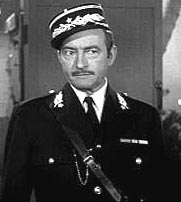
One last important difference is that anti-2kers are censorious about their differences with 2kers – calling 2k outside the Reformed tradition and worse. Meanwhile, like Captain Renault in Casablanca, they are shocked, just shocked, to find that Roman Catholics and Mormons are practicing idolatry freely in the greatest nation on God’s green earth.
 Old Life
At least some of the anti-2k motivation can be explained by impulses toward either immanentizing the eschaton (usually the postmills) or the QIRC, although the latter is more a symptom of any number of things than an explanation. Still, it seems that every Reformed person I’ve known had been or still is some form of anti-2k, even if only because it was hard to find books prior to 2005 that dissented from the lite-transformationalist hard-predestinarian evangelical position, if that’s a fair label.
For instance, I heard of your Nevin biography from Federal Visionists trumpeting it, which was hardly a commendation. After the DRC debate in 2007, I was intrigued, read the book, and concluded that FVers will miss the forest for dirt if they think the dirt looks a bit like that in their own backyard. Before that, the only criticism of Reformed evangelical sacramentology I heard was from FVers rubbing everyone’s faces in book IV of the Institutes. I am still unaware of any 2k influence during the 80s and 90s besides Meredith Kline.
But any 2k obscurity aside, I can’t understand the anti-2k fixation on the church stopping abortion, Sabbath-breaking, or whatever behavior among committed unbelievers. There’s lots of proximate good to be had by doing or not doing innumerable things, but the church offers eternal life through the gospel. Her discipline of her members’ behavior only makes sense with that in view; apart from that, she has nothing to say other than “believe in Christ” or “eat and drink, for tomorrow we die.”
LikeLike
Dr. Hart, I also think the anti-2k sentiment is wrapped up in a lot of the changes that happened in the 20th century and what most of the reformed camps did in reaction to the threats.
For instance, the rise of naturalism in academic circles over the past 120 years, seems to have had the most unfortunate effect of laying guilt by association upon any use of natural law, whether in apologetics or any other public discourse. In addition, the redefinition of science away from rational knowledge to exclusively empirical, created the science vs. religion polemic that was pretty much non-existence prior to Kant. Hence, anything not deemed material, or discoverable via sensory perception, is no longer considered credible science or factual knowledge. This separated religion and philosophy from the modern sciences. The large majority of reformed thinkers bought the “science = materialism/empiricism” lie and have really had little if anything meaningful to say on the subject of science since.
Finally, again as a knee jerk response to Enlightenment thinkers who put human reason above all other authority, most of us in the reformed camp threw the baby out with the bath water and forever associate reason and rationality exclusively with objects of wrath, rather than creatures created in the image of the Lord our God.
Obviously, a 2ker could fall into any number of equally damaging traps; however, I thought by trying to share the weaknesses I’ve encountered in anti-2k, the case for reconsidering the validity of 2k would be made stronger.
LikeLike