Machen Day 2011

I am not sure if our favorite PCA blogger had J. Gresham Machen’s birthday in mind when he posted a piece on the fortunes of Machen’s kind of confessionalism within the PCA, but it was good preparation for today’s festivities. The same goes for Westminster Seminary California which has released Scott Clark’s interview with me about Machen’s legacy and the chapter I wrote for W. Robert Godfrey’s festschrift, a recording that may put party-goers quickly to sleep.

But whether these resources were designed to highlight today’s anniversary, the following may provide reasons for donning party hats and blowing horns:

There are entirely too many denominations in this country, says the modern ecclesiastical efficiency expert. Obviously, many of them must be merged. But the trouble is, they have different creeds. Here is one church, for example, that has a clearly Calvinistic creed; here is another whose creed is just as clearly Arminian, let us say, and anti-Calvinistic. How in the world are we going to get the two together? Why, obviously, says the ecclesiastical efficiency expert, the thing to do is to tone down that Calvinistic creed; just smooth off its sharp angles, until Arminians will be able to accept it. Or else we can do something better still. We can write an entirely new creed that will contain only what Arminianism and Calvinism have in common, so that it can serve as the basis for some propose new “United Church.” . . . .

When we pass from these modern statements to the great creeds, what a difference we discover! Instead of wordiness we find conciseness; instead of an unwillingness to offend, clear delimitation of truth from error; instead of obscurity, clearness; instead of vagueness, the utmost definiteness and precision.

All these differences are rooted in a fundamental difference of purpose. These modern statements are intnded to show how little of truth we can get along with and still be Christians, whereas the great creeds of the church are intended to show how much of truth God has revealed to us in His Word. (“Creeds and Doctrinal Advance”)

Young, Restless and Lutheran?

If you read Collin Hanson’s book on the young Calvinists you will discover that of Dort’s five points the young and restless ones affirm at most two of the five. You will also see that what drives young Calvinists has less to do with the five points of Calvinsim than with one big point – the sovereignty of God. The youthful interest in being Reformed seems to stem primarily from expressions about the glory of God – thanks to John Piper channeling Jonathan Edwards – that present to late adolescents and young adults an image of God much bigger and grander than anything they had encountered in evangelical preaching and teaching. (I could get snarky and ask what Bible have these “converts” to Calvinism been reading, but I’ll resist mainly.)

But why is an affirmation of divine sovereignty Reformed? It is just as much Lutheran as it is Reformed. It is in fact basically true of Christianity to affirm the sovereignty of God. That business in the Nicene Creed about “maker of heaven and earth” does point in the direction of a divine being sufficiently powerful to create everything and then govern and maintain it all.

So why don’t we call the new evangelical resurgence of interest in divine sovereignty Lutheran instead of Reformed? After all, there is nothing about the young and restless that is explicitly Reformed other than the Jonathan Edwards is My Home Boy t-shirts (and Edwards, for all his genius, is not exactly the standard for Reformed Protestantism).

One explanation may be evangelicals mistakenly think of themselves as Reformed because they are following the lead of Reformed Protestants themselves. The latter are more inclined to think of themselves as evangelical than as Reformed. In turn, this tendency cultivates an atmosphere where Reformed Protestants look, speak, and act like evangelicals. In which case, the reason that evangelicals don’t consider themselves Lutheran – though they do affirm as much of Lutheranism as they do of Reformed Protestantism – and don’t make Martin Luther is My Home Boy t-shirts is that Lutheranism is not a comfortable environment for evangelicals.

Evidence of this tension comes from Kevin DeYoung’s recent interview with the Lutheran pastor, Paul T. McCain (sounds pretty Scottish and not very German). To the question of whether Lutherans consider themselves part of American evangelicalism, McCain responded:

I do not think that most Lutherans consider themselves to be American Evangelicals. We tend to think of ourselves first, and foremost, simply as Lutheran Christians. I must say in light of the fact that conservative Lutherans do have a single book by which they can identify themselves, doctrinally, we find trying to nail down precisely what “Evangelicalism” is a bit like an exercise in nailing jello to a wall, and that kind of gives us the heebie-jeebies. That’s a technical term.

And in a follow up question about differences between Reformed and Lutheran Protestants, McCain had this intriguing response:

We are keen on emphasizing the proper distinction between God’s Law, that shows us our sin, and God’s Gospel, that shows us our Savior and we emphasize God’s objective work through both His Word and His Sacraments. The “S” word makes our Evangelical friends very nervous, but we hold and cherish the Sacraments and really believe that God works saving faith by the power of His promising Word through Baptism. We also believe that the Lord’s Supper is our Lord Christ’s own dear body and blood, actually under, with and in the bread and wine, for us Christians to eat and drink, and that through it we receive forgiveness and life, and wherever there is forgiveness and life, there is salvation.

Now, of course, Lutherans and Reformed disagree on the Lord’s Supper and have ever since 1529. But why are Reformed Protestants any more appealing to evangelicals than Lutherans on sacramental grounds. After all, Reformed Protestants also have sacramental teachings and practices that would scare evangelicals if they ever went beyond the first question and answer of the Shorter Catechism. Does baptism come to mind? Plus, the Reformed churches’ teaching on the Supper – from the Belgic Confession to the Westminster Confession – is no more agreeable to most evangelicals (whoever they are) than the Book of Concord.

So again I find it very strange that many seem to think that Reformed and evangelical go together when as many wrinkles exist between these expressions of Protestants as between evangelicals and Lutherans. Could it be that if Reformed Protestants were as serious about being Reformed as Lutherans have been about being Lutheran the young and restless would simply be content with calling themselves Baptist?

Kingdom Sloppy: A Big Bowl of Wrong

Readers of Oldlife may think I am too hard on Kuyper and neo-Calvinism. I know of one reader and commenter who regularly replies that I am just pointing out errors but that neo-Calvinism in its purity is — well — pure. Another respondent has admitted to some flaws along the way but nothing inherently erroneous about neo-Calvinism per se.

And then I receive a deluge of examples that suggest neo-Calvinism is not simply prone to abuse by a few of its proponents. Instead, repeatedly, neo-Calvinism blurs the distinctions between the church and culture (what we used to call the world), and consistently does not recognize the fundamental difference between redemption and cultural activity. Herewith some examples (and I have the good Dr. K. to thank for several of them).

The first comes from James K. A. Smith in an article he wrote for Pro Rege in which he tried to argue for more of a liturgical component for neo-Calvinism. (I actually think Smith has a point, especially when he conceives of a church-college as a worshiping community in which liturgy should be at the center of campus life.) But to defend his view, he observes a tendency within neo-Calvinism (and he is pro-neo-Calvinist) that is precisely what Old Lifers detect in Kuyperianism:

Kuyper has been inherited in different ways in North America, yielding different Kuyperianisms. While Zwaanstra suggests that “ecclesiology was the core of [Kuyper’s] theology,” one quickly notes that it is the church as organism that is the “heart” of his doctrine. This emphasis, coupled with some other emphases in Kuyper, led to a strain of Kuyperianism that actually had little place for the church as institute in its understanding of Christian engagement with culture. Indeed, there have even been strains of Kuyperianism that have been quite anti-ecclesial. On the other hand, Kuyper himself clearly saw a crucial role for the church as institute and devoted a great deal of his time, energy, and gifts to its welfare and reform.

Next comes a quotation, which also came to my attention through Dr. K., which seems to run rough shod over distinctions between redemption and creation, such that Bach, bordeaux, and republican governments become the fruit of the Spirit.

Reformational Christians are not very accustomed to relating the working of God’s Spirit to nature and to culture. The under-appreciation of the broader work of the Spirit betrays an incorrect vision of the relationship between nature and grace. Here, too often the point of departure involves an antithesis between the general and the special working of the Spirit. Only the latter is saving.

For the Reformation, grace is not opposed to nature, but opposed to sin. By grace, a person does not become super-human, but genuinely human. Grace restores and redeems nature, but it adds nothing new to nature. “The re-creation is not a second, new creation. It introduces no new substance, but is essentially reformatory,” according to Herman Bavinck. . . .

The Bible connects the work of the Spirit also to the gift of art. That applies to devotional music, to be sure. But architects and visual artists like Bezalel and Oholiab were also filled with the Spirit of God in order to be able to do their creative work [Ex. 31.6; 36.1-2; 38.23].

Christians may pray for the working of the Holy Spirit in their own lives, but also for the corruption-restraining working of the Spirit in society. That working extends to the meetings of literary guilds, of the advertising review council, and of the film rating commission. Where the Holy Spirit is absent, the demons of terror have free reign.

Therefore the church prays for the world this petition as well: “Veni creator Spiritus”—Come, Creator Spirit! (Dr. H. van den Belt, “Focus op bekering mag zicht op vernieuwing aarde niet ontnemen,” Reformatorisch Dagblad [13 June 2011])

We can see where such blurring leads when we look at a new initiative at Redeemer Presbyterian Church. I learned about this one thanks to the ever watchful eyes of the Brothers Bayly. (It should also be mentioned that the good Dr. K. seems to approve of Tim Keller because of the New York pastor’s use of Kuyper.)

The Center for Faith and Work at Redeemer PCA/NYC is hosting a conference this fall on the gospel and culture. The vision for this conference sounds like this:

“And I saw the holy city, new Jerusalem,coming down out of heaven from God, prepared as a bride adorned for her husband.” Rev 21:2

In this great climax of redemption, we get a glimpse of where all of history is moving, and the scope of God’s redemptive purposes extends far beyond what we could have ever imagined. God is at work preparing his bride, and this bride is a holy city—a city designed and built by God Himself. God has intimately invited us into this redemptive story, and when we understand how the story ends, the way we see and engage the city around us changes. When we begin to realize that God cares for New York City, in all of its dimensions and sectors, our eyes become opened to see His love and care for all that we often overlook. Our hope for this conference is that you will begin to see how real the gospel is in every inch of our city and to leave with a renewed sense of purpose and calling as you see hope-filled glimpses of the great City of Peace that is to come.

What is striking about this understanding of the gospel in the city is that the gospel seems to be there even if the church isn’t proclaiming the gospel or transforming the culture. It sounds like this wing of Redeemer believes that the gospel is already there in NYC and so Christians need to become more sensitive to it so they can see how God is at work everywhere. So much for needing to transform the city. The church needs to be culturalized.

To add plausibility to this interpretation, consider that one day of the conference will be devoted to “glimpses,” that is, a “cultural event (1) based in New York City, (2) experienced in community, (3) which points toward evidence of God’s glory and Sovereignty over all things.” Conference participants may gain a glimpse by engaging in one of the following suggested activities:

STARTER IDEAS — Food Tour · Metropolitan Museum · BAM · NYPhil · Brooklyn Heights History Walk · Brooklyn Bridge Architecture Walk · The Morgan Library · Times Square “Branding” Walk · Off B’way · Carnegie Hall · City Opera · City Ballet · IFC · Angelika · Lincoln Square Cinema · Jazz @ Lincoln Center · Fashion Show · Joyce Dance · B.B. King’s · NY Historical Society · The MET · Rockwood Hall · Living Room · 92nd St.

I have had some very good meals in NYC. They were better temporally than the meal of the Lord’s Supper that I now eat weekly at our OPC congregation (though the bread made by the pastor’s wife is very good!!). But I never suspected that when dining on Osso Bucco I was actually experiencing the coming of the kingdom of grace or the relishing the fruit of the Holy Spirit. And I don’t think it is necessarily fundamentalist to distinguish peace, love, and joy from the creations of Winslow Homer and Woody Allen.

In which case, if the gospel can be construed so broadly, and if Kuyperianism has a tendency for the church as organism to outrun the church as institute, why won’t neo-Calvinists exert a little internal regulation and pot down the excess? For that matter, do the Allies at the Gospel Coalition really endorse Redeemer church’s understanding of the gospel and culture?

The culture cannot be saved — only created beings with souls can. But if you are in the habit long enough of thinking that cultures can be saved, then perhaps you start to adjust your understanding of the gospel and find salvation in the culture that you deem civilized (or hip).

Kingdom Sloppy: Michele Bachmann and Her Interpreters

Mollie Hemingway, our favorite Lutheran journalist, over at GetReligion has alerted readers to a Lutheran slur against Michele Bachmann (who grew up in the Wisconsin Evangelical Lutheran Synod — who knew? — which is a communion to the right of the Missouri Synod). Mollie herself does not think much of Lutheran theology stuck with Michele:

I’m a confessional Lutheran. Ostensibly, Michele Bachmann was a member of a more conservative but also confessional Lutheran church body. And for years, whenever I heard her speak, she never sounded even mildly Lutheran to me. The “the Lord put it on my heart” type language. The “the Lord anointed me” stuff. This is not how Lutherans speak, although I won’t bore you with all of the why. Her other affiliations have always been more evangelical than Lutheran, going back decades.

But the point of Mollie’s piece is a story in The Atlantic which attempts to make Bachmann look bad because of her former church’s teaching (chances are the reporter could not find a confession or creed from Bachmann’s current church):

Michele Bachmann is practically synonymous with political controversy, and if the 2008 presidential election is any guide, the conservative Lutheran church she belonged to for many years is likely to add another chapter due to the nature of its beliefs—such as its assertion, explained and footnoted on this website, that the Roman Catholic Pope is the Antichrist.

Mollie responds:

Now, as anyone who knows anything about church history can tell you, the papacy is not a feature of Protestantism. And if you followed the Reformation or knew anything about the abuses of Pope Leo X or the anathemas of the Council of Trent, it’s not really newsworthy that the reformers looked at what Scripture says are the marks of the anti-Christ and basically said “yep — the papacy has those.” What makes the church to which Michele Bachman was once joined slightly different is that while most Lutheran church bodies will talk about the historical context into which they were made, the Wisconsin Synod says that basically they’re still Protestants who still don’t believe in the papacy and still think it sits in opposition to the Gospel of Christ.

And, again, if you don’t know that Catholics and Protestants have very strongly held different views on whether the papacy is on the whole a really good or really bad institution, you should repeat 8th grade or whatever.

The irony, of course, is that if the reporter had studied Lutheran theology further, he would have discovered a doctrine of the kingdoms what would allow a political candidate to affirm that the pope is the anti-Christ and also promise to serve Roman Catholic citizens according to the laws of the United States. In fact, there is a better chance that Bachmann’s studies with Francis Schaeffer, not the teaching of WELS, make her less flexible in negotiating the the claims of Christ’s lordship over greatest nation on God’s green earth.

Kingdom Sloppy: Southern Baptists and Immigration Policy

‘Tis the season of thinking about the relations between evangelicalism and political conservatism thanks to the release of From Billy Graham to Sarah Palin. With such heightened sensitivity come examples that show fuzziness on the differences between the kingdoms of redemption and providence.

I begin with the reaction of Jerry Salyer to the recent Southern Baptist Resolution, “On Immigration and the Gospel,” a statement that in itself is a grab bag of truths that do not cohere either theologically or politically. Salyer writes:

One defender of the new SBC policy is Southern Baptist Seminary theologian Russell Moore, who declares in “Immigration and the Gospel” that “[t]he Christian response to the immigrant communities in this country cannot be ‘You kids get off my lawn’ in Spanish.” Up until now I have had nothing but respect for Moore – anyone who appreciates Berry and Genovese can’t be all bad – which is precisely why his trite and thoughtless remarks pain me so. Does he really mean that no Christian can offer an argument against mass-immigration better than that of Mr. Wilson from Dennis the Menace? Can one really dismiss so quickly classicist Thomas Fleming, or philosopher Roger Scruton? What about journalists like Tom Piatak, Patrick Buchanan, and Peter Hitchens?

Whether one ultimately agrees with the positions taken by immigration restrictionists is beside the point. The point is that the Southern Baptist leadership hide from their flock the fact that such positions even exist. Should we be concerned about, say, the socioeconomic consequences of a vastly expanded labor pool? Soaring crime rates? What about the implications of perpetual war with the Muslim world even as mosques simultaneously sprout all across the Midwest? How seriously should we take those activists who celebrate the Reconquista of “Aztlan”?

In other words, opposition to open borders may not simply be an expression of nativist prejudice. It may actually stem from plausible political considerations, such as these that Salyer quotes from James Kalb who recognizes that the motivations for unrestricted immigration may stem less from what is true or good or noble and more from economic and political interests:

Ruling elites . . . are concerned with the power and efficiency of governing institutions, the status and security of those who run them, and maintenance of the liberal principles that support and justify their rule. It is in their interest to expand the human resources available to them, even at the expense of those who are already citizens, and to weaken the mutual ties that make it possible for the people to resist rational management and to act somewhat independently.

The practical result of such influences has been the suppression of immigration as an issue in the interest of an emerging borderless world order. Restrictionist arguments are scantily presented in the mainstream media, and concern with cultural coherence, national identity, or even the well-being of one’s country’s workers is routinely denigrated as ignorant and racist nativism.

Whether you agree with Kalb’s skeptical analysis, it is a reminder that beyond the calls for making the gospel relevant or pursuing social justice are political considerations that religious idealism ignores. In which case, the book of redemption (which is silent on immigration policy) tells the book of nature (which has much to say) to “shut up.”

Why Do Reformed Think They Are Evangelical?

If Reformed Protestantism is basically evangelical then how do you account for the major divisions that have occurred among American Presbyterians? The fundamentalist controversy apparently has nothing at stake for the Reformed/evangelical consensus since Machen and other conservative Presbyterians were fighting liberalism and EVERYONE knows that liberalism is bad. (Of course, the problem here is that Machen’s evangelical colleagues at Princeton were some of his biggest opponents – the revival friendly Charles Eerdman and Robert Speer.)

According to this consensus the Presbyterian opposition to revivalism during the Second Pretty Good Awakening is also easy to explain. Charles Finney and company were delinquent on theology and possibly practice (revivalism and new measures instead of just plain revival). So the Second Pretty Good Awakening proves nothing.

Then there is the First Pretty Good Awakening where Calvinists promoted revivals. This is the golden-age for the Reformed/Evangelical consensus. But what about the Old Side critics? Well, as I learned at Westminster and from Leonard Trinterud, the Old Side were proto-liberals, propounding a rationalistic theology with Enlightenment echoes, and they were drunks, falling off their horses on the way home from presbytery thanks to a heavy elbow.

In the recent exchange with Ken Stewart over at the Christian Curmudgeon I came across another explanation for the apparent tension between Reformed Protestants and evangelicals – which is, blame the Dutch. In response to differences of interpretation about revivalism, Stewart wrote to the Curmudgeon:

I think we disagree is in our estimation of the danger posed by Hart and his school of writers. Westminster Escondido, in a strange continuity with Calvin Seminary Grand Rapids (these schools are usually at loggerheads) are centers from which revival is disparaged. So important a church historian as George Marsden (raised in the OPC) termed Darryl Hart’s book on American presbyterianism “anti-evangelical” because of its steady misrepresentation of the Great Awakening. So, while from your vantage point, you are aware of Hart, from mine – I think he and his allies represent a danger so great that it needs to be countered.

When pushed on the fact that George Marsden, who studied with Cornelius Van Til, who was very critical of evangelicalism, Stewart responded:

I don’t dispute CVT’s anti-evangelical posture; in fact I would suggest that the influx of CRC faculty into WTS in the 1930’s fundamentally shifted the young WTS away from its Princeton heritage, which had been decidedly the other way. When one stands back from this, it makes us realize that the whole conservative Reformed tradition in this country has been influenced far more by Grand Rapids theology than is generally acknowledged. I am not demonizing the CRC in this particular respect; I am simply highlighting the fact that throughout the 20th century, there have been rival versions of the Reformed faith jockeying with one another for dominance.

What is fairly amusing about this reply is that the Dutch-Americans at Calvin Seminary were responsible for printing a review that Stewart wrote of Recovering Mother Kirk, which was hardly flattering of the book’s author or his interpretation of the Reformed tradition. If the Dutch-American Reformed mafia wanted to enlarge their control of the interpretation of American Protestantism, they fell asleep when reading Stewart’s submission.

Stewart and others who reject the argument that Reformed and evangelical are at odds gain a lot of traction by suggesting that Reformed critics of evangelicalism construe Reformed and evangelical Protestantism as fundamentally at odds or separate entities. The proponents of an evangelical-friendly Reformed faith also like to point out that Reformed churches have made lots of room for evangelicalism and even revivalism. So both conceptually and historically, supposedly, the Reformed critics of evangelicalism are flawed.

But for this critic, it is obvious that evangelicals and Reformed are both Protestant and so overlap at certain points, both religiously and historically. Experimental Calvinism arose in the context of Reformed churches (especially when the prospects for reforming the national churches were looking bleak) and Reformed and Presbyterians churches have been friendly to evangelicalism (though I wish they were not).

What the proponents of the consensus are incapable of doing is accounting for the splits that have occurred within Reformed churches over evangelicalism (even without the presence of Dutch Reformed). The Old Side and the Old School split from their Presbyterian peers because the pro-revivalists believed subscription and polity were secondary to conversion and holy living. And so it has always been with evangelicalism. It is inherently anti-formal in the sense that forms to not matter compared to the experience of new birth or ecstatic worship. Evangelicals are also inherently inconsistent about this because since we exist as human beings in forms (i.e., bodies that are either male or female), we cannot escape formalism of some kind. Either way, on the matter of forms – creeds, worship, and polity – those who promote revivals or consider themselves evangelical are indifferent. The Spirit unites, not the forms. The same goes for different shades of evangelicalism: for the Gospel Coalition it is the gospel not the forms that unite; and for the Baylys and other “do this and live” types, it is the law not the forms that unites. Sticklers for the regulative principle, the system of doctrine, or presbyterian procedure are simply ornery obstacles to uniting Protestants on what is truly important.

What should not be missed either is that when Presbyterian particularists insist that forms matter, that the word reveals forms, and that the word and the Spirit work in conjunction, the response is invariably that the particularlists are mean and lack the fruit of the Spirit. Why? Because they do not recognize the presence of the Spirit.

And so to bring a little more light on the matter from one of those nefarious Dutch-Reformed types (though he is actually German), here is a useful reflection from Richard Muller on the impulses within evangelicalism that lead away from the insights of the Reformation(if only he had been editing the Calvin Theological Journal when Stewart reviewed Recovering Mother Kirk):

Even more than this, however, use of the language of personal relationship with Jesus often indicates a qualitative loss of the traditional Reformation language of being justified by grace alone through faith in Christ and being, therefore, adopted as children of God in and through our graciously given union with Christ. Personal relationships come about through mutual interaction and thrive because of common interests. They are never or virtually never grounded on a forensic act such as that indicated in the doctrine of justification by faith apart from works – in fact personal relationships rest on a reciprocity of works or acts. The problem here is not the language itself: The problem is the way in which it can lead those who emphasize it to ignore the Reformation insight into the nature of justification and the character of believer’s relationship with God in Christ.

Such language of personal relationship all too easily lends itself to an Arminian view of salvation as something accomplished largely by the believer in cooperation with God. A personal relationship is, of its very nature, a mutual relation, dependent on the activity – the works – of both parties. In addition, the use of this Arminian, affective language tends to obscure the fact that the Reformed tradition has its own indigenous relational and affective language and piety; a language and piety, moreover, that are bound closely to the Reformation principle of salvation by grace alone through faith alone. The Heidelberg Catechism provides us with a language of our “only comfort in life and in death” – that “I am not my own, but belong – body and soul, in life and death to my faithful Savior, Jesus Christ” (q. 1). “Belonging to Christ,” a phrase filled with piety and affect, retains the confession of grace alone through faith alone, particularly when its larger context in the other language of the catechism is taken to heart. We also have access to a rich theological and liturgical language of covenant to express with both clarity and warmth our relationship to God in Christ.

Even so, the Reformed teaching concerning the identity of the church assumes a divine rather than a human foundation and assumes that the divine work of establishing the community of belief is a work that includes the basis of the ongoing life of the church as a community, which is to say, includes the extension of the promise to children of believers. The conversion experience associated with adult baptism and with the identification of the church as a voluntary association assumes that children are, with a few discrete qualifications, pagan-and it refuses to understand the corporate dimension of divine grace working effectively (irresistibly!) in the perseverance of the covenanting community. It is a contradictory teaching indeed that argues irresistible grace and the perseverance of the saints and then assumes both the necessity of a particular phenomenology of adult conversion and “decision.” (“How Many Points?” Calvin Theological Journal, Vol. 28 (1993): 425-33 posted at Riddelblog)

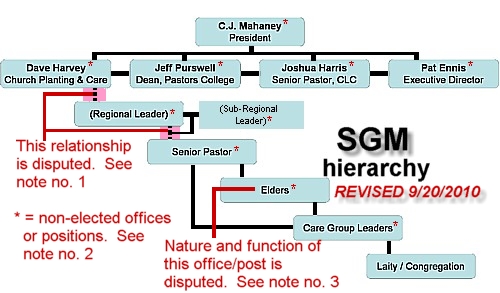
Why Does Mahaney Get More Slack Than Nevin?

The answer appears to be that if you I have spoken at conferences with C.J., shared a meal with him after one of those sessions, or sung Sovereign Grace Music songs on stage with him, then it is possible to stand in the gap with C.J. in the current difficulty that SGM is experiencing. But if you have not done any of those relationship-building things with J.W., then it is not possible to give Nevin the benefit of the doubt.

This is another way of saying that personal knowledge and friendship appear to be significant elements in the reactions from famous evangelical Reformed figures to the news about C. J. Mahaney and the difficulties besetting SGM. Al Mohler has issued a statement of full confidence in Mahaney and so Ligon Duncan has recently issued a statement over at Reformation 21 which includes this:

It is clear that far from a scandalous cover up, our brothers at Sovereign Grace are taking these matters with utter seriousness and are endeavoring to walk in Gospel repentance and humility and fidelity. C.J. knows of my complete love and respect for him. And my brethren at Sovereign Grace know of my support and prayers for them. . . . I want to emphasize that we fully respect the process that SGM is taking to review the entire situation and that we have no intention whatsoever of joining in the adjudicating of this case in the realm of the internet – a practice as ugly as it is unbiblical.

Here’s the problem. For schlubs like me, who have had no personal interaction with Mahaney, the only information I have to go on are those formal statements that describe SGM’s work. And when I go to the website of SGM I discover that Sovereign Grace churches are weak on the sacraments, have no presbyterian polity, and also include statements friendly to charismatic views of the Holy Spirit. These official teachings and practices have nothing to do (as far as any of us know) with the current difficulties at SGM. C.J. may be guilty or innocent no matter what SGM teaches and does.

But those formal statements would be enough for me not to have personal knowledge of C.J., at least the kind that comes from parachurch conferences, networks, and alliances. All serious Reformed church members and officers, of course, may and do participate with non-Reformed in a host of voluntary organizations. You cannot exist in civil society and not participate with Baptists, Mormons, or Roman Catholics at the Parent Teachers Association, or at the committee for expanding the local library, or on the Chamber of Commerce. You might even participate with non-Reformed in religious endeavors like a college or a magazine.

But if an association or organization calls itself a ministry, I am not sure how such cooperation can exist. The reason has to do with the word “ministry” itself. It invariably goes with “the word” as in minister the word of God (except for the neo-Calvinist/evangelical clutter of “every member ministry”). And when we talk about ministry in this way, we are in the ballpark of ordination, ecclesiology, sacraments, worship, and doctrine. Ministry as such should be confessional. Cross-confessional ministries undermine confessionalism. (And if an organization has the word “gospel” in its name and does not call itself a ministry then it should cease its activities because ministering the gospel is of the essence of ministry.)

So again, I am in a dilemma regarding the current situation at SGM. I have a knowledge of C.J. that only comes from formal statements that would prevent me from entering into ministry relationships with him. And not having those ministry relationships I have no personal knowledge that he is a worthwhile friend and colleague. At the same time, I have friends and acquaintances who are assuring me that everything is basically okay with C.J. and this advice stems from personal knowledge that is grounded in a cross-confessional ministry. Reassurances about C.J. would not be coming from evangelical Reformed types if those Reformed and Baptist figures were as particular in their understanding of ministry as anyone who takes seriously the visible church should be.

Of course, it is commendable for people to stand by their friends and I commend Duncan and Mohler for not doing the self-righteous thing of throwing Mahaney under the bus simply at the accusation of misconduct. Innocent until proven guilty works in both kingdoms.

But if friendship is really a function of fellowship and such fellowship is misbegotten on confessional grounds, then standing by one’s friend may really be a form of standing by a fellow minister while having no ecclesiastical basis or status for doing so.

So I remain ignorant of C.J.’s personal charms because I remain separate from Sovereign Grace Ministries.

When Private Goes Public

(TMI Alert!) Last Sunday my wife and I were publicly received by the OPC congregation in Hillsdale, Michigan. The reception took place during a public worship service on Sunday morning. Despite all the public matters transpiring, very few people noticed. Aside from members of session who decided to receive us by letter of transfer, the email recipients who learned of the time for our reception, and the worshipers themselves who gathered last Sunday (a small group when the college is not in session), no one else knew about these public events. No one from the Hillsdale newspaper covered the event. Session filed no papers with state or federal authorities monitoring church membership. Session did not even hire a publicity firm to promote this part of the worship service. (How dare them!)

And yet it was all public.

According to the OPC’s Directory for Public Worship, Lord’s Day worship is public:

While believers are to worship in secret as individuals and in private as families, they are also to worship as churches in assemblies of public worship, which are not carelessly or willfully to be neglected or forsaken. Public worship occurs when God, by his Word and Spirit, through the lawful government of the church, calls his people to assemble to worship him together. (1.1.c

Also, according to the Directory the reception of members is also public, as in the Directory supplies directions for “The Public Reception of Church Members”:

When a person is received into membership on letter of transfer from another Orthodox Presbyterian congregation, that reception is effective at the time of the action of the session to receive him. Nevertheless, a session may deem it appropriate to welcome that person publicly into the congregation and allow him to give public expression to his faith. If this is done, it shall be made clear to the congregation that the person has already been received by action of the session. (DPW, 4.C)

Critics of 2k often point out that this dualistic doctrine is wrongheaded because it marginalizes faith and puts in a box of privacy. Instead of interacting with all spheres of life, as allegedly all Christians are required to do, 2k believers hide their faith under a bushel. Even worse, they supposedly ratchet up the binary distinction between the public and the private, leaving the former to public officials and the latter to people who do ministry.

But if I’m right about the public nature of what happened last Sunday at Hillsdale OPC, then the critics of 2k are wrong. A spiritual church is just as public as what happens in the public square. It’s just that people who believe in the spirituality of the church don’t need the people supervising the public square to validate the importance of what transpires in public spiritual activities. Public church affairs are plenty important even if the public authorities don’t notice.

Trueman on Protestant Urbanism

Like the moth drawn to the candle flame, I will once again comment on the apparent discrepancies of Carl Trueman, the Lord Protector of Westminster Seminary, whom I hope will not do to me what happened to Charles I. What has to be striking to many readers is that Trueman is critical of many of the quirks of people with whom he is associated. He has been rightly critical of celebrity pastors but is connected to parachurch organizations that thrive on such celebrity. He has been critical of inspirational conferences as a form of binge-and-purge-spirituality but speaks at such gatherings. He is also critical of God-and-country Republicanism but dedicates his most forceful expression to a God-and-country pastor-scholar. Yet, when he has had the chance to comment on authors who share his perspective on these matters (and others), Trueman will sometimes dismiss them as peculiar and idiosyncratic.

Be that as it may, the English historical theologian who admires Oliver Cromwell has a set of important observations about the phenomenon of urban-love that has swept up much of the conservative Presbyterian and evangelical world for the last two decades.

First he wrote this about the romanticization of the city that lurks in the urban-ministry model:

This superiority of the urban at an economic level has been reinforced with a veritable arsenal of cultural weapons, from the linguistic (e.g., city life is often described as `authentic’ while that in the suburbs is `artificial’) to the ethnic (city folk are seen as quick, sharp, savvy, sophisticated; country folk as slow, thick, simple – think accents, whether Mississippi or Gloucestershire). One could easily make the case for the existence of an urbanism which parallels Edward Said’s orientalism. Now the church is apparently on the bandwagon: missions to the city have a cool, hip status; missions to the bumpkins and the yokels (that’s English for `redneck’) not being quite so sexy. The secular aesthetic receives biblical sanction through baptism by a dodgy hermeneutic.

It is a real, practical, pastoral shame that influential churches are jumping on this urban-aesthetic bandwagon. Not that cities are not important. As I said, they are important because they contain lots of people. And, of course, almost by definition, big influential churches are in the cities because of the concentration of resources. But the suburbs are important too (and not simply for the faux urbanites who commute from thence for their urban church experience on a Sunday); and the countryside has its reached and its unreached. They may not be as cool in secular terms, and I would certainly not want to portray them as superior to or more authentic than the city in a way that some do (let’s not forget that as Marx romanticised the industrial proletariat, so the Fascists romanticised the feudal countryside); but it would be good to see the obsession with cities as some kind of eschatologically unique or superior entity disappearing from the trendy reformed discourse, to be replaced by much less contentiously significant biblical categories: those who see the cross as foolishness or an offence, and those who see it as the power of God unto salvation. It would also be good to see suburban and rural pastors being given their due as well.

Then he followed up with a pertinent post on the dangers of mulit-site churches:

These are sad days, when the biblical models of church and pastoring are being swept away by the avalanche of numerical success allied to personality cults and corporate values. The Apostle Peter clearly likens pastoring the church to shepherding, connects this shepherding to Christ as the great shepherd and, by implication, to the kind of quality of relationship Christ has with his sheep (1 Pet. 5: 1-5; cf. Jn. 10:14). Can multi-site, out-of state ministries even approximate in the vaguest and most attenuated way to this? Is there even a debate to be had here? Is there a single one of these megachurch outfits that isn’t basically identified with one or maybe two big personalities? Is that not a warning light that something may be amiss? And isn’t it about time that somebody who carries real weight in the young, restless and reformed world spoke out about this kind of ecclesiastical madness? Or are we so steeped in the celebrity/corporate/megachuch culture and so mesmerisied by numbers that nobody sees the problems any more?

All of us have our inconsistencies and some of us have two-kingdom theology and Christian liberty to explain them. But as long as Trueman does not let his associations with celebrity pastors and presence at inspirational conferences prevent him from incisive critiques of the American church, I’ll continue to appreciate his observations even if few of his associates seem to be paying attention.

Not Nevin or Edwards but Kuyper is the Answer

Nelson Kloosterman has a blog and is using it to promote the thought of Abraham Kuyper among other topics neo-Calvinistic. No surprise there. Admittedly, Kuyper, the Reformed transformer-of-all-trades, master of none, was an impressive figure and blessed with much sound and wise counsel about a variety of matters with which contemporary believers wrestle. If Old Life appears to be critical of Kuyper, it stems as much from the unbecoming adoration he receives as it does from questions about the limits of world-and-live viewism.

And it is here that Kloosterman is useful to illustrate the problem. A few weeks back he quoted from Kuyper’s book on common grace (translated from the Dutch, of course) about the Genesis flood. Kloosterman’s point was that we need to make room for legitimate differences of opinion about such matters as the nature of the flood. The reason seems to be Kuyper. Since he did not follow conventional literalist interpretations about Genesis, so we need to make room for a diversity of perspectives on hot-button issues. One does wonder if this extends to Christian schools. Here’s the Kuyper quote:

An esteemed correspondent has objected to our position that the flood most probably did not cover the entire globe, and in connection with this, that predatory animals perhaps remained alive elsewhere in the world.

Let it be stated immediately that we attach very little importance to this dispute. Our only interest was to emphasize the significance of the protection of humanity against predatory animals.

For the rest, we note that Scripture itself says that “the waters prevailed so mightily on the earth that all the high mountains under the whole heaven were covered” (Gen. 7:19), after which Scripture mentions the highest mountain, Mount Ararat. Nevertheless it is clear that numerous mountains were higher than Ararat.

In the second place, that not all the animals were destroyed appears from the fact that since the flood consisted of water, the fish could not have been killed, but rather received a rare and rich prize of human and animal corpses.

Third, numerous fossils have been found in the earth’s depths, fossils of animals that did not belong to this time period.

Fourth, it is indeed true that in Genesis 8:17 we read that all the animals had to leave the ark, but a literal interpretation of this presents us with insoluble difficulties. Suppose there were eight people, together with a small number of horses, cattle, camels, sheep, goats, etc., and you let loose two lions, two tigers, two hyenas, two snakes, two wolves, two bears, and many more. How could people have defended themselves at this point? What did those animals live on? Would not the entire small stock have been killed within a short time? Were you to say that Noah and his sons might have been animal tamers, or that God might have restrained the predatory animals at that point so that they didn’t attack people, we would certainly admit that these were possible, but precisely at that point justice is not being done to Genesis 9:5.

In any case, we are facing difficulties here that arise from the brevity of the narrative. One person can posit this, while another can posit that, and those opinions should be permitted. But Genesis 8 and 9 are revealed to us not to have a dispute about them. The main point here involves God’s ordinances given to the new human race.

But then along comes another quote from Kuyper, supplied by Kloosterman, which calls for a distinctly Christian contribution to questions about science and faith. Again from the work on common grace, again translated from the Dutch:

The life of particular grace does not stand by itself, but has been placed by God amid the life of common grace. Since Holy Scripture is definitely not limited to opening up for us the way of salvation, but has been given also to enrich common grace with new light, for those who confess that Word not to make this higher light to shine upon the arena of science, which belongs to the field of common grace, constitutes deficient devotion to duty.

What is hard to understand is that many who attempt to follow Scripture on science, and so regard Genesis as more authoritative than the findings of geology, would not be friendly to Kuyper’s views on the flood. I mean, if we are to use special revelation to interpret general revelation when it comes to politics and society, why not when it comes to geology and biology? And yet, Kloosterman regularly denounces 2k for not letting Scripture be the norm for interpreting natural law.

I am struggling to find the coherence in Dr. K’s view, except that it all seems to go back to Kuyper.