The Danger of Revivals and of Their Critics

Our favorite PCA blogger has once again kicked up a little e-dust with a review of Kenneth Stewart’s new book, Ten Myths about Calvinism: Recovering the Breadth of the Reformed Tradition. The review itself is worth reading, as is a subsequent post that explains the author’s perspective (the author being pastor William H. Smith aka The Christian Curmudgeon). But what is particularly striking about the review and its responses (some from Ken Stewart himself) is how sensitive the topic of revivalism is.

Not to make this all about me (about which it generally is), but Stewart even calls my interpretation of revivalism “dangerous.” In fact, one of the underlying factors in Stewart’s purpose and in the book’s reception will be the way Reformed Protestants consider the relationship between being Reformed and being evangelical. Some like Stewart – John Frame may be the most notable exponent of this – tend to view evangelicalism and Reformed Protestantism as co-extensive, with Reformed being in some constructions a subset of evangelicalism. Others like the informal members of the Old Life Theological Society regard this relationship as more troubled than peaceful because of important differences between evangelicals and Reformed Protestants.

One of those differences is revivalism. Stewart believes that Reformed Protestants have generally been supportive of revivals. He even wonders who would not be in favor of unbelievers being converted and believers becoming more devout. Stewart believes that the critics of revivals have been a minority view, and that such folks are – well – dangerous. Is this the evangelical academic version of Gilbert Tennent’s “The Danger of An Unconverted Ministry”?

But the critics of revival, like myself anyway, are not opposed to conversion nor to increased godliness among the saints (why we need to call that revival is another matter). At the same time, critics of revival see that revivals generally undermine those aspects of church life that make Reformed churches Reformed. If you look at the Old Side Presbyterians critique of the supposedly good First Pretty Good Awakening, their concerns about subscription and church polity were not without merit. Similar criticisms informed the Old School Presbyterian critiques of the pro-revival New School Presbyterians. New Side and New School Presbyterians were of course pro-revival and so less attached to Presbyterian convictions and practice that was becoming officers who had taken vows about being Presbyterian. (Do evangelicals have vows?)

Here is how Charles Hodge put the division among colonial Presbyterians during the allegedly Calvinistic revivals of the First Pretty Good Awakening (danger alert!!):

It appears from this history that the great schism was not the result of conflicting views, either as to doctrine or church government. It was the result of alienation of feeling produced by the controversies relating to the revival. In these controversies the New Brunswick brethren were certainly the aggressors. In their unrestrained zeal, they denounced brethren, whose Christian character they had no right to question. They disregarded the usual rules of ministerial intercourse, and avowed the principle that in extraordinary times and circumstances such rules ought to be suspended. Acting upon this principle, they divided the great majority of the congregations within the sphere of their operations, and by appealing to the people, succeeded in overwhelming their brethren with popular obloquy. Excited by a sense of injury, and alarmed by the disorders consequent on these new methods, the opposite party had recourse to violent measures for redress, which removed none of the evils under which they suffered, and involved them in a controversy with a large class of their brethren, with whom they had hitherto acted in concert. These facts our fathers have left on record for the instruction of their children; to teach them that in times of excitement the rules of order, instead of being suspended, are of more importance than ever to the well-being of the church; that no pretence of zeal can authorize the violation of the rules of charity and justice; and on the other hand, that it is better to suffer wrong than to have recourse to illegal methods of redress; that violence is no proper remedy for disorder, and that adherence to the constitution, is not only the most Christian, but also the most effectual means of resistance against the disturbers of the peace and order of the church. (Constitutional History, Part II, pp. 249-50)

So the criticisms of revivalism and evangelicalism more generally is not necessarily the product of idiosyncratic or Dutch Reformed (as Stewart alleges) outlooks. It may simply follow from reading the splits in American Presbyterianism caused by revivals.

But to make sure my own views of revivalism are not obscure, and to let folks see if they are dangerous, I conclude by listing my major objections:

1) Revivalism (and evangelicalism generally) is anti-formal because of an emphasis on the work of the Spirit (especially in conversion but also in preaching). This stress makes presbyters or church members less worried about the wording of creeds or the requirements of polity than they should be. “It’s the Spirit that matters, not whether presbytery follows church order.”

1a) Revivalists (and evangelicals generally), because of their anti-formalism, disregard the importance of the sacraments. Perhaps the greatest example of this is the way that pro-evangelical Reformed folk regard Baptists as Reformed.

2)Revivalism (and evangelicalism generally) cultivates an appetite for the extraordinary in matters of devotion. This leads to a piety that is often discontent with the outward and ordinary means of grace that God has instituted in the church, such as the word preached by ordinary ministers, and the ordinary elements of bread, wine, and water, or even the really dull aspects of session and presbytery meetings.

3) Revivalism (and evangelicalism generally) does not know what to do with children of the covenant except to demand conversion. How you take a child who has grown up participating in family and corporate worship, has tried to lead a pious life, has prayed regularly, and tell him to convert from his wicked ways is beyond me. It is also a recipe for spiritual schizophrenia or a baptized child going to a non-Reformed church as an adult.

These views may be dangerous. But how could anyone who has studied the history of the church look at revivalism or evangelicalism as Christian expressions without problems? Reformed churches, of course, have problems too. But you can’t be Reformed if you think that basic aspects of your creed and ministry are your problems. And that is what evangelicals want from Reformed Protestants – give up those distinct aspects that make you Reformed (in doctrine, worship, and polity) and we’ll give you a seat under the big evangelical umbrella. (I might be tempted if they were serving drinks with umbrellas, but that would be really, really dangerous.)

Does Roman Catholic Emancipation Involve Breaking the First Commandment?

According to the logic of the Baylys, the answer is yes.

The brothers who are “out of their minds” are upset with Marvin Olasky and the rest of World Magazine for a piece on homosexual marriage by Megan Dunham in which she writes:

For the longest time I’ve struggled to put my finger on just what I believe about homosexuality and whether or not same-sex marriages should be allowed.

Always quick to spot the link between political infidelity and real infidelity, the Baylys conclude that Dunham’s questions about same-sex marriages are indicative of her and the magazine’s waffling on homosexuality.

But a similar concern could be raised about the Baylys who never seem to question the status of Roman Catholics or Mormons in the United States. Is it not possible to conclude from their silence about toleration for idolatry and blasphemy in the greatest nation on God’s green earth that they are in exactly the same position regarding the first commandment as Megan appears to be on the seventh? By implication, haven’t they affirmed this:

For the longest time we’ve struggled to put my finger on just what I believe about Roman Catholicism and whether or not the Mass should be allowed.

To deduce that the Baylys are soft on blasphemy and idolatry, of course, would be uncharitable. But that is exactly what happens when you confuse a policy with a conviction. Since they are out of their minds, we may be able to cut the Baylys some slack. But their insanity is worthwhile instruction for the rest of us pilgrims.

It is possible for people who affirm an inerrant Bible, the Westminster Confession, and Presbyterian polity to have different positions on what the state should do about murder, pre-marital sex, or health insurance. But to assume that all believers of a Reformed persuasion will come down on the same side in policy and legislative matters is to identify one’s own political convictions with articles of faith. And that identification obliterates Christian liberty. (Ironically, the Baylys are not so inclined to require uniformity among Reformed believers in worship.)

In which case, the Baylys are not wrong to question World (how could that ever be wrong?) or to oppose homosexual marriage. Their mistake is to judge sinful anyone who departs from their political and legislative orthodoxy.

postscript: in the comments on the Baylys’ post, the brothers state the following:

This is a magazine owned and run by Reformed Protestant Christian men and there is almost no Reformed Protestant Christian doctrine. Christians pay its bills and read it, but it carefully avoids judgment in the Church. This is what I meant about the doctrinal commitments of WORLD’s owners and workers being hidden from their subscribers.

They have a bully pulpit within the church and they act as if they’re speaking to the unrighteous. Preaching and writing should apply God’s Word and truths most intensely to those listening and reading–not those outside the church, those who do NOT subscribe.

This is a curious view of ministering the word of God. It seems to imply that such ministry is all about law, when in fact the only consolation in Scripture comes from the gospel. This difference — whether God’s people need the law or the gospel — is what distinguishes the Law Coalition from Reformed confessionalism.

Two Kingdoms, Two Liberties

And now for a different English perspective on political independence. This one comes from the men whom many conservative Presbyterians believe to be the “founding fathers” of Presbyterianism — namely, the Westminster Divines (not to be confused with the divines who teach at Westminster Seminary California). As near as I can tell, without yet sufficient funds to purchase James Dennison’s massive compilation of Reformed creeds, the Westminster Confession of Faith is one of the rare Reformed creeds to devote a chapter to liberty (I’m still looking for the chapter on union). And what is striking about their teaching about liberty is how far removed it is from the way many Christians in the United States conflate religious and political freedoms.

Here is the Divines’ statement on Christian liberty:

The liberty which Christ hath purchased for believers under the gospel consists in their freedom from the guilt of sin, the condemning wrath of God, the curse of the moral law; and, in their being delivered from this present evil world, bondage to Satan, and dominion of sin; from the evil of afflictions, the sting of death, the victory of the grave, and everlasting damnation; as also, in their free access to God, and their yielding obedience unto him, not out of slavish fear, but a childlike love and willing mind. All which were common also to believers under the law. But, under the new testament, the liberty of Christians is further enlarged, in their freedom from the yoke of the ceremonial law, to which the Jewish church was subjected; and in greater boldness of access to the throne of grace, and in fuller communications of the free Spirit of God, than believers under the law did ordinarily partake of. (20.1)

According to this teaching, British tyrants, loyalists who ran for cover to Canada, and American patriots to the extent that they trusted in Christ enjoyed the same liberty no matter where they stood on the matter of political independence.

In fact, the Divines go on to teach that Christian liberty has nothing to do with forms of political authority.

. . . because the powers which God hath ordained, and the liberty which Christ hath purchased, are not intended by God to destroy, but mutually to uphold and preserve one another, they who, upon pretense of Christian liberty, shall oppose any lawful power, or the lawful exercise of it, whether it be civil or ecclesiastical, resist the ordinance of God. (20.4)

That doubleness of mind — affirming both spiritual liberty and political submission — is one of the better expressions of two kingdom theology to exist. Of course, it is a hard truth to assimilate if one is committed to the singleness of mind that goes with pietistic notions of Christ’s Lordship. Saying that someone is free while also enslaved or oppressed appears to be illogical — sort of like saying someone is both a sinner and a saint. But it is a truth capable of affirmation if you don’t calculate the progress of the spiritual kingdom according to the arrangements of this world’s kingdoms.

The Queen's Speech

During the events surrounding the United States’ bicentennial, Queen Elizabeth took participated in a ceremony held in my beloved Philadelphia, the nation’s first capital. The Queen presented a Bicentennial Bell to the United States, with the help of strong assistants (likely overpaid and under worked members of one of the city’s unions). Her remarks were remarkable for their graciousness and wisdom, especially considering that soldiers and citizens on both sides of the revolutionary war died. The text of the speech (below) is also preserved at the wall of the bell tower in Old City Philadelphia, at the southeast corner of 3rd and Chestnut Streets. It is not a bad way to reflect on the significance of July 4th.

Remarks Of Queen Elizabeth II At The Presentation Of The Bicentennial Bell, July 6, 1976

I speak to you as the direct descendant of King George III. He was the last Crowned Sovereign to rule in this country, and it is therefore with a particular personal interest that I view those events which took place 200 years ago.

It seems to me that Independence Day, the Fourth of July, should be celebrated as much in Britain as in America. Not in rejoicing at the separation of the American Colonies from the British Crown but in sincere gratitude to the Founding Fathers of this great Republic for having taught Britain a very valuable lesson.

We lost the American colonies because we lacked that statesmanship “to know the right time, and the manner of yielding, what is impossible to keep.”

But the lesson was learned. In the next century and a half we kept more closely to the principles of Magna Carta which have been the common heritage of both our countries.

We learned to respect the right of others to govern themselves in their own ways. This was the outcome of experience learned the hard way in 1776. Without that great act in the cause of liberty performed in Independence Hall two hundred years ago, we could never have transformed an Empire into a Commonwealth!

Ultimately peace brought a renewal of friendship which has continued and grown over the years and has played a vital part in world affairs. Together we have fought in two world wars in the defence of our common heritage of freedom. Together we have striven to keep the peace so dearly won. Together, as friends and allies, we can face the uncertainties of the future, and this is something for which we in Britain can also celebrate the Fourth of July.

This morning I saw the famous Liberty Bell. It came here over 200 years ago when Philadelphia, after London, was the largest English speaking city in the world. It was cast to commemorate the Pennsylvania Charter of Privileges, but is better known for its association with the Declaration of Independence.

Today, to mark the 200th anniversary of that declaration, it gives me the greatest pleasure, on behalf of the British people, to present a new bell to the people of the United States of America. It comes from the same foundry as the Liberty Bell, but written on the side of the Bicentennial Bell are the words “Let Freedom Ring”.

It is a message in which both our people can join and which I hope will be heard around the world for centuries to come.

How to Account for the Casey Fixation

I have to admit that the details of the Casey Anthony case are still a mystery to me. I do see headlines occasionally at my Google homepage which mention proceedings in the trial. But when I log into Comcast to check email and see the electronic equivalent of the celebrity magazines at the supermarket checkout, I generally receive the news about Kim Kardashian’s latest revealing outfit or the best smelling actor according to Tom Hanks. All of which is to say that I’ve had a general awareness of the Anthony trial. But I dismissed it as the television news networks’ attempt to generate viewers during a slow news period.

That was the case until this morning when my wife and I had breakfast at the Jackson County Airport. The setting itself was eye-opening since this airport handles no commercial flights. People who own planes use the airport as one of many such places to land or take off, like boat and yacht owners use any harbor throughout the United States. I had never thought much before about private aircraft and personal flights. I must say it was fascinating to see three different planes land, their pilots park next to the terminal, and then meet the other pilots and passengers for a prearranged breakfast for eight. I didn’t know such a world existed.

And I also learned over breakfast that Fox News is devoting untold people-power to the Anthony trial. The volume was low, but the image on the large flat screen television in the restaurant was bright. And during the time it took to consume an omelet, I counted at least seven different talking heads discussing the concluding days of the Anthony trial. I even saw Greta VanSusteren walking outside the prison facility where Casey is an inmate and under constant surveillance for fear of a suicide attempt.

I understand, even without knowing the details, that this is a trial that titillates the prurient. A mother accused of killing her child would be enough for publicity. Throw in the irregularities of the Anthony family and you have a show that combines Jerry Springer and Judge Judy. It would be easy to ridicule the media and the public that consumes such yellow electronic journalism.

But I also have a hunch that Americans are fascinated by this trial because they also love to watch court room dramas and police shows, and because they have a inherent sense of justice. I know that the television executives who allocate resources and assign reporters are likely more interested in ratings, advertising revenue, and job security than they are in the law, merit, and fairness. But most Americans, I suspect, don’t care about the ephemera of television journalism but do care about wrong doers receiving their just desserts, and justice officials meeting out some semblance of due process.

If I didn’t know better, I’d suspect that what makes the Casey Anthony trial tick as a media extravaganza is natural law — that innate light of nature that gives all people a sense of right and wrong, justice and criminality, good and evil. It is not enough to prevent Comcast from teasing its customers with Kim’s latest dress. But it does account for what seems to be an insatiable interest by most Americans (at least) in law, order, and justice — from Nancy Grace to CSI.

Is This Where Neo-Calvinism Leads?

Our favorite PCA blogger (why? He’s more my age than Stellman) has adapted an older article from the Nicotine Theological Journal for his blog, calling it “Bye, Bye Kuyper.” Here is an excerpt:

Christians have come to believe that they worship God as much in their weekday jobs as they do on the Lord’s Day gathered with the congregation to pray, sing, read, and preach. In fact, Monday can be more important than Sunday. Sunday’s gathering is justified not by offering God acceptable worship and dispensing the means of grace, but only if it has some good effect on one’s work and leisure Monday through Saturday.

Ministers who lead in worship, preach the Word, and administer the sacraments are doing nothing more important than the politician or housewife (or husband) or professor of physics or laborer. In fact he may be doing something less important as he provides only the spiritual inspiration for those who really advance the kingdom. The Christian school is as important as the Church, perhaps more important if we want to prepare our young people to conquer the world for Christ.

The whole thing has led to a denigration of the traditional mission of the church. Churches are embarrassed to say that they have no more to offer than the ordinary means of grace. Ministers feel they must apologize if they do no more than preach the Word, administer the sacraments, show lost sheep the way to the fold, and help make sure the gathered sheep have the provision and protection they need as they make their way to the heavenly sheepfold. The world, it is contended, will rightly condemn the church if it does not see the “practical effects” of its existence (hence the church must distribute voters’ guides to promote Christian political agendas, create faith-based ministries to provide cradle to grave welfare, put on get seminars so everybody can communicate and have good sex, and offer concert seasons and art shows to provide the congregants and community with cultural experiences).

I know that not all Kuyperians approve of the way Kuyperianism has been domesticated. But what I am still waiting for is an account of neo-Calvinism that avoids the unhinging of the church that The Christian Curmudgeon describes. It is one thing to say that voters’ guides are a problem. It is another, though, to say that voting is kingdom work. It seems to me that Kuyperians are so reluctant to give in to the spirituality of the church that they end up making the world safe for both Jim Skillen and Jim Wallis.

Feed My Sheep — With Fast Food?

Over at Mere Orthodoxy a couple of posts have tried to identify two wings of the Young, Restless, and Reformed “movement” by applying the labels Old School and New School. Since many members of the PCA and OPC would even be unaware of this nineteenth-century division among American Presbyterians and what it meant, I was naturally intrigued by the diagnosis. I am also unpersuaded.

Both posts start from the premise that in an age of Facebook and blogging, social institutions and structures have become radically voluntary. I am not sure if this is true, especially when it comes to Christianity in the United States. Ever since the Constitution and ecclesiastical disestablishment, faith in America has been voluntary. Granted, the suppliers of religious services have expanded considerably and the golden age of Protestant denominationalism is no more. But even during the first half of the twentieth century, conservative Protestants were awash in a cornucopia of religious institutions, from Bible schools (as graduates of BIOLA should know, rights?) and faith missions, to independent congregations and celebrity revivalists.

Then comes the application of Old and New School categories by Kevin White to the Young, Restless, and Reformed:

The “Parachurch” or “New School” prefer more informal church networks and more emphasize the big conferences as the anchor points for the movement. They are more likely to identify as missional and to be part of independent churches or newer church connections. (e.g., Sovereign Grace Ministries, Acts 29, Mohlerite Southern Baptists) The parts of Reformed Theology that they emphasize are sovereignty and the doctrines of grace. You might call them the “Evangelical Reformed.”

The “Church” or “Old School” have a stronger emphasis on confessionalism and formal church polity. They more emphasize the visible church as a covenant community. The conventions are more of a supplementary fellowship opportunity. Like the 19th century Old School Presbyterians, they think revivalist, pietistic evangelicalism is a good thing, that can go hand-in-hand with the best of Protestant scholastic theology. They are more likely to emphasize Reformed ecclesiology as the context for the doctrines of grace and election. You might call them “Reformed Evangelicals.”

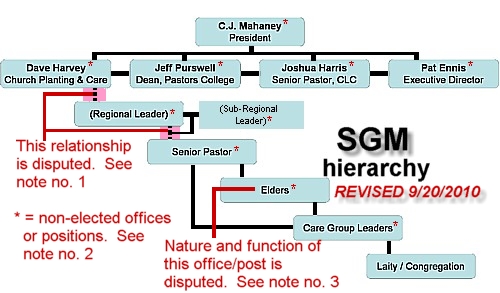
I sure would have thought that Acts 29 or Sovereign Grace were about as churched as the Young, Restless, and Reformed get. Those are communions of some kind. Together for the Gospel or The Gospel Coalition would appear more New School than Old School compared to the networks of congregations headed by Driscoll or Mahaney. In other words, I’m puzzled by this notion that an Old School element exists among the Young, Restless, and Reformed. Neither post mentions any examples of such an Old School contingent, a figure, or set of churches. I even wonder if the authors know about the communions that comprise the North American Presbyterian and Reformed Churches.

Mind you, the hope for a well grounded account of the church to counteract voluntarism is a welcome sign. White writes, for instance:

Once entered, membership and fellowship become a holy obligation and a familial bond, not to be broken lightly. The visible fellowship of the church is made (ideally) a living critique of unstable, self-defined voluntary culture.

Matthew Lee Anderson adds:

. . . voluntary associations of an arbitrary sort simply do not provide the stability and depth that we need for human flourishing. For that, we must look elsewhere, to God Himself, which is the first movement of the church and the fountainhead of virtue.

But when Anderson talks about the dangers of localism as a kind of nostalgia, I am not sure he understands the nature of the church. He says:

It would be easy to dismiss voluntarity and pine for a return of immobility and a small patch of land with a picket fence. But the promise of localism needs to be tempered by the perils as well. The soil is just as fallen as the pavement, and electing to reject the easy, voluntary associations of our late modern world for the involuntary ones of the local community may offer just as false a hope as the social networks did.

Well, actually, when it comes to food production, a patch of land is much better than pavement, superior in every respect. And spiritual food is best produced locally rather than corporately. It is easy to sound elitist when promoting the values of slow food over McDonald’s, and the work of a pastor is much closer to that of a slow food chef than a teenager flipping burgers at the local store of an international company. But closer to the truth is the similarity between a local pastor’s work and a mother’s. These officers prepare food (whether spiritual or physical) with a sense of what is good for the eaters. They use good ingredients and do so with a sense of what the sheep or children need nutritionally.

In which case, when Jesus told Peter to feed his sheep, our lord likely did not have in mind Peter going to the spiritual equivalent of McDonald’s to purchase burgers for the flock. Care, discernment, and preparation were as important to the feeding as the actual cooking. That leaves the megaconferences like TGC or T4G or even the Philadelphia Conference on Reformed Theology much more in the position of providing fast food than a home cooked meal since the cooks are not dining with the eaters, or spending time in between meals to see how the digestion is going or if the diet needs to be modified.

I an very glad to know that some Young, Restless, and Reformed are aware of Old School Presbyterianism. But I’d sure like to know which cooks they have in mind and what authorities are overseeing the kitchens.

Mark Driscoll Has Some 'Splaining To Do

A story about megachurch multi-site projects at Christianity Today contains an arresting quotation from the Mars Hill corporation. Driscoll’s church is planning to plant a church in Portland, Oregon and the justification runs as follows:

The city of Portland is known for many things, but the gospel of Jesus is nowhere on the list.

Let’s see, when I think of Seattle, does the gospel come to mind? Not really. All I can think of are corporations — Starbucks, the McDonalds of coffee, Red Hook beer, now part of one of the consolidated breweries, and Microsoft, the company responsible for inserting bullet points whenever I hit the indent key while using MS Word. I used to think of the Supersonics but that was before the National Basketball Association caved to the greed of one of its franchise owners.

All in all, the gospel is not one of the associations I make with Seattle. Maybe Mark Driscoll should turn Seattle into the Jerusalem of the Pacific Rim before setting up shop in Portland (where even congregations with ties to Tim Keller exist).

Orthodox Presbyterians Rival Gospel Co-Allies Enthusiasm for Enthusiasm

General Assemblies are not always like this but the recent OPC GA did assume more the character of a national preaching conference (of course, minus the celebrity pastors) than a regular meeting of the church’s highest judicial body. All of the presentations from the OPC’s standing committees included historical overviews as well as substantial edification and exhortation from God’s word. Don Poundstone, a retired minister and home missionary, rounded out the proceedings with his address at the Saturday night banquet in which he argued, based on Christ’s responses to Pilate (John 18), that the OPC at its best had been a witness to the truth of Scripture and had affirmed that Christ’s kingdom is not of this world. Video recordings of most of the presentations are available here. (Foreign missions talks are unavailable because of the sensitivity of information regarding several fields of ministry.)

Arguably, one of the most moving parts of the Assembly came on Saturday morning during the presentation by the Committee on Christian Education. Part of the proceedings included a talk by Rev. John P. Galbraith, a 98-year old minister who actually studied at Westminster when Machen was still teaching and went on to serve in a variety of capacities, including General Secretary of both the Committee on Home Missions and the Committee on Foreign Missions. Even before speaking — which revealed a man with a mind still sharp and a tongue still eloquent — Galbraith received a standing ovation from commissioners and guests. The first words out of his mouth were those of the apostle Paul, “I do not understand what I do. For what I want to do I do not do, but what I hate I do.” Galbraith then added, “And you applaud me?”

As near as I could tell, Galbraith’s deflection of applause characterized the week of presentations, devotionals, and sermons. Orthodox Presbyterians were glad to have reached the seventy-fifth birthday, but but they also knew that their history was not sensational or the product of their own faithfulness. (Self-promotion alert: see this point expressed in a different way here.) As cliched as it may have sounded, the truth that human accomplishments were less responsible than God’s grace for the OPC’s “success” was overwhelming sense among all those gathered. Part of the reason must have been that the last time the OPC met to throw a birthday party — in 1986 at Tony Campolo’s Eastern University — the church also voted itself out of existence. That is, the OPC accepted the invitation from the PCA to join and be received into the newer Presbyterian denomination. The proposal did not receive the super-majority of votes needed to be sent to the presbyteries for ratification. But a majority of commissioners in 1986 were willing to hitch their own and longer story to a communion that was less than fifteen years old. After twenty-five years of developments in both denominations, hardly anyone, at least in the OPC, regrets the rejection of J&R.

And so with quiet resolve and restrained joy Orthodox Presbyterians reflected on their past and heard preachers and missionaries recount the mighty deeds of God throughout redemptive history. It was by most accounts a time of great blessing for all who attended, and even prompted some to think that the OPC should sponsor its own national conference. Its speakers, like its history, would not be famous. And so the turnout would be light, insufficient to cover expenses. But those preachers would know their Bibles. Perhaps, just as important, they’d know their place — that the power of their words depends not on their own accomplishments or celebrity but on the God who gave them the word to proclaim.

Alliances, Ecumencity, and Being Reformed

The OPC’s 75th anniversary also coincided with the regular meeting of General Assembly. My pastor, whose energy consumes more calories in a day than I devour in the course of a week, wrote the daily report and perusing his summary reminds me of an important point about communions like the Orthodox Presbyterian Church. The pastor’s notes on Friday’s sessions included the report from the OPC’s Committee on Ecumenicity and Inter-Church Relations (CEIR), with a list of the various denominations with which the OPC has a relationship.

The OPC reserves the category of ecclesiastical fellowship for fifteen different churches, which include:

The Associate Reformed Presbyterian Church (ARPC)
The Canadian Reformed Churches (CanRef)
The Christian Reformed Churches in the Netherlands (CRCN)
The Evangelical Presbyterian Church of England and Wales (EPCEW)
The Evangelical Presbyterian Church of Ireland (EPCI)
The Free Church of Scotland (FCS)
The Presbyterian Church in America (PCA)
The Presbyterian Church in Korea (Kosin) (PCKK)
The Reformed Church in Japan (RCJ)
The Reformed Church of Quebec (ERQ)
The Reformed Church in the United States (RCUS)
The Reformed Churches of New Zealand (RCNZ)
The Reformed Presbyterian Church of Ireland (RPCI)
The Reformed Presbyterian Church of North America (RPCNA)
The United Reformed Churches in North America (URCNA)

According to the OPC’s rules for ecclesiastical relationships:

Ecclesiastical Fellowship is a relationship in which the churches involved are Reformed in their confessional standards, church order and life though there may be such differences between them that union is not possible at this time and there might be considerable need for mutual concern and admonition. It is to be implemented where possible and desirable by:

Exchange of fraternal delegates at major assemblies
Occasional pulpit fellowship (by local option)
Intercommunion, including ready reception of each other’s members at the Lord’s Supper but not excluding suitable inquiries upon requested transfer of membership, as regulated by each session (consistory)
Joint action in areas of common responsibility
Consultation on issues of joint concern, particularly before instituting changes in polity, doctrine, or practice that might alter the basis of the fellowship
The exercise of mutual concern and admonition with a view to promoting Christian unity
Agreement to respect the procedures of discipline and pastoral concern of one another
Exchange of Minutes (Acts) of the major assemblies
Exchange of denominational church directories (yearbooks)
Exchange of the most recently published edition of the confessional standards
Exchange of the most recently published edition of the (Book or Manual of) Church Order
Exchange of the most recent denominationally published edition of hymnals or Psalters

Runner up to ecclesiastical fellowship is a corresponding relationship, an OPC category into which eleven churches fall:

The Africa Evangelical Presbyterian Church
Free Church of Scotland Continuing
The Free Reformed Churches of North America
The Heritage Reformed Congregations
Independent Reformed Church in Korea
The Reformed Churches in the Netherlands (Liberated)
The Presbyterian Church of Brazil
The Presbyterian Church of Eastern Australia
The Presbyterian Church in Japan
The Bible Presbyterian Church
The Reformed Churches of South Africa

According to the rule book, a corresponding relationship is one in which:

. . . mutual contact with another church is undertaken to become better acquainted with one another with a view towards entering into Ecclesiastical Fellowship at some time in the not-too-distant future. It shall be implemented where possible and desirable by:

Exchange of official representatives at major assemblies
Joint action in areas of common responsibility
Consultation on issues of joint concern, particularly before instituting changes in polity, doctrine, or practice that might alter the basis of the relation
Exchange of Minutes (Acts) of the broadest assemblies
Exchange of denominational church directories (yearbooks)
Exchange of the most recently published edition of the confessional standards
Exchange of the most recently published edition of the (Book or Manual of) Church Order
Exchange of the most recent denominationally published edition of hymnals or Psalters

Finally, the last level of relationship is ecumenical contact and the OPC puts ten churches into this category:

Confessing Reformed Church in Congo
Presbyterian Free Church of India
Free Church in Southern Africa
Free Reformed Churches in South Africa
Gereja-Gereja Reformasi Calvinis
Gereja-Gereja Reformasi di Indonesia
Reformed Churches of Brazil
Reformed Churches of Spain
Reformed Presbyterian Church of India
Reformed Presbyterian Church North-East India

An ecumenical contact is a status reserved or denominations that belong to the International Council of Reformed Churches and .reflects an effort to follow the ICRC’s stated d purpose, “to encourage the fullest ecclesiastical fellowship among the member churches.”

It shall be implemented, as appropriate, by:

Meetings, both formal and informal, of delegates to the quadrennial meeting of the Conference
Welcome of official observers at the broadest assemblies
Communication on issues of joint concern
Mutual labors as members of the Conference in discharge of the purposes of the Conference

A couple of matters are worth highlighting about these lists and terms: 1) The OPC is often characterized as narrow and idiosyncratic but her ecclesiastical relationships extend well beyond the United States and (even) North America to places which U.S. parachurch agencies and alliances have no presence. 2) The list and definitions extend not to celebrity pastors but to actual churches.

All the more reason to associate the word, “reformed,” with another word, “church.” Without church, reformed makes no sense.