
Worldview Demagoguery

One of Dr. K’s fans posted here part of a letter by a Reformed pastor who is also in agreement with the good doctor on the threat that 2k supposedly poses to vigorous and full-fledged Reformed Protestantism. That excerpt read:

We agree with Dr. Kloosterman’s assessment of what will happen in the Reformed community, as we know it, if these natural law, two-kingdom views espoused by Dr. Van Drunen and others, take root. We urge every reader of this magazine to exert the mental energy that will be required to follow the lines of argumentation that Dr. Kloosterman will present in upcoming articles. It is necessary for the peace of the church and survival of the Reformed faith with its Calvinistic world and life view. Please do not underestimate the importance of the struggle we are facing.

What is curious about this understanding of 2k’s threat is that again it does not accord with reality (or in denial, if you will). To be sure, Dr. K has also been guilty of construing the debate over Christianity and culture in fidelity-to-the-gospel proportions. But when you least expect it, he also provides evidence that undermines his very claims about the stakes of 2k. In an article for Christian Renewal where he discussed the Federal Visionists’ identification of baptism with regeneration, Dr. K appealed to one of those communions allegedly on the verge of losing its Reformed soul to the trickery of 2k:

Our purpose here is to warn readers about the inevitable deformative effects, within confessionally Reformed churches, of correlating a child’s physical birth (to believing parents) with that child’s spiritual birth from above. This view is an over-correction of another, admittedly deficient and non-covenantal, “revivalist paradigm” so common among evangelical Protestants, which denies to a child of believing parents any status or blessings different from those enjoyed by a child born to unbelieving parents. For a helpful analysis of these and related views, see the “Report of the Committee to Study the Doctrine of Justification” presented in June, 2006, to the 73rd General Assembly of the Orthodox Presbyterian Church.

Important to note here is that David VanDrunen chaired the committee responsible for this report and he contributed significant sections to it. Had Dr. K known this, he may not have cited it so favorably.

But since he did, Dr. K has proven the worried letter writer quoted above wrong. One of the communions where 2k is on the loose has not abandoned the Reformed faith but has actually stood remarkably well for the doctrines of grace (among others). What is more, in the case of VanDrunen himself, the logic of 2k does not lead to an abandonment of Reformed orthodoxy.

Not to be missed either is the 600 pound gorilla in the room of worldview triumphalism and lamentation. That would be the beast known as the Christian Reformed Church. Much as I enjoyed my time in that communion and regard highly many of its pastors and scholars, the CRC is emerging precisely as the communion that the fervid letter writer fears—a communion where the peace of the church and the survival of the Reformed faith are up for grabs. Now, the reasons for this state of affairs may not be solely the effects of worldview thinking and overreaching. But isn’t it a tad curious that the one communion where worldviewism is alive, well, and bursting at the seems (from neo-Calvinist steroids?) is the CRC? So where is the evidence that 2k leads to infidelity? And where is the acknowledgment from 2k critics that worldviewism also goes wobbly and is no guarantee of Reformed faithfulness?

At the very least, the critics of 2k should consider the evidence before predicting the effects of 2k on Reformed churches. But more helpful would be for the worldview critics of 2k to consider why a Reformed world-and-life-view has prompted former conservatives in the CRC to leave for other denominations or federations (out of respect to our good friends in the URC).


Freedom for Home Schoolers, Tyranny for Infidels

In the category of harmonic convergence, Rabbit Bret and Brothers B recently huffed and puffed about a PCA pastor from Richmond, Indiana who had the temerity to write a letter to the local newspaper editor in which he argued for more government oversight of homeschooling.

In his 19-point reply (with subpoints, no less) the good rabbi makes this not so subtle rejoinder:

Tom, the chief person you’ve offended is Jesus Christ in heaven above. You have advocated the State to usurp the prerogatives that God has given to the parents in order that the State might play God to the family. Your advocacy for increased State control is an advocacy that leads to the deterioration of the family and the enhancement of the State. A State, I might remind you, which is hostile to Biblical Christianity.

Weighing in for the Baylys is brother Tim who has this reasoned response (though, a drive-by snipe at Covenant Seminary ended up provoking the most discussion):

It takes a village? Actually, no: that village is a gang or a group home.

What it really takes is a home. It takes a father and mother. It takes God and the natural sovereigns He’s put over sons and daughters–Papa and Mama.

Those authorities that undermine or remove the authority of fathers and mothers by transferring their authority to the state are rebels against God.

Keeping the cosmic convergence on a roll, I too would come down on the side of Bret and Tim. I affirm limited government and the value of mediating institutions, starting at the very basic, natural law, level of the family. On matters of policy, I might favor some kind of interaction among families and local school authorities, just at a meet and greet level so that both sides actually function as neighbors, another association that yields mediation. So I understand and approve generally of their concern about the state controlling more and more of daily life.

What I call attention to though is the contradiction between these pastors’ call for limited government regarding the family and their frequent requests for the state to uphold and defend the true religion. To put this matter graphically, would Bret and Tim be so willing to see a Wiccan family conduct home schooling? Maybe they would given their opposition to big government.

But how big a government would you have if the Westminster Assembly was right about the powers of the civil magistrate and Hilary Clinton as the next president of the United States had the power and duty to call and preside over the PCA General Assembly or the CRC Synod? At this point I believe Bret and Tim might finally come around to a 2k outlook (mind you, I know longer speak of worldviews).

A Reformed Protestant by Any Other Name Has to Be Shorter

From my trip to Geneva last summer for the festivities to celebrate John Calvin’s 500th birthday I still recall the indignation of a professor from the University of Zurich during his plenary presentation. He complained about Calvinism as the designation for Protestants who come from the Swiss Reformation. Obviously, he has a point since the Reformed churches started well before Calvin was a Protestant. What is more, Geneva was a bit of an outlier in the Swiss Confederation, not joining until the 19th century (though it was an ally of Bern which brought Geneva in closer relationship to Switzerland). And during the Reformation itself, Geneva and Zurich were not always on the best of terms. The Consensus Tigurinus (1549) is one indication of an effort by Calvin and Bullinger to bury the butter knife.

The primacy of Zurich to Geneva and of Zwingli to Calvin means that Calvinism is a misnomer. Should the better name be Zwinglian? Well, the Lutherans might find that agreeable – as in the Reformed finally own up to their real convictions on the Lord’s Supper. But Zwingli died in 1531 and hardly spoke for a body of churches that were just emerging (Geneva had yet to reform its church).

Another disadvantage of Calvinism is that it abstracts a doctrine of salvation from the church and sacraments – as in John Piper is a Calvinist. Piper may share Calvin’s view of the five points, but does he follow Calvin on church polity or the Lord’s Supper? And why would the doctrines of grace determine the nature of Calvinism more than worship or the church?

Of course the advantage of Calvinist is that it is shorter than Reformed Protestant. At three syllables, Calvinist weighs in right there with Lutheran and Anglican, meaning you don’t have to exert yourself to identify as a Calvinist. Reformed Protestant is a five-syllable mouthful; Reformed Protestantism is no quicker to say. RP might work but the Covenanters already have that moniker cornered.

So we may be stuck with Calvinism. But all Reformed Protestants, that is, those Protestants different from Lutherans and the Church of England, who identify with like-minded saints in places like Hungary, Poland, France, Scotland, the Netherlands, and the Palatinate, should feel a pang of remorse when identifying their ecclesial heritage as Calvinist – sort of the way readers of Wendell Berry feel guilty when turning the ignition of their car and burning more fossil fuel.

Two-Kingdom Tuesday: The Hollowness of Article 36

Critics of two-kingdom theology from Dutch backgrounds often cite the Belgic Confession’s teaching on the civil magistrate as grounds for rejection. For those who don’t have a copy of the confession handy, Article 36 reads:

And the government’s task is not limited to caring for and watching over the public domain but extends also to upholding the sacred ministry, with a view to removing and destroying all idolatry and false worship of the Antichrist; to promoting the kingdom of Jesus Christ; and to furthering the preaching of the gospel everywhere; to the end that God may be honored and served by everyone, as he requires in his Word.

What said critics fail to mention is that Article 36 has been soundly rejected by the Dutch and the Calvinists among them.

First, the North American descendants of the Dutch Reformed church would revise the article to remove the magistrate’s responsibility for upholding the true religion and destroying all infidelity. The Christian Reformed Church Synod of 1958 called this affirmation of Article 36 “unbiblical” and substituted the following:

They should do it [i.e., remove every obstacle to the preaching of the gospel and to divine worship] in order that the Word of God may have free course; the kingdom of Jesus Christ may make progress; and every anti-Christian power may be resisted.

That may give the magistrate more sway over religion than 2k folk would like, but it is far removed from the original language of the Belgic Confession. What is more, the modern Dutch churches regard the standard by which many neo-Calvinists critique 2k as “unbiblical.”

Second, Abraham Kuyper himself, the Calvinist than whom no Calvinist is more neo, rejected Article 36’s assertion of the magistrate’s power to punish infidelity. As pointed out in a previous post, Kuyper wrote specifically and candidly about his disagreement with Article 36. Among the assertions he made were:

We would rather be considered not Reformed and insist that men ought not to kill heretics, than that we are left with the Reformed name as the prize for assisting in the shedding of the blood of heretics.

It is our conviction: 1) that the examples which are found in the Old Testament are of no force for us because the infallible indication of what was or was not heretical which was present at that time is now lacking.

2) That the Lord and the Apostles never called upon the help of the magistrate to kill with the sword the one who deviated from the truth. Even in connection with such horrible heretics as defiled the congregation in Corinth, Paul mentions nothing of this idea. And it cannot be concluded from any particular word in the New Testament, that in the days when particular revelation should cease, that the rooting out of heretics with the sword is the obligation of magistrates.

3) That our fathers have not developed this monstrous proposition out of principle, but have taken it over from Romish practice. . . .

I do wish that Dr. Kloosterman would pay attention to the master of all worldview and world transformation and cease from using an article against 2k that no Dutch Calvinist uses (except himself and his fans).

Finally, the Dutch magistrates themselves rejected Article 36 even in the glory days of the Dutch Reformation. Here is how Philip Benedict concludes his chapter on the Dutch Reformation:

The place of the Reformed church came to assume within the seven United Provinces of the Netherlands was different from that of any other established church in Europe. On the one hand, the Reformed church was the public church. Its ministers were paid from the tithe and the proceeds of seized church property. It provided the chaplains who accompanied the republic’s armies and navies. . .

On the other hand, across the republic as a whole the Reformed enjoyed neither the numerical preponderance nor the degrees of ideological hegemony that Europe’s legally dominant churches normally exercised. For every author who likened the Dutch struggle for independence to the liberation of ancient Israel from the yoke of Egypt, another depicted the long war for independence as a battle to preserve the traditional liberties of the region against tyranny, including ecclesiastical tyranny. . . . The consistories and synods learned before long to moderate the severity of their demands for moral purity, and the measures regulating public morals generally fell far short of the strictness of those promulgated in Zurich, Geneva, and Scotland. Last of all, ecclesiastical discipline was not backed up by civil sanctions as in Geneva and Scotland. The revolutionary reformation of the Low Countries was thus revolutionary for its reconfiguration of the relation between church and state and for the degree of freedom it obtained for inhabitants of this region to live their lives outside the institution and ritual of any organized church, even while it gave birth to a Reformed church that was at once privileged and pure, an established church and a little company of the elect.

Maybe I’m finally understanding the purpose of worldview thinking. It is a way of seeing the entire globe and ignoring reality.

Act One, Scene Two: Kloosterman on Luther as Neo-Calvinist

I would not have thought it possible. “It” in this case is an effort to disassociate Martin Luther from two-kingdom theology. Most Reformed Protestants beyond the age of accountability understand intuitively, it seems, that Lutheranism goes wobbly in its Christian teaching because of the dualism that haunts it, thanks to Luther’s two-kingdom theology. Furthermore, when Reformed Protestants, like David VanDrunen, come along and speak favorably of 2k, they usually have to duck or else get hit with the epithetical cream pie of “Lutheran.”

But our good Dr. Kloosterman, the keeper of the neo-Calvinist flame (he likely prefers Calvinettes to GEMS as the name for Christian Reformed girls clubs), will have none of such a conventional understanding of Luther. In the third installment of his review of VanDrunen’s book on natural law and the two kingdoms (the second was on VanDrunen’s handling of Augustine), Kloosterman takes issue with VanDrunen on Luther. VanDrunen’s presentation is hardly controversial; he links Luther to previous developments stemming from Augustine’s doctrine of the two cities, and Gelasius’ teaching on the two swords. VanDrunen doesn’t even try to claim Luther as a proto-Reformed theologian.

But Kloosterman is so opposed to VanDrunen’s project that he will not even let VanDrunen’s discussion of Luther stand. For instance, Kloosterman accuses VanDrunen of a selective reading and quotes from the 1523 essay, “Temporal Authority,” where Luther writes of the Christian prince:

What, then, is a prince to do if he lacks the requisite wisdom and has to be guided by the jurists and the lawbooks? Answer: This is why I said that the princely estate is a perilous one. If he be not wise enough himself to master both his laws and his advisers, then the maxim of Solomon applies, ‘Woe to the land whose prince is a child’ (Eccles. 10:16). Solomon recognized this too. This is why he despaired of all law-even of that which Moses through God had prescribed for him-and of all his princes and counselors. He turned to God himself and besought him for an understanding heart to govern the people (I Kings 3:9). A prince must follow this example and proceed in fear; he must depend neither upon the dead books nor living heads, but cling solely to God, and be at him constantly, praying for a right understanding, beyond that of all books and teachers, to rule his subjects wisely. For this reason I know of no law to prescribe for a prince; instead, I will simply instruct his heart and mind on what his attitude should be toward all laws, counsels, judgments, and actions. If he governs himself accordingly, God will surely grant him the ability to carry out all laws, counsels, and actions in a proper and godly way.

Kloosterman seems to think that this adds up to a brief for his own position – namely, that special revelation must interpret natural revelation. On this basis Kloosterman has argued that a magistrate needs to take his cues from Scripture to rule in a truly just manner. Curiously enough, Luther did not answer his question – where should the prince look for wisdom? – as Kloosterman would, by pointing the prince to the Bible. The archetypal Lutheran in good 2k fashion merely speaks of the prince’s need for a godly attitude in discerning his duties.

This misinterpretation of Luther extends throughout Kloosterman’s installment and it is particularly ironic since Kloosterman’s point is that VanDrunen misinterprets Luther. Be that as it may, Kloosterman insists that Luther must not be chalked up on the side of dualism:

Our point is simple: When one surveys the breadth of Luther’s voluminous writings, the overwhelming impression is that for Luther, the Christian faith and the Christian religion did not exist alongside public life, but came to expression and functioned within public life. Whether speaking at the Diet of Worms or serving as mediator among the German princes, whether opposing public unrest and public heresy or defending good quality education, whether commenting on war and peace or on trade and money—in all of these roles, we meet Luther the preacher of the gospel and pastor of the German people. Yes, Luther knew how to distinguish the “spiritual” regiment from the “temporal” regiment, but he never separated them, nor did he retreat from entering the world’s domain in the name of God, with the Word of God.

There we have it – Luther the proto-Kuyperian. This surely will be news to the historians, theologians, Lutherans, and Reformed Protestants, who knew and know Luther to be 2k. Kloosterman’s reading is not at all unusual for a Kuyperian since neo-Calvinists, from Kuyper to the present, have a habit of reading the past in a way that always vindicates them and their world-and-life-view. Even so, his review suggests less a stroke of genius than a move of desperation to save the neo-Calvinist movement that used to have a monopoly – world dominators that they were – on what it means to be Reformed.

Why Should Chaplains Have All the Good Uniforms?

Our southern correspondent sent a story from the Washington Post about the Supreme Court’s justices’ annual photo shoot. Robin Givhan, the staff writer, took particular notice of Ruth Bader Ginsburg’s decision to adorn her black robe with “a white lace frill that flopped down the front of her chest like a hankie she’d tucked into her collar.” This fashion statement contrasted with the new justice, Elena Kagan, who allowed only a “a discreet hint of delicate white fabric peeking out from the top of her robe.”

Givhan goes on to comment on the significance of attire for officials such as justices:

One wishes that the decision to wear basic black had been unanimous. The justices’ unadorned black robes carry with them an air of tradition, dignity, gravitas, as well as humility. It doesn’t matter if a justice is wearing a custom made Turnbull & Asser shirt, a Chanel suit or a tie from Charvet. All of that finery is hidden under their look alike robes. The stark costume reminds them that while they possess great power, it should be wielded with deep humility.

In donning the robes, the justices make a visual promise that they’re leaving personal idiosyncrasies, prejudices and desires outside the courtroom. They have tamped down individual preferences in service to the greater good, the general public . . . the law. The robes acknowledge that the justices have shed distractions in favor of objectivity, fairness and a common, high minded purpose. . . . The robe helps to ward off hubris and self importance. Indeed, wouldn’t we be perturbed if a justice decided that a little rhinestone trim along the sleeves would be quite nice? Or what if a justice decided that a mink collar would be quite lovely in the winter?

Does not the same logic, as our southern correspondent’s email asked, apply to pastors? Isn’t the nature of their work to get out of the way and let the word and Spirit do the work? And wouldn’t a robe that hid personal idiosyncrasies of sartorial preference and cultural breeding be a good way to remind the pastor that his work is not finally about him, his taste, or his social standing?

As Givhan concludes, “Clothes have a lot to say about who we are. They are our personal riffs on our place in the world. And those flourishes of style are important and meaningful.” But such statements have “no place on the Supreme Court.” If the proclamation of the word and the administration of the sacraments occupies an even higher purpose than interpreting the meaning of the nation’s laws, a robe would appear to be even more fitting for ministers than the business suit (not to mention the polo or faded t-shirt).

Where's Waldo Wednesday: Union and Two Kingdoms Together


Now this is union-with-Christ piety that is more like Calvin than Kuyper:

Grant Almighty God, that as thou deignest so far to condescend as to sustain the care of this life, and to supply us with whatever is needful for our pilgrmiage, — O grant that we may learn also to rely on thee and so trust to thy blessing as to abstain not only from all plunder and all other evil deeds, but also from every unlawful coveting; and to continue in thy fear, and so to learn also to bear our poverty on the earth, that being content with those spiritual riches, which thou offerest to us in thy gospel, and of which thou makest us now partakers, we may ever cheerfully aspire after that fullness of all blessings, which we shall enjoy when at length we shall reach the celestial kingdom and be perfectly united to thee through Christ our Lord. Amen. (Prayer of John Calvin from lectures on Habakkuk)

And for good reason.

In fact, I continue to scratch my head that the leading proponents of union are not openly on the side of the spirituality of the church and opposed to the this-worldly activism of neo-Calvinists.

Act One, Scene One: Kloosterman, Worldview, and the Reformed Confession

The indefatigable slayer of 2k dragons, Nelson Kloosterman, has started a review series of David VanDrunen’s recent book on natural law and the two kingdoms. In his opening essay – will this one grow to twenty-one installments like his series on Klineanism and theonomy – he identifies the issue that makes VanDrunen’s position so alarming and worthy of extended critique:

. . . the disagreement—let this be clear from the outset—has never been about the existence of natural law or of two modes of divine rule in the world. In our current context, and in this ongoing discussion, that has never been the disagreement. The disagreement has involved, and continues to involve, the authority of Scripture, the authority of Jesus Christ, and the responsibility of Christians in the world. How is the Bible relevant to Christian living in today’s world? How is the lordship of Jesus Christ relevant to Christian living in today’s world? These have been, and remain, the questions that define the disagreement. Contemporary advocates of a certain construal of natural law and two kingdoms are unable to explain how either the Bible or the lordship of Jesus Christ are normative for Christians in their cultural life in today’s world. By contrast, contemporary advocates of Reformed worldview Christianity insist that the principles of God’s inscripturated revelation and of the lordship of King Jesus are normative for Christians in their cultural life in today’s world.

This is a helpful statement of what it is that troubles Kloosterman. But he has left out an important matter for Reformed Protestants, namely, what do our churches confess? Here the answer is not in Kloosterman’s favor since the Reformed Confessions say nothing about a Christian worldview as an article of the Christian faith. Nor has the notion of worldview been a consideration for determining churches of like faith and practice.

That puts Kloosterman in the awkward position of implicitly binding the conscience of VanDrunen and all those who don’t accept Dr. K’s version of Christian worldviewism. By making worldview the basis for his approval of other believers and their ideas, Kloosterman is establishing his own opinion and interpretation of the Bible as the criterion for unity in the faith. But let it be clear that he has no confessional basis for making a Christian worldview a requirement of authentic and faithful Christianity.

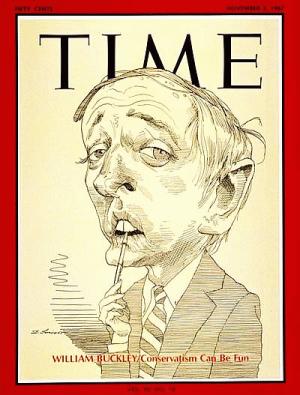
Why Conservatism Beats Biblicism

An earlier reference to Ross Douthat’s blog posts on gay marriage was intended to show that people in the mainstream secular media can hear an argument that is laced with Christian norms and not go running to the Supreme Court for an injunction to shut said arguer down. Douthat concluded his series of posts (defending his column in the New York Times) with a lengthy response to Andrew Sullivan, one of gay marriage’s most provocative and intelligent advocates.

The entire post is worth reading, just to see the wider implications of what might seem like a straightforwardly up or down moral matter — whether marriage is for one man and one woman or not. But he ends with an appeal to the nature of conservatism that Protestants who think of themselves as conservative should well consider. The reason has to do with the nature of conservatism, which is not about defending morality and opposing wickedness (the Bayly version) but rather concerns conserving as much as possible what humans (whether Christian or not) have learned and benefited from the past. Douthat writes:

The benefits of gay marriage, to the couples involved and to their families, are front-loaded and obvious, whereas any harm to the overall culture of marriage and childrearing in America will be diffuse and difficult to measure. I suspect that the formal shift away from any legal association between marriage and fertility will eventually lead to further declines in the marriage rate and a further rise in the out-of-wedlock birth rate (though not necessarily the divorce rate, because if few enough people are getting married to begin with, the resulting unions will presumably be somewhat more stable). But these shifts will probably happen anyway, to some extent, because of what straights have already made of marriage. Or maybe the institution’s long decline is already basically complete, and the formal recognition of gay unions may just ratify a new reality, rather than pushing us further toward a post-marital society. Either way, there won’t come a moment when the conservative argument, with all its talk about institutional definitions and marginal effects and the mysteries of culture, will be able to claim vindication against those who read it (as I know many of my readers do) as a last-ditch defense of bigotry.

But this is what conservatism is, in the end: The belief that there’s more to a flourishing society than just the claims of autonomous individuals, the conviction that existing prohibitions and taboos may have a purpose that escapes the liberal mind, the sense that cultural ideals can be as important to human affairs as constitutional rights. Marriage is the kind of institution that the conservative mind is supposed to treasure and defend: Complicated and mysterious; legal and cultural; political and pre-political; ancient and modern; half-evolved and half-created. And given its steady decline across the last few decades, it would be a poor conservatism that did not worry at the blithe confidence with which we’re about to redefine it.

Now He's Channeling DG

And I don’t mean Desiring God Ministries.

Carl Trueman offers some preliminary thoughts on the Christianity Today feature story on Al Mohler. Trueman recognizes a potential trap in offering a response. If Mohler represents evangelicalism, then the born-again identity is really much smaller than the evangelical guardians at Christianity Today and the National Association of Evangelicals would have it. But if the Southern Baptist Seminary president is only one small piece of the evangelical puzzle, then the movement has lost all chance of coherence. So Trueman’s solution is to punt, or at least conduct the thought experiment of a world in which evangelicalism does not exist.

I would like to suggest an alternative take, one intended neither in a mean nor chauvinist spirit: maybe evangelicalism, as some kind of abstract ideal in which all us `evangelicals’ participate, does not really exist. Maybe it is now (even if it has not always been) simply a construct which lacks any real doctrinal identity (and claims to be `gospel people’ simply will not do here, given that the Catholics and liberal friends I have also claim the same title). Maybe it is to be defined institutionally, not theologically. And maybe, therefore, it is not worth fighting or fretting over.

As in the debates between realists and nominalists in the Middle Ages, it seems to me that evangelicalism only exists in particulars, in highly qualified forms such `Confessing Evangelical’, `Open Evangelical’ etc. The essence of evangelicalism is elusive, and, I believe, illusory. After all, it is surely an odd term that implies a Reformed Calvinist has more in common with an open theist than a traditional Dominican. That, by the way, is a merely descriptive remark.

If this is so, and we can come to acknowledge such and act upon it, many of the current battles might well be defused. We will not be fighting, after all, over ownership of something that does not really exist. We could all be free to be ourselves (Reformed, Baptist, Presbyterian, Anabaptist and so on).

This sounds oddly familiar. In fact, in Deconstructing Evangelicalism the pre-DG DG wrote something very similar:

Instead of trying to fix evangelicalism, born-again Protestants would be better off if they abandoned the category altogether. The reason is not that evangelicalism is wrong in its theology, ineffective in reaching the lost, or undiscerning in its reflections on society and culture. It may be but these matters are beside the point. Evangelicalism needs to be relinquished as a religious identity because it does not exist. In fact, is it the wax nose of twentieth-century American Protestantism. Behind this proboscis that has been nipped and tucked by savvy religious leaders, academics and pollsters is a face void of any discernible features. The non-existence of an evangelical identity may prove to be, to borrow a phrase from Mark A. Noll, the real scandal of modern evangelicalism. For despite the vast amounts of energy and resources expended on the topic, and notwithstanding the ever growing literature on the movement, evangelicalism is little more than a construction. This book is a work of deconstruction.

. . . . the central claim of Deconstructing Evangelicalism is precisely to question the statistics and scholarship on evangelicalism. The reason is not simply to be perverse or provocative. Good reasons exist for raising questions about whether something like evangelicalism actually exists. In the case of religious observance, evangelical faith and practice have become increasingly porous, so much so that some born-again Christians have left the fold for more historic expressions of the Christian faith, such as Roman Catholicism, Eastern Orthodoxy, and Anglicanism. At the same time, in the sphere of religious scholarship, evangelicalism has become such a popular category of explanation that it has ceased to be useful. Better reasons, however, may also be offered for looking behind the evangelical facade to see what is really there. As the following chapters attempt to show, evangelicalism has been a religious construction of particular salience during the late twentieth century. The general contractors in building this edifice were the leaders of the 1940s neo-evangelical movement who sought to breathe new life into American Christianity by toning down the cussedness of fundamentalism while also tapping conservative Protestantism’s devotion and faith. Yet, without the subcontractors in this construction effort, the neo-evangelical movement would have frayed and so failed much quicker than it did. The carpenters, plumbers, and painters in the manufacturing of evangelicalism have been the historians, sociologists and pollsters of American religion who applied the religious categories developed by neo-evangelicals to answer the questions their academic peers were asking about Protestantism in the United States. The emergence of evangelicalism as a significant factor in American electoral politics did not hurt these efforts and, in fact, may have functioned as the funding necessary for completing the evangelical edifice. Especially after the election of Ronald Reagan as President in 1980 and the formation of the so-called Religious Right, religious leaders and religion scholars had a much easier time than before convincing skeptical academics, policy wonks, publishers and pundits that evangelicalism was a given of American life, a thriving movement, and therefore important.

Makes you wonder if Trueman is an undercover Old Life agent at the Alliance of Confessing EVANGELICALS?