Now He's Channeling Glen

Not Glen Beck but Uncle Glen, that is.

Carl Trueman is on a roll and a recent post gives his objections to celebrity pastors. A friend told Trueman about an inquirer who came to him with a doctrinal question because the inquirer’s own pastor was too busy on the speaking circuit to meet with his congregant.

To which Trueman responds:

What was interesting was that this person was a member at one of the flagship Reformed evangelical churches in the US where the pastor is seen as one of the great hopes for the spread of gospel churches in the post-Christian world. In fact, this church member had actually tried to speak to this pastor about the issue, but had not been able to get an appointment. The church leader was simply too busy, with countless external demands on his time; and now, presumably protected by a praetorian guard of personal assistants and associate pastors, he was essentially as unavailable to the masses in his large congregation as the average rock star is to the punters who buy his concert tickets. . . .

I am immensely grateful that I have only ever held membership in churches of a size where the pastor has always been accessible and available. Indeed, my pastors have always even known my name, my wife’s name, my kids’ names, and even what sports they play (this latter may seem trivial but it has been peculiarly important to me: my kids may not always enjoy going to church; but they have never doubted that the pastor actually cares for them; and that is something for which I am more grateful than I can articulate). Indeed, each of my pastors has cared about his people, not as a concept or a good idea or as an indeterminate mass, but as real, particular people with names and histories and strengths and weaknesses; and this surely reflects the character and love of God who, after, calls his sheep by name and cares for us all as individuals. If I gave you the names of said pastors, few reading this post would ever have heard of them: they have written no books; they have never pulled in huge crowds; and they have never spoken at megaconferences. But they have always been there when even the humblest church member has called out for advice, counsel or even help with bailing out a flooded basement.

This sounds a lot like the point that avuncular Glen made in the pages of New Horizons to his nephew James:

The problem with your attraction to Pastor Strong’s church is that you may be succumbing to unhealthy standards for a pastor. Yes, this man does much of what a minister is supposed to do, and he does it in a much more visible way than most. He studies Scripture, expounds and applies it, leads worship, and apparently assumes his responsibilities as a presbyter both in his session and in his presbytery. I say “apparently” because someone who travels the way he does, especially when he is in book-promotion mode, is not going to be available for some regularly appointed session and presbytery meetings, not to mention any committees on which he might serve. He is also an effective speaker, and I have heard a number of recordings that attest to his powers of delivery (though I am not as sure that he preaches as much as he “gives a talk”).

As I say, Pastor Strong does the things that pastors are supposed to do in a very visible or public way. This means that he is ministering the word to a wider audience than that of his congregation. But when folks read his books or listen to his online sermons, Strong is not acting in his capacity as a minister because he has no relationship to the reader or listener. They are not members of the congregation that called him. They did not take vows to submit to him in the Lord, and he has not made promises ratified by real people to minister the word faithfully to anyone who picks up his book in a bookstore. In other words, he has no personal, and therefore no pastoral, relationship to remote listeners and readers.

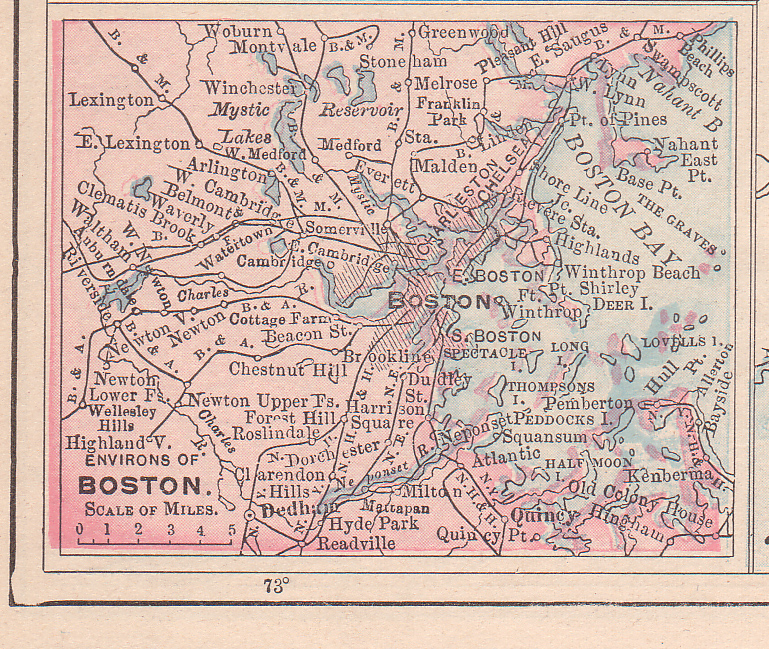
Granted, you say you would like to become a member of his congregation, and this would put you in a real relationship to Strong. But then comes the flip side of the problem I have just described. How can a man who is as busy as he is have time for a personal relationship with his congregants? What generally happens in situations like Strong’s is that he is at the top of a large pastoral staff in which the pastors without star power have the day-to-day responsibilities of shepherding the flock. At least that accounts for the pastoral oversight that Christians need. I can well imagine the disappointment you will experience if you move to Boston only to discover that you had more access to Strong during his visit to Rutherford than you do in the place where you worship.

Think of it another way. Have you ever heard of a celebrity dad? Well, of course, there are dads who are celebrities because of their work outside the home (Brad Pitt might qualify). But do you know any dads who are celebrities because of their activities as a father and husband? Bill Cosby’s character on his hit television show comes to mind, but that still isn’t the real thing. We do not know what Bill Cosby was like as a father because most of the duties of fathers are hidden from the public eye—taking out the trash, cleaning up after a child’s upset stomach, praying over the family meals. These are not tasks that create celebrity because they are unexceptional and do not attract publicity.

Some might argue that I am simply setting into motion a set of expectations that tolerates average or even mediocre men in the ministry—those without the ability to attract large audiences. Perhaps so, since I believe what Paul writes about God using earthen vessels to accomplish his purposes. The skills of the pastor are not what make his ministry effective; rather, it is the power of God that saves. My point, though, is not to deny the value of excellence. It is rather to underscore the quiet and routine ways in which the pastoral ministry transpires. Pastoral ministry is not flashy, but we need it in the same way that we need fathers and mothers to be in the home, not on speaking tours about parenthood.

It is good to know that Westminster Seminary has someone who understands the personal and routine nature of the pastoral ministry. Back in the day when I was at WTS, a certain transforming pastor in a large metropolis had a reputation at the seminary so large that he not only walked on water but hovered over it. Now, perhaps, sanity about the work of a pastor is reemerging at Machen’s seminary.

What's A Lay Person To Do?

One of the problems that Protestantism addressed at the beginning of the sixteenth century was the gap between monastic piety and the lives of ordinary Christians. The expectations in the Roman church were for the laity, without the support or environment of a monastic order, to maintain levels of holiness that monks and clergy supposedly embodied. So what Lutherans and Reformed did was to devise a piety for the laity that did not bind them to artificial and unbiblical priestly standards. An important piece of this new lay piety was the doctrine of vocation – the idea that secular work was valuable for serving God.

Later in the sixteenth century came a body of practical divinity that appears at times to micro-manage the life of the ordinary Christian. Folks like Lewis Bayly and William Ames and Richard Baxter wrote guides for holy living (available on line at Calvin College’s ethereal library) that walk lay folk through the ordinary parts of daily life and infuse these activities with religious significance. It is not unlike the efforts of neo-Calvinists, under the banner of world-and-life-views, drenching every thought with sacred purpose.

What experimental Protestants sometimes forget is that Roman Catholics and pietist Lutherans were engaged in similar enterprises at roughly the same time – endeavors to make Christianity practical and to make ordinary life extraordinarily devout. According to Philip Benedict, “the tradition of practical divinity . . . may be seen, as it has been by German historians of spirituality, as simply the Reformed manifestation of a larger phenomenon of these years: a ‘new piety’ illustrated as well by the vogue for Granada and de Sales in Catholic lands and by the publication in 1605 of Johann Arndt’s True Christianity, a staple of Lutheran devotion for centuries to come.” (Christ’s Churches Purely Reformed, p. 319)

When you compare these manuals of devotion to biblical teaching on the ordinary life of believers the differences are stunning. Here for instance are the final instructions (ch. 13) to lay folk from the author of Hebrews:

1Keep on loving each other as brothers.

2Do not forget to entertain strangers, for by so doing some people have entertained angels without knowing it.

3Remember those in prison as if you were their fellow prisoners, and those who are mistreated as if you yourselves were suffering.

4Marriage should be honored by all, and the marriage bed kept pure, for God will judge the adulterer and all the sexually immoral.

5Keep your lives free from the love of money and be content with what you have, because God has said,
“Never will I leave you;
never will I forsake you.”

6So we say with confidence,
“The Lord is my helper; I will not be afraid.
What can man do to me?”

7Remember your leaders, who spoke the word of God to you. Consider the outcome of their way of life and imitate their faith.

8Jesus Christ is the same yesterday and today and forever.

9Do not be carried away by all kinds of strange teachings. It is good for our hearts to be strengthened by grace, not by ceremonial foods, which are of no value to those who eat them.

10We have an altar from which those who minister at the tabernacle have no right to eat.

I submit it is hard to find here (or in similar passages in the New Testament) walking papers for the kind of comprehensive piety or outlook that experimental and neo- Calvinists promote. The authors of Scripture seemed to be content with covering the important parts of faith and practice, and let the laity make the rest up as they went along. (A similar pattern seems to exist in the Old Testament which goes into great detail about religious practices but says almost nothing about how pottery or bread signify the creator of the universe, or how the choice produce bespeaks God’s electing purposes, or how the best practices for managing sewage say something about holiness and profanity – let alone how to think Judaically about math or grammar.)

I will also admit that I like order and instructions for achieving it as much as the next anal person. I understand that some of the instruction for piety and thinking is appealing to people who want to know how to serve God. The motives are indeed usually wholesome. But the question is whether they are necessary (or biblical). If you judge by the New Testament writers, they are willing to allow for great freedom in ordinary life without micro-managing the saints.

Desert Island Texts


I recently heard a sermon that included the point about the value of biblical memorization. Along with it came the warning about what would happen if we found ourselves in a situation without access to the Bible. If believers do not hide the word in their hearts, the logic goes, they will not have any spiritual nourishment when either deserted or imprisoned. The idea of finding yourself in a situation either hostile to Christianity or without the public ministry of the word is obviously troubling.

But upon further reflection, so is the Marcion-like canon one might actually have stowed away in one’s heart in preparation for such circumstances. Unless you are Jack Van Impe – the prophecy guy who has the entire Bible memorized (I think) – you are like me left with a very odd assortment of memorized biblical passages that may or may not come to mind in solitary confinement. In my own case, I have at one time or another memorized Psalms (1 and 23), the fortieth chapter of Isaiah, the Luke birth narrative, the Magnificat, and John 3:16 (does John 3:16 actually count?). And to pass Hebrew in seminary (received an A, mind you), I memorized the entire book of Ruth from which the final exam came. That way, as long as I knew enough Hebrew to see there the passage assigned for translation began and ended, I could “translate” “competently” for a satisfactory grade.

But again, unless you memorize the entire Bible, doesn’t committing to memory an isolated passage undermine the point of why God gave us the entire Bible? Does memorizing a passage on the love of God, or on the free offer of the gospel, or a specific parable help us to know all of what God has revealed? Granted, isolated texts contribute to the whole. But without the whole, could the isolated texts lead us astray and defeat the point of sermon exhortations to memorize more Scripture? Surely, a selective approach to the canon did not work out well for Thomas Jefferson or Marcion.

Perhaps a better memory aid to all of God’s truth is the catechism. Here is a tool that is a summary of all of Scripture. It gives the high points about God, man, Christ, salvation, the church, and Christian duty. It also is relatively easy (except for the Larger Catechism) to memorize.

This is another way of suggesting that the gap between man-made creeds and God’s word is not as large as people think. Of course, if the gap is as large as the biblicist strain of Protestantism alleges, then Christians like Gilligan better have mastered large portions of Scripture if they are going to withstand the wiles of Ginger. But if it is possible and even right for those appointed by God to teach his word to develop faithful summaries of biblical truth in the pedagogical device of questions and answers, then the texts that Christians should be memorizing in preparation for Bible-less conditions is the catechism.

Putting the TR in Trueman

Carl Trueman’s comments on Dinesh D’Souza appointment as president of King’s College have prompted further discussion. In a post that responds to the charge that Trueman was guilty of applying seminary standards to a liberal arts college, the Lord Protector of WTS explains that the real confusion is on the other side — namely, promoting a comprehensive world and life view that is supposedly free from doctrinal considerations of the kind that divide Protestants and Roman Catholics. Trueman writes:

If a liberal arts college says that it teaches such a thing, then doctrine is surely important. All world and life views are doctrinal, after all; and a Christian one is presumably constituted by Christian doctrine in some basic way Further, as the very term indicates total comprehensiveness, the teaching of such a thing does not seem to me to require any less clarity on doctrine at a foundational level than the curriculum at a seminary would so do (albeit the curricula at the two types of institution might be markedly very different). . . .

Just to be clear: all this `Christian world life view’ talk is not my language. I am myself very uncomfortable with it because it fails to respect difference among Christians; but I do not consider it inappropriate to ask those who do use this language with such confidence to explain it to me; to explain, for example, why they use the singular not the plural; and what are the doctrines that can be set to one side as matters indifferent when constructing this singular Christian world life view?

For myself, I am very comfortable with the view of the world expressed in the Westminster Standards. The theology therein profoundly expresses my view of life, the universe and all that. Does that mean I deny the name Christian to someone who is, say, an Arminian or a Lutheran or an Anabaptist or a Catholic? . . . .

The result: my concern for doctrinal indifferentism at a Christian College arises not out of a seminary-college category confusion but rather out of my belief that one huge mythological misconception is simply being allowed to continue unchallenged: that there is `a [singular] Christian life and world view’ that can be separated as some kind of Platonic ideal from the phenomena of particular confessional commitment, whether Reformed, Anabaptist or whatever. It is time to come clean: we need to speak of Christian life and world views (plural) and we need to acknowledge that those who talk of such in the singular are more than likely privileging their particular view of the world (including their politics — Left and Right) as the normative Christian one, and thus as being essentially beyond criticism and scrutiny — whether that view is doctrinally complex or indifferent to all but being `born again.’

Again, this is very well said and evokes Oldlife objections to neo-Calvinism. How many times does you need to point to the Christian Reformed Church and see that melange of bullish worldviewism and doctrinal incompetence before establishing the unreliability of a Reformed world and life view? How many times do we need to hear about a Reformed view of “Will & Grace” before we begin to ask about a Reformed view of the sacred assembly on the Lord’s Day? Granted, keepers of the Dooyeweerdian flame will insist that King’s College and D’Souze are not the real deal; their worldviews do not run on the high octane of Reformed philosophy. That only raises the more basic objection of who made philosophers God? When did epistemology, ethics, and aesthetics trump the doctrines of God, man, Christ, salvation, the Holy Spirit, and the church? (Hint: 1898.)

Meanwhile, further indications of the unreliability of neo-Calvinism come from David Bahnsen, the son of THE Bahnsen, whose flame for neo-Calvinism drew energy from project of establishing Christ’s Lordship over all areas of life. According to Bahnsen, who is a financial planner living in Southern California:

The brilliant Dinesh D’Souza is the new President of King’s College in New York. Dinesh is a good friend, a superb scholar, an accomplished apologist, and in my opinion, a wonderful pick for this fantastic college to help provide vision and guidance as they advance into the next phase of their institutional development. Dinesh also is a Roman Catholic, though he is married to an evangelical, attends an evangelical church, and has been widely accepted in evangelical circles for several years as a respected thought leader. Dinesh is better known as a socio-political commentator than he is a theologian, but of course most people do not regard the primary qualification in the job of “college president” to be “theologian”.

The hiring of Dinesh D’Souza is an exciting thing for me as one who is very fond of the work King’s College is doing, and very fond of Dinesh in particular. I also consider the provost at King’s College, Dr. Marvin Olasky, to be one of the premier intellects in American society. I have often said that his The Tragedy of American Compassion is an utter masterpiece, and I believe his work at both World magazine and King’s College to be inspiring examples of Kingdom-building. Marvin is both a mentor to me and dear friend. I am deeply grateful to know him.

To the objections that Trueman raises, Bahnsen displays the nakedness of the neo-Calvinist royal jewels:

However, the implicit lesson in this response to Dinesh’s hiring is that Reformational theology is exclusively about soteriology and sacramentology. This is patently absurd. There is a valuable and vital element to catholic social thought which is undeniably important in worldview training. The contributions of a Dinesh D’ Souza in the contemporary scene go far beyond those things that Trueman considers so trivial (you know, unimportant disciplines like economics and political science). True, Dinesh may not line up with a lot of Protestant thought on the really, really important things like predestination and church discipline (though perhaps he does, or perhaps he will), but maybe a little more genuinely Reformed thought is needed here? For those of us who see our evangelical Reformed theology as a comprehensive world and life view, maybe, just maybe, Dinesh is far more qualified than the Carl Truemans of the world could possibly understand.

So now political science and economics have pushed aside philosophy. At least epistemology, ethics, and aesthetics have some otherworldiness going for them. But as is typical of the immanentizers of the eschaton, disciplines like politics and economics are even more vital in establishing Christ’s reign.

Maybe the real lesson is that justification is an idea with consequence.

Two Kingdom Tuesday: No Confusion, No Massacre

August 24 is the anniversary of the St. Bartholomew’s Day Massacre, a time when in 1572 the hostilities between Roman Catholics and Huguenots reached historic proportions. Thousands of Protestants lost their lives in a string of anti-Reformed riots, aimed a eliminating the “heretics.” According to Philip Benedict, the Massacre marked a turning point in the French Reformation. After the incident, “the once buoyant Huguenot minorities that had taken control of cities like Lyon, Rouen, and Orleans in 1562 amounted to at most a few hundred families. Many of the smaller, more isolated Reformed churches had been extinguished” (146).

One of the casualties of the Massacre was Gaspard de Coligny, a military leader by most accounts of remarkable ability and courage. During Henry II’s reign, Coligny was a friend and close ally of the king. Once Coligny converted to Protestantism, he lost such access but did emerge as a patron and strategist for the Reformed cause. He even supported the establishment in 1557, of an ill-fated French colony in Brazil, complete with ministers supplied by the Company of Pastors in Geneva. On August 24, 1572 Coligny lost his life to an assassin’s sword. His death was the opening act in the subsequent massacre of Huguenots.

As much as the courage and conviction of Coligny and the Huguenots inspire today — and possibly provoke severe cases of head shaking at the thought of a Roman Catholic presiding over a Protestant college — the St. Bartholomew’s Day Massacre also teaches important lessons about the virtue of distinguishing the affairs of the civil polity from those of the church. Although Paul taught that “to die is gain,” he also counseled Christians to seek quiet and peaceful lives. In which case, secular regimes that are neutral to religion (as opposed to the ones that are explicitly anti-clerical) are far preferable to the confusion of kingdoms that was at least partly responsible for the good Admiral’s death.

Joining the Club?

“Trey” may think that Carl Trueman puts it more graciously than we have, but the Lord Protector of Westminster Seminary has another stellar post about the significance of The King’s College’s new president, a Roman Catholic, Dinesh D’Souza. Trueman writes (but the entire post is worth reading):

OK. So evangelicalism writ large verges on the theologically incoherent and indifferent. That’s not news. But why pick D’Souza? What is it he offers that is so distinctive? Could it be his commitment to conservative economic and social policies? Is that the essence of the really important world view at the King’s College, compared to which disagreements over the Pope and justification are mere sideshows? If so, we can see this appointment as a certain strand of evangelicalism definitively coming clean: it is not the theological issues listed above that are considered critical; it is rather the conservative political and social vision of thinkers such as Marvin Olasky. Again, just to clarify — this is not in itself to criticise such a position (though my critical views of such are surely no secret); but to point to the skewed priorities of `the Christian worldview.’

Just to clarify, this post is intended positively. After all, the critiques of Rome and evangelicalism are in such short supply among Protestants that we adherents of Reformed Protestantism need to stick together.

Whither Muslims In Doug Wilson's American Christendom?

The Kuyper of Idaho (you know, pastor, college founder, magazine editor, culture warrior – so far, no prime ministry) has spoken on the proposed mosque in New York City near Ground Zero. As complicated as the issue is, because of the delicate balance between legal freedoms and democratic politeness, Wilson has used the occasion to denounce – you guessed it – secularisim. (Thanks to the Brothers Bayly for the link.) Wilson concludes:

. . . Muslims know what they are doing. What is that exactly? They are exposing the intellectual, theological, and ethical bankruptcy of secularism, and they are doing it on purpose. . . . Someone really does need to tell secularist America that her gods are genuinely pathetic. And currently, the Muslims are doing this because the Christians won’t. And the Christians who won’t do this are not so much in need of a different kind of theology as they are in need of a different kind of spine.

According to Wilson, the problem with America’s gods is that all sectarian faiths need to go along with the president in order to get along. He doesn’t like what such accommodation means for those who protest abortion and gay marriage on religious grouds. But if the United States prohibited abortion and gay marriage, would Wilson be content? Would Muslims have a place in Christendom. Over at another site Doug and I went round on this one and he seems to argue that Christendom makes plenty of space for freedom of conscience. He allowed that Servetus would conceivably grow to a ripe old age in Moscow, Idaho, if Wilson were in fact prime minister, and that Muslims would be free to hold their views, just not to practice their faith in a Wilsonian Christendom. I am not sure that Wilson’s version of Christendom does justice to the actual history of Christian Europe, where the relations between Christians, Jews, and Muslims was hardly harmonious. So if you want the freedom to practice your faith in America, don’t you need to allow for the freedom of other religious adherents to practice? I guess you don’t have to if your religious group is the one holding keys to the White House. But if you are going to make the cult the basis for the cultus, you are going to have a few conundrums about how to handle those “poor” and “tired” “masses,” streaming to the United States, “yearning to breathe free.”

Just as thorny as Wilson’s ideal of Christendom is his denunciation of secularism. In his post he cites what he regards as an ineffective piece by Charles Krauthammer on the “hallowedness” of Ground Zero’s ground. I concede that the idea of sacred space in secular America is a puzzle and I also believe that more effective arguments can be made about the impropriety (as opposed to illegality), for instance, of putting a German Lutheran church across the street from the National Holocaust Museum. It’s just not right.

But Wilson is so intent to denounce secularism (in order to prove the merits of Christendom) that he misses other fine points in Krauthammer’s secular piece. The op-ed includes this:

Even New York mayor Michael Bloomberg, who denounced opponents of the proposed 15-story mosque and Islamic center near Ground Zero as tramplers on religious freedom, asked the mosque organizers “to show some special sensitivity to the situation.” . . .

Bloomberg’s implication is clear: If the proposed mosque were controlled by “insensitive” Islamist radicals either excusing or celebrating 9/11, he would not support its construction.

But then, why not? By the mayor’s own expansive view of religious freedom, by what right do we dictate the message of any mosque? Moreover, as a practical matter, there’s no guarantee this couldn’t happen in the future. Religious institutions in this country are autonomous. Who is to say that the mosque won’t one day hire an Anwar al-Awlaki — spiritual mentor to the Fort Hood shooter and the Christmas Day bomber, and one-time imam at the Virginia mosque attended by two of the 9/11 terrorists?

And not to be missed is what Wilson’s secular pal, Christopher Hitchens wrote about the mosque. Hitchen’s calls for a discussion of the matter based less on the feelings of both sides – whether the Muslims or the survivors of 9/11 – and more on reasonable premises of American law and knowledge or recent experience.

Even within Wilson’s own post he acknowledges that the Supreme Court of the United States, in its Chaplinsky v. New Hampshire (1942) decision was able to see clearly through the lens of secular reason that “that freedom of speech did not include the right to stand on the sidewalk outside the funeral of somebody’s mom in order to taunt the mourners.”

Which leads to the question: why does Wilson go out of his way to denounce secularism when secular people in the United States provide plenty of evidence that secularism has its moments. One of those moments is the distinction between public (involuntary) and private (voluntary) associations. According to this division, religionists have the freedom to maintain their own institutions and keep out those who disagree. But in the public ones, everyone has access, no matter what their faith. This was the arrangement of secular America and it has worked reasonably well for Christians since they still are able to worship freely (along with Mormon, Jews, and Muslims). And it is what Wilson rejects, as if not maintaining one’s private views in public settings is a form of bad faith.

Of course, a secularism that tries to impose public standards on private associations is a real danger and this has been a feature of court rulings for the last four decades where justices do not respect either private associations or the rights of states. I understand that this is partly responsible for the reaction of the Religious Right. Many evangelicals felt and still feel threatened by the federal government extending its reach into private associations. (I also think this is more a political than a religious problem.)

But Wilson’s solution is not to return to the good secularism because for him only Christendom is good and secularism is always bad. In which case, his Christendom model is an effort to impose private rules of association on public institutions. That presents a problem not only for the construction of mosques but the presence (if you’re Reformed) of Roman Catholics and Anabaptists in the United States. One of the more perceptive readers of Wilson’s blog made this very point:

Interesting post, Douglas. But I’m not entirely clear about what you are saying. You say that building a mosque so close to ground zero should be prohibited because the existence of such a mosque would be “fighting words.” But using that standard, wouldn’t the building of any mosque be prohibited anywhere in the United States?

In fact, if we applied that standard, wouldn’t the establishment of New St. Andrews College in downtown Moscow be unconstitutional using the “fighting words” standard?

It seems to me that you should stay away from the constitution (you don’t like it much anyway, do you?) and stick to the Bible. The Bible is clear: permit only correct forms of worship (like Christ Church) and destroy all others.

In which case, the problem with the situation in New York City is not America’s gods but the nation’s feelings. Many officials are worried about offending the sensibilities of some aggrieved group, and they want to be sure to be seen as sensitive (as opposed to intolerant and insensitive). Now, if I were prone to the single-cause explanations as Wilson appears to be, I’d be tempted to blame the current predicament on evangelicals. After all, ever since Jonathan Edwards wrote Religious Affections, born-again types have been far more attentive to sincerity of motives than to formal expressions of doctrine or worship. If this is so, then the moral and political impasse to which this blessedly secular land has come could be the direct result of the success of Whitefield, Finney, Graham, and Rock the River Tours. But I am far too charitable to take the bait and blame it all on evangelicalism.

Where's Waldo Wednesday: Cornering the Market on Suffering

During interactions with advocates of union with Christ I have frequently heard remarks that suggest this doctrine takes account of the believer’s suffering in breathtaking ways. In fact, union is apparently so effective in accounting for the miseries of this life that it needs to be a regular part of counsel and preaching to Christians. The logic goes something like this: because Christ suffered and was glorified as a reward for enduring his suffering, so the Christian, by virtue of his or her union with Christ, will live a life of suffering before inheriting the riches of glorification. In other words, the pattern of the Christian life is rooted in union: just as Christ was humiliated and exalted, so the believer will suffer in this life (humiliation) and then in the life to come be glorified (exaltation). (I am open to instruction on deficiencies in this summary.)

The problem with this conception, though, is that the Protestants who apparently don’t place union correctly in the order of salvation, the Lutherans, those who stress the centrality of justification and the forensic at the expense of the regenerative, have no trouble accounting for suffering. They are, after all, known for the theology of the cross. And Luther, a theologian of the cross, was exceptional in contrasting the theology of the cross with that of glory.

In which case, is union priority better in explaining Christian suffering than justification priority? One way to answer is to look at Calvin’s rather bleak portrait of the Christian life (surely the folks at Focus on the Family wouldn’t call it “golden,” as in The Golden Booklet of the Christian Life, since it would not seem to extol trips to Disneyland) and see how or where he treats union. What follows is one of Calvin’s discourses on the present life that may say as much about Where Waldo Is as it does about neo-Calvinist desires to transform the world and recover paradise. (It’s a two-fer.)

Let the aim of believers in judging mortal life, then, be that while they understand it to be of itself nothing but misery, they may with greater eagerness and dispatch betake themselves wholly to meditate upon that eternal life to come. When it comes to a comparison with the life to come, the present life can not only be safely neglected but, compared to the former, must be utterly despised and loathed. For, if heaven is our homeland, what else is the earth but our place of exile? If departure from the world is entry into life, what else is the world but a sepulcher? And what else is it for us to remain in life but to be immersed in death. . . . Therefore, if the earthly life be compared with the heavenly, it is doubtless to be at once despised and trampled under foot. Of course it is never to be hated except in so far as it holds us subject to sin; although not even hatred of that condition may ever properly be turned against life itself. In any case, it is still fitting for us to be so affected either by weariness or hatred of it that, desiring its end, we may also be prepared to abide in it at the Lord’s pleasure, so that our weariness may be far from all murmuring and impatience. (Institutes, III. ix. 4)

And the Winner of the Reformed Militant of the Week Is. . .

Carl Trueman (given his regard for boxing he may not mind the photo).

First, he weighed in on the recent trend to polemicize against Reformed Protestants who engage in polemics. Trueman wrote:

So, please, let’s bin this sad, misguided self-loathing on the polemic front. We must repent where necessary, where we have crossed the line; but, just as necessary, we must fight where we see the truth is at stake. We should be grateful for the truth that polemics have preserved so that we have a gospel to proclaim; and we should not allow a misguided commitment to being nice to allow us, in effect, to dump huge problems on the next generation by running up a massive theological and moral deficit in the church of the present.

Then he followed up with a post against a video that downplayed the differences between Reformed and Wesleyan Protestants:

Pastorally, there is, of course, a huge difference between Wesleyan and Reformed: whichever side one comes down on, on sin, on redemption, on election, on sovereignty, on sanctification etc., is going to have a profound impact on how one preaches the gospel on a Sunday, counsels the woman who has just had a miscarriage, or consoles the family whose father has just died of cancer. In saying this, I am not making a qualitative judgment on which of the two approaches is more biblical, simply commenting that the differences in theology between the two make a significant difference at the grassroots level of church practice.

These are worthwhile points, the sort of argument you might find in the pages of the Nicotine Theological Journal.

Two-Kingdom Tuesday: More Spiritual (and Less Corinthian) than Thou

Contemporary Reformed Protestants are divided on their reading of the Reformation. The 2k advocates find in Calvin and others precedent for the spirituality of the church, that is, the idea that the kingdom of Christ is not to be identified with the state or the civil order but with the visible church which possesses the keys of the kingdom. The 2k critics, whether theonomists (hard or soft) or neo-Calvinist redeemers of culture, read in Calvin and others the basis for magistrates enforcing both tables of the Law, ensuring a Christian society, and even supervising the spiritual kingdom – after all, they called it a magisterial reformation for a reason.

In other words, the advocates of 2k insist that Christ’s kingdom cannot be located in temporal politics; 2k critics argue that Christ’s kingdom is in fact everywhere and that the church implements some, the state and families the rest.

What ends this contest, game, set, and match, for 2k proponents is the spirituality of the church.

Here is Calvin on the nature of Christ’s kingship:

I come now to kingship. It would be pointless to speak of this without first warning my readers that it is spiritual in nature. For from this we infer its efficacy and benefit for us, as well as its whole force and eternity. . . . For we see that whatever is earthly is of this world and of time, and is indeed fleeting. Therefore Christ, to lift our hope to heaven, declares that his “kingship is not of this world” [John 18:36]. In short, when any one of us hears that Christ’s kingship is spiritual, aroused by this word, let him attain to the hope of a better life; and since it is now protected by Christ’s hand, let him await the full fruit of this grace in the age to come. (Institutes, II. xv. 3)

Here is Calvin on the second petition of the Lord’s prayer (“thy kingdom come,” for the catechetically challenged):

God reigns where men, both by denial of themselves and by contempt of the world and of earthly life, pledge themselves to his righteousness in order to aspire to a heavenly life. Thus there are two parts to this Kingdom: first, that God by the power of his Spirit correct all the desires of the flesh which by squadrons war against him; second, that he shape all our thoughts in obedience to his rule. . . . Now because the word of God is like a royal scepter, we are bidden here to entreat him to bring all mens’ minds and hearts into voluntary obedience to it. This happens when he manifests the working of his word through the secret inspiration of his Spirit in order that it may stand forth in the degree of honor that it deserves. (III. xx. 42)

And finally, Calvin on the magistrate:

But whoever knows how to distinguish between body and soul, between this present fleeting life and that future eternal life, will without difficulty know that Christ’s spiritual Kingdom and the civil jurisdiction are things completely distinct. Since, then, it is a Jewish vanity to seek and enclose Christ’s Kingdom within the elements of this world, let us rather ponder that what Scripture clearly teaches is a spiritual fruit, which we gather from Christ’s grace; and let us remember to keep within its own limits all that freedom which is promised and offered to us in him. (IV.xx.1)

For anyone wondering why this matter is so decisive, consider the following: if Calvin is right about the spiritual nature of Christ’s kingdom, then the state’s establishment of righteousness, no matter how beneficial or comprehensive, is always outward and temporal. The state does not deal with the spiritual or eternal realities because it lacks the means to do so. And if an institution ordained by God to punish wickedness cannot advance the kingdom, how much less the media or environment?

This means that 2k advocates have no trouble explaining Calvin’s instructions to magistrates about the need for a Christian order. For starters, he didn’t know any better; he was a man of his time and regarded the religious duties of magistrates the way we take usury in the form of credit cards for granted. For the main course, Calvin wasn’t stupid; to advocate a separation between the Christian and temporal authorities was to be a radical. Calvin needed Reformed magistrates if he and others were not to wind up like Huss and Wycliffe.

But if Calvin believed, as Federal Visionists, neo-Calvinists, and various theonomists do, that temporal institutions other than the church, or cultural activities usher in the kingdom, you would think he would gut the spirituality of the church from his text. He didn’t. That would apparently mean that while outward order and righteousness is desirable and God’s providential intention for this world, it is not a blueprint for a theology of glory where supposedly more faith and morality will resurrect Christendom. Calvin was emphatic that the way of Christ’s kingdom was the path of suffering. The second petition of the Lord’s Prayer, he argued:

ought to kindle zeal for mortification of the flesh; finally, it ought to instruct us in bearing the cross. For it is in this way that God wills to spread his Kingdom. But we should not take it ill that the outward man is in decay, provided the inner man is renewed [II Cor. 4:16]. For this is the condition of God’s Kingdom: that while we submit to his righteousness, he makes us sharers in his glory. (III. xx. 42)

What 2k critics cannot fathom is Calvin’s argument that the fruit of grace is spiritual. The fiercest critics of 2k are basically Corinthian; they associate the coming of the kingdom with redeemed television, better health care, a larger GDP, decrease in crime and secularization, and faith-based policy (especially regulating sex). In which case, neo-Calvinists and theonomists cannot agree with what the Westminster Divines taught about the kingdom of the Lord Jesus Christ, namely, that it is the visible church outside of which there is no ordinary possibility of salvation. Why do theonomists keep telling us about the saving ways of sanctified laws for the polity or neo-Calvinists about the redemptive capacities of a health environment? Have they never read Calvin on the spirituality of the church or Paul on the theology of glory? The answer, apparently, is a big NO.