The Latest Issue of the Nicotine Theological Journal

If you would like to receive the entire issue, contact me on X @oldlife or via email and I will send a PDF. Here’s the introduction of the lead article by R. Scott Clark:

The Origins of 2-K Political Theology

Since David VanDrunen published, in 2010, the first volume in what has become a series of important volumes, Natural Law and the Two Kingdoms: A Study in the Development of Reformed Social Thought, Emory University Studies in Law and Religion (Grand Rapids: Eerdmans, 2010), there has been a certain degree of controversy in some quarters of the confessional Reformed world over the recovery of the “two kingdoms” as a way of thinking about Christ and culture and ethics. The qualifier some is important here because anyone who knows the history of Reformed theology knows that faithful, confessional theologians have been speaking of God’s “twofold government” (duplex regimen and duplex regnum) or “two kingdoms” since the 16th century. It is not a novelty but so divorced are enough contemporary Reformed Christians from their own tradition and heritage that when this way of speaking re-surfaced in 2010 it was taken, in some quarters as a radical departure from Reformed theology.

Why The Controversy?

That reaction, in some quarters, is part of a pattern. Because of the sad state of confessional Reformed covenant theology in the 20th century, when Richard Muller and others in his wake began to re-appropriate the historic Reformed way of distinguishing between theology as God knows it and theology as God has given us to know it, it was denounced as Barthian by one scholar (who should have known better). When some began to try to resurrect the teaching of, e.g., Zacharias Ursinus (1534–83) and the Westminster Divines (see WCF 7.2) on the prelapsarian (pre-fall) covenant of works, it was ridiculed as a deformation of Reformed theology. Similar reactions happened when some scholars began to try to recover the historic Reformed doctrine of the pre-temporal covenant of redemption, e.g., David VanDrunen and R. Scott Clark, “The Covenant Before the Covenants,” in R. Scott Clark ed., Covenant, Justification, and Pastoral Ministry (Phillipsburg: P&R Publishing, 2007). When some contemporary Reformed writers and historians began writing about and advocating the historic pan-Protestant (including the Reformed) distinction between law and gospel they were denounced as “antinomians” and “Lutherans.” E.g., some of the reviews and reactions to R. Scott Clark, “Letter and Spirit: Law and Gospel in Reformed Preaching,” in Clark, ed., Covenant, Justification, and Pastoral Ministry. These are analogous cases illustrating the decay of historic Reformed theology in the twentieth century. Doctrines which were nigh-well universally held and taught in the classical period of Reformed theology, when uncovered and dusted off in the late 20th and early 21st centuries were regarded with suspicion. For more on the project of recovery of the older Reformed theology, see R. Scott Clark, Recovering the Reformed Confession (Phillipsburg: P&R Publishing, 2008). . . .

Gemini AI is More Reliable than Chat GPT: Here’s Why

Looks like the folks at Google have a better read on two-kingdoms theology and Christian nationalism than those at Microsoft. When you ask Chat GPT “which is a greater threat to American society Christian nationalism or two kingdom theology? here’s what you get.

ChatGPT

Determining which is a greater threat to American society, Christian nationalism or two kingdom theology, is a nuanced question as it involves various perspectives and considerations.

  1. Christian Nationalism: This ideology intertwines Christianity with patriotism, often asserting that the United States is a “Christian nation” and advocating for policies and laws based on Christian principles. Critics argue that it can lead to exclusionary practices, discrimination against minority religions, and a blurring of the lines between church and state, potentially undermining religious freedom and social cohesion.
  2. Two Kingdom Theology: This theological perspective emphasizes a separation between the kingdom of God (spiritual matters) and the earthly kingdom (secular matters). Proponents argue that it helps maintain religious integrity while engaging in societal affairs. However, critics suggest that it may lead to disengagement from social issues and a lack of accountability for addressing societal injustices.

The assessment of which is a greater threat depends on various factors such as how these ideologies are interpreted and practiced, their influence on policies and actions, and their impact on social harmony and justice. Christian nationalism, with its potential for exclusionary practices and erosion of secular principles, may be viewed by some as posing a more immediate threat to pluralistic societies like the United States. However, two kingdom theology’s potential for disengagement from societal issues could also be seen as a challenge, particularly in addressing pressing social injustices.

Ultimately, both ideologies have their risks and potential impacts, and the assessment of their relative threat to American society may vary depending on one’s perspective and values. It’s essential to engage in critical dialogue and evaluation of these ideologies’ implications to foster a more inclusive and just society.

At Gemini this is the answer your receive:

Two Kingdom Theology is generally not considered a threat to American society. In fact, it’s a concept used by some Christians to navigate the relationship between their faith and civil authority.

Christian nationalism, on the other hand, can be seen as a threat because it blends Christian identity with American national identity. This can lead to policies that favor one religion over others, or a belief that America is inherently superior to other nations.

Here’s a breakdown of why Christian nationalism is considered more concerning:

  • Exclusionary: It can lead to discrimination against those who don’t adhere to a specific Christian belief system.
  • Erosion of Democracy: It can lead to a push for policies that reflect a specific religious view, rather than the will of the people.
  • National Chauvinism: It can breed a sense of American superiority that can be harmful to international relations.

Two Kingdom Theology, while it might be debated in its theological applications, focuses on maintaining separate spheres of influence for the Church and the State. This can promote a peaceful coexistence between religion and government.

It’s important to note that these are generalizations. There are variations within both Christian nationalism and Two Kingdom Theology.

Comparing Christian Liberal Arts Colleges (part two)

The first of these posts compared Hillsdale College and Covenant College as Christian liberal arts colleges by their course requirements in each respective institution’s core curriculum. This follow up calls attention to Professor Jay Green’s initial suspicions about Hillsdale calling itself a Christian college because its mission is more civilizational than confessional.

Any two-kingdom confessional Protestant who read Dr. Green’s first column had to be amused if not frustrated by the way he positioned Covenant College along with its peer institutions in the Coalition for Christian Colleges and Universities (CCCU). Evangelical colleges (some of them turned universities) have for almost forty years marched under the banner of the integration of faith and learning. They converted to the Neo-Calvinist cause somewhere around the time that Francis Schaeffer popularized Abraham Kuyper among American evangelicals. This was also around the time that evangelical faculty and students began to read The Reformed Journal and discovered how darned smart Calvin College (now university) professors were (sometimes they were even funny). With the integration of faith and learning came the elixir of w(orld-and-life-vie)w. In that intellectually pietistic hothouse, faculty and students attempted to bring every square inch of the arts and sciences under the Lordship of Christ. One goal of these institutions was to redeem or transform the culture, and a primary way to do that was to bring a Christian perspective to every single human activity — from goat breeding to Division III men’s football. If you think that sounds sort of civilizational, you’re right.

Reformed confessionalists of the two-kingdom type pushed back against the line blurring that such w(orld-vie)w thinking encouraged. The church and the world were separate categories, just as were general and special revelation. Christianity might require a definite perspective on Christ’s deity or the place of the Hebrew monarchy in the plan of redemption. But on matters of interpreting Andrew Jackson’s electoral victory in 1828, Christians had liberty to come to differing conclusions, most of which would depend on the best scholarship produced overwhelmingly by unregenerate scholars who had no trace of a Christian w(orld-and-life-vie)w.

In other words, confessional Protestantism, not the kind to which Dr. Green appeals, produced critics of the confessional-non-civilizational-but-nevertheless-cultural-integration of faith and learning or transformation of culture that institutions like Covenant College promoted. From a truly confessional Reformed perspective, the mission of many evangelical colleges was civilizational. And that transformationalist outlook and mission undermined a churchly or confessional understanding of Christianity irrespective of what it meant for higher education.

But now Dr. Green has tried to use confessionalism to undermine Hillsdale’s claims to be a Christian college. Again, he has largely recanted his original piece. But the argument he initially made is useful for gaining clarity about confessional Protestantism.

One point in particular bears mentioning. In his first piece about Hillsdale, Dr. Green worried that civilizational Christian colleges would make the work of confessional Christian colleges more difficult:

As Christian nationalism grows more attractive and widely accepted, some colleges are feeling pressure to shift toward defining themselves by their civilizational rather than their confessional priorities. I’m guessing that development offices find it easier to raise money for a college actively committed to saving Western Civilization than for one that promises only to walk in the way of Jesus.

Claiming to be taking the high ground where Jesus walked over against those in the ditches of saving Western Civilization has an inspiring WWJD-feel, but it does not actually describe well “the way of Jesus” in which evangelical colleges that are part of the CCCU execute their Christian mission. Dr. Green said specifically that institutions that belong to the CCCU are “‘Christian’ in the sense that their faculty (and sometimes their students) submit to clear statements of faith.”

But when you look at the CCCU website, here‘s what you will find in reply to the question, “What is Christian Higher Education?”

First, we integrate biblical truth not just into “spiritual” aspects of the institution but throughout the academic enterprise. Our professors pursue academic excellence because they are committed to God as the author of truth, and that truth has implications for every academic discipline. The classroom and the laboratory are just as much arenas of Christian integration as the college chapel.

There is the classic Neo-Calvinist move of blurring the spiritual and temporal, sacred and secular. All of life is religious and so all of religion is civilizational or cultural

Second, we are committed to the moral and spiritual formation of students. Education that instructs the mind without deepening the soul is not true learning. Our schools seek to develop students who, in the words of the Old Testament prophet, “act justly and love mercy and walk humbly with their God” (Micah 6:8). . . . This task gives meaning and coherence to every part of the academy, from the classroom to the fine arts studio, from the internship placement to the residence hall and the athletic field.

Again, in the Neo-Calvinist world of higher education, it’s hard to see where civilization begins and confessional ends because an activist, civilizational Christianity is co-extensive with confession — though so far the confession of faith has little theology (but lots of justice).

Third, we are committed to graduating students who make a difference for the common good as redemptive voices in the world. Our schools offer a wide variety of academic programs because we believe that Christians are called to use their vocations as vehicles to bring the good news of Jesus Christ to a fallen world. Our graduates . . . play a redemptive and restorative role in the world as doctors, teachers, marketers, engineers, parents, soccer coaches, and in a host of other ways. In other words, we are private religious institutions that exist for the public good and contribute to human flourishing. 

So integration of faith and learning extends across the curriculum to redeem and transform the world, one that has many civilizations in need of redemption. One has to suppose that if successful, graduates will build redeemed civilizations that could well qualify as Christian. And how is such a transformationalist understanding of Christian education any less civilizational than Hillsdale College’s self-professed Christian identity?

To Dr. Green’s credit, he does acknowledge that CCCU institutions might do better at being explicitly Christian in their mission.

To hear a call for confessional Christianity is encouraging. But in Dr. Green’s case, his brief for confessional Christian colleges needs the clarity that comes from distinguishing the arts, sciences, and theology as separate branches of learning, the way Protestants did before Kuyper.

Comparing Christian Liberal Arts Colleges (part one)

Professor Jay Green’s thoughts about Covenant College and Hillsdale College have come and gone but his two articles do raise a couple of questions that may be worthy of further comment. The first has to do with the curriculum of a Christian college. The second has to do with that vexing question of Christ and culture, which runs to notions about transforming culture or integrating faith and learning. This post is about the former — curriculum — and it will read like a college catalogue because it relies on course descriptions from Covenant and Hillsdale to compare the religious dimension of a liberal arts college purporting to be Christian.

In his first post, professor Green distinguished between civilizational and confessional Christian colleges. Part of the difference stems from whether faculty actually need to affirm (believe) Christian statements of faith. At Covenant they do. For Green, Hillsdale is different because it “is a civilizational Christian college” in the sense of “acknowledging and honoring the strategically important role the faith played in laying the foundations of both Western Civilization and the American Founding.” He knows that many faculty at Hillsdale “also embrace Christianity in a confessional sense.” But because belief is not required at Hillsdale, “less time and attention are given to using Christian insights to critique things like Western Civilization and the American Founding.”

By the way, somewhere in here is a big point about ecclesiology and whether colleges should function like churches.

Not to be missed as well is an apparent assumption that Green does not develop — the idea that if you believe and teach Christianity you will critique Western Civilization and the American Founding. Does he mean to suggest that true believers will automatically be skeptical of the West and the United States? Or will they simply be willing to be critical, just as they would criticize Chinese or Islamic civilization and China and Indonesia? Or is he simply hinting that because Hillsdale is not sufficiently critical of the West and America — it is very political according to Green — the college loses its Christianness.

Whatever Green means about the relationship between Western civilization, the United States, and Christianity, his understanding of a confessional college leaves out what the apostle Paul included, namely, that those who preach the gospel out of envy or spite should be praised as long as they preach the gospel. That is, no matter the motives of the preacher or the faculty member, the content of what they preach or teach should be of first importance.

If catalogues are revealing, here is Covenant College’s description of basic courses in their core curriculum.

COR 100 The Christian Mind
This course is designed to introduce newly enrolled students to the general scope and distinctive emphases of a Covenant College education. The first portion of the course focuses on our calling in Christ and some of its implications for the task of being a student. The second portion introduces students to the Reformed tradition; and the third portion invites students to join with the faculty in addressing challenges that the tradition currently faces. 2 hours.

COR 225 Cultural Heritage of the West I
This course fosters cultural literacy by surveying important philosophical, theological, literary, scientific, and aesthetic ideas which have shaped Western culture. It begins with the earliest origins of Western culture in ancient Semitic (including Old Testament) and Greek cultures, then considers the transformation of these earlier influences successively in Roman culture, the rise of Christianity, the medieval synthesis of classical and Christian sources, and the Renaissance and Reformation. The course includes exposure to important works or primary sources, critiqued from a Christian perspective. 3 hours.

COR 226 Cultural Heritage of the West II
This course fosters cultural literacy by surveying important philosophical, theological, literary, scientific, and aesthetic ideas which have shaped Western culture. It considers the emergence of Modernism in the physical and social sciences from roots in the Renaissance and the Enlightenment as well as the effect of later reactions like Romanticism and Existentialism. The effect of these philosophical and scientific ideas on literature and other arts is also explored. The course includes exposure to important works or primary sources, critiqued from a Christian perspective. 3 hours.

Hillsdale in contrast spends a lot more time with the West’s cultural heritage though its catalogue says less about teaching from a “Christian perspective.” As part of the core curriculum students at Hillsdale take at least six courses — two in history, two in English, and two in Philosophy and Religion — that add up to 18 hours (ten more than Covenant). Here is what those courses are supposed to cover.

HST 104 The Western Heritage to 1600 3 hours The course will focus on the development of political cultures in Western Europe before 1600. It begins with a consideration of Mesopotamian and Hebrew civilizations and culminates in a survey of early modern Europe. The purpose of the course is to acquaint students with the historical roots of the Western heritage and, in particular, to explore the ways in which modern man is indebted to Greco-Roman culture and the Judeo-Christian tradition.

HST 105 The American Heritage 3 hours This course, a continuation of HST 104, will emphasize the history of “the American experiment of liberty under law.” It covers from the colonial heritage and the founding of the republic to the increasing involvement of the United States in a world of ideologies and war. Such themes as the constitutional tensions between liberty and order, opportunity in an enterprising society, changing ideas about the individual and equality, and the development of the ideal of global democracy will be examined. Attention will also be given to themes of continuity and comparison with the modern Western world, especially the direct Western influences (classical, Christian and English) on the American founding, the extent to which the regime was and is “revolutionary,” and the common Western experience of modernization.

ENG 104 Great Books in the Western Tradition: Ancient to Medieval 3 hours This course will introduce the student to representative Great Books of the Western World from Antiquity to the Middle Ages. Selections may include the Bible and works by authors such as Homer, Aeschylus, Sophocles, Plato, Aristotle, Vergil, Ovid, Augustine, and Dante. The writing content includes a variety of writing exercises that incorporate traditional compositional and rhetorical skills.

ENG 105 Great Books in the British and American Traditions 3 hours A continuation of English 104 but with a focus on Great Books in the British and American traditions. English authors may include Chaucer, Shakespeare, Milton, Swift, Wordsworth, Dickens, Yeats, Eliot; American authors may include Thoreau, Hawthorne, Melville, Whitman, Dickinson, Twain, Frost, Hemingway, Faulkner, and O’Connor. The writing emphasis continues with a variety of writing exercises that incorporate traditional compositional and rhetorical skills.

PHL 105 The Western Philosophical Tradition 3 hours A general overview of the history of philosophical development in the West from its inception with the Pre-Socratic philosophers of ancient Greece to the 20th century Anglo-American and Continental traditions. The contributions of seminal thinkers and innovators such as Socrates, Plato, Aristotle, Augustine, Aquinas, Descartes, Locke, Hume, Kant, Mill, and Nietzsche are studied. Major works by these and other important philosophers are read, analyzed, and discussed with the aim of understanding what they argued for and against in regard to metaphysical, epistemological, and ethical issues. The course investigates to what extent they influenced their own and subsequent societies, how these philosophical systems create varying views of the world and human life, and how they address the perennial questions humans universally ask, existential questions such as, “Is there purpose and meaning in life?”; epistemological questions such as, “What are the limits of human knowledge?”; metaphysical questions such as, “What is the ultimate nature of the reality in which we live?”, “Is there life after death?”, “Are humans identical to their brains?”; and ethical questions such as, “What is the fundamental criterion of right and wrong human action?” In short, the course examines the main Western philosophical thinkers and traditions in an effort to understand what they have taught, why they have so taught, and how they have helped form and shape Western civilization.

REL 105 The Western Theological Tradition 3 hours A survey of the history of Western theology, analyzing and exploring the teachings of the various theological traditions that have influenced Western Civilization. Given the dominant influence of Christianity on Western culture and society over the past 2000 years, the course makes clear the theological teachings of the major Christian traditions that have prospered and played a significant role in shaping Western societies. The connections between theology and notions of proper community and individual life, theology’s influence on Western metaphysics and ethics, and the influence theology has had on the development of modern institutions and enterprises, such as modern science, are explored. In addition, the conceptual innovations about the nature of man and his abilities which theological disputes over the nature of God and Christ have provided are pointed out and discussed. Moreover, particular notions of the religious life and of the role of religion in life that have dominated Western thought on these matters are also explored. In short, students are instructed in the basic teachings of that faith that has dominated and, until recently, to a large extent directed the course of Western civilization in order to understand how religious belief informs self-understanding, provides a comprehensive view of reality, and, by instilling a vision of human life, its purpose and proper comportment, shapes the larger culture.

One aspect to notice, irrespective of the personal convictions of professors, Hillsdale’s curriculum is set up to present Christian context for the West and American government and culture. This instruction may be too friendly to Western culture and the United States, but it is very positive about Christianity. No specific confessional tradition claims to be at the center of Hillsdale’s Christian identity (though some faculty may try). But for Hillsdale to call itself a Christian college hardly looks like a bait and switch.

What is also striking is that Hillsdale delivers these courses on the West and America through specific academic departments. These courses are both in the core and at the beginning of a sequence of an academic major. Because they are not set apart in an interdisciplinary “Core” area which may be staffed by sociologists, English professors, historians, or musicians, Hillsdale’s “Core” curriculum is not set apart in a nebulous, required, general education or interdisciplinary part of the curriculum, something that students check off before getting to real courses in English, history, and philosophy. At Hillsdale, the core courses are the real courses (even if students still check boxes when taking them because of curricular requirements). This likely accounts for why Hillsdale has so many majors in English, history, and philosophy.

The exception to this pattern at Covenant are the required “Core” courses in Bible and Theology.

BIB 111 Old Testament Introduction
This course introduces the basic theological themes, chronological framework, and literary character of the Old Testament with a focus on Genesis – Kings. It aims to provide: 1) the foundations for theological interpretation of the Old Testament, giving special attention to the covenantal framework for redemptive history; and 2) an introduction to critical theories concerning the authorship, canonicity, integrity and dating of the documents. 3 hours.

BIB 142 New Testament Introduction
The course will deal with 1) questions of introduction (authorship, canon, inspiration, integrity of the documents, dating, etc); 2) beginning hermeneutics; 3) inter-testamental history as a background to the New Testament, as well as 4) a study of the historical framework of the New Testament as a whole, and key theological concepts. 3 hours.

BIB 277 Christian Doctrine I
A survey of the major doctrines of the Christian faith. First semester investigates the biblical data on Scripture, God, man and Christ. Second semester investigates the biblical data on the Holy Spirit, salvation, Church and last things. The Westminster Confession of Faith and Catechisms serve as guidelines and resources. 3 hours.

BIB 278 Christian Doctrine II
A survey of the major doctrines of the Christian faith. First semester investigates the biblical data on Scripture, God, man and Christ. Second semester investigates the biblical data on the Holy Spirit, salvation, Church and last things. The Westminster Confession of Faith and Catechisms serve as guidelines and resources. 3 hours.

These four courses give Covenant a leg up on Hillsdale, especially if you are a Presbyterian. Covenant requires two courses that survey study of Scripture, and two that summarize Christian doctrine. These arguably constitute the most confessional pieces of Covenant’s education. But because professor Green is more concerned with what faculty believe and profess, he spends little time in his published pieces on curriculum and academic departments.

What may be the most important difference between the two colleges is the way they conduct a liberal education. Both schools advertise themselves as liberal arts colleges. But at least at their websites, Hillsdale uses language that informed a long line of liberal arts colleges in the United States. Covenant’s statements are much less liberal education-inflected and bear some of the conviction of a Bible college where the Bible is pre-eminent and the arts and sciences are second string.

Consider this answer at Covenant to the FAQ, what makes Covenant different from other top-rate liberal arts colleges?

At Covenant, why you learn something is every bit as important as what you learn. Here, you will learn to see God in every facet of your life, and you will be personally taught by acclaimed professors who could teach virtually anywhere in the world and choose to be here.

At Hillsdale’s website the following describes the College’s commitment to a liberal arts core curriculum:

Liberal learning produces cultivated citizens with minds disciplined and furnished through wide and deep study of old books by wise authors. . . . It does so by leading forth students into a consideration of what has been called, “the best that has been thought and said.”

For what it’s worth, until the so-called fundamentalist controversy, Protestant denominational colleges (even Free Will Baptists) had no trouble offering a Christian and liberal education. Those colleges offered way more courses in the arts and sciences than they did in Bible and theology. Then when the mainline Protestant denominations started to go liberal (theologically) and dabbled with notions of God revealing himself as much through literature as through Scripture, fundamentalist-leaning Protestants turned to the Bible as the core of the college curriculum — first at Bible colleges and then at liberal arts schools like Wheaton, Gordon, and Westmont. How Hillsdale pulled off what it has — a return to the Protestant denominational Christian liberal arts college without being exclusively Protestant — is anyone’s guess.

If professor Green is a bit befuddled in pigeonholing Hillsdale College, he is not alone.

Should a Reformed Protestant Receive Treatment at a Roman Catholic Hospital?

(From the Winter 2010 Nicotine Theological Journal)

After a visit to my father at his local hospital, I had a worldview moment. What should have alerted me from the outset was the name of the place – St. Mary’s. But then I noticed that the spiritual services wing of the hospital had dropped off for him a brochure about their activities which was included with information about television channels and daily menus – talk about trivializing the eschaton. But the kicker was the crucifix in my dad’s ICU room. Shazzam!!! That’s a whole lot of idolatry for a man who is on a heart monitor.

But is Roman Catholic medicine really any different from Reformed medicine or even – dare I say – secular medicine. If worldviews go all the way down to the very tips of our toes, and if we can’t escape the claims of Christ in any parts of our lives, can I really look the other way in good conscience when entering a hospital room that displays an image of Christ on a cross?

And then there is the concern for quality of health care. If Abraham Kuyper was right that Roman Catholicism “represents an older and lower stage of development in the history of mankind” and if Protestantism occupies a “higher standpoint,” shouldn’t my dad try to find treatment at a Protestant hospital? Kuyper, by the way, wasn’t real complimentary of Roman Catholicism on science either.

It could be that I have once again misunderstood the claims of neo-Calvinism and that some algorithm exists for taking the gold of scientific advances from the dross of defective worldviews. But it could also be that the language of worldviews and the difference they make for every aspect of human existence is overdone, simply a rallying cry for inspiring the faithful, but not anything that would prevent my father from receiving treatment from unbelieving nurses employed by Roman Catholic administrators. Then again, the power of modernity is stunning, making all of those religious claims about connections between spiritual and physical reality look fairly foolish – as if a creed actually produces better medicine.

I mean no disrespect to the neo- Calvinists and their epistemological purity. But if they could help me out on this one, I’d be grateful. Does a Reformed worldview really make a difference for modern medicine and the ordinary decisions a sick believer must make in seeking a physician or hospital – under the oversight, of course, not of the elders but the insurance company?

Machen Death Day 2024

The year of living Machenly prompted much attention from this writer to Machen’s training as a classicist prior to becoming a scholar of the New Testament. One instance of his serious reflection on the differences between pagan myths of gods begetting humans and the birth narratives of the New Testament came in his book, The Virgin Birth of Christ (1931). One important difference was lust. Another was polytheism:

In the pagan stories of divine begetting, polytheism is not merely incidental; it is the centre and core of the whole complex of ideas. But in the New Testament story of the virgin birth of Christ, the lofty Old Testament monotheism is abated not a whit; the awful transcendence of God, the awful separateness of God from the world, is never lost from view. Where in the New Testament story is there found any hint of a love of God for the maid of Nazareth, which could be analogous to the love of a husband for his wife? The question can scarcely even be asked, by any man of literary taste—-to say nothing of any devout Christian—without a shudder. Yet it would have not only to be asked, but also to be answered in the affirmative, if the theory with which we are now dealing were correct. The love of the gods for mortal women is the very point of the pagan stories—the thing without which they could not possibly exist. To mention any such thing in connection with the narratives in Matthew and Luke is to do violence to the whole spirit of those narratives. The truth is that when we read these narratives we are in a totally different world from that which produced the pagan stories of the loves and hates of the gods.

All Law, No Gospel

From the Archives: Nicotine Theological Journal (Spring 2022)

All Law, No Gospel

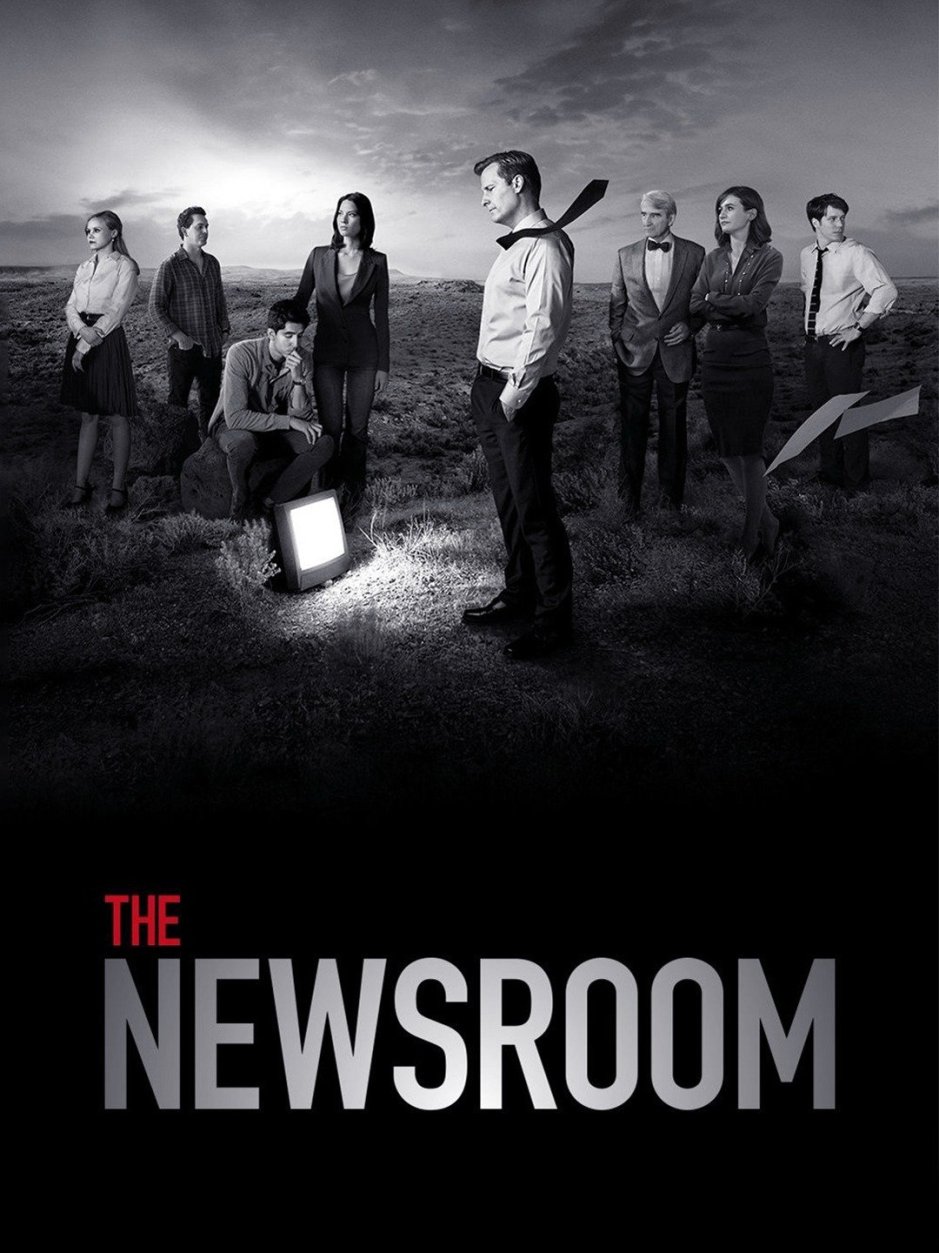
Even before the soldiers of justice activism landed (social justice warriors is so tired), left-of-center Progressives could praise the United States for being on the right (read moral) side of debates and events. In 2013, Aaron Sorkin penned these words for his “Newsroom” (HBO) character, Will McAvoy (played by Michigan’s own Jeff Daniels). Of course, on the grounds by which conservatives calculate American greatness, Sorkin was fashionably negative:

[T]here is absolutely no evidence to support the statement that we’re the greatest country in the world. We’re seventh in literacy, twenty-seventh in math, twenty-second in science, forty-ninth in life expectancy, 178th in infant mortality, third in median household income, number four in labor force, and number four in exports. We lead the world in only three categories: number of incarcerated citizens per capita, number of adults who believe angels are real, and defense spending, where we spend more than the next twenty-six countries combined, twenty-five of whom are allies.

But when it came to America’s proud past, McAvoy sounded a very different note and national wholesomeness was its organizing theme:

We sure used to be [great]. We stood up for what was right! We fought for moral reasons, we passed and struck down laws for moral reasons. We waged wars on poverty, not poor people. We sacrificed, we cared about our neighbors, we put our money where our mouths were, and we never beat our chest. We built great big things, made ungodly technological advances, explored the universe, cured diseases, and cultivated the world’s greatest artists and the world’s greatest economy. We reached for the stars, and we acted like men. We aspired to intelligence; we didn’t belittle it; it didn’t make us feel inferior. We didn’t identify ourselves by who we voted for in the last election, and we didn’t scare so easy. And we were able to be all these things and do all these things because we were informed. By great men, men who were revered. The first step in solving any problem is recognizing there is one—America is not the greatest country in the world anymore.

Lest it miss anyone, this was three years before the Trump presidency and MAGA merch. Sorkin’s script shows that MAGA was not an alien force in national life. It was the norm.

One hundred years before “Newsroom” aired on HBO, H. L. Mencken also noticed that moralism was a defining trait of American culture. It was synonymous with both Calvinism and Puritanism in his Germanophilic mind:

That deep-seated and uncorrupted Puritanism, that conviction of the pervasiveness of sin, of the supreme importance of moral correctness, of the need of savage and inquisitorial laws, has been a dominating force in American life since the very beginning. There has never been any question before the nation, whether political or economic, religious or military, diplomatic or sociological, which did not resolve itself, soon or late, into a purely moral question. .. . The frank theocracy of the New England colonies had scarcely succumbed to the libertarianism of a godless Crown before there came the Great Awakening of 1734, with its orgies of homiletics and its restoration of talmudism to the first place among polite sciences. . . .

Thereafter, down to the outbreak of the Civil War, the country was rocked again and again by furious attacks upon the devil. On the one hand, this great campaign took a purely theological form, with a hundred new and fantastic creeds as its fruits; on the other hand, it crystallized into the hysterical temperance movement of the 30’s and 40’s, which penetrated to the very floor of Congress and put “dry” laws upon the statute-books of ten States; and on the third hand, as it were, it established a prudery in speech and thought from which we are yet but half delivered.

Say what you will about the accuracy of Mencken’s depiction of Puritanism, his diagnosis of American moralism was even prophetic when he described the activism of the Progressive era in terms that make sense of the United States post-Trump, post-George Floyd, post-Lia Thomas:

The new Puritanism is not ascetic, but militant. Its aim is not to lift up saints but to knock down sinners. Its supreme manifestation is the vice crusade, an armed pursuit of helpless outcasts by the whole military and naval forces of the Republic. Its supreme hero is Comstock Himself, with his pious boast that the sinners he jailed during his astounding career, if gathered into one penitential party, would have filled a train of sixty-one coaches, allowing sixty to the coach.

Making Sense of the PCA

From the Archives: Nicotine Theological Journal (Spring, 2009)

Making Sense of the PCA

I have been a minister of the Presbyterian Church in America from its founding. I attended the Convocation of Sessions, the Advisory Convention, and the first General Assembly in 1973. I have not been what one would call “a player” over the past 30 years, but I have been “involved.” I was one of the early Reformed University Ministry (RUM) campus ministers, had a full term as a member of the Committee on Mission to the World, and served on the Creation Study Committee. I edited work for children’s curriculum for Great Commission Publications. I have traveled to Japan, Philippines, Ukraine, France, and Turkey in connection with MTW mission work.

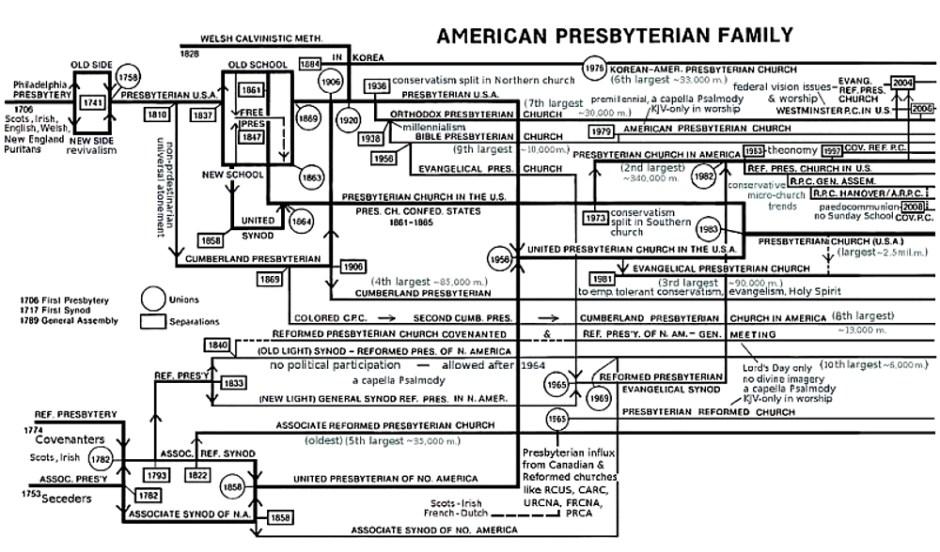
As our denomination has experienced recent tensions about confessional subscription, our mission, and worship, I have struggled to understand how we got here. My working hypothesis is that the PCA is a majority New Side/New School Presbyterian Church, with a substantial minority that is either New Side/Old School or Old Side/Old School.

The differences between the Old and New Side Presbyterians focused primarily on their differing views of revivals. The New Side believed the revivals or George Whitefield, which first disturbed and then converted sinners within and without the church and awakened and stirred to holiness and action true believers, had biblical precedents. Itinerant ordained and non-ordained speakers were often the instruments of revival. Religious experience was intensely personal and greatly concerned with whether or not one had been genuinely converted.

Old Siders had a higher view of the church as an institution, more confidence in the work of settled, ordained ministers carrying out the ordinary ministry of word and sacrament, and a greater emphasis on corporate religious life. Tensions over subscription pushed New Siders toward a looser view, with the Old Side arguing for strictness. Neither side was monolithic.

If the First Great Awakening balkanized the Old and New Sides, the Second Great Awakening returned the favor for the Old and New School Presbyterians. Despite this similarity, the major issue in the nineteenth century was not revivalism but confessionalism. Old Schoolers had differing appraisals of the earlier awakenings, but they shared a growing unease about the Second Great Awakening with its Arminian theology and its new measures.

In order to defend the theology of the Second Awakening New Schoolers had to take a broad view of the Westminster Standards and a much weaker view of what was involved in an officer’s ordination vows. The New School strongly favored mission over theology while the Old School held that theology defines and directs mission. Because of its emphasis on mission the New School favored working with parachurch societies to accomplish evangelism and missions, while the Old School believed the church alone was responsible for spreading the gospel and building up the saints. Part of the mission-orientation of the New School was its commitment to engage social issues, such as slavery and temperance, as part of an effort to Christianize America. Old Schoolers countered with the spirituality of the church. Not surprisingly, the New School had a low view of the church while the Old School maintained and defended jure divino Presbyterianism.

How does this explain the PCA? In my view, the majority of the PCA consists of three groups all of which share a New Side/New School orientation: the Columbia Seminary founding generation, the Reformed Presbyterian Church, Evangelical Synod (RPCES) influx, and the rising leadership consisting primarily of large urban/metropolitan church pastors and denominational executives.

Most of the founders of the PCA had been educated at the most conservative of the PCUS (Southern Presbyterian) seminaries in the 1950s and 1960s. While Columbia could trace her heritage all the way back to Thornwell, the most eloquent Southern Old School voice, little remained of Thornwell’s influence (William Childs Robinson being the exception) by the time PCA leaders received their training at Columbia. Students were considerably more conservative than the faculty at Columbia, but they were never much exposed to the old Confessional orthodoxy of the Southern Church. They believed in the Bible, in “the fundamentals,” in the gospel, and in evangelism and missions. They took their ordination vows with sincerity but they did not consider how those vows bound them to the Westminster Confession. In fact, many of these brothers were influenced by teachings that were inconsistent with Calvinism. I think of semi-Pelagianian, Invitation System revivalism, dispensationalism, and perfectionism. In addition, they were suspicious of church institutions and authority (having witnessed and experienced the corruption and abuse of the mainline Southern church) and were eager to cooperate with any evangelicals to win the world for Christ, maybe even “in this generation.”

It was not clear at the time of Joining and Receiving (J&R) in 1982 what the impact of the influx of the RPCES would be, but time has proved that it broadened and strengthened the New Side/New School segment of the PCA. The RPCES was the result of the union of the dwindling Reformed Presbyterian Church in North America, General Synod (a “new light” break-off from the Covenanters), and the larger Evangelical Presbyterian Church (from the McIntire wing of 1936.) Although RPCES was more Reformed and Presbyterian than McIntire’s Bible Presbyterians, its roots remained New School, and, though there was some indication the RPCES might move toward Princeton Old School positions, this did not materialize. The RPCES was and remains New Side/New School and so injected into the PCA another dose of New Side/New Schoolism.

What then of the rising leadership? The one word, which best catches the outlook and agenda of this group, consisting primarily of large urban pastors and denominational executives, is “missional.” In the New Side/New School tradition, mission is the church’s defining characteristic and responsible for its vitality and unity.

This “missional” orientation has been notably evident in recent worship services at the General Assembly. Mission requires us to rethink what it means to be church and to sit loose on doctrinal formulations, on polity issues, on how we worship, and on what the nature of the mission of the church is, so that as we understand more of this “post-everything” culture and figure out how to respond, we can make the necessary adjustments to further the church’s mission. This is decidedly the New Side/New School outlook, dressed in new clothes, but with the substance of the body unchanged.

This represents the majority of the PCA’ teaching and ruling elders. A majority holds to the New Side/New School type of Presbyterianism. At the same time a substantial minority in our church, with Old and New Side proclivities, holds to Old School Presbyterianism. This means that issues of doctrine, polity, subscription, worship, and mission remain live ones for the foreseeable future. The soul of the church is at stake for both the majority and minority.

William H. Smith is pastor of Covenant Presbyterian Church (PCA) in Louisville, Mississippi.

Mencken Day 2023

I was on the fattish side as an infant, with a scow-like beam and noticeable jowls. Dr. C. L. Buddenbohn, who fetched me into sentience at 9 P.M., precisely, of Sunday, September 12, 1880, apparently made a good (though, as I hear, somewhat rough) job of it, despite the fact that his surviving bill, dated October 2, shows that all he charged “to one confinement” was ten dollars. The science of infant feeding, in those days, was as rudimentary as bacteriology or social justice, but there can be no doubt that I got plenty of calories and vitamins, and probably even an overdose.  There is a photograph of me at eighteen months which looks like the pictures the milk companies print in the rotogravure sections of the Sunday papers, whooping up the zeal of their cows. If cannibalism had not been abolished in Maryland some years before my birth I’d have butchered beautifully. (Happy Days, 1940)

Just Grow Up

From the Archives: Nicotine Theological Journal (January, 1999)

Just Grow Up

A recent visit to Yale, complete with watching a Yale-Princeton hockey game, reminded us of the suffocating ubiquity of post-1950s popular culture. Being some twenty years removed from college life it was curious to see Yale undergraduates participating in the rah-rah spirit that college students of our generation studiously avoided in the name of being independently cool. Even more surprising was to see the overwhelming support for the Yale band, an extracurricular activity that certain boomers associated with losers and nerds. But here we were, in 1998, watching kids supposedly indoctrinated in the dogma of political correctness and postmodernism not just playing in but singing along with the band. Perhaps even more remarkable was that these nineteen- and twenty-year olds knew the words to the songs the band played. The Rolling Stones, the Beatles and Credence Clearwater Revival – it didn’t matter. These students sang along. The scene was almost surreal. These college students were joining in the singing of music that in our generation was supposed to be a pronounced statement against joining anything. Of course, one of the great myths of popular culture is that of the solitary individual who does his own thing, even while two-thirds of the teenage population are doing exactly the same thing.

BUT ASIDE FROM REVEALING the conformist side of pop culture’s individualism, this scene also spoke volumes about the triumph of rock ‘n roll. Who could have imagined college students in the 1960s and 1970s singing with the college band to popular songs three decades old? Would any of us have known the words to the songs of Frank Sinatra or the Andrews Sisters? So why then won’t John, Paul, Ringo and Mick just go away? Perhaps, an even more pressing question is why people are not embarrassed to continue to live like teenagers even when they are in their forties and fifties?

One way of considering this question is to contrast the Rolling Stones’ relatively recent tour (lots of 1970s bands are doing retrospective treks, we understand) with what Frank Sinatra did for almost all of his life and with what Tony Bennett continues to do – that is, sing the songs that made them stars. It was not the least embarrassing for Sinatra to sing his kind of music because it was and is adult (don’t ask for a definition; it’s like pornography). It may not be Mozart or Vaughn Williams, but the way of singing, combined with the ethos such songs create, do not require listeners or adoring fans to act like teenagers. In other words, no one thought Frank silly singing his songs into his eighties. The same cannot be said for Mick Jagger. In fact, one cannot think of a more laughable sight than a man who is a grandfather acting like he is still the high-school deviant whose only care seems to be questioning all forms of authority.

WHICH RAISES A FURTHER question – why the triumph of rock ‘n roll in most sectors of Christian worship? Why has perpetually adolescent music become appropriate for expressing praise and adoration to the God of Abraham, Isaac and Jacob? This is not to suggest that ballads like those made popular by Sinatra would be fitting. Our preference runs to the Psalms of the Old Testament set to tunes that are either singable by all generations or chanted. But the triumph of rock ‘n roll, whether soft or not, seems to run contrary to the apostle Paul’s instructions in Titus where he told older men to be temperate, serious, and sensible, and older women to be sensible, chaste, and domestic. If this is indeed conduct fitting sound doctrine, in fact, if gravity and self-control are virtues that sound doctrine is supposed to produce, then why has Christian worship become the arena where the musical forms of the Stones, Beatles and CCR, already domesticated, are now baptized?

Of course, our culture has many problems, but it does not say good things about our churches that by failing to see any difference between serious and frivolous music they are also in danger of losing the ability to distinguish adolescence from maturity. Of course, churches who follow the lead of pop culture may become as mainstream and as ubiquitous as the Stones, but they are likely to look just as silly when they turn fifty.