Maybe not Delegated but Self-Selective General Assembly

I enjoyed listening to Chortles and Wresby talk to Charlie Nave about the problems of under representation among elders (OPC lingo) at GA. Mr. Nave made his case in e-print before the podcast. Here is how he described his experience at the 2017 PCA GA:

The experience was certainly instructive, but I found that the troublingly secretive caucus controlled the assembly entirely. It installed its own candidate for Moderator; it cut off debate on topics about which it had already made up its mind; it defeated a measure to protect biblical marriage within the PCA; and it approved recommendations to open the door to ordaining women.

This all struck me as very odd and un-Presbyterian. How are things being done “decently and in order” if a caucus is making decisions in secret and then imposing them upon the General Assembly? How are we abiding by the plurality of elders principle if this caucus is predominantly Teaching Elders (TE)?

Worse still, I found that REs were outnumbered by TEs by 4:1 at General Assembly (apparently this is typical). Ultimately, this is the root of the problem. After all, we know that everyone – even a TE! – is a sinner. And people who prioritize politics in a convention system will eventually network together for mutual benefit. The formation of this caucus was inevitable.

One major reason why they were able exercise control was that there weren’t enough REs there to counsel them otherwise. So that raises the question: why don’t more REs attend General Assembly?

As it turned out, this was the same day that I registered for the OPC GA. I don’t want to gloat, but the OPC has a fairly good representation from its elders and that has to do partly with all costs being reimbursed. You ask, how does the OPC do it?

Well, we meet on college campuses and have commissioners share rooms and bathrooms. This year at Wheaton I will share a bedroom with one other commissioner and a bathroom with three others (my sphincter is already tightening).

I’d much prefer to have a hotel room to myself and even meet in the comfortable surroundings of a convention center. But dorm rooms and gymnasiums go with the OPC’s no-nonsense approach to affect.

In which case, one way to even out the proportion of pastors and elders (OPC lingo) is to meet in settings that weed out the under motivated.

What If I Want Jordan Peterson instead of Wendell Berry?

The Gospel Allies are always peppering readers with guidance on contemporary culture without ever acknowledging that many Christians would be better served by reading secular publications (like The New Yorker, The American Conservative, Times Literary Supplement).

As the allies make their way through the haze of relevance, some may wonder what their criteria for evaluating writers, ideas, and cultural expressions are.

Take for instance Joe Carter’s estimate of Jordan Peterson (wherein comes a heavy dose of anti-thetical analysis thanks to a quote from Joel McDurmon):

For all of his toppling of great idols of humanism in our day, Dr. Peterson’s thought, from their presuppositions right through many of his conclusions, is as thoroughly humanist, autonomous, and thus ultimately dangerous, as anything any leftist every said. Christians need to be aware of the depths of this problem in Peterson’s thought, and the implications it has for their discernment of his teachings.

But when it comes to Wendell Berry, a writer much admired here but no font of Christian orthodoxy, the Allies print a positive estimate of the farmer-poet:

Reading Wendell Berry reminds us that one result of rooting ourselves in God’s Word should be that we root ourselves in our neighborhoods. These places are likely to be dark and polluted, but in belonging here while stretching toward the light of God’s love, we bear witness to John’s proclamation: “The light shines in the darkness, and the darkness has not overcome it” (John 1:5). Berry’s fictional characters help us imagine what it might look like to be members of God’s household who live with faith, hope, and love—and so bless their neighbors.

Dare I observe that if TGC had given an assignment to a Van Tillian to write about Berry, the article would not be so charitable.

And then to round out the confusion comes a piece that recommends the film of P. T. Anderson (including one — don’t tell John Piper — that has nudity):

Phantom Thread feels like an especially instructive model of a film that I fully expect will be talked about and enjoyed by future generations, long after most 2017 films are forgotten. Director Paul Thomas Anderson is known for making movies (e.g., Magnolia, There Will Be Blood) that aren’t particularly “relevant” but are inarguably good. He is a master of the cinematic form, an auteur who has true, loving interest in the characters and settings he depicts, beyond their utilitarian value as fodder for the zeitgeist. Like Terrence Malick, Anderson makes the films he wants to make, pointing the camera on the things he finds beautiful and interesting, paying little heed to headlines or formulas or convention. Ironically this is often the formula for lasting influence. It certainly has been for Malick and Anderson.

At some point, don’t you wonder that the editors at TGC have less a coherent w-w than they do a desire to pose as up-to-date? And oh, by the way, what does any of this have to do with the gospel?

American Greatness

Liberalism may be failing, but at least the voluntary character of church life in the United States means that communions here do not need to worry the way those in Scotland do where the establishment principle is still in effect even for those outside the established church. David Robertson highlights the contrasting responses of Presbyterians — Church of Scotland vs. Free Church of Scotland — to the Scottish government’s proposal to allow Scots to self-identify their gender. Spoiler alert: the Free Church dissents, the Church of Scotland goes along.

But the arresting matter here is the degree to which a communion self-identifies with its nation:

Lets talk not about gender identity but the identity of the Church. It seems to be that the Church of Scotland is no longer self-identifying as a biblical, prophetic Christian church. It now self-identifies as the spiritual wing of the progressive state, affirming its every action and endorsing its liberal theology. State churches always run the danger of avoiding the prophetic, because they are tied in with the State, and therefore will find it difficult to tell the State the Word of God. If John the Baptist had been a Church of Scotland minister, he would have affirmed Herod in his sin, told him ‘he didn’t want to judge’ and offered to produce a booklet of stories of adulterers like him! I hope and pray that the faithful ministers who remain in the Kirk will not hand out this propaganda, but will challenge 121 and the bureaucracy that has collaborated in this document. Its time for faithful people to be faithful and to at least be prophets to their own denomination.

What about the Free Church (and other churches). We can moan from the sidelines – refuse to get involved – shout in anger or shrink in despair. Or we can be a biblical Christ loving church which does what we can to welcome and help transpeople who are seeking Christ. They need to know him and be saved from their sin – not their trans. And we must have a prophetic voice into the culture – whether its challenging schools when they seek to indoctrinate our children with Queer theory, or making representations to the Scottish Government. And of course we weep and pray….

God have mercy and save Scotland from itself.

At what point do you see the folly of ecclesiastical establishments? Nothing possibly could go wrong here (ever since Constantine).

Presbyterianism In Secret or in Private?

1“Beware of practicing your righteousness Presbyterianism before other people in order to be seen by them, for then you will have no reward from your Father who is in heaven.

2“Thus, when you give to the needy commission deaconesses, sound no trumpet before you, as the hypocrites do in the synagogues and in the streets, that they may be praised by others. Truly, I say to you, they have received their reward. 3But when you give to the needy, do not let your left hand know what your right hand is doing, 4so that your giving may be in secret. And your Father who sees in secret will reward you.

So what does it mean when a pastor is Presbyterian in name but known nationally and interdenominationally by his own evangelical brand? You could say, he is practicing his Presbyterianism in secret and God, who sees in secret, will reward such Protestantism. He keeps his Presbyterianism to himself. Likewise, it could be that the critics of parachurch evangelicalism on Presbyterian grounds are the hypocrites who practice their Presbyterianism in public by identifying with a particular denomination or communion and letting that shape their reputation. This is a form of practicing Presbyterianism for others to see.

But what if practicing Presbyterianism in secret also cuts you off from practicing evangelicalism in public? Isn’t the point of the Sermon on the Mount partly to avoid hypocrisy? In which case, ministering in a Presbyterian church is inconsistent with ministering in an interdenominational setting. And avoiding an evangelical ministry because of Presbyterian convictions is a version of practicing Presbyterianism in secret since the confessional Presbyterian’s absence from the Gospel-Industrial-Complex conference is invisible — no one knows the Presbyterian isn’t there or why he or she is not.

So isn’t an application of Christ’s warnings about practicing piety in public that you better mean what you believe (and oh, by the way, vow)? And if you mean what you confess as a Presbyterian, why and how can you minister with non-Presbyterians?

Lent Is Methodist

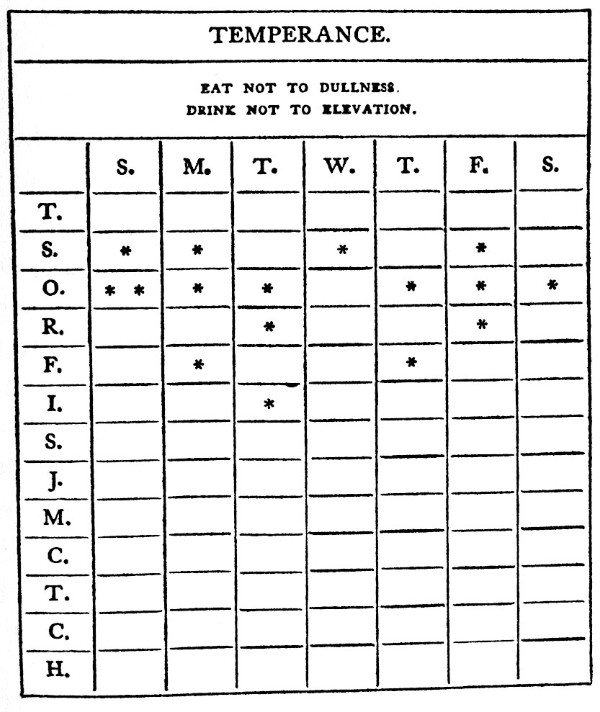
Bill Smith, always worth a read, thinks Old Life has declared another war on objections to Lent. He acknowledges two chief objections among Reformed Protestants to Lent — the regulative principle of worship and the fear of Romish practices. The regulative principle should actually take care of the matter for the sake of corporate worship and the life of the church. If a Christian wants to engage in some kind of Lenten activities as a means to holiness, well, whatever floats your sanctification. But for officers in the church to make Lent the norm for a congregation or a communion, then they better come with something more than “it looks like a pretty good idea” and “our motives are generally pious.” Plus, if church members may opt out of Lenten abstemiousness, then what’s the point of officers calling for the wider body to “special” actions during a certain number of days in late winter?

Still, Bill is not content with those objections. He returns fire and argues that Lent is actually a reasonable form of temporary form of sanctification:

Another objection is that those who observe Lent use it as a time for the temporary repentance from certain sins which are normally indulged, while Jesus calls us to repent of all sins all the time. It may well be that some poorly instructed Christians view Lenten practice in that way, but in my experience I have never heard anyone who observes Lent speak of a temporary giving up of sin.

Fine. So a Christian who pursues holiness 365/12 now adds an intense time of repentance for a specified forty days before a Sunday some communions designate Easter. Maybe that’s how it works among Reformed Episcopalians.

But why THESE forty days and not another thirty in September and October, or maybe a dozen or so in late spring and early winter? Why not more intense forms of repentance sprinkled throughout the year? Or why not leave each family and person to decide when and for how long to engage in certain times of self-denial? Why these days that some designate as Lent?

Could it be that some churches embrace a formula for Lent and so follow the spiritual equivalent of an Excel spreadsheet for the pursuit of holiness? The Lent practitioner follows these forty days with the other saints of similar inclinations and so doesn’t have to consider whether another time of fasting and prayer is needed or useful for another time during the year?

That kind of methodical piety is what Charles Briggs called, “Methodist.” It was a word he applied to the proponents of the First Pretty Good Awakening who insisted that godliness manifest itself in certain predictable and uniform ways. Of course, the idea of likening the church calendar to revivalism is oxymoronic. But to everyone who concedes that believers mature and bear different kinds of spiritual fruit in the course of their lives, the idea that you can prescribe a certain number of days — the same ones every year — for extra special holiness, and the one that requires the same kind of religious zeal to prove your conversion, are not so far removed. Both pietism and prescribed liturgicalism promote a one-size fits all spirituality that is perfect for bureaucracies, but not so hot for the diversity of human experience.

Why Reformed Protestantism is Safe

You have ways to avoid the excesses of Jonanthan Edwards (which you never learn about from the New Calvinists), John Wesley, and Jim and Tammy Bakker:

From Edwards and Wesley, we receive a fixation on the will, a desire to create enclaves of piety, and a belief in the possibility of the individual’s direct experience of God. In the work of their successors, such as Charles Grandison Finney, we find latent belief in the sinlessness of the true self and an approach to revival characterized by the appearance of improvisation and spontaneity. These preachers cultivated the spirits of the multitude through results-focused experimentalism in the context of camp meetings around the country, sowing in the American character the seeds of enthusiasm that would yield strange harvests in every decade thereafter. The later 19th century saw the development of quasi- and post-Christian reform movements, fads, and pop-philosophies that would call individuals to embrace their higher selves—such as “New Thought,” which centered the will in a larger project of spiritual self-advancement through the unleashing of “the creative power of constructive thinking.”

The 20th century inherited from these enthusiastic forebears an epochal optimism. Even in times of anxiety and despair, there is a hopefulness in the American self, and this hopefulness is built upon that self’s utter reality in a world of mere appearances; though circumstances change, the self remains a firm foundation. The literary critic Harold Bloom captured something of the strangeness of this in his provocative and infuriating book The American Religion. “The soul stands apart,” he writes, “and something deeper than the soul, the Real Me or self or spark, thus is made free to be utterly alone with a God who is also quite separate and solitary, that is, a free God or God of freedom.” In essence, Bloom describes a post-Protestant Gnostic cult of the self: “The American finds God in herself or himself, but only after finding the freedom to know God by experiencing a total inward solitude.”

Bloom’s analysis hinges on a metaphysical intuition: that the self is uncreated, and it knows, rather than believes in, its own innocence and divinity. “Awareness, centered on the self, is faith for the American religion,” Bloom wrote, and this religion of the self “consistently leads to a denial of communal concern.” Christ is internalized to a point of blurred identity with the “real me.” Such are the fruits of what Bloom calls the “doctrine of experience”—an outgrowth from the taproot of religious enthusiasm. Christianity, Bloom suggests, was too cramped for the young, unbounded nation. Abandoning doctrinal encumbrances such as belief in original sin (or sometimes, belief in sin at all), an intuitive and endlessly innovative spirituality grew to meet this need.

* * *
Wild spirits prepared the way for the coming of the Bakkers. Distinct from mainline, fundamentalist, and evangelical varieties of Protestantism—but eventually influential in all three—Pentecostalism grew out of late-19th-century Methodist holiness movements, dramatically emerging through a revival in Los Angeles that began in 1906 and lasted for a decade. With a mandate to seek out the signs and wonders attributed to Christ’s apostles in the book of Acts, Pentecostals trembled, shouted, spoke in tongues, and did much else to startle and shock the sensibilities of average Americans. Promises of dramatic spiritual and physical healing found great purchase among those in poverty, and the new enthusiasm became disreputable both for its excesses and its hard-up—and racially diverse—demographics.

If Tim Keller wants to join that company of enthusiasts, have at it.

At Least It’s Not a Conference about Lent

Redeemer Big Apple is sponsoring a conference during this Lenten reason not about repentance and abstinence but about work:

When we see that work is created to glorify God, our work doesn’t necessarily get easier, but it does become more meaningful. The pain in our work is faced with greater honesty, where the brokenness can finally be named and seen. The unseen potential of our work is faced with greater imagination, where an innovative spirit can unleash what yearns to be resurrected. In short, when we discover that we’re formed to work for God’s glory, we find that our small tasks aren’t so small, and our big tasks are in better hands. Work becomes desirable. Rest becomes possible. Faith becomes essential.

Join us for a two-day experience where we’ll investigate how we are formed to work for the glory of God. Artists and educators, designers and technicians, homemakers, engineers, managers, entrepreneurs, doctors, and everyone in between are welcome.

Plumbers? Janitors? Bakers? The only non-professionals included in that list are homemakers.

But the oddest part of the conference is its “Glimpses,” or “exciting opportunities throughout the city to participate in diverse experiences centered around work, culture and sabbath.” These include:

GREAT GOTHAM CHALLENGE

In this thrilling urban scavenger hunt, you’ll experience New York City as you never have before. Within teams, you’ll work through city-centric challenges and puzzles and learn new things about the Big Apple along the way.

COMEDY SHOW

Join us for a stand-up comedy performance followed by an in-depth look into how the gospel intersects with the entertainment sector.

ALPHABET SCOOP

Have some ice cream and see this newly opened and highly lauded East Village shop that blends a great product with a powerful mission.

TOWN REAL ESTATE WORKSITE VISIT

Come visit one of the largest real estate firms in New York City, where we’ll see how urban homes are found and made, and hear from a broker about the inner workings of the vast and complex NYC market.

FLOWER ARRANGING

Learn a simple and practical method for bringing God’s beauty into your personal space. Together we’ll learn a new restful hobby and the spiritual importance of fostering beauty in your daily life.

RUNNING TOUR OF CENTRAL PARK

How can running be a form of practicing rest? Come find out and run through a guided path with a group.

GOLDMAN SACHS TRADING FLOOR VISIT

Get an inside look at the excitement and energy of a trading floor. We’ll also hear from a panel of finance industry employees to hear about the shifts, values, and complexities of the financial sphere.

TOUR OF LOWER MANHATTAN/REVOLUTIONARY NEW YORK

With more than 400 years of history, come see the Lower Manhattan neighborhood where what once were cow paths and trading posts are now skyscraper lined streets.

MOVING MEDITATION: YOGA SESSION

Knowing His great care for our bodies, how can we invite God into our physical workouts? Through meditation and prayer, we’ll discover how to connect God to breathing and movement in this meditation that will also include an hour long yoga class and journaling.

Aside from blessing Goldman Sachs at a time when I would have thought progressive-leaning, Ta Nehisi Coates-reading evangelicals were woke about neo-liberalism (not to mention the 2008 financial collapse and the federals’ bailout), could this list of consumption, tourism, and entertainment be any more of a cliche? It would be like the OPC selling shirts that can’t be tucked in, pocket protectors, and slide rules at one of its pre-General Assembly conferences?

Or could it be that when you are this cool, you don’t worry about optics?

History is Not Rocket Science (but it requires some accuracy)

A piece at Reformation 21 (the publication of the Alliance before THE Alliance) on Billy Graham took me by surprise, and it wasn’t the name dropping that went with the article:

The founder of the Alliance of Confessing Evangelicals, Donald Grey Barnhouse, had a friendship with Dr. Graham. In a 1977 interview with Christianity Today, Graham said, “One of my great regrets is that I have not studied enough. I wish I had studied more and preached less. People have pressured me into speaking to groups when I should have been studying and preparing. Donald Barnhouse said that if he knew the Lord was coming in three years he would spend two of them studying and one preaching. I’m trying to make it up.”1 At another point in his ministry, Graham said of Barnhouse, “He knew the Scriptures better than any man I ever knew.”

Here’s a (not the) thing. The Alliance of Confessing Evangelicals did not start until 36 years after Barnhouse’s death:

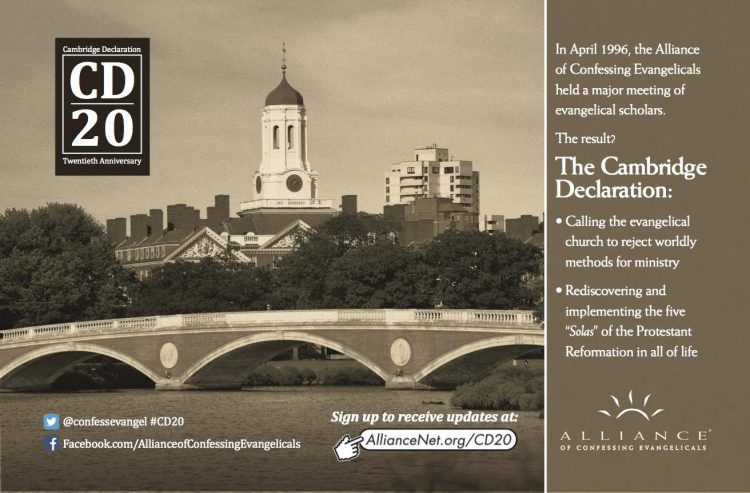
In April 1996, the Alliance of Confessing Evangelicals held its first major meeting of evangelical scholars. The Cambridge Declaration, first presented at this meeting, is a call to the evangelical church to turn away from the worldly methods it has come to embrace, and to recover the Biblical doctrines of the Reformation. The Cambridge Declaration explains the importance of regaining adherence to the five “solas” of the Reformation.

Maybe the explanation is this:

The Alliance’s history stretches back a half century. The Alliance began as Evangelical Ministries in 1949, which broadcasted Dr. Donald Grey Barnhouse via The Bible Study Hour, and also published Eternity magazine.

But in the end, I go with Wikipedia:

The Alliance was formed in 1994 out of what was known as Evangelical Ministries when James Boice, then senior pastor of Tenth Presbyterian Church in Philadelphia and teacher on The Bible Study Hour radio program, called together a group of like-minded pastors and theologians from a variety of denominations to unite in a common cause to help revive a passion “for the truth of the Gospel” within the church.

On April 17– 20, 1996, the Alliance came together in Cambridge, Massachusetts, to draw up a statement that would be called the Cambridge Declaration. Signatories included R. C. Sproul, David F. Wells, and Michael Horton.

Or is this what happens when you have four gospels?

You Gotta Exegete Someone

Reformed Protestants may be a tad hung up on Scripture, though it is supposed to be the very word of God. But if you begin to waffle on that canon notice how you begin to add to the authoritative texts.

For Roman Catholics, the doctrine of development has a hard time nurturing content with the Bible (even including the Apocrypha):

The deepest reason for the identity of Revelation in its ecclesial continuity is given in the hypostatic union, i.e., in the unity of the human and divine natures in the one divine person of Jesus Christ. The many words he spoke, revealing God’s plan to us through the medium of human language (cf. Joh 3:34; 6:68), are united in the hypostasis or person of the one Word that is God and has become flesh (cf. Joh 1:1, 14). The Word of God comes to us through the preaching of human beings (cf. 1 Thess 2:13); it is made present through human words, with their grammar and vocabulary. Therefore, it is possible and necessary to grow individually and communally in our understanding of the revelation that has been given to us once and for all in Christ. It is clear, then, that Catholic theology has always recognized the fact and necessity of the development of dogma. It is part of Christianity’s essence as the religion of the incarnate Word—the religion of God’s self-revelation in history—to affirm the identity of the doctrine of the faith along a continuous process by which the Church comes to an ever more differentiated conceptual comprehension of faith’s mysteries.

Make of that what you will about the potential problems of development but here you see an affirmation of continuity between the incarnation, divine revelation, and the ongoing revelation of divine truth in the doctrines of the church. Finding a distinction there between the prophets and apostles, and the teachings of the bishops and councils becomes fairly murky when the word incarnate, the word inscripturated, and the mystical body of Christ (the church) are all pieces of ongoing understanding of truth.

Unfortunately, it seems that Lutherans have a similar problem distinguishing between the apostles and the church’s theologians or pastors:

From a very practical standpoint, we have, as Lutheran pastors sworn to uphold the theology of the Book of Concord of 1580, also consequently, committed ourselves to the hermeneutic of reading the confessions we find in the Formula of Concord, and that is, if ever a question arises within the Lutheran church, the writings of Luther are to be consulted for the answer. In other words, the confessions understand themselves not to be so much a theology in and of themselves, but a summation of Luther’s theology:

“Since Dr. Luther is rightly to be regarded as the most eminent teacher of the churches which adhere to the Augsburg Confession and as the person whose entire doctrine in sum and content was comprehended in the articles of the aforementioned Augsburg Confession and delivered to Emperor Charles V, therefore the true meaning and intention of the Augsburg Confession cannot be derived more correctly or better from any other source than from Dr. Luther’s doctrinal and polemical writings.”[1]

Thus the confessions are not the bottom of a theological well from which Lutheran theologians thereafter would draw, but instead the confessions are the peak of the mountain, the mountain which is the theology of Martin Luther. But if that mountain remains unknown to us, how then are we to understand our task as pastors today in view of the Lutheran confessions?” (Paul Strawn, “Rediscovering the Theology of the Small Catechism, i.e. Martin Luther”)

Luther was great and is always edifying to read. But he did not approach salvation by following a great theologian, unless you consider (as some do) Paul the church’s first great theologian. Here, though, Paul had an advantage over Luther. He was infallible.

Words that Only Some Western Christians May Sing

1 A debtor to mercy alone,
of covenant mercy I sing;
nor fear, with Your righteousness on,
my person and off’ring to bring.
The terrors of law and of God
with me can have nothing to do;
my Savior’s obedience and blood
hide all my transgressions from view.

2 The work which His goodness began,
the arm of His strength will complete;
His promise is yea and amen,
and never was forfeited yet.
Things future, nor things that are now,
nor all things below or above,
can make Him His purpose forgo,
or sever my soul from His love.

3 My name from the palms of His hands
eternity will not erase;
impressed on His heart it remains,
in marks of indelible grace.
Yes, I to the end shall endure,
as sure as the earnest is giv’n;
more happy, but not more secure,
the glorified spirits in heav’n. (Augustus Toplady, 1771)