The Good Thing about New Calvinism

They don’t attract people like this:

The FBI closely monitors online communities that discuss ISIS, at times running so many undercover accounts that agents end up investigating one another: An FBI policy guide, obtained and published by The Intercept, notes that online investigations have “previously resulted in resources being wasted by investigating or collecting on FBI online identities,” or employees working undercover. The Bureau also takes tips from a network of sources—from security firms to random vigilantes—who monitor these communities.

The small group of people who have been arrested on ISIS-related charges are an idiosyncratic bunch—they come from a range of socioeconomic backgrounds, and each case is distinctive. But many do share important traits with Moe and Jaelyn. According to the Center on National Security at Fordham University’s School of Law, their median age is 25. Three-quarters are American citizens. Nine out of 10 are male. Over one-third are converts to Islam. Although roughly a quarter of cases have involved people of Arab descent like Moe, whose father is Palestinian, most come from other ethnic backgrounds, including African Americans like Jaelyn. Few have criminal backgrounds. Many live with their parents. And roughly 90 percent of cases involve social media, sometimes including online conversation with a recruiter, either real or undercover.

So why is voting for Trump so scary? Have Americans really lost the capacity to discern different kinds of threats? Even words that trigger PTSD don’t have the same effect as a guillotine.

But the biggest problem with the jeremiads against the new P.C. is that they treat the so-called politically correct as radical freaks who are outside of mainstream American society—opposing the common sense free-speech position held by wholesome liberals and conservatives. Yet far from outlier ideas, trigger warnings and safe spaces grow out of impulses that are broadly shared. For many decades, the United States has been the home to a thriving vernacular therapeutic culture, where ordinary citizens borrow concepts from psychology and use them as tools of self-improvement, often, in the process, forming distinct political and social identities. In a society where Oprah Winfrey is a guru to millions and self-help books are perennial best-sellers, the adoption of folk therapy is hardly the mark of eccentricity. Moreover, trigger warnings and safe spaces echo the larger jitteriness that has marked American culture for many decades, gaining special salience after September 11, 2001.

Imagine that kind of understanding for white evangelicals.

And then duck.

The World Is Turning Rod and Leaving Tim Behind

The piece on Rod Dreher and the Benedict Option in the New Yorker was remarkable on several levels. It was generally positive, respectful, and long. This was the case despite Dreher’s tendency to sound a tad hysterical about sexual irregularities and deviance. This quote by Andrew Sullivan, a gay man who has gone head to head with Rod over the years, was telling:

Sullivan has a long-standing disagreement with Dreher over same-sex marriage, but he believes that the religiously devout should be permitted their dissent. “There is simply no way for an orthodox Catholic to embrace same-sex marriage,” he said. “The attempt to conflate that with homophobia is a sign of the unthinking nature of some liberal responses to religion. I really don’t think that florists who don’t want to contaminate themselves with a gay wedding should in any way be compelled to do so. I think any gay person that wants them to do that is being an asshole, to be honest—an intolerant asshole. Rod forces you to understand what real pluralism is: actually accepting people with completely different world views than your own.”

In “The Benedict Option,” Dreher writes that “the angry vehemence with which many gay activists condemn Christianity” is the understandable result of a history of “rejection and hatred by the church.” Orthodox Christians need to acknowledge this history, he continues, and “repent of it.” He has assured his children that, if they are gay, he will still love them; he is almost—but not quite—apologetic about his views, which he presents as a theological obligation. He sees orthodox Christians as powerless against the forces of liquidly modern progressivism; on his blog, he argues that “the question is not really ‘What are you conservative Christians prepared to tolerate?’ but actually ‘What are LGBTs and progressive allies prepared to tolerate?’ ” He wants them to be magnanimous in victory; to refrain from pressing their advantage. Essentially, he says to progressives: You’ve won. You wouldn’t sue Orthodox Jews or observant Muslims. Please don’t sue us, either.

“What I really love about Rod is that, even as he’s insisting upon certain truths, he’s obviously completely conflicted,” Sullivan said. “And he’s a mess! I don’t think he’d disagree with that. But he’s a mess in the best possible way, because he hasn’t anesthetized himself. He’s honest about a lot of the questions that many liberal and conservative Christians aren’t really addressing.”

Notice that Dreher, who is outspokenly anti-gay marriage, did not receive the chorus of criticism that Tim Keller did at Princeton Seminary even from such mainstream organs and figures as the New Yorker and Andrew Sullivan.

To be sure, the PCUSA is not the New Yorker, but at a time when the magazine has identified President Trump and his supporters as an alien force in national life, a fair piece about Dreher is not what readers would have expected.

So why does Dreher receive more acclaim than Keller? The reason could be that the former promotes a thick (as he understands it) Christian identity, complete with communitarian obligations, while Keller stands for a Christianity that is chiefly reasonable and appeals to the mind. In other words, Dreher is appealing to a larger conception of Christianity that encompasses more of one’s identity than intellect while Keller is largely about defending the Apostles’ Creed (as he explained a while back in an interview at First Things) — or a Christian minimum. Rod is maximalist where Tim is a minimalist.

Naomi Schaeffer Riley picked up on this difference when she contrasted Dreher and Keller:

Keller sees an integral part of the church’s mission as being present in the big cities — no matter how culturally degraded they may seem. “Christians ought to be present and engaged everywhere that there are people. But across the world people are flocking to cities at the rate of millions per year.

“Christians don’t all need to live in cities, but they should at least be moving there in the same proportions as the people whom they want to serve.”

His approach may be falling out of favor among some more orthodox believers. Last month, the Wall Street Journal reported on a small but growing number of Christians who, “feeling besieged by secular society . . . are taking refuge” in small, often isolated communities away from negative cultural influences and surrounded by other believers.

This “Benedict Option” was named in honor of St. Benedict, who fled the moral degradation of Rome. It’s also the title of a new book by Rod Dreher, who, writing in Christianity Today, calls it a “strategic withdrawal” by “serious Christian Conservatives [who] could no longer live business-as-usual lives in America.”

Though Dreher doesn’t say Christians should all flee to isolated enclaves, those are where such withdrawal would be easiest.

Keller believes Christians in New York cannot retreat into homogeneity. They’ll be regularly faced with people who fervently disagree with them. Keller’s church is a multi-ethnic one and even if the believers have a similar religious outlook, they hail from a variety of different backgrounds.

That fear of homogeneity and retreat also explains, by the way, while Keller is somewhat uncomfortable with going all in on Presbyterianism (from his interview at First Things):

I don’t believe you can reach New York with the gospel if you only plant Presbyterian churches. There are all kinds of people who’ll never be Presbyterians. It just doesn’t appeal to them. Some people are going to be Pentecostals, some people are going to be Catholics. I mean, I know that sounds¯I’m not talking about that certain cultures reach certain people. It’s much more complicated than that. Even though there’s something to that. We all know that certain cultures seem to have more of an affinity toward a certain kind of Christian tradition than others, but I wouldn’t want to reduce it to that at all. I would just say that I only know that God seems to use all these kinds of churches to reach the whole breadth of humanity, and so that’s why we give money to start churches of other denominations, and give free training to it. And we’ve done about a hundred in the New York area, where we’ve helped people. It’s very important to us.

For Keller, apparently, Christianity resists taking overly specific and particular forms (think ecclesiology, liturgy, even creed). His ministry can transcend different cultures and expressions of Christianity. That comes up short against those Christians that Schaeffer identifies as wanting a more than “business-as-usual” faith.

But the Allies at Gospel Coalition back Keller over Dreher when they say they want both a Christianity that is meaty and one that is mainstream:

The Benedict Option is named for Benedict of Nursia, a 4th century monk who launched a monastic movement that preserved Western civilization. Today, writers like Rod Dreher enjoin Christian​s​ to take similar steps to “develop communities based on a shared sense of orthodoxy (right belief) and orthopraxy (right practice), for the sake of forming ourselves and the next generation in the Christian faith.”

The New York Times columnist Ross Douthat has called Redeemer Presbyterian Church in New York City, where Tim Keller serves as senior pastor, an effective example of the Benedict Option for our twenty-first century, post-Christian context. Like other TGC-inspired communities, Redeemer aims to blend countercultural biblical faithfulness with a Christ-exalting, city-embracing vision.

That dual commitment to faithfulness and cultural affirmation did work for the post-World War II world. It was precisely the vision of the Neo-Evangelicals who formed the National Association of Evangelicals, founded Christianity Today, and cheered and prayed for Billy Graham. It was and is a faith that harmonizes well with a nationalism confident of its role in the world, and generally progressive in its estimate of where history is going or at least who the good guys are in that narrative.

But at a time when that post-war internationalist order is under serious strain (think Brexit, Scottish Independence, Trumpian nationalism), the appeal of a rational, enlightened Christianity may have hit a wall. What Christians seem to understand is that they need a faith little more “deep-down diving and mud upbringing,” that can withstand a social order that is not congenial to their religious convictions. It is a faith that bears more resemblance to the politics of identity than to United Statesist Christianity. This faith does not go along but separates. It makes more claims on adherents than a faith that primarily relies on mental exercises demanded by w-w. It recognizes that the world is more hostile than previous generations supposed and that Christians need to be more intentional about their convictions.

Why someone living in New York City, the place that cultivated the boorish Donald Trump, doesn’t see that cities (from culture to economics) may be a problem for the practice of demanding Christianity is a real mystery.


Protest

When you see gross deficiency in the church, you don’t shrug. You object as Phil Lawler does over news of a new Roman Catholic church in Boston:

in the past 50 years, the Archdiocese of Boston has opened zero new parish churches. Over the same span, roughly 125 parishes have been shut down or merged into “cluster” units.

This might be understandable, if the Boston’s Catholic population had disappeared. But it hasn’t—at least not according to the official statistics. On paper, it has grown. There were about 1.8 million Catholics registered in the area covered by the Boston archdiocese 50 years ago; today the official figure is 1.9 million.

The trouble, of course, is that most of those 1.9 million Catholics aren’t practicing the faith. Consequently it should be no surprise that their sons don’t aspire to the priesthood. There were just over 2,500 priests working in the archdiocese 50 years ago; now there are fewer than 300. That’s right; nearly 90% of the priests are gone. If you can’t replace the priests, you can’t keep open the parishes.

Let’s be frank. These figures are not a cause for concern; they are a cause for horror. Panic is never useful, but something close to panic is appropriate here. Things have gone terribly, terribly wrong.

Lawler also identifies four possible responses:

A) “This is a disaster! Stop everything. Drop what you’re doing. “Business as usual” makes no sense; this is a pastoral emergency. We don’t just need another “renewal” program, offered by the same people who have led us into this debacle. We need to figure out what has gone wrong. More than that. We know that the Gospel has the power to bring people to Christ; therefore it follows that we have failed to proclaim the Gospel. The fault lies with us. We should begin with repentance for our failures.”

B) “Don’t worry. Times change, and we have to change with them. Religion isn’t popular in today’s culture, but the faith will make a comeback sooner or later. We just need to keep plugging away, to have confidence, to remember God’s promise that the Church will endure forever.” . . .

C) “It doesn’t really matter whether or not people go to church on Sunday. As long as we’re all nice people, God in his mercy will bring us all to heaven.”

D) “Don’t bother me with your statistics. Actually the faith is stronger than ever. Our parish/diocese is vibrant! You’re only seeing the negative.

Lawler takes no comfort from the idea common refrain that the gates of hell will not prevail against the church:

You see what’s wrong with argument B, don’t you? Yes, the Lord promised that the Church would last through the end of time. But he did not promise that the Archdiocese of Boston (or your own diocese) would last forever. The faith can disappear, indeed has disappeared, from large geographical areas—northern Africa, for instance.

If the Archdiocese of Boston won’t last, what about the global diocese centered in the Eternal City?

Every Member Ministry

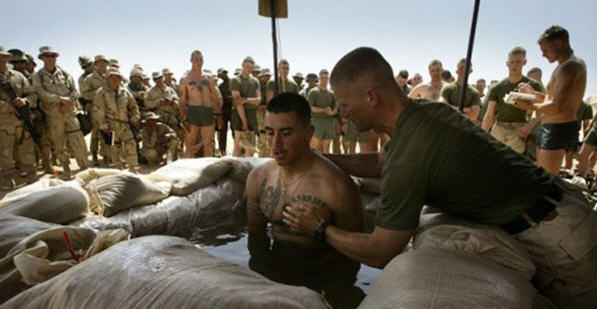
Remember how the Second Vatican Council affirmed the priesthood of believers?

The baptized, by regeneration and the anointing of the Holy Spirit, are consecrated as a spiritual house and a holy priesthood, in order that through all those works which are those of the Christian man they may offer spiritual sacrifices and proclaim the power of Him who has called them out of darkness into His marvelous light. (Lumen Gentium 2.10)

Look where it leads:

Here is part of what the pope said:

And today Lutherans and Catholics, Protestants, all of us agree on the doctrine of justification. On this point, which is very important, he did not err.

No, no, no. Now see, this infuriates me as an apologist (and former Protestant). It is one thing to have to correct this nonsense when it comes from the late Anglican bishop Tony Palmer. But from the pope? I defend the poor man, but at times he exasperates me.

Turns out Lutherans and Roman Catholics don’t agree:

Now, it is true, that some consensus has been reached between Catholics and Lutherans on justification. But it is not at all true to say, as Pope Francis does, that we all “agree” now, as though there are no differences to speak of. And for him to say that Luther “did not err” on justification is just flat baloney.

I mean, for heaven’s sake, Luther taught justification by faith alone. The Council of Trent condemned this error. Was Trent wrong? Or was Pope Leo X wrong in Exsurge Domine?

Leo X condemned Martin Luther’s view that the sacraments give pardoning grace

Leo X condemned Martin Luther’s teaching that sin remains after baptism

Leo X condemned Martin Luther’s view that a just man sins in doing a good work

And in its Canons on Justification, the Council of Trent pronounced an anathema on the following views of Luther:

Canon 5 anathematized the view that Adam’s sin destroyed free will

Canon 7 anathematized the view that good works before justification are sinful

Canon 9 anathematized justification by faith alone

Canon 11 anathematized imputed righteousness

Canon 25 anathematized the view that good works are venial sins even for the just man

There are important differences between Protestants and Catholics, and ecumenism is of no use if we don’t treat them honestly. We can’t just pretend they are not there and wish them away. If Luther “did not err,” did the Church err? Should we all become Protestants?

Trent was right; Leo X was right. Luther did indeed err; and in this particular statement, so did Pope Francis. I love Pope Francis; he’s my Father; but no, no, no. He was wrong.

Move over papal audacity. Say hello to lay audacity.

Both Cannot Be True

On the one hand, preaching the Bible is haahht:

According to a new study by Gallup, the hottest thing at church today is not the worship and not the pastor. It’s not the smoke and lights and it’s not the hip and relevant youth programs. It’s not even the organic, fair trade coffee at the cafe. The hottest thing at church today is the preaching. Not only is it the preaching, but a very specific form of it—preaching based on the Bible.

On the other hand, Americans who go to church wouldn’t know a Bible if you threw it at them:

Over half of Americans have read little or none of the Bible, according to findings released Tuesday (April 26) by LifeWay Research.

“Most Americans don’t know first-hand the overall story of the Bible—because they rarely pick it up,” said Scott McConnell, executive director of LifeWay Research. “Even among worship attendees less than half read the Bible daily. The only time most Americans hear from the Bible is when someone else is reading it.”

Only 11 percent of survey respondents said they have read all of the Bible. Even less (9 percent) have read all of the Bible multiple times.

Stop making sense.

Be Careful for What You Pine

If you want the world to be sacramental:

Living a sacramental worldview means, quite simply, viewing the world as sacrament. A redundant definition it might be, but often times the simplest explanations are the best. If we do truly believe that the Sacraments are moments in time where the invisible grace of God is made visible and tangible then seeing this same grace working constantly in and through our daily lives would only beg that we see the sacramental nature of daily life. This is not to say that every blade of grass is truly the transubstantiated body of Christ, but it does substantiate St. Ignatius’s charge to see God in all things.

You may wind up with the market as God:

In his most recent book, The Market as God, Harvey Cox argues that the market economy has become deified in our contemporary world. In formulating this argument, he identifies many parallels between the structures of Christianity and those of the capitalist economic system.

What Princeton Seminary Could Learn from the Pentagon

Peter Berger notices a sector of American religiosity where true inclusion and diversity reigns — the military chaplaincy:

One particularly interesting development is that the military chaplaincy, in its Protestant group, is increasingly filled with Evangelicals, who feel more at home in the military than among largely liberal mainline clergy, whose concerns over gender and multiculturalism Evangelicals don’t resonate with. Some years ago I presided over a seminar dealing with whatever issues members of the seminar were concerned about. One of the seminar students was an Evangelical Air Force chaplain. This was the issue she wanted to think through: She served on a small base in the Arctic where she was the only Protestant chaplain. Of course she was not expected to perform religious services that did not agree with her own beliefs. But she was expected to facilitate services for any group of Air Force personnel. A group of Air Force women wanted to perform the rituals of Wicca, which defines itself as a modernized version of the old witches’ Sabbath. How, she asked, could she help organize a worship service of the devil without betraying the core of her Christian faith? I tried to convince her that the devil part was not to be taken seriously, that Wicca was a rather harmless form of nature worship—dancing naked in the moonlight and showing respect for menstrual blood. She said that the way I spoke about this showed I did not take the religious beliefs of this group seriously. I’m afraid she was quite right. In the end she had no choice unless she wanted to resign from the chaplaincy—so the would-be witches did their thing as facilitated by a nonsectarian Evangelical minister. (Religious freedom bears strange fruit, including the struggle of conscience of an Evangelical pastor ordered to go against her conscience by her commanding officer.)

Here’s the thing: if NAPARC communions and the PCUSA wonder about the fit between Tim Keller and a liberal Presbyterian seminary, why are those same NAPARC communions willing to send their pastors off to work not only with ordained women but even witches? I keep asking. I’m still not hearing many answers.

When Did Sex Become Orthodoxy?

This is how you know when the Church of England goes over the cliff:

I left the Church of England when, in 2008, it became clear what the inexorable trajectory had become. Wherever it leads, it doesn’t lead to orthodoxy and will always be shipwrecked on the rocks of secular liberalism and cultural Marxism. Secular liberalism rejects the Church’s notion of the complementarity of the sexes – male and female having separate and distinct roles within the economy of salvation – and cultural Marxism would do away entirely with the biblical teaching on marriage and the family. Both liberalism and Marxism reject the sanctity of life from conception to natural death.

Aside from the difficulties that Rome is not enduring with debates about marriage, divorce, and homosexuality (not to mention the sex scandal), why is sex such an indicator of sound doctrine? The only reproduction mentioned in the creed is the divine conception of the incarnate Christ.

But if you want to be on the Christian side of the culture wars, avoiding churches that ordain women and that prohibit abortion is apparently the preferred strategy for those who either have never heard of the NAPARC churches or who think evangelicalism is tacky.

Curmudgeonly Evangelicals?

Old Life is not the only place where the dissatisfied express their dissatisfaction. Evangelical scholars are weighing in on Francis Fitzgerald’s new book, The Evangelicals: The Struggle to Shape America. If Barry Hankins thinks Fitzgerald neglects evangelicalism’s religious character, Randy Balmer faults her for not noticing evangelicals’ progressive politics:

FitzGerald recounts the drafting of the Chicago Declaration of Evangelical Social Con­cern in November 1973, but then progressive evangelicals drop almost entirely from the narrative until the waning years of the George W. Bush administration. Jimmy Carter, a Southern Baptist deacon and Sunday school teacher, the nation’s first avowed born-again president and a progressive evangelical, receives only scattered mention—far less, for example, than Phyllis Schlafly or even Herb Titus, a truly fringe figure. The chapter on George W. Bush, the nation’s second born-again president, by contrast, consumes more than a hundred pages.

FitzGerald renders the inner workings of the religious right in granular detail. We hear, for example, about James Dob­son’s tantrums and Richard Land’s partisan harangues, but only brief and belated reference to Sojourners magazine’s Call to Renewal or the effort of Red Letter Christians to emphasize the social teachings of Jesus. The author commendably plunges into the works of Rousas John Rushdoony and Francis Schaeffer, but the writings of Jim Wallis receive no comparable midrash. Shane Claiborne, a “rock star” among younger evangelicals and a radical (not progressive) evangelical, merits only a single reference.

The problem that Balmer fails to notice is that Christian progressives (evangelical or not) are in decline:

If the religious right has a single lesson to offer the left, it’s that churches make excellent incubators for political movements. With the decline of unions, progressive organizing has been left with a vacuum to fill. Left-leaning congregations could provide much-needed organizational apparatus that would be particularly important in local and off-year elections — the type of contests Democrats have struggled with in recent years.

Yet the the religious left has never faced more serious challenges. Religious progressives are fighting for relevance at a time when secular voters are becoming an increasingly crucial part of the Democratic coalition, and their political clout is only going to grow. Recent work suggests that secular voters are often uncomfortable with religiously infused political appeals, which could hurt the prospects of creating a secular-religious coalition. Progressives have always celebrated the big-tent nature of their movement, but religious liberals who once operated in the center ring may now have to come to terms with working outside the spotlight.

Since we live in a democracy, numbers matter? If we want an aristocracy of the few, the virtuous, the woke, fine. But that means giving up all that idealism about the equality of all people.

Don’t forget to notice also that the problem for Balmer with evangelicals is not Hankin’s complaint — that they are too political. Instead, the evangelical error is having the wrong politics. That would be an amusing exegetical show to find the Democratic (or Republican) platform in the pages of Holy Writ.

Why the Personal is not Political

President Obama explained why policy is such a poor instrument for addressing something as personal as race relations:

But this is always one of the challenges of politics: It can never capture all the complexity and contradictions in life. So you end up having to try to be true in a way that can be consumed for a mass audience, but you’re always missing some elements of it. You’re always leaving some things out.

And that’s part of the reason why race is such a difficult thing to deal with in politics, because the evolution of racial identity, racial relationships, institutional racism, is never similar. The trajectory, I believe, has been positive. But anything you say on the topic of race, there’s a counterargument, there’s an exception, there’s a nuance. There’s a, Wait, hold on a minute, how about that? And that’s part of the reason why, I think, it creates frustration. It’s also why it’s easy to demagogue. It’s also why situations that look ambiguous can lead to people dividing into camps very quickly.

Justice is one thing. Politeness is another.