Public Health is Harder than Long Division

James Scott’s book, Seeing Like a State (1998) came up in this fascinating discussion of public policy, health systems, government, expertise, and legitimate political authority. The following is from a review of Scott’s book in The New Republic, May 18, 1998 (“More is Less”, by Cass R. Sunstein). This is precisely what state governors and their advisors are doing during the COVID-19 pandemic:

German psychologist named Dietrich Dorner has done some fascinating experiments designed to see whether people can engage in successful social engineering. The experiments are run by a computer. Participants are asked to solve problems faced by the inhabitants of some region of the world: poverty, poor medical care, inadequate fertilization of crops, sick cattle, insufficient water, excessive hunting and fishing. Through the magic of the computer, many policy initiatives are available (improved care of cattle, childhood immunization, drilling more wells), and participants can choose among them. Once initiatives are chosen, the computer projects, over short periods of time and then over decades, what is likely to happen in the region.

In these experiments, success is entirely possible. Some initiatives will actually make for effective and enduring improvements. But most of the participants—even the most educated and the most professional ones—produce calamities. They do so because they do not see the complex, system-wide effects of particular interventions. Thus they may recognize the importance of increasing the number of cattle, but once they do that, they create a serious risk of overgrazing, and they fail to anticipate that problem. They may understand the value of drilling mote wells to provide water, but they do not foresee the energy effects and the environmental effects of the drilling, which endanger the food supply. It is the rare participant who can see a number of steps down the road, who can understand the multiple effects of one-shot interventions into the system.

These computer experiments have countless real-world analogues. As everyone now knows, an unanticipated problem with mandatory airbags is that they result in the deaths of some children who would otherwise live. Less familiarly, new antiterrorist measures in airports increase the cost of air travel, thus leading people to drive instead, and driving is more dangerous than traveling by air, so more stringent antiterrorist measures
may end up killing people. If government wants to make sure that nuclear power is entirely safe, it should impose tough controls on nuclear power, but those controls will increase the price of nuclear energy, which may well increase the use of fossil fuels, which may well create the more serious environmental problems. . . .

On Scott’s view, the failed plans and the thin simplifications ignore information that turns out to be crucial. To be sure, an all-seeing computer, capable of handling all relevant information and envisioning the diverse consequences of different courses of action, may facilitate tyranny. But it need not blunder. This is the real lesson of Dorner’s experiments, for which Scott has provided a wealth of real-world counterparts. And this is not
the end of the story. Dorner also demonstrated the possibility of successful planning by those who are attuned to long-range effects. Scott’s analysis would have been improved if he had compared success with failure, and given a clearer sense of the preconditions for success.

Still, Scott’s advice is far from useless. It can be applied to contexts far afield from those that concern him here. His case studies help explain, say, why national regulation tends to work better when it consists of altered incentives rather than flat commands. Some of the most successful initiatives in American regulatory law have consisted of efforts to increase the price of high-polluting activities; and some of the least successful have been rigid mandates that ignore the collateral effects of regulatory controls. Scott’s enthusiasm for metis also suggests that certain governmental institutions will do best if they act incrementally, creating large-scale change not at once, but in a series of lesser steps. We might think here not only of common law, but also of constitutional law. Many judicial problems derive from a belief that judges can intervene successfully in large-scale systems (consider the struggles with school desegregation in the 1960s and 1970s), and many judicial successes have come from proceeding incrementally (consider the far more incremental and cautious attack on sex discrimination in the same period).

And Scott also offers larger implications. A society that is legible to the state is susceptible to tyranny, if it lacks the means to resist that state; and an essential part of the task of a free social order is to ensure space for institutions of resistance. Moreover, a state that attempts to improve the human condition should engage not in plans but in experiments, secure in the knowledge that people will adapt to those experiments in unanticipated ways. Scott offers no plans or rules here, and a closer analysis of the circumstances that distinguish success from failure would have produced greater illumination. But he has written a remarkably interesting book on social engineering, and be cannot be much faulted for failing to offer a sure-fire plan for the well-motivated, metis-friendly social engineer.

What Value Do Evangelicals Add?

One more thought about David French’s implicit castigation of Al Mohler for deciding to support Donald Trump. It goes beyond French’s own theology of regeneration and good works to his w-w. If he thinks that faith should inform all he does, if that means especially it should determine his political judgments, why is his godly point of view so similar to journalists who don’t pretend to be Christians? Shouldn’t a Christian understanding of human nature, virtue, governance, society and more mean that a believer’s analysis will look different from a non-Christians? Wasn’t that the point of w-w thinking, integrating faith and intellect?

Take the case of Alabama Republican, Roy Moore. In his exchange with Eric Metaxas, French said “America is better off without Roy Moore.” He didn’t say much more than that but it’s not hard to imagine that again Moore came up short in the character balance sheet.

Anyone who tells you that your choice is limited to pro-abortion Doug Jones or an incompetent, unfit apparent child abuser like Roy Moore is simply lying to you. If you are a faithful conservative, you can write in a different name or stay home. You can reject the choice served up by the plurality of Alabama GOP primary voters and simply say, “If you want my vote, you have to do better.”

…There is no comparison between Moore and men like Patton, Jefferson, and King. Their legacies are complicated by their flaws. Moore’s candidacy is unambiguous. There is no positive political legacy to “complicate.” There is only a sordid, ignorant, and revolting reality.

No party or politician is entitled to your vote. Every man or woman who seeks public office has to earn the public’s trust. Roy Moore has earned nothing but its contempt.

This is not that different from David Graham’s point of view at the Atlantic:

The newest allegations against Moore present Republicans with a choice—not only individual officeholders, but the party as a whole, both nationally and in Alabama. Withdrawing support for Moore, and calling for voters not to support him, would be a bitter pill. It’s too late to replace him on the ticket, and although there’s talk of a Luther Strange write-in campaign, a Moore defeat would probably mean the seat goes to Democrat Doug Jones. And yet if the party’s members can’t bring themselves to set aside narrow partisan interest and condemn a man whom they despise, with a track record of bigotry, and with multiple on-the-record accusations of improper sexual misconduct with underage women, what behavior and which candidate can they possibly rule out in the future?

None of what French and Graham write is untrue, nor is it particularly profound or very political, unless electoral politics is really about finding the most virtuous people.

So what value does French add? As a recognized evangelical writer with a law degree and some history in conservative circles, he seems to add the evangelical perspective. What makes it different from writers at the Atlantic is that French appeals to Jesus for his morality.

That is not political philosophy. As Mark Noll wrote almost 10 years ago:

The merger of Jesus and Jefferson that propelled the New Christian Right was neither made in heaven, as in the eyes of its proponents, nor was it a cynical exercise in hypocritical self-interest, as often portrayed by its opponents. It was rather a historically constructed contingency that, judged from a broad Christian perspective, deserves to be both applauded and denounced….evangelical conservative politics has been a movement without a philosophy. … Yet to deal with such complexities—to bring together solidly grounded conceptions of government, employment, education, capitalism, race, history, world affairs, and even Christianity into practical political action—requires political philosophy of the sort that American evangelicals have never possessed. Theirs is not the tradition of Rerum Novarum, Quadragesimo Anno, or Mater et Magistra. It is instead the tradition of Charles G. Finney, who in the 1830s declared that the problem of slavery could be resolved “in three years’ time” if only slaveholders would recognize that slaveholding was a sin. It is the lineage of Billy Sunday, who in 1919 predicted that Prohibition would empty American prisons and transform the country into a heaven on earth.

The flourishing of conservative evangelical politics in recent American history has done considerable good through the exercise of instinct, anger, energy, and zeal. It would have done much more good, and also drawn nearer to the Christianity by which it is named, if it had manifested comparable wisdom, honesty, self-criticism, and discernment.

Timely, Timeless, and Weekly

After pondering why pastors (and even parachurch leaders) feel the necessity to comment on contemporary affairs — and whether this is connected to civil religion or pious nationalism — I was curious to see what the gospel allies have been writing about the pandemic.

One problem for people who are in the business of teaching and defending enduring truths like those from a book over two millennia old is that commentary on current affairs can be dated oh so quickly, even in a piece that initially seemed so brilliant:

3. What Decisions Do We Need to Make?
[Note this update from Crouch: As of the President and federal health officials’ afternoon press conference on 16 March 2020, this advice, which was intended for leaders making decisions on or immediately after12 March 2020, is obsolete, though still helpful both for modeling how Christians might make such decisions and in helping us comply with existing restrictions (e.g., in places where gatherings of up to ten are allowed). I will not be updating it further. All leaders should obey both the requirements and the requests of public officials at every level.]

Groups of less than ten people can meet together with minimal risk, provided that
*no one present is sick or has any reason to think they have been exposed to SARS-CoV-2,
*shared surfaces are disinfected before and after the meeting
*everyone washes their hands thoroughly (more than 20 seconds) upon arrival and upon returning to their home
*food and drink are served individually
*as much distance as possible is maintained between members of different households and their belongings.

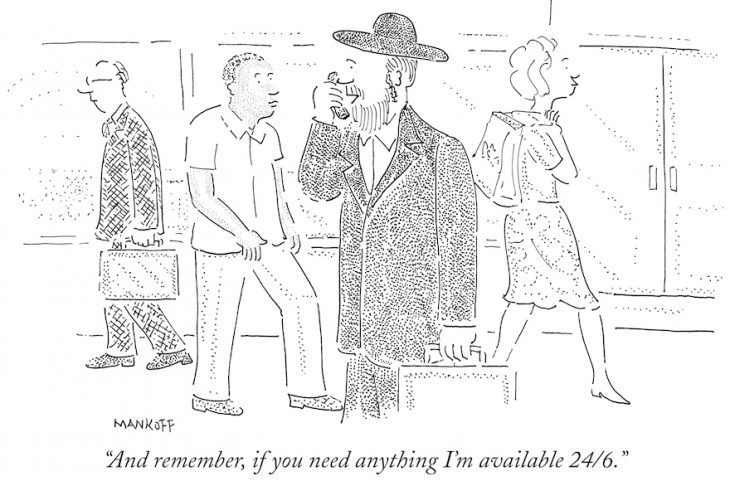
Another oddity is the tacit admission that Christians are so poorly read that they need to go to a parachurch website for knowledge about a topic that almost everyone is talking about 24/7. Don’t believers actually know where to go for information about the world they share in common with non-believers? Or do they need that knowledge to come from reliable sources (and only Christian sources are reliable)? This piece has good material, but it also comes across paternalistically, like we need to spoon feed this stuff to you kids out there:

The use of the terms endemic, outbreak, epidemic, and pandemic do not denote the severity, or how serious the condition has become. For instance, influenza (flu) is endemic to the United States, though the severity changes from year to year. The severity of the flu in 2019–2020 is classified by the Centers for Disease Control (CDC) as being “high.” According to CDC estimates, from October 1, 2019, through February 15, 2020, there have been 29 million to 41 million flu illnesses, 13 million to 19 million flu medical visits, 280,000 to 500,000 flu hospitalizations, and 16,000 to 41,000 flu deaths.

In contrast, the COVID-19 has (as of February 24, 2020), resulted in 51,838 currently infected patients (40,271 in mild condition; 11,567 in serious condition), 25,271 recovered cases, and 2,698 deaths. It’s currently unclear what level of severity we should expect if COVID-19 becomes a pandemic.

Two other important terms are containment and mitigation. Containment is measures taken to slow the spread of a condition, usually for the purpose of making preparations before it becomes an epidemic or pandemic. As applied to COVID-19, containment has included measures taken to slow the spread of the virus (a somewhat achievable goal) rather than intended to stop the complete spread of the disease (which may not be achievable, at least in the short term). Mitigation is efforts to reduce the severity or seriousness of the condition. In a pandemic, mitigation strategies may include a variety of approaches, from encouraging handwashing to the creation of new vaccines.

So what are Christians to do? Why can’t they have Sundays for a word from the Lord, fellowship of the saints, and rest from this world in anticipation of the eternal rest to come? Machen sure seemed to understand this:

Remember this, at least — the things in which the world is now interested are the things that are seen; but the things that are seen are temporal, and the things that are not seen are eternal. You, as ministers of Christ, are called to deal with the unseen things. You are stewards of the mysteries of God. You alone can lead men, by the proclamation of God’s word, out of the crash and jazz and noise and rattle and smoke of this weary age into the green pastures and beside the still waters; you alone, as minsters of reconciliation, can give what the world with all its boasting and pride can never give — the infinite sweetness of the communion of the redeemed soul with the living God. (Selected Shorter Writings, 205)

The other six days, let the experts have their say and let the saints figure out — in consultation with friends, parents, cousins, teachers, colleagues — which experts to follow. Is that too secular?

Proportional Meanness

This is inspired by trying to calculate the sweepstakes for Christians criticizing Christians. As much as Calvinists may suffer from a reputation for orneriness, some of the folks on the progressive side of evangelicalism have a pretty low threshold for deviation from progressive evangelical norms.

I suspect most people who write critically about others, in venues other than book reviews, have some sense of the critique’s degree of importance. How much of a threat is the person about whom you are posting or writing a stand-alone article? Part of the calculation behind criticism is actually preventing the spread of error or harm. But another side of it — and does it take only someone who believes in total depravity (or has seen The Wire)? — is what notoriety and even recognition an author might receive writing the piece. If it is an easy dismissal, one where most people agree — like Donald Trump is a moral cretin, then you need to add value to have your criticism taken seriously and distinguish your perspective from the herd. But if it requires some work to see the problem in the person under scrutiny, then what you gain potentially by criticizing is a reputation for being smart or clever — thinking outside the box. In which case, if Jonathan Merritt criticizes Mark Galli, the former editor of Christianity Today magazine, he will need to work fairly hard since Galli has received lots of praise for writing an op-ed in favor of Trump’s impeachment (those were the days!). To take on Galli could hurt your own standing. But if someone writes about the frivolity and potential danger of Joel Osteen, you don’t have to work all that hard.

Then the question will be where you publish. If you want to impress editors in D.C. or New York, chances are you can’t simply contend against religious celebrities who may be very popular but are not very well known or very interesting to cosmopolitan readers. You may want to rail against Osteen, but editors at The Atlantic or New Yorker will be right to ask why should we or our readers care? If you want to write for a rank-and-file conservative Protestant outlet, you may not have to work as hard since editors may have trouble finding good copy. But you also need to be careful that editors or readers of the publication may like the person you are criticizing. If so you need to write your critique in a way that is plausible even to the admirers of the person you intend to correct.

That seems to leave three layers of calculus: 1) how big or famous is the person you are criticizing? 2) how national or parochial is the publication to which you are submitting your critique? 3) how do you rate in comparison to either the object of criticism or the authors who write regularly for the publication?

If you are a big fish in a small pond and go after an obvious target, say someone like Carl Trueman writing a critical piece of the atheist Sam Harris for New Horizons, then you may have misfired. Who among New Horizons’ readers needs to be schooled in the dangers of atheism.

But if you are a smaller fish in a bigger pond, say a professor at Westminster Seminary writing a critical estimate of Karl Barth for Theology Today, then you need to walk carefully since the editors and readership are inclined to be partial to Barth.

And if you are a big fish writing in a big pond about a little fish, say Stanley Hauerwas writing at First Things about the impoverished theology of Rick Warren’s Purpose Driven Life, you probably won’t do it. You would be wasting your own learning on someone outside the ranks of professional theology. And even if the readers of First Things regularly publish what your submit, you may not want to waste your capital on a subject that is of little concern to the editors or readers of the journal. You start to publish too many pieces on thinkers, writers, or pastors that are not in your league, you may drop down from the Premier League to the Football League.

So why is it that evangelicals who are minor figures in the national pantheon of thought leaders and public intellectuals don’t see how large or obvious the subtext is when they hammer away at the religious celebrities that secular or Christian progressives find so easy to mock? It is not even a question of loyalty to your tribe however thin the ties may be within tribal evangelicalism. It is a question of thoughtfulness. If you want to impress your cultural superiors, do you really take on subjects that are virtually defenseless (other than having standing from celebrity)?

On the other side of the relationship, why do secular editors publish criticisms from evangelical journalists and academics of pastors and Protestant celebrities about whom none of their readers actually care? Maybe it is a way of “otherizing” the religious whackos and allowing yourself and your readers the chance to feel superior to the religious unwashed. That’s not terribly clever or difficult, though it likely explains the logic behind click-bait. But why evangelical journalists or academics ever want to be used that way is a mystery. I hope they are washing more than their hands (early and often).

Chloro(Men)cken for COVID-19

Teaching Mencken during a pandemic is downright riveting. Imagine reading these observations while quarantined (with cats or not):

The suicide rate, so I am told by an intellgient mortician, is going up. It is good news to his profession, which has been badly used of late by the progress of medical science, and scarcely less so by the rise of cut-throat, go-getting competition within its own ranks. It is also good news to those romantic optimists who like to believe that the human race is capable of rational acts. What could be more logical than suicide? What could be more preposterous than keeping alive? Yet nearly all of us cling to life with desperate devotion, even when the length of it remaining is palpably slight, and filled with agony. Half the time of all medical men is wasted keeping life in human wrecks who have no more intelligible reason for hanging on than a cow has for giving milk.

In part, no doubt, this absurd frenzy has its spring in the human imagination, or, as it is more poetically called, the human reason. Man, having acquired the high faculty of visualizing death, visualizes it as something painful and dreadful. It is, of course, seldom anything of the sort. The proceedings anterior to it are sometimes (though surely not always) painful, but death itself appears to be devoid of sensation, either psychic or physical. The candidate, facing it at last, simply loses his faculties. It is no more to him than it is to a coccus. . . .

[M]en work simply in order to escape the depressing agony of contemplating life — that their work, like their play, is a mumbo-jumbo that serves them by permitting them to escape from reality. Both work and play, ordinarily, are illusions. Neither serves any solid and permanent purpose. But life, stripped of such illusions, instantly becomes unbearable. Man cannot sit still, contemplating his destiny in this world, without going frantic. So he invents ways to take his mind off the horror. He works. He plays. (On Suicide, 1926)

He streams.

What about how to dispose of human remains?

One of the crying needs of the time in this incomparable Republic is for a suitable Burial Service for the admittedly damned. I speak as one who has of late attended the funeral orgies of several such gentlemen, each time to my esthetic distress. The first of them, having a great abhorrence of rhetoric in all its branches, left strict orders that not a word was to be said at his obsequies. The result was two extremely chilly and uncomfortable moments: when six of us walked into his house in utter silence and carried out his clay, and when we stood by as it was shoved, in the same crawling silence, into the fire-box of the crematory. The whole business was somehow unnatural and even a shade indecent: it violated one of the most ancient sentiments of homo sapiens to dispatch so charming a fellow in so cavalier a fashion. One felt almost irresistibly impelled to say good-by to him in some manner or other, if only, soldier fashion, by blowing a bugle and rolling a drum. Even the mortician, an eminent star of one of the most self-possessed of professions, looked a bit uneasy. . . .

What is needed, and what I bawl for politely, is a service that is free from the pious but unsupported asseverations that revolt so many of our best minds, and yet remains happily graceful and consoling. It will be very hard, I grant you, to concoct anything as lasciviously beautiful as the dithyrambs in the Book of Common Prayer. Who wrote them originally I don’t know, but whoever did it was a poet. They put the highly improbable into amazingly luscious words, and the palpably not-true into words even more arresting and disarming. It is impossible to listen to them, when they are intoned by a High Church rector of sepulchral gifts, without harboring a sneaking wish that, by some transcendental magic, they could throw off their lowly poetical character and take on the dignity and reliability of prose — in other words, that the departed could be actually imagined as leaping out of the grave on the Last Morn, his split colloids all restored to their pristine complexity, his clothes neatly scoured and pressed, and every molecule of him thrilling with a wild surmise. (Clarion Call to Poets, 1927)

And then there is Mencken’s propensity for thinking outside the box:

What reason is there for believing that a high death-rate in itself, is undesirable? To my knowledge none whatever. The plain fact is that, if it be suitably selective, it is extremely salubrious. Suppose it could be so arranged that it ran to 100% a year among politicians, executive secretaries, drive chairmen, and the homicidally insane? What rational man would object? (Christian Science, 1927)

Happy computer modelling.

The Nation’s Math Crisis

Lots of people are throwing around statistics about COVID-19, cases, deaths, ICUs, ventilators, even percentages, a challenge for those who forgot long division. And then there are the software/programming types and computer models that project what yesterday’s and today’s numbers will mean for tomorrows.

Keep in mind though that in country as large and opinionated as the United States, tabulating numbers (which depend on people keeping records) is a challenge. For instance:

In his effort to narrow the stunning divide between the U.S. and other industrialized Western nations on the rates at which they incarcerate their respective citizens, Latzer’s argument is limited to people housed in prisons. His analysis thus quite explicitly ignores the almost 800,000 people who are detained, at any given point in time, in city and county jails across America housing half as many prisoners as state and federal prisons do.

Excluding jail inmates in a debate concerning over-incarceration, however, is just as illogical as ignoring foreign-manufactured vehicles from an assessment of the number of automobiles on the road. The place where prisoners are housed (prison versus jail) is just as irrelevant as the place of manufacture of automobiles in arguments over whether we have too many inmates and cars in the United States. To have any real-world significance, each normative inquiry must begin with an accurate appraisal of the empirical phenomenon being assessed. In the case of over-incarceration, that means factoring in the hundreds of thousands of people locked up in jails along with their counterparts in federal and state prisons.

According to the U.S. Department of Justice, “County and city jails in the United States reported a total confined population of 745,200 inmates at midyear 2017.” In that same year, the government reported that prisons contained 1,489,363 inmates. Despite the fact that non-lawyers often use the terms “prison” and “jail” interchangeably, prisons are reserved for persons convicted of felonies and sentenced to more than a year behind bars. Jails, by contrast, house less serious convicts serving custodial sentences of one year or less and persons being held on pending charges not yet adjudicated. People in jails and prisons alike are incarcerated and thus directly relevant to debates regarding over-incarceration.

At a time when we are trying to sort through critical cases of COVID-19, ordinary ones, and asymptomatic carriers, remembering that Americans also have trouble counting people who commit felonies may provide comfort. You can always juke the stats.

Stats May Lie but What about the Words?

Some think Aaron Ginn’s article that debunks the projections for COVID-19’s rates of transmission, infection, and mortality are off. In an era of big data, from Wall Street to Major League Baseball, occupying the lane alone as the only interpreter of statistics looks a tad risky. But okay, Carl T. Bergstrom can have the numbers (though I wonder if he ever questions the graphs that Stuart A. Thompson creates for the New York Times).

What about the text that Ginn also supplied?

One example is from the Wall Street Journal:

A World Health Organization report on China concluded that cases of Covid-19 in children were “relatively rare and mild.” Among cases in people under age 19, only 2.5% developed severe disease while 0.2% developed critical disease. Among nearly 6,300 Covid-19 cases reported by the Korea Centers for Disease Control & Prevention on March 8, there were no reported deaths in anyone under 30. Only 0.7% of infections were in children under 9 and 4.6% of cases were in those ages 10 to 19 years old

Only 2% of the patients in a review of nearly 45,000 confirmed Covid-19 cases in China were children, and there were no reported deaths in children under 10, according to a study published in JAMA last month. (In contrast, there have been 136 pediatric deaths from influenza in the U.S. this flu season.)

About 8% of cases were in people in their 20s. Those 10 to 19 years old accounted for 1% of cases and those under 10 also accounted for only 1%.

This was not a cherry-picked quotation. Ginn could have added:

Trends in South Korea so far look similar. Among nearly 6,300 Covid-19 cases reported by the Korea Centers for Disease Control & Prevention on March 8, there were no reported deaths in anyone under 30. Only 0.7% of infections were in children under 9 and 4.6% of cases were in those ages 10 to 19 years old.

Ginn also quoted a study from the Center for Disease Control

A growing body of evidence indicates that COVID-19 transmission is facilitated in confined settings; for example, a large cluster (634 confirmed cases) of COVID-19 secondary infections occurred aboard a cruise ship in Japan, representing about one fifth of the persons aboard who were tested for the virus. This finding indicates the high transmissibility of COVID-19 in enclosed spaces.

The larger part of that paragraph includes this.

[H]ospital-based transmission has occurred, potentially affecting healthcare workers, inpatients, and visitors at healthcare facilities, which might explain an increasing trend and the elevated CFR estimates. Indeed, thousands of healthcare workers have succumbed to the disease in China (18), a pattern that resembles past nosocomial outbreaks of Middle East respiratory syndrome (MERS) and severe acute respiratory syndrome (19,20). During past MERS outbreaks, inpatients with underlying disease or elderly persons infected in the hospital setting have raised the CFR to values as high as 20% (21,22).

Meanwhile, Ginn brought interpretation of statistics — that would be words — from Nobel laureate and Biophysicist, Michael Levitt. Not shabby, right?

Every coronavirus patient in China infected on average 2.2 people a day — spelling exponential growth that can only lead to disaster. But then it started dropping, and the number of new daily infections is now close to zero.” He compared it to interest rates again: “even if the interest rate keeps dropping, you still make money. The sum you invested does not lessen, it just grows more slowly. When discussing diseases, it frightens people a lot because they keep hearing about new cases every day. But the fact that the infection rate is slowing down means the end of the pandemic is near.”

Turns out Ginn was abstemious in his quotation of Levitt:

There are several reasons for this, according to Levitt. “In exponential growth models, you assume that new people can be infected every day, because you keep meeting new people. But, if you consider your own social circle, you basically meet the same people every day. You can meet new people on public transportation, for example; but even on the bus, after some time most passengers will either be infected or immune.”

Another reason the infection rate has slowed has to do with the physical distance guidelines. “You don’t hug every person you meet on the street now, and you’ll avoid meeting face to face with someone that has a cold, like we did,” Levitt said. “The more you adhere, the more you can keep infection in check. So, under these circumstances, a carrier will only infect 1.5 people every three days and the rate will keep going down.”

Quarantine makes a difference, according to Levitt, but there are other factors at work. “We know China was under almost complete quarantine, people only left home to do crucial shopping and avoided contact with others. In Wuhan, which had the highest number of infection cases in the Hubei province, everyone had a chance of getting infected, but only 3% caught it,” he explained. “Even on the Diamond Princess (the virus-stricken cruise ship), the infection rate did not top 20%.” Based on these statistics, Levitt said, he concluded that many people are just naturally immune to the virus.

The explosion of cases in Italy is worrying, Levitt said, but he estimates it is a result of a higher percentage of elderly people than in China, France, or Spain. “Furthermore, Italian culture is very warm, and Italians have a very rich social life. For these reasons, it is important to keep people apart and prevent sick people from coming into contact with healthy people.”

It doesn’t take epidemiological scientist to think this:

To put things in proportion: “there are years when flu is raging, like in the U.S. in 2017, when there were three times the regular number of mortalities. And still, we did not panic. That is my message: you need to think of corona like a severe flu. It is four to eight times as strong as a common flu, and yet, most people will remain healthy and humanity will survive.”

If Carl Bergstrom wants all non-experts to butt out. Fine. But what newspaper, magazine, or news-website will stand in that great day?

Too Small to Succeed (the Health Care System)

Americans may distrust big institutions, and journalists may take most of what Donald Trump says as brummagem, but why aren’t Americans suspicious of the people running the health care system? After all, most times the phrase — flattening the curve — is not about saving lives (as Jay Santos would put it), but about managing the demand for medical care in a hospital. Of course, saving lives is related to access to hospitals, especially in life threatening stages of many diseases and conditions. But flattening the curve also indicates that hospitals are not prepared for a pandemic. That could well be the fault of federal authorities and public health officials. But we are in a privatized system of health care (different from health insurance). And it’s now fairly obvious that hospital CEOs had all sort of financial incentives to handle COVID-19 cases.

Here’s some of the polling data on physicians and research scientists:

The spread of the new coronavirus in the United States comes at a time of low public trust in key institutions. Only around a third of U.S. adults (35%) have a great deal or a fair amount of confidence in elected officials to act in the public’s best interests, and fewer than half say the same about business leaders (46%) and the news media (47%), according to a January 2019 Pew Research Center survey.

Public attitudes are substantially more positive when it comes to another set of participants in the unfolding coronavirus threat: doctors and medical research scientists. In the same survey, 74% of Americans said they had a mostly positive view of medical doctors, while 68% had a mostly favorable view of medical research scientists – defined as those who “conduct research to investigate human diseases and test methods to prevent and treat them.”

Why don’t Pew’s pollsters ask questions about hospital administrators? A story about the differences between non-profit and for-profit health systems indicates that hedge fund types, the folks who gave us (at least partly) the 2008 financial meltdown, may also be responsible for the COVID-19’s economic symptoms:

for-profit health system boards tend to be a blend of investor representatives and community leaders.

At Nashville-based HCA Healthcare Inc., a for-profit health system with more than 180 hospitals, the chairman of the board is Thomas F. Frist III, founder and managing principal of Frist Capital LLC, a Nashville investment firm.

Other members of the HCA board include Nancy-Ann DeParle, a partner at New York-based Consonance Capital Partners, a private equity firm that invests in healthcare companies. Charles O. Holliday Jr., chairman of Royal Dutch Shell PLC, which is headquartered in The Hague, the Netherlands, is also on the board.

Sure, it could be that to make hospitals work, you need bean counters and market watchers and venture capitalists to calculate the allocation of resources. But what if for-profit medicine is not the right model for pandemics?

And what if journalists and Democrats, eager to make the current White House look like a gaggle of idiots (not hard), took a long look not at the way we pay and process paperwork for health insurance companies? What about running stories on the business people who manage and own hospital systems that were interested in profits as much as public health? What about coverage of the sort of contortions imposed on epidemiologists, economists, and elected officials because the people who directly manage and own institutions within the health care system were unprepared for a pandemic? And when will someone point out that again the federal government and its printing presses at the Treasury will save another industry’s CEOs?

Have Senior Christian Market Pastors Served the PCA Well?

If Tim Keller is someone to read for political philosophy, what about urban design and planning? It turns out that much Christian reflection on the city is similar to Christian thought about government and society — it is pietistically utilitarian. The city or politics are ways to evangelize or carry out God’s will for me and others, not a common arena of human life that relies on the sorts of human inquiry that may involve both sides of the antithesis.

Here is one of Tim Keller’s typical briefs for the city:

social scientists tell us that across the whole planet there are at least 5 million people moving into cities from the countryside every month. The number of churches per capita in the country and towns dwarfs the number of churches in cities. People are moving to cities with fewer places of gospel witness for the population, and that situation is worsening by the day. For example, New York City will be gaining a net of 1 million people over the next 25 years. That’s bigger than Charlotte, North Carolina. Yet will we be planting as many new churches here as there are churches in Charlotte? Probably not.

So put the balance like this: we need churches everywhere there are people—but the people of the world are moving into cities much faster than the church is. Jesus told us to go into the world to make disciples (Matt 28:18–20). If we fail to go where the world is going, then we aren’t heeding our Lord’s command. Certainly we must never insist that everyone should do city ministry, nor that gospel ministry in one place is intrinsically better than in another, but we shouldn’t shrink from emphasizing city ministry as never before.

Don’t romanticize or demonize or shrug at the city. Love the city, as Christ loved you.

Treat cities like a mission field.

But if you are going to transform a city with a gospel ecosystem, you may need to read urban designers and planners. And if you read the history of the cities, you may encounter a less than onward-and-upward understanding of the city. Cue James Howard Kunstler:

The city is perhaps the greatest cultural artifact of the long-running human project, which now faces an array of predicaments at a larger scale than at any previous inflection point in our history. These include population overshoot, the fossil-fuel quandary, competition over dwindling resources, an unsound banking system, climate uncertainty, and much more. These dynamics are expressing themselves currently in political disorders and cultural hysterias, and the anxiety over what happens next appears to be driving us crazy. . . .

The urban metroplexes of the U.S. have assumed a scale and complexity of operation that cannot be sustained in the coming disposition of things. They will contract substantially. Some of them in especially unfavorable locales—Tucson, Miami, Houston—may disappear altogether, but the rest will have to become a lot smaller and the process is liable to be messy as various groups fight over who gets to inhabit the districts that retain value: for example, riverfronts and original urban cores. This will occur against the backdrop of more generalized political disorder and the failures of national government, especially where fiscal management is concerned. State governments, too, may be broke and impotent. (That implies a devolution of political power from the grand scale to the local level, where decisions and action will matter.)

Cities that are overburdened with skyscrapers and megastructures face an added degree of failure. These buildings will never be renovated in the coming era of resource and capital scarcity. Professional observers like Krieger’s colleague, Edward Glaeser of Harvard’s Kennedy School of Government (author of Triumph of the City, 2011), is exactly one of those who expects only more-bigger-higher-denser cities in the years ahead. That will be another disappointment for the wishful-thinking techno-narcissists of this land. More likely we will see skyscrapers and megastructures convert from being assets to liabilities in very short order. We may not even have the financial mojo to pay for their disassembly and the salvage of their modular materials.

The places in our country that stand a chance to carry on are the very places that have gone through the most catastrophic failure and disinvestment the past 50 years: the small towns and small cities that are scaled to the capital and resource realities of the future—especially the ones that have a meaningful relationship to food production. Many of these places lie along America’s inland waterway system (the Ohio, Mississippi, Missouri, Great Lakes, including the Hudson River estuary and the Erie and Champlain Canals). As the trucking system collapses, we will have to move more things by boat. The conventional futurists don’t even see this coming.

But you don’t read about this side of the city when you see descriptions of gospel ecosystems:

When a gospel movement is underway, it may be that the Body of Christ develops to the point that a whole city tipping point is reached. By that I mean the moment when the number of gospel-shaped Christians in a city reaches critical mass. The Christian influence on the civic and social life of the city—on the very culture—is recognizable and acknowledged. That means between 10 and 20 percent of the population.

. . . In New York City, some groups have a palpable effect on the way life is lived when their numbers reach at least 5 to 15 percent and when the members are active in public life. . . . In other words, something is going on in New York that goes beyond one church, one network, or any one denomination. It goes beyond any particular race or ethnic group. It’s a movement.

We’re a long way from getting to the place we need to be, a city tipping point, when 10 to 20 percent of the population goes to those churches, and you begin to realize that the whole city, the whole culture is going to change because of the impact of Christians in a place like New York.

That’s what we’re after. It takes a movement to reach a city, and that’s more than just planting a church, or even seeing your denomination growing.

Someone needs to ask, what will remain of the city when the movement arrives?

What the Coronavirus Reveals about Protestant Piety

For Lutherans, the question is what do you do?

What precautions should my church take?

  1. Buy large supplies of hand sanitizer and disinfectant wipes. Masks too if you feel like it, but masks are not as essential as disinfectant materials.

  2. Establish a single, controlled point of entry to your church which you can use to force congregants to wash their hands and check for disease symptoms.

  3. Strongly discourage people with any sickness in their household from coming to church; the pastor or deacons can make a house call later.

  4. Eliminate non-essential activities at your church like social groups. Consider suspending church schools or peripheral activities.

  5. Communion is your highest-infection-risk element of the service. Avoid passing a communion plate, intinction, or a common cup. The safest way to take communion is in individual cups and pieces of bread, in small groups, at the altar.

  6. Other personal-touch service elements like peace-passing, offering, or attendance books should also be restructured or suspended.

  7. Put more space between chairs or encourage bigger seating gaps in pews.

  8. However, informal interpersonal contact at church and church fellowship time does not need to be cancelled, provided a few basic precautions are taken, like limiting food to individually-packaged snacks.

  9. It is especially important for church workers to wash their hands fanatically, wear masks, and maintain good personal hygiene.

For New Calvinists, the question is what this disease means for your walk with God:

Why should Christians be concerned about the coronavirus?

There are several reasons Christians should be concerned about the coronavirus, and for those who are suffering from the disease. But the primary reason, as the apostle Paul tells us, is that we should “weep with those who weep” (Rom. 12:15) and that we “comfort those who are in any affliction, with the comfort with which we ourselves are comforted by God” (2 Cor. 1:4).

As a pastor of a church in Wuhan recently said in an open letter to fellow believers, “If you do not feel a responsibility to pray, ask the Lord for a loving soul, an earnestly prayerful heart; if you are not crying, ask the Lord for tears. Because we surely know that only through the hope of the Lord’s mercy will Wuhan be saved.”

Neither set of advice is wrong. But if you want an index to the way that confessional Protestants and pietists think about life in this world — especially about economics and politics — this is a good measure. Notice too the importance of the church and public worship to the Lutheran outlook. Just saying.