Another Reason Why Evangelicals Aren't Conservative

Gordon McDonald, the evangelical pastor and now Leadership editor at large (do editors ever work at medium?) has written in support of the Obama health care bill (hat tip to John Fea). His reasoning has nothing to do with politics and everything to do with Jesus. McDonald is glad for the bill “not because I am a Democrat or a Republican but because I think that Jesus, who seemed to take great interest in health issues, is glad. Looking back on his life among people like us, he often acted as a healer. He seemed to delight in curing diseases, restoring disabled people to wholeness, and rewiring damaged minds. You cannot divorce these encounters from the rest of his public ministry. Health-care was in his frame of reference.”

Methinks McDonald’s humanitarianism gets in the way of his reading of the New Testament. Sure, Jesus healed people. Had he lived longer and not gone to the cross, he could have healed a lot more. And had he yielded to Satan’s temptation to reign over everything, he might have instituted a health care plan better than our president’s. It very well could be that his healings, like his raising of Lazarus, weren’t the point of his ministry but only a sign of the everlasting wholeness and well being that will come in the new heavens and new earth for all who trust in him – healthy and sick, insured or not, Republican and Democrat.

At the same time that McDonald’s compassion clouds his reading of the New Testament, it also harms his discernment about American government. He concludes the piece with several points, numbered presumably to give the effect of policy items:

1. Any effort that is made to bring health benefits to more people (especially the weak, the poor, the children) is an effort with which I want to identify.

2. Anyone whose argument is based simply on the notion that we cannot afford making medical benefits available to more people does not get my ear. The fact is that our country—we the people—can afford it, even if it means that each of us surrenders a few more bucks that we would have spent on things for ourselves. We just have to conclude that compassion in the face of human need is a greater value than accumulating more stuff.

3. Any initiative that makes it possible for the common person to have the same access to medical science as the rich appear to have is one I want to hear about.

On the surface, these ideals look benign. But does he really mean “any” in each of these cases? Certainly, he would not countenance legalizing prostitution as a way to pay for health care insurance. Some restrictions will obviously need to come from the moral law.

And does McDonald really mean to say that the price tag is no object? Has he no sense of the debt that his and my generation is passing on to the next? Usury used to be a sin. Can printing money to balance the books – or at least reduce the debt – be a virtuous enterprise, or healthy for a government that depends on the assent of the governed?

And can McDonald really mean he is willing to level the wealth playing field so that I enjoy the same medical care as Ryan Howard, all-star first baseman for the Phillies? Um, either Howard gets easy access to orthopedists and the Phillies make the playoffs, or he and I both wait in the same waiting room, my knees get the same attention as his elbow, and the Phillies miss the playoffs? That’s an easy decision.

But whatever the difficulties in McDonald’s idealism, his haste to evaluate political events by the What-Would-Jesus-Do standard obscures the political and economic realities of universal health care within an American form of government. A better measure of Obama’s policies – or any president’s – is what would Abe do, or what would Jefferson do, or what would Wilson do? Only by asking secular and political questions first, can believers be faithful to their ultimate Lord. Conversely, by asking the religious and ethical questions first, evangelicals wind up, in Christ’s name (of all things) making a mess of this world.

Has President Obama Been Reading the Baylys?

Sometime ago, to ridicule two-kingdom theology even more, the Baylys ran a post on whether the resurrection has any public policy implications. Apparently, Obama took the bait and issued remarks at the White House Easter prayer breakfast that outlined the implications of the resurrection for civil society. (By the way, how do you spot the difference between a religious and a political prayer meeting? Depends on whether they are serving eggs.)

Obama said (thanks to Touchstone):

I can’t shed light on centuries of scriptural interpretation or bring any new understandings to those of you who reflect on Easter’s meaning each and every year and each and every day. But what I can do is tell you what draws me to this holy day and what lesson I take from Christ’s sacrifice and what inspires me about the story of the resurrection.

For even after the passage of 2,000 years, we can still picture the moment in our mind’s eye. The young man from Nazareth marched through Jerusalem; object of scorn and derision and abuse and torture by an empire. The agony of crucifixion amid the cries of thieves. The discovery, just three days later, that would forever alter our world — that the Son of Man was not to be found in His tomb and that Jesus Christ had risen.

We are awed by the grace He showed even to those who would have killed Him. We are thankful for the sacrifice He gave for the sins of humanity. And we glory in the promise of redemption in the resurrection.

And such a promise is one of life’s great blessings, because, as I am continually learning, we are, each of us, imperfect. Each of us errs — by accident or by design. Each of us falls short of how we ought to live. And selfishness and pride are vices that afflict us all.

It’s not easy to purge these afflictions, to achieve redemption. But as Christians, we believe that redemption can be delivered — by faith in Jesus Christ. And the possibility of redemption can make straight the crookedness of a character; make whole the incompleteness of a soul. Redemption makes life, however fleeting here on Earth, resound with eternal hope.

Of all the stories passed down through the gospels, this one in particular speaks to me during this season. And I think of hanging — watching Christ hang from the cross, enduring the final seconds of His passion. He summoned what remained of His strength to utter a few last words before He breathed His last breath.

“Father,” He said, “into your hands I commit my spirit.” Father, into your hands I commit my spirit. These words were spoken by our Lord and Savior, but they can just as truly be spoken by every one of us here today. Their meaning can just as truly be lived out by all of God’s children.

So, on this day, let us commit our spirit to the pursuit of a life that is true, to act justly and to love mercy and walk humbly with the Lord. And when we falter, as we will, let redemption — through commitment and through perseverance and through faith — be our abiding hope and fervent prayer.

To borrow a line from Tonto, who is this “we” and “us” to whom President Obama refers? Does it include Jews, Buddhists, and non-Christians, does it merge Mormons into generic Christianity, and does it speak for Roman Catholics and Protestants? This is the sort of universalism in which civil religion always traffics if Christianity is going to serve a religiously plural society.

And what of the theology behind these remarks. As much as I like the priority of the forensic, when Obama says that redemption makes for virtuous character, for the president grace simply seems to be the door prize for contestants who don’t live up to be good and decent folks. People rightly faulted President Bush for trivializing Christianity when he used it in public speeches. Obama may be more eloquent but he is just as guilty of taking something that is sublime and holy and reducing it to having us all get along. Getting a long is a good thing. Christianity is profounder than that.

And yet, if Obama were on the right side of gay marriage and abortion, I suspect readers of the Baylys would be happy to see such policy implications of the resurrection.

The Bible and the Politics of Sex

Discussions about the relative value of special (i.e. the Bible) or general revelation (e.g. natural law) for politics and society often bog down on the politics of sex. What about abortion? It is a heinous practice that cannot be outlawed on as flimsy a basis as natural law or private conscience. What about gay marriage? The Greeks were pretty good at natural law sorts of arguments but not necessarily reliable on same-sex relationships. Or what about women in the military? (I actually think nature is far more instructive here than God’s word, having seen some of the tortured reasoning from Presbyterian communions on women serving in the military.) The idea that most Americans will rally around an argument from general revelation to ban women from the armed services seems far fetched.

And of course beyond whether or not natural law will be more effective than Scripture in public debate is the issue of what’s right. If God requires certain kinds of holiness from his people, and believers are implicated in a host of immoral activities by virtue of their citizenship and taxes at work, then shouldn’t Christians object to laws and policies on the clear grounds of the Bible?

The problem for sufficiency-of-Scripture advocates, though, is that government these days involves a lot more than sex. After all, the president’s health care legislation is more than 1,000 pages. I haven’t seen it. I know many believers are concerned about the potential for government-funded abortion. But can this piece of legislation simply be boiled down to pro-life implications? At stake are questions about the power of the federal government, the private sectors of medical insurers, drug companies, the livelihoods of physicians, and even public health. In other words, I’d bet that 99 percent of the document involves matters that Scripture won’t resolve. And yet, Christians only seem to react to those aspects of law that pertain to abortion while insisting that the Bible is the standard for public life.

An article in the New Republic recently about copyright laws and Google’s attempts to make all books available on line illustrates the weak link in the Bible only argument. The author, Laurence Lessig, starts with the case of Grace Guggenheim, the daughter of a successful documentary film maker who wanted to reproduce digitally all the films made by her father. But Guggenheim could not complete the task. Lessig explains:

Her project faced two challenges, one obvious, one not. The obvious challenge was technical: gathering fifty years of film and restoring it digitally. The non-obvious challenge was legal: clearing the rights to move this creative work onto this new platform for distribution. Most people might be puzzled about just why there would be any legal issue with a child restoring her father’s life’s work. After all, when we decide to repaint our grandfather’s old desk, or sell it to a neighbor, or use it as a workbench or a kitchen table, no one thinks to call a lawyer first. But the property that Grace Guggenheim curates is of a special kind. It is protected by copyright law.

Documentaries in particular are property of a special kind. The copyright and contract claims that burden these compilations of creativity are impossibly complex. The reason is not hard to see. A part of it is the ordinary complexity of copyright in any film. A film is made up of many different creative elements–music, plot, characters, images, and so on. Once the film is made, any effort at remaking it–moving it to DVD, for example–could require clearing permissions for each of these original elements. But documentaries add another layer of complexity to this already healthy thicket, as they typically also include quotations, in the sense of film clips. So just as a book about Franklin Delano Roosevelt by Jonathan Alter might have quotes from famous people talking about its subject, a film about civil rights produced in the 1960s would include quotations–clips from news stations–from famous people of the time talking about the issue of the day. Unlike a book, however, these quotations are in film–typically, news footage from CBS or NBC.

The point of Lessig’s example is that reproducing documentaries becomes impossible because of the fees necessary to secure permission (again) to use footage contained in the original product. For instance, one documentary on the Civil Rights movement, considered the most complete visual chronicle of the events, will never be seen again because the original permissions have expired and the company that made the film no longer exists.

Lessig goes on to raise questions about the recent settlement of Google’s plans to reproduce books on-line. He believes that a similar set of hurdles has entered the realm of books that once only applied to other media. He concludes:

I have no clear view. I only know that the two extremes that are before us would, each of them, if operating alone, be awful for our culture. The one extreme, pushed by copyright abolitionists, that forces free access on every form of culture, would shrink the range and the diversity of culture. I am against abolitionism. And I see no reason to support the other extreme either–pushed by the content industry–that seeks to license every single use of culture, in whatever context. That extreme would radically shrink access to our past.

Instead we need an approach that recognizes the errors in both extremes, and that crafts the balance that any culture needs: incentives to support a diverse range of creativity, with an assurance that the creativity inspired remains for generations to access and understand. This may be too much to ask. The idea of balanced public policy in this area will strike many as oxymoronic. It is thus no wonder, perhaps, that the likes of Google sought progress not through better legislation, but through a clever kludge, enabled by genius technologists. But this is too important a matter to be left to private enterprises and private deals. Private deals and outdated law are what got us into this mess. Whether or not a sensible public policy is possible, it is urgently needed.

This is a long article, well worth reading for those interested in law and the future of the book. And this post hardly does justice either to the article or issues involved. But the article does illustrate a point: most of what magistrates do pertains to matters far removed from the clear moral teaching of Scripture about sex and marriage. So if some are going to fault natural law for not performing a slam dunk on the hot button topics of the culture wars (abortion and gay marriage), when will those advocates of a biblical approach to politics admit that Scripture won’t resolve important questions like this one about the copyright of words and images?

Putting a Point on Two Kingdoms


Posts and comments have been flying fast and furious over at the blog of those two crazy guys, Brothers Tim and David Bayly (they admit that they are “out of their minds”) about two-kingdom theology. It started over a week ago with acrimony surrounding the experimental Calvinism of Jonathan Edwards and Martin Lloyd-Jones, but quickly descended into mud-slinging about who has picketed abortion clinics the most, thus proving that the conversion experience is hardly otherworldly.

One of the points to surface in these debates is the cockamamie idea (to them) of the separation of church and state. As I have tried to point out, if you don’t believe in the separation of church and state, what is the alternative? One to which a Bayly Bro alluded was Calvin’s Geneva, with a nice scoop of scorn for those Calvinists who have departed so far from the pater familia of Reformed orthodoxy and Christian politics. But when I try to bring up the idea that idolaters and heretics were not welcome in Geneva – ahem, can anyone say Servetus? – I receive another helping of scorn. I simply don’t know what I’m talking about because executing heretics is not what they are talking about. Then why bring up Calvin?

I may not know what I’m blogging about, but I definitely don’t know how you can promote Calvin’s ideas on church and state and not see the pinch that might be coming in this greatest of nations on God’s green earth for Mormons and Roman Catholics (for starters). I’m not sure Baptists would be secure either since they do rebaptize. (Just trying to show I’m not selective in my dogmatic intolerance.) And the Baylys have the nerve to call me utopian. What land of chocolate (props to the Simpsons) would execute Servetus and keep Orrin Hatch?

And then along comes Rabbi Bret to the rescue. Mind you, he has been banished (it could be a self-imposed exile) from the Bayly Bros land of chocolate blogging for extreme remarks, so I am not implying that he speaks for the Baylys. But I am not sure how the Baylys and other versions of Christian America, from an orthodox George Washington and a federally envisioned Moscow, Idaho, to the transformation of New York City, can avoid having a Christian influence on society that stops at religious intolerance without limiting Christian influence to mere morality (quite like the liberal Protestant project, mind you, where the Bible was good for ethics but lousy for doctrine).

Here is how Rabbi Bret puts a point on it:

A second problem with the idea of a Christian advocating some version of “it is only fair that in a pluralistic culture that no faith, including Christianity, ever be preferred by the state” is that such a statement is treason against the King Jesus Christ. All Christians should be actively working for the elimination of false faiths from our culture and for the elimination of the influence of false faiths upon our civil-social / governmental structures. Any Christian who advocates the planned continuance of religious and cultural pluralism is a Christian who is denying the King Jesus.

If we need to be subject to King Jesus in all of our lives, and if we want his rule in every walk of life, including Manhattan for those who can afford it, then how do we tolerate other faiths in our nation? If the Bible is the norm for all of life, including politics, why doesn’t the state assume the same opposition to false religion as the church? We don’t tolerate heterodox teaching or unrepentant immoral living in our churches, so why would a nation that has Christian standards be more lenient than the church? Wouldn’t that nation be the civil version of the mainline Protestant churches before the sexual revolution? (This question has the ring of plausibility since it suggests why so many Protestants are inclined to conclude that the founding fathers, who were hardly orthodox, were highly orthodox. If orthodoxy is synonymous with morality, then the criteria for judging Christ’s rule shifts significantly.)

But aside from questions this raises about holding back on fully applying God’s word to all of life, including Roman Catholic neighbors, what about being subject to the government ordered by a constitution that preserves religious liberty? If those who say public education is a legitimate option for Christians can be accused of denying the legitimacy of Christian education, can’t those who continue to live with a regime guided by the U.S. Constitution be blamed for supporting idolatry? And if the toleration of unbelief by law is so awful, a sign of disloyalty to King Jesus, then when are folks like Rabbi Bret and the Pastors Bayly going to do more than blog or picket and actually follow the example of many Calvinists and resist tyranny? Is it really fair to accuse 2k advocates of bad faith when the accusers themselves won’t engage in the sort of armed insurrection practiced by Calvinists in sixteenth-century Holland, seventeenth-century England, and eighteenth-century America?

Where Bret seems to part company with the Baylys (and the Christian school advocate, Kloosterman) is over the magistrate’s enforcement of the first table of the law. Bret favors it, while the others seem to think that the magistrate should acknowledge the first table but not enforce it. That sure doesn’t seem to be Calvin’s theory or practice with Servetus who was executed for a defective view of the Trinity (the First Commandment by my reckoning). But even if you allow for this weasely distinction, then haven’t you introduced an area where all that Christ has commanded is not enforce? Christ commands people to have only one God. The magistrate theoretically believes this but lives with subjects who believe in many Gods. Huh? I wonder where exactly the biblical instruction comes for rulers to distinguish the first and second tables of the law so that the latter becomes legislation but not the former.

At the end of the day, it seems to me that the Covenanters had a good position on all this, even if I disagree with their starting place. They refused to participate in the U.S. regime because it did not acknowledge Christ as Lord. They would not run for office or vote in elections (up until about 1980). That seems like a good way of keeping your distance from a regime that tolerates other faiths and doesn’t acknowledge the Lordship of Christ. But folks like Bret rail against the United States and then run for Senate on the Constitution Party ticket – the God-denying Constitution, that is.

For 2k advocates along with your average conservative Presbyterian, Bret’s and the Baylys’ complaints are no skin off our backs. American Presbyterians revised our confession of faith and we now confess that the magistrate has a duty to protect the freedom of all people, no matter what their faith or level of unbelief. According to Bret’s logic, my communion is guilty of treason against the Lord Jesus Christ. And yet, the Covenanters, who would have disagreed vigorously with the American revisions of the WCF, never once considered (to my knowledge) severing fellowship with the OPC because of these differences on church and state.

In which case, are the Christian transformers of the U.S.A. making a mountain out of a mole hill? Or is it better to say that they are like Peter, defending his lord with a sword, when that way of doing things has passed away and a new order is in place, a spiritual regime for a spiritual institution – the church – which is the kingdom of the Lord Jesus Christ?

German Reformation

Heidelberg 027Sebastian Heck is a church planter in Heidelberg who needs our prayers and support. He has recently sent out news about the launch of a Bible study and a terrific site for worship in the heart of the historic (and beautiful) city. You may read about it here.

(I know, this isn’t funny or smart-alecky. Apparently Tim Keller hasn’t gotten out of bed this week.)

And You Thought New York City Was Hard to Transform

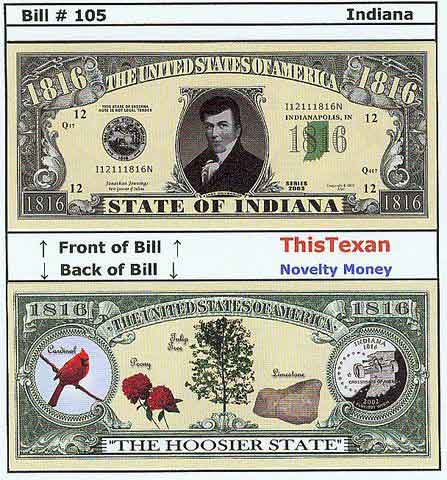
indinaImagine the hurdles that Kuyperians in Indiana who practice law are facing. In fact, look at the vow this allegedly wholesome mid-western state, known for Booth Tarkington and high school basketball – if only they’d invented hot dogs and motherhood – requires of attorneys.

Rule 22. Oath of Attorneys
Upon being admitted to practice law in the state of Indiana, each applicant shall take and subscribe to the following oath or affirmation:

“I do solemnly swear or affirm that: I will support the Constitution of the United States and the Constitution of the State of Indiana; I will maintain the respect due to courts of justice and judicial officers; I will not counsel or maintain any action, proceeding, or defense which shall appear to me to be unjust, but this obligation shall not prevent me from defending a person charged with crime in any case; I will employ for the purpose of maintaining the causes confided to me, such means only as are consistent with truth, and never seek to mislead the court or jury by any artifice or false statement of fact or law; I will maintain the confidence and preserve inviolate the secrets of my client at every peril to myself; I will abstain from offensive personality and advance no fact prejudicial to the honor or reputation of a party or witness, unless required by the justice of the cause with which I am charged; I will not encourage either the commencement or the continuance of any action or proceeding from any motive of passion or interest; I will never reject, from any consideration personal to myself, the cause of the defenseless, the oppressed or those who cannot afford adequate legal assistance; so help me God.” (From Indiana Rules for Admission to the Bar and the Discipline of Attorneys)

The nerve of the Hoosiers. No acknowledgment of God as the creator and sustainer of all things, of Christ as redeemer of his church, no sense that notions of truth and falsehood, justice or crime come from the holy standard of God’s revealed will. Even worse, no mention of a Reformed world and life view, though I suppose the mention of God helps this go down better and lifts Indiana out of the vicious depths of Gotham.

But you do have to wonder how someone committed to the Lordship of Christ in every square inch could take such a vow. Isn’t Indiana guilty of proposing a common realm in which Christian and non-Christian lawyers must serve? And wouldn’t a Christian lawyer who took such a vow be acknowledging the existence of such a common realm. (Of course, it’s not neutral either; Indiana attorneys must always root for IU to beat Michigan.)

The answer could be the difference between theory and practice. Ideally, every square inch should be ruled by Christ, but of course it doesn’t work out in practice. If this were the explanation, then why mock those who try to find a theological rationale for such a common realm (which is what two-kingdom theology attempts)? After all, a two-kingdom attorney would have no problem taking such a vow. His conscience is clear because he knows the older Protestant teaching on the civil magistrate was afflicted with Constantinianism and that expectations for a Christian state died with the passing of Israel.

But the attorney who regularly chastises two-kingdom proponents for selling out the Reformed faith and then turns around and lives with rules of Indiana’s common realm of rules for attorneys, well, that seems remarkably inconsistent if not a tad perverse. It’s as if he’s a Kuyperian in only parts of his life, like the holy times when dropping the kids off at the Christian day school and attending the school board meeting, and then in the common realm living the rest of his day under the rule of Indiana’s legal institutions. How dualistic!

Like Totally Radical

GOSSIP GIRL I see that Doug Wilson, who is reviewing Jason Stellman’s new book, Dual Citizens, has adopted the unfortunate adjective, “radical,” to tarnish two-kingdom theology.
(For some of Jason’s responses, go here.)

I guess Wilson’s refraining from calling it a disease, as in R2K virus, is a step up in name-calling. But to call two-kingdom theology “radical” is silly.

For starters, it is as old as Protestantism is itself. Now for some Reformed Protestants, historic Protestantism is tainted by Lutheranism. This is indeed a puzzle and deserves greater investigation. What is going on among conservative Presbyterians and Reformed that they so carelessly hurl around “Lutheran” as an epithet?

For the main course, two-kingdom theology among Presbyterians goes all the way back to the Adopting Act of 1729. Yes, the colonial church would eventually revise the Confession of Faith in 1788 on questions surrounding the duties of the civil magistrate. But those reservations were already obvious to the American church in 1729 when the Synod of Philadelphia took a corporate exception to the Standards’ teachings on the civil magistrate in order to adopt the Confession and Larger and Shorter Catechisms as the communion’s confession.

One additional consideration is the language of the revision itself. Exactly, how radical is the following (from the revised chapter twenty-three)?

Civil magistrates may not assume to themselves the administration of the Word and sacraments; or the power of the keys of the kingdom of heaven; or, in the least, interfere in matters of faith. Yet, as nursing fathers, it is the duty of civil magistrates to protect the church of our common Lord, without giving the preference to any denomination of Christians above the rest, in such a manner that all ecclesiastical persons whatever shall enjoy the full, free, and unquestioned liberty of discharging every part of their sacred functions, without violence or danger. And, as Jesus Christ hath appointed a regular government and discipline in his church, no law of any commonwealth should interfere with, let, or hinder, the due exercise thereof, among the voluntary members of any denomination of Christians, according to their own profession and belief. It is the duty of civil magistrates to protect the person and good name of all their people, in such an effectual manner as that no person be suffered, either upon pretense of religion or of infidelity, to offer any indignity, violence, abuse, or injury to any other person whatsoever: and to take order, that all religious and ecclesiastical assemblies be held without molestation or disturbance.

I know of no two-kingdom advocate who would dissent from this moderate view of the magistrate’s responsibilities or the civil protection such teaching approves for Roman Catholics, Mormons, Jews, and unbelievers. (We 2k folk, cabal that we are, stay in very close contact.)

On the other hand, the critics of two-kingdom theology prefer this formulation of the civil magistrate (from the original WCF) and regularly accuse two-kingdom folk of bad faith for denying it:

The civil magistrate may not assume to himself the administration of the Word and sacraments, or the power of the keys of the kingdom of heaven: yet he hath authority, and it is his duty, to take order, that unity and peace be preserved in the Church, that the truth of God be kept pure and entire; that all blasphemies and heresies be suppressed; all corruptions and abuses in worship and discipline prevented or reformed; and all the ordinances of God duly settled, administered, and observed. For the better effecting whereof, he hath power to call synods, to be present at them, and to provide that whatsoever is transacted in them be according to the mind of God.

Not to be missed here is that this conception of the magistrate not only denies freedom to Roman Catholics, Mormons, Jews, Arminians, and Pentecostals to practice their faith (where Baptists would fit is also uncertain; the National Covenant knew no privileges for anyone denying infant baptism). It also grants Barrack Obama the authority to call and moderate the General Assembly of the PCA. (OPC GA’s generally do not meet at security-rich locations.)

Who’s the radical now?

So all parties should drop “radical” from descriptions of two-kingdom theology. Better terms are “historic,” “American,” “American Presbyterian,” or “mainstream Presbyterian,” words not synonymous with radicalism.

Do Tim Keller and Norman Shepherd Live in the Same Neighborhood?

galatia Well, the island of Manhattan is about one thousand miles from South Holland, and of course the cultures are universes apart. But harmonic convergence happens.

With apologies to Nick Batzig who pointed this out to me, Tim Keller has an essay on the gospel and the poor at Themelios that echoes Shepherd’s attempt to bring faith and obedience closer together.

Keller writes:

We all know the dictum: “we are saved by faith alone, but not by faith that is alone.” Faith is what saves us, and yet faith is inseparably connected with good works. We saw in Jas 2 that this is also the case with the gospel of justification by faith and mercy to the poor. The gospel of justification has the priority; it is what saves us. But just as good works are inseparable from faith in the life of the believer, so caring for the poor is inseparable from the work of evangelism and the ministry of the Word. . . . We cannot be faithful to the words of Jesus if our deeds do not reflect the compassion of His ministry. Kingdom evangelism is therefore holistic as it transmits by word and deed the promise of Christ for body and soul as well as the demand of Christ for body and soul.

Several times Acts makes a very close connection between economic sharing of possessions with those in need and the multiplication of converts through the preaching of the Word. The descent of the Holy Spirit and an explosive growth in numbers (Acts 2:41) is connected to radical sharing with the needy (2:44–45). Acts 4 is a recapitulation: after the filling of the Spirit, the economic sharing of the people inside the church accompanies the preaching of the resurrection with great power (4:32–35). After the ministry of diakonia is more firmly established, Luke adds, “so the word of God spread. The number of disciples in Jerusalem increased rapidly” (6:7). Luke is again pointing out the extremely close connection between deed-ministry and word-ministry.

Arguments like this show that the spirituality of the church depends on maintaining the centrality of justification by faith alone, with the call for good works, obedience, or personal righteousness kept at a safe distance from the human propensity for works righteousness. David VanDrunen makes that case about the close ties between the priority of justification to sanctification and two-kingdoms theology particularly well in his recent inaugural lecture, “The Two Kingdoms and the Ordo Salutis: Life Beyond Judgment and the Question of a Dual Ethic,” (WTJ 70 [2008] 207-24). But Keller supplies unintended support because the effort to join faith and obedience in the individual seems inevitably to slide into linking word and deed in the church.

All the more reason why the words of Peter Berger, a secular Lutheran, are worth hearing again:

Any cultural or political agenda embellished with such authority is a manifestation of “works righteousness” and ipso facto an act of apostasy. This theological proposition, over and beyond all prudential moral judgments, “hits” in all directions of the ideological spectrum; it “hits” the center as much as the left or the right. “Different gospels” lurk all across the spectrum. No value or institutional system, past or present or future, is to be identified with the gospel. The mission of the church is not to legitimate any status quo or any putative alteration of the status quo. The “okay world” of bourgeois America stands under judgment, in the light of the gospel, as does every other human society. Democracy or capitalism or the particular family arrangements of middle-class culture are not to be identified with the Christian life, and neither is any alternative political, economic, or cultural system. The vocation of the church is to proclaim the gospel, not to defend the American way of life, not to “build socialism,” not even to “build a just society” – because, quite apart from the fact that we don’t really know what this is, all our notions of justice are fallible and finally marred by sin. The “works righteousness” in all these “different gospels” lies precisely in the insinuation that, if only we do this or refrain from doing that, we will be saved, “justified.” But, as Paul tells us, “by works of the law shall no one be justified.” [Berger, “Different Gospels: The Social Sources of Apostasy,” Erasmus Lecture, January 22, 1987]

The Ecumenicity of American Civil Religion

us papal flagsHere is proof of civil religion’s appeal to both sides of the Reformation. What is surprising is that American civil religion was anti-Catholic. Amazing how the culture wars make the anathemas of Trent vanish.

(Thanks to DL for the link.)

Putting Christ's Righteousness in a Lock Box

presidentronaldreagan Adult Sunday school students at Calvary OPC (Glenside) had the privilege of hearing Richard M. Gamble, an Orthodox Presbyterian elder at Hillsdale OPC and historian at Hillsdale College speak on the appeal of the “city on a hill” in American civil religion. Lest some think the lesson promoted mixing biblical metaphors with America’s civic faith, Gamble indicated his own discomfort with efforts to underwrite earthly powers with a redemptive purpose. For those who missed the lecture, the following is a quotation from Gamble’s book, War for Righteousness: Progressive Christianity, the Great War, and the Rise of the Messianic Nation:

America’s anointment as the world’s political messiah did not end when demobilized troops returned from Europe in 1919. It did not end with America’s opposition to the Treaty of Versailles, nor with America’s refusal to join the League of Nations. The cumulative product of generations of reflection, experience, and anticipation, the American identity reached too deep and far to have been uprooted in a moment of supposed renunciation. Transcending party politics and most ideological boundaries, nearly all of the language of universality and emancipation, of the “city on a hill” and the world’s rebirth, of light and dark, Messiah and Armageddon, reverberates down to the present moment. Like Woodrow Wilson before them, few modern presidents have been able to resist the allure of America’s global redemptive consciousness. In the 1940s, Franklin Roosevelt planned for a future refounded on four freedoms, freedoms that would prevail “everywhere in the world.” In the fourth of these universal freedoms, freedom from fear, he anticipated a day when “no nation will be in a position to commit and act of physical aggression against any neighbor – anywhere in the world.” In countless speeches from the 1960s through the 1980s, moreover, Ronald Reagan reached back to the earliest metaphors of America’s divine destiny” to reaffirm the nation’s special calling as a “city on a hill.” Combining the Puritan errand with the Enlightenment dream of earthly regeneration, he also embraced Tom Pain’s longing to “begin the world over again.” And on September 11, 2002, George W. Bush, speaking with the colossus of the Statue of Liberty behind him, called America the “hope of all mankind” and appropriated the world of John 1:5 as if they described not just the Incarnation of Christ but the mission of the United States: “And the light shines in the darkness; and the darkness will not overcome it.” To one degree or another and with varying motives and consequences, each of these men continued to speak of the United States as if it were the Salvator Mundi, following a pattern of thought that has endured for more than four centuries.