Transforming History

Bill Evans thinks that a few pokes at the cultural transformers means the neo-Calvinists are taking it on the chin these days. It is in fact odd to see folks express surprise when others don’t agree with them, as if neo-Calvinism were the settled position of Reformed Protestantism since the days of Ulrich Zwingli and Zacharias Ursinus. One way a tradition becomes fossilized is to imagine that everyone is agreed; arguments keep you sharp, unless you are a follower of Abraham Kuyper whose authority cannot be questioned. I doubt Kuyper himself would be pleased with that group think.

Evans is a little worked up about a post by Carl Trueman that wonders whether the transformationalists have accomplished enough to make news:

The secular and religious media are awash with reports of how the millennial generation of evangelicals is burned out on the political activism of the religious right, and the Two-Kingdoms theology (2K) currently being trumpeted by some faculty members at Westminster Seminary in California (WSC) certainly provides a theological fig-leaf for such culture-war fatigue. In short, H. Richard Niebuhr’s Christ and Culture, with his favored model of “Christ transforming culture,” and the great Dutch Neo-Calvinist theologian and politician Abraham Kuyper are not exactly the flavor of the month.

Nevertheless, I was a bit surprised, though certainly not shocked, to see Carl Trueman jumping decisively on the anti-transformational bandwagon (here on Ref21 and here on TheAquilaReport). Dr. Trueman, as most of us know, teaches church history at Westminster Theological Seminary in Philadelphia (WTS), and is the former Provost and academic dean there. But despite Trueman’s very public aversion to all things trendy, he seems to be right in step with the Zeitgeist on this one. He also seems to be somewhat out of step with his institution’s history.

Evans goes on to assert that Trueman is out of step with the history of Westminster Seminary. Trueman himself is fully capable of defending himself and I won’t speak for him. But I will observe that Evans is remarkably ill informed about the history of Westminster.

For one, he does not seem to recall that WTS’ chief founder was J. Gresham Machen, a man whom neo-Calvinists will contort into a transformationalist but who better than anyone else in the first half of the twentieth century articulated the spirituality of the church over against the transformationalism that dominated the PCUSA:

In the first place, a true Christian church, now as always, will be radically doctrinal. It will never use the shibboleths of a pragmatist skepticism. It will never say that doctrine is the expression of experience; it will never confuse the useful with the true, but will place truth at the basis of all its striving and all its life. Into the welter of changing human opinion, into the modern despair with regard to any knowledge of the meaning of life, it will come with a clear and imperious message. That message it will find in the Bible, which it will hold to contain not a record of man’s religious experience but a record of a revelation from God.

In the second place, a true Christian church will be radically intolerant. At that point, however, a word of explanation is in place. The intolerance of the church, in the sense in which I am speaking of it, does not involve any interference with liberty; on the contrary, it means the preservation of liberty. One of the most important elements in civil and religious liberty is the right of voluntary association – the right of citizens to band themselves together for any lawful purpose whatever, whether that purpose does or does not commend itself to the generality of their fellow men. Now, a church is a voluntary association. No one is compelled to be a member of it; no one is compelled to be one of its accredited representatives. It is, therefore, no interference with liberty of a church to insist that those who do choose to be its accredited representatives shall not use the vantage ground of such a position to attack that for which the church exists. . .

But when I say that a true Christian church is radically intolerant, I mean simply that the church must maintain the high exclusiveness and universality of its message. It presents the gospel of Jesus Christ not merely as one way of salvation, but as the only way. It cannot make common cause with other faiths. It cannot agree not to proselytize. Its appeal is universal, and admits of no exceptions. All are lost in sin; none may be saved except by the way set forth in the gospel. Therein lies the offense of the Christian religion, but therein lies also it glory and its power. A Christianity tolerant of other religions is just no Christianity at all. . . .

There are certain things which you cannot expect from such a true Christian church. In the first place, you cannot expect from it any cooperation with non-Christian religion or with a non-Christian program of ethical culture. There are those who tell us that the Bible ought to be put into the public schools, and that the public schools should seek to build character by showing the children that honesty is the best policy and that good Americans do not lie nor steal. With such programs a true Christian church will have nothing to do. . . .

In the second place, you cannot expect from a true Christian church any official pronouncements upon the political or social questions of the day, and you cannot expect cooperation with the state in anything involving the use of force. Important are the functions of the police, and members of the church, either individually or in such special associations as they may choose to form, should aid the police in every lawful way in the exercise of those functions. But the function of the church in its corporate capacity is of an entirely different kind. Its weapons against evil are spiritual, not carnal; and by becoming a political lobby, through the advocacy of political measures whether good or bad, the church is turning aside from its proper mission. . . .

The responsibility of the church in the new age is the same as its responsibility in every age. It is to testify that this world is lost in sin; that the span of human life — nay, all the length of human history — is an infinitesimal island in the awful depths of eternity; that there a mysterious, holy, living God, Creator of all, Upholder of all, infinitely beyond all; that He has revealed Himself to us in His Word and offered us communion with Himself through Jesus Christ the Lord; that there is no other salvation, for individuals or for nations, save this, but that this salvation is full and free, and that whosever possesses it has for himself and for all others to whom he may be the instrument of bringing it a treasure compared with which all the kingdoms of the earth — nay, all the wonders of the starry heavens — are as the dust of the street. ( “The Responsibility of the Church in the New Age,” 1933)

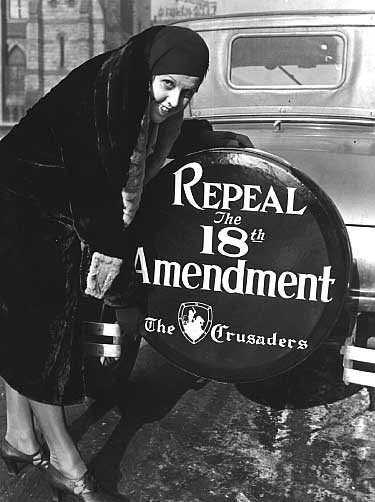
Lest Evans think that Machen was Westminster’s conciliar tradition swamped by the high papalism of neo-Calvinism, he should also remember that after Machen’s death, the Westminster faculty (including R.B. Kuiper, Cornelius Van Til, and Ned Stonehouse, all sons of neo-Calvinism) opposed the transformationalists who formed with Carl McIntire the Bible Presbyterian Synod. The Bible Presbyterians wanted to retain the transformationalism of American Presbyterianism as the genuine Presbyterian tradition in the United States, hence the overture that split the OPC — one in favor of prohibition, the very crusade that had cost Machen a promotion at Princeton Seminary.

So Evans can argue for neo-Calvinism and its superiority all he wants. But he can’t read his preference back into the history of American Presbyterianism. And he should not let his preference prevent him from considering the real tension that comes from trying to harmonize Abraham Kuyper and J. Gresham Machen.

A Week Late and a Quote Short

Travels prevented a post on Machen Day (July 28), which also solved the dilemma of whether to post on the Lord’s Day (July 28). But in honor of Machen’s birth, a selection from What is Faith? (1925):

The gospel does not abrogate God’s law, but it makes men love it with all their hearts.

How is it with us? The law of God stands over us; we have offended against it in thought, word and deed; its. majestic “letter” pronounces a sentence of death against our sin. Shall we obtain a specious security by ignoring God’s law, and by taking refuge in an easier law of our own devising? Or shall the Lord Jesus, as He is offered to us in the gospel, wipe out the sentence of condemnation that was against us, and shall the Holy Spirit write God’s law in our heart, and make us doers of the law and not hearers only? So and only so will the great text be applied to us: “The letter killeth, but the Spirit giveth life.”

The alternative that underlies this verse, then, and that becomes explicit in Galatians also, is not an alternative between an external or ceremonial religion and what men would now call (by a misuse of the New Testament word) a “spiritual” religion, important though that alternative no doubt is; but it is an alternative between a religion of merit and a religion of grace. The Epistle to the Galatians is directed just as much against the modern notion of “salvation by character” or salvation by “making Christ Master” in the life or salvation by a mere attempt to put into practice “the
principles of Jesus,” as it is directed against the Jewish ceremonialists of long ago: for what the Apostle is concerned to deny is any intrusion of human merit into-the work by which salvation is obtained. That work, according to the Epistle to the Galatians and according to the whole New Testament, is the work of God and of God alone.

At this point appears the full poignancy of the great Epistle with which we have been dealing. Paul is not merely arguing that a man is justified by faith so much no doubt his opponents, the Judaizers, admitted but he is arguing that a man is justified by faith alone. What the Judaizers said was not that a man is justified by works; but that he is justified by faith and works exactly the thing that is being taught by the Roman Catholic Church today. No doubt they admitted that it was necessary for a man to have faith in. Christ in order, to be saved: but they held that it was also necessary for him to keep the law the best he could; salvation, according to them, was not by faith alone and not by works alone but by faith and works together. A man’s obedience to the law of God, they held, was not, indeed, sufficient for salvation; but it was necessary; and it became sufficient when it was supplemented by Christ.

Against this compromising solution of the problem, the Apostle insists upon a sharp alternative: a man may be saved by works (if he keeps the law perfectly), or he may be saved by faith; but he cannot possibly be f’saved by faith and works together. Christ, according to Paul, will do everything or nothing; if righteousness is in slightest measure obtained by our obedience to the law, then Christ died in vain; if we trust in slightest measure in our own good works, then we have turned away from grace and Christ profiteth us nothing. (192-93)

The Reorganization of Old Princeton

Our own Darryl Hart recently visited with the folks at Reformed Forum to speak about the reorganization of Old Princeton on Christ the Center. Darryl’s article on the subject, “The Reorganization of Princeton Theological Seminary and the Exhaustion of American Presbyterianism” is published in the 2012 issue of The Confessional Presbyterian Journal. Listen to another interesting conversation on this important event in the history of American Presbyterianism.

Machen Didn't Say It

This quote has been making the rounds as something attributed to Machen:

For Christians to influence the world with the truth of God’s Word requires the recovery of the great Reformation doctrine of vocation. Christians are called to God’s service not only in church professions but also in every secular calling. The task of restoring truth to the culture depends largely on our laypeople. To bring back truth, on a practical level, the church must encourage Christians to be not merely consumers of culture but makers of culture. The church needs to cultivate Christian artists, musicians, novelists, filmmakers, journalists, attorneys, teachers, scientists, business executives, and the like, teaching its laypeople the sense in which every secular vocation-including, above all, the callings of husband, wife, and parent–is a sphere of Christian ministry, a way of serving God and neighbor that is grounded in God’s truth. Christian laypeople must be encouraged to be leaders in their fields, rather than eager-to-please followers, working from the assumptions of their biblical worldview, not the vapid clichés of pop culture.

From what I can tell, it may have originated at a Facebook page for Table Talk. Most recently, Rabbi Bret posted it and attributes it to Christianity and Liberalism. It definitely does not appear in that book. I don’t think anything from this quotation came from Machen. He never to my knowledge wrote in print about film makers. And the phrase “pop culture” was not common until the 1950s, long after Machen’s death.

I originally thought this might be part of what Machen wrote in his essay, “Christianity and Culture” (1912). But here is what Machen says there about culture:

Instead of destroying the arts and sciences or being indifferent to them, let us cultivate them with all the enthusiasm of the veriest humanist, but at the same time consecrate them to the service of our God. Instead of stifling the pleasures afforded by the acquisition of knowledge or by the appreciation of what is beautiful, let us accept these pleasures as the gifts of a heavenly Father. Instead of obliterating the distinction between the Kingdom and the world, or on the other hand withdrawing from the world into a sort of modernized intellectual monasticism, let us go forth joyfully, enthusiastically to make the world subject to God.

If the W-Wers want to count this as evidence of Machen’s neo-Calvinism, they should check out how he ends the essay. There he strikes a much more confessional or churchly note:

The things which are seen are temporal; the things which are not seen are eternal. What will become of philanthropy if God be lost? Beneath the surface of life lies a world of spirit. Philosophers have attempted to explore it. Christianity has revealed its wonders to the simple soul. There lie the springs of the Church’s power. But that spiritual realm cannot be entered without controversy. And now the Church is shrinking from the conflict. Driven from the spiritual realm by the current of modern thought, she is consoling herself with things about which there is no dispute. If she favors better housing for the poor, she need fear no contradiction. She will need all her courage. She will have enemies enough, God knows. But they will not fight her with argument. The twentieth century, in theory, is agreed on social betterment. But sin, and death, and salvation, and life, and God – about these things there is debate.

Either way, someone out there is making up quotes from Machen. Does a Christian W-W include telling the truth?

Machen Day 2011

I am not sure if our favorite PCA blogger had J. Gresham Machen’s birthday in mind when he posted a piece on the fortunes of Machen’s kind of confessionalism within the PCA, but it was good preparation for today’s festivities. The same goes for Westminster Seminary California which has released Scott Clark’s interview with me about Machen’s legacy and the chapter I wrote for W. Robert Godfrey’s festschrift, a recording that may put party-goers quickly to sleep.

But whether these resources were designed to highlight today’s anniversary, the following may provide reasons for donning party hats and blowing horns:

There are entirely too many denominations in this country, says the modern ecclesiastical efficiency expert. Obviously, many of them must be merged. But the trouble is, they have different creeds. Here is one church, for example, that has a clearly Calvinistic creed; here is another whose creed is just as clearly Arminian, let us say, and anti-Calvinistic. How in the world are we going to get the two together? Why, obviously, says the ecclesiastical efficiency expert, the thing to do is to tone down that Calvinistic creed; just smooth off its sharp angles, until Arminians will be able to accept it. Or else we can do something better still. We can write an entirely new creed that will contain only what Arminianism and Calvinism have in common, so that it can serve as the basis for some propose new “United Church.” . . . .

When we pass from these modern statements to the great creeds, what a difference we discover! Instead of wordiness we find conciseness; instead of an unwillingness to offend, clear delimitation of truth from error; instead of obscurity, clearness; instead of vagueness, the utmost definiteness and precision.

All these differences are rooted in a fundamental difference of purpose. These modern statements are intnded to show how little of truth we can get along with and still be Christians, whereas the great creeds of the church are intended to show how much of truth God has revealed to us in His Word. (“Creeds and Doctrinal Advance”)

An Anniversary that Deserves More than a Mug

The Orthodox Presbyterian Church turns 75 today. Festivities have so far included lectures, presentations from the General Secretaries of the Assembly’s standing committees, a banquet tonight, and the opportunity to purchase handsome coffee mugs. Thankfully, the Assembly’s organizers resisted the chief temptation of our time — t-shirts (which are fine to wear under shirts with collars but should be reserved for the boudoir or basketball court).

The OPC has also produced two new books to mark the event, Confident of Better Things, a collection of essays edited by John Muether and Danny Olinger, and Between the Times: The Orthodox Presbyterian Church in Transition, 1945 to 1990 by yours truly.

The latter title covers a number of important episodes during the period when second generation Orthodox Presbyterians decided what to do with the legacy and heritage of Machen, Van Til, Murray, Stonehouse, Young, and Woolley. It includes chapters on the creation of the Trinity Hymnal, the formation of Great Commission Publications, Westminster Seminary’s relationship to the OPC, relations with the PCA and RPCES, and the demise of the Presbyterian Guardian.

One of the more interesting parts of this middle period was the OPC’s desire and protracted effort to merge with the Christian Reformed Church. To honor the anniversary and whet readers’ appetites, the following is an excerpt from chapter seven, “The OPC and the Christian Reformed Church, 1956-1973”:

The OPC’s dependence on theologians and churchmen from immigrant backgrounds characterized its first three decades of existence and gave to the denomination a unique character and international outlook. Westminster Seminary was the source of this foreign presence. Names such as Cornelius Van Til, Ned B. Stonehouse, and R. B. Kuiper were not common fare among American Presbyterians. And even though John Murray’s name was more common than Dutch family names among Presbyterians whose ties to Scotland and Ireland were apparent in the colonial era and first half of the nineteenth century, even his Presbyterianism — the Scottish Free Presbyterian Church — differed in important respects from the American tradition out of which the OPC came. Yet, the OPC did not simply find a place for these foreign Calvinists, as if the church were a haven for the world’s Reformed masses struggling to be free. If anything these Dutch and Scottish Calvinists helped to preserve the conservative Presbyterianism they had learned at Princeton Seminary and that Machen had established at Westminster. In turn, these hyphenated Presbyterians helped to define the the OPC. Because the denomination had emerged from the northern Presbyterian mainline church, it was obviously American in its formal expressions. But because of the presence of foreign leadership — a point that the OPC’s critics never tired of making — the church was also un-American.

The Dutch-American connection was particularly strong and a significant influence upon the OPC’s ecumenical relationships before 1970. Here the ties went back again to Old Princeton. Geerhardus Vos’ decision to complete his theological studies — after transferring from Calvin Seminary — at Princeton Seminary and Princeton’s subsequent appointment of Vos in 1892 as professor of biblical theology established a unique kinship between conservative American Presbyterians and Dutch-American Calvinists of which the OPC was practically the sole beneficiary. Of course, the relationship also benefitted the Dutch communion. As an ethnic religious body on the margins of Anglo-American culture and Protestantism, the CRC was naturally looking for ways to assimilate. Conservative Presbyterians at Princeton and Westminster were particularly attractive half-way houses from ethnic isolation to mainstream respectability. But again, not to be missed in this relationship is the leadership of Dutch-Americans within the OPC. The church did not merely provide a comfortable home for ethnic Calvinists who hoped to be successful in the United States on American terms. In fact, the situation was almost the reverse. The OPC became a comfortable home for Reformed orthodoxy and Presbyterian practice because hyphenated Calvinists assumed positions of leadership in the denomination.

The downside of ethnic leadership, as disaffected critics never ceased to mention, was the OPC’s difference from other conservative Protestants who followed the ethos and piety of American Christianity more than a Reformed faith less encumbered by United States developments. The upside was an ability to see the Reformed faith without the blinders of national pride or patriotic civil religion. So appealing was this international Calvinism that the OPC almost decided to unite with the Christian Reformed Church. In fact, at a time when American Protestants were increasingly identifying Christianity with the American “way of life,” the OPC was contemplating ways to establish closer ties to Dutch-American Reformed Protestants.

Machen's Warrior Children

Darryl G. Hart visits with the panel of Christ the Center once again. On this episode Dr. Hart speaks about his latest essay found in Always Reformed, a festschrift written in honor of Dr. Robert Godfrey.

Download the audio

Two Kingdom Tuesday: Machen Was All Wet

The resolution endorsing the Eighteenth Amendment or the Volstead Act was introduced to the Presbytery of New Brunswick at the very end of the meting on April 13, 1926. The attendance, which had been large during the early part of the session, had dwindled until only a very few persons were present – y estimate would be ten or twelve, exclusive of the officers, though I believe someone else estimates the number at about five. Under these conditions, the resolution was put to a viva voce vote. I voted “No”; but I did not speak to the motion or in any way ask that my vote should be recorded. . . .

It is a misrepresentation to say that by this vote I expressed any opinion on the merits of the Eighteenth Amendment or the Volstead Act – and still less on the general question of Prohibition. On the contrary, my vote was directed against a policy which places the church in its corporate capacity, as distinguished from the activities of its members, on record with regard to such political questions. And I also thought it improper for so small a group of men as were then in attendance to attempt to express the attitude of a court of the church with regard to such an important question. . . .

Such are the facts about my vote. I desire now to say one or two things about my attitude regarding the issues involved.

In the first place, no one has a greater horror of the evils of drunkenness than I or a greater detestation of any corrupt traffic which has sought to make profit out of this terrible sin. It is clearly the duty of the church to combat this evil

With regard to the exact form, however, in which the power of civil government is to be used in this battle, there may be different of opinion. Zeal for temperance, for example, would hardly justify an order that all drunkards should be summarily butchered. The end in that case would not justify the means. Some men hold that the Eighteenth Amendment and the Volstead Act are not a wise method of dealing with the problem of intemperance, and that indeed those measures, in the effort to accomplish moral good, are really causing moral harm. I am not expressing any opinion on this question now, and did not do so by my vote in the Presbytery of New Brunswick. But I do maintain that those who hold the view that I have just mentioned have a perfect right to their opinion, so far as the law of our church is concerned, and should not be coerced in any way by ecclesiastical authority. The church has a right to exercise discipline where authority for condemnation of an act can be found in Scripture, but it has no such right in other cases. And certainly Scripture authority cannot be found in the particular matter of the Eighteenth Amendment and the Volstead Act.

Moreover, the church, I hold, ought to refrain from entering, in its corporate capacity, into the political field. Chapter XXXI, Article iv, of the Confession of Faith reads as follows:

Synods and councils are to handle, or conclude nothing, but that which is ecclesiastical: and are not to intermeddle with civil affairs which concern the commonwealth, unless by way of humble petition in cases extraordinary; or, by way of advice, for satisfaction of conscience, if they be thereunto required by the civil magistrate.

This section, I think, established a very great principle which was violated by the Presbyter of New Brunswick. . . .

In making of itself, moreover, in so many instances primarily an agency of law enforcement, and thus engaging in the duties of the police, the church, I am constrained to think, is in danger of losing sight of its proper function, which is that of bringing to bear upon human soul the sweet and gracious influences of the gospel. Important indeed are the function of the police, and members of the church, in their capacity as citizens, should aid by every proper means within their power in securing the discharge of those functions. But the duty of the church in its corporate capacity is of quite a different nature. (J. Gresham Machen, “Statement on the Eighteenth Amendment”)

Forensic Friday: Machen on Paul

There could be no greater error, therefore, than that of representing the Pauline doctrine of justification by faith as a mere afterthought, as a mere weapon in controversy. Paul was interested in salvation from the guilt of sin no whit less than in salvation from the power of sin, in justification no whit less than in the “new creation.” Indeed, it is a great mistake to separate the two sides of his message. There lies the root error of the customary modern formula for explaining the origin of the Pauline theology. According to that formula, the forensic element in Paul’s doctrine of salvation, which centers in justification, was derived from Judaism, and the vital or essential element which centers in the new creation was derived from paganism. In reality, the two elements are inextricably intertwined. The sense of guilt was always central in the longing for salvation which Paul desired to induce in his hearers, and imparted to that longing an ethical quality which was totally lacking in the mystery religions. And salvation in the Pauline churches consisted not merely in the assurance of a blessed immortality, not merely in the assurance of a present freedom from the bondage of fate, not merely even in the possession of a new power of holy living, but also, and everywhere, in the consciousness that the guilt of sin had been removed by the cross of Christ. (Origin of Paul’s Religion, p. 279)

Machen Day 2010

But biblical theology is not all the theology that will be taught at Westminster Seminary, for systematic theology will be at the very center of the seminary’s course. At this point an error should be avoided: it must not be thought that systematic theology is one whit less biblical than biblical theology is. But it differs from biblical theology in that, standing on the foundation or biblical theology, it seeks to set forth, no longer in the order of the time when it was revealed, but in the order of logical relationships, the grand sum of what God has told us in his Word. There are those who think that systematic theology on the basis of the Bible is impossible; there are those who think that the Bible contains a mere record of human seeking after God and that its teachings are a mass of contradiction which can never be resolved. But to the number of those persons we do not belong. We believe for our part that God has spoken to us in his Word, and that he has given us not merely theology, but a system of theology, a great logically consistent body of truth.

That system of theology, that body of truth, which we find in the Bible is the Reformed faith, the faith commonly called Calvinistic, which is set forth so gloriously in the Confession and catechisms of the Presbyterian church. It is sometimes referred to as a “man-made creed.” but we do not regard it as such. We regard it, in accordance with our ordination pledge as ministers in the Presbyterian church, as the creed which God has taught us in his Word. If it is contrary to the Bible, it is false. But we hold that it is not contrary to the Bible, but in accordance with the Bible, and true. We rejoice in the approximations to that body of truth which other systems of theology contain; we rejoice in our Christian fellowship with other evangelical churches; we hope that members of other churches, despite our Calvinism, may be willing to enter into Westminster Seminary as students and to listen to what we may have to say. But we cannot consent to impoverish our message by setting forth less than what we find the Scripture to contain; and we believe that we shall best serve our fellow Christians, from whatever church they may come, if we set forth not some vague greatest common measure among various creeds, but that great historic faith that has come through Augustine and Calvin to our own Presbyterian church. (“Westminster Theological Seminary,” 1929)