Contemporary Cosmic Christology and Contemporary Christian Music

In his endless and zealous quest to see Abraham Kuyper prevail as the vice-regent of all things, Dr. K. (Nelson Kloosterman) keeps translating and quoting Kuyper as if such invocations will settle debates over 2k. Somehow, Kloosterman believes that 2kers deny Christ’s kingship over all things. When I respond that Jesus was Lord even over Saddam Hussein, just not as king in the sense of being Saddam’s redeemer, I receive responses like the following (which is generally a restatement that 2kers deny Christ’s Lordship over all things):

Agreement: Jesus Christ is King of the church

Agreement: Jesus Christ will one day rule all the world

Difference: Jesus Christ is King of the cosmos. Not simply the Second Person of the Trinity, not simply the “Logos Asarkos,” not simply the Son of God. No—Jesus Christ, prophet and priest, is also King of the universe.

Difference: Jesus Christ is King of the cosmos today. Here and now. In this world, and in today’s history.

These are not quibbles. For now we are being introduced to a new terminological distinction (here) regarding Jesus’ essential reign as King and Jesus’ mediatorial reign as King. Note: not the essential reign of Jesus Christ, but merely the essential reign of Jesus as the Second Person of the Godhead.

The distinction between Jesus Christ and Jesus Christ as the second person of the Trinity is lost on me. But I suppose it gets Dr. K. through these difficult mid-western winters.

And then, as is his habit, Dr. K. finishes off debate with a long flourish from the original Dr. K. (i.e. Kuyper):

Coupled with this was a change in another arena of living. As the ecclesiastical conflict was being waged, Reformed people were throwing themselves into public social life. For them there existed two kinds of living, one kind within the Church and another kind outside the Church, and justice was no longer being done to the unity of both. That rupture could have been prevented only if the confession of the Kingship of Christ, proceeding from the church, had been recognized within popular consciousness as the governing power for all of life. But this is precisely what did not happen. Instead the Kingship of Christ was pushed further into the background, and at that point naturally this caused the contrast between ecclesiastical life and public life to penetrate the consciousness of Reformed people in a most perilous way. Ultimately it was as though people dealt with Christ only in the church, and as though outside the church they did not have to take into account the exaltation of Christ. That opposition has functioned until late in the previous [nineteenth] century, at which point room was made for the first time for better harmony in Christian living. This is how we acquired our Christian press, our Christian science, our Christian art, our Christian literature, our Christian philanthropy, our Christian politics, our Christian labor organizations, etc. In short, the understanding that Christ laid claim also to life outside the church gradually became commonplace. At present we are already to the point that nobody among us wants it any differently anymore. The problem, however, is that people still seek [to locate] the Christian character of these various expressions of life too exclusively in Christian principles, and the understanding has not yet sufficiently permeated our thinking that Christ himself is the One who as our King must imprint this Christian stamp on our expressions of life. This explains the need for awakening and fortifying this understanding once again. It is this need that Pro Rege is attempting to satisfy.

According to the contemporary Dr. K., this is the heart of the issue, whether there are two ways, or two spheres of Christian endeavor, one inside and the other outside the church. For neo-Calvinists distinctions between creational and redemptive spheres when considering aesthetics is a form of dualism and a sign of infidelity because it denies Christ’s lordship over all things.

The frustrating aspect of those who are so eager to blur distinctions between the religious and the secular, between the eternal and the temporal, is that they are long on inspiration and short on qualification. What I mean is that someone could plausibly read Kuyper on the effort to integrate the church and all other walks of life as an endorsement of contemporary Christian music. (Since John Frame, who follows Kuyper also, makes this move in reflecting on worship, this idea is not far fetched). When folks like Larry Norman, the first Christian rocker, asked “why should the devil have all the good music?” he was apparently rephrasing the Kuyperian desire to tear down the distinctions between Christian and secular areas of life. He wanted to bring the expressions of secular culture into the halls of the sacred assembly.

Which makes me wonder if Kuyper and neo-Calvinism is proximately responsible for the triumph of bad taste and poor music in Reformed churches. Without making the distinctions that 2kers are wont to require, I don’t see how a Kuyperian would really object to the contemporary Christian music project on the grounds of contemporary cosmic Christology.

Hate the Sin, Demonize the Sinner?

Shameless self-promotion alert: a post I wrote for First Things’ blog “On the Square” about the recent vote within the Presbyterian Church U.S.A. on the ordination of sexually active gays and lesbians prompted me to reflect on a point that I could not include because of space constraints.

One of the responses from a joyous Presbyterian to the news that gays and lesbians could now be ordained in the PCUSA (though the constitutional process forward is anything but clear) was to the effect that homosexuals could be regarded as normal, or better as moral. Instead of regarding homosexuality as inherently perverted, the recent presbytery votes indicated, to this happy observer, that mainline Presbyterians are more willing than before to see that within the spectrum of homosexuality are standards that run the gamut from virtue to sexual license. In other words, a gay man can be part of a committed relationship and faithful to his partner, or he can live like most young men – gay or straight. The important consideration, accordingly, is not the sexual practice or orientation per se but whether a person pursues these acts modestly and responsibly.

I appreciate this distinction, especially since fans of The Wire are forced to confront a similar ethical dilemma in countless of the series’ characters. Jimmy McNulty doesn’t follow the chain of command within the police force but he is really trying to bring criminals to justice. Omar steals from drug lords but he has an honor code that only allows him to retaliate for just reasons. Avon Barksdale makes millions of dollars in dealing drugs and destroys many lives but is a man committed to his family (and only gives up family members for justifiable reasons).

In other words, the reality of the fall is that sinners are human beings and they do wicked things even while they retain the image of God in ways that endear them to friends, family, and writers.
This also means that sinners are not monsters. “Monster” was the word I heard repeatedly on CNN when the perky evening news anchor (I never once found her attractive, really!) interviewed various officials about the significance of Mr. Laden’s death. She kept referring to Mr. Laden as a “monster.”

This way of demonizing evil helps may help to make better sense of how ordinary people can commit such heinous acts. If we can simply chalk them up as deranged or as inhuman then we have a ready explanation for their wickedness and don’t have to reflect upon the extent of the fall.

But such demonization also shelters us from recognizing the sinfulness that afflicts each and everyone one of us. If only monsters commit wicked acts, and if I am not a monster, then I must not be so bad after all. Whew!

In reality, sin does not turn human beings into monsters. Some of the most evil figures in human history such as Adolf Hitler were real people with feelings, loyalties, reason, and virtues (see Downfall). In which case, the standard for sin is not the degree to which a person is a human being or a monster, but whether his or her acts conforms to the law of God.

Plenty of gays and lesbians are great people or characters (think Omar), and many are likely involved in very caring, faithful, and committed relationships. But none of this excuses the nature of homosexuality, nor avoids what the Bible (in the case of the PCUSA) reveals about sexual relations.

If Morally Indifferent, Why Not Morally Neutral?

I understand and have commented before on the scare word, neutral. The followers of Abraham Kuyper regard nothing as neutral; everything is either for or against Christ and so no secular or neutral realm exists. This has obvious appeal in Sunday school or at a political rally. But someone going to court, even to protest a parking ticket, is hoping that some realm of neutrality exists. If everything is partisan, then so much for impartial judgment by police, justices, reporters, or even plumbers (“Fox opines, you report”).

But lo and behold there is help for those parched and weary from the partisans of antithesis. Johannes G. Vos, son of Geerhardus Vos, and longtime professor at Geneva College, wrote an essay, “The Bible Doctrine of the Separated Life,” in which he asserted that some parts of creation are indeed morally indifferent. Take the case of piano playing:

Playing on the piano. . . is in itself morally indifferent. Just because it is a thing indifferent, it can never be sinful in itself. But there may exist circumstances in which such an act is sinful. If a child has been forbidden by its parents to play on the piano at a particular time, but does so anyway, then under those circumstances playing on the piano is sinful. The sin committed, however, is not the sin of piano playing, but the sin of disobedience to legitimate parental authority. Again, if a person develops such a consuming passion for piano music that he devotes to this pursuit practically all of this time and strength, and makes it the supreme business and chief aim of his life, even above worshiping God and seeking his kingdom and righteousness, then in such a case and when carried to such an intemperate extreme, playing on the piano is sinful. The sin committed, however, is not the sin of piano playing but the sin of idolatry. Thus we see that while certain circumstances may render the use of adiaphora sinful by a particular person at a particular time or under certain circumstances, still this is very different from affirming that the things in question are sinful in themselves.

Let us assure ourselves, then, once for all, that Scripture does really teach that certain things or actions are not sinful in themselves, but morally indifferent. If this fact be denied or ignored, only confusion and error can result. If any of our readers are disposed to deny that Scripture teaches the existence of adiaphora, we can only entreat them to make a more careful study of the fourteenth chapter of the Epistle to the Romans. This doctrine is proved by Rom. 14:14 and I Cor. 10:23. “I know, and am persuaded in the Lord Jesus, that nothing is unclean of itself; save that to him who accounteth anything to be unclean, to him it is unclean.” “All things are lawful; but not all things are expedient. All things are lawful; but not all things edify.”

Since neutral is a synonym of indifferent, I think I’ve found daylight for neutrality. And from a Dutchman, no less. Woot!

Hi, I'm A Christian So I Can Be Trusted

Well, that’s actually a complicated assertion since the holders of 2k do not appear to be trustworthy people from the perspective of 2k’s critics. Let me explain.

A repeated contention against 2k is that it relies too much on general revelation or the light of nature. Not only is general revelation apparently insufficient for unbelievers who suppress the truth in unrighteousness. But supposedly the only way to interpret general revelation is through the lens of special revelation. In response to the assertion that Christ rules the kingdom of the world by the work of his Spirit through general revelation and common law, 2k critics objected as follows:

Are we to understand from this that Christ only rules the Church directly, by his Spirit and Word? And that He rules everything that is non-church (or the whole of culture itself) through an undefined work of His Spirit in general revelation and through the consciences of the unenlightened people of Romans 2:15? Is this the second kingdom of light? Incredible. . . .

To imply that a Biblically undefined work of the Spirit, and the enlightened consciences of the unconverted referred to in Romans 2:15 can “restraint eveil in those outside the church” . . . is a “stretch” unknown to the Reformers and to us. Therein lies the core problem of NL2KL. (Letter to the editor, Christian Renewal, Jan. 12, 2011, pp. 6-7.)

(NL2KL refers to natural law and two kingdoms of light, and implies that to hold to two as opposed to one kingdom of light is incredible.)

Like so much in the neo-Calvinist and theonomic schemes, this looks good on the screen and appears to make sense. But it’s a lousy philosophy for living in a world where we have neighbors who not only suppress the truth of general revelation but also can’t begin to fathom the teachings of Scripture apart from the work of the Holy Spirit. I mean, the critics of 2k don’t really intend to suggest, do they, that my unbelieving neighbor can open her curtains and see the glory of God and perceive some elementary principles of justice only if I give her a Bible and she begins to read it? Don’t 2k critics believe that a proper understanding of Scripture can only come from the work of regeneration? In which case, my neighbor will never see God’s glory until she believes.

In which case, the anti-2k complaint against the sufficiency of general revelation goes much deeper than a point about the relationship between the two books of revelation. That deeper level is that unregenerate people cannot be trusted. They don’t have the Bible or the Spirit and so cannot see the truths and order God has revealed in creation or their consciences.

One implication of this at the level of everyday life is how Christians can summon up enough trust to venture on to the roads and highways with unbelievers? Will the unregenerate or biblically illiterate see the signs and obey traffic laws? Do Christians go to the public library and expect to find the books placed on the shelves incorrectly because of a disbelieving shelver? How could unbelievers ever pull off such quotidian conduct without interpreting general revelation first through the lens of Scripture? And how could they do this apart from saving faith?

At the upper ranges of human existence – those having to do with justice – could Christians ever allow for non-saved police, judges, legislators, governors, or presidents? In fact, doesn’t this way of understanding the relationship between general and special revelation force 2k critics to require a religious test for holding public office? In which case, do 2k critics ever vote for non-Protestant politicians? And do they inquire of Protestant candidates if they have really been saved? Gilbert Tennent wanted accounts of conversion experience from prospective pastors. Now we want them from political candidates?

Well, actually, at one time in U.S. history we wanted some sign of regeneration for citizens to be able to enter into the simplest aspects of life as a citizen – and this is another one of those implications the 2k critics don’t seem to consider. In a very good book on church-state relations in nineteenth-century America, The Second Disestablishment, Stephen K. Green reminds readers of the barriers to the judicial system posed by distrust of non-believers:

. . . for a witness, juror, or declarant to be competent to testify or undertake a legal obligation, he had to assert a belief not only in God but also in the accountability of his soul after death for swearing falsely. The rule was far-reaching, extending beyond the competency of judicial witnesses to include all forms of oath taking, including will execution and office holding. In contrast to the federal Constitution’s ban on religious tests, all of the original thirteen state constitutions had imposed or retained various religious requirements for public office holding and civic participation that included oath taking. The oath requirement was viewed, according to one advocate, as a “means of divine appointment for securing faithfulness in official station.” Because of these requirements, religious nonconformists could not aspire to public office, enter into many legal agreements, bequeath property, or file suit and testify to enforce their legal rights. . . . nonconformists were barred from testifying as witnesses or serving as jurors. Many of the important attributes fo citizenship were thus closed to non-Christians. (p. 178)

So in an ideal world, where the magistrate did not tolerate blasphemy or idolatry, not only would non-Christians be prevented from worshiping but also from participating in public life. Is this the kind of society that anti-2kers want? This would, of course, be heaven, but haven’t 2k critics heard of the dangers of immanentizing the eschaton?

And just to make my complication complete, how do 2k critics deal with those who hold the 2k position? Some of the reception that 2k receives is great distrust. In fact, the distrust heaped upon 2kers seems to exceed that held against politicians in the Democratic Party. One explanation could be that 2kers don’t begin political and cultural reflections with appeals to the Bible. But another could be that 2kers are actually unregenerate.

I don’t mean this as a joke. It is a serious matter. And the reverse is just as serious. If I am regenerate, then the 2k position disproves the anti-2k argument because 2k shows that regeneration does not require beginning and ending reflection on the natural order with Scripture. If regenerate people can appeal to general revelation instead of the Bible for understanding some matters of morality and social relations, then how can 2kers be untrustworthy? Obviously, the anti-2k position is that 2kers should not appeal to general revelation without starting with special revelation? But if 2kers are regenerate and therefore, from the anti-2k perspective, trustworthy, they why the distrust? Shouldn’t regeneration make 2kers trustworthy?

The easy answer to that riddle is to say 2kers are not regenerate. And that may explain the Gilbert Tennent-like histrionics that so often greet 2k.

Rhetorically Different, Functionally Similar

After yet another round of snark-prone discussion of 2k at Green Baggins (I don’t think we’ll reach the record of 800-plus comments that we did in the fall of 2008), I have come to understand better the attacks upon 2k.

By holding to the position that the Bible speaks to all of life, folks like Dr. Kloosterman and the Baylys believe they have a platform by which to upbraid President Obama for his various failings to enforce biblical morality. It is also a firm foundation upon which to insist upon public morality without having to countenance relativism.

When 2k proponents then say this is an improper use of Scripture or a legal conundrum for Americans bound by a Constitution that avoids religious tests, anti-2kers respond with the charge of antinomianism and unbelief. For without the Bible in hand, Christians have no basis upon which to tell President Obama or the rest of U.S. citizens, with love of course, what to do.

No, no, no 2kers reply. We can tell President Obama what to do by appealing to the light of nature and to the laws of the republic. The Bible doesn’t have to speak to all of life for us to speak to all of life because God gave all of life and created life has an inherent order.

But because anti-2kers don’t really believe in the light of nature’s reliability, they are left with the Bible as the only source of ethics or law.

Another difference between the two sides is the use to which each side puts Calvin and the magisterial Reformation. For anti-2kers, the arrangements between church and state from 1522 to 1776 are just fine (even though the state basically ruined the Reformed churches from 1600 on), and 2kers betray the Reformed tradition for criticizing those same ecclesiastical establishments.

Not so fine, however, is the older legal provisions for blasphemy and idolatry and witchcraft. When pressed to defend the practice of executing heretics or blasphemers, anti-2kers try to change the subject and say that 2k is the issue on trial, not the anti-2k position. But so far, no 2k critic has actually defended the execution of Servetus or Massachusetts laws calling for the execution of adulterers. Not even Doug Wilson can seem to stomach the execution of heretics.

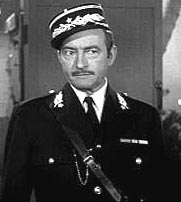
One last important difference is that anti-2kers are censorious about their differences with 2kers – calling 2k outside the Reformed tradition and worse. Meanwhile, like Captain Renault in Casablanca, they are shocked, just shocked, to find that Roman Catholics and Mormons are practicing idolatry freely in the greatest nation on God’s green earth.

Christian Hell?

Mark Horne apparently thinks he has landed a damaging jab against 2k by ridiculing Jason Stellman’s point about the discontinuity between culture here and the new heavens and new earth – a point raised in Keith Mathison’s review of David VanDrunen’s new book, Living in God’s Two Kingdoms. Stellman wrote:

If my marriage to my wife will not survive into the age to come, then why would I think her wedding ring will? Sure, it’s a nice ring and very well-made, but it’s hardly a higher example of human productivity than our marriage is.

For what it’s worth, the absence of marriage in the new heavens and new earth would certainly seem to unravel arguments that look at redemption as the restoration of creation. If marriage existed as part of the created order and then vanishes in the glorified order, something is going on that seems to escape the average neo-Calvinist’s redemptive-historical horizon.

But Horne does not consider Stellman’s point for very long and rushes instead to his own – perhaps listening to too much Focus on the Family – about the difference that Christianity makes for marriages and child rearing. He writes:

If we use this principle for a generalized defense of R2K, then we must state that there are no such things as Christian marriages or Christian families. Jesus does not want us wasting our time talking about how husbands and wives should behave or raising their children according to God’s word. This is all a compromise of the Gospel and a confusion of law and grace. We should leave family issues to secular family counselors just as we should leave the economy to Bernanke.

(By the way, humans rear children; they raise cows. And I’ll take my chances with Bernake over Gary North running the economy.)

First, marriage is a legal status determined by the state. As such, Christian marriages do not exist unless we want to turn matrimony into a sacrament. But when you refuse the categories of holy, common, and profane, how else to make marriage meaningful except to baptize it?

Second, since marriage as an institution is not Christian but a creation ordinance that is open to all human beings (except for gay ones – lest anti-2k hysteria surface), then the issue is whether a Christian’s vocation is married or single. Christianity has to do with persons, not with institutions (other than the church). Christians who are married have clear instruction from Scripture about how they should conduct themselves as spouse or parent or both. But that does not mean that the institution of marriage (or the church for that matter) will survive in the new heavens and new earth. I mean, the Bible gives some instruction about the Lord’s Supper but does that mean we’ll still be observing that meal in remembrance of the Lord whom we see with our resurrected eyes?

Horne concludes with this whopper – the antithesis doesn’t come any more antithetical:

It is one or the other. Either you affirm that Jesus is “ruler of the kings of the earth” or you deny that it is “the Father, from whom every family in heaven and on earth is named.”

Huh? Since when does denial of Jesus as ruler of the earth unseat him as King of Kings and Lord of Lords? This is where the literal mindedness of 2k’s critics is most revealing. They do not seem to have any conception for Christ ruling all things in different ways (you know, some as redeemer and others as creator and redeemer). Which means in the case of marriage that Christ rules all marriages, whether entered by believers or unbelievers. And those people who deny Christ as Lord are no less married than those who confess his name. To implicitly question the legitimacy of unbelievers’ marriages is to throw all conventions that support a measure of good social order to the wind. The implication of Horne’s antithesis is – if you don’t have Christ in your heart, be who you really are, a hell raiser. Since I’ve had hell raisers as neighbors, I much prefer those unbelievers who follow the order of creation even if they can’t identify the creator in a multiple choice test.

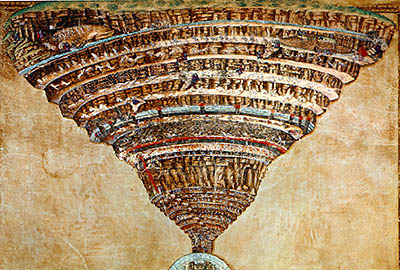
And speaking of hell, I wonder if it has ever occurred to 2k critics like Mark Horne that Christ is Lord of both Heaven and Hell, and that his rule in those places is markedly different. If Christ is indeed Lord of the cursed and the blessed, then it may be possible to imagine that Christ’s rule in a Christian home will be different from his sovereignty within a secular family. And if this is the case, then Christians need neither force non-believers to live like Christians nor inaugurate the eschaton by having the state start the judgments that Christ will execute when he returns. In other words, if Christians will simply follow what their Lord has told them to do – attend the means of grace, live quiet and peaceful lives, and glorify God and love neighbors in their work – Christ, who is Lord, will take care of the rest.

Uncanny how Christ does that without our ruling in his name.