Shouldn’t Calvinists (even new ones) Understand Clay Feet?

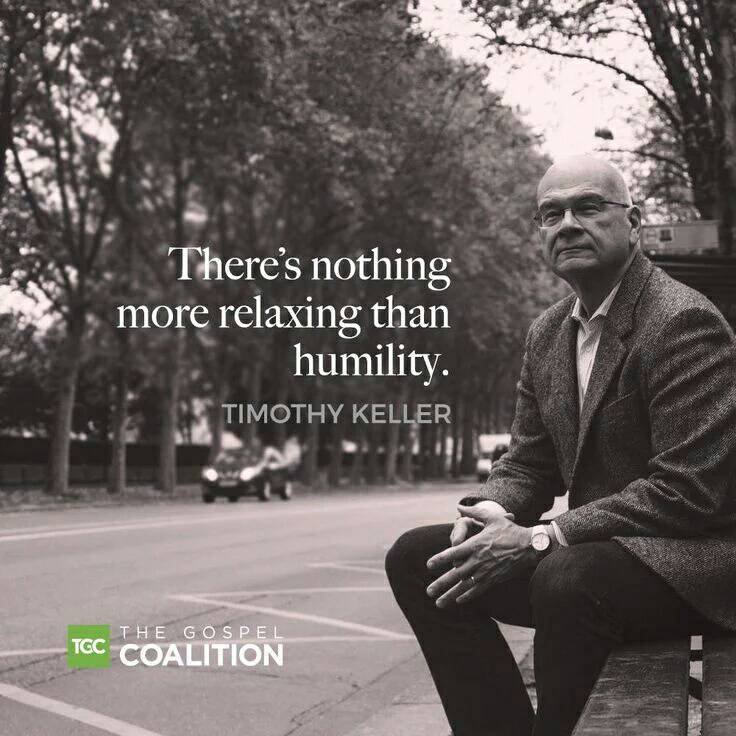
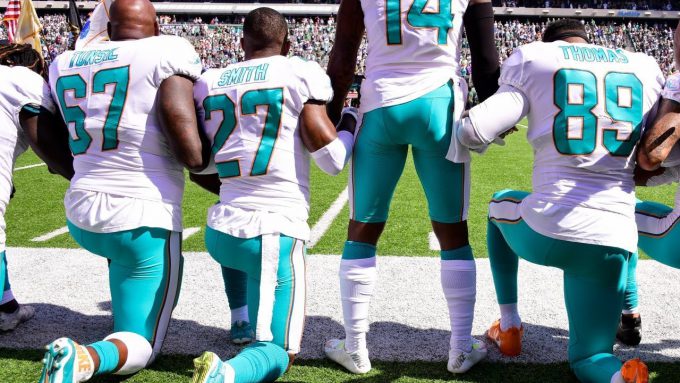
Even if Russell Moore received several tweeted thumbs up for his address at the Gospel Coalition conference on Martin Luther King, Jr., others are raising questions about ERLC head’s commentary on race relations.

For starters, Lorine Spratt, executive assistant to the Pastor of First Baptist Church Bossier City, LA, thinks Moore’s finger on the pulse of Southern Baptist life is numb:

I am a born-again Christian, Conservative, Black attender of a White, Southern Baptist, Evangelical Church in Louisiana. In fact, I not only attend, I also work there and I am very concerned about the narrative that I’m hearing from our ERLC leadership. I am absolutely appalled by the comments made by Dr. Russell Moore concerning racism within the White Evangelical churches.

I, and many other Black congregants, attend a predominately White, Southern Baptist Evangelical Church. We attend there because we are free to do so, we’ve been welcomed, and we’re seen and treated as brothers and sisters in Christ. I truly believe that I could attend any White Evangelical church and be welcomed. However, there are born again Black believers who choose to attend Black evangelical churches and worship within their culture and they are free to do so. We are exercising our freedom to choose. We are not commodities to be bargained with or exploited or used to promote an agenda or boost quotas.

White churches are not advocating racism but Dr. Moore is. He is fueling racial tensions. I view his comments as divisive and antagonistic. His words do not promote unity!

Please, let it be known that Dr. Moore does not speak for me or other Black Christians who believe that great strides and fearless efforts have been made by many throughout the years to abolish racism such as William Wilberforce, Martin Luther King Jr., Billy Graham and many others.

The letter above originally appeared here and the anti-Calvinists in the SBC, truth be told, may relish a chance to catch the New Calvinist, Moore, mangling relations among black and white Southern Baptists.

Then there is the arresting perspective of Bob Gagnon who couldn’t help but notice the way that critics of Trump’s moral failings were noticeably silent about King’s own behavior (in ways that may actually resemble how the “court evangelicals” have overlooked Trump’s character):

Gagnon, a conservative biblical scholar recognized as the foremost traditionalist interpreter on the topic of the Bible and homosexuality, said Russell Moore, head of the SBC Ethics and Religious Liberty Commission and lead organizer of the gathering, failed to address documented evidence that King lived a sexually immoral personal life.

Gagnon called Moore “the same guy, mind you, who has had no trouble accusing the vast majority of his brethren who voted for Trump in order to avoid Clinton (or who supported Roy Moore in order to avoid Doug Jones) of falling prey to ‘moral relativism’ and ‘consequentialism,’ of being an embarrassment to the gospel because they are not standing up for their own Bible values around sexual fidelity in marriage.”

“He said not a word about MLK’s sexual immorality that was arguably the equal of Trump’s,” the scholar said.

Gagnon said speakers at the “MLK50: Gospel Reflections From the Mountaintop” confab also tried to explain away “the fact that by any reasonable standard of what counts for essential Christian faith, King was what evangelicals then and today would view as a heretical Christian.”

“He denied Christ’s incarnation, virgin birth, substitutionary atonement, bodily resurrection, and second coming; in short, a full sweeping denial of orthodox Christian faith,” Gagnon said in an earlier post. “For King, Christ was an excellent moral teacher and human exemplar of trust in God. No more, no less.”

Gagnon said King’s sexual immorality was arguably worse than Trump’s, not only because he was a minister of the gospel but also because he “was willing to risk the fate of the entire civil rights struggle in order to continue his sexually immoral conduct, week after week, right up to what would be his final night on earth.”

Of course, the way out of these dilemmas is to rely not on heroes or celebrities but on Scripture for moral standards. From Thomas Jefferson to Charlie Rose, exemplary humans are fallen and their lives don’t prove one side or the other in any debate. But if you want to signal that you are on the right side of the cultural divide, lining up behind a social or political icon works as long as you forget that you are living in the #metoo era.
On the Way to the CRC

Tim Challies linked to Chris Gordon’s piece on the demise of confessionalism in the Christian Reformed Church. Challies seemed to find Gordon’s piece a worthwhile caution: “This strong article warns certain Reformed denominations against going down paths that will necessarily lead to destruction.”

But when you look at the six features of CRC declension, don’t at least three of them apply to the New Calvinists?

1. The Abandonment of the Authority of Scripture–This was the first domino to tip knocking everything else over. No longer was Scripture the final say regarding doctrine and life, but major doctrines were called into question due to cultural pressure.

2. The Abandonment of Reformed Principle of Worship–Historic Reformed convictions and principles laid out in the confessions were abandoned based on seeker sensitive assumptions.

3. The Abandonment of the Sabbath and the Second Worship Service–Even the word Sabbath was abandoned in embarrassment. The evening service was jettisoned by claiming better opportunities for Bible studies and home gatherings to reach the lost and love their neighbor.

4. The Abandonment of Gospel-Centered Expository Preaching–Expository gospel-centered sermons through books of the Bible were replaced with topical messages often addressing the current social justice discussion of the culture.

5. The Abandonment of God Assigned Roles in the Church (Women’s Ordination)–The classic distinctions between creation roles and functional hierarchy were abandoned in support of full equality of function in ecclesiastical offices.

6. The Abandonment of Moral Standards for Her Members–Those committing gross sins were no longer called to repentance, but instead welcomed into the life of the church upon the assumption that “justice” demands it. Nicholas Wolterstorff, a professor at Calvin College of over thirty years claimed that biblical justice requires that people of homosexual orientation be granted “the great good of civil and ecclesial marriage.”

New Calvinists of the kind at Gospel Coalition have given up number 2, 3, and parts of number 4. If the cultural servings of Gospel Coalition on-line are any indication, efforts to understand media and politics are more important than explaining the catechism or biblical commentary.

So why don’t New Calvinists see affinities between themselves and progressive Protestants?

Bigger is Bigger

The appeal of Roman Catholicism is size. It has 1.2 BILLION members. It has 2000 years of history. It has oh so many paintings, galleries, cathedrals, yada yada. Size matters.

Redeemer Big Apple’s appeal is also to size — but it is the big city, and being connected to churches in other big cities, in following a pastor who has enough celebrity even for New York City editors. It’s size has almost nothing to do with the past, at least if Kathy Keller is to be believed:

I’ve saved my most important value for last: carefully screening our language is the most critical thing we can do.

I can’t find enough words to stress how important this is. We must have a care for how we choose our words, our images, and our ideas when we communicate, no matter what we’re communicating — whether it’s donor updates, lectures, or emails about events that are coming up. You absolutely must comb out all of the Christian subcultural phrases that clutter up so much of the Christian church. This is vitally important, and perhaps it’s even more important today than it was 30 years ago, because the cultural moment that we’re in now loathes evangelical Christians, and we don’t need to give them any more reasons to disrespect and dislike us.

Redeemer has been pretty good at this, partly because it was actually one of the major parts of my job description to search and destroy any piousbabble. That’s the word I coined to describe the-language-that-must-not-be-spoken. You’ve heard of psychobabble? That’s pop psychology drawn from catchphrases, media, podcast pontification and other non-academic sources.

Piousbabble are those phrases and those words that creep into your prayers and into your language.. Lord, we just, we just, Lord … We want traveling mercies, we want to bathe it in prayer, and we need prayer warriors, and we need a hedge of protection. All that sounds kind of normal-ish to most Christians. But it’s like Swahili to the nonbelievers and the seekers who are coming.

Does pious babble extend to words like Presbyterian, justification, Holy Spirit (Ghost is even more alarming, I guess), eschatology, ministry, or vocation?

That may explain why Tim Keller thought he needed a catechism other than the one his own communion uses.

But isn’t this piousbabble?

Sixth, that we do not hurt, or hate, or be hostile to our neighbor, but be patient and peaceful, pursuing even our enemies with love. Seventh, that we abstain from sexual immorality and live purely and faithfully, whether in marriage or in single life, avoiding all impure actions, looks, words, thoughts, or desires, and whatever might lead to them. Eighth, that we do not take without permission that which belongs to someone else, nor withhold any good from someone we might benefit.

Even so, if I can count on Kathy Keller to renounce the use of such pious phrases as “dead orthodoxy,” I’m on board.

Lent Is Methodist

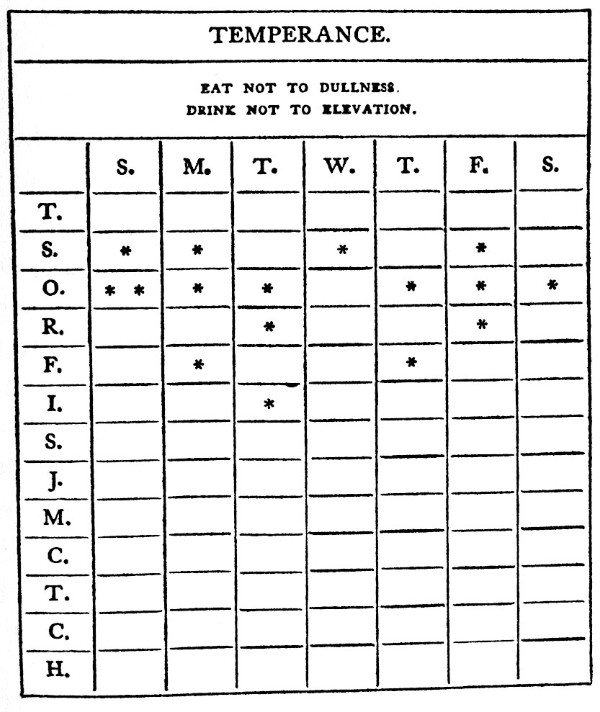
Bill Smith, always worth a read, thinks Old Life has declared another war on objections to Lent. He acknowledges two chief objections among Reformed Protestants to Lent — the regulative principle of worship and the fear of Romish practices. The regulative principle should actually take care of the matter for the sake of corporate worship and the life of the church. If a Christian wants to engage in some kind of Lenten activities as a means to holiness, well, whatever floats your sanctification. But for officers in the church to make Lent the norm for a congregation or a communion, then they better come with something more than “it looks like a pretty good idea” and “our motives are generally pious.” Plus, if church members may opt out of Lenten abstemiousness, then what’s the point of officers calling for the wider body to “special” actions during a certain number of days in late winter?

Still, Bill is not content with those objections. He returns fire and argues that Lent is actually a reasonable form of temporary form of sanctification:

Another objection is that those who observe Lent use it as a time for the temporary repentance from certain sins which are normally indulged, while Jesus calls us to repent of all sins all the time. It may well be that some poorly instructed Christians view Lenten practice in that way, but in my experience I have never heard anyone who observes Lent speak of a temporary giving up of sin.

Fine. So a Christian who pursues holiness 365/12 now adds an intense time of repentance for a specified forty days before a Sunday some communions designate Easter. Maybe that’s how it works among Reformed Episcopalians.

But why THESE forty days and not another thirty in September and October, or maybe a dozen or so in late spring and early winter? Why not more intense forms of repentance sprinkled throughout the year? Or why not leave each family and person to decide when and for how long to engage in certain times of self-denial? Why these days that some designate as Lent?

Could it be that some churches embrace a formula for Lent and so follow the spiritual equivalent of an Excel spreadsheet for the pursuit of holiness? The Lent practitioner follows these forty days with the other saints of similar inclinations and so doesn’t have to consider whether another time of fasting and prayer is needed or useful for another time during the year?

That kind of methodical piety is what Charles Briggs called, “Methodist.” It was a word he applied to the proponents of the First Pretty Good Awakening who insisted that godliness manifest itself in certain predictable and uniform ways. Of course, the idea of likening the church calendar to revivalism is oxymoronic. But to everyone who concedes that believers mature and bear different kinds of spiritual fruit in the course of their lives, the idea that you can prescribe a certain number of days — the same ones every year — for extra special holiness, and the one that requires the same kind of religious zeal to prove your conversion, are not so far removed. Both pietism and prescribed liturgicalism promote a one-size fits all spirituality that is perfect for bureaucracies, but not so hot for the diversity of human experience.

Why Reformed Protestantism is Safe

You have ways to avoid the excesses of Jonanthan Edwards (which you never learn about from the New Calvinists), John Wesley, and Jim and Tammy Bakker:

From Edwards and Wesley, we receive a fixation on the will, a desire to create enclaves of piety, and a belief in the possibility of the individual’s direct experience of God. In the work of their successors, such as Charles Grandison Finney, we find latent belief in the sinlessness of the true self and an approach to revival characterized by the appearance of improvisation and spontaneity. These preachers cultivated the spirits of the multitude through results-focused experimentalism in the context of camp meetings around the country, sowing in the American character the seeds of enthusiasm that would yield strange harvests in every decade thereafter. The later 19th century saw the development of quasi- and post-Christian reform movements, fads, and pop-philosophies that would call individuals to embrace their higher selves—such as “New Thought,” which centered the will in a larger project of spiritual self-advancement through the unleashing of “the creative power of constructive thinking.”

The 20th century inherited from these enthusiastic forebears an epochal optimism. Even in times of anxiety and despair, there is a hopefulness in the American self, and this hopefulness is built upon that self’s utter reality in a world of mere appearances; though circumstances change, the self remains a firm foundation. The literary critic Harold Bloom captured something of the strangeness of this in his provocative and infuriating book The American Religion. “The soul stands apart,” he writes, “and something deeper than the soul, the Real Me or self or spark, thus is made free to be utterly alone with a God who is also quite separate and solitary, that is, a free God or God of freedom.” In essence, Bloom describes a post-Protestant Gnostic cult of the self: “The American finds God in herself or himself, but only after finding the freedom to know God by experiencing a total inward solitude.”

Bloom’s analysis hinges on a metaphysical intuition: that the self is uncreated, and it knows, rather than believes in, its own innocence and divinity. “Awareness, centered on the self, is faith for the American religion,” Bloom wrote, and this religion of the self “consistently leads to a denial of communal concern.” Christ is internalized to a point of blurred identity with the “real me.” Such are the fruits of what Bloom calls the “doctrine of experience”—an outgrowth from the taproot of religious enthusiasm. Christianity, Bloom suggests, was too cramped for the young, unbounded nation. Abandoning doctrinal encumbrances such as belief in original sin (or sometimes, belief in sin at all), an intuitive and endlessly innovative spirituality grew to meet this need.

* * *
Wild spirits prepared the way for the coming of the Bakkers. Distinct from mainline, fundamentalist, and evangelical varieties of Protestantism—but eventually influential in all three—Pentecostalism grew out of late-19th-century Methodist holiness movements, dramatically emerging through a revival in Los Angeles that began in 1906 and lasted for a decade. With a mandate to seek out the signs and wonders attributed to Christ’s apostles in the book of Acts, Pentecostals trembled, shouted, spoke in tongues, and did much else to startle and shock the sensibilities of average Americans. Promises of dramatic spiritual and physical healing found great purchase among those in poverty, and the new enthusiasm became disreputable both for its excesses and its hard-up—and racially diverse—demographics.

If Tim Keller wants to join that company of enthusiasts, have at it.

That’s An Awfully Low Threshold

Tim Challies identifies the marks of a false teacher, including this one:

Third, false teachers teach their own wisdom rather than God’s wisdom. False teachers always teach their own foolishness instead of divine wisdom. This means then, that the ultimate source of their teaching is their own minds. It’s their own hearts, it’s their own sinful desires. Listen to what God said through the prophet Jeremiah. He said, “The prophets are prophesying lies in my name. I did not send them, nor did I commend them or speak to them. They are prophesying to you a lying vision, worthless divination, and the deceit of their own minds.” That was true in Jeremiah’s day, it’s just as true in our day.

Imagine what that does for pastors who Tweet (or even elders).

Morality Divides, Coalitions Unite

That is, as some may tell, an riff on the old line used during the fundamentalist controversy to counter conservatives — “theology divides, ministry unites.”

Our friend, Chortles Weakly explains how officers in NAPARC communions who also hold official positions in The Gospel Coalition — can anyone identify the Allies? — are looking the other way when it comes to the Second Commandment, the bedrock of the Regulative Principle:

As the cultural exegetes must surely agree, an organization’s use of images, technology, and messaging strategies is fair game for critics. What follows is my attempt to critique some of the ways TGC uses images and innovates. The standard will not be something I learned in business school, the standard will be the confessions of the Reformed churches.

My concern here is not really with Reformed churches as such (which cannot actually align with TGC) or with members (who are free to consume as they will). It is with the officers (elders and pastors) of confessionally Reformed churches who participate in TGC leadership, given the fact that TGC’s content so strongly influences the one culture that really matters, the one culture that truly ought to be ordered according to the Bible – the household of faith, the church of God.

My concern is that the officers of confessionally Reformed churches (basically those from denominations affiliated with the North American Presbyterian & Reformed Council – NAPARC) who sit on the TGC council are giving their stamp of approval to some things that are specifically forbidden by the Bible, the Reformed confessions, and the historic practice of the Reformed churches.

The TGC web page over the recent Thanksgiving weekend provided a notable example of TGC-endorsed aberrant practices. The front page of the site used an image of a nativity scene (with the second person of the Trinity supposedly represented) in support of an article on “8 New Resources for Advent”. This is not an isolated instance. Pictures of Jesus and commendations of movies and materials depicting him are nothing new at the TGC web site.

What specifically is wrong with images of Jesus? Well, simple logic tells us that any image of Christ is necessarily a lie – the Bible is not a picture book. No image of Christ can be accurate. Can inaccurate images be a help to those who view them? Some will argue that serve an essential pedagogical use when it comes to children. Some, as were heard at the last General Assembly of the Presbyterian Church in America, will argue that we cannot appreciate the humanity of Jesus without images.

The Westminster Larger Catechism, to which the presbyterian ministers on the TGC council have taken vows of subscription, would seem to speak both to images of Christ and things like Advent in question 109:
Picture

Q. 109. What sins are forbidden in the second commandment?

A. The sins forbidden in the second commandment are, all devising, counseling, commanding, using, and any wise approving, any religious worship not instituted by God himself; the making any representation of God, of all or of any of the three persons, either inwardly in our mind, or outwardly in any kind of image or likeness of any creature whatsoever; all worshiping of it, or God in it or by it; the making of any representation of feigned deities, and all worship of them, or service belonging to them; all superstitious devices, corrupting the worship of God, adding to it, or taking from it, whether invented and taken up of ourselves, or received by tradition from others, though under the title of antiquity, custom, devotion, good intent, or any other pretense whatsoever; simony; sacrilege; all neglect, contempt, hindering, and opposing the worship and ordinances which God hath appointed. (http://opc.org/lc.html)

Now, I am aware that there are officers who take exceptions (where allowed) to portions of this section, especially concerning mental images. I am aware that some presbyterian bodies have in the last few decades allowed loose or “system” subscription to confessional documents. Still the question must be raised: Should a NAPARC church officer sit on a quasi-ecclesial body’s board when that that body condones and promotes violations of the second commandment as defined by the confessional standards of the officers’ own denominations?

At a time when America is leading the crusade for obedience to God’s law, do Gospel Allies really want to be caught on the sidelines?

Gospel Coalition Haiku

Why does a complementarian organization promote a congregation that belongs to a communion that ordains women?

Here‘s an explanation of complementarianism’s importance from TGC poobahs:

Probably all of us who share The Gospel Coalition’s vision to renew our faith in the gospel of Christ and to reform our ministry practices to conform fully to the Scriptures have been asked, “So why is TGC complementarian? Are you saying only those who uphold male leadership in the home and church believe the gospel?”

If you’ve ever wondered and asked the question yourself, we hope you’ll watch this video featuring TGC founders Don Carson, Tim Keller, and John Piper. Keller opens with a hermeneutical argument about what sometimes happens when we apply arguments in favor of egalitarianism to biblical passages that relate directly to the gospel. He also explains why TGC’s confessional statement and theological vision for ministry go beyond basic gospel doctrines to include such issues as gender roles. As Piper explains, TGC wants to say things that protect the gospel, display the gospel, and release the gospel for human flourishing. And our current age demands that believers model and argue the biblical case for Christ-like headship.

“We live in a culture where for the last 30 or 40 years, the collapse of the meaning of biblical masculinity has not produced a beautiful egalitarian society,” Piper observes. “It has produced a brutal masculine society.”

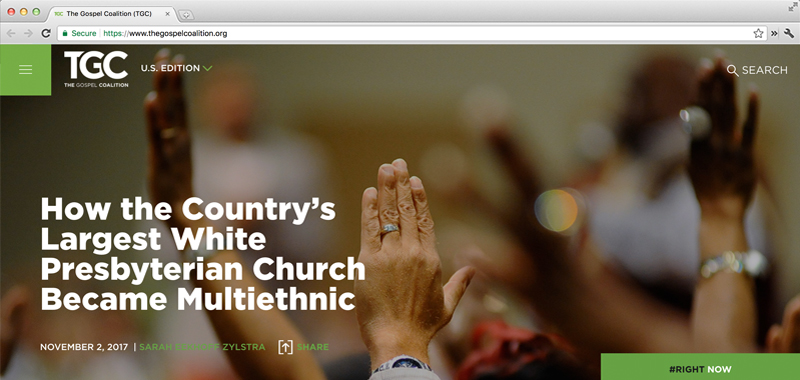
Here‘s a profile of puff piece on Hope Church, the largest Presbyterian Church in the nation (even larger than Redeemer NYC) that avoids questions about gender by featuring the topics of race and ethnicity:

The principles were solid: Churches should reflect their neighborhoods, and relationships are a good way to show God’s love to the unchurched. But the results were decidedly monoethnic congregations.

Within 20 years, Hope was the largest church in Memphis, regularly drawing 7,000 worshipers each weekend. But in a city that was nearly 60 percent black, less than 1 percent of them were African American.

At first, Hope reflected its neighborhood. The city to Hope’s south—Germantown—was 93 percent white in 2000, and 90 percent white in 2010. But its county—Shelby—fell from 47 percent white in 2000 to 41 percent white in 2010. And Cordova, the small suburb where Hope sits, dropped from nearly all white in 1988 to 68 percent white in 2010.

So Strickland and Morris set out to do what had never successfully been done before—to convert a white megachurch into a multiracial congregation.

They’re doing it.

Today, one out of five people who attends Hope is black. Of the 106 staff, 18 are nonwhite—including the senior pastor. The congregation sings hymns, contemporary Christian, and black gospel. Members work in predominately black, underresourced neighborhoods in north Memphis together through Hope’s community development corporation. They attend biannual three-day urban plunges and regularly spend eight weeks eating dinner with someone of another ethnicity.

Here’s the Evangelical Presbyterian Church’s statement on women’s ordination (Position Paper, 1984):

Thus, while some churches may ordain women and some may decline to do so, neither position is essential to the existence of the church. Since people of good faith who equally love the Lord and hold to the infallibility of Scripture differ on this issue, and since uniformity of view and practice is not essential to the existence of the visible church, the Evangelical Presbyterian Church has chosen to leave this decision to the Spirit-guided consciences of particular congregations concerning the ordination of women as elders and deacons, and to the presbyteries concerning the ordination of women as ministers.

It is in this context that the Evangelical Presbyterian Church states in its Book of Govern-ment, Chapter 6, titled “Rights Reserved to a Local Church” that “The local church has the right to elect its own officers” (6-2). This right is guaranteed in perpetuity.

Does this mean that race trumps gender?

Why Pietism and Liberalism Go Hand in Hand

Amy Julia Becker declares her independence from evangelicalism — for at least the reign of President Trump. She seems to think that evangelical stands for something on the conservative side of Christianity’s spectrum. But she now sees how political evangelicalism has become. I’m not sure if she just landed from Mars.

Here is what makes her a pietist:

I am still tempted to categorize my Christian friends with words like “liberal” or “progressive” or “orthodox” or “conservative” or “evangelical.” I am still tempted to judge the faith of other people according to my standards of who and what constitutes Christianity. But when I stop and ask how I see God’s work in their expressions of faith — when I stop and consider the expansive love of God at work in and through countless people, people like me, people who have our theology wrong plenty of the time, people who have our theology right and still behave badly, people who are bumbling around in a world of sin and are still at our core beloved by God and invited to participate in God’s work in the world — when I do that, I start to believe that we are Christians.

Imagine what Ms. Becker would do with Arius. Look at how much he loves God.

Or what about Jacob Arminius? Well, he sure seems serious about the faith.

But such displays of or criteria for genuine faith have little to do with forms. In fact, it’s not just that Christianity revolves around feelings. The people who hurt feelings, the ones who stress right doctrine, the inerrancy of the Bible, or the regulative principle of worship, they are people who care more about forms than feelings. And therefore, such conservatives are inferior kinds of Christians. Tight sphinctered. Machen’s warrior children. They lack charity.

Snowflake Christians beget snowflake nones.

Transformationalize This

Michael Oakeshott on culture (from Alan Jacobs):

A culture, particularly one such as ours, is a continuity of feelings, perceptions, ideas, engagements, attitudes and so forth, pulling in different directions, often critical of one another and contingently related to one another so as to compose not a doctrine, but what I shall call a conversational encounter. Ours, for example, accommodates not only the lyre of Apollo but also the pipes of Pan, the call of the wild; not only the poet but also the physicist; not only the majestic metropolis of Augustinian theology but also the “greenwood“ of Franciscan Christianity. A culture comprises unfinished intellectual and emotional journeyings, expeditions now abandoned but known to us in the tattered maps left behind by the explorers; it is composed of light-hearted adventures, of relationships invented and explored in exploit or in drama, of myths and stories and poems expressing fragments of human self-understanding, of gods worshipped, of responses to the mutability of the world and of encounters with death. And it reaches us, as it reached generations before ours, neither as long-ago terminated specimens of human adventure, nor as an accumulation of human achievements we are called upon to accept, but as a manifold of invitations to look, to listen and to reflect.

And the holy urbanists actually think they are up to taking every thought captive? They may have bought that bridge in Brooklyn.