Send This to Members of Praise Bands Before It is Too Late!!!

If only James K. A. Smith had been the editor with whom John Frame worked on his worship books, the world of conservative Presbyterianism might be a lot more liturgically coherent than it is. I (all about me) don’t usually agree entirely with Smith, though I admire his provocations within the world of neo-Calvinism. But his recent letter to praise bands was largely on target — a bull’s eye would have been doing away with bands altogether.

1. If we, the congregation, can’t hear ourselves, it’s not worship. Christian worship is not a concert. In a concert (a particular “form of performance”), we often expect to be overwhelmed by sound, particularly in certain styles of music. In a concert, we come to expect that weird sort of sensory deprivation that happens from sensory overload, when the pounding of the bass on our chest and the wash of music over the crowd leaves us with the rush of a certain aural vertigo. And there’s nothing wrong with concerts! It’s just that Christian worship is not a concert. Christian worship is a collective, communal, congregational practice–and the gathered sound and harmony of a congregation singing as one is integral to the practice of worship. It is a way of “performing” the reality that, in Christ, we are one body. But that requires that we actually be able to hear ourselves, and hear our sisters and brothers singing alongside us. When the amped sound of the praise band overwhelms congregational voices, we can’t hear ourselves sing–so we lose that communal aspect of the congregation and are encouraged to effectively become “private,” passive worshipers.

2. If we, the congregation, can’t sing along, it’s not worship. In other forms of musical performance, musicians and bands will want to improvise and “be creative,” offering new renditions and exhibiting their virtuosity with all sorts of different trills and pauses and improvisations on the received tune. Again, that can be a delightful aspect of a concert, but in Christian worship it just means that we, the congregation, can’t sing along. And so your virtuosity gives rise to our passivity; your creativity simply encourages our silence. And while you may be worshiping with your creativity, the same creativity actually shuts down congregational song.

3. If you, the praise band, are the center of attention, it’s not worship. I know it’s generally not your fault that we’ve put you at the front of the church. And I know you want to model worship for us to imitate. But because we’ve encouraged you to basically import forms of performance from the concert venue into the sanctuary, we might not realize that we’ve also unwittingly encouraged a sense that you are the center of attention. And when your performance becomes a display of your virtuosity–even with the best of intentions–it’s difficult to counter the temptation to make the praise band the focus of our attention. When the praise band goes into long riffs that you might intend as “offerings to God,” we the congregation become utterly passive, and because we’ve adopted habits of relating to music from the Grammys and the concert venue, we unwittingly make you the center of attention. I wonder if there might be some intentional reflection on placement (to the side? leading from behind?) and performance that might help us counter these habits we bring with us to worship.

Chances are that readers of Old Life don’t worship in churches where they have trouble hearing themselves while singing. But in case Old Lifers have friends or family members who are either in a band or are having the ear drums blown out by a band, this letter may be useful. After all, our motto here is servants serving servers.

Frame, Escondido, and Worship

One of Frame’s objections to “Escondido Theology” pertains to worship. Here are the bullet points from his book:

WORSHIP/PIETY
• It is wrong to try to make the gospel relevant to its hearers.
• Worship should be very traditional, without any influence of contemporary culture.
• The Sabbath pertains only to worship, not to daily work. So worship should occur on the Lord’s Day, but work need not cease.
• There is no immediate experience of God available to the believer.
• The only experience of God available to the believer is in public worship.
• Meetings of the church should be limited to the preaching of the word and the administration of the sacraments.
• In worship, we “receive” from God, but should not seek to “work” for God.
• We should take no interest in our inner feelings or subjective life.
• Preaching should narrate the history of redemption, but should never appeal to Bible characters as moral or spiritual examples.
• Preaching “how tos” and principles of practical living is man-centered.
• Those who try to show the application of Scripture to the daily problems of believers are headed toward a Christless Christianity.

I know Frame would likely object to what follows, but it is hard to read his books and other writings on worship, look at his objections to “conservatives” on worship, and not conclude that he is oriented — in his terms — to the horizontal rather than the vertical. How a Reformed theologian would gravitate toward the human aspects and relations of worship as opposed to the implications of worship for God is beyond me. In fact, the difference between a seeker-sensitive and a God-sensitve worship service was at the heart of the debate in which Frame and I engaged almost fifteen years ago.

What follows is a lengthy excerpt from my closing statement in that on-line debate:

I hope it is not a contested assertion to say that worship reflects theology. Our understanding of the God in whose presence we assemble will color what we do in that sacred assembly. Here I believe that Reformed worship best embodies the kind of encounter between God and man that we find at the end of the book of Job. In its stress upon divine sovereignty and man’s utter dependence upon God, the Reformed tradition has captured best what God says to Job, “who then is he that can stand before me? Who has given to me, that I should repay him? Whatever is under the whole heaven is mine” (41:10-11) and in return Job’s proper response to this great and mighty sovereign, “I had heard of thee by the hearing of the ear, but now my eye sees thee; therefore I despise myself, and repent in dust and ashes” (42:5-6). Reformed theology is premised upon this radical gulf between a holy and transcendent God and man who stands at the apex of God’s good creation.

When Reformed believers have worshiped, then, they have been guided historically by the relationship between God and man such as that expressed in this encounter between God and Job. There is an enormous gulf between God and his creatures, not simply because of sin, but because God is, in the language of the Shorter Catechism, a spirit, infinite, eternal and unchangeable in his being wisdom, power, holiness, justice, goodness and truth. Man is not on equal footing with God. He comes before God as an inferior, wholly dependent, and utterly impotent. The fitting way to approach God is in humility and godly fear.

The RPW, as defined by the Westminster Divines, is a good and necessary consequence of the Reformed tradition’s understanding of God and man, not to mention a Reformed hermeneutic. Man cannot please God on his own. He must go to the Bible to see how God desires to be worshiped. And that this means is that there are certain elements that are regular parts of corporate worship and these elements must be conducted in a way that recognizes the gulf between God and man and what God has done to make it possible for man to enter God’s presence. The RPW and Reformed theology are like the proverbial hand and glove. If you give up one, you relinquish the other. A different understanding of divine-human relations yields a different understanding of worship, while a different conception of worship means adopting a different conception of the relationship between God and man.

I believe that true worship, that is, Presbyterian worship (sorry to sound sectarian), is under attack in conservative Presbyterian circles on two fronts. The first comes from church planting and home missions efforts that make worship serve as a form of outreach. Once worship becomes (even slightly) a means by which we self-consciously recruit new members our understanding has shifted dramatically from that of Job in chapter 42. This statement in no way denies that the preaching of the word becomes an effectual means of convincing and converting sinners. But all of the literature on contemporary worship that I keep tabs on emphasizes music, a casual atmosphere, and such other diversions as drama, dance and rave masses as means to attract the unchurched. The stress overwhelmingly is on intelligibility. But there may be a biblical form of intelligibility that is unpleasant to unbelievers, that makes them feel uncomfortable, such as Jesus’ interaction with his disciples in John 6. Our Lord in this passage was intelligible the disciples could understand his words, but the meaning and binding address of those words made them unacceptable.

The second form of attack comes from the common distinction in Presbyterian circles between form and content. We have been so good (relatively) at keeping our theology pure and our Bibles inerrant that we have forgotten about the practice of the faith, especially the one sacred practice that orders our week, namely, corporate worship. As I have tried to argue at several points in this debate, forms are not indifferent. For instance, we cannot package the dramatic encounter between God and Job in a sit-com. Nor can soft rock music appropriately carry the weight of the burning bush. As the writer to the Hebrews says, our God is still a consuming fire, even in the wake of Jesus’ better covenant. This means that our posture in worship should not be like Yule Brenner’s in The King and I, bare breasted, hands on hips, and feet apart in effect, saying “look at me.” Nor should it be the casual pose of sitting in the barcalounger with feet up and Styrofoam cup of coffee in hand in effect saying “dude!” Instead, our posture should be like that of the angels and elders in Revelation 7 who “fell on their faces before the throne of God” (v. 11). This doesn’t mean that we may not enter confidently into the holy of holies. Because of Christ we are able to go boldly where only Israel’s high priests went before. But when we get there, we must know that our response will be one of self-abasement. And again, I believe the RPW best preserves this reverential character of worship while also guarding and defending the proper elements of worship. In other words, it preserves (but does not guarantee) worship that is acceptable to God.

A word also needs to be said about joy. Prof. Frame emphasizes it, and I stress reverence, as if the two are mutually exclusive. But I would argue that Prof. Frame’s emphasis is one-sided, and that even though he talks about reverence he hasn’t explained how the “rejoice” texts of the Bible he cites square with all of those biblical texts, like Psalm 2:11 that say we should rejoice with trembling. In other words, there are reverent ways to express joy. But by making joy and reverence two different things we might be tempted to think that the elders who fall face down before God in glory are unhappy, that is, not rejoicing. I would argue instead that those elders are joyful and part of the way they are expressing their joy is through their utter self-abasement. So saying that we need to rejoice in worship doesn’t solve the matter of what form our joy takes.

Prof. Frame is by no means guilty of all the excesses that goes under the name, “contemporary worship.” But his books do open the door, in my opinion. As he explains in the introduction to WST, he writes for those Presbyterians who worship with guilty consciences, who recognize that they are not worshiping as the Puritans worshiped but who still adhere to Puritan theology. I don’t know how this separation is possible. I have tried to argue that it is theologically, intellectually and historically impossible. By saying that dance, drama and humor MAY be used in worship, Frame technically violates the heart of the RPW. Either the Bible commands a specific element or practice, or it doesn’t. According to the RPW, if it doesn’t we may not do it. But aside from this technical reading of the RPW’s intent, even worse is the idea that I find implicit in Frame’s books, namely, that God will accept most of what we do as long as we are doing it with the right motives. To me this nurtures the idea that God is not zealous for his worship and that we may be more casual in our observance. God’s jealousy for his worship, I believe, is what the RPW protected so well.

In other words, I believe Frame wants it both ways. He wants to worship like a charismatic . . . but wants the blessing of being a good Presbyterian. Would he allow the same inconsistency in apologetics? If R.C. Sproul practiced evidential apologetics but claimed to be a presuppositionalist would Frame let that claim go? Yet, this analogy reveals a dynamic that has been lurking around our debate about worship. On the one hand, it suggests that there is a wrong (of false, as I learned it at WTS) way of doing apologetics, one that conflicts with our theology, with our confession of God’s sovereignty and human depravity. On the other hand, the parallel I am making with apologetics also teaches that forms matter. What Sproul is doing is apologetics; he is defending the faith. But he is using the wrong form of argument, according to presuppositionalism, one that contradicts his Reformed profession. This analogy, applied to worship, means that there can be false worship even when done by people with good theology. It also suggests that if there are Reformed forms for apologetics (i.e. presuppositionalism) why not Reformed forms for worship? In the same way that we need to recognize that what Sproul is doing is a form of Christian apologetics, we also need to recognize that the Roman Catholic mass, the charismatic P&W service and Reformed liturgy are all forms of Christian worship. They all use the same elements (i.e. the word, sacraments, prayer, and song). But just because
someone uses a Christian form of worship doesn’t mean it is true worship, anymore than someone who uses a Christian form of apologetics (one practiced by Christians throughout the ages) is necessarily using the true argument.

But why, someone might ask, is historic Reformed worship so difficult and so unappealing? If one is starting a church plant Reformed liturgy as practiced by Calvin and the Puritans is hardly something to bring in the crowds. At the same time, believers who know little of Reformed theology may find little in Reformed worship that is immediately edifying. Here we might want to learn a few things from the social and cultural critics. Rather than regarding contemporary worship music (CWM) or the movements that produced them as the work of the Holy Spirit, that is, as revivals as Frame does (WST, 115ff; CWM 5ff) we might plausibly interpret them as the work of the spirit of the age. The English sociologist, David Martin, argues in a book on contemporary Pentecostalism (TONGUES OF FIRE) that Wesleyan Arminianism has defined the cultural ethos of the United States since 1800. One way of seeing this is to observe how Americans insist on “sincerity and openness rather than on form and privacy.” For this reason, he says that the “whole American style was, and is, Methodist’ in its emphases, whereas in England the culturally prestigious style remained Anglican.” Of course, Martin is only a sociologist, not an inspired author of Holy Writ. But if he is right might not our expectations be for forms of worship that stress sincerity and openness to be more appealing to all Americans (Reformed or not) rather than the formal and reverent kind of Calvin’s Geneva? In other words, David Wells, whom Frame too quickly dismisses, may be right to argue that contemporary evangelicalism reveals much more about modernity than it does about biblical religion. Charismatic worship may be more appealing because it fits the cultural ethos more than because it demonstrates the power of the Holy Spirit. Which is why the work of historians, sociologists and cultural critics, the folks whom Wells reads and cites, is so valuable for the church in her work of testing the spirits. Which is also why Frame’s defense of biblicism can produce a lack of discernment both about the culture and about how it shapes religious expression. (Another argument on behalf of the impossibility of separating form and content, by the way.)

. . . Prof. Frame and the “audience” may think I have been judgmental. I would only say in response that judgment is integral to the existence of moral communities. Moral communities, like churches or theological traditions always have to decide what is and what is not acceptable. To neglect this task is to give up the possibility of saying defining anything. Our Lord warned that we should not judge lest we be judged. But I don’t think I am guilty of judging in this sense. I want to be judged by the same standards by which I am judging Prof. Frame, that is, on the basis of a theological tradition that has stood the test of time and, more importantly, that has better than any other Christian tradition given all glory and honor to God. I do so not simply because I want to be right, but also so that this generation and generations to come can say, as Dr. Machen did, “isn’t the Reformed Faith grand!” . . .


Playing with Fire

Martin Luther complained about the radicals of the Reformation who invoked the fullness of the Spirit that they had “swallowed the Holy Ghost, feathers and all.” Justin Taylor’s recent quote from John Piper about worship makes me wonder if fire-eater would occur to Luther as the name to describe the oldest of the Young, Restless, and “Reformed.” Here’s the quote that lights Taylor’s fire:

The fuel of worship is a true vision of the greatness of God;

the fire that makes the fuel burn white hot is the quickening of the Holy Spirit;

the furnace made alive and warm by the flame of truth is our renewed spirit;

and the resulting heat of our affections is powerful worship, pushing its way out in confessions, longings, acclamations, tears, songs, shouts, bowed heads, lifted hands, and obedient lives.

Fire metaphors aside, some of what Piper writes is sensible, such as the idea that God’s greatness undergirds worship, or that true worship depends on the work of the Holy Spirit. What is troubling is the criteria Piper uses to evaluate Spirit-filled worship. Do we really want to put shouts and tears and lifted hands on a par with confessions and songs? In my-all-about-me-church the only person raising his hands is the Reformed pastor at the beginning and end of the service.

To put Piper’s spiritual arsonry in perspective, confessionalists may need a little spiritual quenching from the teaching of Reformed churches:

Under the gospel, when Christ, the substance, was exhibited, the ordinances in which this covenant is dispensed are the preaching of the Word, and the administration of the sacraments of baptism and the Lord’s Supper: which, though fewer in number, and administered with more simplicity, and less outward glory, yet, in them, it is held forth in more fullness, evidence and spiritual efficacy, to all nations, both Jews and Gentiles; and is called the new testament. There are not therefore two covenants of grace, differing in substance, but one and the same, under various dispensations. (Confession 7.6)

This is a significant difference between confessionalism and pietism. Pietists believe that for worship to become white hot, the work of the Spirit must be visible, even tangible. Confessionalists, in contrast, actually believe that the more the Spirit is at work in worship, the simpler and more invisible the Spirits work will be.

But Piper’s version of “Reformed” worship is what happens when you redact the 16th through the 18th century. Cherry picking indeed.

Contemporary Cosmic Christology and Contemporary Christian Music

In his endless and zealous quest to see Abraham Kuyper prevail as the vice-regent of all things, Dr. K. (Nelson Kloosterman) keeps translating and quoting Kuyper as if such invocations will settle debates over 2k. Somehow, Kloosterman believes that 2kers deny Christ’s kingship over all things. When I respond that Jesus was Lord even over Saddam Hussein, just not as king in the sense of being Saddam’s redeemer, I receive responses like the following (which is generally a restatement that 2kers deny Christ’s Lordship over all things):

Agreement: Jesus Christ is King of the church

Agreement: Jesus Christ will one day rule all the world

Difference: Jesus Christ is King of the cosmos. Not simply the Second Person of the Trinity, not simply the “Logos Asarkos,” not simply the Son of God. No—Jesus Christ, prophet and priest, is also King of the universe.

Difference: Jesus Christ is King of the cosmos today. Here and now. In this world, and in today’s history.

These are not quibbles. For now we are being introduced to a new terminological distinction (here) regarding Jesus’ essential reign as King and Jesus’ mediatorial reign as King. Note: not the essential reign of Jesus Christ, but merely the essential reign of Jesus as the Second Person of the Godhead.

The distinction between Jesus Christ and Jesus Christ as the second person of the Trinity is lost on me. But I suppose it gets Dr. K. through these difficult mid-western winters.

And then, as is his habit, Dr. K. finishes off debate with a long flourish from the original Dr. K. (i.e. Kuyper):

Coupled with this was a change in another arena of living. As the ecclesiastical conflict was being waged, Reformed people were throwing themselves into public social life. For them there existed two kinds of living, one kind within the Church and another kind outside the Church, and justice was no longer being done to the unity of both. That rupture could have been prevented only if the confession of the Kingship of Christ, proceeding from the church, had been recognized within popular consciousness as the governing power for all of life. But this is precisely what did not happen. Instead the Kingship of Christ was pushed further into the background, and at that point naturally this caused the contrast between ecclesiastical life and public life to penetrate the consciousness of Reformed people in a most perilous way. Ultimately it was as though people dealt with Christ only in the church, and as though outside the church they did not have to take into account the exaltation of Christ. That opposition has functioned until late in the previous [nineteenth] century, at which point room was made for the first time for better harmony in Christian living. This is how we acquired our Christian press, our Christian science, our Christian art, our Christian literature, our Christian philanthropy, our Christian politics, our Christian labor organizations, etc. In short, the understanding that Christ laid claim also to life outside the church gradually became commonplace. At present we are already to the point that nobody among us wants it any differently anymore. The problem, however, is that people still seek [to locate] the Christian character of these various expressions of life too exclusively in Christian principles, and the understanding has not yet sufficiently permeated our thinking that Christ himself is the One who as our King must imprint this Christian stamp on our expressions of life. This explains the need for awakening and fortifying this understanding once again. It is this need that Pro Rege is attempting to satisfy.

According to the contemporary Dr. K., this is the heart of the issue, whether there are two ways, or two spheres of Christian endeavor, one inside and the other outside the church. For neo-Calvinists distinctions between creational and redemptive spheres when considering aesthetics is a form of dualism and a sign of infidelity because it denies Christ’s lordship over all things.

The frustrating aspect of those who are so eager to blur distinctions between the religious and the secular, between the eternal and the temporal, is that they are long on inspiration and short on qualification. What I mean is that someone could plausibly read Kuyper on the effort to integrate the church and all other walks of life as an endorsement of contemporary Christian music. (Since John Frame, who follows Kuyper also, makes this move in reflecting on worship, this idea is not far fetched). When folks like Larry Norman, the first Christian rocker, asked “why should the devil have all the good music?” he was apparently rephrasing the Kuyperian desire to tear down the distinctions between Christian and secular areas of life. He wanted to bring the expressions of secular culture into the halls of the sacred assembly.

Which makes me wonder if Kuyper and neo-Calvinism is proximately responsible for the triumph of bad taste and poor music in Reformed churches. Without making the distinctions that 2kers are wont to require, I don’t see how a Kuyperian would really object to the contemporary Christian music project on the grounds of contemporary cosmic Christology.

Sometimes the Prayer Book Just Makes Sense (sorry for having the word “just” so close to the thought of praying)

For those who resist watching videos like the one posted earlier today from “King of the Hill,” here is the text of Bobby’s prayer, which is a brilliant illustration of the enormity that happens when trying to put sober truths into vulgar words.

I want to give a shout out to the man that makes it all happen. Props be to you for this most bountiful meal that’s before us. Okay, check it. God, you got skills. You represent in these vegetables and in this napkin and in the dirt that grows the grains that makes the garlic bread sticks that are on this table today. Yes. Yes. Thanks, J-man. Peace.

Of course, Reformed Protestants don’t need to go the Anglicans to read prayers before meals. Most of the older psalter-hymnals of the Dutch Reformed churches include liturgical resources at the back of the book that reproduce prayers, many of them attributed to Calvin, for public worship, ecclesiastical assemblies, and family devotion. The following is the prayer for before a meal. At the risk of offending contemporary worship leaders, I’d argue this is, like “Of the Father’s Love Begotten” is a better hymn than “Shine, Jesus, Shine,” a better prayer than Bobby’s.

Almighty God, faithful Father, You have made the world and uphold it by Your powerful word. You did provide Israel in the desert with food from on high. Will You also bless us, Your humble servants, and renew our strength by these gifts, which, through our Lord Jesus Christ, we have received from Your bountiful Fatherly hand. Give that we may use them with moderation. Help us to put them to use in a life devoted to You and Your service. May we thus acknowledge that You are our Father and Source of all good things. Grant also that at all times we may long for the lasting food of Your Word. May we thus be nourished to everlasting life, which You have prepared for us by the precious blood of Jesus Christ, Your Son, our Savior, in whose name we pray. Amen.

One additional advantage of Calvin’s prayer over Bobby’s is that the Frenchman’s thanksgiving is not blasphemous.

Is Hank Hill Wiser than David and Tim Bayly?

http://youtu.be/OxrRg8AFjPE

The Brothers Bayly have stirred up the pot again by arguing that Tim Keller is a greater threat than Doug Wilson and the Federal Vision to the PCA. Calculating the heinousness of error is indeed a judgment call, but the Shorter Catechism does indicate that some sins are more grievous than others.

As folks who often read the Baylys know, these PCA pastors rank sexual identity and gender relations fairly high on the list of woes that are afflicting the United States and the church. And despite our Lord’s own teaching that love of God is the greatest commandment – which would include those laws about blasphemy, idolatry, worship, and the Sabbath – my own sense of the Baylys is that they are not as rigorous in applying the third and fourth commandments as they are about the fifth and the seventh. My reason for thinking this is the Baylys’ preference for forms of worship music that do not, as I see it, maintain an atmosphere of reverence and awe. I am not going to listen to lots of tracks or watch lots of videos of the Good Shepherd Band to back up this claim, though I have seen a few. When the guitars come out, this aging boomer melts down.

I will grant that lots of folks disagree about the application of the first table of the law and I wish the Baylys could be as generous on differences in applying the second table (you know, whether protesting with them at abortion clinics is required in the sixth commandment). But even at the level of egalitarianism, one of the Baylys bugaboos, one could argue that contemporary praise music is fundamentally egalitarian by leveling all aesthetic standards down to those of what adolescents prefer. Actually, it is a kind of aesthetic superiority and ageism where the young are automatically given authority over the old. Democracy of the dead’s hymns and psalms? I don’t think so.

Which is why this video from King of the Hill is so refreshing (thanks to one of our southern correspondents). When Hank says, “I never thought that Members Only jacket would go out of style,” he put his finger on what ails contemporary worship: contemporary style is ephemeral and so not a reliable vehicle for communicating permanent truths.

In which case, why don’t the Baylys understand that by packaging worship in the idiom of contemporary music, they may be putting their Lord in Hank Hill’s box of lame? It sure doesn’t honor the Lord, not to mention that it doesn’t seem to be all that wise a strategy for fighting the culture wars.

Sometimes the light of nature (and even Hollywood writers) does really enlighten.

Faking It

A few more thoughts on the Duncan, Nevin, Helm, Edwards discussion.

The proponents of Edwards and the First Pretty Good Awakening (hereafter FPGA) are worried about nominal Christianity – that is, people who go through the motions of worship or Christian practice. Although this is an understandable concern – who would ever commend hypocrisy unless you are a vice paying tribute to a virtue – it is also an impossible concern. How does anyone know if another person is faking anything? Only God knows the heart. So the effort to eradicate going through the motions is a lot like a quest to be God (and wasn’t that what got our first parents into trouble?).

At the same time, why is it that insincerity only goes in one direction? Why is it only possible for Christian profession and practice to betray unbelief? Why can’t unholy actions betray a believing heart? Of course, I’m not trying to justify sin or worldliness. But if the heart is as fickle as pietists believe it is, why isn’t it possible for the duplicity to go both ways? Why can’t a believer’s impious actions actually betray real belief? What if someone is faking unbelief but really believes? If you think this seems preposterous, consider Peter’s thrice denying his Lord. And he became Pope!

Those skeptical about Edwards put less emphasis on the first word of “faking it” and worry more about the it. That is, they (okay, I) worry that the words or actions in question are actually fitting or biblical – fitting within the Reformed tradition or having a warrant from Scripture. Since we can’t know the human heart, at least we can take precaution that the things we do as believers and the things we say actually conform to what Scripture teaches. Let the Spirit take care of the heart, along with pastoral counsel in the privacy of one’s home.

So, for instance, when churches have Thanksgiving Day services where people stand to give testimonies, the Edwards proponents might be very much moved by the woman who stands to give thanks that she recently found a job afer a year of unemployment. And if the woman cries, the Edwardsean might be especially inclined to think this testimony spiritual and genuine. After all, the pro-FPGA saw lots of tears (and more) as evidence of the work of the Spirit. Never mind that sometimes people cry when speaking in public because they are nervous. If affections appear, then hallelujah, we have piety.

Edwards skeptics may also be moved by the emotion, but will also be sitting there going postal internally because of the impropriety of letting people, even saints, stand up and say things without any sort of screening by the pastor and elders. In other words, whether or not someone fakes a testimony, the issue in this case is that testimonies are wrong. The noun (“it”) matters more than the gerund (“faking”).

But Edwards rooters are rarely as worried about the “it” as Edwards skeptics and the reasons are that those who are interested in holy affections often take liberties with the “it” of Christian piety. That is, in order to cultivate and give expression to those genuine affections, pietistically inclined establish new practices, sometimes not having biblical warrant or foreign to the Reformed tradition, in order to fan real spirituality into aflame. The best example of this is the phenomenon of hymns. Prior to the FPGA, Presbyterians all sang psalms (or other biblical songs). But these songs were not as conducive to the revivals of Whitefield, Wesley, and Edwards as were the hymns being written expressly for revivalistic purposes by the likes of Watts and Wesley (Charles, that is).

Now maybe you are a hymn-singing kind of Presbyterian. I myself enjoy a good hymn now and then. But the historical record is remarkably undeniable that hymn singing prevailed among a group of believers previously committed to psalm-singing because those biblical songs weren’t cutting it in the effort to create believers who did not fake singing psalms but really sang hymns.

And now to bring it full circle, hymn-singing Presbyterians in the 1980s were besieged by praise-song singing Presbyterians because the old hymns weren’t up to speed with Jesus people piety.

So once you start down the road of the quest for genuine piety, it’s hard to get off before it turns into the charismatic highway.

I seem to recall Scott Clark writing a book about this.

The Etiquette and Manners of Worship

Bill Evans, one of the new bloggers on the block at Baptists and Presbyterians Together (also known as the Alliance of Confessing Evangelicals), seems to have an issue with a point I made some time ago when I contrasted the arguments of John Frame and Hughes Oliphant Old on worship. Here is how Evans describes my point:

Hart in essence asked the question of why some Reformed theological “conservatives” can be so “liberal” on worship while those further to the left theologically are often so “conservative” on matters liturgical. His test case is a comparison of PCA teaching elder John Frame’s Worship in Spirit and Truth (P&R, 1996) and PCUSA worship scholar Hughes Oliphant Old’s Worship That Is Reformed according to Scripture (John Knox, 1984). As Hart puts it, “In the ‘liberal’ PCUSA, if Old’s book is any indication, the traditional elements and rites of historic Reformed liturgy are firmly in place. But in the ‘conservative’ PCA, using Frame as a guide, the conventional pieces of Reformed worship are in flux.” A bit later, Hart contends, “If sideline Presbyterian denominations such as the PCA and the OPC were as conservative about the Reformed tradition as they regard themselves, then we would expect Old’s book to have come from a PCA or an OPC minister and to have been published by a conservative Presbyterian press. Moreover, if the mainline Presbyterian denomination was as liberal as its conservative detractors insist, then it would make more sense for Frame’s book to have come from a PCUSA officer and publishing house. Yet the opposite is the case. The conservatives have turned modernist, if by modernism we mean the self-conscious adaptation of the faith to modern times. Just as unlikely, the modernists have become the chief defenders of the historic Reformed faith, at least in its liturgical aspects, against efforts to preserve the kernel while refashioning a modern husk.”

Evans explanation for the difference between the “conservative” Frame and the “liberal” Old differs from mine. I had written that evangelical Presbyterians like Frame, motivated by evangelism and biblicism, could turn a blind eye to formal considerations in worship, such as the fitting modes of expressing praise, gratitude, Christian truth, etc. Evans counters that a better account may be aesthetics – in mainline churches where upper-class Protestants worship, choirs and organs are more acceptable than in evangelical churches. But because evangelicals hold on to the importance of evangelism and the authority of Scripture, Evans is willing to put up with the tackiness that sometimes comes with evangelical worship.

In short, is the real problem for some conservative Reformed champions of “traditional worship” that a lot of evangelical worship is, by upper-middle-class standards, a bit tacky? Given an unhappy choice between holding on to the gospel and the authority of Scripture on the one hand and aesthetically pleasing traditional Reformed worship on the other, the issue for me is clear. Why strain a liturgical gnat and swallow a theological camel? Fortunately, that is a false dichotomy, a choice that need not be made.

I don’t know if Evans thinks I favor traditional worship because it is not tacky. Since he uses me to make his point he may think so. So let me be clear. Organs are no more acceptable in worship than guitars. Worship should not follow the ethos of the concert hall any more than it should conform to the feel of a rock concert or television show. In fact, Reformed worship of the Genevan and Scottish kind, when the only music was unaccompanied psalm-singing, avoided the elite idiom of chamber music and would have no trouble rejecting the I-love-Jesus ballads of P&W. Reformed worship actually attempted a cultural idiom that was unique to the task of worshiping God. It was a form of expression set apart for the people of God. This worship could still be beautiful even if austerely simple. According to Evelyn Underhill, for Calvin the abiding reality of worship was “God’s unspeakable Majesty and Otherness, and the nothingness and simplicity of man.” For this reason, “No ceremonial acts or gestures were permitted. No hymns were sung but those derived from a Biblical source. The bleak stripped interior of the real Calvinist church is itself sacramental; a witness to the inadequacy of the human over against the divine.”

The theological rationale for this simplicity came at least with the reasoning of the Westminster Divines when they wrote:

Under the gospel, when Christ, the substance, was exhibited, the ordinances in which this covenant is dispensed are the preaching of the Word, and the administration of the sacraments of baptism and the Lord’s Supper: which, though fewer in number, and administered with more simplicity, and less outward glory, yet, in them, it is held forth in more fullness, evidence and spiritual efficacy, to all nations, both Jews and Gentiles; and is called the new testament. There are not therefore two covenants of grace, differing in substance, but one and the same, under various dispensations. (7.6)

In which case, pipe organs are no more beautiful than guitars, and upper-, middle-, and lower-class aesthetics have no standing in “traditional” Reformed worship. The reason has everything to do with the theology of the Lord’s Day, when Christians assemble with all the angels and heavenly hosts at Mount Zion in the presence of Christ and offer up their petitions and praise and hear their Lord speak in the word read and preached. Worship is not about earthly but heavenly aesthetics.

And that has a lot to do with why Oliphant is a better guide to Reformed worship than Frame. If worship is a meeting between the king of the universe and his subjects, then would that encounter be reverent and serious or would it be casual and folksy – even humorous? That seems like a perfectly obvious question. But because the Bible does not apparently address questions of style, but is only concerned about the content of worship, for evangelicals as long as a service has correct doctrine its tone can assume a variety of cultural idioms, hip-hop, exclusive psalmody, 1950s, or P&W – they are all the same. (Which is a pretty remarkable argument coming from some who think the Bible teaches how we are going to transform the secular culture. We can be certain of cultural standards for pagans and Christians in New York City but be cultural relativists for Presbyterians and Baptists in worship? Oy vey!)

Forms matter. Forms should, as Paul taught in Titus 2, fit sound doctrine. How informality, breeziness, or vulgarity befit sound doctrine, I’ll never know. But if someone has a clue about civility and manners, and why talking on a cell phone loudly in a public place is inappropriate (but maybe not a sin), he or she may have a pretty good sense why worship that does not reinforce the holiness and transcendence and authority of the God they serve is not becoming to Reformed Protestantism.

Mark Dever Needs to Start His Own Gospel Coalition

This frank and open conversation about multi-site churches among Mark Driscoll, James MacDonald, and Mark Dever is, from this Old Schooler’s perspective, down right scary. (Thanks to one of our readers.) It shows how words like “missional” and “video-campus” have undermined any clear understanding of ecclesiology at the Gospel Coalition. For instance, if I were an overseer at GC, I would have spiked this video and not let it go public. It is not fit for aspiring pastors or evangelical congregations if only because the views are so far from a biblical understanding of the church and — ding, ding, ding, ding — worship. But for some reason the folks at GC believe this is a valuable exchange about the work of the local church. Who’s in charge of quality control, or does a celebrity’s presence make it good?

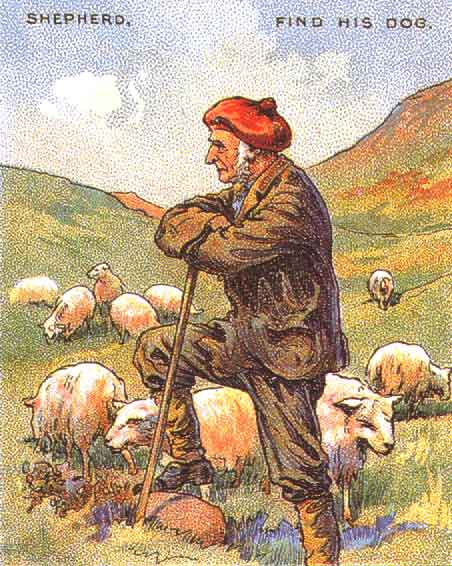
Props go to Dever, though, who around minute 6 asks the question that should haunt all celebrity preachers — “What happens when you die?” That is a concern about which an ordinary pastor does not have to worry, as long as he has a good set of elders and as long as his congregation belongs to a presbytery. Shepherding is not rocket science since the objects of ministry are — well — sheep. Feeding a flock certainly has its challenges. But God calls other men, he equips a variety of teachers and pastors to provide training, and the recipes for sheep food are basic — word, sacrament, and discipline.

I do not know how you feed or care for a real live human being through a television screen. MacDonald and Driscoll not only need to read the pastoral epistles. They need to read Wendell Berry on how to care for sheep and for human beings.

Can Drinkers of Bad Beer Read Roman Numerals (even when sober)?

One of the blessings of being a sabbatarian is the removal of the temptation to watch the Super Bowl. Yes, if the home team happens to be there I may revert to the Jewish conception of the sabbath day ending at sundown. But the NFL has become so bloated (and mediocre along the way thanks to the salary cap), and the championship game has become such a venue for sports executives and television sports producers to think they can put on a show as good as people the people in Hollywood, that I’m just as happy to have a religious excuse for not wasting my time. Think about it, halftime is the worst part of any football game and the only reason to put up with marching bands. But now the NFL allots forty-eight friggin’ minutes to a silly attempt at extravaganza (silly because they still incorporate cheerleaders and baton twirlers — at least last time I watched). Can that much time really be good for the teams and their rhythm? Are people watching the game to see Bruce Springteen or Bono, or would they prefer to have their concert and their sports cheering as separate experiences, sort of like keeping rock ‘n’ roll out of worship.

But what strikes me as the best example of the NFL’s hubris is their tired and foolish tradition of designating each Super Bowl with a Roman number. This year is XLV, which if my ancient numbering is correct tallies up to 45. Yes, we have had forty-five Super Bowls. Big deal.

Does anyone know how many World Series Major League Baseball has conducted? Or what about the Stanley Cup? At least the other major leagues have the good sense to designate their annual championship by its equivalent year and not try to dress it up in something Ben Hur might see, though the NFL’s desperation may stem from their status as the newest kids on the championship block.

Here are the respective totals for baseball, hockey, basketball, and football.

World Series — begun in 1903 with a total of 106 championships (two years were cancelled).

Stanley Cup — begun in 1927 with a total of 84 championships.

National Basketball Association Finals — begun in 1947 with a total of 64.

Super Bowl — begun in 1967 with a total of 44 (and counting).

I do know that the NFL had championships before the Super Bowl. But those don’t count because they don’t have Roman numerals.