
(thanks to our mid-western correspondent)
Category: Shock and Awe
Worst Christian Video of the Year
I had thought about posting this before the end of last year, but this is so egregious that it transcends single calendar years. Bad theology is only a fraction of the problem. Bad music — a tune that you cannot get out of your head quickly (so beware) — goes a long way in explaining its poverty. But the icing on the cake is the setting. You’d almost think California was solely capable of producing such vulgarity. But then along comes Florida with the reminder that fruits and nuts grow in all temperate climes.
This video is even worse than Christian hip hop (hat tip to the folks at Gospel Coalition who don’t seem to be worried about the disconnect between the forms of rap and the content of sound doctrine but are concerned about the gap between the supremacy of God and beer):
or the contemporary music to which the Baylys are partial. (The tag, “race,” is a nice touch.)
Happy Hodgemas
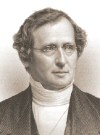 I understand that for those observers of all holidays, but holy and secular, persevering a whole week between Christmas and New Year’s Day without a party can be an ordeal. I also know that for those vinegary Presbyterians who don’t observe the nativity of Christ in late December, non-observance can look downright acidic. The remedy for the neo- and paleo-sanctifiers of days is the birthday of Charles Hodge, who came into this world in that little burgh of Philadelphia on December 28, 1797. The great appeal of Hodge’s nativity is that for the strict Reformed it functions as a festive day close to Christmas and thus provides an outlet for all of that cooking, spirituous refreshment, and commercial enterprise bubbling up at years end in this greatest nation on God’s green earth. And for the not-so-strict neo-Presbyterians, Hodge’s birthday functions, midway between Christmas and New Year, as a way to turn the last week of the year into one long party.
Hodge’s birth has added significance because, as I am learning from Andrew Hoffecker’s fine biography of the Princeton theologian (forthcoming in the American Reformed Biographies), Hodge himself was not an observer of December 25th, like most low-church Protestants prior to the commercial success of Christmas, Mother’s Day, and Easter during the Victorian era. Hoffecker observes that when Hodge was preserving his thoughts and whereabouts during a period of supply preaching in the early 1820s he never mentioned Christmas.
Further evidence of Hodge’s silence on the Roman Catholic holiday comes from a letter he wrote on December 25, 1825 to his mother. In addition to demonstrating Hodge’s non-observance of Christmas, the letter has the Old Life advantage of making a plug for the two-kingdom that provides a proper understanding of days holy and common during a pilgrim’s life in this world. Here is the letter (which can be found in The Life of Charles Hodge, p. 97):
My Dear Mother:
Your dear little Mary Elizabeth was baptized this afternoon in the Oratory by Dr. Alexander. Notwithstanding the rain, the place of service was so near we found it easy to take our dear little treasure out to be consecrated to God in this delightful ordinance. I never appreciated so highly before the privilege of thus giving to God what is dearest to us on earth. We feel now as though she were not our own, but something lent to be cultivated and prepared through our agency for heaven. To be instrumental in thus training up one of the children of the Lord to be presented before Him without spot or blemish, is so delightful and honorable a task, that we cannot help hoping that He who has made the prospect of the duty so pleasant, will aid us in its performance. There is, too, so much ground to hope that our efforts will not be in vain that we can address ourselves to the duty with all possible cheerfulness. The application of the pure element of water is not only designed to represent the purifying influence of the Spirit upon the heart, but it seems to be the appointed pledge on the part of God, that if we sincerely devote our children to Him, and faithfully endeavor to bring them up for Him, He will bestow upon them the blessings signified by the ordinance, and contained in that gracious covenant to which it is attached. Hence the ordinance is represented as so important in the Scriptures. He that believeth and is baptized shall be saved. It certainly never was designed to be an empty form. And as it imposes the most solemn obligations, so it contains abundant encouragement to fulfil them. Our dear little children we have promised to educate for heaven, and as God shall enable us, we mean to perform our vows. To this every thing must be made secondary. To gain this world is not what we have promised to aim at. It must therefore never be the direct and primary object of pursuit. I have lately, in reading Bonaparte’s Russian Campaign, and the Life of Sheridan, been very much struck with the truth of the remark how little they really enjoy the world to whom the world is every thing. Bonaparte says the happiest part of his life was when he was a poor lieutenant. And Sheridan said the happiest part of his life was the short time he spent in a cottage. There is nothing lost, therefore, even as regards the present world, by seeking first the kingdom of God; that is, by making it the primary object of pursuit, seeing that godliness has the promise of the life that now is, and of that which is to come. We feel, therefore, determined, if God shall render us faithful to our purposes, to bring up your dear little grandchildren, as we are sure you would have us do, with the one object supremely in view of fitting them for heaven. I have great confidence in the effect of religious truth upon the infant mind. Children are so susceptible, their associations are so strong and lasting, that it does not seem strange that the effect of early education should so frequently be felt through life. And if we add to this God’s peculiar promises to those who endeavor to bring up a child in the way in which he should go, we shall see that there is abundant reason to hope that exertions properly directed will be crowned with success.
Your affectionate son,
C. H.
So if you go out tonight, hoist one in honor of Charles Hodge and his paleo-Presbyterian piety.
Take, Eat, This Is My Baby Given for You
 For low church Protestants who partake of the Lord’s Supper monthly, usually the first Sunday of the month, the juxtaposition of remembering both the baby Jesus’ fleshy form and the adult Jesus’ broken body and flowing blood rarely occurs. We can have our Lord’s Supper at the beginning of December and hear sermons on the birth of Jesus at the end of the same month, never having the links between the baby fat of the nativity scene and the wounded body of the crucifixion pressed upon our consideration of the incarnation in all of is wonder and agony.
But a recent Lord’s Supper evening service brought the realities of Christ’s birth and death into closer proximity and was a poignant reminder of the continuity between the body and blood of the babe whom the shepherds adored and spiritual eating of that same flesh and blood in the sacrament. Since the service, as a prelude to Christmas without being explicitly an Advent observance – low churchers don’t do Advent unless it becomes a time to affirm the family (as in families lighting the Advent wreath candles) – included several hymns related to Christ’s nativity, the reminder of the fleshy character of the incarnation was right there next to a call to discern Christ’s body in the Supper.
Consider the following Christmas (or Advent – I can’t keep them straight) hymn lines:
All praise to thee, Eternal Lord, Clothed in a garb of flesh and blood (first line of Luther’s 1524 hymn)
To human view displayed, All meanly wrapped in swathing bands (“While Shepherds Watched Their Flocksâ€)
Born of Mary ever blest, God in flesh is manifest (“Savior of the Nations Comeâ€)
Veiled in flesh the godhead see, Hail the incarnate deity (“Hark, the Herald Angels Singâ€)
Word of the Father, Late in flesh appearing (“O Come, All Ye Faithfulâ€)
All this mention of the flesh of Christ in the manger right before the observance of the Lord’s Supper brings the body of the baby into much closer proximity with the body and blood of Christ’s sacrifice than I had ever before contemplated. To use the language of the Heidelberg Catechism, the Christ who “took upon him the very nature of man, of the flesh and blood of the virgin Mary†(A 35), is the same Jesus whose “crucified body and shed blood are the true meat and drink, whereby our souls are fed to eternal life.†In fact, in the bread and wine we really become “partakers of his true body and blood by the operation of the Holy Ghost as we receive by the mouths of our bodies these holy signs in remembrance of him†(A 79).
Maybe plenty of low church Protestants made this connection long before I did. And I suspect that many believers who refuse the sentimentality that haunts nativity scenes and Advent candles have long known that the baby we adore as a warm up to unwrapping gifts and devouring fresh ham was born precisely to do the work of the one and only high priest who would offer up his own body to take away the sins of the world. In which case, for those who take the atonement seriously, the joy of Jesus’ birth should always be calibrated according to the rest of Christ’s humiliation which began with his taking human flesh and included graphically the torture of his body on the way to descending into hell.
But I do wonder if Christians observed the Lord’s Supper more frequently, or at least during Christmas pageants and concerts, they would also be struck that, in the words of the Belgic Confession, the sacraments we hold “in our hands and eat and drink it in our mouths,†which sustain our spiritual life and are “the true body and true blood of Christâ€(Art. 35), are the same flesh and blood celebrated in the form of an innocent baby, wrapped in swaddling clothes, to prevent the chill of Bethlehem’s frigid winter. (Kidding, of course about Bethlehem’s weather; today the city of Jesus’ birth will experience a low temperature of 50 degrees.)
Note to readers rightly concerned about images of Jesus: the photo included with this post is intended as a generic portrayal of babies and their fleshy existence.
Catechetical Preaching Solves the Church Calendar Problem
 I continue to scratch my head that low-church Protestants are as attached as they are to the calendar of the Roman Catholic church. They don’t think of Christmas or Easter as part of Roman Catholic liturgical practices. But assigning Christ’s birth to December 25th and Christ’s resurrection to the fortunes of the lunar calender and the ides of March is not a project that leaps immediately from the pages of the New Testament as a must. That is why Christmas and Easter greatly expanded their appeal when businessmen like the Presbyterian, John Wanamaker, recognized the big holiday’s of Christ’s life as good for big business. Wanamaker’s department store in center city Philadelphia featured a main hall complete with a grand pipe organ and various forms of musical and holiday festivities (the store’s current owner, Macy’s, continues some of the rituals holiday commerce). The best book on the commercialization of Christian holidays and the high-churchification of low-church Protestants (implicitly) is Leigh Schmidt’s, Consumer Rights: The Buying and Selling of American Holidays.
Some Reformed Protestants will be quick to point out that various churches, such as the Netherlands State Church, included in their church order instructions to observe five days from the Roman calendar – Christmas, Epiphany, Good Friday, Easter, and Pentecost. Reformed church historians will shoot back that the Dutch authorities were not the most reliable magistrates ever to oversee a Reformed church – they let Descartes live among the Dutch observers of Christmas and Epiphany, after all. These historians will also argue that the retention of these five holy days was a concession to keep the former Roman Catholic – now Protestant – population happy.
Historical and commercial reflections aside, the one argument for retaining Christmas and Easter that makes the most sense is the difficulty in answering simply the question, “what’s wrong with once a year calling attention to the birth and resurrection of Christ?†That question invites other questions: what’s wrong with observing once a year the announcement to the virgin Mary of her conception? And by what criteria do we decide which once-a-year observances are wrong?
To these questions the good Heidelberg Catechism has the answer. Divided into 52 Lord’s Days, most print versions break down the 129 questions and answers into units that Reformed pastors were expected to preach in the second Sunday service. Those were the same expectations that brought Christmas, Epiphany, Good Friday, Easter, and Pentecost into the Reformed church. For a second service with a catechetical sermon every Sunday in every Reformed church that observed Christmas and Easter, I might be prepared to swallow the Roman Catholic origins of the Christian “holidays.â€
But I’m still holding out hope that catechetical preaching will make Christmas and Easter unnecessary. The reason is that every fourteenth Lord’s Day of the year the Heidelberg Catechism explains the significance of Christ’s birth. And every seventeenth Lord’s Day Heidelberg teaches the meaning of Christ’s resurrection. That means that Christians would have the opportunity to see that nothing is wrong with reflecting once a year on Christ’s birth and resurrection.
The question for those who want to retain the annual festivities is whether they would be comfortable celebrating Christ’s birth in mid-April (14th Sunday), and Christ’s resurrection in early May (17th). (They don’t seem to realize that they already celebrate Christ’s resurrection fifty-two days a year.) That would make for a rushed holiday season among low-church Protestants. But if Jews can squeeze Rosh Hashanah and Yom Kippur into two weeks of Indian Summer, surely Reformed Protestants can gear up for three weeks of celebrations. And just imagine how merchants will benefit from a Spring-time boost in sales.
Why Should Episcopalians Have All the Good Chants?
 What I am about to write will put me in awkward company since both James Jordan, the godfather of visions federal and David Koyzis, one of many keepers of the Kuyperian flame, have also advocated chanting psalms. But I am not afraid of the genetic fallacy that attributes guilt by association. I have very little sympathy for Jordan’s musings or for Koyzis’ opposition to dualism. But I do agree with them that chanting psalms is a better way to sing them than any available to the modern church.
But I don’t need to go Federal Visionist or neo-Calvinist to find support for chanting. The good and reliable singers of psalms, the Reformed Presbyterians, also include a page in their Book of Psalms for Singing on how to chant. Their reasons for chanting are as straightforward as their tips for singing are helpful. What is more, Reformed Presbyterian arguments don’t dabble in the exotic, trendy, or liturgical. For them, the point is to sing psalms as given in Scripture.
Chanting has several advantages over metrical Psalmody, stemming from the fact that in chanting, the music completely serves the text. The music is not difficult or interesting in itself, but has character and meaning only in conjunction with the words. The meaning of the text is thus more immediate, and the parallel structure of the Hebrew poetry is more apparent. The difficulties of translating ancient non-metrical poems into sensible English rhyme are rendered unnecessary. Chanting encourages the use of entire Psalms rather than selections.
The one advantage that I’d call attention to is that chanting frees modern congregations from having to sing songs that rhyme. My own tastes in poetry are pedestrian, and I like poems that rhyme. I am particularly attached to the limerick and sometimes write them. My main challenge is finding words that rhyme. (Heck, I have enough trouble finding the right word when it doesn’t have to rhyme.) But I see no reason why the songs we sing in worship need to rhyme. And I sometimes see the toll that rhyme schemes take upon the constructions (or their translations) of poets for whom rhyming was unknown.
Adding to the burden of metrical psalms is the tune. Each song has a certain number of beats per line, which means that each turn has a specific meter. Modern hymnals devote one of their many indexes to meters, such as 7.7.7.8, so that you may find all tunes with that meter and sing texts with the same meter to any of the listed tunes.
This means that psalm translators for metrical purposes not only have to find words at the end of lines that rhyme, but must also use translations that have the right number of syllables per line. Which means that a metrical psalm is several steps removed from the genuine article.
Now, of course, the genuine article would be to chant the psalms in Hebrew, but that would prevent worship in a known tongue to anyone in the United States other than obsessive seminary students.
So why not remove the entire rigamarole of awkward translations fitted for conventions of modern poetry and find a good English rendition of the psalms to chant? The music of chants are flexible and, contrary to the RPCNA’s advice, are often beautiful. Four-part chants are down right stunning. And chants aren’t that hard. The conservative Presbyterians with whom I commune sing well any number of complicated tunes. If Episcopalians, a group hardly known for vigorous congregational singing, can chant, why can’t Presbyterians?
Why Should Chaplains Have All the Good Uniforms?
 Our southern correspondent sent a story from the Washington Post about the Supreme Court’s justices’ annual photo shoot. Robin Givhan, the staff writer, took particular notice of Ruth Bader Ginsburg’s decision to adorn her black robe with “a white lace frill that flopped down the front of her chest like a hankie she’d tucked into her collar.†This fashion statement contrasted with the new justice, Elena Kagan, who allowed only a “a discreet hint of delicate white fabric peeking out from the top of her robe.â€
Givhan goes on to comment on the significance of attire for officials such as justices:
One wishes that the decision to wear basic black had been unanimous. The justices’ unadorned black robes carry with them an air of tradition, dignity, gravitas, as well as humility. It doesn’t matter if a justice is wearing a custom made Turnbull & Asser shirt, a Chanel suit or a tie from Charvet. All of that finery is hidden under their look alike robes. The stark costume reminds them that while they possess great power, it should be wielded with deep humility.
In donning the robes, the justices make a visual promise that they’re leaving personal idiosyncrasies, prejudices and desires outside the courtroom. They have tamped down individual preferences in service to the greater good, the general public . . . the law. The robes acknowledge that the justices have shed distractions in favor of objectivity, fairness and a common, high minded purpose. . . . The robe helps to ward off hubris and self importance. Indeed, wouldn’t we be perturbed if a justice decided that a little rhinestone trim along the sleeves would be quite nice? Or what if a justice decided that a mink collar would be quite lovely in the winter?
Does not the same logic, as our southern correspondent’s email asked, apply to pastors? Isn’t the nature of their work to get out of the way and let the word and Spirit do the work? And wouldn’t a robe that hid personal idiosyncrasies of sartorial preference and cultural breeding be a good way to remind the pastor that his work is not finally about him, his taste, or his social standing?
As Givhan concludes, “Clothes have a lot to say about who we are. They are our personal riffs on our place in the world. And those flourishes of style are important and meaningful.†But such statements have “no place on the Supreme Court.†If the proclamation of the word and the administration of the sacraments occupies an even higher purpose than interpreting the meaning of the nation’s laws, a robe would appear to be even more fitting for ministers than the business suit (not to mention the polo or faded t-shirt).
All Sermons Are Not Created Equal
 The one’s preached in the nation’s capit
aol are more important than the ones in the provinces. Not really, though some transformationalists and faith-based urbanists might be tempted to think so. Instead, the point of a new fall lecture series at Christ Reformed Church in Washington, D.C., (yes, that nation’s capitaol) is to understand better what constitutes a faithful sermon. Here is how the hosts describe the series:
The Reformation taught that preaching is the very Word of God, a mark of the true church, and a key of the kingdom that opens the doors of heaven to those that believe. It is the divinely appointed means by which the Spirit produces faith in our hearts, and the primary source of Christian instruction.
Is this still true today?Most contemporary sermons are a mix of anecdotes, tips, and inspirational stories—more junk food than bread of life. We often hear more about the person behind the pulpit than about the person and work of Christ. It seems that few in our pulpits—or our pews— understand what’s required by our Lord’s command to preach the Gospel.
Join us for Preaching in the Capit
aol, a lecture series that will critically explore the state of preaching today and ask how the lost art of Reformation preaching can be recovered. Explore this site to learn more about our speakers, their books, and ways to win and iPad by helping us promote Preaching in the Capitaol.
The schedule is a follows:
Oct. 7 Gene Edward Veith
Oct. 14 T. David Gordon
Oct. 21 Robert Norris
Oct. 28 Marva Dawn
If I were a betting man, I’d put money on the proposition that the lecturers will not be telling audiences about the need to preach to the sort of people who work in the capitaols of nations.
Now He's Channeling Glen

Not Glen Beck but Uncle Glen, that is.
Carl Trueman is on a roll and a recent post gives his objections to celebrity pastors. A friend told Trueman about an inquirer who came to him with a doctrinal question because the inquirer’s own pastor was too busy on the speaking circuit to meet with his congregant.
To which Trueman responds:
What was interesting was that this person was a member at one of the flagship Reformed evangelical churches in the US where the pastor is seen as one of the great hopes for the spread of gospel churches in the post-Christian world. In fact, this church member had actually tried to speak to this pastor about the issue, but had not been able to get an appointment. The church leader was simply too busy, with countless external demands on his time; and now, presumably protected by a praetorian guard of personal assistants and associate pastors, he was essentially as unavailable to the masses in his large congregation as the average rock star is to the punters who buy his concert tickets. . . .
I am immensely grateful that I have only ever held membership in churches of a size where the pastor has always been accessible and available. Indeed, my pastors have always even known my name, my wife’s name, my kids’ names, and even what sports they play (this latter may seem trivial but it has been peculiarly important to me: my kids may not always enjoy going to church; but they have never doubted that the pastor actually cares for them; and that is something for which I am more grateful than I can articulate). Indeed, each of my pastors has cared about his people, not as a concept or a good idea or as an indeterminate mass, but as real, particular people with names and histories and strengths and weaknesses; and this surely reflects the character and love of God who, after, calls his sheep by name and cares for us all as individuals. If I gave you the names of said pastors, few reading this post would ever have heard of them: they have written no books; they have never pulled in huge crowds; and they have never spoken at megaconferences. But they have always been there when even the humblest church member has called out for advice, counsel or even help with bailing out a flooded basement.
This sounds a lot like the point that avuncular Glen made in the pages of New Horizons to his nephew James:
The problem with your attraction to Pastor Strong’s church is that you may be succumbing to unhealthy standards for a pastor. Yes, this man does much of what a minister is supposed to do, and he does it in a much more visible way than most. He studies Scripture, expounds and applies it, leads worship, and apparently assumes his responsibilities as a presbyter both in his session and in his presbytery. I say “apparently” because someone who travels the way he does, especially when he is in book-promotion mode, is not going to be available for some regularly appointed session and presbytery meetings, not to mention any committees on which he might serve. He is also an effective speaker, and I have heard a number of recordings that attest to his powers of delivery (though I am not as sure that he preaches as much as he “gives a talk”).
As I say, Pastor Strong does the things that pastors are supposed to do in a very visible or public way. This means that he is ministering the word to a wider audience than that of his congregation. But when folks read his books or listen to his online sermons, Strong is not acting in his capacity as a minister because he has no relationship to the reader or listener. They are not members of the congregation that called him. They did not take vows to submit to him in the Lord, and he has not made promises ratified by real people to minister the word faithfully to anyone who picks up his book in a bookstore. In other words, he has no personal, and therefore no pastoral, relationship to remote listeners and readers.
Granted, you say you would like to become a member of his congregation, and this would put you in a real relationship to Strong. But then comes the flip side of the problem I have just described. How can a man who is as busy as he is have time for a personal relationship with his congregants? What generally happens in situations like Strong’s is that he is at the top of a large pastoral staff in which the pastors without star power have the day-to-day responsibilities of shepherding the flock. At least that accounts for the pastoral oversight that Christians need. I can well imagine the disappointment you will experience if you move to Boston only to discover that you had more access to Strong during his visit to Rutherford than you do in the place where you worship.
Think of it another way. Have you ever heard of a celebrity dad? Well, of course, there are dads who are celebrities because of their work outside the home (Brad Pitt might qualify). But do you know any dads who are celebrities because of their activities as a father and husband? Bill Cosby’s character on his hit television show comes to mind, but that still isn’t the real thing. We do not know what Bill Cosby was like as a father because most of the duties of fathers are hidden from the public eye—taking out the trash, cleaning up after a child’s upset stomach, praying over the family meals. These are not tasks that create celebrity because they are unexceptional and do not attract publicity.
Some might argue that I am simply setting into motion a set of expectations that tolerates average or even mediocre men in the ministry—those without the ability to attract large audiences. Perhaps so, since I believe what Paul writes about God using earthen vessels to accomplish his purposes. The skills of the pastor are not what make his ministry effective; rather, it is the power of God that saves. My point, though, is not to deny the value of excellence. It is rather to underscore the quiet and routine ways in which the pastoral ministry transpires. Pastoral ministry is not flashy, but we need it in the same way that we need fathers and mothers to be in the home, not on speaking tours about parenthood.
It is good to know that Westminster Seminary has someone who understands the personal and routine nature of the pastoral ministry. Back in the day when I was at WTS, a certain transforming pastor in a large metropolis had a reputation at the seminary so large that he not only walked on water but hovered over it. Now, perhaps, sanity about the work of a pastor is reemerging at Machen’s seminary.
Things You Learn From Christian Radio
 I had never heard of the David Crowder Band before last Sunday while listening to the New Beginnings show with — pastor — Greg Laurie. But apparently they are a big enough name to tout for the recent Harvest Crusade in Anaheim. The band’s website indicates that this appearance may be notable because their performance will be free of charge.
Because the only radio music I listen to is a streaming audio recording of Rob da Bank’s weekly show on BBC 1, I don’t get around much Christian musically speaking. Nor am I, truth be told, much of a fan of Christian rock or pop. I prefer secular up tempo to holy syncopation.
Listening to a few of the songs at the David Crowder Band’s Myspace page has not changed my prejudice against sacred rock. Perhaps more objectionable are the band’s lyrics. Do people actually listen to this? Do they really want this music and text in worship?
Here, apparently, are the lyrics to one of the band’s popular songs:
How He Loves
He is jealous for me,
Loves like a hurricane, I am a tree,
Bending beneath the weight of his wind and mercy.
When all of a sudden,
I am unaware of these afflictions eclipsed by glory,
And I realise just how beautiful You are,
And how great Your affections are for me.And oh, how He loves us so,
Oh how He loves us,
How He loves us allYeah, He loves us,
Whoa! how He loves us,
Whoa! how He loves us,
Whoa! how He loves.
Yeah, He loves us,
Whoa! how He loves us,
Whoa! how He loves us,
Whoa! how He loves.We are His portion and He is our prize,
Drawn to redemption by the grace in His eyes,
If grace is an ocean, we’re all sinking.
So Heaven meets earth like a sloppy wet kiss,
And my heart turns violently inside of my chest,
I don’t have time to maintain these regrets,
When I think about, the way:He loves us,
Whoa! how He loves us,
Whoa! how He loves us,
Oh how He loves.
Yeah, He loves us,
Whoa! how He loves us,
Whoa! how He loves us,
Whoa! how He loves.Well, I thought about You the day Stephen died,
And You met me between my breaking.
I know that I still love You, God, despite the agony.
…They want to tell me You’re cruel,
But if Stephen could sing, he’d say it’s not true, cause…Cause He loves us,
Whoa! how He loves us.
Whoa! how He loves us.
Whoa! how He loves.
Yeah, He loves us,
Whoa! how He loves us,
Whoa! how He loves us,
Whoa! how He loves.
Woe indeed.
 Old Life