What I Learned about My Brother

Today is his birthday and he shares it with Bob Dylan.

Of course, Dylan is better known than Don Hart. But they share the same birthday and they are both musicians. Talk about harmonic — see what I did there? — convergence.

But Don Hart is way better know than IiiiiiiiiiIIIIIIII.

America First as NIMBY for the Nation

Old neighbors in Philadelphia are objecting to a business that is expanding its hours and footprint:

Past residents of Chestnut Hill, through great effort, created a vision for the neighborhood. We owe them a great debt and we believe that we have a duty to be just as vigilant and visionary as our forebears.

Nearly 40 years ago, under the auspices of the Chestnut Hill Community Association, and well covered by this newspaper, a covenant was hammered out between the owners of the Chestnut Hill Hotel and its near neighbors on Ardleigh Street. This was no easy task. It took the efforts of hundreds of Chestnut Hill residents, city politicians, and the CHCA. The covenant runs in perpetuity with the property.

Such covenants are extremely important and should not be discarded or ignored in a willy-nilly fashion. Certainly, any attempt to supersede or challenge the covenant should be presented and discussed with the parties involved. Such was never done with the neighbors on Ardleigh Street. Only the heavy construction work we heard coming over the fence in the dead of night alerted us that something was happening. Now we are faced with a fait accompli, and our only recourse seems to spend thousands of dollars in legal fees to have our living covenant recognized. How is this at all neighborly?

As development proceeds in Chestnut Hill, all of us should be concerned about the abrogation of covenants. Ours is not the only such covenant here, and by acceding to the development whims at the Chestnut Hill Hotel property without any review, all such covenants are mocked and threatened. I appeal to the CHCA to take careful note.

Finally, the system set up to monitor local development, which includes building codes, zoning and the associated permits, are not to be ignored. All those seemingly petty requirements – the posting of permits, height restrictions, propinquity to elementary schools – are important. And again, the wider community should take note because what is scoffed at and ignored in our neighborhood is coming your way sooner or later. There is and will continue to be voracious demand for development in Chestnut Hill.

Given the demographics of the place, I assume many of these concerned residents are liberal politically and supported Hillary Clinton in last year’s election for POTUS. But imagine if these same people thought about the United States, its borders, and the expectations underwritten by the Constitution the same way that they think about their neighborhood and what threatens their way of life.

If they did that, would they really have trouble understanding people who voted for a president who campaigned to take borders seriously, to put national interests first, and who annoyed a lot of citizens who disdained rather than cared for Americans living in fly-over country?

Deep inside every American, conservative or liberal, beats a Not In My Back Yard heart. Why the outrage when the wrong side shows it has a pulse?

Why Liberty U. May Be a Better Place to Study than Duke

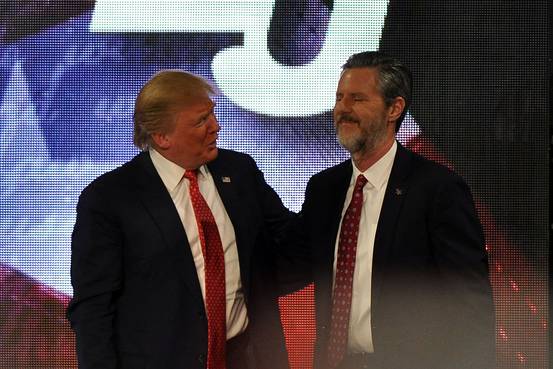
Jerry Falwell, Jr. may have and still does support Donald Trump, but I doubt he’d let happen what Paul Griffiths, a very smart Roman Catholic scholar, is now experiencing for not submitting to sensitivity training (thanks to Rod). Griffiths’ description of the consequences of the politics of identity is a reminder that we have more to fear than Donald Trump:

These disciplinary proceedings are designed not to engage and rebut the views I hold and have expressed about the matters mentioned, but rather to discipline me for having expressed them. Elaine Heath and Thea Portier-Young, when faced with disagreement, prefer discipline to argument. In doing so they act illiberally and anti-intellectually; their action shows totalitarian affinities in its preferred method, which is the veiled use of institutional power. They appeal to non- or anti-intellectual categories (‘unprofessional conduct’ in Heath’s case; ‘harassment’ in Portier-Young’s) to short-circuit disagreement. All this is shameful, and I call them out on it.

Heath and Portier-Young aren’t alone among us in showing these tendencies. The convictions that some of my colleagues hold about justice for racial, ethnic, and gender minorities have led them to attempt occupation of a place of unassailably luminous moral probity. That’s a utopia, and those who seek it place themselves outside the space of reason. Once you’ve made that move, those who disagree with you inevitably seem corrupt and dangerous, better removed than argued with, while you seem to yourself beyond criticism. What you do then is discipline your opponents.

If only liberals were liberal.

The United States of Fear

I think I have the way to form a more perfect union in this place we call the USA. It is to recognize that all Americans share a sense of fear. Anxiety is what unites us in the U.S. Consider the following.

Andrew Sullivan writes respectfully about reactionary conservatism and even grants its plausibility:

Certain truths about human beings have never changed. We are tribal creatures in our very DNA; we have an instinctive preference for our own over others, for “in-groups” over “out-groups”; for hunter-gatherers, recognizing strangers as threats was a matter of life and death. We also invent myths and stories to give meaning to our common lives. Among those myths is the nation — stretching from the past into the future, providing meaning to our common lives in a way nothing else can. Strip those narratives away, or transform them too quickly, and humans will become disoriented. Most of us respond to radical changes in our lives, especially changes we haven’t chosen, with more fear than hope. We can numb the pain with legal cannabis or opioids, but it is pain nonetheless.

If we ignore these deeper facts about ourselves, we run the risk of fatal errors. It’s vital to remember that multicultural, multiracial, post-national societies are extremely new for the human species, and keeping them viable and stable is a massive challenge. Globally, social trust is highest in the homogeneous Nordic countries, and in America, Pew has found it higher in rural areas than cities. The political scientist Robert Putnam has found that “people living in ethnically diverse settings appear to ‘hunker down,’ that is, to pull in like a turtle.” Not very encouraging about human nature — but something we can’t wish away, either. In fact, the American elite’s dismissal of these truths, its reduction of all resistance to cultural and demographic change as crude “racism” or “xenophobia,” only deepens the sense of siege many other Americans feel.

And is it any wonder that reactionaries are gaining strength? Within the space of 50 years, America has gone from segregation to dizzying multiculturalism; from traditional family structures to widespread divorce, cohabitation, and sexual liberty; from a few respected sources of information to an endless stream of peer-to-peer media; from careers in one company for life to an ever-accelerating need to retrain and regroup; from a patriarchy to (incomplete) gender equality; from homosexuality as a sin to homophobia as a taboo; from Christianity being the common culture to a secularism no society has ever sustained before ours.

Notice too that conservatives are not the only ones who are very, very afraid. It’s also feminist philosophers. But even they can’t claim privilege for their phobia:

I want to explore a much more general issue raised by this whole affair. This has to do with concept of harm, which keeps being raised. The main charge against Tuvel is that the very existence and availability of her paper causes harm to various groups, most specifically to members of the transgender community. This is a puzzling and contentious claim that deserves serious reflection.

The editorial board statement specifically refers to “the harm caused by the fact of the article’s publication.” As the concept of harm is standardly used in legal contexts, this would be a tough claim to defend. It is certainly possible for someone to suffer material or tangible loss, injury, or damage as a consequence of a 15-page article being published in an academic journal. The article might be libelous, for example. But there is no such charge here. The only individual mentioned by name besides Rachel Dolezal is Caitlyn Jenner, and it seems implausible to say that Tuvel has harmed Jenner by “deadnaming” her (i.e., using her birth name), given how public Jenner has been about her personal history.

The authors of the editorial board statement have nothing to say about how they understand harm. This already should give pause for thought. Philosophers, whatever their methodological orientation or training, usually pride themselves on sensitivity to how words and concepts are used. This makes it odd to see no attention being paid to how they are understanding this key concept of harm, which is central to many areas in legal and moral philosophy.

But the statement does clarify what the authors believe has caused the harm: “Perhaps most fundamentally, to compare ethically the lived experience of trans people (from a distinctly external perspective) primarily to a single example of a white person claiming to have adopted a black identity creates an equivalency that fails to recognize the history of racial appropriation, while also associating trans people with racial appropriation.”

And here I thought we were supposed to be afraid of Trump. Imagine the harm a POTUS can do. But in the United States of Fear, an academic paper poses a threat capable of generating the kind of fear that many endure with our incautious and vicious president.

The question is whether those with fears can recognize fear as a basis for personal identity. Can we go from the specific to the general and recognize fear is something that every American experiences? If so, then we may finally have a common point of reference for a shared existence. We are united in fear.

But (not all about) Me No Buts

In honor of the Bard’s birth which occurred sometime before his baptism recorded on April 26, 1564 — puts the Elizabeth in Elizabethan English.

Those Also Were the Days

Damon Linker remembers those crazies times under President Obama:

As Delmore Schwartz once joked, sometimes paranoids have real enemies, and the paranoid-in-chief occupying the Oval Office has some very real and very powerful enemies.

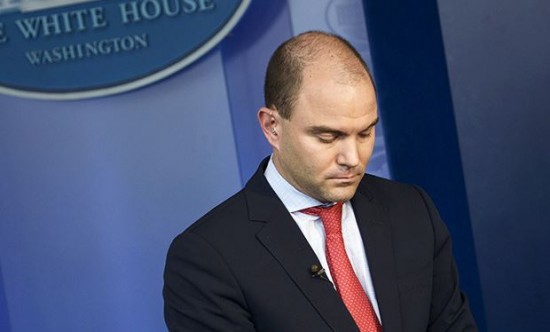
Anyone who denies this needs to go back and reread the most important (and unfairly maligned) magazine feature written last year: David Samuels’ 9,500-word New York Times Magazine profile of Obama administration senior staffer Ben Rhodes. Journalists hated the piece, but for reasons so self-serving that it’s hard to believe anyone took the objections seriously. (My colleague Noah Millman noted as much shortly after the essay appeared.)

Samuels portrays (and quotes) Rhodes as someone who views both reporters (“they literally know nothing”) and Washington’s foreign policy establishment (Rhodes calls it “The Blob”) with utter contempt. It’s that contempt that Rhodes uses to justify the propaganda shop he ran out of the Obama White House, subtly but significantly manipulating the story that the mainstream media told about the Iran nuclear deal by selectively and repeatedly leaking tiny bits of information to dozens of journalists who wove those bits of micro-spin into countless tweets and stories over the course of many months. The end result was a pro-Iran deal conventional wisdom — a pointillistic picture of reality composed entirely of colorful dots painted by Rhodes and his staff with the knowledge and support of the president.

While trying to get the Iran deal approved, Rhodes was in the position of needing to use journalists to defeat The Blob, which viewed with extreme skepticism (if not outright hostility) the Obama administration’s efforts to reach a nuclear accord with Tehran. But once Donald Trump won the presidency, old opponents found themselves firmly on the same side. Rhodes and his former boss, the bipartisan foreign policy establishment, and the nameless and faceless bureaucrats who staff the executive branch agencies and departments that make up the “intelligence community.” All of them were now united in standing against a president who had vowed to break far more radically from the established Washington consensus than Obama ever dreamed of doing.

What makes America great? Remembering sometime.

You Don’t Need to Believe in God to thank God for the ACLU

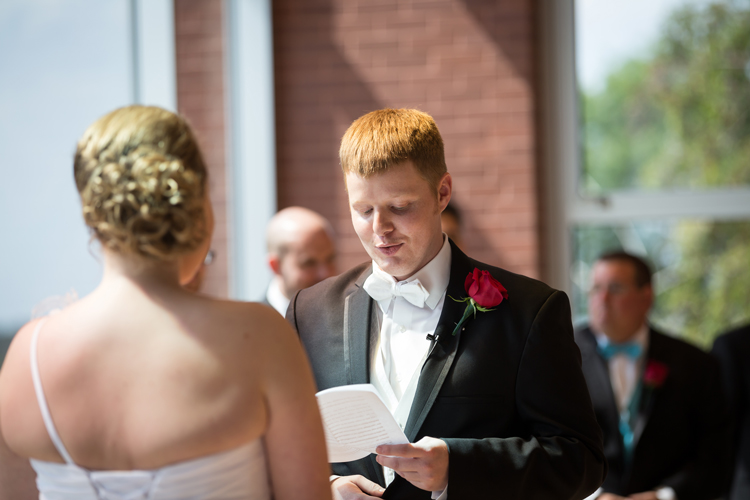
Do civil liberties in the United States really depend on non-Quakers having access to self-uniting marriages (amazing what you find when you go to Philadelphia’s municipal offices‘ webpages):

What is a self-uniting marriage, you ask? No, it doesn’t mean you fulfill your self-love:

For couples who want to skip a formal marriage ceremony, usually their first thought is to just get a marriage license, go to city hall and get married by a judge, magistrate or mayor. But in Pennsylvania, getting married doesn’t even have to be that formal.

Pennsylvania is one of the few states that offers couples the option of a self-uniting marriage license.

The custom is rooted in the Quaker faith and is actually part of a formal wedding ceremony. According to the book Quakerism: A Religion Meaningful for Today’s World, the couple walks into the ceremony together and later rises and states their vows to each other. At the conclusion of the event, all of the witnesses sign the marriage certificate.

But the ACLU became alarmed when some residents of Pennsylvania did not have access to a self-uniting marriage (civil libertarians don’t seem to care that residents of Ohio don’t have access to this kind of union):

Because Pennsylvania has a large Quaker population, the license is available in most counties. But you don’t have to be a Quaker to take advantage of the service; the state American Civil Liberties Union took care of that in 2007.

An Allegheny County couple had been denied the self-uniting license because they told the Register of Wills that they weren’t part of the Quaker faith. With the help of the ACLU, the couple sued, and the court ruled that the license cannot be denied to anyone.

That’s a relief.

But it wasn’t enough to keep Donald Trump from becoming POTUS. Never forget, never Trump.

Social Justice Warriors Then

Mencken explains how to pursue social reform without eschatology or sanctity:

I do not hold, with the suffragettes, that the extension of the suffrage would bring the millennium, that the will to power would become the will to kiss, that sin would perish from the earth. Far from it. But I do hold that the dear girls could do no worse with the vote than men have done, that the present discrimination against them is unjust and absurd, that they ought to have their equal chance to inject their favorite antitoxins into the body politic and perform their pet mazurkas.

The common theory that women would not vote as intelligently as men is one that doesn’t appeal to me. I see no evidence in support of it. Women, in general, are certainly not less intelligent than men. On the contrary, they are probably more intelligent. That is to say, they keep in closer contact with reality, they are less romantic, they yield less to emotion. A woman’s eye is always upon the immediate certainty, not upon the remote possibility. She is not an idealist; she seldom dreams great dreams. But in the everyday, commonplace business of living she renders inestimable services to the human race. She keeps it upon the track; she sees that it gets three meals a day; she darns its socks and bathes its fevered brow; she assiduously counts its change.

In the great business of marriage, for example, the attitude of women is far less sentimental than that of men. A man usually marries romantically: he is full of magnificent visions of incredible bliss. Many men, indeed, are so romantic that they never marry at all—the true explanation of 90 per cent. of all masculine celibacy. But women marry with an eye to the main chance. They seldom allow romance to obliterate worldly prudence. In the whole history of England, I am told, no woman has ever actually refused a Duke. And here in free America it is not often, I venture, that a sane woman ever refuses a man who is her social equal and of good repute and able to support her. She may do it if she has a free choice between two such men, but such opportunities, it must be plain, are rare, and even when they occur there is commonly a Palpable difference between the two men, and so the woman’s choice is not free. She picks the better, not the worse. Her eye is on her number.

Such instinctive sagacity, I believe, would have a good influence upon politics. The woman voter would decide public questions, not from the idealistic standpoint, but from the standpoint of bread and butter. She would regard all political wizards and windjammers with distrust and aversion, just as she regards them now. She would bring to the business of government that salubrious cynicism which she now brings to the business of ensnaring and managing her husband. In brief, she would introduce a sharp common sense into political controversy and combat—a quality now almost wholly lacking.

But the suffragettes! The suffragettes! What of them? Isn’t it a fact that their present propaganda is utterly without sense, that their panaceas are all bosh, that their arguments and claims are romantic and nonsensical? Maybe it is. But don’t make the mistake, beloved, of confusing suffragettes with women in general. The suffragettes, by the irony of fate, are the worst of all imaginable specimens of their sex—not in the sense that they are evil, but in the sense that they are untypical. They no more represent the normal habits and mental processes of women than the fantastic Ibsenites of yesterday represented old Henrik, or than the S. P. C. A. of today represents that kindly and lovable creature, the Canis familiaris.

No; the suffragettes are not typical women, and so it would be absurd to charge their extravagances to the normal feminine character. On the contrary, they are untypical women, romantic women, women without womanly common sense. The thing that attracts thern to the suffrage cause is not the cause itself, but the excitement of the campaign. In brief, they are emotionalists—which is exactly what normal women are not. This explains their eager adoption of such ludicrous jehads as the vice crusade. This explains, too, their willing alliances with prima donna preachers, Chautauqua “sociologists,” Socialists, play censors and other such bogus “thinkers” and laryngeal bravos. And this explains, finally, the curious fact that many of them also belong to other windy lodges—of anti-vivisectionism, of anti-vaccinationists, of medical freedomists, of initiators and referendors, of deep breathers, of eugenists.

An Anti-2kers Dream Come True

Thanks to our southern correspondent:

Briarwood Presbyterian Church in Vestavia Hills is trying to establish its own police force.

The move requires approval from state lawmakers. The bill, sponsored by Rep. Arnold Mooney (R-Shelby County) cleared its first major hurdle Wednesday. The House Public Safety Committee gave its OK.

Briarwood Presbyterian Church calls this a way to create a safer campus in a fallen world.

Some lawmakers argue allowing a private church to have its own police force could begin a slippery slope.

“What do we do when other church affiliates come and ask for the same thing?” questioned Rep. Mary Moore (D-Birmingham). “They’re not a college. They’re a church and they’re a church asking for police jurisdiction.”

Many questions were posed during Wednesday’s committee meeting.

“Who do the officers answer to?” asked Rep. Chris England (D- Tuscaloosa).

“They would answer to the leadership of the section of the church,” a representative from the church answered.

Rep. Connie Rowe (R- Jasper) is a former police chief. She supports allowing Briarwood to create its own force.

“They will conduct their own investigations,” explained Rowe. “They will conduct their own security. They will make their own arrests and instead of calling on the local law enforcement agency to take over the particular situation they’re trying to control, they will do that themselves. All they will utilize from their other law enforcement agencies is their lock up facilities.”

At a time when the PCA is repenting of racism and Black Live Matters is calling for reform of the police, has not the word “optics” entered the PCA thesaurus?

More of Those (were the) Days

James Madison in “Federalist” 45:

The powers delegated by the proposed Constitution to the federal government are few and defined. Those which are to remain in the State governments are numerous and indefinite. The former will be exercised principally on external objects, as war, peace, negotiation, and foreign commerce…The powers reserved to the several States will extend to all the objects which, in the ordinary course of affairs, concern the lives, liberties, and properties of the people, and the internal order, improvement, and prosperity of the State.

So how did we go from 2 to 15 seats in POTUS’ Cabinet?

The President’s Cabinet
Department of Agriculture
Established: 1862

Department of Commerce
Established: 1903

Department of Defense
Established:1947

Department of Education
Established: 1979

Department of Energy
Established: Aug. 1977

Department of Health and Human Services
Established: 1953

Department of Homeland Security
Established: 2003

Department of Housing and Urban Development
Established: 1965

Department of the Interior
Established: 1849

Department of Justice
Established: 1870

Department of Labor
Established: 1913

Department of State
Established: 1789

Department of Transportation
Established: 1966