Timely, Timeless, and Weekly

After pondering why pastors (and even parachurch leaders) feel the necessity to comment on contemporary affairs — and whether this is connected to civil religion or pious nationalism — I was curious to see what the gospel allies have been writing about the pandemic.

One problem for people who are in the business of teaching and defending enduring truths like those from a book over two millennia old is that commentary on current affairs can be dated oh so quickly, even in a piece that initially seemed so brilliant:

3. What Decisions Do We Need to Make?
[Note this update from Crouch: As of the President and federal health officials’ afternoon press conference on 16 March 2020, this advice, which was intended for leaders making decisions on or immediately after12 March 2020, is obsolete, though still helpful both for modeling how Christians might make such decisions and in helping us comply with existing restrictions (e.g., in places where gatherings of up to ten are allowed). I will not be updating it further. All leaders should obey both the requirements and the requests of public officials at every level.]

Groups of less than ten people can meet together with minimal risk, provided that
*no one present is sick or has any reason to think they have been exposed to SARS-CoV-2,
*shared surfaces are disinfected before and after the meeting
*everyone washes their hands thoroughly (more than 20 seconds) upon arrival and upon returning to their home
*food and drink are served individually
*as much distance as possible is maintained between members of different households and their belongings.

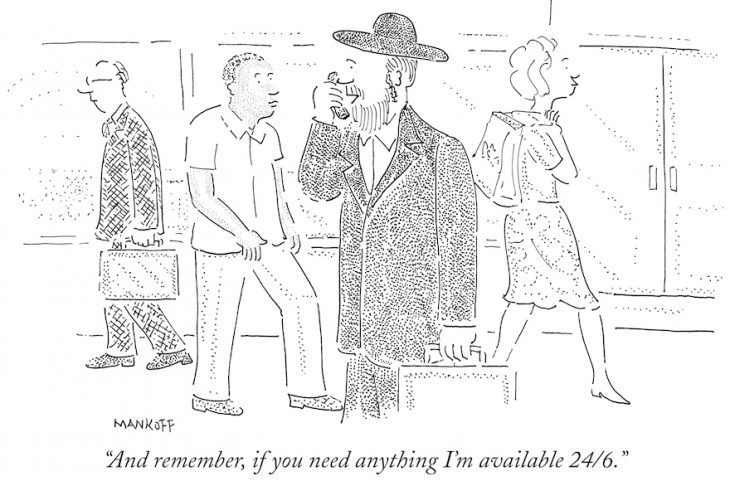
Another oddity is the tacit admission that Christians are so poorly read that they need to go to a parachurch website for knowledge about a topic that almost everyone is talking about 24/7. Don’t believers actually know where to go for information about the world they share in common with non-believers? Or do they need that knowledge to come from reliable sources (and only Christian sources are reliable)? This piece has good material, but it also comes across paternalistically, like we need to spoon feed this stuff to you kids out there:

The use of the terms endemic, outbreak, epidemic, and pandemic do not denote the severity, or how serious the condition has become. For instance, influenza (flu) is endemic to the United States, though the severity changes from year to year. The severity of the flu in 2019–2020 is classified by the Centers for Disease Control (CDC) as being “high.” According to CDC estimates, from October 1, 2019, through February 15, 2020, there have been 29 million to 41 million flu illnesses, 13 million to 19 million flu medical visits, 280,000 to 500,000 flu hospitalizations, and 16,000 to 41,000 flu deaths.

In contrast, the COVID-19 has (as of February 24, 2020), resulted in 51,838 currently infected patients (40,271 in mild condition; 11,567 in serious condition), 25,271 recovered cases, and 2,698 deaths. It’s currently unclear what level of severity we should expect if COVID-19 becomes a pandemic.

Two other important terms are containment and mitigation. Containment is measures taken to slow the spread of a condition, usually for the purpose of making preparations before it becomes an epidemic or pandemic. As applied to COVID-19, containment has included measures taken to slow the spread of the virus (a somewhat achievable goal) rather than intended to stop the complete spread of the disease (which may not be achievable, at least in the short term). Mitigation is efforts to reduce the severity or seriousness of the condition. In a pandemic, mitigation strategies may include a variety of approaches, from encouraging handwashing to the creation of new vaccines.

So what are Christians to do? Why can’t they have Sundays for a word from the Lord, fellowship of the saints, and rest from this world in anticipation of the eternal rest to come? Machen sure seemed to understand this:

Remember this, at least — the things in which the world is now interested are the things that are seen; but the things that are seen are temporal, and the things that are not seen are eternal. You, as ministers of Christ, are called to deal with the unseen things. You are stewards of the mysteries of God. You alone can lead men, by the proclamation of God’s word, out of the crash and jazz and noise and rattle and smoke of this weary age into the green pastures and beside the still waters; you alone, as minsters of reconciliation, can give what the world with all its boasting and pride can never give — the infinite sweetness of the communion of the redeemed soul with the living God. (Selected Shorter Writings, 205)

The other six days, let the experts have their say and let the saints figure out — in consultation with friends, parents, cousins, teachers, colleagues — which experts to follow. Is that too secular?

Civil Religion without Turning George Washington into John Piper

One of the gospel allies is surprised at and disturbed by the depth of American Protestants’ attachment to civil religion. The problem is that he and his allies, whenever they evaluate politics, American or otherwise, by Christian categories, enhance American civil religion.

Here’s why. In his famous essay on American civil religion, Robert Bellah wrote:

As S. M. Lipset has recently shown, American religion at least since the early nineteenth century has been predominantly activist, moralistic, and social rather than contemplative, theological, or innerly spiritual. De Tocqueville spoke of American church religion as “a political institution which powerfully contributes to the maintenance of a democratic republic among the Americans” by supplying a strong moral consensus amidst continuous political change.

Put more succinctly:

American civil religion is not the worship of the American nation but an understanding of the American experience in the light of ultimate and universal reality.

This is precisely what Thabiti Anyabwile did, for instance, when evaluating the 2016 election. He regarded it as having religious significance, whether or not Trump or Clinton were on God’s side:

I don’t think the goal right now is merely a quiet conscience. I don’t see how such a goal can be met without abdicating a significant moral responsibility to oppose evil. It’s not enough to say, “I had no part in the evil.” We must actually resist the evil as best we can. We’re in that Bonhoeffer-like moment where we can choose peaceful exile in some Evangelical enclave or enter the fray bearing our cross. If we choose exile, like Bonhoeffer, we’ll have no right to participate in our Germany after Hitler. If we choose to bear our cross, we’ll have the right now and later to testify to what’s right in the sight of God.

This may be the way Christians should think about elections — or even the 2016 contest — though it would be good to have some scriptural support. Believe it or not, the Bible has no good examples of democratic elections. But aside from biblical sanctions, Anyabwile looked at the 2016 election as having cosmic and moral significance. That is the way that most Protestants, from flag-waivers to draft-card igniters, have understood American politics. Why? The United States is special and deserves the application of eschatological standards.

The same approach is evident in Thabiti’s friend, Nick Rodriguez. In his defense of a vote for Hillary Clinton, he again raised the stakes of religious meaning (and missed almost altogether any of the policy debates that Trump and Clinton were having):

My hope is that I’ll be able to vote for a candidate who unambiguously protects life in 2020. But until then, I hope that Christians throughout this country will work together to protect us from the threat Trump represents. Our leaders can play a big role in giving us permission and guidance within the law to do this in a way that preserves our witness and honors Christ. And though we strive for a particular result, I pray that we would ultimately trust God with the outcome, and that we would glorify Him with our actions both before and after the coming election.

Imagine writing that for a secular or mixed audience. But just because he’s writing for the audience of the gospel allies does not mean Rodriguez is any less reluctant to view the election not as folly — because as Ecclesiastes tells us all is folly under the sun — but as a clear and meaningful indication of the nation’s goodness (no matter how fallen).

Meanwhile, here is how someone sounded on the 2016 election who was not hampered by civil religion:

If President Trump does keep out of wars like the one the last Republican president started in Iraq, if he limits immigration and helps restore the US labour force to prosperity, he will have done what no other Republican or Democrat could do. On the other hand, should he live down to the worst expectations — getting into wars like Iraq to, as he puts it, ‘seize the oil’, or inflaming racial tensions at home — I have no doubt that he would be even more effectively opposed in his folly than George W. Bush was. The anti-war and civil-libertarian left, which has been conspicuously silent in the Obama years, would roar back to life.

The opposite would be true with President Hillary Clinton: in advancing globalist economics and pushing a foreign policy of interventionism and nation-building, she would have the support of many Republicans in Congress — and of Acela conservatives in the pages of the New York Times and Washington Post. She will reduce the left to sycophancy and make accomplices of the right’s ‘wets’. (Or ‘squishes’, as we call them here.) Whether Trump succeeds or fails as a president, he will force American politics to make a choice between globalism and the nation.

Imagine an evangelical choosing between globalism and the nation without quoting John 3:16, “For God so loves the world.” So the choice must be globe.

How Smart are Presbyterians?

From James Burtchaell’s history of Christian colleges and universities, The Dying of the Light:

Originally Davidson tied its identity to the Presbyterian church and required that the church serve as the guarantor of the college’s fidelity. When that became outdated the college undertook to vouch for its own fidelity. With the 1972 bylaws it fairly well disengaged itself from any norm or authority for faithful discipleship — Calvinist fundamentals, church, Westminster, Scriptures, or Jesus. The president and twenty-two of the forty voting trustees had to be members of the PCUS. No one else at Davidson College, including the educators, had to be in communion with that church. The only entity binding them together was a statement of purpose, which both Clarence Darrow and H. L. Mencken could perhaps have found their way to embrace. At this very time the moderator of the General Assembly was lecturing the church on their need to learn to live with the new onset of pluralism within their fellowship. . . .

There seems to be a problem in the bloodstream of the Presbyterians that has affected their colleges. The church was, from the beginning, largely composed of an industrious bourgeoisie. They were already well educated, and their Calvinist consciousness of public polity had from the beginning made Presbyterians instinctively supportive of the American civil authorities (as distinct from the British authorities, who had awarded them a hedged citizenship). Over here the Presbyterians were culture-friendly, and from the beginning they marketed their colleges openly: not simply to attract students and income, but because they saw the nation as a divinely blessed commonwealth. In this mood their educators were wholly undisposed to see their colleges as intellectually set apart. For moral purposes they were prepared to make their campuses defensive havens against a threatening environment, but not for intellectual purposes. Marsden and Longfield see this:

In 1935 H. Richard Niebuhr had warned that “if the church has no other plan of salvation . . . than one of deliverance by force, education, idealism or planned economy, it really has no existence as a church and needs to resolve itself into a political party or a school.” By the latter half of the twentieth century most mainline Protestant church schools had resolved themselves into being simply schools. . . Twentieth-century mainline Presbyterians, assuming that they were part of the cultural establishment, have seldom seen American culture as a threat and so have trusted in education. (221, 234-35)

Proportional Meanness

This is inspired by trying to calculate the sweepstakes for Christians criticizing Christians. As much as Calvinists may suffer from a reputation for orneriness, some of the folks on the progressive side of evangelicalism have a pretty low threshold for deviation from progressive evangelical norms.

I suspect most people who write critically about others, in venues other than book reviews, have some sense of the critique’s degree of importance. How much of a threat is the person about whom you are posting or writing a stand-alone article? Part of the calculation behind criticism is actually preventing the spread of error or harm. But another side of it — and does it take only someone who believes in total depravity (or has seen The Wire)? — is what notoriety and even recognition an author might receive writing the piece. If it is an easy dismissal, one where most people agree — like Donald Trump is a moral cretin, then you need to add value to have your criticism taken seriously and distinguish your perspective from the herd. But if it requires some work to see the problem in the person under scrutiny, then what you gain potentially by criticizing is a reputation for being smart or clever — thinking outside the box. In which case, if Jonathan Merritt criticizes Mark Galli, the former editor of Christianity Today magazine, he will need to work fairly hard since Galli has received lots of praise for writing an op-ed in favor of Trump’s impeachment (those were the days!). To take on Galli could hurt your own standing. But if someone writes about the frivolity and potential danger of Joel Osteen, you don’t have to work all that hard.

Then the question will be where you publish. If you want to impress editors in D.C. or New York, chances are you can’t simply contend against religious celebrities who may be very popular but are not very well known or very interesting to cosmopolitan readers. You may want to rail against Osteen, but editors at The Atlantic or New Yorker will be right to ask why should we or our readers care? If you want to write for a rank-and-file conservative Protestant outlet, you may not have to work as hard since editors may have trouble finding good copy. But you also need to be careful that editors or readers of the publication may like the person you are criticizing. If so you need to write your critique in a way that is plausible even to the admirers of the person you intend to correct.

That seems to leave three layers of calculus: 1) how big or famous is the person you are criticizing? 2) how national or parochial is the publication to which you are submitting your critique? 3) how do you rate in comparison to either the object of criticism or the authors who write regularly for the publication?

If you are a big fish in a small pond and go after an obvious target, say someone like Carl Trueman writing a critical piece of the atheist Sam Harris for New Horizons, then you may have misfired. Who among New Horizons’ readers needs to be schooled in the dangers of atheism.

But if you are a smaller fish in a bigger pond, say a professor at Westminster Seminary writing a critical estimate of Karl Barth for Theology Today, then you need to walk carefully since the editors and readership are inclined to be partial to Barth.

And if you are a big fish writing in a big pond about a little fish, say Stanley Hauerwas writing at First Things about the impoverished theology of Rick Warren’s Purpose Driven Life, you probably won’t do it. You would be wasting your own learning on someone outside the ranks of professional theology. And even if the readers of First Things regularly publish what your submit, you may not want to waste your capital on a subject that is of little concern to the editors or readers of the journal. You start to publish too many pieces on thinkers, writers, or pastors that are not in your league, you may drop down from the Premier League to the Football League.

So why is it that evangelicals who are minor figures in the national pantheon of thought leaders and public intellectuals don’t see how large or obvious the subtext is when they hammer away at the religious celebrities that secular or Christian progressives find so easy to mock? It is not even a question of loyalty to your tribe however thin the ties may be within tribal evangelicalism. It is a question of thoughtfulness. If you want to impress your cultural superiors, do you really take on subjects that are virtually defenseless (other than having standing from celebrity)?

On the other side of the relationship, why do secular editors publish criticisms from evangelical journalists and academics of pastors and Protestant celebrities about whom none of their readers actually care? Maybe it is a way of “otherizing” the religious whackos and allowing yourself and your readers the chance to feel superior to the religious unwashed. That’s not terribly clever or difficult, though it likely explains the logic behind click-bait. But why evangelical journalists or academics ever want to be used that way is a mystery. I hope they are washing more than their hands (early and often).

Not the Priesthood Jesus Founded

It does look more and more like the Roman Catholicism that is supposed to be so much like the ancient church (and which needed to be modernized at arguably the worst time to do so –the 1960s) was much more a reaction to the reforms for which Protestants called. From an interview with Clare McGrath-Merkel at Crux:

Camosy: You’ve done a lot of work on the theology of the priesthood. Can you give us the short version of your central view or a couple central ideas that could give Crux readers some insight into how you are thinking about this topic?

McGrath-Merkle: My work has been focused mainly on the theology of the priesthood and its possible role, if any, in the crisis of sexual abuse and cover-up. The causes of the crisis are, of course, varied, but I have wanted to try to understand how this theology might have somehow contributed to a clerical identity prone to the abuse of power.

The understanding I’ve come to is that what we think of as the official theology of the priesthood is actually a 400-year-old revolutionary one, linked to clerical formation spirituality. Its underlying spiritual theology has influenced the training of seminarians up until Vatican II and has had a major resurgence since the 90’s. Interestingly, it hasn’t been of much interest to most systematic theologians.

This theology was proposed in the early 17th century by a little-known cardinal-Pierre de Bérulle, the founder of the French School of Spirituality, and is a rather psychologically and spiritually unhealthy one. Leading up to my research on the possible historical roots of the crisis as found in this theology, I explored some current serious psychosocial maladaptions in priestly identity in a 2010 article.

Arguably, Bérulle’s innovations have contributed to an unhealthy priestly identity and culture over centuries, principally through both an over-identification with Christ and an exaggerated sacrificial spirituality.

What was behind these innovations?

Bérulle wanted to form a new kind of priest during a time when clerical corruption was still rampant in France, a half century after the Council of Trent’s reforms. He particularly wanted to defend the Church against Protestant objections to the necessary role of the priest in the sacrifice of the Mass.

Interestingly, he made major departures from tradition when he tried to answer Protestant Reformers on their own ­­terms-who had rejected St. Thomas Aquinas, particularly his conceptualization of the sacramental character of the priesthood.

If I could boil it down to one central idea, Bérulle asserted that the priest is not just an instrument of Christ, as Aquinas asserted, but is somehow connected to Christ as a part of His Person. In fact, Bérulle proposed that priests pray constantly so that they could give over their person to Christ, the Incarnate Word, so that He could then replace His Person with theirs.

In terms of pious rhetoric today, the idea that the priest is in some kind of essentialist relation to Christ is defended by insisting there is an “ontological” difference between the priest and laity. [emphasis added] The word “ontological” merely points to something having to do with being. Many documents, books, and popular articles on both the theology of the priesthood and priestly spirituality are available today that refer to this “ontological” difference between priests and the laity. But, if it’s used to denote an essential difference, it’s metaphysically impossible, because if a priest’s essence changed, he would no longer be human.

Bérulle’s priestly identity is very different than the priestly identity proposed by Pope St. Gregory the Great-a more humble, service-oriented but still cultic vision of the priest, which I have also explored as one model for renewal in a 2011 article. Gregory’s pastoral manual served the Church for a thousand years before the Berullian priestly identity and spirituality took over.

Lots to see here. Stop. Consider.

Reading Machen in a Crisis

J. Gresham Machen did live through the Spanish Flu pandemic of 1918. Heck, he even lived through World War I, the Great one, in which he mixed hot chocolate and sold cigarettes, under the auspices of the YMCA. At the front in France, he also led Bible studies for American soldiers. Could Machen have have been exposed to the flu in both Europe and North America? Could he have been a carrier? If he succumbed to pneumonia in 1937 (as he did), was that an indication of his capacity to withstand the flu of 1918?

Four years later Macmillan came out with Christianity and Liberalism. There Machen had a crisis in mind different than public health:

What is the duty of Christian men at such at time? What is the duty, in particular, of Christian officers in the Church?

In the first place, they should encourage those who are engaging in the intellectual and spiritual struggle. They should not say, in the sense in which some laymen say it, that more time should be devoted to the propagation of Christianity, and less to the defense of Christianity. Certainly there should be propagation of Christianity. Believers should certainly not content themselves with warding off attacks, but should also unfold in an orderly and positive way the full riches of the gospel. But far more is usually meant by those who call for less defense and more propagation. What they really intend is the discouragement of the whole intellectual defense of the faith. And their words come as a blow in the face of those who are fighting the great battle. As a matter of fact, not less time, but more time, should be devoted to the defense of the gospel. Indeed, truth cannot be stated clearly at all without being set over against error. Thus a large part of the New Testament is polemic; the enunciation of evangelical truth was occasioned by the errors which had arisen in the churches. So it will always be, on account of the fundamental laws of the human mind. Moreover, the present crisis must be taken into account. There may have been a day when there could be propagation of Christianity without defense. But such a day at any rate is past. At the present time, when the opponents of the gospel are almost in control of our churches, the slightest avoidance of the defense of the gospel is just sheer unfaithfulness to the Lord. There have been previous great crises in the history of the Church, crises almost comparable to this. One appeared in the second century, when the very life of Christendom was threatened by the Gnostics. Another came in the Middle Ages when the gospel of God’s grace seemed forgotten. In such times of crisis, God has always saved the Church. But He has always saved it not by theological pacifists, but by sturdy contenders for the truth.

Maybe long winded, but this is a way to let Old Life readers know that Christ Reformed Church in Washington, DC, is conducting a Wednesday night book discussion on-line. They are using Machen’s Christianity and Liberalism and people using the world wide interweb are welcome to join the discussion.

Chloro(Men)cken for COVID-19

Teaching Mencken during a pandemic is downright riveting. Imagine reading these observations while quarantined (with cats or not):

The suicide rate, so I am told by an intellgient mortician, is going up. It is good news to his profession, which has been badly used of late by the progress of medical science, and scarcely less so by the rise of cut-throat, go-getting competition within its own ranks. It is also good news to those romantic optimists who like to believe that the human race is capable of rational acts. What could be more logical than suicide? What could be more preposterous than keeping alive? Yet nearly all of us cling to life with desperate devotion, even when the length of it remaining is palpably slight, and filled with agony. Half the time of all medical men is wasted keeping life in human wrecks who have no more intelligible reason for hanging on than a cow has for giving milk.

In part, no doubt, this absurd frenzy has its spring in the human imagination, or, as it is more poetically called, the human reason. Man, having acquired the high faculty of visualizing death, visualizes it as something painful and dreadful. It is, of course, seldom anything of the sort. The proceedings anterior to it are sometimes (though surely not always) painful, but death itself appears to be devoid of sensation, either psychic or physical. The candidate, facing it at last, simply loses his faculties. It is no more to him than it is to a coccus. . . .

[M]en work simply in order to escape the depressing agony of contemplating life — that their work, like their play, is a mumbo-jumbo that serves them by permitting them to escape from reality. Both work and play, ordinarily, are illusions. Neither serves any solid and permanent purpose. But life, stripped of such illusions, instantly becomes unbearable. Man cannot sit still, contemplating his destiny in this world, without going frantic. So he invents ways to take his mind off the horror. He works. He plays. (On Suicide, 1926)

He streams.

What about how to dispose of human remains?

One of the crying needs of the time in this incomparable Republic is for a suitable Burial Service for the admittedly damned. I speak as one who has of late attended the funeral orgies of several such gentlemen, each time to my esthetic distress. The first of them, having a great abhorrence of rhetoric in all its branches, left strict orders that not a word was to be said at his obsequies. The result was two extremely chilly and uncomfortable moments: when six of us walked into his house in utter silence and carried out his clay, and when we stood by as it was shoved, in the same crawling silence, into the fire-box of the crematory. The whole business was somehow unnatural and even a shade indecent: it violated one of the most ancient sentiments of homo sapiens to dispatch so charming a fellow in so cavalier a fashion. One felt almost irresistibly impelled to say good-by to him in some manner or other, if only, soldier fashion, by blowing a bugle and rolling a drum. Even the mortician, an eminent star of one of the most self-possessed of professions, looked a bit uneasy. . . .

What is needed, and what I bawl for politely, is a service that is free from the pious but unsupported asseverations that revolt so many of our best minds, and yet remains happily graceful and consoling. It will be very hard, I grant you, to concoct anything as lasciviously beautiful as the dithyrambs in the Book of Common Prayer. Who wrote them originally I don’t know, but whoever did it was a poet. They put the highly improbable into amazingly luscious words, and the palpably not-true into words even more arresting and disarming. It is impossible to listen to them, when they are intoned by a High Church rector of sepulchral gifts, without harboring a sneaking wish that, by some transcendental magic, they could throw off their lowly poetical character and take on the dignity and reliability of prose — in other words, that the departed could be actually imagined as leaping out of the grave on the Last Morn, his split colloids all restored to their pristine complexity, his clothes neatly scoured and pressed, and every molecule of him thrilling with a wild surmise. (Clarion Call to Poets, 1927)

And then there is Mencken’s propensity for thinking outside the box:

What reason is there for believing that a high death-rate in itself, is undesirable? To my knowledge none whatever. The plain fact is that, if it be suitably selective, it is extremely salubrious. Suppose it could be so arranged that it ran to 100% a year among politicians, executive secretaries, drive chairmen, and the homicidally insane? What rational man would object? (Christian Science, 1927)

Happy computer modelling.

The Nation’s Math Crisis

Lots of people are throwing around statistics about COVID-19, cases, deaths, ICUs, ventilators, even percentages, a challenge for those who forgot long division. And then there are the software/programming types and computer models that project what yesterday’s and today’s numbers will mean for tomorrows.

Keep in mind though that in country as large and opinionated as the United States, tabulating numbers (which depend on people keeping records) is a challenge. For instance:

In his effort to narrow the stunning divide between the U.S. and other industrialized Western nations on the rates at which they incarcerate their respective citizens, Latzer’s argument is limited to people housed in prisons. His analysis thus quite explicitly ignores the almost 800,000 people who are detained, at any given point in time, in city and county jails across America housing half as many prisoners as state and federal prisons do.

Excluding jail inmates in a debate concerning over-incarceration, however, is just as illogical as ignoring foreign-manufactured vehicles from an assessment of the number of automobiles on the road. The place where prisoners are housed (prison versus jail) is just as irrelevant as the place of manufacture of automobiles in arguments over whether we have too many inmates and cars in the United States. To have any real-world significance, each normative inquiry must begin with an accurate appraisal of the empirical phenomenon being assessed. In the case of over-incarceration, that means factoring in the hundreds of thousands of people locked up in jails along with their counterparts in federal and state prisons.

According to the U.S. Department of Justice, “County and city jails in the United States reported a total confined population of 745,200 inmates at midyear 2017.” In that same year, the government reported that prisons contained 1,489,363 inmates. Despite the fact that non-lawyers often use the terms “prison” and “jail” interchangeably, prisons are reserved for persons convicted of felonies and sentenced to more than a year behind bars. Jails, by contrast, house less serious convicts serving custodial sentences of one year or less and persons being held on pending charges not yet adjudicated. People in jails and prisons alike are incarcerated and thus directly relevant to debates regarding over-incarceration.

At a time when we are trying to sort through critical cases of COVID-19, ordinary ones, and asymptomatic carriers, remembering that Americans also have trouble counting people who commit felonies may provide comfort. You can always juke the stats.

Stats May Lie but What about the Words?

Some think Aaron Ginn’s article that debunks the projections for COVID-19’s rates of transmission, infection, and mortality are off. In an era of big data, from Wall Street to Major League Baseball, occupying the lane alone as the only interpreter of statistics looks a tad risky. But okay, Carl T. Bergstrom can have the numbers (though I wonder if he ever questions the graphs that Stuart A. Thompson creates for the New York Times).

What about the text that Ginn also supplied?

One example is from the Wall Street Journal:

A World Health Organization report on China concluded that cases of Covid-19 in children were “relatively rare and mild.” Among cases in people under age 19, only 2.5% developed severe disease while 0.2% developed critical disease. Among nearly 6,300 Covid-19 cases reported by the Korea Centers for Disease Control & Prevention on March 8, there were no reported deaths in anyone under 30. Only 0.7% of infections were in children under 9 and 4.6% of cases were in those ages 10 to 19 years old

Only 2% of the patients in a review of nearly 45,000 confirmed Covid-19 cases in China were children, and there were no reported deaths in children under 10, according to a study published in JAMA last month. (In contrast, there have been 136 pediatric deaths from influenza in the U.S. this flu season.)

About 8% of cases were in people in their 20s. Those 10 to 19 years old accounted for 1% of cases and those under 10 also accounted for only 1%.

This was not a cherry-picked quotation. Ginn could have added:

Trends in South Korea so far look similar. Among nearly 6,300 Covid-19 cases reported by the Korea Centers for Disease Control & Prevention on March 8, there were no reported deaths in anyone under 30. Only 0.7% of infections were in children under 9 and 4.6% of cases were in those ages 10 to 19 years old.

Ginn also quoted a study from the Center for Disease Control

A growing body of evidence indicates that COVID-19 transmission is facilitated in confined settings; for example, a large cluster (634 confirmed cases) of COVID-19 secondary infections occurred aboard a cruise ship in Japan, representing about one fifth of the persons aboard who were tested for the virus. This finding indicates the high transmissibility of COVID-19 in enclosed spaces.

The larger part of that paragraph includes this.

[H]ospital-based transmission has occurred, potentially affecting healthcare workers, inpatients, and visitors at healthcare facilities, which might explain an increasing trend and the elevated CFR estimates. Indeed, thousands of healthcare workers have succumbed to the disease in China (18), a pattern that resembles past nosocomial outbreaks of Middle East respiratory syndrome (MERS) and severe acute respiratory syndrome (19,20). During past MERS outbreaks, inpatients with underlying disease or elderly persons infected in the hospital setting have raised the CFR to values as high as 20% (21,22).

Meanwhile, Ginn brought interpretation of statistics — that would be words — from Nobel laureate and Biophysicist, Michael Levitt. Not shabby, right?

Every coronavirus patient in China infected on average 2.2 people a day — spelling exponential growth that can only lead to disaster. But then it started dropping, and the number of new daily infections is now close to zero.” He compared it to interest rates again: “even if the interest rate keeps dropping, you still make money. The sum you invested does not lessen, it just grows more slowly. When discussing diseases, it frightens people a lot because they keep hearing about new cases every day. But the fact that the infection rate is slowing down means the end of the pandemic is near.”

Turns out Ginn was abstemious in his quotation of Levitt:

There are several reasons for this, according to Levitt. “In exponential growth models, you assume that new people can be infected every day, because you keep meeting new people. But, if you consider your own social circle, you basically meet the same people every day. You can meet new people on public transportation, for example; but even on the bus, after some time most passengers will either be infected or immune.”

Another reason the infection rate has slowed has to do with the physical distance guidelines. “You don’t hug every person you meet on the street now, and you’ll avoid meeting face to face with someone that has a cold, like we did,” Levitt said. “The more you adhere, the more you can keep infection in check. So, under these circumstances, a carrier will only infect 1.5 people every three days and the rate will keep going down.”

Quarantine makes a difference, according to Levitt, but there are other factors at work. “We know China was under almost complete quarantine, people only left home to do crucial shopping and avoided contact with others. In Wuhan, which had the highest number of infection cases in the Hubei province, everyone had a chance of getting infected, but only 3% caught it,” he explained. “Even on the Diamond Princess (the virus-stricken cruise ship), the infection rate did not top 20%.” Based on these statistics, Levitt said, he concluded that many people are just naturally immune to the virus.

The explosion of cases in Italy is worrying, Levitt said, but he estimates it is a result of a higher percentage of elderly people than in China, France, or Spain. “Furthermore, Italian culture is very warm, and Italians have a very rich social life. For these reasons, it is important to keep people apart and prevent sick people from coming into contact with healthy people.”

It doesn’t take epidemiological scientist to think this:

To put things in proportion: “there are years when flu is raging, like in the U.S. in 2017, when there were three times the regular number of mortalities. And still, we did not panic. That is my message: you need to think of corona like a severe flu. It is four to eight times as strong as a common flu, and yet, most people will remain healthy and humanity will survive.”

If Carl Bergstrom wants all non-experts to butt out. Fine. But what newspaper, magazine, or news-website will stand in that great day?

Too Small to Succeed (the Health Care System)

Americans may distrust big institutions, and journalists may take most of what Donald Trump says as brummagem, but why aren’t Americans suspicious of the people running the health care system? After all, most times the phrase — flattening the curve — is not about saving lives (as Jay Santos would put it), but about managing the demand for medical care in a hospital. Of course, saving lives is related to access to hospitals, especially in life threatening stages of many diseases and conditions. But flattening the curve also indicates that hospitals are not prepared for a pandemic. That could well be the fault of federal authorities and public health officials. But we are in a privatized system of health care (different from health insurance). And it’s now fairly obvious that hospital CEOs had all sort of financial incentives to handle COVID-19 cases.

Here’s some of the polling data on physicians and research scientists:

The spread of the new coronavirus in the United States comes at a time of low public trust in key institutions. Only around a third of U.S. adults (35%) have a great deal or a fair amount of confidence in elected officials to act in the public’s best interests, and fewer than half say the same about business leaders (46%) and the news media (47%), according to a January 2019 Pew Research Center survey.

Public attitudes are substantially more positive when it comes to another set of participants in the unfolding coronavirus threat: doctors and medical research scientists. In the same survey, 74% of Americans said they had a mostly positive view of medical doctors, while 68% had a mostly favorable view of medical research scientists – defined as those who “conduct research to investigate human diseases and test methods to prevent and treat them.”

Why don’t Pew’s pollsters ask questions about hospital administrators? A story about the differences between non-profit and for-profit health systems indicates that hedge fund types, the folks who gave us (at least partly) the 2008 financial meltdown, may also be responsible for the COVID-19’s economic symptoms:

for-profit health system boards tend to be a blend of investor representatives and community leaders.

At Nashville-based HCA Healthcare Inc., a for-profit health system with more than 180 hospitals, the chairman of the board is Thomas F. Frist III, founder and managing principal of Frist Capital LLC, a Nashville investment firm.

Other members of the HCA board include Nancy-Ann DeParle, a partner at New York-based Consonance Capital Partners, a private equity firm that invests in healthcare companies. Charles O. Holliday Jr., chairman of Royal Dutch Shell PLC, which is headquartered in The Hague, the Netherlands, is also on the board.

Sure, it could be that to make hospitals work, you need bean counters and market watchers and venture capitalists to calculate the allocation of resources. But what if for-profit medicine is not the right model for pandemics?

And what if journalists and Democrats, eager to make the current White House look like a gaggle of idiots (not hard), took a long look not at the way we pay and process paperwork for health insurance companies? What about running stories on the business people who manage and own hospital systems that were interested in profits as much as public health? What about coverage of the sort of contortions imposed on epidemiologists, economists, and elected officials because the people who directly manage and own institutions within the health care system were unprepared for a pandemic? And when will someone point out that again the federal government and its printing presses at the Treasury will save another industry’s CEOs?