Gallipoli

Mel Gibson enthralled female movie-viewing audiences with his big blues and his down under twang when he starred in Gallipoli (1981), a film about a pivotal battle during the Great War (we didn’t count them then). Little did I know when I first saw the movie where in the world Gallipoli was – it’s in Turkey – or that I would some day visit it (twice so far).

The Allies decided in 1915 to try to break the stalemate on the Western Front by landing forces on Gallipoli, a peninsula along the Dardanelles of strategic significance, and sending them in from the East (along with Russia’s military). The reason the Australians made a movie about the battle is that Australians and New Zealanders made up the bulk of units to attempt to land at Gallipoli, and it was their first full-fledged service as part of the British Empire’s military (as I understand it).

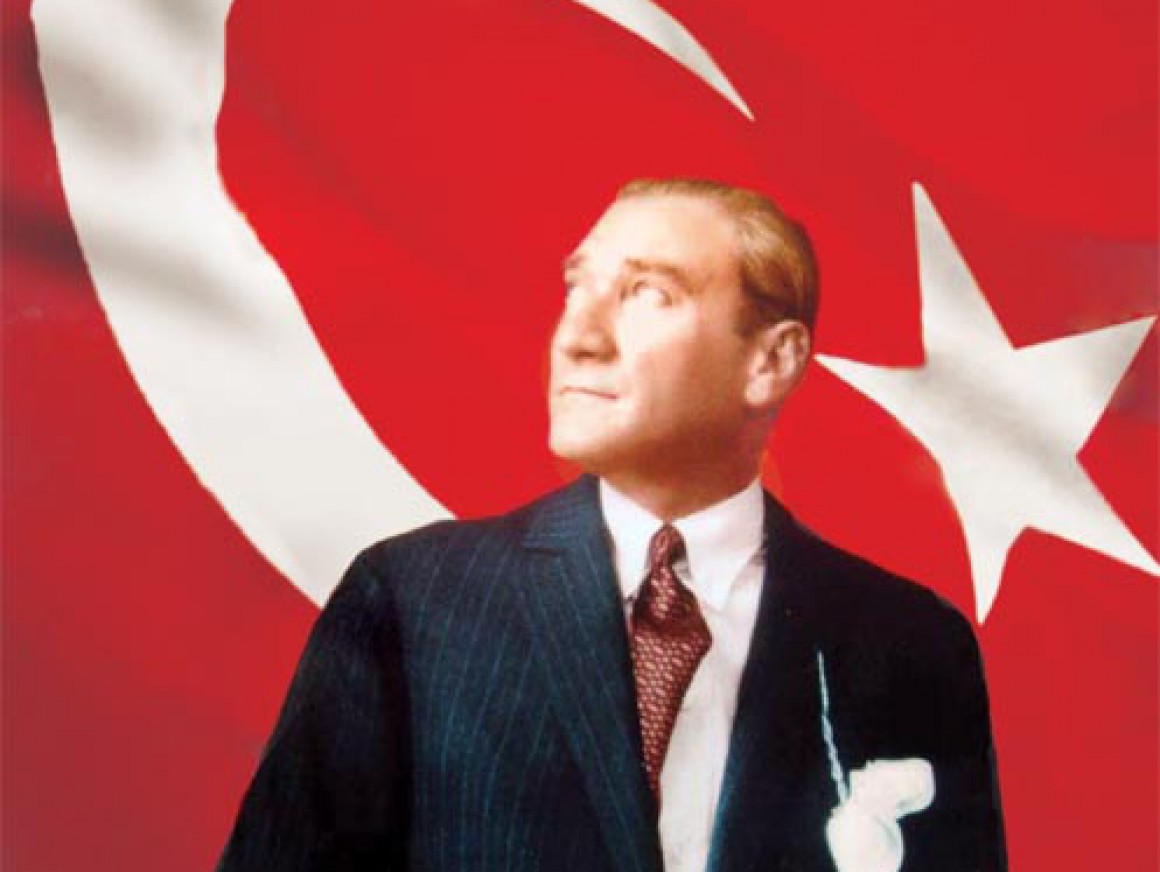
But thanks to poor planning and Ottoman resourcefulness, the Allies experienced a bitter defeat in one of the most brutal series of battles – 100,000 soldiers died on both sides in eight months of fighting. (One irony is that the British won the rights to name bathrooms in Turkey – rule WC!) It was a pivotal event, not only in the larger war, but also in the history of Turkey and Australia. The war gave Australians, arguably for the first time, a sense of Australian nationalism – hence the movie. And for Turkey, Gallipoli produced a military leader – Mustafa Kemal Ataturk – who would become the father of the Turkish Republic. History runs on unintended consequences.

Each year Australian and New Zealand tourists flock back to Turkey to commemorate the dead and participate in ceremonies (April 25) that honor this war. The Turks welcome the Aussies and the Aussies in turn honor the Turks. The reason for the latter has something to do with the exceptional maintenance provided to the military cemeteries that hold the deceased Australian and New Zealand soldiers (some of whom could not be buried until after Armistice). Like many military cemeteries, the neat rows of white grave markers, surrounded by closely cut grass and war monuments of various kinds, are moving in themselves.

But the epitaphs we read yesterday were as touching as they were puzzling. They were curious, partly because the biblical references were small compared to what someone might expect from British colonial culture of the Victorian era. We did see one – had to be a Presbyterian – which spoke of justification by faith and peace with God. Another one invoked the second petition of the Lord’s prayer fittingly. But the one that was the most moving was also the one devoid of religion (an impossibility I know for the neo-Calvinist). It read “my only darling boy.”

Maybe a creative grad student has already done this, but a dissertation on gravestone epitaphs might be a useful way to measure biblical literacy and religious conviction. If the student compared wars, he or she might find ascending or descending rates of religiosity.

Another Coincidence?

Islamic Calvinism.

Religion in Kayseri plays a central part in people’s lives. The city has a traditional reputation; the only place to get a drink is at the international hotel. But where in the past in Turkey business was dominated by the country’s secular elite, which firmly kept religion out of the boardroom, in Kayseri it has a central role.

And it seems to be a winning combination. Kayseri is booming. It holds the world record for the number of factories opening in a day – 190. The city boasts 50 out of 500 of the wealthiest people in Turkey.

But you would use never guess it walking on the streets of the city. There are few expensive cars, as ostentatious behaviour is frowned upon. Kayseri does have a rather puritanical feel to it. But that shouldn’t be a surprise, according Gerald Gnaus of the European Stability Initiative (ESI).

Gnaus recently published a report which draws a parallel with the 19th century Calvinists. Gnaus argues Kayseri buries the widely held belief that Islam and capitalism are incompatible.

“Many people in Western Europe — very serious thinkers too — have held that Islam is a fatalistic religion and that it suits a trading economy but not an industrial economy,” Gnaus says. “What we found in Kayseri is that on the contrary, the kind of characteristic traits that Max Weber attributed to the Calvinists – very hard working, very sober, not given to ostentatious displays of wealth – are the characteristic traits you find in businessmen in Kayseri.”

The term “Islamic Calvinism” caused a bit of a stir in Turkey, being angrily denounced by some in the Islamic media. But in Kayseri, most seemed quite happy with the label.

Mustafa Boydak is the head of the Kayseri chamber of commerce. He also runs one of the largest companies in the city Boydak. He also sees parallels with the 19th century puritans:

“In Calvinism there is this understanding that work is a form of worship, and Kayseri people share that understanding. Islam also teaches us to be tolerant, and open to new ideas, which is very important in business, and to people living here. But Christianity shares this ideal, and the influence of Christianity here is important. For centuries many Christian Greeks and Armenians lived here and were very involved in business, and this too has shaped people’s ideals.”

I’m not sure about the tolerance bit, though Mustafa Akyol makes as good a 2k case for Islam as any Western 2ker does for Calvinism. But when it comes to work ethic, the Turks would put many residents of Massachusetts to shame.

Turkey Bound

Was it a sign? Harmonic convergence? Coincidence? Providence? While dressing for church yesterday, I was listening to the local Hillsdale radio station which has a segment of religious broadcasting before devoting several hours to big band hits. Why station managers deem Frank Sinatra and 1940s music as appropriate formats for the Lord’s Day is as mysterious as my needing background sounds on the Sabbath. (My explanation is that I am a product of Jay and Ellen Hart who always had the radio on. Their station of choice was Family Radio. I can only listen to it through streaming audio. The transistor radio in the bathroom only receives the Hillsdale station.)

Anyhow, the song that played yesterday, the day before we leave for Turkey, was “Istanbul (Not Constantinople).” It is a 1953 swing-style song, with lyrics by Jimmy Kennedy and music by Nat Simon. The lyrics comically refer to the official 1930 renaming of the city of Constantinople to Istanbul. The song was originally recorded by the Canadian group The Four Lads on August 12, 1953. This recording was released by Columbia Records and reached the Billboard magazine charts on October 24, 1953, and it peaked at #10. It was the group’s first gold record. Another tidbit from Wikipedia: The Duke’s Men of Yale, an all-male a cappella group at Yale University, perform the song at the end of most of their concerts. The song has been in the repertoire of the Duke’s Men since 1953.

Here are the lyrics.

Istanbul was Constantinople
Now it’s Istanbul, not Constantinople
Been a long time gone, Constantinople
Now it’s Turkish delight on a moonlit night
(Oh) every gal in Constantinople
(Oh) lives in Istanbul, not Constantinople
(Oh) so if you’ve a date in Constantinople
(Oh) she’ll be waiting in Istanbul

Even old New York
Was once New Amsterdam
Why they changed it I can’t say
People just liked it better that way

So take me back to Constantinople
No, you can’t go back to Constantinople
Been a long time gone, Constantinople
Why did Constantinople get the works?
That’s nobody’s business but the Turks’

Doo doo doo, doo doo doo doo doo doo doo / ohhhhhhh ohh ohh ohh
Doo doo doo, doo doo doo doo doo doo doo / ohhhhhh ohh ohh ohh
Doo doo doo, doo doo doo doo doo doo doo doo doo doo / ohhhh ohh ohh ohh ohhh
Istanbul (Istanbul)
Doo doo doo, doo doo doo doo doo doo doo / ohhhhhhh ohh ohh ohh
Doo doo doo, doo doo doo doo doo doo doo doo doo doo / ohhhh ohh ohh ohh ohhh
Istanbul (Istanbul)

Even old New York
Was once New Amsterdam
Why they changed it I can’t say
People just liked it better that way

Istanbul was Constantinople
Now it’s Istanbul, not Constantinople
Been a long time gone, Constantinople
Why did Constantinople get the works?
That’s nobody’s business but the Turks’

Doo doo doo, doo doo doo doo doo doo doo
Doo doo doo doo doo doo doo doo

So take me back to Constantinople
No, you can’t go back to Constantinople
Been a long time gone, Constantinople
Why did Constantinople get the works?
That’s nobody’s business but the Turks’

Istanbul

You can listen here.

In further preparation for travel to Istanbul (not Constinople) we watched The Edge of Heaven last night after the evening service. It is a very good movie about mothers and daughters, fathers and sons, and the relationships between the Turks and Germans. Lots of Istanbul (and Bremen and Hamburg).

Did Evangelical or Liberal Protestants Have a Better Week?

First came the news of Mark Sanford’s victory in South Carolina’s First District to Congress. For anyone who remembers Sanford’s well publicized marital infidelity, it must have struck many observers as strange that evangelical Protestants — I hear South Carolina is thick with them — would return Sanford to public office. But they also had no problem with Newt Gingrich in the 2012 Republican presidential primaries:

This wasn’t the first time the Republican voters of South Carolina put fidelity to party over fidelity to fidelity. In the 2012 Republican primary, voters were reminded of Newt Gingrich’s admitted adultery and three marriages. His second wife spoke out just days before the vote. Gingrich won by 12.5 percentage points over the morally pure Mitt Romney. He won 45 percent of the evangelical vote, a group that has at times shown more than a passing interest in the morality of public officials. He won 46 percent of those who said that the religious beliefs of a candidate were very or somewhat important.

South Carolina conservatives may still say a candidate’s sins matter, but they aren’t voting that way. In fact, if you weren’t privy to the state’s strong social conservative history, you could almost mistake South Carolinians for city folk—people who vote for experience, policy, and political leanings and show a sophisticate’s relativism toward personal moral failings. These days, South Carolinians seem almost Parisian when they enter the voting booth.

Ross Douthat is having none of Sanford’s theological interpretation of his victory, nor is the columnist optimistic about what this election means for “family values,” once the brand of evangelical Protestant politics:

I’m not particularly surprised by that outcome: Sanford was the G.O.P. candidate in a conservative district, and voting on party rather than character is usually the path of least resistance for partisans on both sides. But the fact that South Carolina Republicans took that path, and made his swift and shameless comeback a success, is still a useful indicator of where the energy is on the right — and it emphatically isn’t with people who see the decline of marriage as a bigger issue for conservatism and America than the precise balance of power in the House of Representatives. Again, the preference among conservatives is obviously for stable marriages and family values and so forth — for the example set by the figures McArdle lists, rather than for Sanford-style shenanigans. But there apparently isn’t enough passion behind that preference at the moment to induce Republican voters to sacrifice even a single House seat on its behalf.

At the same time, this was not a complete win-win for evangelicals since it seems that Sanford himself is an Episcopalian (which suggests that evangelical Protestants are truly ecumenical and likely clueless when they vote according to their w-w, that is, if the lines between evangelicals and mainline Protestants still matter).

And then came yesterday’s news about Martha Mullen, the Virginia Methodist who found a place for Tamerlan Tsarnaev to be buried. When I heard her interview on NPR I could not believe — it moved me to tears (Edwardseans should be happy) — how Christian her motivation (but I’m not an Edwardsean and can’t see her heart) was. Here’s part of the transcript:

CORNISH: Now, you took it upon yourself to find a cemetery that would bury his body, and you don’t have a connection to his family, so why get involved?

MULLEN: Well, I was listening to NPR and I heard the story ongoing that he was unable to be buried and that people are protesting him. And it made me think of Jesus’ words: Love your enemies. I felt that, also, he was being maligned probably because he was Muslim.

And Jesus tells us to – in the parable of the Good Samaritan – to love your neighbor as yourself. And your neighbor is not just someone you belong with but someone who is alien to you. That was the biggest motivation, is that, you know, if I’m going to live my faith, then I’m going to do that which is uncomfortable and not necessarily that’s what comfortable. . . .

CORNISH: Martha, you heard about the story because of the protests. And did you have concerns about making this move that you would become the target of protests or people would have a real problem with what you were doing?

MULLEN: Well, I thought about that, but there’s a line in the Scripture that says whether we live or whether we die, we’re the Lord’s. And I feel like – I don’t think anything really horrible is going to happen to me. I think people are probably going to be upset and irritated and disagree with what this interfaith group has decided to go forward with, but I feel like it was the right thing and it’s important to be true to the principle of your faith.

Now words like these may be cheap, and Jesus’ words are certainly not obscure. But that it took a mainline Methodist to undertake what strikes me strikes me as something so obviously right was amazing, especially considering how many Americans (including Protestants of all kinds) were opposed to letting this terrorist be returned to dust. We do not refuse to bury persons our law enforcement system sentences to execution. So why we should try to prevent Tamerlan Tsarnaev from being buried, or even be suspicious of Martha Mullen or the owners of the cemetery that received the body, is dumbfounding. I know I may be naive about Islam thanks to a trip to Turkey, which is hardly the most representative of Muslim societies. But if conservative Presbyterians think that Paul Hill is not representative of strict Reformed Protestantism, is it not possible for Americans to imagine that Tamerlan Tsarnaev is not your average Muslim?

Then again, the United States has a tradition of moralism that insists, one strike and you’re in hell. The Boston bombings were truly heinous. But a civilized (even Christian) society refuses to abandon conventions like burial of dead bodies even for murderers. The lesson of Joe Paterno, who simply did not do enough to turn in a pederast and for that misdeed lost a chance to be considered one of the greatest coaches of all time, is a reminder of that moral standard. Who indeed can stand in that great day?

This Guy Needs His Own Blog – Part 2 (Gamble vs. Lee)

Brian Lee has some very helpful and wise reflections on his decision to open Congress in prayer. I call it a capitulation to the nation’s civil religion. I believe this is fair even though it hurts to say it because Brian is a good friend and a Reformed pastor whom I respect. It is fair because (I won’t give reasons for befriending Brian) civil religion is precisely the theme by which Brian frames his post-prayer considerations:

Civil religion is thick in America. “God” is on our money, and in the Pledge of Allegiance, not to mention in the Declaration of Independence. We regularly ask him to bless America at ball games. And every session of the U.S. House and Senate opens with a prayer.

Recently the question of civil religion became very concrete for me. I was asked, as a pastor in Washington, D.C., to serve as guest chaplain for the U.S. House of Representatives, and open that body with prayer. The question of “Whether and what sort of civil religion shall we have in America?” quickly became “Should I pray in the House of Representatives? If so, how?”

But Brian went ahead and prayed even though he remains torn about whether he should have prayed. The whole piece is worth reading but I highlight the best reason he gives for not praying (even though he did — it’s confusing):

2) The difference between Congress and church.

Before you file this under “most obvious argument ever,” take a moment to consider exactly what the essential difference is. A church is a particular worshiping community, a creedal body, because it prays to a particular God. When I pray publicly in church, I therefore pray in the first person plural. That is, I pray in common and on behalf of every member of that community. While guests are welcome to observe and join in, there is no presumption they must do so. In doing so I presume for all to whom we are praying, and how we are praying, and why we expect our prayers to be answered.

To whatever degree “Christian” may describe America, we are quite obviously not a creedal nation. Membership in Congress is explicitly not subject to a religious test; it is in this sense an anti-creedal body. It is therefore impossible for me to pray before Congress as I pray in church, on behalf of the assembled body, for Congress does not have an agreed-upon God. However, while I may not be able to pray on behalf of people who don’t share my faith, I can certainly pray for them. In this way, I occasionally pray for sick unbelievers when I’m invited to visit them in the hospital.

Christians must not presume false unity within a pluralistic group by praying in the first person plural on their behalf. If we do pray in such settings, we must pray as individuals, to a particular God, for the group. And indeed, this seems to me most consistent with the pluralistic character of our polity, that we retain our religious distinctiveness even as we enter the public square, instead of pretending as though there is none.

That difference and the pervasiveness of civil religion would have been enough for me (feeling all full of my abstract self) to decline. Another reason is one that Richard Gamble highlights in his book, In Search of a City on a Hill. That is, American Christians (especially conservative ones) have been way too silent about the state taking over Christian language and ideas. Gamble writes:

Today, 50 years after the city on a hill first appeared in modern political rhetoric and nearly 400 years since John Winthrop shepherded his flock to New England’s shores, Americans are left with a secularized metaphor, politicized by the Left and the Right and nearing the point of exhaustion. The metaphor has been forced to carry an impossible load of nationalist, populist and collectivist aspirations. Americans have inherited two political cities looming so large in the media, the political culture and even the church, that together they have eclipsed the historical Winthrop and the biblical Jesus. The biblical metaphor, appropriated by the Puritans and reinvented by modern Democrats and Republicans, has been transformed so successfully into a national myth that few can see or hear these words without all of their modern political meaning attached. Even many Christians, how might be expected to guard their property more vigilantly, argue over which national values the politicized city should stand for and miss the fact that they have lost their metaphor. They argue over which party ought to build the city, over whether Kennedy’s or Reagan’s vision best defines the city, rarely stopping to consider whether Jesus ever had America in mind in the Sermon on the Mount. Such is the power of civil religion in twenty-first century America. Even if Americans manage to convince themselves, in spite of the evidence, that John Winthrop envisioned a glorious future for American ideals and institutions, can they really convince themselves that Jesus intended the United States to take up his disciples’ calling as a city on a hill? Distracted by a contest between two early political cities, Americans forget that the original city on a hill was neither Democrat or Republican. It was not even American. (178-79)

In other words, most of the critics of 2k who fault the notion of two kingdoms for secularizing politics, or culture, or child rearing, wind up secularizing Christianity by making it serve ends that are common (and even profane). At least 2kers are up front about the secular and try to preserve the uniqueness of Christianity. The integralists, the ones who want to see all of life whole with everything Christian, dumb Christianity down.

And it is for the reason that civil religion is so hard wired in American political discourse that I would have preferred that Brian Lee decline the invitation to pray before Congress. If he could have editorialized before praying, and explained that he was praying only as a minister, praying for (not with) Congress members, then perhaps it would have been useful. But as it is I fear that the huge appetite of American civil religion will swallow up his good prayer and thoughtful post-prayer reflections.

The Incomparable Mencken

As part of my preparation to submit a proposal for a religious biography of H. L. Mencken, I ran across a back issue of Menckeniana which had Jonathan Yardley‘s talk at the 2010 Mencken Day. The book critic for the Washington Post, here is how Yardley described his first encounter with Mencken:

I was absolutely bowled over. The power, wit, and originality of Mencken’s prose seized me and shook me to within an inch of my life.

Yardley would eventually pitch a biography of Mencken but could not complete the project. In turn he encouraged Terry Teachout to pick up the task. Yardley concedes that Teachout wrote a better book than he could have. One indication may be this astute observation by Teachout about Mencken’s style and its journalistic genesis:

It is, in short, a triumph of style. The fact that this triumph was the work of a common newspaperman has long served to obscure its singularity, especially among academic critics. “The smell of the city room,” Charles Angoff wrote in 1938, “was in everything he put between book covers.” But what Angoff meant as deadly criticism is in fact central to Mencken’s appeal. It was the discipline of daily journalism that freed him from the clutches of the genteel tradition. The city room was for Mencken what Europe was for Henry James: the great good place where he became himself.

And what would a post on Mencken be without a jolt of that prose? Here is Mencken on the joys of newspaper work when he started to write:

I believed then, and still believe today, that it was the maddest, gladdest, damndest existence ever enjoyed by mortal youth. The illusion that swathes and bedizens journalism, bringing in its endless squads of recruits, was still full upon me, and I had yet to taste the sharp teeth of responsibility. Life was arduous, but it was gay and carefree. The days chased one another like kittens chasing their tails.

Unexpected Development

Converts to a communion may often display a zeal that old-timers find off-putting. In Reformed circles, we have the phrase “cage phase” to denote the over zealous and new Calvinist who expects every Reformed pastor to sound like Calvin and every congregation to be as rigorous the New England Puritans.

It turns out that Roman Catholics have their own problems with converts. One instance, largely forgotten (perhaps another indication of Vatican II’s epoch-making shift) was the exchange between Orestes Brownson and John Henry Newman. Both were converts, but Brownson, admired by some contemporary conservatives, was not impressed by Newman’s theory of development of doctrine. In fact, Brownson believed it would kill Roman Catholicism (which makes it odd that Jason and the Callers do not regard Brownson as the model convert). Here is a short sampling of what Brownson said about the idea of the development of doctrine:

. . . we could not accept Mr. Newman’s Essay, even ,if its theory were susceptible of a satisfactory explanation. It deserves to be excluded from every Catholic library for its unorthodox forms of expression, as scandalous, even if not as heretical, erroneous, or rash. Words are things, and used improperly by men of eminence, or with inexactitude, become the occasion of error and heresy in others. Not a few of the errors which have afflicted the Church have come in under shelter of loose or inexact expressions, which great and sometimes even saintly men have suffered to escape them. The vain, the restless, the proud, the disobedient, seize on them, ascribe to them a sense they will bear, but not the one intended by their authors, and lay the foundation for ” sects of perdition.” Sometimes even better men are deceived and misled, as we see in the case of Fenelon. One cannot be too careful to be exact in expression, or to guard against innovation in word as well as in thought, especially in this age, in which there is such a decided tendency to abandon the scholastic method for the rhetorical. The scandalous phraseology of the Essay is no charge against its author, writing when and where he did, but is a grave charge against the Essay itself.

Finally, we repeat, from our former article, that we object to the Theory of Developments the very fact that it is a theory. We see no call and no room for theories in the Catholic Church, — least of all, for theories concocted outside of her by men whose eyes are dim, and who have nothing but their own reason to work with. From the nature of the case, they are theories, not for the conversion of their authors, but for the conversion of the Church, — framed to bring her to them, not them to her. They can do no good, and may do much harm. It is natural for us to concoct them when out of the Church, for then we have, and can have, nothing but theories, and can do nothing but theorize ; but, if we are wise, we shall not attempt to bring them into the Church with us. The more empty-handed we come to the Church, the better ; and the more affectionately will she embrace us, and the more freely and liberally will she dispense to us her graces.

Lest anyone miss the implicit significance of this exchange for the future of Roman Catholicism and its conservative (or traditionalist) members, readers should know that some Roman Catholics believe that Newman prevailed and Brownson lost at Vatican II. Here is how one traditionalist puts it:

. . . Brownson foresaw the future danger should Newman’s theory become accepted in the Church. Unless his theory was renounced, Brownson affirmed, it would either ultimately lead Newman himself out of communion with the Church or, much worse, be wrongly absorbed into the Catholic Church (p. 1).

In fact, the latter happened. His “pioneer” work established the idea of the development of dogma as a principle later held by the Modernists. Taken up by the Progressivists, it was consecrated at Vatican II, invoked in both the Declaration of Religion Freedom and the Constitution on Revelation. (2)

Newman alleged he was simply showing that the Catholic Church of his time was in continuity with that of the Apostles and the Fathers. But Vatican II did what Brownson feared could happen – it used this ‘theory’ to justify new advances and actual shifts in doctrine, such as its teaching on religious freedom. Jesuit Avery Dulles singled out Newman as anticipating the thought of Karl Rahner “to the effect that every dogmatic proclamation is not only an end, but also a beginning.” (3)

Someone could object that this work was written when Newman was a Protestant, and, therefore, should be disregarded as irrelevant after Newman’s conversion to Catholicism. The objection would be pertinent if he had rejected its theories or buried it, as Brownson suggested. On the contrary, he offered the work to the public and continued to defend its thesis until the end of his life. Thus, the objection is invalid.

Most American Catholics have not read Newman’s suspect theological works, such as the Essay on Development of Doctrine. His fame and popularity rest on his letters and sermons on piety and religious devotion. Let those well-meaning Catholic take the time to read at least Brownson’s criticism of Newman’s Essay, and they may begin to question the orthodoxy of the “oracle from Littlemore.” They may also begin to wonder if the beatification of Newman, rightly called the Father of Vatican II by the progressivists themselves, has the underlying purpose of giving needed impetus to the Council at a time when dissatisfaction with it is significantly increasing.

These tensions within Roman Catholicism may be obscure to recent converts, as difficult to perceive as the real fault lines between conservatives and other varieties of Roman Catholic communicants. For instance, John Zmirac has wondered (a la Brownson about Newman) whether Protestant converts to Rome understand what happened at Vatican II or whether they can find their way to the genuine Roman Catholic liturgy:

7) The Novus Ordo Missae was crafted by an ecumenical committee (including Protestants) that aimed at Christian unity. In a creative compromise, the committee cut large sections from the Mass — those that made it screamingly obvious that the Mass was a sacrifice and a wedding. The committee also trimmed away many rituals designed to underscore those doctrines, adding other practices to boost the role of the laity and undercut the role of the priest.

These changes didn’t vitiate the sacrament, but they did cloud its symbolic and catechetical clarity. They also reduced its dignity, gravity, and beauty. The Dies Irae gave way to “Gather Us In.” Or, as then-Joseph Cardinal Ratzinger wrote: “In the place of the liturgy as the fruit of development came fabricated liturgy. We abandoned the organic, living, process of growth and development over centuries, and replaced it — as in a manufacturing process — with a fabrication, a banal on-the-spot product.”

8) The most important elements that distinguish the priest’s role from the people’s, and hence Catholic sacraments from Protestant prayer services, are the following: The priest facing the altar; the prayers of the old Offertory (which survive in the First Eucharistic Prayer); the exclusive claim of the clergy (priests and deacons) to handle the Sacrament; the all-male priesthood; and kneeling for Communion on the tongue.

9) Each practice we add to the liturgy that blurs the difference between the people and the priest adds to confusion about what the heck is going on up on the altar. It’s no surprise that after 40 years of liturgical “renewal,” only 30 percent of American Catholics still believe in transubstantiation. More troublingly, those who are receiving Communion rarely bother with the Sacrament of Penance. The old terror of blasphemy that was underlined by gold patens tucked under our chins gave way to a shrug and a smile as we take in our hands a wafer from a neighbor.

10) Dissenters from key Catholic doctrines of faith and morals took ruthless advantage of the hype surrounding the Second Vatican Council and the symbolic confusion sowed by radical liturgical changes — which seemed to signal, like a new flag flying over a country, a new regime in the Church. Maybe a new Church altogether. Some of these dissenters, like Archbishop Rembert Weakland, were also involved in creating the new liturgy itself.

11) That liturgy kept on metastasizing, “renewing” itself seemingly every year. The same bishops who pushed relentlessly for Communion in the hand, extraordinary ministers of Communion, altar girls, and standing for Communion were the men who appointed feminists and pro-gay, pro-contraception, and even “pro-choice” delegates to dissident conferences such as the Call to Action (1976). Such bishops also persecuted adherents of the old liturgy and clergy who preached Humanae Vitae. The same men repeatedly defied Pope John Paul II, who avoided a schism and decided instead to replace them as they retired with more faithful bishops. He mostly succeeded.

All of the above is simply, uncontroversially true. And in saner times, it would be none of a layman’s business. We have enough on our plates pursuing our own vocations and staying in a state of grace, and we really shouldn’t have to shop around for the least sacrilegious parish, or fight with our bishop’s religious education office against nuns who deny the Creed. But here we are, still gasping for breath as the smoke of Satan slowly lifts, and there’s no excuse for pretending the air has been clear all along. The Bride of Christ has been battered, hounded, and hunted by the Enemy — but she’s still standing, as we were promised. Now it’s our task to bind her wounds, repair the rents in her gown, and lovingly comb her hair.

Although Zmirac is no traditionalist, one Trad Catholic has picked up on the problem that Protestant converts post-Vatican II face when trying to adjust to and find a place within Rome’s traditionalism:

Catholic converts from Protestantism bring to the Church a certain mentality that can make it difficult for them to accept Traditionalist arguments in favor of restoring a lot of the discarded “externals” of our faith’s tradition. In the post I used myself as a reference point (being a revert to the faith from charismatic Protestantism) and explained how it took some time for me after my return to the Church to start seeing the beauty of Traditional Catholicism, and perceive that much had been lost by rejecting this beauty. . . . I deny that a convert from Protestantism is not as “good’ as a cradle Catholic; I did say (and I maintain) that a convert-from-Protestantism-mentality does color the way we see things once we return to the Church.

It is interesting, however, that John Zmirak . . . talks about the non-Trad confusion over apparent Trad fixation on “mere externals.” This is, I think, one of the central ideas of Traditionalism – that alleged inessentials were not as inessential as once thought.

I often wonder if Jason and the Callers got more than that for which they bargained. They have a lot to make sense of over there on their side of the Tiber. Here is how Boniface puts it:

Then why bother even pointing out the differences? Because the Catholic Church as a whole – Trad, non-Trad, liberal, mainstream, whatever – is in an identity crisis. Who are we, and what does it mean to be Catholic? What does a Catholic life look like? These questions of identity;,far from being useless and divisive, are I think some of the most important issues Catholics can examine. I tend to take the position that Traditionalism exemplifies a more perfect continuity with the fullness of Tradition than other non-Trad manifestations of the faith, and part of what I do here is defend that proposition against those who take a more negative approach to Traditionalism. We may disagree on what Catholic identity should look like, but let’s not say that these questions are not important; if only our fathers in the 1960’s and 1970’s had more of a concern for Catholic identity, we might not be in a liberal crisis.

Given Jason and the Callers’ covering their eyes to church history — ancient and recent, I am not sure they are up to the task of accounting for such developments. But they sure know they aren’t Protestant (as long as they don’t know about Brownson).

Development of Loophole?

While Jason and the Callers continue to lay it on thick with the Protestantism-equals-individualism-and-anarchy-and-Roman-Catholicism-represents-everything-that-is-glorious-and-certain meme, the history of Roman Catholicism continues to yield considerations that render Jason and the Callers virtually gnostic in their quest for a visible church. Today’s stroll into things to which Jason and Callers don’t pay attention is John Henry Cardinal Newman, the Blessed John Henry Newman by the Callers’ reckoning.

It turns out that Newman was not so keen on Pius IX’s efforts to raise the stature and authority of the papacy. He gave the “audacity of the papacy” a whole new meaning. Look, for instance, at his comments on the Syllabus of Errors:

What does the word “Syllabus” mean? A collection; the French translation calls it a “Resumé;”—a Collection of what? I have already said, of propositions,—propositions which the Pope in his various Allocutions, Encyclicals, and like documents, since he has been Pope, has pronounced to be Errors. Who gathered the propositions out of these Papal documents, and put them together in one? We do not know; all we know is that, by the Pope’s command, this Collection of Errors was sent by his Foreign Minister to the Bishops. He, {277} Cardinal Antonelli, sent to them at the same time the Encyclical of December, 1864, which is a document of dogmatic authority. The Cardinal says, in his circular to them, that the Pope ordered him to do so. The Pope thought, he says, that perhaps the Bishops had not seen some of his Allocutions, and other authoritative letters and speeches of past years; in consequence the Pope had had the Errors which, at one time or other he had therein noted, brought together into one, and that for the use of the Bishops.

Such is the Syllabus and its object. There is not a word in it of the Pope’s own writing; there is nothing in it at all but the Erroneous Propositions themselves—that is, except the heading “A Syllabus, containing the principal Errors of our times, which are noted in the Consistorial Allocutions, in the Encyclicals, and in other Apostolical Letters of our most Holy Lord, Pope Pius IX.” There is one other addition—viz., after each Error a reference is given to the Allocution, Encyclical, or other document in which it is proscribed.

The Syllabus, then, is to be received with profound submission, as having been sent by the Pope’s authority to the Bishops of the world. It certainly comes to them with his indirect extrinsic sanction; but intrinsically, and viewed in itself, it is nothing more than a digest of certain Errors made by an anonymous writer. There would be nothing on the face of it, to show that the Pope had ever seen it, page by page, unless the “Imprimatur” implied in the Cardinal’s letter had been an evidence of this. It has no mark or seal put upon it which gives it a direct relation to the Pope. {278} Who is its author? Some select theologian or high official doubtless; can it be Cardinal Antonelli himself? No surely: anyhow it is not the Pope, and I do not see my way to accept it for what it is not. I do not speak as if I had any difficulty in recognizing and condemning the Errors which it catalogues, did the Pope himself bid me; but he has not as yet done so, and he cannot delegate his Magisterium to another. I wish with St. Jerome to “speak with the Successor of the Fisherman and the Disciple of the Cross.” I assent to that which the Pope propounds in faith and morals, but it must be he speaking officially, personally, and immediately, and not any one else, who has a hold over me. The Syllabus is not an official act, because it is not signed, for instance, with “Datum Romæ, Pius P.P. IX.,” or “sub annulo Piscatoris,” or in some other way; it is not a personal, for he does not address his Venerabiles Fratres,” or “Dilecto Filio,” or speak as “Pius Episcopus;” it is not an immediate, for it comes to the Bishops only through the Cardinal Minister of State.

Development of doctrine, indeed, with a splash of Jesuitical casuistry?

I am not competent to know what Newman was up against in England, nor do I know the workings of canon law regarding a Cardinal who dissents from his pope. I don’t have the right paradigm (even if I do have the right chromosomes). But Newman hardly seems like the model of conservative Roman Catholicism, even if he does serve as a model of Roman Catholic reasonableness in the face of the Vatican’s attempt to double-down on its supremacy. In fact, Ian Ker’s biography of Newman gives much more evidence that the Cardinal was hardly the font of conservatism that some contemporary Roman Catholics assert. Just after Vatican I, Newman was figuring out how to reconcile himself to the doctrine of infallibility. According to Ker:

Privately, [Newman] confided to Ambrose St John that he would not know what to say to anxious enquirers if the Pope did in fact take advantage of what was “a precedent and a suggestion to use his power without necessity, when ever he will, when not called on to do so.” He was so concerned, [Newman] admitted, at the danger of an attempt to extend the definition, that “we must hope, for one is obliged to hope it,that the Pope will be driven from Rome, and will not continue the Council, or that there will be another Pope.” (656)

Ker adds that Newman’s hope was that things would get so bad they could not get any worse. In Newman’s own words:

We have come to the climax of tyranny. It is not good for a Pope to live 20 years. It is anomaly and bears no good fruit; he becomes a god, has no one to contract him, does not know facts, and does cruel things without meaning it. For years years past my only consolation personally has been in our Lord’s Presence in the Tabernacle. I turn from the sternness of external authority to Him who can immeasurably compensate trials which after all are not real. . . (659)

Some have tried to explain Newman’s views, though Jason and the Callers are not among them. It does make you wonder if the development of doctrine notion is really a way to explain away aspects of papal teaching that converts find troubling (a version of Protestantism within the Roman Catholic fold). It also raises questions about whether Newman really is a model for Protestant converts to Rome since you don’t find any of Newman’s reservations about the papacy among the Callers. And then we have the matter of Protestant “interpretation” and Roman Catholic “reception” of infallible teaching. If Jason and the Callers followed Newman’s example, they might be questioning the magisterium as much as Cumberland Presbyterians dissent from the Westminster Assembly.

Protestants and Assimilation, Republican Style

One more thought about republican forms of government and what they require of believers who would be citizens. Analogies between twentieth-century France and the nineteenth-century United States suggest that Americans demanded conformity from “outsiders” in ways comparable to the French more recently. The great complaint about Roman Catholic Irish and German immigrants was that their submissiveness to the papacy (as if), a foreign prince, would make them unworthy and unreliable republican citizens. The United States made similar demands on Mormons who had their own civil authority in the office of the apostle, who at least in the days of Brigham Young was also the governor of the Utah territory. For Utah to gain admission as a state, Mormons needed to abandon polygamy. Republicanism makes its demands.

Conversely, have Protestants had little trouble acquiescing to the republic’s norms? One thinks of the Huguenots, for instance, who assimilated pretty much wherever they went without the slightest whiff of the dissent that characterized their days of resistance in the Old World.

And then one thinks about the tradition of covenanting in Scotland and Ireland, a variety of Reformed Protestantism that earned the reputation for submitting to no one except king Jesus. A. T. Q. Stewart observed in 1977 that the Presbyterian “is happiest when he is being a radical.” He went on:

The austere doctrines of Calvinism, the simplicity of his worship, the democratic government of his Church, the memory of the martyred Covenanters, and the Scottish unwillingness to yield or to dissemble — all these incline him to that difficult and cantankerous disposition which is character of a certain kind of political radicalism.

Of course, the United States did not demand Covenanters to conform to republican norms to be assimilated. Instead, the Covenanters until around 1980 self-selected and opted out of the republic’s political life — no voting, no vows, no running for office, and no service in the military, a form of Reformed Protestant Anabaptism.

But with the exception of the ideals of sixteenth-century Scotland, Protestants came to terms fairly easily with republican government. The reason stems largely from their not having a state or monarch who was their ruler and the chief executive of their faith.

The lesson: most Reformed Protestants are 2K and they don’t even know it.

Christians Assimilated (but compromised?)

A terrific book review, now a little long in the tooth, of two books on Europe and its immigrant populations is worth pondering for a variety of reasons but it got me thinking specifically about the assimilation of Christians in a secular republic like the United States. Here is a striking passage:

PEOPLE WHO ASK whether better government policies could have made Muslim immigration to Europe less of a debacle tend to look at Britain and France as two ends of a spectrum of approaches. Britain has let immigrants go their own way. It has been multiculturalist, laissez-faire, tolerant of partial allegiances and unintegrated identities. If you are a Sikh policeman, you can wear your turban on duty. In immigration as in other matters, the United Kingdom is unusually disorderly and willing to run the risk that “parallel societies” will form; but it does offer immigrants more self-respect and freedom of religion. France, by contrast, favors the assimilatory pressures of the melting pot. It wants immigrants to embrace a single model of republican citizenship. France’s model may sound condescending and hypocritical, but at its best it can convince a newcomer that the country’s thousand-year-old history belongs to him as much as anyone. It is a fool’s errand to call either the French or the British approach “better.” Each is built out of thousand-year-old habits of political culture. But immigration experts tend to laud whichever of the two has led to riots less recently.

What was I thinking:

1) it is hard to assimilate people of diverse cultural backgrounds and religious heritages into a peaceful, moderately ordered, and free society. Americans often bemoan the size of the government, the disregard for morality, or the inconsistency of cultural expectations (myself included). But keeping very different groups relatively calm and peaceful is no mean feat (especially if you believe what Reformed Protestants do about human nature).

2) Where does the U.S. fall in this model? In some ways it looks more like its cultural grandparent, Britain. But we also have conformist expectations that resemble the French (which likely owes to our adopting a republican form of government under the influence of Enlightenment political thought).

3) If Christians who complain about the decadence of the U.S. only kvetch and do not riot, is their desire to follow God weaker than Muslims?

4) If Christians want non-Christians to fit in with American norms that stem from Christian convictions, are they doing the same thing as the French even though for religious as opposed to enlightened reasons?