The Queen's Speech

During the events surrounding the United States’ bicentennial, Queen Elizabeth took participated in a ceremony held in my beloved Philadelphia, the nation’s first capital. The Queen presented a Bicentennial Bell to the United States, with the help of strong assistants (likely overpaid and under worked members of one of the city’s unions). Her remarks were remarkable for their graciousness and wisdom, especially considering that soldiers and citizens on both sides of the revolutionary war died. The text of the speech (below) is also preserved at the wall of the bell tower in Old City Philadelphia, at the southeast corner of 3rd and Chestnut Streets. It is not a bad way to reflect on the significance of July 4th.

Remarks Of Queen Elizabeth II At The Presentation Of The Bicentennial Bell, July 6, 1976

I speak to you as the direct descendant of King George III. He was the last Crowned Sovereign to rule in this country, and it is therefore with a particular personal interest that I view those events which took place 200 years ago.

It seems to me that Independence Day, the Fourth of July, should be celebrated as much in Britain as in America. Not in rejoicing at the separation of the American Colonies from the British Crown but in sincere gratitude to the Founding Fathers of this great Republic for having taught Britain a very valuable lesson.

We lost the American colonies because we lacked that statesmanship “to know the right time, and the manner of yielding, what is impossible to keep.”

But the lesson was learned. In the next century and a half we kept more closely to the principles of Magna Carta which have been the common heritage of both our countries.

We learned to respect the right of others to govern themselves in their own ways. This was the outcome of experience learned the hard way in 1776. Without that great act in the cause of liberty performed in Independence Hall two hundred years ago, we could never have transformed an Empire into a Commonwealth!

Ultimately peace brought a renewal of friendship which has continued and grown over the years and has played a vital part in world affairs. Together we have fought in two world wars in the defence of our common heritage of freedom. Together we have striven to keep the peace so dearly won. Together, as friends and allies, we can face the uncertainties of the future, and this is something for which we in Britain can also celebrate the Fourth of July.

This morning I saw the famous Liberty Bell. It came here over 200 years ago when Philadelphia, after London, was the largest English speaking city in the world. It was cast to commemorate the Pennsylvania Charter of Privileges, but is better known for its association with the Declaration of Independence.

Today, to mark the 200th anniversary of that declaration, it gives me the greatest pleasure, on behalf of the British people, to present a new bell to the people of the United States of America. It comes from the same foundry as the Liberty Bell, but written on the side of the Bicentennial Bell are the words “Let Freedom Ring”.

It is a message in which both our people can join and which I hope will be heard around the world for centuries to come.

How to Account for the Casey Fixation

I have to admit that the details of the Casey Anthony case are still a mystery to me. I do see headlines occasionally at my Google homepage which mention proceedings in the trial. But when I log into Comcast to check email and see the electronic equivalent of the celebrity magazines at the supermarket checkout, I generally receive the news about Kim Kardashian’s latest revealing outfit or the best smelling actor according to Tom Hanks. All of which is to say that I’ve had a general awareness of the Anthony trial. But I dismissed it as the television news networks’ attempt to generate viewers during a slow news period.

That was the case until this morning when my wife and I had breakfast at the Jackson County Airport. The setting itself was eye-opening since this airport handles no commercial flights. People who own planes use the airport as one of many such places to land or take off, like boat and yacht owners use any harbor throughout the United States. I had never thought much before about private aircraft and personal flights. I must say it was fascinating to see three different planes land, their pilots park next to the terminal, and then meet the other pilots and passengers for a prearranged breakfast for eight. I didn’t know such a world existed.

And I also learned over breakfast that Fox News is devoting untold people-power to the Anthony trial. The volume was low, but the image on the large flat screen television in the restaurant was bright. And during the time it took to consume an omelet, I counted at least seven different talking heads discussing the concluding days of the Anthony trial. I even saw Greta VanSusteren walking outside the prison facility where Casey is an inmate and under constant surveillance for fear of a suicide attempt.

I understand, even without knowing the details, that this is a trial that titillates the prurient. A mother accused of killing her child would be enough for publicity. Throw in the irregularities of the Anthony family and you have a show that combines Jerry Springer and Judge Judy. It would be easy to ridicule the media and the public that consumes such yellow electronic journalism.

But I also have a hunch that Americans are fascinated by this trial because they also love to watch court room dramas and police shows, and because they have a inherent sense of justice. I know that the television executives who allocate resources and assign reporters are likely more interested in ratings, advertising revenue, and job security than they are in the law, merit, and fairness. But most Americans, I suspect, don’t care about the ephemera of television journalism but do care about wrong doers receiving their just desserts, and justice officials meeting out some semblance of due process.

If I didn’t know better, I’d suspect that what makes the Casey Anthony trial tick as a media extravaganza is natural law — that innate light of nature that gives all people a sense of right and wrong, justice and criminality, good and evil. It is not enough to prevent Comcast from teasing its customers with Kim’s latest dress. But it does account for what seems to be an insatiable interest by most Americans (at least) in law, order, and justice — from Nancy Grace to CSI.

Is This Where Neo-Calvinism Leads?

Our favorite PCA blogger (why? He’s more my age than Stellman) has adapted an older article from the Nicotine Theological Journal for his blog, calling it “Bye, Bye Kuyper.” Here is an excerpt:

Christians have come to believe that they worship God as much in their weekday jobs as they do on the Lord’s Day gathered with the congregation to pray, sing, read, and preach. In fact, Monday can be more important than Sunday. Sunday’s gathering is justified not by offering God acceptable worship and dispensing the means of grace, but only if it has some good effect on one’s work and leisure Monday through Saturday.

Ministers who lead in worship, preach the Word, and administer the sacraments are doing nothing more important than the politician or housewife (or husband) or professor of physics or laborer. In fact he may be doing something less important as he provides only the spiritual inspiration for those who really advance the kingdom. The Christian school is as important as the Church, perhaps more important if we want to prepare our young people to conquer the world for Christ.

The whole thing has led to a denigration of the traditional mission of the church. Churches are embarrassed to say that they have no more to offer than the ordinary means of grace. Ministers feel they must apologize if they do no more than preach the Word, administer the sacraments, show lost sheep the way to the fold, and help make sure the gathered sheep have the provision and protection they need as they make their way to the heavenly sheepfold. The world, it is contended, will rightly condemn the church if it does not see the “practical effects” of its existence (hence the church must distribute voters’ guides to promote Christian political agendas, create faith-based ministries to provide cradle to grave welfare, put on get seminars so everybody can communicate and have good sex, and offer concert seasons and art shows to provide the congregants and community with cultural experiences).

I know that not all Kuyperians approve of the way Kuyperianism has been domesticated. But what I am still waiting for is an account of neo-Calvinism that avoids the unhinging of the church that The Christian Curmudgeon describes. It is one thing to say that voters’ guides are a problem. It is another, though, to say that voting is kingdom work. It seems to me that Kuyperians are so reluctant to give in to the spirituality of the church that they end up making the world safe for both Jim Skillen and Jim Wallis.

Feed My Sheep — With Fast Food?

Over at Mere Orthodoxy a couple of posts have tried to identify two wings of the Young, Restless, and Reformed “movement” by applying the labels Old School and New School. Since many members of the PCA and OPC would even be unaware of this nineteenth-century division among American Presbyterians and what it meant, I was naturally intrigued by the diagnosis. I am also unpersuaded.

Both posts start from the premise that in an age of Facebook and blogging, social institutions and structures have become radically voluntary. I am not sure if this is true, especially when it comes to Christianity in the United States. Ever since the Constitution and ecclesiastical disestablishment, faith in America has been voluntary. Granted, the suppliers of religious services have expanded considerably and the golden age of Protestant denominationalism is no more. But even during the first half of the twentieth century, conservative Protestants were awash in a cornucopia of religious institutions, from Bible schools (as graduates of BIOLA should know, rights?) and faith missions, to independent congregations and celebrity revivalists.

Then comes the application of Old and New School categories by Kevin White to the Young, Restless, and Reformed:

The “Parachurch” or “New School” prefer more informal church networks and more emphasize the big conferences as the anchor points for the movement. They are more likely to identify as missional and to be part of independent churches or newer church connections. (e.g., Sovereign Grace Ministries, Acts 29, Mohlerite Southern Baptists) The parts of Reformed Theology that they emphasize are sovereignty and the doctrines of grace. You might call them the “Evangelical Reformed.”

The “Church” or “Old School” have a stronger emphasis on confessionalism and formal church polity. They more emphasize the visible church as a covenant community. The conventions are more of a supplementary fellowship opportunity. Like the 19th century Old School Presbyterians, they think revivalist, pietistic evangelicalism is a good thing, that can go hand-in-hand with the best of Protestant scholastic theology. They are more likely to emphasize Reformed ecclesiology as the context for the doctrines of grace and election. You might call them “Reformed Evangelicals.”

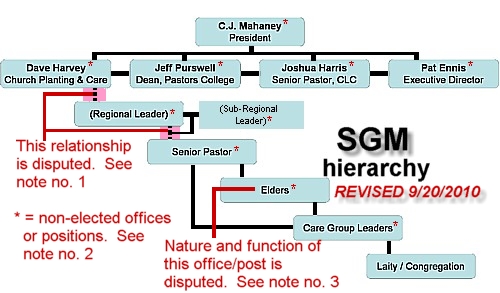
I sure would have thought that Acts 29 or Sovereign Grace were about as churched as the Young, Restless, and Reformed get. Those are communions of some kind. Together for the Gospel or The Gospel Coalition would appear more New School than Old School compared to the networks of congregations headed by Driscoll or Mahaney. In other words, I’m puzzled by this notion that an Old School element exists among the Young, Restless, and Reformed. Neither post mentions any examples of such an Old School contingent, a figure, or set of churches. I even wonder if the authors know about the communions that comprise the North American Presbyterian and Reformed Churches.

Mind you, the hope for a well grounded account of the church to counteract voluntarism is a welcome sign. White writes, for instance:

Once entered, membership and fellowship become a holy obligation and a familial bond, not to be broken lightly. The visible fellowship of the church is made (ideally) a living critique of unstable, self-defined voluntary culture.

Matthew Lee Anderson adds:

. . . voluntary associations of an arbitrary sort simply do not provide the stability and depth that we need for human flourishing. For that, we must look elsewhere, to God Himself, which is the first movement of the church and the fountainhead of virtue.

But when Anderson talks about the dangers of localism as a kind of nostalgia, I am not sure he understands the nature of the church. He says:

It would be easy to dismiss voluntarity and pine for a return of immobility and a small patch of land with a picket fence. But the promise of localism needs to be tempered by the perils as well. The soil is just as fallen as the pavement, and electing to reject the easy, voluntary associations of our late modern world for the involuntary ones of the local community may offer just as false a hope as the social networks did.

Well, actually, when it comes to food production, a patch of land is much better than pavement, superior in every respect. And spiritual food is best produced locally rather than corporately. It is easy to sound elitist when promoting the values of slow food over McDonald’s, and the work of a pastor is much closer to that of a slow food chef than a teenager flipping burgers at the local store of an international company. But closer to the truth is the similarity between a local pastor’s work and a mother’s. These officers prepare food (whether spiritual or physical) with a sense of what is good for the eaters. They use good ingredients and do so with a sense of what the sheep or children need nutritionally.

In which case, when Jesus told Peter to feed his sheep, our lord likely did not have in mind Peter going to the spiritual equivalent of McDonald’s to purchase burgers for the flock. Care, discernment, and preparation were as important to the feeding as the actual cooking. That leaves the megaconferences like TGC or T4G or even the Philadelphia Conference on Reformed Theology much more in the position of providing fast food than a home cooked meal since the cooks are not dining with the eaters, or spending time in between meals to see how the digestion is going or if the diet needs to be modified.

I an very glad to know that some Young, Restless, and Reformed are aware of Old School Presbyterianism. But I’d sure like to know which cooks they have in mind and what authorities are overseeing the kitchens.

Mark Driscoll Has Some 'Splaining To Do

A story about megachurch multi-site projects at Christianity Today contains an arresting quotation from the Mars Hill corporation. Driscoll’s church is planning to plant a church in Portland, Oregon and the justification runs as follows:

The city of Portland is known for many things, but the gospel of Jesus is nowhere on the list.

Let’s see, when I think of Seattle, does the gospel come to mind? Not really. All I can think of are corporations — Starbucks, the McDonalds of coffee, Red Hook beer, now part of one of the consolidated breweries, and Microsoft, the company responsible for inserting bullet points whenever I hit the indent key while using MS Word. I used to think of the Supersonics but that was before the National Basketball Association caved to the greed of one of its franchise owners.

All in all, the gospel is not one of the associations I make with Seattle. Maybe Mark Driscoll should turn Seattle into the Jerusalem of the Pacific Rim before setting up shop in Portland (where even congregations with ties to Tim Keller exist).

Orthodox Presbyterians Rival Gospel Co-Allies Enthusiasm for Enthusiasm

General Assemblies are not always like this but the recent OPC GA did assume more the character of a national preaching conference (of course, minus the celebrity pastors) than a regular meeting of the church’s highest judicial body. All of the presentations from the OPC’s standing committees included historical overviews as well as substantial edification and exhortation from God’s word. Don Poundstone, a retired minister and home missionary, rounded out the proceedings with his address at the Saturday night banquet in which he argued, based on Christ’s responses to Pilate (John 18), that the OPC at its best had been a witness to the truth of Scripture and had affirmed that Christ’s kingdom is not of this world. Video recordings of most of the presentations are available here. (Foreign missions talks are unavailable because of the sensitivity of information regarding several fields of ministry.)

Arguably, one of the most moving parts of the Assembly came on Saturday morning during the presentation by the Committee on Christian Education. Part of the proceedings included a talk by Rev. John P. Galbraith, a 98-year old minister who actually studied at Westminster when Machen was still teaching and went on to serve in a variety of capacities, including General Secretary of both the Committee on Home Missions and the Committee on Foreign Missions. Even before speaking — which revealed a man with a mind still sharp and a tongue still eloquent — Galbraith received a standing ovation from commissioners and guests. The first words out of his mouth were those of the apostle Paul, “I do not understand what I do. For what I want to do I do not do, but what I hate I do.” Galbraith then added, “And you applaud me?”

As near as I could tell, Galbraith’s deflection of applause characterized the week of presentations, devotionals, and sermons. Orthodox Presbyterians were glad to have reached the seventy-fifth birthday, but but they also knew that their history was not sensational or the product of their own faithfulness. (Self-promotion alert: see this point expressed in a different way here.) As cliched as it may have sounded, the truth that human accomplishments were less responsible than God’s grace for the OPC’s “success” was overwhelming sense among all those gathered. Part of the reason must have been that the last time the OPC met to throw a birthday party — in 1986 at Tony Campolo’s Eastern University — the church also voted itself out of existence. That is, the OPC accepted the invitation from the PCA to join and be received into the newer Presbyterian denomination. The proposal did not receive the super-majority of votes needed to be sent to the presbyteries for ratification. But a majority of commissioners in 1986 were willing to hitch their own and longer story to a communion that was less than fifteen years old. After twenty-five years of developments in both denominations, hardly anyone, at least in the OPC, regrets the rejection of J&R.

And so with quiet resolve and restrained joy Orthodox Presbyterians reflected on their past and heard preachers and missionaries recount the mighty deeds of God throughout redemptive history. It was by most accounts a time of great blessing for all who attended, and even prompted some to think that the OPC should sponsor its own national conference. Its speakers, like its history, would not be famous. And so the turnout would be light, insufficient to cover expenses. But those preachers would know their Bibles. Perhaps, just as important, they’d know their place — that the power of their words depends not on their own accomplishments or celebrity but on the God who gave them the word to proclaim.

Alliances, Ecumencity, and Being Reformed

The OPC’s 75th anniversary also coincided with the regular meeting of General Assembly. My pastor, whose energy consumes more calories in a day than I devour in the course of a week, wrote the daily report and perusing his summary reminds me of an important point about communions like the Orthodox Presbyterian Church. The pastor’s notes on Friday’s sessions included the report from the OPC’s Committee on Ecumenicity and Inter-Church Relations (CEIR), with a list of the various denominations with which the OPC has a relationship.

The OPC reserves the category of ecclesiastical fellowship for fifteen different churches, which include:

The Associate Reformed Presbyterian Church (ARPC)
The Canadian Reformed Churches (CanRef)
The Christian Reformed Churches in the Netherlands (CRCN)
The Evangelical Presbyterian Church of England and Wales (EPCEW)
The Evangelical Presbyterian Church of Ireland (EPCI)
The Free Church of Scotland (FCS)
The Presbyterian Church in America (PCA)
The Presbyterian Church in Korea (Kosin) (PCKK)
The Reformed Church in Japan (RCJ)
The Reformed Church of Quebec (ERQ)
The Reformed Church in the United States (RCUS)
The Reformed Churches of New Zealand (RCNZ)
The Reformed Presbyterian Church of Ireland (RPCI)
The Reformed Presbyterian Church of North America (RPCNA)
The United Reformed Churches in North America (URCNA)

According to the OPC’s rules for ecclesiastical relationships:

Ecclesiastical Fellowship is a relationship in which the churches involved are Reformed in their confessional standards, church order and life though there may be such differences between them that union is not possible at this time and there might be considerable need for mutual concern and admonition. It is to be implemented where possible and desirable by:

Exchange of fraternal delegates at major assemblies
Occasional pulpit fellowship (by local option)
Intercommunion, including ready reception of each other’s members at the Lord’s Supper but not excluding suitable inquiries upon requested transfer of membership, as regulated by each session (consistory)
Joint action in areas of common responsibility
Consultation on issues of joint concern, particularly before instituting changes in polity, doctrine, or practice that might alter the basis of the fellowship
The exercise of mutual concern and admonition with a view to promoting Christian unity
Agreement to respect the procedures of discipline and pastoral concern of one another
Exchange of Minutes (Acts) of the major assemblies
Exchange of denominational church directories (yearbooks)
Exchange of the most recently published edition of the confessional standards
Exchange of the most recently published edition of the (Book or Manual of) Church Order
Exchange of the most recent denominationally published edition of hymnals or Psalters

Runner up to ecclesiastical fellowship is a corresponding relationship, an OPC category into which eleven churches fall:

The Africa Evangelical Presbyterian Church
Free Church of Scotland Continuing
The Free Reformed Churches of North America
The Heritage Reformed Congregations
Independent Reformed Church in Korea
The Reformed Churches in the Netherlands (Liberated)
The Presbyterian Church of Brazil
The Presbyterian Church of Eastern Australia
The Presbyterian Church in Japan
The Bible Presbyterian Church
The Reformed Churches of South Africa

According to the rule book, a corresponding relationship is one in which:

. . . mutual contact with another church is undertaken to become better acquainted with one another with a view towards entering into Ecclesiastical Fellowship at some time in the not-too-distant future. It shall be implemented where possible and desirable by:

Exchange of official representatives at major assemblies
Joint action in areas of common responsibility
Consultation on issues of joint concern, particularly before instituting changes in polity, doctrine, or practice that might alter the basis of the relation
Exchange of Minutes (Acts) of the broadest assemblies
Exchange of denominational church directories (yearbooks)
Exchange of the most recently published edition of the confessional standards
Exchange of the most recently published edition of the (Book or Manual of) Church Order
Exchange of the most recent denominationally published edition of hymnals or Psalters

Finally, the last level of relationship is ecumenical contact and the OPC puts ten churches into this category:

Confessing Reformed Church in Congo
Presbyterian Free Church of India
Free Church in Southern Africa
Free Reformed Churches in South Africa
Gereja-Gereja Reformasi Calvinis
Gereja-Gereja Reformasi di Indonesia
Reformed Churches of Brazil
Reformed Churches of Spain
Reformed Presbyterian Church of India
Reformed Presbyterian Church North-East India

An ecumenical contact is a status reserved or denominations that belong to the International Council of Reformed Churches and .reflects an effort to follow the ICRC’s stated d purpose, “to encourage the fullest ecclesiastical fellowship among the member churches.”

It shall be implemented, as appropriate, by:

Meetings, both formal and informal, of delegates to the quadrennial meeting of the Conference
Welcome of official observers at the broadest assemblies
Communication on issues of joint concern
Mutual labors as members of the Conference in discharge of the purposes of the Conference

A couple of matters are worth highlighting about these lists and terms: 1) The OPC is often characterized as narrow and idiosyncratic but her ecclesiastical relationships extend well beyond the United States and (even) North America to places which U.S. parachurch agencies and alliances have no presence. 2) The list and definitions extend not to celebrity pastors but to actual churches.

All the more reason to associate the word, “reformed,” with another word, “church.” Without church, reformed makes no sense.

Which Father, Whose Children?

(TMI alert) I am inclined to follow the pattern established by my father in the Hart home of listening to Christian radio on the Lord’s Day. Since I listen to the regular radio during the week, listening to the “other kind” of radio on Sundays is a way to set the day apart. My wife believes it is a way to drive her batty. (Truth be told, it depends on how we’re getting along.)

So far I have now been through two shows on June 19, 2011, and wouldn’t you know, the theme is fathers and their responsibilities. (Why do mothers receive piles of gratitude on their day, but fathers hear challenges to own up to their responsibilities. It’s as if Mothers Day is gospel, and Fathers Day is law.)

The irony of the evangelical liturgical calender used to be much sharper three decades ago before Advent or Lent had become attractive to low church Protestants thanks to the growth of publishing on “spiritual disciplines.” A Reformed speaker could make some hay with the observation that Protestants won’t observe Reformation Day but they will devote Sundays in May and June to mothers and fathers. Back then Reformed Protestants in the Dutch tradition would also refer sometimes to their pastor as “dominie,” adding yet another layer of uncertainty about devoting one Sunday to earthly fathers. Now, with the liturgical turn by many Protestants, even some Reformed, the church calendar and Hallmark moments are speed bumps of front-end alignment ruining proportions on the way to lectio continuo preaching. But despite the appeal of churchly observances — it’s really neat to have an Advent Wreath — evangelicals will not let an annual Lord’s Day devoted to motherhood or fatherhood go. (At least, the Baylys are about motherhood and fatherhood ALL THE TIME.)

(Make it three shows in a row. Now I’m hearing Charles Stanley talk about what fathers have to do to keep their children in the faith — and he even worked in a shot at smoking and drinking.)

Don’t get me wrong. God blessed me with a remarkable father whose memory I cherish. But as a godly man he knew that Sundays were not about him or other men with children. He knew that Sundays were the day of only one father, the first person of the Trinity.

So here is a father’s day thought to keep it all in perspective:

What is thy only comfort in life and death?

That I with body and soul, both in life and death, am not my own, but belong unto my faithful Saviour Jesus Christ; who, with his precious blood, has fully satisfied for all my sins, and delivered me from all the power of the devil; and so preserves me that without the will of my heavenly Father, not a hair can fall from my head; yea, that all things must be subservient to my salvation, and therefore, by his Holy Spirit, He also assures me of eternal life, and makes me sincerely willing and ready, henceforth, to live unto him.(emphasis added for Hallmark customers)

Where’s Waldo (A Day After) Wednesday: Someone Needs to Call A Union Summit

Over at Justin Taylor’s blog comes word that Dane Ortlund has published an article on the relationship between justification and sanctification in the writings of Bavinck and Berkouwer. The summary point is as follows:

. . . these two Dutch Reformed thinkers are united in their understanding of justification as the self-conscious means of sanctification. The point is not that justification must be viewed (logically) as preceding sanctification rather than the other way round. Nor is the point that justification provides the ground for sanctification. Nor are they simply agreeing that sanctification must not be thought of as moralistic self-effort. On all this orthodox Protestant theology of various stripes is agreed.

Whether or not Ortlund is correct, his point about the priority of justification is one that union proponents may want to consider when arguing that the focus on justification is a form of Luther envy.

Ortlund goes on:

Bavinck and Berkouwer are making a more penetrating point. They understand that it is quite possible to decry self-resourced progress in holiness while retaining an unhealthy disconnect between justification and sanctification that sees justification as something beyond which one
‘graduates’ in Christian living. They argue that justification is to be seen as ‘settled’ in that the verdict is irreversibly delivered, yet justification is not to be seen as ‘settled’ in the sense that one must now therefore move on to sanctification. Justification is settled materially but retains critical ongoing epistemic import in Christian living. . . . We are justified by self-renouncing faith; we are sanctified by that same faith.

But this is not where Ortlund ends. For some reason he feels compelled to evaluate B&B Theological Enterprises according to standards established by Jonathan Edwards, where Ortlund finds the doctrine of union as the larger rubric for a holistic soteriology. He writes:

Justification is not only relevant for entrance into the people of God and for final acquittal, but, in between these two events, is the critical factor in the mind of the believer for healthy progressive sanctification.

This insight should, however, be placed into the larger soteriological framework of union with Christ. As has been argued by many in the tradition to which Bavinck and Berkouwer belong, union with Christ should be seen as the broadest soteriological rubric, within which both justification and sanctification are subsumed. . . . Had Berkouwer listened more closely to an American strand of his own Reformed tradition (especially Jonathan Edwards), he could have had the more balanced view of Bavinck while retaining his basic point as to the critical role justification plays in ongoing sanctification.

After reading this I’m left scratching my head once again when the subject of union comes up. First, I thought the Dutch Reformed were the most important for the recent recovery of the doctrine of union. Why they’d have to read Edwards to find the genuine article is not exactly the way I have heard the doctrine explained. Are union proponents reading from the same history of doctrine?

Second, a monergistic understanding of sanctification or union is of no great help in the Christian life the way it is commonly explained, as if a rebuttal to Rome’s charges of antinomianism. If union is the work of the Spirit, as is sanctification, how can Protestants claim that these doctrines or realities become motivations for good works? Rome’s logic was that once God does it all in salvation, a believer has no reason to be virtuous. Of course, Protestants rightly respond that the work of the Spirit is a reality that is conforming believers more to the image of Christ. Good works are inevitable such that those that are justified are also sanctified. But conformity to the image of Christ is not the work of a believer. It is the work of the Spirit.

In which case, Rome’s accusation stands. The Spirit-wrought nature of salvation in the Protestant scheme has an antinomian impulse and appearance because good works are not the substance or catalyst for any of the blessings of Christ’s work.

So I’m still wondering how great a breakthrough union is. It is a thought almost as befuddling where to find union in the history of Reformed doctrine.

The Law Coalition

While working on a talk for a conference last week hosted and attended by academic conservatives, I revisited the Manhattan Declaration. My point was that so many who think themselves conservative think they also take religion seriously by injecting faith into public affairs. But what ends up happening most often is that the complexities and depth of faith are sacrificed for the sake of a common cause, and that commonality is almost exclusively moral and comes from the Second Table of the Decalogue. Listen, for instance, to the way that the Manhattan Declaration’s writers (and the Baylys and Rabbi Bret may well want to follow along) turn the sanctity of human life, traditional marriage, and religious liberty into “the Gospel.”

We are Christians who have joined together across historic lines of ecclesial differences to affirm our right—and, more importantly, to embrace our obligation—to speak and act in defense of these truths. We pledge to each other, and to our fellow believers, that no power on earth, be it cultural or political, will intimidate us into silence or acquiescence. It is our duty to proclaim the Gospel of our Lord and Savior Jesus Christ in its fullness, both in season and out of season. May God help us not to fail in that duty.

Which gospel would that be exactly? The one professed by Southern Baptists, Roman Catholics, or Eastern Orthodox? J. Gresham Machen, in one of the quotations I used recently, might have a very different understanding of such joint endeavors:

I am bound to say that the kind of discussion which is irritating to me is the discussion which begins by begging the questino and then pretensd to be in the interests of peace. I should be guilty of such a method if I should say to a Roman Catholic, for example, wthat we can come together with him because forms and ceremonies like the mass and membership in a certain definite organization are, of course, matters of secondary importance – if I should say to him that he can go on being a good Cathoilc and I can go on being a good Protestant and yet we can unite on comon Christian basis. If I should talk in that way, I should show myself guilty of the crassest narrowness of mind, for I should be shoing that I had never taken the slightest trouble to understand the Roman Catholic point of view. If I had taken that trouble, I should have come to see plainly that what I should be doing is not to seek common ground between the roman Catholic and myself but simply to ask the Roman Catholic to become a Protestant and give up evertyhing that he holds most dear.

In other words, if Trent still matters, or the the Westminster Confession still matters, the signers of the Manhattan Declaration were in serious denial about the gospel.

What is also important to observe, though, is that they are also in mega-denial. For the law that they affirm, merely calling it the gospel, is only a few brief rules outlined in Scripture. For starters, God’s law also says a fair amount about worship and church polity that again would drive Roman Catholics and Protestants not together but apart — can you say the Mass, or how about apostolic succession? (The same can be asked of the Gospel Coalition — are they ignoring the means of grace, or ecclesiology in order to affirm a meager understanding of the gospel?)

So why is it conservative to affirm the law as revealed in holy writ during public debates if you don’t affirm all of the law? And how conservative can it be to rename the law “gospel”? This is not conservative. It is actually liberal and may border on being modernist.

But saying so makes you an antinomian and a secularist? Shazam!