More on the Temporality of the Church

And they say Roman Catholicism doesn’t change:

Traditionally, the Church’s teaching is encapsulated in something called the deposit of faith. The deposit of faith is the body of revealed truth in the Scriptures and tradition proposed by the Roman Catholic Church for the belief of the faithful. This “deposit” is protected and promulgated in three ways: Sacred Tradition, Sacred Scripture, and the Church’s Magisterium. Scripture and Tradition are the written and unwritten revelations of God, while the Church’s Magisterium forms a kind of living, interpretive arbiter of Divine Revelation.

The job of the Magisterium is to look at a given subject of faith or morals and tell the Christian faithful what the Church’s constant teaching has been. It is a living voice of Tradition in every subsequent generation. We are probably all familiar with the concept of the stool with three legs which represents how these three elements, Tradition, Scripture, and Magisterium interact.

The role of the Magisterium is to tell the faithful of each generation what the unchanging truths of the Catholic Faith are. If there is confusion about a teaching, the Magisterium is supposed to diligently seek the solution in the sources of faith and propound it faithfully.

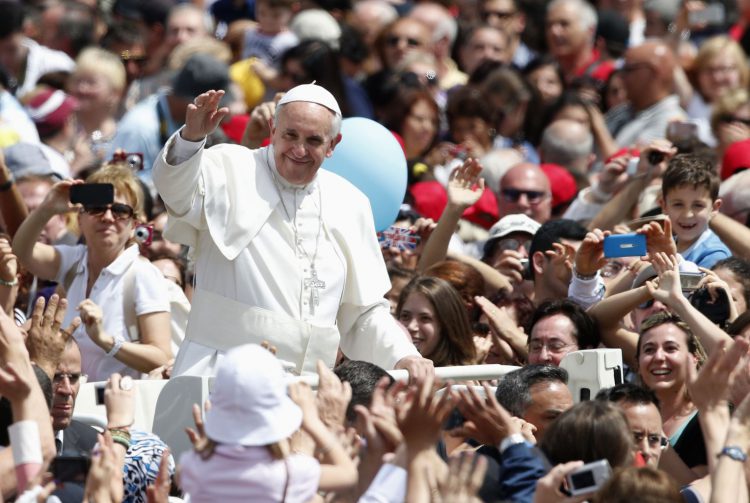
Contemporary Catholicism, however, seems to have adopted a new view of the Magisterium. Rather than authoritatively explaining the Church’s perennial tradition, the contemporary Magisterium has become the mechanism whereby a current pope’s priorities are transmuted into policy. A pontificate thus becomes more akin to an American presidential administration, where each successive president has certain policy objectives that are implemented through the machinery of the federal government. Instead of asking, “What does the Church teach?”, the question is increasingly becoming, “What is the policy of the current pontificate?”

Obviously every pope has had and always will have things that are of special importance to him; but what I think alarming is seeing the way the contemporary popes—beginning with Paul VI but really culminating in Francis—essentially endeavor to recreate the Magisterium with each successive pontificate to reflect their own personal pet-projects.

For example, look at the subject of Catholic social teaching since Vatican II. Paul VI gave us Populorum Progessio, the first post-conciliar Catholic social teaching encyclical. St. John Paul II gave us three, Laborem Exercens (1981), Sollicitudo Rei Socialis (1987), and Centesimus Annus (1991). Then Benedict XVI wrote Caritas in Veritate (2009). Not even a decade has passed and the Franciscan pontificate has promulgated Evangelii Gaudium (2013) and Laudato Si (2015). One gets the idea that each new pope is expected to issue his own social teaching encyclical—not because the needs of the Church require such an encyclical, but because it is expected that a new pope will want to put his own “stamp” on the Church’s body of social doctrine. It seems as if the way modern encyclicals are used is that they become occasions for each pope to re-evaluate a subject in light of his own particular interests. When a new social encyclical is issued, pundits’ mouths water as they wonder “What is this pope’s take on Catholic social teaching?”, as if it is each pope’s job to “shape” what comes down to them by offering a new “take” each pontificate. (Related: “The Curiosity of the Modern Papal Encyclical”, USC, June, 2015).

Yes, the Magisterium is treated the way a president would treat the federal government: as an outlet for his “policy objectives.” We even have gotten to the point where Pope Francis’ new amendment to the Catechism cites as its source a letter of the very same Pope Francis. How humble! And the letter is supposed to have been elevated to Magisterial authority by its inclusion in the Catechism. This seems kind of backwards, as originally the CCC was promulgated as a compilation of teachings already considered authoritative. A teaching was considered authoritative, and therefore included in the CCC; now a teaching is included in CCC and therefore considered authoritative. It all feels so lop-sided.

When churches want to address policy, reach for your double-edged sword.

Charism vs. Expertise, Hierarchy vs. Democracy

When the Second Vatican Council opened the Roman Catholic Church to the modern world, it may have bitten off more than it could chew. Not only would the late 1960s make the modern world look not so great (radical terrorists and sexual liberation) and so once again raise questions about the bishops’ discernment. But the modern world is one that is at odds with deferring to elites because of the latter’s authority, and with receiving the teaching of bishops simply by virtue of their office. When the church teaches something that collides with the views of a majority in the church or with the expertise of lay Roman Catholics, can church members and clergy simply expect conformity to church beliefs because the laity is supposed to pay, pray, and obey? In a pre-Vatican II world (more like a pre-1789) that might have been plausible. Rome’s episcopal and Vatican structures are more medieval than modern. But now that the church wants to come along side the modern world, that means accepting modern ideas like majority rule and authority based not on office but knowledge, learning, and study.

One of Bryan and the Jason’s contributors does not like what he sees in the Roman Catholic Church in the U.S.:

American Catholicism is certainly unique. A majority of American Catholics buck the global Catholic trend on capital punishment in their support the death penalty, according to the Washington Post. Yet it would be good for us to remember that we are but one, relatively small part of a global body of Catholics — about 6 percent.

We may be wealthier than Catholics in other parts of the world. We may even be better-educated than the average Catholic worldwide. But that doesn’t make us necessarily better Catholics, nor does it mean we have some outsized claim on commenting on church decisions. Indeed, a truer “conservative Catholicism” would be one that exemplifies humility and self-restraint, rather than self-importance and bluster.

Commentators in the coming weeks and months will continue to debate whether the pronouncement is a “legitimate development,” as one article termed it, or a “reversal,” as other commentators are labeling it. I’m uninterested in raising that debate here (although two of my favorite commentaries, demonstrating a more nuanced, reflective, and unemotive analyses of the decision, can be found here and here). Far more important, I offer, is the manner in which Catholics debate and analyze the Holy Father and the remainder of his pontificate.

One solution to the problem would be for popes and bishops to speak less and narrow their teaching to those matters related to the Creed. But since bishops continue to think they can teach about a whole range of issues and policies (thus substituting the temporality of the church for its spirituality), the church hierarchy will continue to run up against lay church members who may actually know more about banking or climate change or capital punishment than the pope.

And yet, the converts choose to double-down on papal audacity, when? When other church members have lost confidence in the bishops on matters of holiness and church discipline:

We are also angry. We are angry over the “credible and substantiated” report of Archbishop McCarrick’s abuse of a minor. We are angry over the numerous allegations of his abuse of seminarians and young priests. We are angry that “everybody knew” about these crimes, that so few people did anything about them, and that those who spoke out were ignored.

In addition, we have heard reports of networks of sexually active priests who promote each other and threaten those who do not join in their activities; of young priests and seminarians having their vocations endangered because they refused to have sex with their superiors or spoke out about sexual impropriety; and of drug-fueled orgies in Vatican apartments.

As Catholics, we believe that the Church’s teaching on human nature and sexuality is life-giving and leads to holiness. We believe that just as there is no room for adultery in marriages, so there is no room for adultery against the Bride of Christ. We need bishops to make clear that any act of sexual abuse or clerical unchastity degrades the priesthood and gravely harms the Church.

Wouldn’t Pope Francis be better off trying to remedy another sex scandal than to “develop” church teaching in a way that makes most nineteenth-century popes guilty of mortal sin (because they ran a state that executed criminals)?

One Week Ago in Belfast

Irish Presbyterians, a few Baptists, and an Anglican or two, endured me last week during a conference in Belfast, even though the setting and company energized me. I spoke about and led discussions of three of my books, which gave me a chance to revisit older writings. What follows is an excerpt from Recovering Mother Kirk that still seems pertinent:

Finally, however, the moment came. A man on the pastoral staff stood up and asked if Presbyterians are evangelical. He inquired not to put me on the spot, but because that was the question on most people’s minds. I could not duck it any longer even though I would have gladly tried to bluff my way through 1 Corinthians 14 for the rest of the hour.

Rather than answering the question, I did what most academics do in difficult situations — I tried to rephrase the question. So I responded that the better question to ask may be “are evangelicals Presbyterian?” At least this way of inquiring into the relationship between evangelicalism and Presbyterianism would not assume that evangelicalism is the norm for evaluating all forms of Protestantism, as if it is the purest or most biblical expression of Christianity. This question, I also explained, yielded a different answer from the one asking of Presbyterians whether they were evangelical. It might be obvious that certain Presbyterians are evangelical. But no one would expect evangelicals to be Presbyterian, for instance, to believe in limited atonement, baptize babies, or memorize the Westminster Shorter Catechism. And the reason for offering a different perspective on the relationship between evangelicalism and Presbyterianism was precisely the point of my talks. However it had happened, the common expectation in Presbyterian circles was for the heirs of John Knox and John Calvin to adopt the ways of evangelicalism so that Presbyterians would be indistinguishable from the likes of Billy Graham, Charles Colson or James Dobson. But ironically, Presbyterians would never think of expecting evangelical institutions such as Christianity Today or Promise Keepers to advocate Presbyterian beliefs and practices. This situation not only seemed unfair — sort of like expecting immigrants to the United States to give up their culture for the English language, fast food, and popular sovereignty — but, I argued, it was odd for Presbyterians, proud of their theological heritage, to settle for non-Presbyterians dictating what was most important about the Christian religion.

Since that weekend conference I have become convinced that in order to understand the relationship between the Christian faith and its practices the question, “are evangelicals Presbyterian?”, yields more insight than the query, “are Presbyterians evangelical?” Other questions would work just as well, for instance, “are evangelicals Lutheran?”or “are evangelicals Episcopalian?” And the reason is that evangelicalism presumes a simple set of theological boundaries, mostly preserving the deity and supernatural redemptive work of Christ in history and the human soul, coupled with a set of religious practices that are virtually independent of the church as a worshipping communion. To spot an evangelical one only need look for someone who carries a Bible (often in some sort of canvas or vinyl cover), leaves tracts, wears some expression of devotion such as a WWJD bracelet or t-shirt, witnesses to neighbors and strangers, refrains from cursing, and avoids such delights as tobacco and alcohol (though this is changing). In contrast, Presbyterians (along with other churchly forms of Protestants) possesses a lengthy creedal statement of Christianity, and this understanding of the faith is nurtured through a distinctive form of public worship, relies upon the ministry of clergy who preach and administer the sacraments, reinforced s through a system of church government, and expects Presbyterian families to engage in family worship and catechesis that buttress the ministry of the church. To be sure, this contrast may border on caricature. But it does point out the problems of asking whether Presbyterians are evangelical. If asking Presbyterians to be evangelical commits Presbyterian adherents to religious practices at odds with or different from the Reformed faith’s churchly piety, then being an evangelical may actually be a curse rather than a blessing. The reason is that Presbyterians intent on being evangelical may end up abandoning the very practices that have been crucial not simply to marking Reformed Christians but also that embody the convictions of Reformed theology.

Of course, devout Presbyterians who delight in thinking of themselves as evangelical have generally not thought through the relationship between theology and practice. All they usually mean by being evangelical is something as valuable as taking Christian commitment and the Bible seriously. The habit of asking Presbyterians to be evangelical is not designed to ignore such matters as Sabbath observance, public worship, or memorization of the catechism. And yet, the evangelical stress on conversion and believing in the Bible has obscured the range of practices that various Christian communions not only believe the Bible to require but also that fortify believers in their pilgrimage. It would be wrong to say that evangelicalism emphasizes faith while other forms of Protestantism stress practice, since evangelicalism has its own distinctive set of practices that flow quite naturally from its conversionist understanding of the Christianity. But it would not be unfair to say that the contrast between evangelicalism and, in this case, Presbyterianism is one between practices geared toward the freedom and creativity of the laity to express their devotion as they see fit and practices oriented toward the corporate church through its ministry of word, sacrament and discipline.

Although he is neither a Presbyterian nor an evangelical, the Duke Divinity School ethicist, Stanley Hauerwas, self-described as a high church Mennonite, has written insightfully about the relationship between faith and practice and the importance of embodying one’s religious convictions in visible and formal exercises. His basic point is that Protestantism, whether in evangelical or liberal versions, has become an abstraction, something that is disconnected from the communal life of the church, defined as a worshiping community. In other words, Hauerwas argues that doctrine, something dear to Reformed Christians, cannot be isolated from the practices of the church. He raises the stakes as well by asserting that the faith of Christians does not achieve genuine significance until it is embodied in the ways and patterns of participating in the life of the church. “What makes Christians Christian,” Hauerwas writes, “is our worship of God.” “Of course,” he adds, “the praise of God cannot be limited to ‘liturgy,’ but it is nonetheless the case that Christians learn how to be praiseworthy people through worship.” An evangelical rendering of Hauerwas’s point might involve the idea that the way Christians show their regeneration is by saving other souls. But this interpretation misses Hauerwas’s argument about the body of Christ as a worshiping community and the unique responsibilities given to those who minister word and sacrament. Identifying worship as the central and essential task of the church, Hauerwas observes, “counters some of the unclarity surrounding” ordination and embodies the presumption “that there is literally nothing more important for the Christian people to do than praise God.”

Reformed Christians may need to learn about the importance of the church and worship from a post-liberal Methodist ethicist because they have for so long thought of themselves as evangelical first and Presbyerian second. What is particularly clear is that Presbyterians who take their tradition seriously need to be reminded about the churchly and liturgical character of the practices that make good Presbyterians. Here it may be interesting to remember the answer to Question 85 of the Westminster Shorter Catechism which reads: “What does God require of us to escape his wrath and curse?” Aside from showing Calvinism’s gruffer side with the language of God’s righteous retribution for sin, the answer is revealing for what it says about the relationship between faith and practice. The response states: “To escape the wrath and curse due to us for sin God requires of us faith in Jesus Christ, repentance unto life, and the diligent use of the outward and ordinary means whereby Christ communicates to us the benefits of redemption.” Most evangelicals and conservative Presbyterians are on fairly familiar terms with the first two parts of that answer, namely, faith and repentance. Salvation requires trust in Christ for redemption and sorrow for sin, and without those two marks of regeneration churches have difficulty spotting a genuine profession of faith. But this answer’s addition of diligently attending the means of grace is a notion foreign to many Presbyterians under the evangelical influence. And so when the Shorter Catechism goes on to explain that the “outward and ordinary means” are word, sacrament and prayer, some proponents of the Reformed faith are caught off guard because they have so emphasized either conversion or doctrine that they have abstracted the Christian religion from the Christian practices the mark the body of Christ. Yet, if the Westminster Divines have anything to say about the Christian life, participating in the churchly practices of the word preached, the sacraments administered and corporate prayer is as necessary to a credible profession of faith as are trust in Christ and repentance from sin. (242-45)

Where Pietists and Presbyterians Differ on Christian Freedom

Chris Gerhz preached a pretty (pretty pretty pretty) good sermon (though if he’s not ordained to preach I hope he only exhorted) on Christian freedom around the time of our Independence Day holiday. What was particularly good was his understanding of freedom as a spiritual reality:

Paul assumes that Christians will be persecuted by those in power… and yet remain free in Christ. Meanwhile, we Americans know how easy it is to live in political freedom… and yet be a slave to our worst impulses.

In his greeting, Paul wishes the Galatians the grace and peace of “the Lord Jesus Christ, who gave himself for our sins to set us free from the present evil age” (1:3-4). If God kept a record of our sins, the psalmist asks, “who could stand?” But with God “there is forgiveness” (Ps 130:3-4). In Christ we are free from sin, free from everything we think, say, do, and leave undone that keeps us enslaved to the powers of this world (Gal 4:3,8-9) and in rebellion against God.

That was a recurring theme for Paul, as he took Christianity farther and farther from the place where it was born. In Acts 13 he tells people in the city of Antioch — both “Israelites, and others who fear God” (v 16) — that through Jesus “forgiveness of sins is proclaimed to you; by this Jesus everyone who believes is set free from all those sins from which you could not be freed by the law of Moses” (vv 38-39).

Before Christ, all we had to modify our behavior was law — and the carrots and sticks that come with following and breaking laws. But Paul teaches that the law cannot stop us from wanting to sin. Only faith in Christ can make us righteous in God’s eyes (Gal 2:16) and start to change our hearts from the inside out.

But some Jewish Christians — the so-called Judaizers — want Gentile converts to join them in continuing to honor the old laws — including the ancient one requiring men to be circumcised. Apparently they’ve persuaded some Christians in Galatia, because Paul says right away that he’s “astonished that you are so quickly deserting the one who called you in the grace of Christ and are turning to a different gospel” (Gal 1:6). If righteousness actually came through the law, “then Christ died for nothing” (2:21). “For in Christ Jesus,” he concludes. “neither circumcision nor uncircumcision counts for anything; the only thing that counts is faith working through love” (5:6).

That’s not the end of the story; that’s just Paul’s argument to one church. We need to read the theology of Galatians 5 alongside the history of Acts 15. Paul returns to Jerusalem to make his case to the leaders of the church, including Peter, who agrees that the Judaizers are “putting God to the test by placing on the neck of the disciples a yoke that neither our ancestors nor we have been able to bear” (v 10).

The church decides: we are free, no longer staggering under the burden of laws that can never really release us from the slavery of sin, but accepted as God’s children, free heirs of his promises.

That’s fairly close to what the Confession of Faith says about Christian liberty:

The liberty which Christ hath purchased for believers under the gospel consists in their freedom from the guilt of sin, the condemning wrath of God, the curse of the moral law; and, in their being delivered from this present evil world, bondage to Satan, and dominion of sin; from the evil of afflictions, the sting of death, the victory of the grave, and everlasting damnation; as also, in their free access to God, and their yielding obedience unto him, not out of slavish fear, but a childlike love and willing mind. All which were common also to believers under the law. But, under the new testament, the liberty of Christians is further enlarged, in their freedom from the yoke of the ceremonial law, to which the Jewish church was subjected; and in greater boldness of access to the throne of grace, and in fuller communications of the free Spirit of God, than believers under the law did ordinarily partake of. (20.1)

You might think that with that start, Gehrz is headed to an affirmation of the spirituality of the church. But you would be wrong:

But the kingdom he proclaimed isn’t just spiritual. We are free to proclaim a gospel that has consequences in this world. Freedom in Christ means that we are free to go forth in the name of the Messiah who was “anointed to bring good news to the poor… to proclaim release to the captives and recovery of sight to the blind, to let the oppressed go free, to proclaim the year of the Lord’s favor” (Luke 4:18-19).

Freedom in Christ is freedom to give freedom! To free those kept in the spiritual bondage of sin and the physical bondage of human trafficking, to free those mired in poverty and hunger, to free those oppressed for no reason other than who they are, what they think, or what they look like.

Free from sin, we are free to do what Paul says is the only thing that actually counts: “faith working in love” (or making our faith active in love).

For Presbyterians, though, freedom from the guilt and penalty of sin means submission to the powers that God has ordained. The gospel doesn’t lead to social activism or wars of independence; it nurtures living quiet and peaceful lives:

And because the powers which God hath ordained, and the liberty which Christ hath purchased, are not intended by God to destroy, but mutually to uphold and preserve one another, they who, upon pretense of Christian liberty, shall oppose any lawful power, or the lawful exercise of it, whether it be civil or ecclesiastical, resist the ordinance of God. And, for their publishing of such opinions, or maintaining of such practices, as are contrary to the light of nature, or to the known principles of Christianity (whether concerning faith, worship, or conversation), or to the power of godliness; or, such erroneous opinions or practices, as either in their own nature, or in the manner of publishing or maintaining them, are destructive to the external peace and order which Christ hath established in the church, they may lawfully be called to account, and proceeded against, by the censures of the church. (20.4)

And that’s a reason why Presbyterians should be a tad reluctant to hitch Christian notions of freedom to Independence-Day ideas about “life, liberty, and the pursuit of happiness.”

Machen Day 2018

Timely.

The undergraduate student of the present day is being told that he need not take notes on what he hears in class, that the exercise of the memory is a rather childish and mechanical thing, and that what he is really in college to do is to think for himself and to unify his world. He usually makes a poor business of unifying his world. And the reason is clear. He does not succeed in unifying his world for the simple reason that he has ho world to unify. He has not acquired a knowledge or a sufficient number of facts in order even to learn the method of putting facts together. He is being told to practice the business of mental digestion; but the trouble is that he has no food to digest. The modern student, contrary to what is often said, is really being starved for want of facts.

Certainly we are not discouraging originality. On the contrary we desire to encourage it in every possible way, and we believe that the encouragement of it will be of immense benefit to the spread of the Christian religion. The trouble with the university students of the present day, from the point of view of evangelical Christianity, is not that they are too original, but that they are not half original enough. They go on in the same routine way, following their leaders like a flock of sheep, repeating the same stock phrases with little knowledge of what they mean, swallowing whole whatever professors choose to give them and all the time imagining that they are bold, bad, independent, young men, merely because they abuse what everybody else is abusing, namely, the religion that is founded upon Christ. It is popular today to abuse that unpopular thing that is known as supernatural Christianity,
but original it certainly is not. A true originality might bring some resistance to the current of the age, some willingness to be unpopular, and some independent scrutiny, at least, if not acceptance, of the claims of Christ. If there is one thing more than another which we believers in historic Christianity ought to encourage in the youth of our day it is independence of mind. (What is Faith? 16-17)

If Not The Wire or The Crown, How About Wild Wild Country?

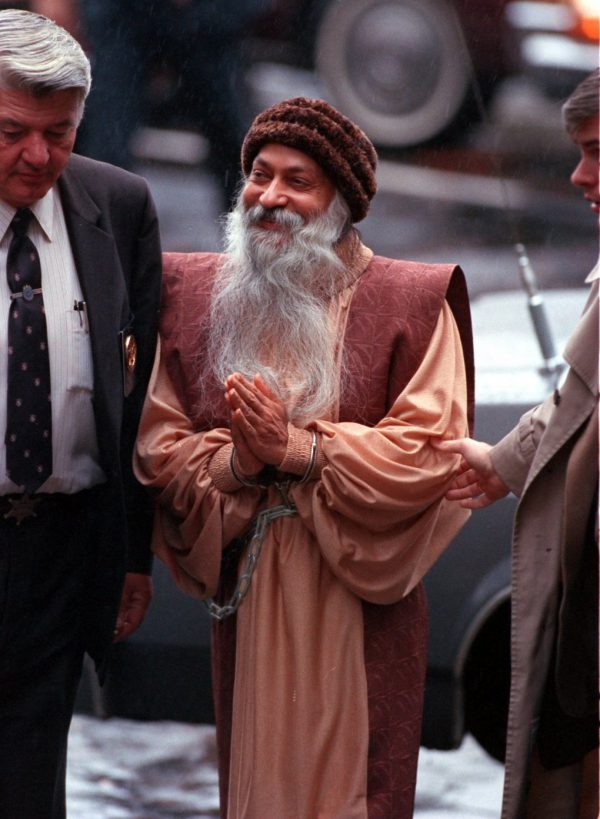
The Netflix series on the Rajneeshee group that took over a small town in the high Oregon desert is fascinating on many levels. One of those is whether contemporary Oregonians would be as opposed today to a fringe religious group lead my a man of color as they were in the 1980s.

To Sojourners‘ credit, you can count on them to side with the underdog:

Encoded in the U.S. Bill of Rights is the belief that while governments must be secular, communities are free to practice any faith they wish to uphold. But in Antelope, freedom of religion came on a condition of familiarity — people only accepted what they knew, while everything and everyone else was seen as a threat.

And I wonder, would bigotry have ever played the lead if Osho’s teachings were Christian in nature? Would any of this have played out the way it did if Rajneeshees weren’t viewed as being “the other?”

Strangely the site of Rajneeshpuram is now a Christian Young Life camp where kids arrive each summer to learn about Jesus Christ.

“After the Rajneeshees left … a billionaire developer from Montana … bought the ranch and ended up gifting the thing to Young Life. They call them camps. It’s more like a resort to me … it’s kind of like a cult, too,” John Silvertooth, the then mayor of Antelope, says.

“They’re not perfect. But they’re much better neighbors than the Rajneeshees.”

But Ma Anand Sheela remains unapologetic to this day.

“I would like to say, ‘People of Oregon… think yourselves lucky that this opera came your way,’” she says.

Imagine saving some of that empathy for Liberty University and not viewing Jerry Falwell, Jr. as a threat.

I can’t.

In That Church with This Editorial?

As much as the world of Roman Catholicism remains mysterious, this excerpt from Commonweal seems like a case of changing the subject. At a time when many Roman Catholics are wailing and gnashing their teeth over the latest sex scandal (the case of Theodore McCarrick), the editors at Commonweal decide to keep the attention on President Trump:

The mesmerizing farce of the Trump administration —its scandals, lurid intrigues, and flagrant lies—can easily distract us from the many ways this president and his party are making life harder for vulnerable Americans. While we all attend to the latest antics of President Twitter, his appointees and congressional allies are quietly punching holes in the safety net that protects millions of people from destitution.

One way the GOP is trying to deprive the poor of public assistance is by imposing strict work requirements on the tenants of public housing and recipients of Medicaid. In January, Seema Verma, who runs the federal Centers for Medicare and Medicaid Services, announced that the Trump administration would begin allowing states to require most non-disabled adults to work as a condition of Medicaid coverage. In late June, a few days before the first such work requirement was to take effect in Kentucky, a federal judge blocked it, ruling that the Trump administration had been “arbitrary and capricious” in approving Kentucky’s plan without making sure it was in keeping with Medicaid’s stated purpose of “furnish[ing] medical assistance” to the poor. “The record shows that 95,000 people would lose Medicaid coverage,” the judge wrote, “and yet the secretary [of Health and Human Services] paid no attention to that deprivation.” The judge was right, but he may yet be overruled by a Supreme Court too solicitous of states’ rights and too deferential to executive authority.

Now, it could be truly that the scandal of Trump is much more momentous than the allegations against a cardinal and former archbishop of The District. But if you believe in the world to come and that the church, unlike the United States, is the institution that is best equipped to get people into heaven (or purgatory for the righteousness-challenged), wouldn’t the story of one of the apostles’ successors be a bigger deal than a depraved POTUS’ welfare policy?

Again, I don’t know Commonweal as well as I might, though I have read and used many of its essays and columns about the Roman Catholic Church for my own writing and teaching. It is a readable magazine with thoughtful writers (I could do without E. J. Dionne) on a variety of subjects, from the arts to church life.

The other problem is one of jumping on the bandwagon. With all the kvetching about scandalous priests and lack of accountability for the bishops, do the editors at Commonweal have anything new to say?

At the same time, the allegations surrounding Theodore McGarrick and its implications for Rome’s oversight are so potentially toxic that one would think editors of a Roman Catholic publication would want to put some distance between themselves and their hierarchy.

Meanwhile, Bryan and the Jasons got zip, nada, zilch.

I Understand The Wire, but The Crown?

What should we stream on Netflix or Amazon Prime? Should we do what the Puritans did (even though they didn’t have wifi)?

Here’s one piece of advice on what to watch:

Does this [movie] increase my love to the Word of God, kill my sin, and prepare me for the life to come?

Remember that this world is not our home. The fact that we are forgiven sinners, purchased by Christ and bound for heaven should impact every aspect of our lives.

Additionally, we know from Scripture that we have an adversary who is determined to take Christ’s soldiers out of the fight. What soldier would spend time in activities that weaken his armor?

Be critical of the choices you have when deciding what to watch. Does this movie help you to better appreciate the truths expressed in Scripture, or is it void of redemptive elements? Does this show encourage you to snuff out sin in your life, or does it entice you to see how close you can get to the flame without getting burned? Does this film make you long for God’s kingdom, or does it merely increase your desire for the things of earth?

Okay. I can understand (and always have) why some people won’t watch The Wire. As much as I appreciate the show, I don’t recommend it to all Christians. It’s like meat offered to idols. Some people can’t handle it (and those who can aren’t superior, just different).

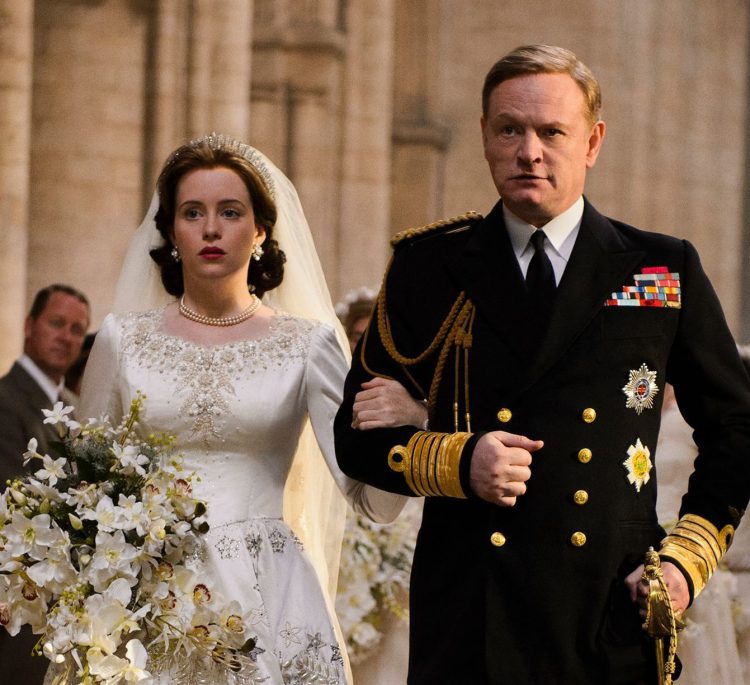
But The Crown? Why not watch a series that is highly suggestive about the English monarchy and its responsibilities, recent British history, the nature of British politics and the decline of Britain’s empire, not to mention very revealing about human nature (nor to mention exquisitely accomplished). None of this is particularly edifying or redemptive. The Crown doesn’t make me a better Christian.

But God is not merely a redeemer. He’s also the creator and that means — doesn’t it? — he’s also involved with and oversees the non-redemptive parts of human history. In that case, watching The Wire and The Crown makes me a better human being because they help me understand God’s creation and providence.

If you only take spiritual cues from the Puritans, you’ll have Christian duties figured out (perhaps) but you’ll still need to get a life.

What Rome and Mainline Protestants Have in Common

Fear of being small and on the margins.

The most poignant part of Ross Douthat’s new book on Pope Francis and the crisis over remarriage and divorce is the admission that to be large and influential, Roman Catholicism cannot demand too much from its adherents. Douthat uses several episodes from church history to put the current controversy in perspective and one of those was the seventeenth-century conflict between Jansensists and Jesuits. Jansenism lost not because they laced “theologically decisive argument,” “brilliant” exegesis, or a persuasive interpretation of Augustine’s thought. The problem was that Roman Catholicism would not survive as a global faith on Jansenists’ grounds. Here he quotes Leszek Kolakowski (who wrote a book on the controversy):

In the new world, full of novelty and excitement. . . Christianity had to mae itself, if not “easy,” at least much easier, in order to survive. One could not resurrect as a universal norm the ethos of the apostolic time when the faithful lived in the shadow of imminent apocalypse. But that is precisely what the [Jansenists] tried to do — to their doom.

One way of putting that is to say that to ask Christians to live as if pilgrims and exiles, as if this world is not their home, is too much, even if that’s exactly what Christ and the apostles taught.

Douthat adds that this — the gap between rigor and accommodation — may be why Francis will wind up winning:

…history’s likely verdict on this era in the church would be that Pope Francis had understood, as his critics do not, what the Catholic faith must accept to move forward and continue preaching Christ. Like the Jansenists before them, with their desperate quest for purity in a changing world, the “more orthodox” church of today’s conservatives could only be a sect, not a universal faith, so great is the gap between our own new world and their kind of rigorism. So the faith must change, and in the changing, the conservatives must diminish, and like the Jansenists before them, lose. (To Change the Church, 167, 168)

What this says about why conservative churches are growing is anyone’s guess. And whether its a consoling view for Protestants who operate in micro-communions may be tempting, but pride in smallness is a danger also.

What it does explain is the consolation that many Roman Catholics take from that 1.2 billion number. It is encouraging apparently to belong to something big (like those who follow Tim Keller on Twitter). But size has its cost and one of those debits is faithfulness. The current Vatican and many others in the church want Roman Catholicism but not too much.

I May Come to the Garden Alone, But Stay (in part) Because of Who’s There

Is it okay for conservative Presbyterians to talk about the perseverance of the saints in terms of social psychology? Not exclusively, but at least a little? The idea is that we certainly depend on the work of the Spirit to endure hardships and doubts. But what if the work of the Spirit includes the people around us, in our homes, congregations, friendships, social networks?

Part of what got me thinking about this was an exchange a while ago between Glenn Loury and Steven Teles about the former’s Christian background and how he experienced tensions between the fairly unsophisticated faith of his charismatic congregation and the intellectual cast of his peers at an Ivy League university. This was not simply a question of faith versus reason. It was one of whether Loury knew other academics who were Christian and, by virtue of associations with them, make his own Christian belief plausible. Here’s a link to that conversation.

These thoughts returned after reading Tommie Kidd’s post about Philip Jenkin’s reflections on fertility and religiosity. First Jenkins (via Kidd):

… there is an inverse relationship between the fertility rates of a community and that society’s degree of religious fervor and commitment. High fertility societies, like most of contemporary Africa, tend to be fervent and devout. Conversely, the lower the fertility rate, and the smaller the family size, the greater the tendency to detach from organized or institutional religion. That shift from high to low commonly takes place in a short time, a generation or so. Fertility rates thus supply an effective gauge of trends towards secularization. What follows is a bare sketch, but I will deal with it in much greater detail in a book that I am currently working on–especially on issues of causation and correlation.

The classic example of demographic/religious change is modern Europe. Not coincidentally, the Europe that has become so secular since the 1960s has also, in these same years, pioneered an epochal demographic revolution of historically low fertility rates. Those rates are at their lowest in such countries as Spain and Italy, where they stand today around 1.3 or 1.4, and they have dipped well below that.

(Ahem. What am I missing about Humanae Vitae, Spain, and Italy?)

Then Kidd:

Religious adherence does have a lot to do with kids. In spite of horror stories about how many youth group kids “leave the faith,” people who took a break often come back into church when they get married and start having kids. Anecdotally, I know of parents who readily admit that they only go to church for the sake of their kids. I recently had a conversation with someone who said they would not go to a certain church because of a lack of children and children’s programs. My family would certainly have to re-evaluate our involvement at our current church if we felt like their programming for teenagers was inadequate (thankfully, it is terrific).

I too know of people who became pillars of Reformed congregations after having kids and recovering the faith that they had mainly abandoned during young adulthood.

But the point I am raising goes beyond families and child rearing. It has to do with the people with whom we hang out and how they keep us in the faith. You may have a doubt or two, but because you know other folks for whom these thoughts are not troubling, you may be inclined to go with the flow until you find a resolution. Conversely, without people in your faith tribe who reinforce your beliefs by virtue of their smarts, humor, outlook, sartorial display, or friendship, if you hit a period of doubt, are you more willing to consider unbelief?

Our dependence (if that’s not too strong) on other believers need not be at odds with the work of the Spirit. After all, the Spirit is also behind providence, which are God’s most “holy, wise, and powerful, preserving and governing all his creatures and all their actions.”

So it’s not social psychology or pneumatology. It’s both/and, a win win.

Or maybe not.