Autonomy and Theonomy Again

If you don’t grant autonomy from religious authority to the political realm (including to political actors to behave in ways different from religious duties), do you wind up with Omar Mateen? Adam Garfinkle thinks so:

… defined properly, there just isn’t very much Islamist ideology. As that term is commonly used in the West, at a minimum an ideology needs to specify: some ideal political economy; some ideal relationship between society, state, and authority; and some ideal relationship between a given society and the world outside it. There is nothing special in these regards about current Islamist thinking. There are a few innovations of note that distinguish it from traditional Islam—the very strict segregation of the sexes in public spaces; the insistence that non-Muslims cannot hold public office; the re-merging of religious and temporal authority in the caliphate—but there are too few and too marginal to create much of a difference from the standard traditional Muslim understanding of the relationship of religion and politics. Hence, for example, the supremacist assumptions of Islamism are also characteristic of mainstream traditional Sunni Islam, making it impossible for us to “message” against it without alienating Sunnis who are not our enemies and who are critical extent and potential allies.

This reflects the key fact that there is nothing specifically ideological—again as we understand the term—about Islamic attitudes about the intersection of religion and politics. Neither Islamist nor Islamic “ideology” is commensurate with any system of Western political ideas. Liberalism as the epitome of the Western way of thinking about politics is based on deeper philosophical currents, but it is not a mere lesser-included case. It has its own weight, its autonomy, its own discourse. The political world is a lesser-included case within Islamist (and Islamic) thinking. It is not autonomous but derivative. It does not have its own credentialed authorities and discourse, only the authorities and discourse of the clergy whose concerns far transcend politics.

Islam, in other words, has little capacity to develop the spirituality of the mosque. Christians who oppose the spirituality of the church should be very careful.

Modernity is Biblical

I understand that many think the modern world has frustrated human flourishing, but what happens if the basic ingredients of the modern West that are supposedly the fault of the Reformation are actually medieval?

According to Richard Landes (Heaven on Earth), traditional societies are organized by a “prime divider,” a boundary between elites and commoners. He follows Ernest Gellner in called these “agro-literate” societies, since that phrase names two key technologies that mark the division. More generally, “Elites construct prime dividers along four major lines: legal privilege, stigmatization of manual labor, restricted access to the technologies of knowledge, and weaponry— all imposed by potentes who possess ‘honor’ and ‘status’” (216).

Modernity is a product of civil polities that undermines these prime dividers. Landes isolates four main elements in the formation of an alternative social order:”isonomia [equality before the law], widespread literacy, dignity of manual labor, and positive-sum attitudes that transcend honor-shame dynamics” (227). He discovers these in “the communes of eleventh-century Europe, the peasant rebellions of the late Middle Ages (e.g., England, 1381) and early modern period (e.g., Germany, 1525), the Puritan Revolution of the seventeenth, the American and French of the eighteenth, and the Socialist and Zionist movements of modern times.” Each “made appeals to equality before the law, all spoke of manual labor as a unique source of dignity, all leaned heavily for their support on the existence of a class of commoners who could read or cared about the contents of texts, and all, at least in their nascent stages, emphasized the importance of overcoming the obsession with externally defined ‘honor’” (227).

And get this, what happens if the modern world actually originated in ancient Israel?

Landes thinks that ancient Israelite civilization was more decisive in the rise of the modern world: “this culture emphasized the importance of isonomia, mass education, manual labor, and the substitution of integrity for honor, long before, and with much greater consistency and depth, than Greek or even Athenian society. And perhaps because of this consistency—unlike Athens, there were few voices of dissent on any of these matters—the culture and its traditions survived in an unbroken chain from the ancient world to the present. Moreover, since the principal (but not sole) source of these values, the Hebrew Bible, became the canon of the dominant religion of European society, these attitudes found much more accessible expression—and to a much wider audience—through religious than through classical studies” (230).

After examining each of these themes in the Bible, Landes notes the continuity between Hebrew prophecy and the aspirations of modern social and political reformers: “the goal of demotic millennialism (as imagined in the millennial song of Isaiah/Micah) is to dismantle traditional, belligerent authoritarian and socially stratified (prime-divider) societies, and replace them with a universal network of free, productive civil polities, living in mutual and voluntary peace and exchange, enforced by a discourse of judicial fairness. It is at once a modern ideal and an ancient prophetic dream” (239).

When Did Christianity Become Imperial?

Pierre Manent begs more than he explains:

What to do about our diminished collective capacity is the great political question of Europe. Whether in relation to European unification or to Islam, it is clear that we have nothing pertinent to say if we refrain from making claims about European identity. One way to outline essential characteristics of European political and spiritual life is to contrast them with certain fundamental features of Muslim life.

Running the risk of a somewhat rough stylization, we might say something like the following: Islam throughout its history has largely preserved the form, the impulse, and the consciousness of empire (traits that are found with renewed vigor today), while Western Christianity, though born in an imperial form, and very much subject to great missionary and conquering movements, found its relative stability in a very different arrangement. Islam was never able to abandon the imperial form that ­Christianity could never assume in a lasting way. Christianity instead found its form in the nation, or in the plurality of nations once called “Christendom,” then “Europe.”

Anyone who reads the first pope Peter, finds little sense of Christian empire:

But you are a chosen race, a royal priesthood, a holy nation, a people for his own possession, that you may proclaim the excellencies of him who called you out of darkness into his marvelous light. Once you were not a people, but now you are God’s people; once you had not received mercy, but now you have received mercy.

Beloved, I urge you as sojourners and exiles to abstain from the passions of the flesh, which wage war against your soul. (1 Peter 2:9-11 ESV)

The early church thought of itself more in exile than as part of the establishment. Then came Constantine. Then came empire. Then came establishment. Only with the novos ordo seclorum did Europeans begin to question the fit between Christianity and empire.

Tying Yourself Up In Knots

Yet another reminder of ecclesiastical superiority:

I am Catholic because Catholicism is true.

It is not a little true.

It is not some truth mixed with error; if I wanted that, I definitely wouldn’t be here. I am Catholic because the Catholic Church is the only place you will find the fullness of Truth. It is for Truth that I became a Catholic, and it is for Truth that I will die a Catholic.

So what’s a truth-affirming Roman Catholic supposed to do with the historical circumstances that reduce credibility, like the Index of Books?

The Index dated back to the Council of Trent, where the Council Fathers sought to protect the faith and morals of the Catholic population by preventing the reading of heretical and immoral books.

Even before that, at the Fifth Lateran Council and earlier, in the ninth century, the Church attempted to ban books which were considered inappropriate reading. And restrictions on the public’s right to read have been imposed, not only by the Catholic Church, but by the Puritans in the original American Colonies.

I remember first learning about the Index at my mother’s knee. In hushed tones she spoke of a neighbor, a woman who scorned the Church’s guidance and dared to read the banned books. At the same time, she raised an eyebrow at the thought that some might ignore the Catholic Legion of Decency’s “C” (Condemned) rating for films or its secular equivalent, the Hayes Code.

If the church has THE truth, and if it puts out an index on THE errors, then isn’t it odd that truth affirmers may now read error? The reaction to the Index on the anniversary of its abolition (that’s right) is mixed. According to Simcha Fisher:

“My take? The Index was a very bad thing, and it’s much more in keeping with a developed understanding of conscience for the faithful to make their own decisions about what to read…. At the same time, it would be a very good thing if the faithful had a clearer understanding that they do have a duty to make careful decisions about what to read.”

David Mills counters:

“…the idea of an index only sounds funny to us because we don’t think of ideas as dangerous. We recognise physical infections but not intellectual ones…. In that, the advantage goes to the men who invented the Index and kept it going. They took ideas seriously. They thought some ideas would poison you just like nicotine-filled smoke and that some people who might innocently indulge should be protected from poisoning themselves.”

Kathy Schiffer takes comfort from everyone doing it:

the truth is that censorship exists everywhere—and that frequently, those most determined to limit ideas are those on the left. Censorship is at play when people would ban the name of God in a public meeting, obliterate the Ten Commandments on a courtroom wall, prevent schoolchildren from being exposed to the Bible in the classroom. Christian parents, in a case of right-triggered censorship, may applaud the removal of the lesbian-themed “Heather Has Two Mommies” from the elementary school library, while at the same time celebrating as a victory for free speech the inclusion of a prayer by the valedictorian at a commencement ceremony.

Even Luther:

The heretical priest Martin Luther, whose rejection of Catholic teaching triggered the Protestant Reformation, engaged in censorship of ideas which he found incompatible with his personal worldview. Besides his inclusion into the Scriptures of the phrase “faith alone,” Luther reportedly burned St. Thomas Aquinas’ Summa Theologiae—his seminal survey of things social and moral and theological—as well as his other works on the nature of God and the world.

Where does this leave the one who says he’s found the truth in Rome? It leaves him in an awkward spot:

But one thing I had solved was the authority of the Church to teach these things. I knew that the Church was protected by the Holy Spirit from ever teaching error. And so I said to myself: Well, if the Catholic Church can not teach any doctrine that is false, then any remaining problems that I have are my own error, and not the Church’s.

That was a key moment for me: the realization that I am not the arbiter of Truth. The Church is, guided by the Holy Spirit. I am not the Church’s teacher; the Church is my teacher.

Except that the teacher no longer instructs about which books are bad, and the same teacher lets students make up their own minds.

Can someone tell the apologists (that includes Bryan and the Jasons) to act like Vatican II happened?

May Institutions Confess Sins of Persons?

The overture to the PCA General Assembly on racism continues to intrigue if only because this is conceivably a problem just as much for the OPC as for our sister denomination. After all, J. Gresham Machen was no integrationist but held a view of blacks (typical at the time) that anyone today would consider not simply micro but macroracist. So I wonder if the PCA adopts the following overture, will it also petition the OPC to repent for Machen’s sins (for starters):

Therefore be it resolved, that the 44th General Assembly of the Presbyterian Church in America does recognize, confess, condemn and repent of corporate and historical sins, including those committed during the Civil Rights era, and continuing racial sins of ourselves and our fathers such as the segregation of worshipers by race; the exclusion of persons from Church membership on the basis of race; the exclusion of churches, or elders, from membership in the Presbyteries on the basis of race; the teaching that the Bible sanctions racial segregation and discourages inter-racial marriage; the participation in and defense of white supremacist organizations; and the failure to live out the gospel imperative that “love does no wrong to a neighbor” (Romans 13:10) . . .

One of the arguments made in defense of overtures like this one is that as the continuation of the Presbyterian Church US, the PCA is institutionally in continuity with the views on race that afflicted its southern Presbyterian forebears:

why should we confess for the sins of a church that we were not a part of? Frankly, I do not really understand this objection. The PCA is a continuing denomination; we claim to continue the PCUS. We must publicly confess and repent for sins of those whom we share a covenantal relationship with. God holds our covenant community responsible for our actions, even our sins, collectively. That’s how God works. We must confess for our failures as a church during the Civil Rights Movement and wherever we’ve sinned.

If you peel back the onion layers of institutional/covenantal ties, where do you stop? Why for instance do the overtures not include slavery since the PCUS and the PCUSA both had church members that owned slaves?

In fact, when it comes to institutional continuity, one could argue that PCA is good since the PCUS adopted measures to condemn segregation and approve integration. In his book on the origins of the PCA, Sean Lucas observes:

In 1954, the PCUS General Assembly adopted a report that affirmed “that enforced segregation of the races is discrimination which is out of harmony with Christian theology and ethics” and that urged southern Presbyterian colleges, campgrounds, and churches to be open to all, regardless of race. (For A Continuing Church, 121)

Of course, resolutions like this prompted conservatives in the PCUS who also eventually led in forming the PCA, to oppose the centralization of church power and ecumenism. Some of the opposition also came from sessions and presbyteries. But as for institutional succession, PCA officers could regard themselves as standing in line with the PCUS’s disapproval of racism and segregation.

In fact, throughout Sean Lucas’ five-part series on race and the roots of the PCA, the overwhelming examples of questionable views about race come not from the institutional church but from persons or periodicals. Here is how Lucas describes G. Aiken Taylor:

He told Nelson Bell, “I don’t like agitation on the social question from either side. I am not an integrationist, neither am I a segregationist. My position on this issue is that a view point of whatever kind should not be made the criterion for determining the place or the worth of a man…or a church paper.” In reply, Bell assured him that there was a range of opinions on segregation among the board of directors for the magazine and that he would not be required to hold to a particular party line. That said, the older man also counseled him not to push his more moderate racial views either: “I feel you would be utterly foolish to come to the Journal as editor and make race an issue–certainly at this juncture. There are so many more important things which need to be faced.” As it would happen, Taylor’s position on race, as evidenced in his writing and editorial practice, would largely harmonize with Bell’s own racial views: downplaying forced segregation, dismayed by outside agitators who stirred up the racial issue, and concerned not to let racial politics divert attention from the largely doctrinal and social issues of the day.

Sometimes presbyteries might weigh in but in one case the condemnation concerned rioting not integration:

In 1961, East Alabama Presbytery declared itself against the mob violence that engulfed the Freedom Riders in Birmingham and Montgomery: “We express our deep regret and emphatic disapproval of mob violence for whatever cause.”

Even then, only four years later the PCUS took action that would seem to give its Presbyterian successor cover from charges of racism:

When the 1965 PCUS General Assembly endorsed a range of Civil Rights activities, including peaceful demonstrations and sit-ins, over sixty commissioners filed a dissent. Nelson Bell presented it to the assembly, arguing that “some of the methods sanctioned in the document are ‘contrary to or go beyond the jurisdiction of the Church.'” Even if the church desired to support “worthy goals” like racial justice, Aiken Taylor noted, that did not mean that it could do so through “radical measures” or “extremism or vindictiveness.” Later in 1965, Bell worried again that peaceful demonstrations were a small step from civil disobedience and “the step from civil disobedience to riots and violence is even shorter.” Willfully breaking laws, even for a worthy goal, is wrong: “No nation should permit injustice and discrimination to be a part of its accepted way of life. But no nation can survive which placidly allows people to make of themselves prosecutors, jurors, and executioners–and this applies to all citizens.” Means do not justify the end: breaking the law, whether to support segregation or integration, was never right.

Yet, interesting to see is that opposition to General Assembly resolve was not premised on race but on the value of civil disobedience. Yet, when church bodies did engage in explicit forms of racial bigotry, the response of the PCUS and many conservatives (who went into the PCA) was to object:

Second Presbyterian Church, Memphis, Tennessee, drew national attention for its refusal to admit mixed-race groups to corporate worship services. One of several Memphis churches targeted in early 1964 by the local chapter of the National Association for the Advancement of Colored People (NAACP) for its “kneel-ins,” Second Church reacted the most negatively. The groups were refused admittance and church officers patrolled the narthex and the front of the church looking for those who would seek to “integrate” the services. The Second Church kneel-ins drew media attention not only because of their racial component, but also because the congregation was scheduled to host the PCUS General Assembly in 1965. As a result, several presbyteries and synods, along with the liberal Presbyterian Outlook, protested allowing the Memphis church to host the assembly; by February 1965, the assembly’s moderator, Felix Gear, a former pastor of Second Church, made the decision to move the coming meeting to the denomination’s assembly grounds in Montreat.

Lucas’ conclusion may be correct that the founding fathers of the PCA sinned, though his book and series show a lot more complications than simply the yes-no question of white supremacy (or not). But the theological question of institutional responsibility for personal sins is a theological question begged rather than answered. Lucas invokes the example of Daniel confessing Israel’s sins:

But his confession is strange–because he doesn’t confess his own private sins, but the sins of Israel and Judah that led to the judgment of the exile: “We have sinned and done wrong and acted wickedly and rebelled, turning aside from your commandments and rules. We have not listed to your servants the prophets, who spoke in you r name to our kings, our princes, and our fathers, and to all the people of the land. To you, O Lord, belongs righteousness, but us open shame” (Dan 9:5-7).

This wasn’t simply lip synching or going through the motions. Rather, Daniel recognized his own covenantal complicity in what his fathers and forefathers had done and in bringing about the exile. And he confessed those sins and repented: “We have sinned, we have done wickedly” (Dan 9:15).

By that same exegesis, isn’t the PCA righteous for the way its parent body, the PCUS, condemned racism and segregation?

When Will Churches Give Up the U.S. Flag?

Have Southern Baptists pointed the way?

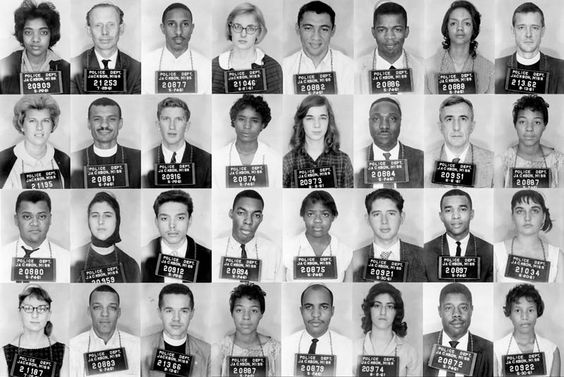
Messengers to the 2016 Southern Baptist Convention renounced display of the Confederate battle flag in a historic, overwhelming vote Tuesday (June 14).

Southern Baptist Convention Parliamentarian Barry McCarty explains the resolution amendment process after a messenger complained about not being allowed to speak after time expired during the afternoon session of the annual meeting of the Southern Baptist Convention on Tuesday, June 14 in St. Louis.

The convention adopted late in its afternoon session a resolution that urged “brothers and sisters in Christ to discontinue the display of the Confederate battle flag as a sign of solidarity of the whole body of Christ, including our African American brothers and sisters.”

Imagine improved relations with Mexicans and Canadians.

Aggiornamento Has Its Limits

Many bloggers and reporters are trying to make sense of Pope Francis’ remarks as reported here:

Pope Francis spoke yesterday at a pastoral congress on the family for the Diocese of Rome, and his remarks are causing consternation among faithful Catholics. In off-the-cuff remarks, the pope made the dual claim that the “great majority” of Catholic marriages are “null” – in other words, not actual marriages – and that some cohabitating couples are in a “real marriage,” receiving the grace of the Sacrament.

“I’ve seen a lot of fidelity in these cohabitations, and I am sure that this is a real marriage, they have the grace of a real marriage because of their fidelity,” he said.

Ed Peters wonders if the modern world has suddenly turned red in tooth and claw:

The collapse of human nature presupposed for such a social catastrophe and the massive futility of the Church’s sanctifying mission among her own faithful evidenced by such a debacle would be—well, it would be the matrimonial version of nuclear winter. I am at a loss to understand how anyone who knows anything about either could seriously assert that human nature is suddenly so corrupted and Christ’s sacraments are now so impotent as to have prevented “the great majority” of Christians from even marrying!

Phil Lawler questions the implications for Vatican II’s effort to engage modern society:

The Pope’s statement—if it was relayed accurately and meant seriously—would mean that our society is so thoroughly perverse that it has actually debased human nature. If that were the case, the Catholic Church could not reconcile herself to modern society; the faith would be in open conflict with the modern age. Yet in Amoris Laetitia, Pope Francis delivered a very different sort of message, suggesting that pastors should learn to work patiently, gradually, and sympathetically with people who do not share the Catholic understanding of marriage.

It is curious how Pope Francis’ openness to the less than ideal circumstances of modern romance and marriage is cheek by jowl next to an anti-modern prejudice (think industrial capitalism and modern finance).

Not holding my breath for Bryan and the Jasons’ authoritative interpretation.

If You Want to Engage the Culture, Don’t Publish with Crossway

Isn’t this the flip side of Tim Challies’ advice about reading the “right” books?

If you are an academic and you publish with a famous university press, that is wonderful for your career. If you go with a vanity press, that can sink your career. That division of presses also matters in defining whether a particular issue is part of mainstream debate, or way off on the disreputable fringe.

The problem in all this, though, is that some presses are very strong and reputable within particular fields, but that fact need not be known to university authorities. I can imagine a junior professor trying to argue to a department head or dean that a title with such a firm should be counted as equal in prestige to a leading university press, and struggling to make the case. Please understand, that would not be a fair situation, but I could see it happening.

Let me take a specific example. I am currently using a book that came out from Inter-Varsity Press some fifteen years ago. It is a really excellent piece of work, scholarly and well written, and IVP is a very strong and well known publisher from the evangelical point of view. Hence my surprise, recently, when I tried unsuccessfully to find a copy in the very large and wide-ranging library at Penn State University. They had other works by this author, but not that particular title. Like many major university libraries, Penn State has standing orders with certain mainstream publishers, and acquires pretty much everything they put out. That principle does not extend to well known evangelical presses like IVP, Eerdmans, Baker, Thomas Nelson, and so on. The more library budgets shrink, the harder they cut back on any presses they don’t see as absolutely core and necessary.

In itself, that decision is not disastrous for me, because if I want a copy of the book in question I can get it through inter-library loan. But the underlying attitude demands attention. These libraries are assuming that the presses in question are not fully respectable houses for academic work, they are partisan or denominational, and therefore they do not demand the same credibility as even minor university presses.

Maybe that explains why TKNY doesn’t publish with the company that subsidized the gospel allies.

UPDATE: a multi-author 16-page tract is not a book, and I’m guessing Ross Douthat hasn’t read it.

Ye Must Be Baptized Again

Tim Challies keeps explaining what he is not. This time, it’s paedobaptist — not.

What is curious about the post, aside from how circumstantial Challies’ theological evolution is/was, is his adoption of the Gospel Coalition policy of looking the other way:

I suppose I am credobaptist rather than paedobaptist for the very reason most paedobaptists are not credobaptists: I am following my best understanding of God’s Word. My position seems every bit as obvious to me as the other position seems to those who hold it. What an odd reality that God allows there to be disagreement on even so crucial a doctrine as baptism. What a joy, though, that we can affirm that both views are well within the bounds of orthodoxy and that we can gladly labor together for the sake of the gospel.

But if credos and paedos can all get along, why did Challies have to be re-baptized? He admits that he was baptized as an infant in an Anglican church. But then he became a Baptist:

When we moved to our new home we began attending Baptist churches. We eventually settled into one and, in order to become a member, I had to be baptized as a believer. By then my convictions had grown and deepened enough that I believed it was the right thing to do. Since that day my convictions have grown all the more.

If both views are within the bounds of orthodoxy, why don’t Baptists (Reformed or not) recognize Presbyterian or Anglican baptisms? Or why don’t Baptists like Challies object to Presbyterians like Tim Keller for baptizing unbelievers? I grew up Baptist and was baptized sometime during my misspent adolescence. So far, the PCA, CRC, and OPC have not required re-baptism of mmmmmeeeeeEEEEEE.

The Gastronomicity of the Church

Where the BenOp meets episcopal flourishing:

Regardless of our religious backgrounds or belief systems, we tend to take note not only of what the pope says and does, but what he wears, what kind of -mobile he’s driven around in — and what he eats. Thus “The Vatican Cookbook,” published in April by the Sophia Institute in Nashua, N.H., which has the compelling subtitle of “500 Years of Classic Recipes, Papal Tributes and Exclusive Images of Life and Art at the Vatican.” But this is as much a practical cookbook as it is a coffee-table book for the devout. There are more than 80 recipes, including favorites of the current pope, as well as his two most recent predecessors. Thus, there are dishes from Argentina (Pope Francis), Bavaria (Pope Benedict XVI) and Poland (Pope John Paul II).

So: pierogi and dulce de leche, homey recipes for Christmas cookies and minestrone, and bistro favorites such as a Parisian beefsteak and chocolate amaretto cake. Threaded through these recipes are glossy photographs of patron saints, the Pietà, the pasta stations, and sections devoted to the recent popes and the Pontifical Swiss Guard, the uniformed men who pledge to serve and protect the pope and who “present” the cookbook (today, we’re told, there are 110 of them). The book was written not by the Polish nuns who do the majority of cooking at the Vatican, but by David Geisser (a former chef who published two cookbooks before joining the guard), Erwin Niederberger and Daniel Anrig, all current or former members of the guard. There are a few “table prayers” here, but they’re included at the end, after a section devoted to “basic recipes” that includes pasta dough, pizza dough, polenta — and truffle risotto. Because, in Vatican City, truffle risotto is a basic recipe. In other words, it’s all kind of lovely, whether your devotion extends to God or to tiramisu, or maybe to both.