To Paraphrase Freud, Sometimes a Vote is Only a Vote

Are evangelicals this concerned about family farms when they buy their food or about the U.S. military when the pay their taxes?

So why so much attention to conscience when it comes to voting for the next POTUS?

For some reason, this vote says more about evangelicalism than the gospel that pastors preach (maybe that’s an indication that you’ve lost perspective?):

Evangelicals, deeply divided over Donald Trump, are wrestling with what the tumultuous 2016 election will mean for their future.

His candidacy has put a harsh spotlight on the fractures among Christian conservatives, most prominently the rift between old guard religious right leaders who backed the GOP nominee as an ally on abortion, and a comparatively younger generation who considered his personal conduct and rhetoric morally abhorrent.

“This has been a kind of smack in the face, forcing us to ask ourselves, ‘What have we become?'” said Carolyn Custis James, an evangelical activist and author who writes about gender roles in the church.

Then we have the argument that Christianity is a helicopter faith (it hovers over everything):

To undertake this particular activity—voting—the Christian must be convinced that the ballot is cast as an obedient response to the command of God in discipleship. The Christian seeks to discern the word God has for them and to act upon it faithfully. One participates willingly in democratic elections as a disciple or not at all. This might mean that the Christian abstains from voting or votes for an alternate candidate who they believe (again, in good conscience) will best carry out the office. Yes, God works through material affairs themselves to inform the Christian of whom a candidate is and what is at stake in voting for them, but his revelatory providence is by no means restricted to the empirical and obvious.

Whatever happened to the idea of Christian liberty?

God alone is Lord of the conscience, and hath left it free from the doctrines and commandments of men, which are, in anything, contrary to his Word; or beside it, if matters of faith, or worship. So that, to believe such doctrines, or to obey such commands, out of conscience, is to betray true liberty of conscience: and the requiring of an implicit faith, and an absolute and blind obedience, is to destroy liberty of conscience, and reason also. (Confession of Faith, 20.2)

So unless we have a proper warrant from Scripture for not voting for either Donald Trump or Hillary Clinton, like not supporting a self-centered windbag (think Nero) or not voting for a sinner (think Nebuchadnezzar), what’s the big deal here? Aren’t Christians free? Can’t we disagree about politics, just the way we disagree about novels, cars, food, and banking?

But if you are a w-w Christian and every single millimeter of life is shot through with spiritual significance . . .

Well, then why not more hair pulling about the World Series and trying to discern God’s commandment for which team to root?

He Dehumanized First

With all the talk of human dignity these days, and all the recognition that Donald Trump doesn’t recognize it in Mexicans and Muslims, what happened to the capacity to recognize Trump himself as human? In other words, why don’t Christian historians model the charity and perspective in discussing Trump that they expect the Republican to display? John Fea (sorry to write so much about you big guy but you know, iron-sharpening-iron and all) once again sees what so many already see:

As Christian students of the past they strive to tell the stories of all human beings. The goal of such teaching and writing is not political correctness, but a fundamental belief in the dignity of individuals. Everyone’s story counts.

When Trump disparages women and people of different races and religions he dehumanizes them. He sends the message that some human beings are not as important as others. In the process he fails to recognize the Imago Dei in all of God’s human creation.

Historians know a few things about this kind of dehumanizing rhetoric. We have studied its manifestation in the past and are trained to recognize it in the present.

I have already commented on evangelical historians who seem to pride themselves on the value they add to discussion of the present.

But I don’t for the life of me understand why the historians who are so quick to condemn Trump don’t admit that the really challenging part of studying the past is to humanize characters like the Republican nominee. How a scholar does that is not obvious and that is why they pay historians the big bucks. To look beyond the surface and see the wider set of circumstances that contribute to a human being’s assets and liabilities is what makes history valuable (and for me fun).

Regarding a person in merely moral categories doesn’t measure up to the standards of good historical knowledge. It does what everyone else already does. And when done in the name of evangelical history it actually shows that born-again historians have a moral imagination but little removed from Jerry Falwell (Sr.) or James Dobson. What they did to President Clinton, evangelical historians are ready and willing to do to Donald Trump.

The Trump Will Set You Free

Free to criticize that is.

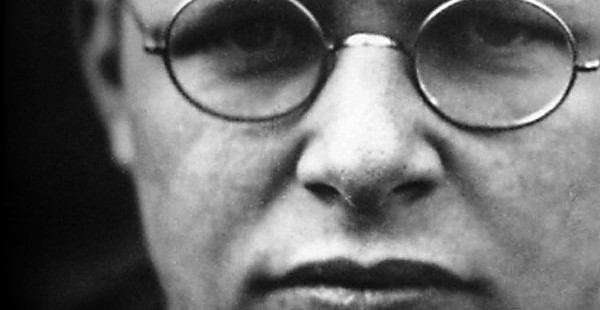
In 2014 when Charles Marsh’s highly acclaimed biography of Dietrich Bonhoeffer came out, the author avoided taking on Eric Metaxas. In an interview with John Fea, this is the worst he could do:

I’m pleased that Eric Metaxas has inspired such a spirited and intense conversation on Bonhoeffer’s life and legacy. Nevertheless, I wanted to tell the story anew by relying primarily on a treasure of recent archival and scholarly discoveries, on letters, journals, and other documents, as well as my own interviews. I spent a lovely afternoon in the home of Eberhard Bethge, shortly before his death, talking candidly about aspects of Bonhoeffer’s character that had been largely ignored. Metaxas’s book also offered me a cautionary tale on the political misuses of biographical writing; had I not been able to see what havoc his own heavy-handed political agenda wreaked on the telling of Bonhoeffer’s life I might have been inclined to tweak it in the direction of my partisan biases.

In his review of Marsh’s book for the Wall Street Journal, Christian Wiman even faults Marsh for failing to correct Eric Metaxas’ popular biography of Bonhoeffer:

Mr. Marsh does not even mention the Metaxas book or the enormous attention it brought to Bonhoeffer. He is a scholar, and Mr. Metaxas is a popular biographer, and it’s possible that Mr. Marsh found no new information in the Metaxas book that he needed for “Strange Glory.” Still, though Mr. Marsh deals quite well with the intractable contradictions of Bonhoeffer’s beliefs and actions, he misses the chance to situate the theologian and his ideas more clearly within the contemporary context. A simple preface would have helped.

That is why Marsh’s recent post about Metaxas was a surprise:

WRITTEN WITH BUT the slightest familiarity with German theology and history, Metaxas’s best-selling Dietrich Bonhoeffer: Pastor, Martyr, Prophet, Spy was published by Thomas Nelson in the spring of 2010 and launched at the Young Republicans Club of New York City. Christians in the United States needed to learn some very important lessons from Bonhoeffer’s story, and Eric Metaxas, who some followers call “the American Bonhoeffer,” had been called by God to deliver these lessons in our own hour of decision: It is not the role of the state to take care of people. America is the greatest nation in the world. People can take care of themselves; small government is the best government. Germans turned to Hitler to do the things that other people ought to be doing, and we in America are in danger of the same mistake. People who like big government don’t believe in God; they’re secularists and can be compared to the Nazis. We need Bonhoeffer’s voice today—Metaxas told an interviewer—“especially in view of the big government ethos of the Obama administration.”

With a literary background that includes a popular biography of the abolitionist William Wilberforce and the VeggieTales children’s series, Metaxas said that his purpose in writing the book was to save Bonhoeffer from the liberals, from the globalists, the humanists, and the pacifists. His Bonhoeffer was a born-again Christian who espoused traditional family values.

This is complete nonsense.

What explains the change? Metaxas has endorsed Trump and Marsh disapproves. The Trump will set you free.

But the editors at Religion & Politics and Dr. Fea should remember that just because Marsh is agreeable about Trump, it doesn’t make him right about Bonhoeffer. In fact, both Marsh and Metaxas may reflect their own “American” perspective. Ferdinand Schlingensiepen, a German biographer of Bonhoeffer, sure thought so:

Marsh and Metaxas have dragged Bonhoeffer into cultural and political disputes that belong in a U.S. context. The issues did not present themselves in the same way in Germany in Bonhoeffer’s time, and the way they are debated in Germany today differs greatly from that in the States. Metaxas has focused on the fight between right and left in the United States and has made Bonhoeffer into a likeable arch-conservative without theological insights and convictions of his own; Marsh concentrates on the conflict between the Conservatives and the gay rights’ movement. Both approaches are equally misguided and are used to make Bonhoeffer interesting and relevant to American society. Bonhoeffer does not need this and it certainly distorts the facts.

Years ago Charles Marsh described his Bonhoeffer biography project. This reviewer remembers a passage about him wanting to approach the topic in a more ‘writerly’ way than Bethge, using a talent for storytelling for which the Southern States are famous. It is true that his book surpasses that of Bethge in terms of writerly skill, but is has become ‘A Life of Bonhoeffer’ that never existed in this form. A number of mistakes found in Marsh’s book have been referred to above. There are more, but I have deliberately concentrated on those that do most to distort the picture of Bonhoeffer.

I have no doubt that Schlingensiepen would disapprove of Trump. I do doubt he would let his view of Trump inform his understanding of the past.

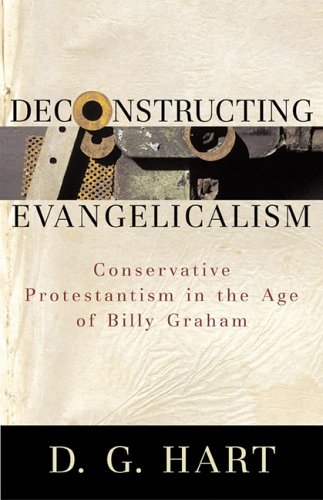
Deconstructing Evangelicalism

I told you so:

There’s another problem here. Many of the best pollsters lack a deep understanding of the subtle outlines of the thing they’re trying to measure. It’s hard enough to quantify evangelicalism when you basically, if vaguely, grasp what it is, but it’s almost impossible to do so if you’re otherwise unable to tell a Pentecostal from a Presbyterian. So it would seem like the pollsters best-qualified to tackle this tricky business would be those with a first-hand, native-born understanding of what American evangelical Christianity is really like — knowledge that comes from living it on the inside.

But there’s a little problem with that, and a big problem with that. The little problem, as we’ve already mentioned, is that evangelical Christians themselves aren’t usually any better able to limn the outlines of their category than anyone else — hence the NAE turning to a British scholar of religious history to describe for them who they are. As the old joke says, if you want to know what water is like, don’t ask a fish.

The big problem, though, is a doozy. Part of the character of evangelical Christianity is that it is contentious and disputed. Bebbington didn’t include this in his quadrilateral, but it has been true ever since at least the Reformation, and it greatly intensified throughout the 20th century. Evangelicalism is, among other things, a category of people who are perpetually arguing over which among them does and does not legitimately belong in that category. The definition of “evangelical” provided by any given evangelical, therefore, tends to be fraught. Evangelicals have a hard time measuring their group without taking the opportunity to declare that others aren’t measuring up and don’t legitimately belong with the rest.
So even though we have some very skilled evangelical pollsters and data-crunchers, and even though they’ve done some laudable work trying to refine their measurements and metrics, these folks also tend to be bound up and beholden to the very same evangelical institutions involved in the tradition’s never-ending disputes over legitimacy. When those institutions seek a head-count of evangelicals or a measure of evangelical opinions, they’re almost always also seeking to count others out.

Back then W. was in the White House, evangelicals had access to power, and White Christian America was only in critical condition. Deconstructing evangelicalism then was a lot harder to do than it is in the age of Trump.

Jesus for President

He’s about the only one left when it comes to a presidential candidate with character. Alan Noble laments:

In just five years, white evangelicals went from overwhelmingly denying a division between private and public character to overwhelmingly embracing the division. It is very difficult for me to imagine an explanation of this shift other than the candidacy of Donald Trump.

I do not want to speculate here on what exactly in Trump’s candidacy caused this shift in white evangelicals. Most of the possibilities are grim and warrant their own thorough exploration. But right now evangelicals can turn back to our traditional teaching that character matters and correct the mistake of supporting Donald Trump.

He concedes that Hillary has issues (which is why Jesus is left standing in that great day):

Some evangelical leaders have claimed that we just have two morally flawed candidates. They point to Hillary Clinton’s flawed character and her sins and conclude that since they are both sinners, we have to simply judge them on their policies. But that does not reflect a Christian conception of character and behavior.

Like many evangelicals, I cannot vote for Clinton because I do not believe she would be a good president for my neighbor. Since I believe that life begins at conception, Clinton’s intention to repeal the Hyde Amendment so that federal funds can be spent on abortions reveals a profound flaw in her character.

But her flaw does not magically make Trump’s flaws any less grievous.

What I enjoy about Trump’s candidacy as someone with a seat in the theater of American electoral politics, is how fundamentalists are now in fashion for both evangelicals and Democrats:

Having grown up as a conservative evangelical during Bill Clinton’s administration, I believe that character matters. This is what leaders on the religious right taught me when Clinton was caught in his affair with Monica Lewinsky. At the time, some people tried to shrug off Clinton’s infidelity as a private matter: Of course he shouldn’t have done it, but this didn’t affect his ability to be president. But conservative evangelicals rejected this logic, and they were right.

In response to President Clinton’s infidelity, the Southern Baptist Convention passed a “Resolution on the Moral Character of Public Officials”:

Therefore, be it RESOLVED, That we, the messengers to the Southern Baptist Convention, meeting June 9-11, 1998, in Salt Lake City, Utah, affirm that moral character matters to God and should matter to all citizens, especially God’s people, when choosing public leaders; and

Be it further RESOLVED, That we implore our government leaders to live by the highest standards of morality both in their private actions and in their public duties, and thereby serve as models of moral excellence and character; and

Be it finally RESOLVED, That we urge all Americans to embrace and act on the conviction that character does count in public office, and to elect those officials and candidates who, although imperfect, demonstrate consistent honesty, moral purity and the highest character.

So is Noble ready for the isolation that always comes to evangelicals who scold modern America for its sins? I thought evangelicals wanted a seat at the table, and fashioned a kinder, gentler Protestantism (than fundamentalism) to get there.

Now Falwell and Co. were right? Who knew?

Why Does It Take an Election To See This?

But thank the dear Lord for general revelation.

Archbishop Chaput (of Philadelphia) thinks a leaner meaner holier church is preferable to one that is large but not very in charge.

In a stark prognosis for contemporary Catholicism, a leader of the conservative wing of the U.S. hierarchy has said that “a smaller, lighter Church” of fewer but holier believers is preferable to one that promotes inclusion at the expense of orthodoxy.

In a speech delivered Oct. 19 at the University of Notre Dame, Philadelphia Archbishop Charles Chaput also suggested that many prominent Catholics are so weak in their faith that they ought to leave the Church.

Chaput singled out Democrats such as Vice President Joe Biden and vice presidential nominee Tim Kaine for special criticism, linking them to the concept of a “silent apostasy” coined by Pope Emeritus Benedict XVI and saying Catholics who do not champion the truth of Church teaching are “cowards.”

“Obviously we need to do everything we can to bring tepid Catholics back to active life in the Church,” Chaput told a symposium for bishops and their staff members at the South Bend, Ind. campus.

“But we should never be afraid of a smaller, lighter Church if her members are also more faithful, more zealous, more missionary and more committed to holiness.

“Losing people who are members of the Church in name only is an imaginary loss,” he continued. “It may in fact be more honest for those who leave and healthier for those who stay. We should be focused on commitment, not numbers or institutional throw-weight.”

No shrug there and some support for those of us who marvel at the seeming innocence of Bryan and the Jasons and wonder what they are seeing. And kudos for a bishop who is acknowledging what at least Orthodox Presbyterians understood 80 years ago.

The problem though is that Archbishop Chaput doesn’t hold the mirror up to his own visage. Why has his communion become so loose and amorphous? Don’t the bishops have the mechanisms and authority and charism (no less) to make the ship ship shape?

Perhaps the problem is the general problem of our time is that we all want to be victims, from the abused to the bishops. It’s the new source of authority — my victimhood trumps your legitimate authority. But if the magisterium is what Bryan and the Jasons say it is, sure Archbishop Chaput can do more than give a speech.

And the question remains, why would it take a presidential election to provoke the Archbishop’s call to holiness?

Chaput’s main focus, however, was on the wider threat posed by what he said was a secularizing culture and a progressive political agenda that “bleaches out strong religious convictions in the name of liberal tolerance.”

Too many Catholics are guilty of cooperating with that process, he said, transferring “our real loyalties and convictions from the old Church of our baptism to the new ‘Church’ of our ambitions and appetites.”

He named Biden, Kaine and House Minority Leader Nancy Pelosi as prime examples of this phenomenon, as well as Supreme Court Justice Anthony Kennedy, a Catholic and Republican appointee whose deciding vote in the landmark 2015 gay marriage case made him anathema to many social conservatives.

The politics of the U.S. hierarchy are in flux largely because Francis, who was elected in 2013, has begun naming and promoting bishops who embrace his outgoing approach to ministry and evangelization.

That trend away from the “culture warrior” bishops who came to dominate the U.S. Conference of Catholic Bishops over the past three decades was evident in the men Francis chose this month as his first American picks to be cardinals.

The three – the archbishops of Chicago and Indianapolis and the former bishop of Dallas – are known for their moderate tone and pastoral style while hard-liners like Chaput, who in a previous era might have been a strong candidate for a red hat, were passed over.

But Chaput, 72, and other conservatives in the U.S. hierarchy have been speaking out with greater frequency about the election. They tend to lament Trump’s obvious faults while singling out the Democratic ticket for special criticism and noting that opposition to legal abortion – which is part of the Republican platform and a Trump campaign promise – overrides every other policy consideration.

Called to this communion? Is Bryan and the Jasons serious?

Michelle Obama is the Most Christian First Lady Ever

Okay, I’m borrowing a claim already made elsewhere about the First Lady’s husband.

But it is instructive when blessing Hillary Clinton as the Christian candidate in this year’s presidential contest to remember what Mrs. Obama said about Mrs. Clinton.

First, the baptism of Clinton (by a Fuller Seminary turned Yale University theologian no less):

The best case to be made for Hillary Clinton is that on balance she better represents the convictions and character that should concern Christian citizens. No candidate is perfect. There are certainly areas where Secretary Clinton’s policies and record might give Christians pause. But she takes the threat posed by climate change seriously. Her policies, such as paid family leave, would actually strengthen American families. She is committed to a just and welcoming approach to immigration that does not unduly compromise the legitimate good of security. She supports major reforms to America’s overly retributive and racially-biased criminal justice system. And, perhaps most importantly, she has demonstrated much deeper commitment to supporting the disadvantaged and the vulnerable than her opponent has, his grandiose rhetoric notwithstanding.

Second, keep in mind what Obama said about Clinton:

One of the important aspects of this race is role modeling what good families should look like. And my view is that if you can’t run your own house, you certainly can’t run the White House. Can’t do it.

Of course, Mrs. Obama and the president have not always been so discerning about certain popular entertainers or the lyrics to their songs which rival most of what Donald Trump has said.

Still, sorting out the Christianness of the candidates and their observers is getting really hard to do especially when partisanship clouds judgment.

When the Election is not about the Nation but MmmmeeeeEEEEE

Why do Christians on both sides of the Tiber frame the current presidential contest in a secular republic no less in terms of what a believer’s vote says about his or her devotion or virtue? Here are a few samples.

First, how the character of a candidate may affect the character of the voter:

Christians can, morally, either support Trump over Hillary or not support either. Nearly all Christians who support Trump over Hillary do so without adopting strong-man messianism. Being clear that one is not endorsing specific moral flaws, and having one’s eyes wide open about the calculation, is not an internal threat to the Church. It’s not even a problem unique to this election cycle.

Whew. If I vote for Hillary I won’t stain my soul.

But morality won’t resolve my dilemma of for whom to vote (if I’m Roman Catholic):

. . . it’s plain to see that Catholic moral reasoning does not map on to the current American political grid. What then should Catholics do? What should be the final thought of the undecided American Catholic voter, behind the sacred veil of the voting booth?

Some Catholics react to their complicated political instincts by isolating one issue about which to make an electoral decision. At the national level, we find many “single-issue voters” on the topic of abortion. As a fundamental matter of life and death, one of the non-negotiables of Catholic moral teaching, it makes sense why many Catholics highlight abortion as a way to clear a path toward a conscience-protecting vote. But there are other non-negotiables in Faithful Citizenship too, such as torture and racism. And some Catholics also believe that recent uses of American military power, especially targeted killings through drone strikes or accidental bombings of allies, have crossed the line of non-negotiable moral teaching about the dignity of human life and the protection of noncombatants during war.

Uh oh.

For Protestants, voting winds up functioning as a part of self-disclosure:

A vote for Trump is a vote signifying that evangelicals are owned by the GOP. Part of the tragedy here is that evangelicals are still a big enough voting bloc that we could prevent either candidate from winning the election.

Let that sink in. If evangelicals just said, “No, I refuse to be coerced into supporting candidates who do not meet a very basic standard,” we could swing the election. You probably read that sentence and immediately dismissed it, thinking something like, “That is a fantasy. The reality is people are going to vote for one of the two major candidates.”

People won’t vote for a third party candidate because third party candidates don’t win because people won’t vote for a third party candidate—which is great for the two major parties because they don’t really have to even try to address the concerns of voters.

A vote for Trump also communicates to our neighbors that we believe he would be an acceptable leader for our country. Sure, you can qualify your Trump support by saying you have reservations but you believe he’s better than Clinton; however, by casting a ballot for him you are fundamentally claiming that it would be good for Trump to govern you and your neighbor.

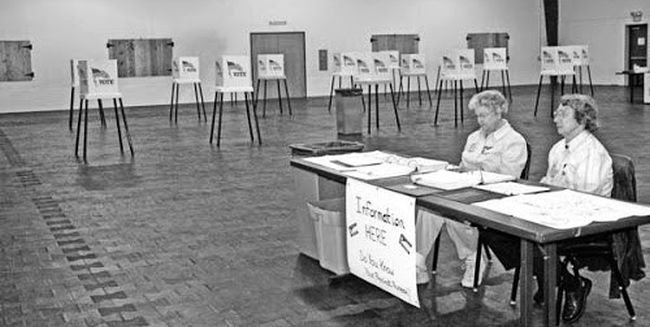
How would anyone actually know how I vote? Isn’t the ballot supposed to be private? If so, then maybe ordinary Christians should not be so glib about how they are going to vote. Propriety, people!

But no. For some this election season is so wicked and Trump so depraved that the only response is revulsion (which it seems you should display so that people know you are not so morally compromised):

I believe that the proper response of the well-former mind and heart to the very idea of Donald Trump as President of the United States is, to put it bluntly, revulsion. . . .

What concerns me far more deeply is the ordinary, everyday Christian — the person who claims to be an evangelical Christian — who is not revolted by Trump, who lacks the requisite “wisdom of repugnance.” I think, for instance, of the people who have compared Trump to King David, presumably because both are guilty of sexual sin. But those who make this comparison have failed to recognize the difference between one who says “For I know my transgressions, / And my sin is ever before me” and one who says that he doesn’t “bring God into that picture” when he does something wrong and follows up by saying “I am good. I don’t do a lot of things that are bad.” And if you don’t understand that distinction — and equally if you understand it but for political reasons pretend not to — there is very little about the Christian message that you truly grasp.

By the way, I’m not talking about Hillary Clinton here because there is so little evangelical support for Hillary Clinton. She also offers much for us to be appalled by.

And I’m not even making the argument that an evangelical Christian should never in any circumstances vote for Trump. (Not today, anyway.) I am simply saying this: the fact that so many American Christians feel no revulsion at the thought of electing Donald Trump — this man so palpably “unsound, uninformed, unhinged and unfit” — as the leader of this or for that matter any other nation, but rather express great enthusiasm at the prospect, indicates not just a lack of knowledge but also, and more important, a lack of moral training. The immediate responses are missing or wrong.

Voting as fruit of the Spirit. Politics as sanctification.

It seems to this 2ker that investing voting with such moral and spiritual significance is to overestimate (way way so) the United States or a Christian’s place in the nation. Everyone has ideas about American government, what would be good for the nation, which candidate may offer a corrective to certain trends, which figure symbolizes a part of the nation’s worthwhile qualities. Of course, Americans could be more informed about policies and how government works, though if members of Congress can’t parse the Affordable Care Act which of us can stand in that pretty good day of national or state debate? Chances are that after this election, even if Congress impeaches the next president (which could happen to either major candidate), the republic will go on and the forces of consolidation and centralization will also remain thanks to the United States’ standing as a global hegemon.

Life will go on.

Sanctification for the saints will continue.

Christians will more or less throw themselves into policy, activism, party politics.

CNN and Fox will sensationalize.

Large sums of money — almost as much as professional athletes make — will go to politicians in hopes of access.

It’s all bigger than mmmmeeeeeeEEEE.

So it’s time to switch from the summer cocktail of choice — the gin and tonic — to the one for cooler temperatures — the whiskey sour. Somewhere in the world it’s 5:00.
What Would Trump Be Like as POTUS?

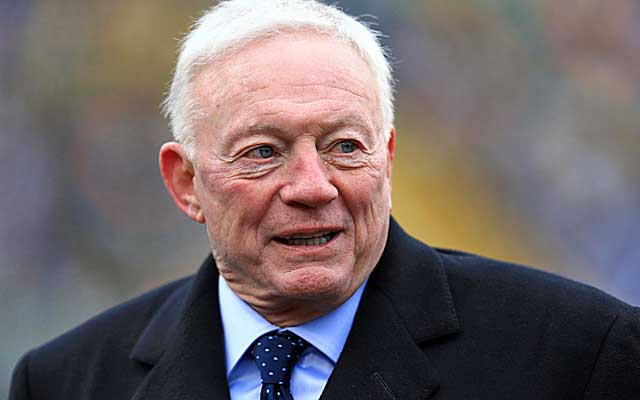
Think Jerry Jones as president of the Dallas Cowboys?

In charge but not and outspoken about it:

In the locker room after Sunday night’s 31-17 win over the Chicago Bears, Cowboys owner and general manager Jerry Jones said Dez Bryant had X-rays on his injured right knee. He said they revealed a sprain and the star receiver would have an MRI Monday.

However, during his Tuesday morning radio interview, Jones said Bryant still had not had an MRI.

“He hasn’t taken an MRI, to my knowledge,” Jones said on 105.3 The Fan’s Shan and RJ show [KRLD-FM]. “I’m assuming that he’s on go [for Sunday]. Will he get an MRI here probably later today? Maybe.

“But he certainly finished the game out. That in and of itself is a good indication. It doesn’t mean he’s going to be free of the symptoms of the injury, but again, we may look at an MRI before this day is over.”

He’s rich, he hangs out with celebrities, and he’s outspoken about it:

Jerry Jones seems to have a story about everyone he’s ever met.

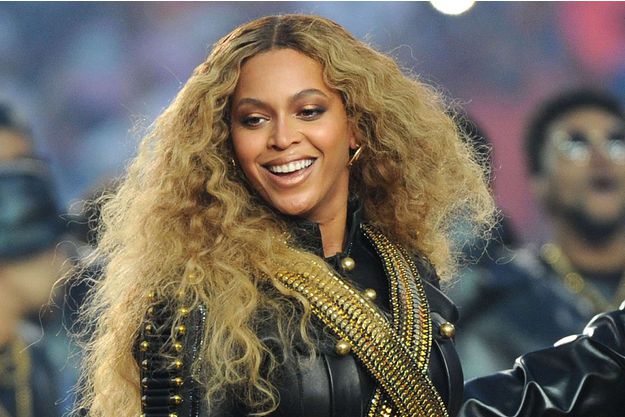
This includes Grammy Award-winning couple Jay Z and Beyonce. The two attended Sunday night’s Cowboys game at AT&T Stadium.

During his Tuesday morning radio interview, Jones said he’s known Beyonce since her former group, Destiny’s Child, performed at halftime of the Cowboys’ 2004 Thanksgiving Day game at Texas Stadium.

“As a matter of fact, they were planning to perform and it was so cold you couldn’t stand it out there on Thanksgiving Day,” Jones recalled on 105.3 The Fan’s Shan and RJ show [KRLD-FM]. “And I got them all coats from Neiman Marcus. And to this day, one of the things that we kind of smile about are those jackets that we got them so that they could go out there and do a good job and give us Thanksgiving Day halftime. Boy, I’m telling you, she’s phenomenal.

What does Jones think about her husband?

“He, as an individual, is one of the neatest people that I’ve met,” Jones said. “Make no mistake about it, he’s the real deal. He’s as easy to be around, talk to, as sharp as anybody I’ve met. I see what she sees in him.”

Don’t forget that Jerry Jones is a patriot and want a great America:

“I got to give a big pat on the back to our entire team, our coaching staff, our entire organization,” Jones told the Cowboys’ flagship station. “We strongly, strongly support the flag in every way we support — and it’s almost ridiculous to be saying it — the people who for generations and generations have given it all up so that we can get out here and show off in front of millions of people on television.

“We respect that so much. That’s the real business. The forum of the NFL and the forum on television is a very significant thing. I’m for it being used in every way we can to support the great, great contributors in our society, and that’s people that have supported America, the flag, and there’s no reason not to go all out right there. And for anybody to use parts of that visibility to do otherwise is really disappointing.”

Is there room in the Constitution for Jerry Jones?

Would Ron Sider Trust Richard Nixon?

Ron Sider comes out for Hillary over Trump and appeals to statesmanship:

Do we evangelical Christians trust Donald Trump to be a wise statesman leading the world to avoid conflict and war? The US president is the leader of the democratic world and the commander of the world’s largest military. A wise, thoughtful president who listens carefully to the best-informed advisers is essential if the United States and China are to avoid catastrophic conflict in the next decade or two.

Trump has absolutely no experience in foreign affairs or global diplomacy. He has repeatedly demonstrated arrogant, impulsive decision making. I can’t trust him to control the nuclear trigger. In August, 50 of the nation’s most senior Republican national security officials issued a public letter saying Trump “lacks the character, values, and experience” to be president, and added that Trump “would be the most reckless president in American history” and would “put at risk our country’s national security.”

I don’t understand why Richard Nixon doesn’t haunt anyone who thinks of backing Clinton. It’s not like paranoia and secrecy worked out that well for the Republican president. And now baby boomers have come to terms with Watergate?

Notice these parallels:

Not even Clinton’s harshest critics could claim that Servergate (or Chappaquadata, or whatever it may come to be called) constitutes a high crime or misdemeanor. But it does connote a reflexive wariness about her enemies – a wariness that sometimes seems to border on paranoia – that has long dogged Clinton, and that struck at least a few old Nixon hands as familiar.

“This is like the Nixon tapes, in a sense,” said Ken Khachigian, who was a young speechwriter on Nixon’s White House staff and is now a grizzled veteran of California’s Republican political wars. “Everybody wanted access. We resisted, and then they were eked out in death by a thousand cuts. Finally they were expropriated and now belong to the archives.”

And that doesn’t even capture the hi-jinks that went into Hillary’s recent physical collapse.

Which also is reminiscent of Nixon:

It was 1960, and Nixon was preparing for the nation’s first televised presidential debate. The debate became a case study in political image-making, with Kennedy looking healthy and vital while Nixon was waxen, sweaty and haggard.

“He was sick during the debate,” Scalettar said.

Only the doctor and Nixon’s advisers knew that Nixon was suffering from a serious infection — the result of a knee injury on a campaign trip to Greensboro, N.C. …

Nixon had a staph infection, which brought on septic (poisonous) arthritis. And he refused to take time off from the trail because he had promised to campaign in every state.

Scalettar wrote that the illness, Nixon’s failure to rest and recuperate normally, his loss of time due to illness and his appearance “seriously impaired his effectiveness as a campaigner.”

He’s convinced that Nixon’s medical secret contributed to his narrow loss to Kennedy — by slightly more than 100,000 votes — that November 56 years ago. Coming clean about how sick he was right before that debate may have severely altered the course of American history.

It doesn’t add up to support for Trump. But are Americans ready for another constitutional crisis?