Republicans are Always Evil Everywhere

I still remember my days at Harvard Divinity School when most if not all of my friends mocked Ronald Reagan as a boob and a divorcee who had snowed God’s faithful within the Moral Majority. In fact, every nominee of the GOP since Goldwater (in my memory) has been of dubious character and intellect. That makes evangelical support for Republicans the height of hypocrisy, not to mention a threat to the Republic.

I went to church with some of my friends on a number of occasions, mostly to see what they were teaching their followers. While I disagreed with much of it, I couldn’t help but like the people I met there and admire their sense of community and devotion to something bigger than themselves. I took part in discussion groups with church members too, and again, while I thought much of it was intellectually indefensible, the intent was genuine and their desire to do good in their communities laudable.

I could not for the life of me understand how these good people could vote for someone like George Bush and Dick Cheney — oil funded war hawks who spent their political careers wrecking social programs for the poor and doing everything in their power to trash the environment. The contradiction between their personal humility and willingness to vocally support and vote for greedy millionaires with a penchant for violence in the Middle East was completely alien to me.

So why be shocked if those same evangelical Protestants vote for Trump? Because he is so much more wicked?

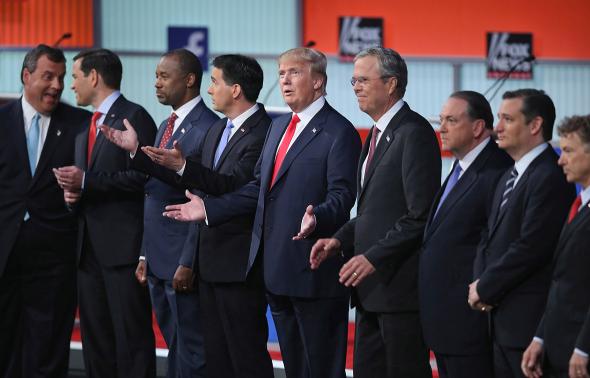
White evangelical Christians came out in droves to support Donald Trump — a man who exemplifies literally everything Jesus Christ stood for. Trump is a rich braggart who has made a name for himself flaunting his wealth. He openly denigrates women, has a lurid history of sexual assault, insults minorities and holds petty grudges against anyone who speaks out against him. In no rational universe can these two completely contradictory beliefs be reconciled. If you believe that the gospels accurately depict the life of Christ, then supporting a man who calls women “pigs” and “dogs” and has spoken about grabbing them “by the pussy”, you cannot be called a Christian in any meaningful sense of the word.

Did this narrative of Republican depravity help either evangelicals or editors at the New York Times tell the difference between decent and vulgar GOP nominees? Not really, but one of the blessings of Trump is adding nuance to perceptions of the Republican Party (barely):

This uniquely American phenomenon of equating greed, misogyny and racism with moral righteousness appears to be getting more and more pronounced. In retrospect, George W. Bush was a shining example of moral virtue when compared with Donald Trump.

Hmm. What if the mainstream media had treated George W. Bush, John McCain, and Mitt Romney — all persons who had served in public administration and were serious politicians (compared to Trump) — as real players in U.S. politics rather than benighted fools of questionable morals? Perhaps the electorate might have had the tools to discern the difference between Trump and John Kasich. Maybe some voters would not have sensed that they were damned no matter for which Republican they voted.

But from the perspective of the elite press rooms, spotting the difference among Republicans is as unusual as white Americans thinking Asian Americans look different.

I guess evangelicals are guilty of introducing self-righteousness into politics, but I blame the Puritans and all graduates of their universities, you know, the schools from which anyone worth a darn graduates (think Harvard and Yale).
From Goldwater to Trump

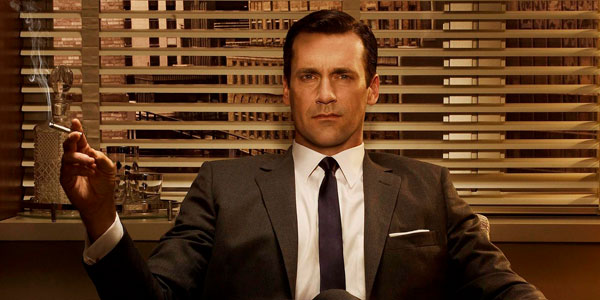
John Fea found an old LBJ ad that shows moderate Republican discomfort over ideological conservatives like Barry Goldwater, the 1964 Republican presidential nominee. If Don Draper had worked for the Democrats, this is how it would have looked:

Drawing parallels between Trump and Goldwater are somewhat overdone since the Arizona Senator had a distinguished record of public service and even vowed to support Nixon in 1960 to the dismay of political conservatives. But the parallels do contain an element of truth in the sense that since the 1950s conservatives (and I count myself as one) have stressed ideological purity over political pragmatism. Maybe it’s the effect of turning 39, or maybe it’s the Trump phenomenon, but compromise for the sake of not blowing things up looks a lot more appealing these days than fidelity to “the movement.”

And here’s the kicker for Roman Catholics reading, some of the most articulate and intellectually rigorous supporters of Goldwater were Roman Catholics like Brent Bozell and William F. Buckley, Jr. (the latter of whom during the 1964 campaign had to distance himself from Robert Welch, the leader of the John Birch Society). In fact, Brent Bozell was the man who put Barry Goldwater’s political convictions into words — The Conscience of a Conservative (as I understand it, the book was entirely Bozell’s effort — see below).

All of this to say, Trump may be much more the fruit of the conservative movement and its anti-establishment ways than conservatives are wont to admit.

Postscript: a little background on Goldwater, Bozell and the conservative conscience:

Goldwater and Bozell were incongruous collaborators: The easygoing Westerner and the intense Midwesterner; the college dropout and the Yale law graduate; the Jewish Episcopalian and the Roman Catholic convert; the principled politician and the activist intellectual (Bozell had run for public office in Mary-land). But they shared a Jeffersonian conviction that that government is best which governs least. They looked to the Constitution as their political North Star. And they were agreed that communism was a clear and present danger.

Goldwater gave his final approval of the manuscript in late December, and Clarence B. Manion, the moderator of a highly popular weekly radio program “The Manion Forum” and the former dean of the Notre Dame Law School, undertook the publication and promotion of a book he was convinced would “cause a sensation.” Indeed it did. Before The Conscience of a Conservative appeared, Barry Goldwater was an attractive but controversial senator from a small Western state who was at best a long-shot vice presidential possibility. After the publication of The Conscience of a Conservative, Goldwater became the political heir to Robert Taft, the hope of disgruntled Republicans, partyless Independents, and despairing Democrats, and the spokesman of a new national political movement—conservatism.

What had Goldwater—and Bozell—wrought? The Conscience of a Conservative was an original work of politics and philosophy, a vision of the nation and the world as it should be, not a compromise with the world as it was. It was a fusion of the three major strains of conservatism in 1960—traditional conservatism, classical liberalism or libertarianism, and anti-communism. It was a book by a conservative for conservatives at a time when conservatives were beginning to realize the potential of their political power.

Trump is What Conservatives Do (or have done since 1950)

Maybe Trump’s 45 minutes of fame (he certainly has more than the rest of us) are coming to an end. But I continue to be surprised by the woe-is-me-conservatism that accompanies his candidacy and appeal (and I am not going to vote for him — there). He is an insurgent, he is a populist, he is undignified, he’s a threat to the GOP establishment.

So was William F. Buckley, Jr. (and he was a traditionalist Roman Catholic).

First Rod Dreher’s hand-wringing:

What Trump has shown, and is showing every day, is how out of touch Conservatism, Inc., is with the people for whom it purports to speak. They haven’t had a chance to vote for someone like him in a long, long time because, as I’ve said, the GOP and Conservatism, Inc., gatekeepers kept them down. The conservative Christians who have gone to Washington and gotten invited to be in the inner Republican power circles? You think those professional Christians really speak for the people back home anymore?

Me, I’m in a weird and extremely unrepresentative place, politically and ideologically. I am mostly a cosmopolitan in my tastes, but I live by choice in deep Red America, and am a traditionalist by conviction. What Sean Trende says about the Republican and conservative elites living inside a cosmopolitan bubble is true — and the people who give money to the GOP and to the think-tank archipelago are Business Conservatives who, as we now know post-Indiana RFRA, regard we traditionalists are the problem.

Second, Michael Brendan Dougherty on the problem with the editors of National Review repudiating Donald Trump:

You could call it a freak out on the right.

National Review, the flagship journal of the conservative movement, published a surprisingly defensive symposium, asserting the continued relevance of conservative ideas against an election-year populist challenger, who promised to fight for American jobs and sovereignty. “The old guard threw everything they had at him, and their diminished power is now exposed,” wrote David Brooks. This crude challenger to the party’s status quo had to be stopped.

That was eight years ago. And it was Mike Huckabee, whose advisor Ed Rollins declared the Reagan coalition dead. The challenge was sufficiently contained, then. But it was the first time that I noticed that the anti-establishment kick reflex that the conservative movement had installed in its Frankenstein-coalition of voters had turned around and began kicking them.

Donald Trump and his coalition of voters kick a lot harder than Mike Huckabee. And so we have another symposium, now exclusively anti-Trump. But this time around, even movement-bred stalwarts are wondering if Ed Rollins had a point. Maybe the coalition is dead.

There’s something faintly comical about everyone in the Republican party shouting, “I’m not the establishment. That guy is.” The conservative movement long ago defeated the East Coast establishment of the party. It was a total rout; the last semi-moderate New England Republicans were defeated a decade ago. And yet, conservatives still insist that they are fighting some powerful establishment within the Republican Party.

The irony is that National Review’s founding editor, Buckley, had a lot to do with defeating the East Coast Establishment GOP. Garry Wills knows the score:

Joe Scarborough, in a recent book, The Right Path: From Ike to Reagan, How Republicans Once Mastered Politics—and Can Again, claims that moderate conservatism is the real Republican orthodoxy, interrupted at times by “extremists” like Goldwater or the Tea Party.3 He suggests Dwight Eisenhower as the best model for Republicans to imitate. Yet Scarborough is also an admirer of Buckley, and his thesis does not explain—as Dionne’s thesis does—why Buckley despised Eisenhower. Eisenhower, as the first Republican elected president after the New Deal era of Roosevelt and Truman, was obliged in Buckley’s eyes to dismantle the New Deal programs, or at least to begin the dismantling. Buckley resembled the people today who think the first task of a Republican president succeeding Obama will be to repeal or take apart the Affordable Care Act.

Eisenhower, instead, adhered to the “Modern Republicanism” expounded by the law professor Arthur Larson, which accepted the New Deal as a part of American life. Eisenhower said, “Should any political party attempt to abolish social security, unemployment insurance, and eliminate labor laws and farm programs, you would not hear of that party again in our political history.” It was to oppose that form of Republicanism that Buckley founded National Review in 1955, with a program statement that declared: “Middle-of-the-Road, qua Middle-of-the-Road is politically, intellectually, and morally repugnant.”

Buckley hated Eisenhower’s foreign policy as much as his domestic one. He said, “Eisenhower was above all a man unguided and hence unhampered by principle. Eisenhower undermines the Western resolution to stand up and defend what is ours.” When Russia put down the 1956 uprising in Hungary and Eisenhower did not intervene, National Review called for people to sign the Hungary Pledge—to have no dealings with iron curtain products or exchanges (Buckley’s wife had to give up Russian caviar).

Admittedly, Buckley did not, like Robert Welch (founder of the John Birch Society), think Eisenhower was a secret Communist (as many Republicans now think Obama is a secret Muslim). Buckley thought that Eisenhower had no greater purpose than his own success: “It has been the dominating ambition of Eisenhower’s Modern Republicanism to govern in such a fashion as to more or less please more or less everybody.”

The sense of betrayal by one’s own is a continuing theme in the Republican Party (a Fox News poll in September 2015 found that 62 percent of Republicans feel “betrayed” by their own party’s officeholders). The charges against Eisenhower were repeated against Nixon, who brought Kissingerian “détente” into his dealing with Russia and renewed diplomatic ties to China. On the domestic front, he imposed wage and price controls and sponsored the welfare schemes of Daniel Patrick Moynihan. Buckley joined the effort to “primary” Nixon in 1972 by running John Ashbrook against him. Buckley campaigned for Ashbrook in New Hampshire, but he succumbed to pleas from Spiro Agnew (before his disgrace) and Henry Kissinger (a new friend of his) that he endorse Nixon for the general election.

Any American with conservative instincts should in the presence of Donald Trump act like we’ve been here before.