It in this case is separatism. Back in grad school days the historiographical truism about evangelical Protestantism was that they were not separatists. Fundamentalists were. And so, evangelicals were good (broad minded) and fundamentalists were bad (intolerant). The dividing line was particularly the question of whether conservative Protestants could cooperate with the mainline (read liberal) Protestant denominations. When Billy Graham did reach out to mainline Protestants during his 1957 New York City Crusade (hee hee), fundamentalists like Bob Jones (harumph) broke with Graham’s evangelism. Thus you have separatism and the difference between an evangelical and a fundamentalist. The latter is an evangelical who is angry. Or, an evangelical is someone who likes Billy Graham (thank you George Marsden).
You wouldn’t know it, but separatism is rearing its poorly groomed head again and its not fundamentalists’ fault. Consider the following forms of separatism. First, the Benedict Option (as stated by Ken Myers):
The recovery of the culture of the people of God will make us look profoundly different from our neighbors. In a post-Christian society, all faithful people begin to look a little Amish. But we must remember that we are always against the world for the world.
Bob Jones didn’t withdrawal either. He didn’t even look Amish.
Then consider the academy’s moralism in the case of Yale professor, Thomas Pogge, allegedly guilty of sexually harassing female students:
To some students, responding means boycotting Pogge’s classes. A closed Facebook group called Students Against Pogge asks supporters to stand in solidarity with Lopez Aguilar “and the other foreign women of color targeted by [Pogge] by, at a minimum, not taking any of his classes in the fall.” The page notes that it’s also “a place to brainstorm other means of pressuring the university into making student voices heard and removing Pogge from the classroom,” according to the popular philosophy blog Daily Nous.
Other academics have said they won’t participate in conferences where Pogge is present. Most controversially, some professors have said that responding means eliminating Pogge from their syllabi.
James Sterba, a professor of philosophy at the University of Notre Dame, for example, told The Huffington Post that he’s no longer including Pogge’s work in exams for graduate students. “You don’t need him,” Sterba said. “He carries too much baggage — he doesn’t have to be cited anymore. … He’s a negative image and we don’t need that. Maybe if he was Einstein we’d have to cite him, but he’s not.”
That sounds like shunning.
But fundamentalists still bear the burden of separatism:
Thus, by the mid to late 1950s, the heirs of anti-modernist “second phase” fundamentalism were divided. An organization such as the American Council of Churches and separatists such as Rice and Jones Sr. and Jr. understood themselves as continuing in the historic line of militant, anti-modernist fundamentalism with a new emphasis on ecclesiastical separation. On the other hand, more open-minded heirs of second-phase fundamentalists, who would lead the neo-evangelical surge, sought to return to the era associated with the nineteenth-century evangelical scholarship of The Fundamentals.
On the verge of the tumultuous sixties, the fundamentalist movement had become deeply divided. Those who affiliated with the positive agenda of the non-separatist faction took the name neo-evangelical (eventually simply evangelical) and the separatists militantly clung to the label fundamentalist. Neo-evangelicals often repudiated the term fundamentalist, and fundamentalists did the same with the neo-evangelical moniker.
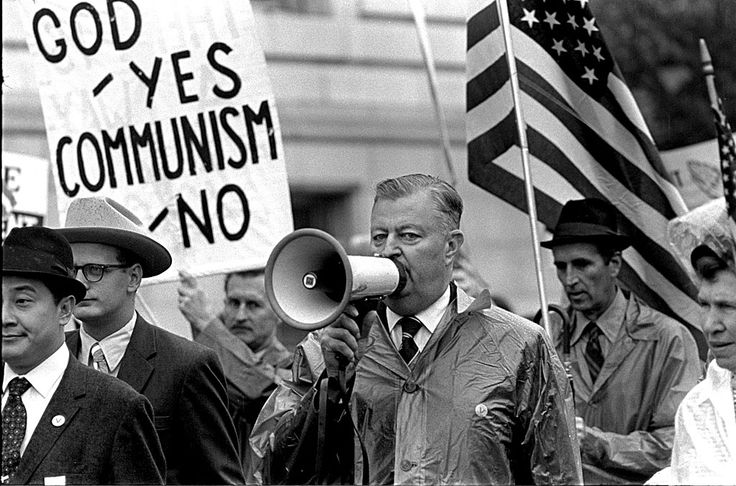
What if separatism is basic to what all humans do? We identify with some things and reject others. None of us are tolerant all the way down. We are all fundamentalists.


 Old Life