 Over at Mere Orthodoxy a couple of posts have tried to identify two wings of the Young, Restless, and Reformed “movement” by applying the labels Old School and New School. Since many members of the PCA and OPC would even be unaware of this nineteenth-century division among American Presbyterians and what it meant, I was naturally intrigued by the diagnosis. I am also unpersuaded.
Both posts start from the premise that in an age of Facebook and blogging, social institutions and structures have become radically voluntary. I am not sure if this is true, especially when it comes to Christianity in the United States. Ever since the Constitution and ecclesiastical disestablishment, faith in America has been voluntary. Granted, the suppliers of religious services have expanded considerably and the golden age of Protestant denominationalism is no more. But even during the first half of the twentieth century, conservative Protestants were awash in a cornucopia of religious institutions, from Bible schools (as graduates of BIOLA should know, rights?) and faith missions, to independent congregations and celebrity revivalists.
Then comes the application of Old and New School categories by Kevin White to the Young, Restless, and Reformed:
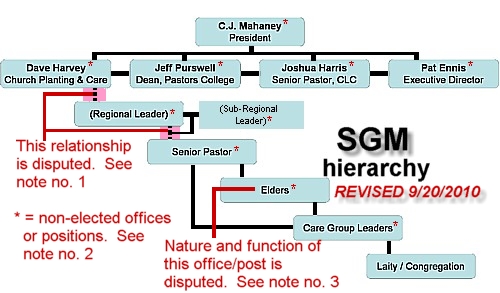
The “Parachurch” or “New School” prefer more informal church networks and more emphasize the big conferences as the anchor points for the movement. They are more likely to identify as missional and to be part of independent churches or newer church connections. (e.g., Sovereign Grace Ministries, Acts 29, Mohlerite Southern Baptists) The parts of Reformed Theology that they emphasize are sovereignty and the doctrines of grace. You might call them the “Evangelical Reformed.”
The “Church” or “Old School” have a stronger emphasis on confessionalism and formal church polity. They more emphasize the visible church as a covenant community. The conventions are more of a supplementary fellowship opportunity. Like the 19th century Old School Presbyterians, they think revivalist, pietistic evangelicalism is a good thing, that can go hand-in-hand with the best of Protestant scholastic theology. They are more likely to emphasize Reformed ecclesiology as the context for the doctrines of grace and election. You might call them “Reformed Evangelicals.”
I sure would have thought that Acts 29 or Sovereign Grace were about as churched as the Young, Restless, and Reformed get. Those are communions of some kind. Together for the Gospel or The Gospel Coalition would appear more New School than Old School compared to the networks of congregations headed by Driscoll or Mahaney. In other words, I’m puzzled by this notion that an Old School element exists among the Young, Restless, and Reformed. Neither post mentions any examples of such an Old School contingent, a figure, or set of churches. I even wonder if the authors know about the communions that comprise the North American Presbyterian and Reformed Churches.
Mind you, the hope for a well grounded account of the church to counteract voluntarism is a welcome sign. White writes, for instance:
Once entered, membership and fellowship become a holy obligation and a familial bond, not to be broken lightly. The visible fellowship of the church is made (ideally) a living critique of unstable, self-defined voluntary culture.
Matthew Lee Anderson adds:
. . . voluntary associations of an arbitrary sort simply do not provide the stability and depth that we need for human flourishing. For that, we must look elsewhere, to God Himself, which is the first movement of the church and the fountainhead of virtue.
But when Anderson talks about the dangers of localism as a kind of nostalgia, I am not sure he understands the nature of the church. He says:
It would be easy to dismiss voluntarity and pine for a return of immobility and a small patch of land with a picket fence. But the promise of localism needs to be tempered by the perils as well. The soil is just as fallen as the pavement, and electing to reject the easy, voluntary associations of our late modern world for the involuntary ones of the local community may offer just as false a hope as the social networks did.
Well, actually, when it comes to food production, a patch of land is much better than pavement, superior in every respect. And spiritual food is best produced locally rather than corporately. It is easy to sound elitist when promoting the values of slow food over McDonald’s, and the work of a pastor is much closer to that of a slow food chef than a teenager flipping burgers at the local store of an international company. But closer to the truth is the similarity between a local pastor’s work and a mother’s. These officers prepare food (whether spiritual or physical) with a sense of what is good for the eaters. They use good ingredients and do so with a sense of what the sheep or children need nutritionally.
In which case, when Jesus told Peter to feed his sheep, our lord likely did not have in mind Peter going to the spiritual equivalent of McDonald’s to purchase burgers for the flock. Care, discernment, and preparation were as important to the feeding as the actual cooking. That leaves the megaconferences like TGC or T4G or even the Philadelphia Conference on Reformed Theology much more in the position of providing fast food than a home cooked meal since the cooks are not dining with the eaters, or spending time in between meals to see how the digestion is going or if the diet needs to be modified.
I an very glad to know that some Young, Restless, and Reformed are aware of Old School Presbyterianism. But I’d sure like to know which cooks they have in mind and what authorities are overseeing the kitchens.



 Old Life