
Sometimes even boomers know the score. Take Camille Paglia (via Rod Dreher):
Paglia believes there is a causal connection between young Americans’ ignorance of history and their dim view of present conditions. At a conference in Oxford, Paglia stated again, in response to a student who criticized her and others for telling youths not to be so sensitive and snowflaky, “There is much too much focus on the present.”
Or try Rod Dreher:
Imagine that the US was involved in a major overseas war in which over 11,000 American soldiers died in one year alone (1967). For a point of comparison, fewer than 7,000 US troops have been killed in Iraq and Afghanistan over the past 14 years of combat there.
Imagine that 17,000 US soldiers would die in 1968, and 12,000 in 1969 fighting that war
Imagine that you might be drafted to go fight there.
Imagine what it would be like if you were convinced the war was profoundly immoral, and you had to choose between deserting the country and bearing arms in that war.
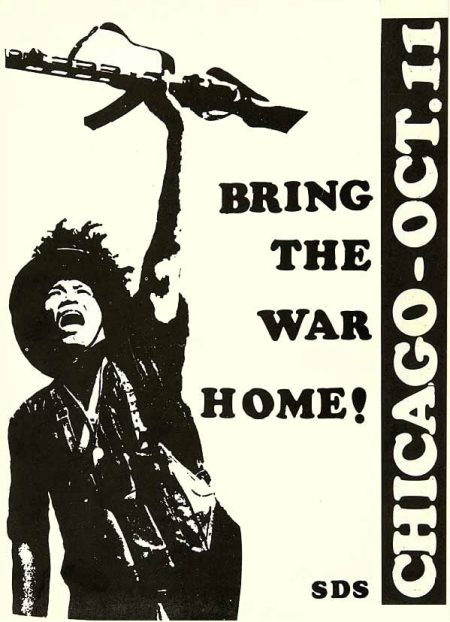
Imagine that many college campuses had become hotbeds not of snowflakey sit-ins, but of serious violence.
Imagine that domestic bombings by left-wing radicals had become a routine part of American life (e.g., five per day in an 18-month period in the early 1970s).
Imagine that two of the nation’s most prominent political leaders (MLK and RFK) Bobby were gunned down three months apart.
Imagine that your government and military were lying to Congress and to the American people about the war, and had been for years (as was revealed with the 1972 publication of the Pentagon Papers).
Imagine that major American cities were burning in race riots.
Imagine that cops in a major American city staged what was later called “a police riot” outside a political party’s national convention, and beat the hell out of protesters.
Could it be that Rod Dreher had it rougher than Ta-Nehisi Coates?
The mind reels.
 Old Life