Why Never Trumpers Need the Falwells

Because they are both fundamentalists of the double-separatist variety.

Here’s something for John Fea to consider (as he passes on advice to the new White House press secretary, Sarah Huckabee Sanders):

There is a moral argument, I suppose, for men and women who chose to go into this administration to serve in Cabinet-level or sub-Cabinet positions out of a sense of obligation to the country. (The better argument is that working in this administration inevitably leads to enabling wrongdoing and horrible policy decisions, but I understand the rationale of those who disagree with me.) However, there is no moral argument for going directly into the president’s senior/political staff, which in this administration means defending indefensible conduct, denying reality and encouraging others to lie in defense of the administration. You cannot serve in a dishonorable White House honorably.

Now substitute mainline Protestant churches (read modernist) for Cabinet and president in that quotation and you have the same argument that prompted Bob Jones to reject Billy Graham’s — get this — crusades when in 1957 the revivalist started cooperating with mainline churches. It was the same rationale that led the OPC to reject the leadership of the National Association of Evangelicals for including in its membership ministers, laity, and congregations that belonged to the mainline churches. That was double-separatism then, and historians like John Fea who know a thing or two about fundamentalism have argued that such institutional purity lacked Christian charity and was even ornery.

But if applied to the secular realm, such double-separatism makes perfect sense.

Pardon me for thinking evangelical historians are not up to their A-game with Trump. Is it because they’ve gone soft on Russia?

All Down Hill After John Witherspoon?

Anthony Bradley wonders (again) what has happened to Presbyterians and why they lost their momentum. First it was as popular voices among evangelicals, now it’s as dispensers of wisdom about the world:

I am wondering, then, for those who are raising their children in the Presbyterian tradition what resources exists for forming Presbyterian identity in terms of an understanding marriage & family (i.e., the relationship between covenant marriage & covenant baptism in America’s marriage debate), issues related to social & political power & federal political theory (which is derivative of federal theology), divorce and remarriage, war and social conflict, apologetics, and so on? How does a covenantal world-and-life view, and Presbyterian understandings of power structures, unlock the implications for a theology of work & economics when applied to international third world development, and so on?

By extension, I am also wondering what happened to Presbyterians as known and normative leaders of culturally leveraged institutions in American society and culture? Mark Twain and William Faulkner were Presbyterian. More Vice-Presidents of the United States have been Presbyterian more than any other denomination (Presbyterians rank 2nd for the US Presidency). Presbyterians rank 2nd in terms of placement on the Supreme Court in US History. I could go on. . . .

An initial thought is to wonder why Presbyterians need to go to another Presbyterian for instruction on the federal government. Isn’t reading the Federalists and Anti-Federalists (Presbyterian or not?) good enough?

Another wonder is whether Presbyterians have ever been all that influential as Bradley’s post assumes. To meet his criteria — “what Presbyterians are speaking to these issues or leading institutions that are (like think tanks or colleges and universities” — at least three sets of circumstances need to be in play. First, a person needs to be Presbyterian (what kind — Old Side, New Life, Neo-Calvinist — is another question)? Second, such a person needs to be writing on a vast number of public policy type subjects. So far Tim and David Bayly suffice. But then, third, and this is the kicker, the person needs to be sufficiently well known for folks in the pew to consult him or her (sorry, Tim and David). As it stands, lots of Presbyterians have lots of thoughts on all sorts of subjects and publish them (on the interweb). But no one of them stands out with Francis Schaeffer notoriety.

The problem, then, may have less to do with Presbyterian decline than with the diversification of communication technology and the formation of diverse pockets of affinity.

At the same time, Presbyterians need not feel so bad, at least if misery loves company. Bradley’s question applies just as much to Lutherans, Methodists, Episcopalians, and — boy does it ever — to Congregationalists (nee Puritans). Among Western Christians, Rome stands out as distinctly different in this regard since Roman Catholics have an endless supply of public intellectuals who are doing their best imitations of popes, who speak constantly to a host of issues below their pay grade. This may explain much of Rome’s contemporary appeal to converts. If you want a church with all the answers to life’s pressing questions — don’t go to Guy Noir but to the Vatican. But if you believe in the spirituality of the church and the sufficiency of Scripture, you don’t need a Presbyterian pontiff to tell you how to live. You go to church, say your prayers, work dutifully at your callings, and take your lumps.

One last thought about Anthony’s question comes from a period I know relatively well. During the first half of the twentieth century we did have Presbyterians who spoke on any number of issues, were well known and so had pretty large followings. These were William Jennings Bryan, Billy Sunday, J. Gresham Machen, and Carl McIntire. Maybe 1 in 4 isn’t bad. But if that’s going to be the percentage of Presbyterians we should heed when they start to pontificate about all of life, I’ll take my chances with guys who write for American Conservative.

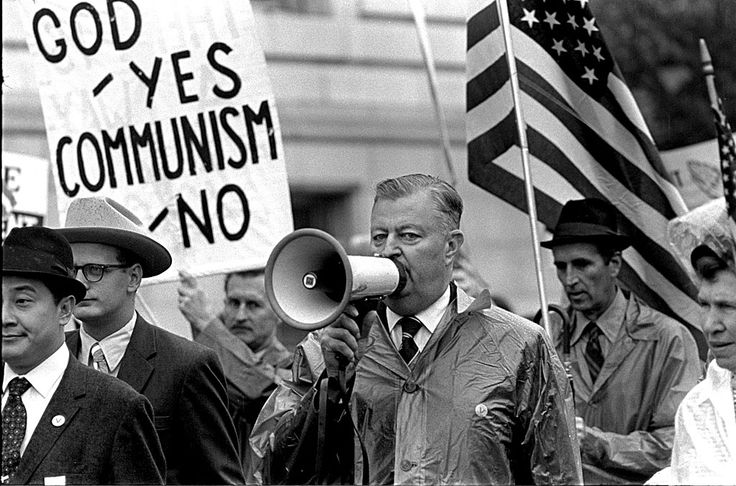
New Schoolers, Neo-Calvinists, and Fundamentalists

After Darrell Todd Maurina kicked up some dust with his post at the Baylyblog on 2k, he made the following comment:

Men such as Dr. Darryl Hart have accused me in the past of holding the same position as the Bible Presbyterians and Carl McIntyre. That is an important accusation and it needs to be rebutted. If men such as Clark, Horton, Hart, and Van Drunen manage to successfully argue that they are in the heritage of Old School Presbyterianism while their opponents are New Schoolers, great damage will be done to the cause of those who oppose “Two Kingdoms” theology within the conservative Reformed world.

Well, if you look at the historical scholarship, Darrell, it gets even worse than you imagine. Consider first of all one inference that George Marsden drew in his first book, a study of New School Presbyterianism:

The most striking illustration of the similarities between nineteenth-century New Schoolism and twentieth-century fundamentalism is found in the sequel to the Presbyterian division of 1936. The newly formed Presbyterian Church of America itself was divided over a complex set of issues remarkably similar to those of 1837. The majority in the new denomination, led by J. Gresham Machen until his death . . . and then by his immediate associates at Westminster Seminary, took clearly Old School positions on each of the issues. The minority, which withdrew to form the Bible Presbyterian Synod, was led by the militant fundamentalist, Carl McIntire. McIntire, who had envisaged the Presbyterian Church of America as part of a wider “twentieth century Reformation,” soon found that he was not at home in a strict Old School tradition. The specific programs for which he fought were 1) toleration of a doctrine (dispenstational premillennialism) that the majority in the Church considered incompatible with the Westminster Confession of Faith; 2) continuation of the Independent Board for Presbyterian Foreign Missions, rather than forming an official denominational mission board; and 3) adoption by the General Assembly of a statement that total abstinence from all that may intoxicate is “the only truth principle of temperance – exactly the same statement first adopted by the New School General Assembly of 1840. These programs, together with McIntires’s claim to represent “American Presbyterianism (a former New School phrase), his avid (anti-Communist) patriotism, his zeal for revivalism and legalistic reforms, his emphasis on interdenominational cooperation, and his lack of concern for strict Presbyterian polity – all indicate a continuation of the distinctly New School traditions with the fundamentalist wing of Presbyterianism. . . .

Perhaps the greatest difference between the New School evangelical movement and fundamentalist was that the nineteenth-century movement was largely successful, while the twentieth-century movement was not. The New School was not characterized by an almost total repudiation of the cultural and scientific advances of the age. Rather, it met those challenges without losing its own respectability. The New School thus advanced toward the center of American cultural and religious life, while fundamentalism was forced to retreat to the hinterlands. This, of course, is a crucial difference and makes a characterization of the New School as proto-fundamentalist s misleading as proto-liberal. The New School was in many respects a constructive and progressive religious intellectual movement with marked success in shaping American culture at large. (247, 249)

In case Darrell and other New School-like Protestants get bogged down in McIntire’s peculiarities, the point here is not that Maurina or the Baylys are dispensationalists or tee-totalers. The point is that they put the nation and its politics ahead of their theological and confessional commitments the way New Schoolers did. They want an American Presbyterianism, a faith that shapes America. In contrast, the Old School was willing to consider Reformed Protestantism as something independent or a matter than transcended the nation. The New Schoolers were Americans first and Americans second. Old Schoolers (at least some of them) were Presbyterians first and Americans second. If the United States and Presbyterianism are not the same, the order in which you put “Presbyterian” and “American” matters. (For Presbyterians from Canada or Ireland that makes perfect sense.)

But for those inclined to think that Dutch-American (notice the order) Reformed Protestants escape these parallels and analogies, consider this point that James Bratt made in an article about Kuyper and Machen:

Put in Dutch Calvinist terms: if forced to choose, Machen would let the Christian cultural task give way to the confessional church; Kuyper would force the confessional church to take up the cultural task. Put in American Presbyterian terms, Kuyper had some strong New School traits where Machen had none. To be sure Kuyper’s predestinarianism was at odds with the New Schools Arminian tints and his movement had a low impetus for “soul-saving,” but his organizational zeal was like Lyman Beecher’s in purpose and scale, his educational purposes at the Free University recalled Timothy Dwight’s at Yale, and his invocation of the “city on a hill” to describe the church’s place in a world recalled the charter image of Puritan New England which was ever the New Schools’ aspiration. In fact Kuyper honored New England as the “core of the American nation” and shared its definition of Christian liberty as a communal opportunity to do the right thing. At that Machen would only shudder. He indicted the “angry passions of 1861″ by which New England trampled on southern rights, and defined Christian liberty as the individual’s protection from the wrong thing. When put to the test, Machen endorsed the political model of Thomas Jefferson. At that Kuyper would only shudder back. (“Abraham Kuyper, J. Gresham Machen, and the Dynamics of Reformed Anti-Modernism,” Journal of Presbyterian History Winter 1997 75.4, 254)

So if folks like Maurina are going to talk about lines of historical continuity in the Reformed world, they may want to get their ducks in a row. And by the likes of these historians who taught/teach at Calvin College, the ties among Lyman Beecher, Abraham Kuyper, Carl McIntire, Francis Schaeffer may be stronger than the anti-2kers imagine.