Trueman on Protestant Urbanism

Like the moth drawn to the candle flame, I will once again comment on the apparent discrepancies of Carl Trueman, the Lord Protector of Westminster Seminary, whom I hope will not do to me what happened to Charles I. What has to be striking to many readers is that Trueman is critical of many of the quirks of people with whom he is associated. He has been rightly critical of celebrity pastors but is connected to parachurch organizations that thrive on such celebrity. He has been critical of inspirational conferences as a form of binge-and-purge-spirituality but speaks at such gatherings. He is also critical of God-and-country Republicanism but dedicates his most forceful expression to a God-and-country pastor-scholar. Yet, when he has had the chance to comment on authors who share his perspective on these matters (and others), Trueman will sometimes dismiss them as peculiar and idiosyncratic.

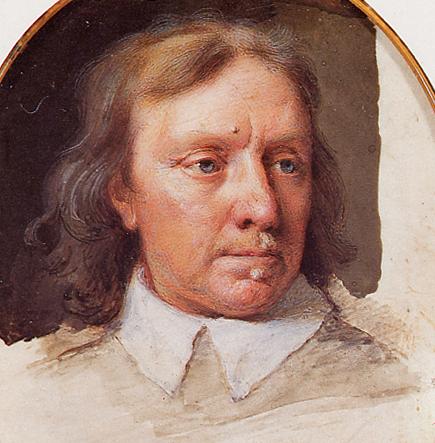
Be that as it may, the English historical theologian who admires Oliver Cromwell has a set of important observations about the phenomenon of urban-love that has swept up much of the conservative Presbyterian and evangelical world for the last two decades.

First he wrote this about the romanticization of the city that lurks in the urban-ministry model:

This superiority of the urban at an economic level has been reinforced with a veritable arsenal of cultural weapons, from the linguistic (e.g., city life is often described as `authentic’ while that in the suburbs is `artificial’) to the ethnic (city folk are seen as quick, sharp, savvy, sophisticated; country folk as slow, thick, simple – think accents, whether Mississippi or Gloucestershire). One could easily make the case for the existence of an urbanism which parallels Edward Said’s orientalism. Now the church is apparently on the bandwagon: missions to the city have a cool, hip status; missions to the bumpkins and the yokels (that’s English for `redneck’) not being quite so sexy. The secular aesthetic receives biblical sanction through baptism by a dodgy hermeneutic.

It is a real, practical, pastoral shame that influential churches are jumping on this urban-aesthetic bandwagon. Not that cities are not important. As I said, they are important because they contain lots of people. And, of course, almost by definition, big influential churches are in the cities because of the concentration of resources. But the suburbs are important too (and not simply for the faux urbanites who commute from thence for their urban church experience on a Sunday); and the countryside has its reached and its unreached. They may not be as cool in secular terms, and I would certainly not want to portray them as superior to or more authentic than the city in a way that some do (let’s not forget that as Marx romanticised the industrial proletariat, so the Fascists romanticised the feudal countryside); but it would be good to see the obsession with cities as some kind of eschatologically unique or superior entity disappearing from the trendy reformed discourse, to be replaced by much less contentiously significant biblical categories: those who see the cross as foolishness or an offence, and those who see it as the power of God unto salvation. It would also be good to see suburban and rural pastors being given their due as well.

Then he followed up with a pertinent post on the dangers of mulit-site churches:

These are sad days, when the biblical models of church and pastoring are being swept away by the avalanche of numerical success allied to personality cults and corporate values. The Apostle Peter clearly likens pastoring the church to shepherding, connects this shepherding to Christ as the great shepherd and, by implication, to the kind of quality of relationship Christ has with his sheep (1 Pet. 5: 1-5; cf. Jn. 10:14). Can multi-site, out-of state ministries even approximate in the vaguest and most attenuated way to this? Is there even a debate to be had here? Is there a single one of these megachurch outfits that isn’t basically identified with one or maybe two big personalities? Is that not a warning light that something may be amiss? And isn’t it about time that somebody who carries real weight in the young, restless and reformed world spoke out about this kind of ecclesiastical madness? Or are we so steeped in the celebrity/corporate/megachuch culture and so mesmerisied by numbers that nobody sees the problems any more?

All of us have our inconsistencies and some of us have two-kingdom theology and Christian liberty to explain them. But as long as Trueman does not let his associations with celebrity pastors and presence at inspirational conferences prevent him from incisive critiques of the American church, I’ll continue to appreciate his observations even if few of his associates seem to be paying attention.


Speaking Truth to Fame

Carl Trueman has some provocative thoughts on the difference between American and British evangelicalism and the conferences that sustain them. He was speaking at an event in Wales:

First, the conference was built around content not speakers. In fact, I was almost refused entry to my own final seminar because I could not find my armband. I was unrecognized by the steward even after speaking three times. Fantastic. In the UK, people come to hear what is said; they do not particularly care for who is saying it. This is subtly evident in the way events are marketed in the two countries. It also points to a major cultural difference. In the US in general, there is great suspicion of institutions yet huge and often naïve confidence placed in individuals. This is part of what makes celebrity culture so important, from politics to the church. In the UK, there is an often naïve trust in institutions but far more suspicion of individuals. I make this point as an observation; but also to flag the fact that US culture lends itself more readily to the problems Paul highlights in 1 Corinthians.

That would seem like a point that folks at the Gospel Coalition, Together for the Gospel, RCA Annual Integrity Leadership Conference organizers, and even the Alliance of Confessing Evangelicals might want to consider.

And it may point to another difference between American and British evangelicals: born-again Americans are suckers for an English accent, even if it expresses thoughts disagreeable.

What Makes Neo-Calvinism Biblical?

Carl Trueman wrote a series of posts about how churches go liberal. Among the culprits are celebrity pastors, pastors who publicly reject a denomination or church’s professed standards, and their enablers, pastors who pursue peace and purity of the church to avoid controversy.

As the Baylys point out — and this is truly scary when you are 2k and find yourself agreeing with 2k haters — Trueman’s post lacks specifics; it’s an abstract account of how churches go liberal (which is surprising since at Westminster Trueman is sitting on a gold mine of evidence about how American Presbyterians lost their way).

One further abstraction that Trueman may have noted was the tendency for Christians to identify their own ideas with the Bible, thus turning the thoughts and words of men into those of God. To avoid the problem of abstraction, I offer the case of — yet again — neo-Calvinism. I understand Baus will go berserk but at his prodding I cracked open Roy Clouser’s Myth of Religious Neutrality and found the following argument identified by Clouser himself as “radically biblical”:

In the context of scientific or philosophical theory making people are generally quite earnest about what they are doing, quite anxious to be as clear as possible, and have nothing to gain by proposing or defending a theory they do not believe. Thus, the possibility of deception rarely interferes in the world of theory making. Of course, the obstacle of cultural difference remains and can perhaps only be overcome by experiencing and appreciating the other culture. But at least one of the two major difficulties with recognizing presuppositions is reduced to a minimum when we are dealing with highly abstract theories.

These features of presuppositions are important because it is by acting as presuppositions that religious beliefs exercise their most important influence on scientific and philosophical theorizing. This point therefore sharply distinguishes the radically biblical position from all the other positions concerning the relation of religion to theory making, including the position of the fundamentalist. The radically biblical view does not seek to find statements in Scripture on every sort of subject matter to establish religious influence. What we want to say is that the influence of religious beliefs is much more a matter of presupposed perspective guiding the direction of theorizing than of Scripture supplying specific truths for theories. (pp. 103-104)

First, I’m not sure why we need a radically biblical understanding of theory making. Why can’t we have Christian liberty about how we make theories — as opposed to the theories we hold. This seems like the philosophical version of the helicopter mom who home schools and doesn’t allow her daughters to eat any nuts for fear of any allergies.

Second, is the Bible given to us to turn us into philosophers? Clouser may think this is a fundamentalist question because it expects to find specific answers from Scripture. But he could simply talk about various philosophies of theory making without using the Bible as an adjective. So why the need to turn a common activity into a supernatural one?

Second, part two, was Paul concerned about theory making? He interacted with philosophers but doesn’t seem to say much about how to do philosophy or the theories of the mind? And what happens when you turn a philosophical theory into the accepted reality for everyone in the church, from Joe the Plumber to Sarah Palin? Do people need to be smart to be Christian?

Third, presuppositions don’t appear to be all that analogous to regeneration. I can see the import of the illumination of the Holy Spirit for understanding and accepting truths in Scripture that had been previously antithetical to my understanding of God, myself, sin, and salvation. But do we need to turn regeneration into a construct of philosophy.

Fourth, and back to the point — if you end up calling human endeavors that are common “biblical,” do you lose sight of what the Bible really teaches and what it doesn’t teach? No matter what the motives may be for overreach — and I generally concede that they are good in Clouser and many neo-Calvinists’ cases — why don’t these smart guys ever see where extending the category of “biblical” beyond the Bible leads? Do historians really need to come to the rescue with specifics from church history like the effects of world-and-life viewism on the Christian Reformed Church where to be Reformed was all Kuyper and Bavinck and very little Dort or Belgic?

BTW, I fear the strained exegesis that this post is inviting.

History Is Not Rocket Science

. . . but it’s not theology either.

I wonder if they’ll be selling copies of Trueman’s new book at the conference.

Now He's Channeling DG

And I don’t mean Desiring God Ministries.

Carl Trueman offers some preliminary thoughts on the Christianity Today feature story on Al Mohler. Trueman recognizes a potential trap in offering a response. If Mohler represents evangelicalism, then the born-again identity is really much smaller than the evangelical guardians at Christianity Today and the National Association of Evangelicals would have it. But if the Southern Baptist Seminary president is only one small piece of the evangelical puzzle, then the movement has lost all chance of coherence. So Trueman’s solution is to punt, or at least conduct the thought experiment of a world in which evangelicalism does not exist.

I would like to suggest an alternative take, one intended neither in a mean nor chauvinist spirit: maybe evangelicalism, as some kind of abstract ideal in which all us `evangelicals’ participate, does not really exist. Maybe it is now (even if it has not always been) simply a construct which lacks any real doctrinal identity (and claims to be `gospel people’ simply will not do here, given that the Catholics and liberal friends I have also claim the same title). Maybe it is to be defined institutionally, not theologically. And maybe, therefore, it is not worth fighting or fretting over.

As in the debates between realists and nominalists in the Middle Ages, it seems to me that evangelicalism only exists in particulars, in highly qualified forms such `Confessing Evangelical’, `Open Evangelical’ etc. The essence of evangelicalism is elusive, and, I believe, illusory. After all, it is surely an odd term that implies a Reformed Calvinist has more in common with an open theist than a traditional Dominican. That, by the way, is a merely descriptive remark.

If this is so, and we can come to acknowledge such and act upon it, many of the current battles might well be defused. We will not be fighting, after all, over ownership of something that does not really exist. We could all be free to be ourselves (Reformed, Baptist, Presbyterian, Anabaptist and so on).

This sounds oddly familiar. In fact, in Deconstructing Evangelicalism the pre-DG DG wrote something very similar:

Instead of trying to fix evangelicalism, born-again Protestants would be better off if they abandoned the category altogether. The reason is not that evangelicalism is wrong in its theology, ineffective in reaching the lost, or undiscerning in its reflections on society and culture. It may be but these matters are beside the point. Evangelicalism needs to be relinquished as a religious identity because it does not exist. In fact, is it the wax nose of twentieth-century American Protestantism. Behind this proboscis that has been nipped and tucked by savvy religious leaders, academics and pollsters is a face void of any discernible features. The non-existence of an evangelical identity may prove to be, to borrow a phrase from Mark A. Noll, the real scandal of modern evangelicalism. For despite the vast amounts of energy and resources expended on the topic, and notwithstanding the ever growing literature on the movement, evangelicalism is little more than a construction. This book is a work of deconstruction.

. . . . the central claim of Deconstructing Evangelicalism is precisely to question the statistics and scholarship on evangelicalism. The reason is not simply to be perverse or provocative. Good reasons exist for raising questions about whether something like evangelicalism actually exists. In the case of religious observance, evangelical faith and practice have become increasingly porous, so much so that some born-again Christians have left the fold for more historic expressions of the Christian faith, such as Roman Catholicism, Eastern Orthodoxy, and Anglicanism. At the same time, in the sphere of religious scholarship, evangelicalism has become such a popular category of explanation that it has ceased to be useful. Better reasons, however, may also be offered for looking behind the evangelical facade to see what is really there. As the following chapters attempt to show, evangelicalism has been a religious construction of particular salience during the late twentieth century. The general contractors in building this edifice were the leaders of the 1940s neo-evangelical movement who sought to breathe new life into American Christianity by toning down the cussedness of fundamentalism while also tapping conservative Protestantism’s devotion and faith. Yet, without the subcontractors in this construction effort, the neo-evangelical movement would have frayed and so failed much quicker than it did. The carpenters, plumbers, and painters in the manufacturing of evangelicalism have been the historians, sociologists and pollsters of American religion who applied the religious categories developed by neo-evangelicals to answer the questions their academic peers were asking about Protestantism in the United States. The emergence of evangelicalism as a significant factor in American electoral politics did not hurt these efforts and, in fact, may have functioned as the funding necessary for completing the evangelical edifice. Especially after the election of Ronald Reagan as President in 1980 and the formation of the so-called Religious Right, religious leaders and religion scholars had a much easier time than before convincing skeptical academics, policy wonks, publishers and pundits that evangelicalism was a given of American life, a thriving movement, and therefore important.

Makes you wonder if Trueman is an undercover Old Life agent at the Alliance of Confessing EVANGELICALS?

Now He's Channeling Glen

Not Glen Beck but Uncle Glen, that is.

Carl Trueman is on a roll and a recent post gives his objections to celebrity pastors. A friend told Trueman about an inquirer who came to him with a doctrinal question because the inquirer’s own pastor was too busy on the speaking circuit to meet with his congregant.

To which Trueman responds:

What was interesting was that this person was a member at one of the flagship Reformed evangelical churches in the US where the pastor is seen as one of the great hopes for the spread of gospel churches in the post-Christian world. In fact, this church member had actually tried to speak to this pastor about the issue, but had not been able to get an appointment. The church leader was simply too busy, with countless external demands on his time; and now, presumably protected by a praetorian guard of personal assistants and associate pastors, he was essentially as unavailable to the masses in his large congregation as the average rock star is to the punters who buy his concert tickets. . . .

I am immensely grateful that I have only ever held membership in churches of a size where the pastor has always been accessible and available. Indeed, my pastors have always even known my name, my wife’s name, my kids’ names, and even what sports they play (this latter may seem trivial but it has been peculiarly important to me: my kids may not always enjoy going to church; but they have never doubted that the pastor actually cares for them; and that is something for which I am more grateful than I can articulate). Indeed, each of my pastors has cared about his people, not as a concept or a good idea or as an indeterminate mass, but as real, particular people with names and histories and strengths and weaknesses; and this surely reflects the character and love of God who, after, calls his sheep by name and cares for us all as individuals. If I gave you the names of said pastors, few reading this post would ever have heard of them: they have written no books; they have never pulled in huge crowds; and they have never spoken at megaconferences. But they have always been there when even the humblest church member has called out for advice, counsel or even help with bailing out a flooded basement.

This sounds a lot like the point that avuncular Glen made in the pages of New Horizons to his nephew James:

The problem with your attraction to Pastor Strong’s church is that you may be succumbing to unhealthy standards for a pastor. Yes, this man does much of what a minister is supposed to do, and he does it in a much more visible way than most. He studies Scripture, expounds and applies it, leads worship, and apparently assumes his responsibilities as a presbyter both in his session and in his presbytery. I say “apparently” because someone who travels the way he does, especially when he is in book-promotion mode, is not going to be available for some regularly appointed session and presbytery meetings, not to mention any committees on which he might serve. He is also an effective speaker, and I have heard a number of recordings that attest to his powers of delivery (though I am not as sure that he preaches as much as he “gives a talk”).

As I say, Pastor Strong does the things that pastors are supposed to do in a very visible or public way. This means that he is ministering the word to a wider audience than that of his congregation. But when folks read his books or listen to his online sermons, Strong is not acting in his capacity as a minister because he has no relationship to the reader or listener. They are not members of the congregation that called him. They did not take vows to submit to him in the Lord, and he has not made promises ratified by real people to minister the word faithfully to anyone who picks up his book in a bookstore. In other words, he has no personal, and therefore no pastoral, relationship to remote listeners and readers.

Granted, you say you would like to become a member of his congregation, and this would put you in a real relationship to Strong. But then comes the flip side of the problem I have just described. How can a man who is as busy as he is have time for a personal relationship with his congregants? What generally happens in situations like Strong’s is that he is at the top of a large pastoral staff in which the pastors without star power have the day-to-day responsibilities of shepherding the flock. At least that accounts for the pastoral oversight that Christians need. I can well imagine the disappointment you will experience if you move to Boston only to discover that you had more access to Strong during his visit to Rutherford than you do in the place where you worship.

Think of it another way. Have you ever heard of a celebrity dad? Well, of course, there are dads who are celebrities because of their work outside the home (Brad Pitt might qualify). But do you know any dads who are celebrities because of their activities as a father and husband? Bill Cosby’s character on his hit television show comes to mind, but that still isn’t the real thing. We do not know what Bill Cosby was like as a father because most of the duties of fathers are hidden from the public eye—taking out the trash, cleaning up after a child’s upset stomach, praying over the family meals. These are not tasks that create celebrity because they are unexceptional and do not attract publicity.

Some might argue that I am simply setting into motion a set of expectations that tolerates average or even mediocre men in the ministry—those without the ability to attract large audiences. Perhaps so, since I believe what Paul writes about God using earthen vessels to accomplish his purposes. The skills of the pastor are not what make his ministry effective; rather, it is the power of God that saves. My point, though, is not to deny the value of excellence. It is rather to underscore the quiet and routine ways in which the pastoral ministry transpires. Pastoral ministry is not flashy, but we need it in the same way that we need fathers and mothers to be in the home, not on speaking tours about parenthood.

It is good to know that Westminster Seminary has someone who understands the personal and routine nature of the pastoral ministry. Back in the day when I was at WTS, a certain transforming pastor in a large metropolis had a reputation at the seminary so large that he not only walked on water but hovered over it. Now, perhaps, sanity about the work of a pastor is reemerging at Machen’s seminary.

Putting the TR in Trueman

Carl Trueman’s comments on Dinesh D’Souza appointment as president of King’s College have prompted further discussion. In a post that responds to the charge that Trueman was guilty of applying seminary standards to a liberal arts college, the Lord Protector of WTS explains that the real confusion is on the other side — namely, promoting a comprehensive world and life view that is supposedly free from doctrinal considerations of the kind that divide Protestants and Roman Catholics. Trueman writes:

If a liberal arts college says that it teaches such a thing, then doctrine is surely important. All world and life views are doctrinal, after all; and a Christian one is presumably constituted by Christian doctrine in some basic way Further, as the very term indicates total comprehensiveness, the teaching of such a thing does not seem to me to require any less clarity on doctrine at a foundational level than the curriculum at a seminary would so do (albeit the curricula at the two types of institution might be markedly very different). . . .

Just to be clear: all this `Christian world life view’ talk is not my language. I am myself very uncomfortable with it because it fails to respect difference among Christians; but I do not consider it inappropriate to ask those who do use this language with such confidence to explain it to me; to explain, for example, why they use the singular not the plural; and what are the doctrines that can be set to one side as matters indifferent when constructing this singular Christian world life view?

For myself, I am very comfortable with the view of the world expressed in the Westminster Standards. The theology therein profoundly expresses my view of life, the universe and all that. Does that mean I deny the name Christian to someone who is, say, an Arminian or a Lutheran or an Anabaptist or a Catholic? . . . .

The result: my concern for doctrinal indifferentism at a Christian College arises not out of a seminary-college category confusion but rather out of my belief that one huge mythological misconception is simply being allowed to continue unchallenged: that there is `a [singular] Christian life and world view’ that can be separated as some kind of Platonic ideal from the phenomena of particular confessional commitment, whether Reformed, Anabaptist or whatever. It is time to come clean: we need to speak of Christian life and world views (plural) and we need to acknowledge that those who talk of such in the singular are more than likely privileging their particular view of the world (including their politics — Left and Right) as the normative Christian one, and thus as being essentially beyond criticism and scrutiny — whether that view is doctrinally complex or indifferent to all but being `born again.’

Again, this is very well said and evokes Oldlife objections to neo-Calvinism. How many times does you need to point to the Christian Reformed Church and see that melange of bullish worldviewism and doctrinal incompetence before establishing the unreliability of a Reformed world and life view? How many times do we need to hear about a Reformed view of “Will & Grace” before we begin to ask about a Reformed view of the sacred assembly on the Lord’s Day? Granted, keepers of the Dooyeweerdian flame will insist that King’s College and D’Souze are not the real deal; their worldviews do not run on the high octane of Reformed philosophy. That only raises the more basic objection of who made philosophers God? When did epistemology, ethics, and aesthetics trump the doctrines of God, man, Christ, salvation, the Holy Spirit, and the church? (Hint: 1898.)

Meanwhile, further indications of the unreliability of neo-Calvinism come from David Bahnsen, the son of THE Bahnsen, whose flame for neo-Calvinism drew energy from project of establishing Christ’s Lordship over all areas of life. According to Bahnsen, who is a financial planner living in Southern California:

The brilliant Dinesh D’Souza is the new President of King’s College in New York. Dinesh is a good friend, a superb scholar, an accomplished apologist, and in my opinion, a wonderful pick for this fantastic college to help provide vision and guidance as they advance into the next phase of their institutional development. Dinesh also is a Roman Catholic, though he is married to an evangelical, attends an evangelical church, and has been widely accepted in evangelical circles for several years as a respected thought leader. Dinesh is better known as a socio-political commentator than he is a theologian, but of course most people do not regard the primary qualification in the job of “college president” to be “theologian”.

The hiring of Dinesh D’Souza is an exciting thing for me as one who is very fond of the work King’s College is doing, and very fond of Dinesh in particular. I also consider the provost at King’s College, Dr. Marvin Olasky, to be one of the premier intellects in American society. I have often said that his The Tragedy of American Compassion is an utter masterpiece, and I believe his work at both World magazine and King’s College to be inspiring examples of Kingdom-building. Marvin is both a mentor to me and dear friend. I am deeply grateful to know him.

To the objections that Trueman raises, Bahnsen displays the nakedness of the neo-Calvinist royal jewels:

However, the implicit lesson in this response to Dinesh’s hiring is that Reformational theology is exclusively about soteriology and sacramentology. This is patently absurd. There is a valuable and vital element to catholic social thought which is undeniably important in worldview training. The contributions of a Dinesh D’ Souza in the contemporary scene go far beyond those things that Trueman considers so trivial (you know, unimportant disciplines like economics and political science). True, Dinesh may not line up with a lot of Protestant thought on the really, really important things like predestination and church discipline (though perhaps he does, or perhaps he will), but maybe a little more genuinely Reformed thought is needed here? For those of us who see our evangelical Reformed theology as a comprehensive world and life view, maybe, just maybe, Dinesh is far more qualified than the Carl Truemans of the world could possibly understand.

So now political science and economics have pushed aside philosophy. At least epistemology, ethics, and aesthetics have some otherworldiness going for them. But as is typical of the immanentizers of the eschaton, disciplines like politics and economics are even more vital in establishing Christ’s reign.

Maybe the real lesson is that justification is an idea with consequence.

Joining the Club?

“Trey” may think that Carl Trueman puts it more graciously than we have, but the Lord Protector of Westminster Seminary has another stellar post about the significance of The King’s College’s new president, a Roman Catholic, Dinesh D’Souza. Trueman writes (but the entire post is worth reading):

OK. So evangelicalism writ large verges on the theologically incoherent and indifferent. That’s not news. But why pick D’Souza? What is it he offers that is so distinctive? Could it be his commitment to conservative economic and social policies? Is that the essence of the really important world view at the King’s College, compared to which disagreements over the Pope and justification are mere sideshows? If so, we can see this appointment as a certain strand of evangelicalism definitively coming clean: it is not the theological issues listed above that are considered critical; it is rather the conservative political and social vision of thinkers such as Marvin Olasky. Again, just to clarify — this is not in itself to criticise such a position (though my critical views of such are surely no secret); but to point to the skewed priorities of `the Christian worldview.’

Just to clarify, this post is intended positively. After all, the critiques of Rome and evangelicalism are in such short supply among Protestants that we adherents of Reformed Protestantism need to stick together.

And the Winner of the Reformed Militant of the Week Is. . .

Carl Trueman (given his regard for boxing he may not mind the photo).

First, he weighed in on the recent trend to polemicize against Reformed Protestants who engage in polemics. Trueman wrote:

So, please, let’s bin this sad, misguided self-loathing on the polemic front. We must repent where necessary, where we have crossed the line; but, just as necessary, we must fight where we see the truth is at stake. We should be grateful for the truth that polemics have preserved so that we have a gospel to proclaim; and we should not allow a misguided commitment to being nice to allow us, in effect, to dump huge problems on the next generation by running up a massive theological and moral deficit in the church of the present.

Then he followed up with a post against a video that downplayed the differences between Reformed and Wesleyan Protestants:

Pastorally, there is, of course, a huge difference between Wesleyan and Reformed: whichever side one comes down on, on sin, on redemption, on election, on sovereignty, on sanctification etc., is going to have a profound impact on how one preaches the gospel on a Sunday, counsels the woman who has just had a miscarriage, or consoles the family whose father has just died of cancer. In saying this, I am not making a qualitative judgment on which of the two approaches is more biblical, simply commenting that the differences in theology between the two make a significant difference at the grassroots level of church practice.

These are worthwhile points, the sort of argument you might find in the pages of the Nicotine Theological Journal.

The Underbelly of Gay Marriage

The federal court decision on California’s Prop 8 legislation has prompted many responses. One significant theme is that conservative Protestants, who oppose gay marriage, whether from the pulpit or in ordination standards and hiring practices, should prepare for continued marginalization and even legislative harassment if they continue to publicly oppose gay marriage. In this vein, Carl Trueman writes:

Those evangelical leaders, academics and evangelical institutions that prize their place at the table and their invitations to appear on `serious’ television programs, and who enjoy being asked to offer their opinion to the wider culture had better be prepared to make a choice. As I have said before in this column, we are not far from the place where to oppose homosexuality will be regarded as in the same moral bracket as white supremacy. Those types only appear on Jerry Springer; and Jerry generally doesn’t typically ask them their opinion on the ethics of medical research, the solution to the national debt, or the importance of poetry to a rounded education.

(BTW, Trueman adds that the older generation of conservative Protestants dropped the ball on this one and failed to produce an exegetical argument against homosexuality. He remembers that for his peers, “now in middle age, dislike of homosexuality . . . had more to do with our own cultural backgrounds than with any biblical argumentation.” He even admits that “we were basically bigots and we needed to change.” Trueman may be too young and too English to remember – if he is middle-aged, what does that make me? – that when John Boswell’s much read and discussed book came out, Christianity, Social Tolerance, and Homosexuality [1980], this geezer remembers any number of evangelicals responses to Boswell, all before the age of the Internet, peppered with important historical and exegetical arguments about biblical teaching on homosexuality.)

I may be as naive as I am old, but I do not agree with Trueman’s assessment that opposition to gay marriage will become synonymous with white supremacy and other crack pot ideas from the perspective of the cultural mainstream. At a deep level, Americans identify with the underdog. Homosexuals have used this to gain acceptance, even though people with the kind of access they appear to have to cultural elites are generally not eligible for the category of the oppressed.

Minority groups in the United States do oppose homosexuality and they do so without any noticeable threat. For instance, Muslims are not keen on gay marriage, nor are orthodox Jews, or African-American Protestants for that matter. And yet, the thought of the state threatening these groups with penalties for their stances on homosexuality seems far-fetched. If Andrew Sullivan were to come to a place in policy debates where he wound up on the other side of a dispute with Jesse Jackson, I bet Sullivan would have enough sense not to charge Jackson with bigotry – something that rarely sticks on minorities. And if Jackson were a spokesman for African-American ministers opposed to homosexual marriage, I doubt he would be banned from the Sunday morning talk shows for doing so. I could actually see lots of bookings (though I wouldn’t be at home to watch them).

The problem for evangelicals is that they are the minority who thinks like a majority. It would be one thing to look at the numbers, recognize you don’t have the votes, and look for ways to protect your own sideline institutions. This was the approach to public life in the United States by Roman Catholics and they found their political outlet in the multi-cultural Democratic Party. But evangelicals have readily identified as the mainstream tradition in the United States, with claims about the nation’s Christian founding, and an accompanying political theology that says God loves republics and freedom. Evangelicals have also tended to approve of the Republican Party’s efforts to impose cultural uniformity on the nation. In which case, evangelicals may like to think that they are a minority only seeking toleration for themselves what other minority groups want (or have). But they have a uniformity-by-majority disposition that seeks to establish their norms as those of the nation.

This is the main reason for quick and ready dismissals of evangelicals as bigoted and intolerant, not their actual views or practices on homosexuality. Gay marriage is an emblem of a deeper cultural divide that prevents white conservative Protestants from embracing some form of cultural diversity. If they could concede ground to homosexuals (I don’t know if it should be civil marriage), they might be able to gain concessions for their own churches, schools, and families. But for the better part of 200 years, evangelicals have approached public life as a zero-sum game.

Scott Clark is sensitive to the particular consequences that gay marriage would have for the entire culture, and not for a certain sector of it, and argues plausibly for considering the social consequences of gay marriage. Scott is particularly concerned about the fallout for the family:

By analogy it is not possible to re-define the fundamental units of society without a cost. Consider any society. Assuming a certain degree of natural liberty and mobility, if people are living together in a defined space, those people have consented voluntarily to live together. They have made a society. What is the basic unit of that society? It cannot be the isolated individual if only because no mere individual is capable of forming a society or of perpetuating a society. There must be a basic social unit. Historically that social unit has been understood to be a heterosexual family, a father, mother, a grandfather, a grandmother and their children and grandchildren because it is grounded in the nature of things.

I tend to agree with this but sense it is almost impossible to use this line of reasoning in a plausible way. For forty years our society has been experimenting with a host of new social forms. Some of those were surely welcome – racial integration, and redefining women’s roles. But the impetus to overturn unwanted hierarchies did not leave much room for recognizing the value of hierarchy more generally and the way that social order depends upon other kinds of order. And so along came sex, drugs, and rock ‘n’ roll as the baby boomers’ favorite idioms for resisting cultural and moral conventions.

Evangelicals may have taken longer and been more selective in appropriating the cultural shifts of the 1960s and 1970s, but when it came to worship and sacred song they did so with abandon. Granted, it is a leap even to suggest – let alone argue – that Praise and Worship worship was a step on the path to gay marriage. But if Christian rock did to religious conventions what rock did to cultural conventions, it is possible to wonder where the bending of conventions ultimately leads.

Scott points in the direction of his observation when he writes of the generational differences on opposition to homosexuality. The younger generation has:

been raised in a culture which not only tolerates homosexuality but celebrates it. Consider the contrast between the way homosexuality was regarded in popular culture in the first half of the 20th century. Liberace was openly effeminate and made only the thinnest of attempts to protest his heterosexuality. Homosexual movie stars regularly went out of their way to create a heterosexual image and especially when it was contrary to fact. Some movie studios had a policy requiring single male actors (e.g., Jimmy Stewart) to visit a studio-run bordello in order to demonstrate their heterosexuality.

In the second half of the 20th century the old conventions, which has lost their grounding in nature and creational law, were deconstructed. . . . All of this took decades but it happened. It’s a real change of culture, of attitude, of stance, of definition of what constitutes acceptable social and sexual behavior and norms.

If Scott is right, and I think he is about the gradual ways in which the culture has changed since 1960, then evangelicals may want to rethink why it is that their disregard for what the created order reveals as appropriate for Christian worship is okay but homosexual disregard for the created order of sexual reproduction is not. It could be that Trueman’s point about bigotry has a point: can you really sing Christian rock in praise of God and oppose gay marriage with a straight face?