Oldlife.org 201: Wit and Sarcasm

The first installment in this series about this blog was to clarify what a blog is. One aspect that I did not mention was that the more successful blogs are provocative – that is, they agitate readers and that’s why people come back. The most successful blogger in the world arguably is Andrew Sullivan, the former editor of the New Republic, and his blog is hardly tepid.

This leads to the second point in need of clarification. Oldlife.org is the on-line presence of the Nicotine Theological Journal. Long before provocations started at this blog, the editors and authors of the NTJ were provoking readers and library patrons in hopes of thinking through the implications of Reformed faith and practice today, with a little levity and sarcasm thrown in. The editors’ inspiration was partly Andrew Sullivan whose time at the New Republic made it one of the most thoughtful, rancorous, and witty magazines on politics and culture at the time. But Sullivan was not the only inspiration. Other authors who wrote on serious matters with wit and sarcasm that provided models for the NTJ were Richard John Neuhaus, P. J. O’Rourke, Joseph Epstein, H. L. Mencken, and Calvin Trillin.

None of these sources, readers may object, are Reformed. Which raises the question whether Reformed authors may engage in wit and sarcasm when pursuing their convictions. Well, the answer is yes. If you spend much time in the polemical writings of the Old School and Princeton theologians, you will find a fair amount of wit and sarcasm. Here are a couple examples, the first from Charles Hodge after a seven-round dogma fight with Edwards Amasa Park (named for Jonathan Edwards – ahem) over theological method and the nature of Calvinism:

It is a common remark that a man never writes anything well for which he has “to read up.” Professor Park has evidently labored under this disadvantage. Old-school theology is a new field to him; and though he quotes freely authors of whom we, though natives, never heard, yet he is not at home, and unavoidably falls into the mistakes which foreigners cannot fail to commit in a strange land. He does not understand the language. He find out “five meanings of imputation!” It would be wearisome work to set such a stranger right at every step. We would fain part with our author on good terms. We admire his abilities, and are ready to defer to him in his own department. But when he undertakes to teach Old-school men Old-school theology it is very much like a Frenchman teaching an Englishman how to pronounce English. With the best intentions, the amiable Gaul would be sure to make sad work with the dental aspirations.

The second comes from Benjamin Warfield in one of the last pieces he ever wrote, an article objecting to the latest proposal (1920) to unite the largest Protestant denominations in the United States:

Now it is perfectly obvious that the proposed creed contains nothing which is not believed by evangelicals. and it is equally obvious that it contains nothing which is not believed by Sacerdotalists – by the adherents of the church of Rome for example. And it is equally obvious that it contains nothing which is not believed by Rationalists – by respectable Unitarians. That is as much as to say that the creed on the basis of which we are invited to form a union for evangelizing purposes contains nothing distinctively evangelical at all; nothing at all of that body of saving truth for the possession of which the church of Christ has striven and suffered through two thousand years. It contains only “a few starved and hunger-bitten” dogmas of purely general character – of infinite importance in the context of evangelical truth, but of themselves of no saving sufficiency. So far as the conservation and propagation of evangelical religion is concerned, we might as well for a union on our common acceptance of the law of gravitation and the rule of three.

By the way, these were a couple of quotes readily available from Hodge and Warfield. If you go farther into their works, along with those of Old Schoolers like Dabney and Thornwell you will find many more examples, sometimes of laugh out loud proportions.

One last source of inspiration for Oldlife.org and the NTJ is – duh – J. Gresham Machen. He did not show a lot of wit or sarcasm in his writings. But his polemics were nonetheless blunt, so much so that many who believed charity to be the only Christian virtue considered Machen mean and beyond the pale. But it is precisely Machen’s candor and warrior spirit that is worthy of emulation. The following is from a piece he wrote for an inter-faith gathering on the relations between Christians and Jews:

The fact is that in discussing matters about which there are differences of opinion, it is really more courteous to be frank – more courteous with that deeper courtesy which is based upon the Golden Rule. For my part, I am bound to say that the kind of discussion which is irritating to me is the discussion which begins by begging the question and then pretend to be in the interests of peace. I should be guilty of such a method if I should say to a Roman Catholic, for example, that we can come together with him because forms and ceremonies like the mass and membership in a certain definite organization are, of course, matters of secondary importance – if I should say to him that he can go on being a good Catholic and I can go on being a good Protestant and yet we can unite on common Christian basis. If I should talk in that way, I should show myself guilty of the crassest narrowness of mind, for I should be showing that I had never taken the slightest trouble to understand the Roman Catholic point of view. If I had taken that trouble, I should have come to see plainly that what I should be doing is not to seek common ground between the roman Catholic and myself but simply to ask the Roman Catholic to become a Protestant and give up everything that he holds most dear.

. . . So to my mind the most inauspicious beginning for any discussion is found when the speaker utters the familiar words: “I think, brethren, that we are all agreed about this . . .” – and then proceeds to trample ruthlessly upon the things that are dearest to my heart. Far more kindly is it if the speaker says at the start that he sees a miserable narrow-minded conservative in the audience whose views he intends to ridicule and refute. After such a speaker gets through, perhaps I may be allowed to say that I regard him as just as narrow-minded as he regards me, and then having both spoken our full mind we may part, certain not as brothers (it is ridiculous to degrade that word) but at least as friends.

None of this is to suggest that Oldlife.org pulls off the wit, sarcasm, polemics, or bluntness of the writers who have inspired this endeavor. It is only to point out that the tone and style of Oldlife.org is not over the top.

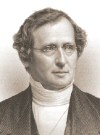
Introducing the Old School Presbyterians: Stuart Robinson

I’ve been wondering. Do contemporary Reformed Protestants read Old School Presbyterians — at all?

Over at Green Baggins where a fiesty exchange of slings and arrows — count ’em, over 1,300 comments and climbing — over 2k has diverted what could have been a good conversation about the value of polemical theology I posted the following excerpt from Stuart Robinson’s The Church of God An Essential Element of the Gospel. I have wondered for a while whether neo-Calvinists and transformers have actually ever considered what were standard argument and distinctions like the one that Robinson here makes. And if they had read the Old School, would they be flummoxed by today’s 2k arguments? Even more, what level of shock set in for neo-Calvinists and transformers to learn that they have more in common with New School Presbyterians like Charles Finney and Albert Barnes than with Charles Hodge or Samuel Miller. Although my pasting this quote has led the crickets to chirp very loudly, it is one worth highlighting here.

1. In that the civil power derives its authority from God as the Author of nature, whilst the power ecclesiastical comes alone from Jesus as Mediator.

2. In that the rule for the guidance of the civil power in its exercise is the light of nature and reason, the law which the Author of nature reveals through reason to man; but the rule for the guidance of ecclesiastical power in its exercise is that light which, as Prophet of the Church, Jesus Christ has revealed in his word. It is a government under statute laws already enacted by the King.

3. They differ in that the scope and aim of the civil power are limited properly to things seen and temporal; the scope and aim of ecclesiastical power are things unseen and spiritual. Religious is a term not predicable of the acts of the State; political is a term not predicable of the acts of the Church. The things pertaining to the kingdom of Christ are things concerning which Caesar can have rightfully no cognizance, except indirectly and incidentally as these things palpably affect the temporal and civil concerns of men; and even then Csesar cannot be too jealously watched by the Church. The tilings pertaining to the kingdom of Csesar are matters of which the Church of Christ as an organic government can have no cognizance, except incidentally and remotely as affecting the spiritual interests of men; and even then the Church cannot watch herself too jealously.

4. They differ in that the significant symbol of the civil power is the sword; its government is a government of force, a terror to evil-doers; but the significant symbol of Church power is the keys, its government only ministerial, the functions of its officers to open and close and have a care of a house already complete as to its structure externally, and internally organized and provided.

5. They differ in that civil power may be exercised as a several power by one judge, magistrate, or governor; but all ecclesiastical power pertaining to government is a joint power only, and to be exercised by tribunals. The Head of the government has not seen fit to confer spiritual power of jurisdiction in any form upon a single man, nor authorized the exercise of the functions of rule in the spiritual commonwealth as a several power.

6. It is unnecessary to digress here into a discussion of the rationale of these fundamental distinctions. It would not be difficult to show, however, that they are neither accidental nor arbitrary, but spring out of those fundamental truths concerning the nature of the Church itself, and of its relations to the gospel, which have already been pointed out. These distinctions, therefore, are of a nature to forbid all idea of any concurrent jurisdiction, and to render certain the corruption and final apostasy of any part of the Church which shall persist in the attempt to exist as a governmental power concurrent with the State,—it matters not whether as superior, inferior, or equal. They are the two great powers that be, and are ordained of God to serve two distinct ends in the great scheme devised for man as fallen. The one is set up, in the mercy and forbearance of the Author of nature toward the apostate race at large, to hold in check the outworking of that devilish nature consequent upon the apostasy, and to furnish a platform, as it were, on which to carry on another and more amazing scheme of mercy toward a part of mankind. The other is designed to constitute of the families of earth that call upon his name, and into the hearts of which his grace has put enmity toward Satan and his seed, a nation of priests, a peculiar nation, not reckoned among the nations, of whom Jehovah is the God and they are his people. That not only the utter disregard of this distinction in the formal union of the Church and State—either merging the Church in the State or the State in the Church—is ” destructive of the Church, but that, also, any degree of confusion in respect of this distinction is proportionally dangerous and corrupting, the history of the Reformed Churches generally, and in particular of the Church of Scotland, is a most striking illustration. Nay, the entire history of the Church, from its first organization, testifies that his people must render to Csesar the things that are Caesar’s, as distinct from rendering to God the things that are God’s, or the Church suffers. (pp. 86-87)

How radical is this if the OPC has reprinted this book?

Happy Hodgemas

I understand that for those observers of all holidays, but holy and secular, persevering a whole week between Christmas and New Year’s Day without a party can be an ordeal. I also know that for those vinegary Presbyterians who don’t observe the nativity of Christ in late December, non-observance can look downright acidic. The remedy for the neo- and paleo-sanctifiers of days is the birthday of Charles Hodge, who came into this world in that little burgh of Philadelphia on December 28, 1797. The great appeal of Hodge’s nativity is that for the strict Reformed it functions as a festive day close to Christmas and thus provides an outlet for all of that cooking, spirituous refreshment, and commercial enterprise bubbling up at years end in this greatest nation on God’s green earth. And for the not-so-strict neo-Presbyterians, Hodge’s birthday functions, midway between Christmas and New Year, as a way to turn the last week of the year into one long party.

Hodge’s birth has added significance because, as I am learning from Andrew Hoffecker’s fine biography of the Princeton theologian (forthcoming in the American Reformed Biographies), Hodge himself was not an observer of December 25th, like most low-church Protestants prior to the commercial success of Christmas, Mother’s Day, and Easter during the Victorian era. Hoffecker observes that when Hodge was preserving his thoughts and whereabouts during a period of supply preaching in the early 1820s he never mentioned Christmas.

Further evidence of Hodge’s silence on the Roman Catholic holiday comes from a letter he wrote on December 25, 1825 to his mother. In addition to demonstrating Hodge’s non-observance of Christmas, the letter has the Old Life advantage of making a plug for the two-kingdom that provides a proper understanding of days holy and common during a pilgrim’s life in this world. Here is the letter (which can be found in The Life of Charles Hodge, p. 97):

My Dear Mother:

Your dear little Mary Elizabeth was baptized this afternoon in the Oratory by Dr. Alexander. Notwithstanding the rain, the place of service was so near we found it easy to take our dear little treasure out to be consecrated to God in this delightful ordinance. I never appreciated so highly before the privilege of thus giving to God what is dearest to us on earth. We feel now as though she were not our own, but something lent to be cultivated and prepared through our agency for heaven. To be instrumental in thus training up one of the children of the Lord to be presented before Him without spot or blemish, is so delightful and honorable a task, that we cannot help hoping that He who has made the prospect of the duty so pleasant, will aid us in its performance. There is, too, so much ground to hope that our efforts will not be in vain that we can address ourselves to the duty with all possible cheerfulness. The application of the pure element of water is not only designed to represent the purifying influence of the Spirit upon the heart, but it seems to be the appointed pledge on the part of God, that if we sincerely devote our children to Him, and faithfully endeavor to bring them up for Him, He will bestow upon them the blessings signified by the ordinance, and contained in that gracious covenant to which it is attached. Hence the ordinance is represented as so important in the Scriptures. He that believeth and is baptized shall be saved. It certainly never was designed to be an empty form. And as it imposes the most solemn obligations, so it contains abundant encouragement to fulfil them. Our dear little children we have promised to educate for heaven, and as God shall enable us, we mean to perform our vows. To this every thing must be made secondary. To gain this world is not what we have promised to aim at. It must therefore never be the direct and primary object of pursuit. I have lately, in reading Bonaparte’s Russian Campaign, and the Life of Sheridan, been very much struck with the truth of the remark how little they really enjoy the world to whom the world is every thing. Bonaparte says the happiest part of his life was when he was a poor lieutenant. And Sheridan said the happiest part of his life was the short time he spent in a cottage. There is nothing lost, therefore, even as regards the present world, by seeking first the kingdom of God; that is, by making it the primary object of pursuit, seeing that godliness has the promise of the life that now is, and of that which is to come. We feel, therefore, determined, if God shall render us faithful to our purposes, to bring up your dear little grandchildren, as we are sure you would have us do, with the one object supremely in view of fitting them for heaven. I have great confidence in the effect of religious truth upon the infant mind. Children are so susceptible, their associations are so strong and lasting, that it does not seem strange that the effect of early education should so frequently be felt through life. And if we add to this God’s peculiar promises to those who endeavor to bring up a child in the way in which he should go, we shall see that there is abundant reason to hope that exertions properly directed will be crowned with success.

Your affectionate son,
C. H.

So if you go out tonight, hoist one in honor of Charles Hodge and his paleo-Presbyterian piety.

Forensic Friday: Hodge on Romans 5: 1-11

The first consequence of justification by faith is, that we have peace with God, ver. 1. The second, that we have not only a sense of his present favour, but assurance of future glory, ver. 2. The third, that our afflictions, instead of being inconsistent with the divine favour, are made directly conducive to the confirmation of our hope; the Holy Spirit bearing witness to the fact that we are the objects of the love of God, verses 3-5. The fourth, the certainty of the final salvation of all believers. This is argued from the freeness and greatness of the divine love; its freeness being manifested in its exercise towards the unworthy; and its greatness, in the gift of the Son of God, verses 6-10. Salvation is not merely a future though certain good, it is a present and abundant joy, verse 11. (Commentary, p. 131)

Two Kingdom Tuesday: Macadam or Concrete?

Does Christianity involve a conviction about roads and their construction? To hear some critics of 2k, the problem with distinguishing between a spiritual and an earthly kingdom is that it creates a vacuum of neutrality. Something is either sacred/religious or secular/non-religious. By granting a sphere that is not religious is to create a bogey that leaves neo-Calvinists, pietists, and theonomists spooked. Dualism (boo!) is scary enough. But to think of a sphere of human existence that doesn’t have religious meaning! It’s worse than making an appointment with the dentist.

This is why road construction – or at least choosing the surface of roads – is an interesting test case for the 2k critic. If nothing is neutral, if every square inch is Christ’s, if the Bible speaks to all of life, what is God’s will for road surfaces? Should a Christian always use macadam? Or is concrete okay? And if concrete is God’s will, should Christians and their congregations picket alongside roads that are being paved with macadam? Again, the basic premise of the anti-2k critique is that nothing is neutral and everything is religious. So do anti-2kers really want to hang the plausibility of their theory on a matter like road surfaces?

Most 2k critics never really consider road construction. They have their sights set on bigger targets. Politics, economics, art, medicine – those are outlets fitting for a healthy and vigorous worldview. And to suggest that Christianity doesn’t have the answers to these areas of human endeavor is to commit worldview antinomianism. Rabbi Bret is again useful for illustrating the point:

Dr. Darryl’s problem is that he honestly believes that Christianity, as promulgated in the Church, neither asks nor answers the question, “How shall than we live.” Dr. Darryl’s worldview believes that all attempts by the Church to speak God’s mind on this question for the public square is sinful. The consequence of Dr. Darryl’s worldview is that the Gospel’s impact in saving individual lives reaches no further than those individual personal lives. For Dr. Darryl, a medical doctor is saved by the Gospel but after being saved by the Gospel, Christianity, as promulgated by the church, has no word for the medical doctor on how he should speak about medical ethics. For Dr. Darryl, a public square Economist is saved by the Gospel but after being saved by the Gospel, Christianity, as promulgated by the church, has no word for the Economist on whether Keynesianism is consistent with the 7th commandment. For Dr. Darryl, a civil magistrate is saved by the Gospel but after being saved by the Gospel, Christianity, as promulgated by the church, has no answer for the civil magistrate on whether political or cultural Marxism is consistent with the 1st commandment. For Dr. Darryl the third use of the law, as it pertains to the public square, completely disappears. For Dr. Darryl God speaks clearly on how individuals get saved but God speaks only a incredibly contested word (i.e. – Darryl’s appeal to Natural Law) on how Christians as Christians should live.

Dr. Darryl has not escaped the fact that his worldview for the public square antinomianism that he would have the Church embrace, if pursued for the wrong reasons, is as much a form of works righteousness as is adopting a mandate on global warming or as adopting legislation that is pro-life.

So I’ll take Bret’s challenge and raise him one. Is road paving part of a Christian worldview? If not, then isn’t every 2k critic guilty of worldview antinomianism when it comes to paving streets? Doesn’t some level of reality exist that cannot be claimed as black or white, God’s kingdom or Satan’s? And if that’s the case, then why give 2kers such a hard time for worldview antinomianism when every Christian practices it at some level?

Now, the critics of 2k may be willing to concede this point but then counter that some areas of human endeavor still require a Christian worldview – especially those important arenas like public life. Here the logic seems to be that the important stuff needs a worldview of equal importance. We may be indifferent to the little things in life – though agrarians are rarely willing to concede that the things industrialists consider little really are – but we need Christianity to speak to the important matters.

What anti-2kers cannot seem to grasp is that as much as they would like Christianity to speak to all the important stuff, the Bible does not. Here it is useful to keep in mind Charles Hodge’s reasoning at the time when the Old School Presbyterian Church was being asked to support the Federal government in the emerging struggle between North and South — a time in the life of the U.S. that was a big deal. Hodge was a Republican. Hodge voted for Lincoln. Hodge wept when Lincoln was assassinated. Hodge believed in maintaining the union. He even called secession “a ruinous political heresy.” And yet, Hodge could find no reason for the church to remain anything but neutral on the political question of 1861. He wrote:

The church can only exercise her power in enforcing the word of God, in approving what it commands, and condemning what it forbids. A man, in the exercise of his liberty as to things indifferent, may be justly amenable to the laws of the land; and he may incur great guilt in the sight of God, but he cannot be brought under the censure of the church.

Eating meat sacrificed to idols was, the apostle tells us, a matter of indifference. To eat it, however, under the circumstances in which the Corinthians were placed, was a sin not only against their brethren, but against Christ. He [Paul] however expressly forbids the church interfering in the matter. To his own Master, in such cases, a man must stand or fall. Drinking wine, under some circumstances, may be a great sin, but it can never be made a ground of censure at the bar of the church. In like manner, an adherent of the Stuarts may have committed a great sin in refusing allegiance to the house of Hanover, and be justly punished by the state; but he could not be justly censured by the church. . . .

The government of South Carolina is in conflict with the government of the United States; and the Assembly decided that Presbyterians in that State, and everywhere else in this country, are under obligations to strengthen, support, and encourage the Federal Government. If the public mind were not so excited, and, therefore, prone to misapprehension and injustice, it would not be necessary for us to say again that we agree with this decision of the Assembly; we only deny their right to make it. We fully believe that the allegiance of the American citizen is to the Union, . . . . but we have no right to call upon the Assembly to adopt our interpretation of the Constitution, nor to make that interpretation the ground of its official action. (“State of the Country,” 1861)

So to make it clear, Hodge does not believe the Bible lays down a Christian position on a momentous matter such as the unity of a federal republic. He also believes that Christians have liberty to be on both sides of the issue, as long as they recognize and accept the civil penalties that may come with their position. But to condemn other Christians for their political convictions, when the Bible does not reveal a Christian position, is to bind their consciences illegitimately.

Of course, many 2k critics suffer from a depleted view of the church and are not clamoring for church censures against 2k indifference to the nickels and dimes of cultural and political life that need to be redeemed. But they do act as if such indifference is sin, when in fact they are doing exactly what fundamentalists do – claiming something to be divinely revealed as good or evil that Scripture itself does not reveal. In other words, the critics of 2k high-brow pietists – for them, everything is either holy or worldly; nothing exists in between.

So if worldview antinomianism is the charge, then let’s see the worldviewers swallow some macadam. Though it seems like an amazingly minor matter on which to hang an all encompassing world view.

Forensic Friday (night): Hodge on Paul on the Gospel

The apostle, in unfolding the plan of redemption proceeds on the assumption that men are under a law or covenant which demands perfect obedience, and which threatens death in case of transgression. He then shows that no man, whether Jew or Gentile, can fulfill the conditions of that covenant, or so obey the law as to claim justification on the ground of his own righteousness. Still, as this law is perfectly righteous, it cannot be arbitrarily set aside. What then was to be done? What hope can there be for the salvation of sinners? The apostle answers by saying, that what the law could not do (that is, save men), God has accomplished by the mission of the Son. But how does the Son save us? This is the very question before us. It relates to the nature of the work of Christ . . . . Paul’s answer to that question is, that Christ saves us by being made under the law and fulfilling all its demands. He fulfilled all righteousness, he knew no sin, he was holy, harmless, and separate from sinners. He bore our sins in his own body on the tree, and thus endured the death which the law threatened against sin. He has thus redeemed us from the law; that, is, we are no longer under obligation to satisfy, in our own person, its demands, in order to our justification, the perfect righteousness of Christ is offered as the ground of justification, and all who accept of that righteousness by faith, have it so imputed to them , that they can plead it as their own, and God has promised to accept it to their salvation. We can hardly persuade ourselves that any ordinary reader of the Bible can deny that this is a correct representation of the manner in which Paul preached the gospel. (Charles Hodge, “Beman on the Atonement,” Essays and Reviews, pp., 155-56)