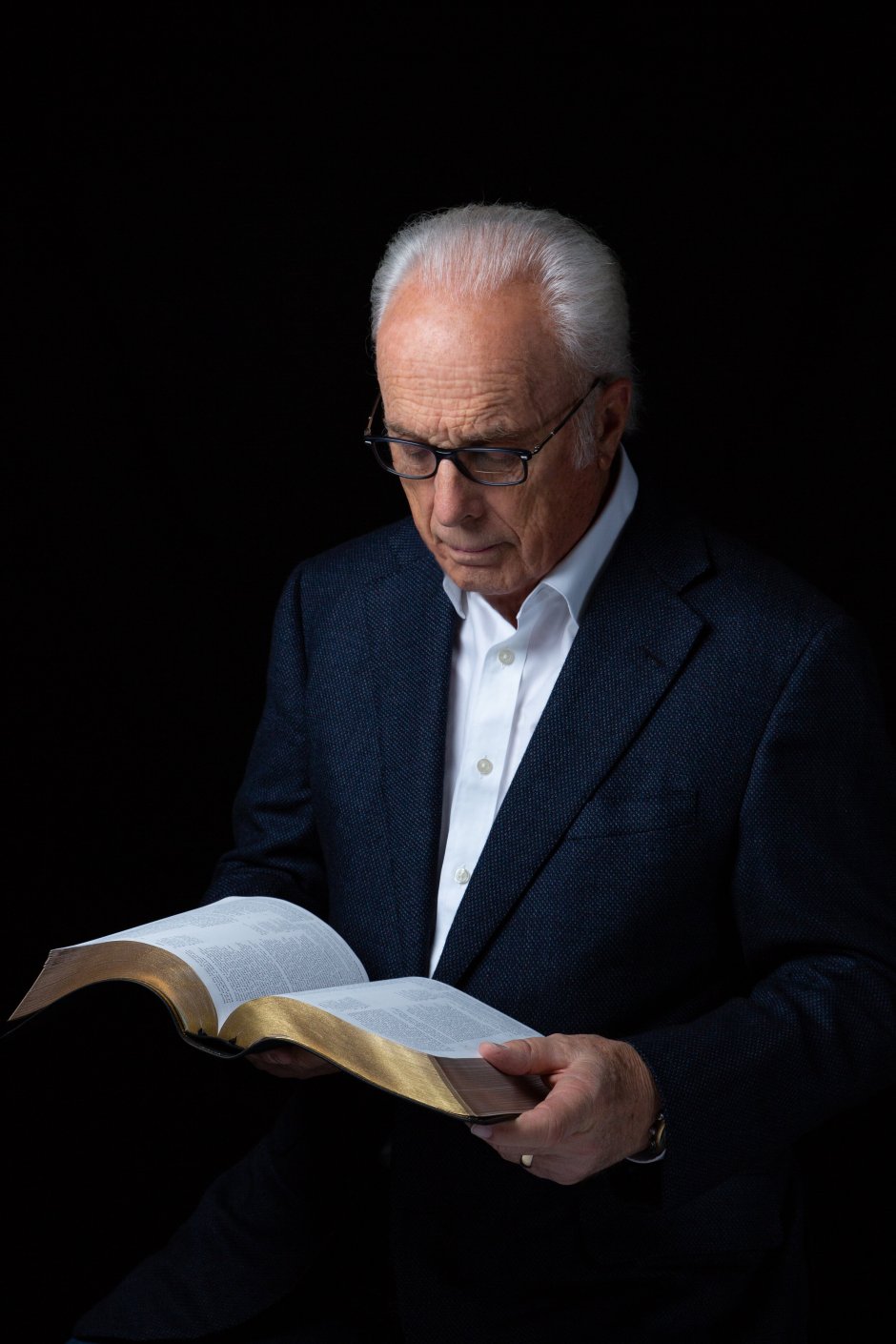
Christian Historians Are more like John MacArthur Than They Admit

A couple of recent posts by historians that identify with the work of doing Christian history leads to the excerpt below which is a critique of trying to follow scholarly standards while believing you are doing so in the name of Jesus.

The first complained about Christian academics failing to come to the defense of a fellow Christian professor (historian) after the latter had criticized both moderate evangelicals and Christian nationalists for “[craving] genocidal rage against Palestinians” and “[wishing] to turn the Gaza Strip into a ‘parking lot.'” Some with less zeal could imagine why defending that opinion might not be a high priority. Instead, the historian feared for his and his family’s lives when the reaction of Andrew Walker at Southern Seminary “set in motion the ire of a cadre of critics, including Mollie Hemingway, William Wolfe, Tom Ascol, and Meghan Basham.”

This post led to another that praised Christian historians for a critical perspective on U.S. history too often lacking in popular evangelical pundits (think the difference between George Marsden and Francis Schaeffer). Historians add value by recognizing that “history must be critical, even prophetic” as opposed to popular leaders who “have seen long-term political goals as more important than the truth of history.”

Thinking that the current generation (or even previous ones) were innocent of politics is fairly remarkable.

All of this wind-up leads to the pitch which is that evangelical historians can come in for criticism too because they mix advocacy (political, theological, moral) with scholarly inquiry just like pastors do. What follows is part of a chapter that faults evangelical historians for having their cake – scholarship – and eating it too – adding Christian faith. They may have better credentials that Francis Schaeffer or John MacArthur, but at some level within the academy their religiously inflected scholarship looks odd, maybe not as odd as non-academic evangelicals, but still strange. (This essay was published in History and the Christian Historian, edited by Ronald A. Wells, under the title “History in Search of Meaning: The Conference on Faith and History.”)

Do Christian historians have a particular perspective or share a set of assumptions that make their writing and teaching different from that of their non-believing colleagues? Though many factors led to the founding of the Conference on Faith in History in 1967, the conviction that the faith of the Christian historian set his or her scholarship apart from that produced by the rest of the profession was probably the greatest reason for organizing the Conference almost thirty years ago and has sustained its meetings and publications ever since. According to Charles Miller, the group who met to begin the CFH came up with three qualifications for a Christian historian: a “profound faith in the God and father of our Lord Jesus Christ”; an “understanding through revelation of “the nature of man, of time, and of the universe”; and a “mastery of the craft and of the art of historian.”

What happens, then, when one of the Conference’s more accomplished members publishes a book on a significant epoch in the history of American Christianity that according to church leaders not only falls well short of demonstrating a Christian philosophy of history but also appears to deny the hand of God in the development of the evangelical movement? This is precisely what happened when Harry S. Stout, Yale University’s Jonathan Edwards Professor of American Christianity, published his study of George Whitefield, entitled The Divine Dramatist: George Whitefield and the Rise of Modern Evangelicalism. This book, which linked the revivalist’s success in part to his theatrics and business acumen, and revealed the less sanctified aspects of Whitefield’s pilgrimage, caused something of a stir among those English-speaking evangelicals of a Calvinistic persuasion who read the Banner of Truth magazine and its publisher’s many reprints of Puritan and Presbyterian pastors and theologians. Not only had Stout presented the English revivalist warts and all. But worse was the implicit conclusion that human techniques, sometimes overtly manipulative, not the work of the third person of the trinity, had been responsible for the many conversions that followed Whitefield’s itinerant preaching throughout the colonies and British isles.

The cries of “say it ain’t so, Skip, say it ain’t so,” first came in a Banner of Truth review of Stout’s biography. The portrait of Whitefield that emerged, a “bombast and showman” guilty of “shameless egocentricity,” was “barely recognisable” to readers long accustomed to Whitefield as the last Calvinistic revivalist. According to David White, the reviewer, “[i]t is fallacious and absurd to trace the origins of modern campaign evangelicalism, with its expensive publicity, deliberate conditioning by a highly charged musical atmosphere and the manipulation of massed choirs, to the straightforward proclamation of a Whitefield who stood in the best tradition of the Puritans.” Iain H. Murray, the editorial director of the Banner of Truth Trust, biographer of Jonathan Edwards and also a historian of Anglo-American revivalism, kept up the attack, using the publication of the papers from an Institute for the Study of American Evangelicals conference on trans-Atlantic evangelicalism in which Stout had a chapter as the occasion for offering his estimate of the new Whitefield. What is lacking in Stout’s handling of Whitefield, as well as in the “new approach to evangelical history,” according to Murray, is a failure to write history from “the standpoint of supernaturalism.” In fact, the whole tone of this history left Murray wondering what these so-called evangelical historians would do to the book of Acts “if they determined to re-interpret its events without reference to God.”

Stout’s response to these charges, printed in both the Banner of Truth and the Evangelical Studies Bulletin, raised and answered important questions about the nature of believers practicing the craft of history. He wrote that “professional” historians “agree to settle for something less that ultimate explanations,” and that academic “canons of evidence and interpretation” leave “off the field” notions of providence and the work of the Holy Spirit. Still, the damage had been done. A member of a body whose purpose was to reflect upon the significance of Christian teachings about creation, providence and salvation for doing history was guilty of saying that in good history, that is, history practiced by university professors, such questions did not matter.

Not being the Evangelical Theological Society which has purged from its membership scholars who appeared to deny the divine origins of Scripture, the Conference on Faith and History took no formal action against the highly regarded Yale professor. Moreover, some of its members have undoubtedly sided in this debate with Stout, in part because they agree with his assessment of the role of faith in the practice of history and also because, remembering the historic warfare between science and theology, they fear the restrictions of church dogma upon the pursuit of historical truth. But despite the tendency of CFH members as academics to prefer the cultural capital offered by Yale University over that available through the Banner of Truth Trust, Iain Murray’s defense of neo-providentialism and the supernatural in the writing of history are much closer than Stout’s critical history to the purposes and contributions of the Conference on Faith and History. Writers for Fides et Historia as well as historians who have presented at the conference’s meetings have argued overwhelmingly against a secular reading of history and have attempted in a variety of ways to articulate a Christian philosophy not just of history but also of historical research and writing.

Pointing out the resemblance between Murray’s charges and the Conference on Faith and History’s mission does not mean that Stout should be banned from the conference or prohibited from attending all conference gatherings. But his biography of Whitefield and subsequent exchange with Murray cast the aims and purposes of the Conference on Faith and History in a different light, one which reveals the difficult terrain the conference has tried to circumnavigate by promoting scholarship of the highest caliber that springs from Christian convictions. What I plan to do in this paper, then, is point out some of these connections between the Conference on Faith and History and the Banner of Truth Trust. In a nutshell, my argument will be that the writings sponsored by the conference and produced by its members show that the kind of history Iain Murray wants has not been that far removed from the kind of history the conference has tried to provide even if a little light on the Calvinism.

Less American Than Thou

Thanks go to Tommie Kidd for actually recognizing that confessional Protestantism may be a category distinct from evangelicalism (all about me alert):

The second group are Reformed/confessionalist Christians, often associated with traditional Presbyterian or Reformed denominations such as the Orthodox Presbyterian Church. This is the easiest category of the four, because many of these Christians would tell you that they are not evangelicals, even if the media would regard them as such. Some of these folks will tell you that they might be evangelicals, but that the doctrines and confessions of Reformed Christianity are the center of their faith, not the born-again feelings of typical American evangelicals. D.G. Hart is one of the preeminent examples of the Reformed critics of evangelicalism.

But Professor Kidd is not going to abandon evangelicalism. He merely wants to create space between evangelicalism and American nationalism (read exceptionalism):

there are many evangelicals who have reservations about the blending of American national history with their faith. Our faith needs to be focused on Christ, the paleos say, and rooted in the deep, wide tradition of orthodox church history. We do not base our faith, in any sense, on the personal beliefs of Jefferson, Washington, or Adams. Especially when viewed from the perspective of the global church, American civil religion looks peculiar, at best. Yes, Christianity played a major role in the American founding, but that fact does not place the founding at the center of Christianity. The paleos admire many of the founders, but do not wish to read the founders alongside Scripture, as Barton would have us do in his Founders’ Bible.

This concern would be a lot more forceful if Professor Kidd were to identify with a particular communion rather than a generic evangelicalism no matter how paleo (like Oleo?). He may so identify in his personal life, but he like a lot of historians who write in Conference on Faith and History (instead of a Conference on Church History) circles claim to belong to Christianity without actually being restrained by the shape and teaching of a particular church. And this is where Kidd’s description of confessional Protestantism could take a correction. Yes, the doctrines of Reformed Protestantism are important to confessional Presbyterians but that is at least because those doctrines are confessed by a communion and bind its officers and members together (in some way).

The alternative to an ecclesial Protestantism is the very sort of evangelicalism with which Kidd seemingly identifies. And part of the reason why evangelicals since Whitefield have held the visible church in low esteem is because it gets in the way of those cooperative endeavors from orphanages and Sunday school to solving world hunger and forming academic guilds. When the United States broke with Theodosius and disestablished religion, Christians did not give up national churches but they — evangelicals included — turned the nation into a church.

If paleo-evangelicals like Kidd want to disabuse evangelicals of their nationalism, a quick remedy would be to turn denominational or churchly by adopting a higher allegiance to the church (and letting it be tested by submission to ecclesiastical authority) rather than turning a critical eye to the nation. But the problem there for Protestants on both the evangelical “right” and the mainline left is that allegiance to a particular church and its teachings, liturgy, and government looks sectarian — sort of like attachments to states like Michigan or Pennsylvania look backward. The solution to one big, vacuous, and uncritical allegiance (American exceptionalism) is not another big, vacuous, and uncritical allegiance (evangelicalism).

When Neo-Calvinism Started to Stop Making Sense

Mark Edwards, Spring Arbor University, has touched a nerve among historians who profess some version of Protestantism by commenting on the new book, Confessing History, edited by John Fea, Jay Green, and Eric Miller and suggesting that the Conference on Faith and History is the intellectual arm of the Religious Right. The historians involved in this discussion don’t mind Edwards reservations about Christian history but are not wild about associations between talk of doing Christian history and the project of evangelical politics (can you blame them?). Edwards explains (courtesy of John Fea):

To me, it concerned the larger issue of “integration of faith and learning” which seemed to underlay CFH at least at that time. For many historians, integrationist language is ALWAYS theocratic code and thus, to them, relative to the Religious Right.

This strikes me as eminently sensible since if you are going to invoke the Lordship of Christ (a Kuyperian trope that informed the Conference on Faith and History from its earliest days) when it comes to academic life, why not also appeal to Christ’s Lordship over the state (as the Religious Right has done in a variety of idioms)? In fact, I began to suspect the weakness of neo-Calvinism when I wrote a piece about the history of the Conference on Faith and History for History and the Christian Historian. I detected that objections to secular scholarship were not far removed from arguments against secular politics. Here is an excerpte:

Apart from the Christian narrative of creation, fall, redemption and consummation, what meaning or purpose can a Christian see in history? And how have Christians historically been able to see this purpose in history? The answer is from some special and authoritative revelatory power, whether it be Scripture or the Magisterium. This means that a Christian historian wanting to understand God’s purposes in the French Revolution or the rise and fall of Philadelphia’s Shibe Park (later Connie Mack Stadium) needs some special revelation – unless, of course, Christian historians all have become charismatics and now receive a word of knowledge whenever they sit down at the computer.

The kind of Christian historical agnosticism advocated here even extends to events like the First Great Awakening, the incident that sparked the debate between [Harry] Stout and [Iain] Murray. The latter thinks that Whitefield’s efforts on behalf of the colonial revivals were the work of God. From Murray’s perspective Whitefield’s revivals benefitted the church, both through the spread of sound theology and through the conversion of vast numbers. But how does Murray know that the Great Awakening was the work of God? Did God tell him? His answer would no doubt be that Whitefield’s work conformed to the teaching of Scripture and that mass conversions were a confirmation of God’s blessing. But this is not the only Christian perspective on Whitefield’s revivals. Roman Catholics would no doubt take a different view. So too would those within the Protestant fold, such as confessional Lutherans and Reformed. Furthermore, is God only at work in history when things go well, when saints are added to his church? Or does the doctrine of providence teach that God is also at work in the revivals that Murray questions, such as those crusades associated with Charles Finney and countless other not-so-Calvinistic evangelists? In fact, the doctrine of providence teaches that God is at work in everything, both good and not so good. But to determine what God intended by a particular event is another matter altogether. In other words, without the special revelation God gave to the apostles and through the risen Christ, twentieth-century Christians, just like the early church, cannot know the meaning from God’s perspective of any historical event, even the crucifixion.

This strong assertion brings us back to the question of whether such a thing as Christian history really exists. Are Christian historians better able to discern the hand of God in history than non-Christians? Are their criteria of evaluation any different even from that of an elder in a local church who has to judge whether or not the person meeting with the session is making a credible profession of faith? And if Christians cannot see into the soul of someone else to tell definitively whether God has intervened, are Christian historians any better able to do so with political, economic or cultural events?

In the end, Christian history is nice work if you can get it. It would be marvelous if, because of faith or regeneration, Christian historians were able to divine what God was up to in all subjects of research and teaching. But Christian theology says we cannot discern God’s hand in that way. It also reminds us that we need to trust that God is in control of human history even if we cannot always see that control, that God providentially orders and governs human affairs to protect his children. No matter how much the historical profession says that history moves from antiquity to modernity, the Bible tells Christians, whether historians or not, that the real direction of history is from the first to the last Adam. Only with a sense of history that culminates in Christ and the establishment of the new heavens and new earth will we finally have a Christian history. The problem for CFH members is that of trying to connect the meta-narrative of redemption to the narratives of the United States, ethnic groups, or western civilization, stories all of which are fascinating and part of God’s providence, but that may distract from the grander history of salvation.

From agnosticism about the workings of history, it was relatively easy work to get to agnosticism about political arrangements and candidates, sometimes called A Secular Faith.