Why Conservatism Beats Biblicism

An earlier reference to Ross Douthat’s blog posts on gay marriage was intended to show that people in the mainstream secular media can hear an argument that is laced with Christian norms and not go running to the Supreme Court for an injunction to shut said arguer down. Douthat concluded his series of posts (defending his column in the New York Times) with a lengthy response to Andrew Sullivan, one of gay marriage’s most provocative and intelligent advocates.

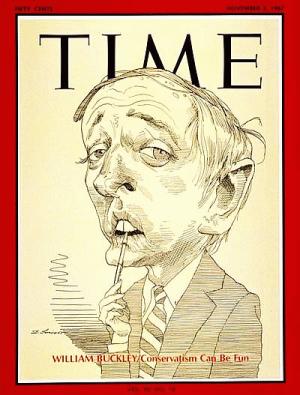
The entire post is worth reading, just to see the wider implications of what might seem like a straightforwardly up or down moral matter — whether marriage is for one man and one woman or not. But he ends with an appeal to the nature of conservatism that Protestants who think of themselves as conservative should well consider. The reason has to do with the nature of conservatism, which is not about defending morality and opposing wickedness (the Bayly version) but rather concerns conserving as much as possible what humans (whether Christian or not) have learned and benefited from the past. Douthat writes:

The benefits of gay marriage, to the couples involved and to their families, are front-loaded and obvious, whereas any harm to the overall culture of marriage and childrearing in America will be diffuse and difficult to measure. I suspect that the formal shift away from any legal association between marriage and fertility will eventually lead to further declines in the marriage rate and a further rise in the out-of-wedlock birth rate (though not necessarily the divorce rate, because if few enough people are getting married to begin with, the resulting unions will presumably be somewhat more stable). But these shifts will probably happen anyway, to some extent, because of what straights have already made of marriage. Or maybe the institution’s long decline is already basically complete, and the formal recognition of gay unions may just ratify a new reality, rather than pushing us further toward a post-marital society. Either way, there won’t come a moment when the conservative argument, with all its talk about institutional definitions and marginal effects and the mysteries of culture, will be able to claim vindication against those who read it (as I know many of my readers do) as a last-ditch defense of bigotry.

But this is what conservatism is, in the end: The belief that there’s more to a flourishing society than just the claims of autonomous individuals, the conviction that existing prohibitions and taboos may have a purpose that escapes the liberal mind, the sense that cultural ideals can be as important to human affairs as constitutional rights. Marriage is the kind of institution that the conservative mind is supposed to treasure and defend: Complicated and mysterious; legal and cultural; political and pre-political; ancient and modern; half-evolved and half-created. And given its steady decline across the last few decades, it would be a poor conservatism that did not worry at the blithe confidence with which we’re about to redefine it.

How Can We Make the Pagans Conform to Our Rules When We Won’t Play By Our Rules?

I have made this point several times, but I think it bears repeating. Evangelicals and cultural transformers spend a lot (inordinate, in my estimation) telling the wider culture how it needs to follow God’s law. Much of this activity happens during the ordinary days of the week. When James Dobson calls for a Justice Sunday or some such, it also happens on the faithful’s lone holiday.

But when many evangelicals and culture transformers gather for worship (or for church business – namely, ordination, instruction of the youth, Bible studies, etc.) they do not do as they say – they don’t follow God’s word but they follow their own rules. An obvious example is contemporary worship led by non-ordained church members. Another example is the Reformed or Presbyterian congregation that follows the praise & worship methods of charismatics and Pentecostals. Such Reformed Christians are awfully serious about husbands and wives respecting their marriage vows. Do they actually worry about the vows their pastors and elders make to uphold Reformed teaching and practice?

I wrote these paragraphs even before reading a juicy example of this very inconsistency at the blog of the Brothers Bayly. Pastors Tim and David are apparently big fans of contemporary Christian music in public worship. I cannot tell what their services are like entirely but I have seen clips of worship bands in their services and have followed links to the Good Shepherd Band’s page at Myspace. (Church of the Good Shepherd, by the way, is the name of Pastor Tim’s congregation in Bloomington, In.) So readers of their blog naturally receive the sense that services in the Baylys’ congregations is up-tempo.

The Baylys left no one to wonder about their worship preferences when this past week they posted a piece in which they divided the world between the effeminate traditionalists/classicalists and the manly singers and performers of contemporary Christian music. In particular, Tim faults Reformed Protestantism for simply being a stop on the ladder of upward mobility:

The Wesleyan or Southern Baptist moves up to Presbyterian. And there in his new Presbyterian church, our convert finds the accoutrements of his new social class wonderfully reassuring. It’s the church’s zip code, the minister’s Genevan gown or collar, the frequent repetition of those peaceful words ‘providence’ and ‘sovereignty,’ the high priority placed on the education of the congregation’s Covenant children, the preacher’s thoughtful message and splendid vocabulary, and of course the high classical style of music.

Musical style is simply an expression of socio-economic status. Could the Marxists teaching down the road at Indiana University have said it any better? This led to remarks, one part anti-intellectual, one part anti-elitist (and therefore egalitarian), that contrasted the snobbery of Reformed upper-middle classness with the poor and uneducated apostles whom Christ turned into fishers of men. “ Our converts don’t take pride in the foolishness of the Cross,” Tim writes, “so much as the wisdom of Calvin and their senior pastor’s earned doctorate from somewhere across the pond.”

This standard leftist cultural analysis in turn led to a brief on behalf of contemporary Christian music:

Speaking specifically of the music of our worship, Reformed pastors would do well to consider whether it isn’t time to stop despising the musical vernacular of our own day. There may be some congregations where musical archaisms have put down such deep roots that it would split the church to turn the clock forward, embracing the musical vernacular. But I’m betting use of the amplified instruments, tunes, and vocabulary of the common man in worship won’t happen in most of our Reformed churches for the same reason preaching against the heresy of egalitarian feminism doesn’t happen. Elisabeth Elliot put it well some years back when she said the problem with the church today is that “it’s filled with emasculated men who can’t bring themselves to say ‘no’ to a woman.”

Thus, when we set the musical forms and instrumentation of our other six days a week beside the musical forms and instrumentation of our Sunday worship, we find our Sunday worship to be cloyingly feminine, an historic specimen best suited to be trotted out by the curator for occasional museum exhibits.

So important is the fork in the liturgical road prompted by contemporary Christian music that Tim thinks fidelity to the gospel is at stake:

We must stop trying to kill two birds with one stone. Either we seek to make men into disciples of this Jesus Who chose tax collectors and fishermen to be His Apostles, or we make men into disciples of these archaic liturgies and exquisite musical forms that have evolved across centuries of Western culture. Yes, they’re true and good and beautiful. But what is the cost of making them the focus of our churches’ culture?

Somehow, the Baylys think the only alternatives are the praise band or the robed (see, they really are effeminate) four-part choir accompanied by an organ. They don’t seem to know or allow for the cultural idiom between high-brow and mass culture which is folk or common. (Ken Myers is brilliant on this point in his book, All God’s Children and Blue Suede Shoes.) And if Reformed have a folk culture certainly one part of it psalm singing (another is the high-carb, low ruffage, pot luck supper). As Shaker furniture can well teach us, simplicity and order can reveal treasures of great beauty, and clearly the Reformed are on the side of decency and order and should be seeking simplicity.

But what may be most troubling about the Bayly post is how much they imitate the academic left that they believe has led the culture astray. The Baylys reduce culture to socio-economic and gender categories. They are as egalitarian and radical as the lefties they oppose. And just as these sorts of arguments have ruined the study of the liberal arts in universities and colleges, so they are also responsible for ruining our churches and undermining any credibility about the church as pilgrim people set apart from the world. In fact, if you see the embarrassing antics of worship leaders and praise bands you have all reasons you need for Keller’s arguments for using professional musicians in services. Again, the choice isn’t between the dudes and the pro’s; the psalter or hymnal accompanied by one instrument or sung acapella depends neither on the failed rock star or the conservatory student.

Which leads to the following excerpt from a piece written fifteen years ago that still seems as fresh as it was then pungent:

Why is it, then, that when evangelicals retreat from the public square into their houses of worship they manifest the same hostility to tradition, intellectual standards, and good taste they find so deplorable in their opponents in the culture wars? Anyone familiar with the so-called “Praise & Worship” phenomenon (so named, supposedly, to remind participants of what they are doing) would be hard pressed to identify these believers as the party of memory or the defenders of cultural conservatism. P&W has become the dominant mode of expression within evangelical churches, from conservative Presbyterian denominations to low church independent congregations. What characterizes this “style” of worship is the praise song (“four words, three notes and two hours”) with its mantra-like repetition of phrases from Scripture, displayed on an overhead projector or video monitors (for those churches with bigger budgets), and accompanied by the standard pieces in a rock band.

Gone are the hymnals which keep the faithful in touch with previous generations of saints. They have been abandoned, in many cases, because they are filled with music and texts considered too boring, too doctrinal, and too restrained. What boomers and busters need instead, according to the liturgy of P&W, are a steady diet of religious ballads most of which date from the 1970s, the decade of disco, leisure suits, and long hair. Gone too are the traditional elements of Protestant worship, the invocation,confession of sins, the creed, the Lord’s Prayer, the doxology, and the Gloria Patri. Again, these elements are not sufficiently celebrative or “dynamic,” the favorite word used to describe the new worship. And while P&W has retained the talking head in the sermon, probably the most boring element of Protestant worship, the substance of much preaching turns out to be more therapeutic than theological.

Of course, evangelicals are not the only ones guilty of abandoning the treasures of historic Protestant worship. Various churches in the ELCA and Missouri Synod have begun to experiment with contemporary worship. The traditionalists in Reformed circles, if the periodical Reformed Worship, is any indication, have also begun to incorporate P&W in their services. And Roman Catholics, one of the genuine conservative constituencies throughout American history, have contributed to the mix with the now infamous guitar and polka mass. Yet, judging on the basis of worship practices, evangelicals look the most hypocritical. For six days a week they trumpet traditional values and the heritage of the West, but on Sunday they turn out to be the most novel. Indeed, the patterns of worship that prevail in most evangelical congregations suggest that these Protestants are no more interested in tradition than their arch-enemies in the academy.

A variety of factors, many of which stem from developments in post-1960s American popular culture, unite evangelicalism and the cultural left. In both movements, we see a form of anti-elitism that questions any distinction between good and bad (or even not so good), or between what is appropriate and inappropriate. Professors of literature have long been saying that the traditional literary canon was the product, or better, the social construction of a particular period in intellectual life which preserved the hegemony of white men, but which had no intrinsic merit. In other words, because aesthetic and intellectual standards turn out to be means of sustaining power, there is no legitimate criteria for including some works and excluding others.

The same sort of logic can be found across the country at week-night worship planning committee meetings. It is virtually impossible to make the case — without having your hearers go glassy-eyed — that “Of the Father’s Love Begotten” is a better text and tune than “Shine, Jesus, Shine,” and, therefore, that the former is fitting for corporate worship while the latter should remain confined to Christian radio. In the case of evangelicals, the inability to make distinctions between good and bad poetry and music does not stem so much from political ideology (though it ends up abetting the cause) as from the deeply ingrained instinct that worship is simply a matter of evangelism. Thus, in order to reach the unchurched the churched have to use the former’s idiom and style. What is wrong with this picture?

The traditionalists are of no help here. Rather than trying to hold the line on what is appropriate and good in worship, most of those who are devoted full-time to thinking about liturgy and worship, the doorkeepers of the sanctuary as it were, have generally adopted a “united-colors-of-Benetton” approach to the challenge of contemporary worship. For instance, a recent editorial in a Reformed publication says that the old ways — the patterns which used Buxtehude rather than Bill Gaither, “Immortal, Invisible” rather than “Do Lord,” a Genevan gown instead of a polo shirt — have turned out to be too restrictive. Churches need to expand their worship “repertoire.” The older predilection was “white, European, adult, classical, with a strong resonance from the traditional concert hall.” But this was merely a preference and reflection of a specific “education, socio-economic status, ethnic background, and personality.” Heaven forbid that anyone should appear to be so elitist. For the traditional “worship idiom” can become “too refined, cultured, and bloodless. . . too arrogant.” Instead, we need to encourage the rainbow coalition — “of old and young, men and women, red and yellow, black and white, classical and contemporary.” And the reason for this need of diversity? It is simply because worship is the reflection of socio-economic status and culture. Gone is any conviction that one liturgy is better than another because it conforms to revealed truth and the order of creation, or that one order of worship is more appropriate than another for the theology which a congregation or denomination confesses. Worship, like food or clothes, is merely a matter of taste. Thus the logic of multi-culturalism has infected even those concerned to preserve traditional liturgy.

The Baylys would have us believe that 2k and the spirituality of the church are responsible for moving the church in radical and liberal directions. As Tom McGinnis would say, “Are you kidding me!?”

Two-Kingdom Tuesday: The Gospel Makes the State Liberal

I have been kicking around for a while the way that some have kicked around the doctrine of the two kingdoms. (I myself prefer to call it the spirituality of the church, following the Old School Presbyterian tradition, which receives constitutional status, for instance, in the OPC’s Form of Government (3.4), which reads: “All church power is wholly moral or spiritual. No church officers or judicatories possess any civil jurisdiction; they may not inflict any civil penalties nor may they seek the aid of the civil power in the exercise of their jurisdiction further than may be necessary for civil protection and security.”) What still leaves me strangely intrigued is the Bayly Bros. kvetch that 2k (read: the spirituality of the church) leaves the resurrection without policy implications. Does this mean that states, counties and townships should establish new policies for burial procedures so that mourning visitors to cemeteries will not be injured when headstones suddenly pop out of the earth?

What it seems to mean is that the gospel must have direct bearing on government, particularly on the rule of law, what conservative politicians usually call, law and order. Here is how the Baylys put it:

How does a pastor preach the Law to Christ’s Kingdom without spillover into other kingdoms? How are we to preach God’s Law so that the Christian understands God’s demands without leading the unconverted to think he can keep the Law as well? How do we preach on cultural sins to Christians without addressing any kingdom beyond Christ’s? How do we parse the person, dividing earthly citizenship from citizenship in the Kingdom of Christ? How do we parse the Law, applying it carefully in Christ’s Kingdom yet avoiding its implications for the kingdom of man?

The two-kingdom concept seems simple enough initially. Two kingdoms: the kingdoms of earth and the Kingdom of our God and of His Christ. Two forms of authority: divine and eternal; human and temporal.

In one sense it’s elementary, so basic I doubt any Christian would deny it. There are human kings and the King of Glory, kingdoms of earth and the Kingdom of God.

The problem comes in knowing how to deal with the inevitable collisions between kings and kingdoms.

If Christianity is about law, morality, and uprightness, then this view of the state and its functions, combined with a desire for a faith-based political activism that goes in the public square and takes no prisoners makes perfect sense.

What is baffling about this understanding of the gospel, however, is that it is all law and no forgiveness. And without forgiveness the gospel is not good news – a gospel of law, human righteousness, and condemnation of sin is not a gospel.

I was reminded of this point quite poignantly during a recent worship service where the New Testament lesson came from the Parable of the Unforgiving Servant. Matthew 18 reads:

23 “Therefore the kingdom of heaven may be compared to a king who wished to settle accounts with his servants. 24 When he began to settle, one was brought to him who owed him ten thousand talents. 25 And since he could not pay, his master ordered him to be sold, with his wife and children and all that he had, and payment to be made. 26 So the servant fell on his knees, imploring him, ‘Have patience with me, and I will pay you everything.’ 27 And out of pity for him, the master of that servant released him and forgave him the debt. 28 But when that same servant went out, he found one of his fellow servants who owed him a hundred denarii, and seizing him, he began to choke him, saying, ‘Pay what you owe.’ 29 So his fellow servant fell down and pleaded with him, ‘Have patience with me, and I will pay you.’ 30 He refused and went and put him in prison until he should pay the debt. 31 When his fellow servants saw what had taken place, they were greatly distressed, and they went and reported to their master all that had taken place. 32 Then his master summoned him and said to him, ‘You wicked servant! I forgave you all that debt because you pleaded with me. 33 And should not you have had mercy on your fellow servant, as I had mercy on you?’ 34 And in anger his master delivered him to the jailers, until he should pay all his debt. 35 So also my heavenly Father will do to every one of you, if you do not forgive your brother from your heart.”

It is hard to listen to this passage and not worry that the world will hear contemporary Christian activists as unforgiving scolds. What is more pressing is whether our heavenly father thinks of such law-and-order believers? Will he look at them as unforgiving servants? Is it not possible that all the faith-based hectoring and finger-pointing in the public square is unbecoming of those who have been forgiven? Isn’t the point of this passage that the Christian’s public face should be one of forgiveness and acceptance?

Does this mean that the state, to be truly Christian, should be like the church, doling out forgiveness for sin? Should the state have mercy on repentant doctors and mothers guilty of abortion? Is that really what faith-based activists want? Isn’t this what the Democrats for the most part give us? In fact, the idea that the state should conform to the church is the way that many evangelicals wind up on the political Left. They believe that the ministry of mercy and compassion will fix the halls of power; the state should be about love, forgiveness, and compassion.

To counter the left, Rightist evangelicals invariably respond with a Christian message of law and order and thereby give the impression that the gospel is one of making people moral (or the world safe for Mormonism – thank you, Ken Myers for that bon mot).

In which case, the Religious Right is right to think that the state should execute justice rather than mercy. But they are wrong to think that the state’s functions are the fundamental building blocks of Christianity.

The problem we face today is that in so wanting the state to uphold standards of law and justice, and in trying to make a Christian case for this, we have turned the church into the state. That is, Americans have generally come to associate the conservative Protestant churches with those believers who advocate law and order (i.e., social conservatism) because the message these Christians invariably promote in public is not one of gospel but of law.

What we are now living through is a crisis of justification, not only within the churches who have members who should know better, but also one within the state, where Christian citizens have disregarded 2k in pursuit of a righteous society. Which came first, the chicken of moralism in the church or righteous activism in the state? It is hard to tell. But in both cases, the opposition to antinomianism has produced the over compensation of neo-nomianism. In both cases as well, sanctification precedes justification, good works and personal righteousness precede forgiveness and imputed righteousness. It is any wonder that justification-priority folks think the sky is falling?

What critics of 2k need to remember is that the doctrine is not about liberal or conservative politics. It is is essentially an effort to preserve the good news that Jesus Christ died to save sinners from the guilt of sin and the penalty of the law.

Another Reason Why Evangelicals Aren't Conservative

Gordon McDonald, the evangelical pastor and now Leadership editor at large (do editors ever work at medium?) has written in support of the Obama health care bill (hat tip to John Fea). His reasoning has nothing to do with politics and everything to do with Jesus. McDonald is glad for the bill “not because I am a Democrat or a Republican but because I think that Jesus, who seemed to take great interest in health issues, is glad. Looking back on his life among people like us, he often acted as a healer. He seemed to delight in curing diseases, restoring disabled people to wholeness, and rewiring damaged minds. You cannot divorce these encounters from the rest of his public ministry. Health-care was in his frame of reference.”

Methinks McDonald’s humanitarianism gets in the way of his reading of the New Testament. Sure, Jesus healed people. Had he lived longer and not gone to the cross, he could have healed a lot more. And had he yielded to Satan’s temptation to reign over everything, he might have instituted a health care plan better than our president’s. It very well could be that his healings, like his raising of Lazarus, weren’t the point of his ministry but only a sign of the everlasting wholeness and well being that will come in the new heavens and new earth for all who trust in him – healthy and sick, insured or not, Republican and Democrat.

At the same time that McDonald’s compassion clouds his reading of the New Testament, it also harms his discernment about American government. He concludes the piece with several points, numbered presumably to give the effect of policy items:

1. Any effort that is made to bring health benefits to more people (especially the weak, the poor, the children) is an effort with which I want to identify.

2. Anyone whose argument is based simply on the notion that we cannot afford making medical benefits available to more people does not get my ear. The fact is that our country—we the people—can afford it, even if it means that each of us surrenders a few more bucks that we would have spent on things for ourselves. We just have to conclude that compassion in the face of human need is a greater value than accumulating more stuff.

3. Any initiative that makes it possible for the common person to have the same access to medical science as the rich appear to have is one I want to hear about.

On the surface, these ideals look benign. But does he really mean “any” in each of these cases? Certainly, he would not countenance legalizing prostitution as a way to pay for health care insurance. Some restrictions will obviously need to come from the moral law.

And does McDonald really mean to say that the price tag is no object? Has he no sense of the debt that his and my generation is passing on to the next? Usury used to be a sin. Can printing money to balance the books – or at least reduce the debt – be a virtuous enterprise, or healthy for a government that depends on the assent of the governed?

And can McDonald really mean he is willing to level the wealth playing field so that I enjoy the same medical care as Ryan Howard, all-star first baseman for the Phillies? Um, either Howard gets easy access to orthopedists and the Phillies make the playoffs, or he and I both wait in the same waiting room, my knees get the same attention as his elbow, and the Phillies miss the playoffs? That’s an easy decision.

But whatever the difficulties in McDonald’s idealism, his haste to evaluate political events by the What-Would-Jesus-Do standard obscures the political and economic realities of universal health care within an American form of government. A better measure of Obama’s policies – or any president’s – is what would Abe do, or what would Jefferson do, or what would Wilson do? Only by asking secular and political questions first, can believers be faithful to their ultimate Lord. Conversely, by asking the religious and ethical questions first, evangelicals wind up, in Christ’s name (of all things) making a mess of this world.

Why Proponents of Christian America Need to Read John Frame

As part of his commitment to speaking the truth at length in love, John Frame has written a review of Scott Clark’s, Recovering the Reformed Confession for his website. (How long, O Lord, how long? Over 17,500 words not including 60 [!!] notes. Let me help with the math. At 250 words per page, that’s 70 [a lot of] pages.)

The review reveals a very interesting difference between Clark and Frame on the Reformed tradition. For Clark, the Reformed faith has an objective standard, found in the churches’ creeds and confessions. He concedes diversity as the churches emerged in such diverse settings as Scotland and Transylvania. But Clark (like me) finds these confessions the best way to understand what Reformed Protestantism stood for, while also providing a good deal of uniformity on what it means to be Reformed.

Frame, however, thinks this is a narrow way of understanding the Reformed tradition and suggests an alternative: “I think it better to regard anyone as Reformed who is a member in good standing of a Reformed church. I realize there is some ambiguity here, for we must then ask, what is a really Reformed church? Different people will give different answers. But, as I said above, I don’t think that the definition has to be, or can be, absolutely precise. The concept, frankly, has ‘fuzzy boundaries,’ as some linguists and philosophers say.”

What would such different approaches to defining Reformed Protestantism mean for understanding the meaning and identity of the United States? This is no idle question since Frame draws on this analogy to identify his differences with Clark. For Frame, Clark is one of those originalists who puts much stock in the founders and the Constitution. But for Frame, the United States cannot be held to such a definite and time-bound standard. He writes:

Imagine someone saying, “if you want to know what ‘American’ means, look at the founding documents of the United States: the Declaration of Independence, the Constitution, and the writings of the founders like The Federalist Papers.” There is a certain amount of truth in that. Certainly these documents tell us much of what makes the United States different from other nations. But these documents presuppose an already existing community of ideas. For example, although they mention religion rarely, they cannot be rightly understood apart from the history of New England Puritanism, Dutch Reformed Christianity in New York, Quakerism in Pennsylvania, Anglicanism in Virginia, and so on.

And the history of America subsequent to these documents is also important. Many claim that these documents are largely neglected and/or contradicted today. There is a large disconnect between what America was at its founding and what it is today. Defining America by the founding documents, and defining it as an empirical community, lead to two different and inconsistent conceptions. People who define America only by its founding documents are likely to say that subsequent developments are “unamerican.” But so say that is merely to express a preference. That preference may be a good one. But merely to express it is not likely to persuade anyone to share that preference. This case is similar to the attempt to define “Reformed.”

On the view I advocate, it is not possible to state in precise detail what constitutes Reformed theology and church life. But one can describe historical backgrounds and linkages, as I have done above in the example of the United States. And there are some general common characteristics, a kind of “family resemblance,” among the various bodies of the last five centuries that have called themselves Reformed. The idea that “Reformed” should be defined as a changing community is not congenial to Clark’s view. But it seems to me to be more accurate and more helpful.

A number of arresting implications follow from Frame’s analogy between the Reformed and American traditions.

One that stands out is who qualifies as a good American. If someone is Reformed because they belong to a Reformed church, then someone is a good American if they belong to the United States. That means that the liberals writing for the New York Times and the atheists writing books against Christianity are as much Americans as the U.S. faithful attending church each Sunday. In other words, the United States is what it is; it has no objective norms for determining what the nation means or who belongs to it. No matter your beliefs, you belong to the United States if you are American.

Another implication that stands out like low-hanging fruit is what Frame appears to be saying to those who spend much time appealing to the nation’s Christian founding for understanding what the nation should be today. As Frame writes above, “People who define America only by its founding documents are likely to say that subsequent developments are ‘unamerican.’ But to say that is merely to express a preference.” Likewise, to say that America was founded as a Christian nation and that the United States needs to return to its Christian heritage is, according to Frame’s argument, not objective reality but a “preference” with as much force as an opinion from Scott Clark.

I myself tend to be an originalist all the way down. I regard the Constitution to be important for understanding the United States then and now, the Reformed creeds important for understanding Reformed history then and now, and even the Bible important for understanding God’s plan of salvation then and now. Maybe this is the hobgobblin of a small mind, though I think it also has something to do with the way we read law, whether for the state or the church.

Still, Frame’s argument would appear to cut off at the knees those folks who think the American nation’s Christian origins are relevant for today. The message seems to be, “just say goodbye to ‘in God we trust.’”

Postscript: for some reason the Bayly Brothers seemed to miss this feature of Frame’s review when they recommended it.

Conservatism and Civil Religion

Pomo’s and Fropo’s are at it again.