
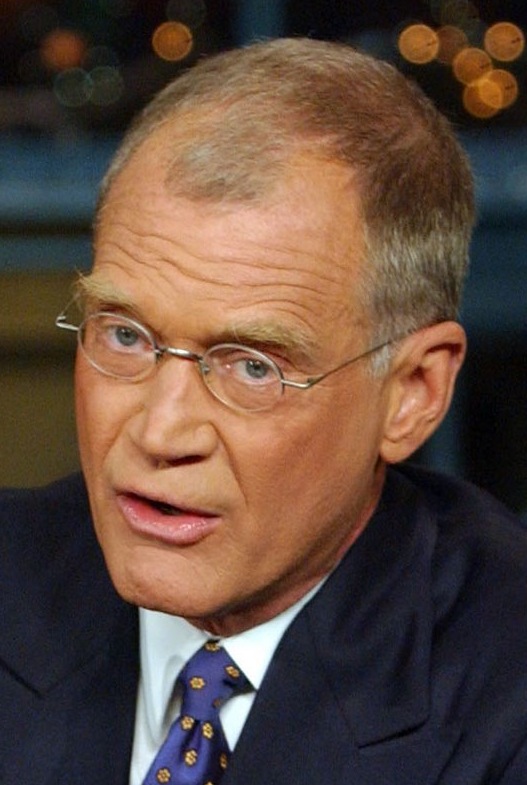
John Fea is sad to see David Letterman go. I am too, even though I haven’t watched late night television for a long time. I am equally sad to see a younger generation of Americans (as in my students) with no familiarity with late night talk shows. When I was a kid, getting to stay up late and watch Johnny Carson was a chance to take a peek at the world of adults — not in the x-rated sense but one that conjured a world of references and people and ideas that seemed important and well beyond a child’s imaginative range.
Late night talk shows are incredibly predictable in format but almost every effort to improve or change them has been a flop. Fea quotes from a piece that describes the success of the talk show:
Talk — relatively spontaneous, genuine, unrehearsed conversation — was, of course, the main point of the genre when the “Tonight Show” was pioneered by Steve Allen back in 1954, redefined by Jack Paar when he took the helm in 1957, and turned into a national institution by Johnny Carson in the ’60s and ’70s. Here was a place where show-business celebrities could drop at least some of their public persona and give us a glimpse of what they were “really” like. Sure, that glimpse was always a little stage-managed — the conversational topics screened, the anecdotes carefully baked. But those nightly sessions on the “Tonight Show” guest couch were a relaxed, human-scale refuge in a hype-filled showbiz world.
And this is what makes the Larry Sanders Show brilliant — that is, the HBO series that Garry Shandling made about late night talk shows, one part homage, one part mocumentary. Since the show within the show was going to have Larry Sanders, the fictional host, interviewing and hosting guest stars, Shandling had to decide whether the guests were also going to be fictional like Larry and Hank (the Ed McMahon figure), or whether they were going to be real. Shandling decided to have the guest stars “play” themselves. So when Alec Baldwin comes on, he is playing himself.
And that points to part of the shows genius. Is Baldwin playing himself? Is he being Alec? Or is he presenting Alec Baldwin as something other than himself? For non-baby boomers this might be way too much irony. But for fans of Letterman, who made self-awareness and irony part and parcel of his show — mocking the talk show format, mugging before the camera, bringing stage personnel into the show — Sanders brought even more attention to the unique dynamics of a show that the networks cannot abandon even if younger viewers aren’t watching.
 Old Life