Mitt ’16

Trigger warning: what follows is a post on a series with lots of profanity and — get this — lots of prayer. If you want to contemplate the disparity between profaning and praising God’s name, see what Curmudgeon has to say.

Like Curmudgeon, I agree that Last Chance U. is a terrific series. It even evokes aspects of — watch out — The Wire since it explores the way college sports functions in African-American boys’ lives and possibly offers a way out of the hood.

The series is so good that the missus did a little research on the director, Greg Whiteley, which took us to his 2014 documentary about Mitt Romney, with the title (of all things) Mitt.

Some think that if this movie had come out during the campaign, Romney might have won. Since the movie ends with the 2012 election returns and Romney’s concession, it’s hard to imagine how the movie might have come out during the campaign. But the movie does humanize Romney in ways that once again raise questions about media coverage of the contest and the mileage anti-GOP folks obtained from Mitt’s 47% remark.

The movie also makes you wish Romney were running now. He seems so much more impressive than either Trump or Clinton. No one has any trouble reminding you what a buffoon the Republican candidate is. Just listen to a ward leader in Philadelphia:

I am writing this letter primarily to the Republicans and Independents of the Ninth Ward (Chestnut Hill and a little bit of Mount Airy). Normally I write to Democratic voters to motivate them to get out and vote in the election. But in this unusual election cycle I think it is important that we talk.

The issue, of course, is Donald Trump. He is a candidate unlike any other that we have seen and, frankly, someone who deeply concerns me and I suspect also concerns many of you. In brief, he is not fit to be President. I say this after a few months of appalling behavior that reveals much about his character.

It is not a question of slips of the tongue or being politically correct. Rather his behavior reveals much about him. These statements show he is not fit and should not be President / Commander in Chief. From the sexist insults of Megan Kelly and many other women, to ridiculing a disabled New York Times reporter, to calling out the Mexican American federal judge as unfit to judge him, to attacking the gold star parents of Captain Kahn, he has revealed his character.

So you vote for Hillary and look the other way when someone asks about character? Where on the spectrum of bad character does a candidate become acceptable, even fit for office? Hillary’s at the good spot on the bad character spectrum? And was this Democratic official standing by Hillary’s man when the president seemed to reveal a few flaws of his own? Now some people know what it feels like to be Jerry Falwell.

Of course, Mitt may overdo Romney’s character. Maybe he’s not that wholesome and easy going. Maybe his family is not so pleasant when the camera is off. Maybe the candidate praying with his family on their knees — in Christ’s name, no less — was phony.

But if Trump could be this year’s candidate, why not Romney? At one point Romney says he is everything the Republican Party is not — he’s northern, rich, and Mormon while the party is southern, populist, and evangelical. Well, what is Donald Trump? Southern? Populist? Christian?

What he is is anti-elite and anti-PC. J.D. Vance explained it to Terry Gross (via Rod Dreher):

… so my dad is a Trump supporter, and I love my dad, and I always say, Dad, you know, Trump is not going to actually make any of these problems better. And he says, well, that’s probably true, but at least he’s talking about them and nobody else is and at least he’s not Mitt Romney. At least he’s not George W. Bush. He’s at least trying to talk about these problems.

Romney was far more regular than the press or his campaign made him seem. But he was too much part of the establishment — though not enough to get the blessing of the mainstream media — (Harvard, governor of Massachusetts) to attract “poor white trash.”

That’s too bad.
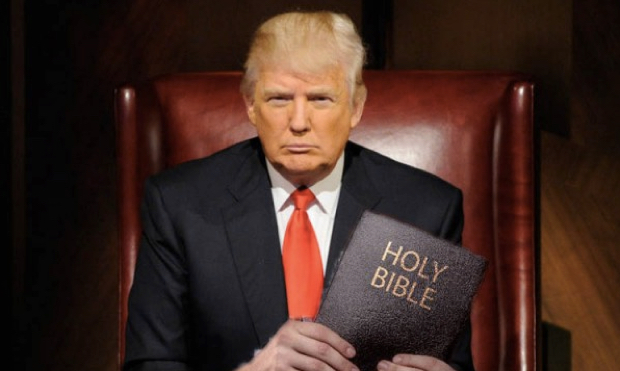
As White and Christian As Ever

Some think the United States is becoming less white and less Christian:

These racial and ethnic changes are dramatic, but they only partially account for the sense of dislocation many whites feel. In order to understand the magnitude of the shift, it’s important to also assess white Christian America’s waning cultural influence. It’s impossible to grasp the depth of many white Americans’ anxieties and fears—or comprehend recent phenomena like the rise of the Tea Party or Donald Trump in American politics, the zealous tone of the final battles over gay rights, or the racial tensions that have spiked over the last few years—without understanding that, along with its population, America’s religious and cultural landscape is being fundamentally altered. . . .

It’s true that mainline numbers dropped earlier and more sharply—from 24 percent of the population in 1988 to 14 percent in 2012, at which time their numbers stabilized. But beginning in 2008, white evangelical Protestant numbers began to falter as well. White evangelical Protestants comprised 22 percent of the population in 1988 and still commanded 21 percent of the population in 2008, but their share of religious America has now slipped to 18 percent.

Meanwhile, some can’t help but notice that the Democrats and Republicans have nominated white Protestants:

Too little noted, Protestant America has managed to nominate two Protestant candidates for president. As Clausewitz famously observed, “war is simply a continuation of political intercourse, with the addition of other means.” My corollary, from which most Americans might prefer to avert their eyes: “Politics is simply a continuation of religious intercourse, with the addition of other means.”

While almost ignored it is a telling and, perhaps, a defining aspect of the 2016 election. In his imperfect but authentic way, Donald Trump is reflecting certain of the Calvinist values underlying his beautiful Presbyterian faith. Hillary Clinton is reflecting, in her own imperfect but authentic way, the values of her beautiful Methodist faith.

If you’re not convinced that America is still white and Christian, then you haven’t tried out the apologists’ argument that Roman Catholicism hasn’t changed.

It’s Still Not 1968

Is this why Hillary Clinton will bring Bill back to the White House?

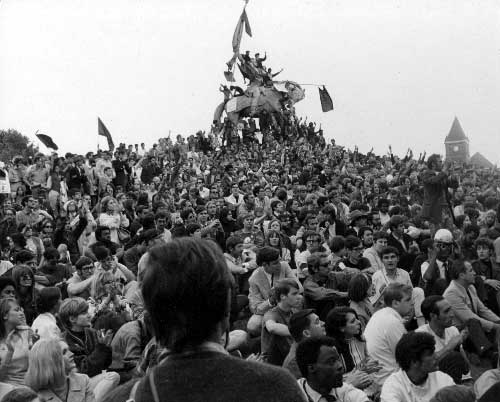
It’s worth repeating: there is no precedent in modern history for such a mass display of disunity by elected delegates at a national political convention as occurred this week in Philadelphia. Hundreds of people elected at primaries and caucuses not only vacated the Wells Fargo arena, they subsequently staged incendiary acts of civil disobedience and stared down Pennsylvania State Police riot cops—all to express the depth of their opposition to Hillary. Then, on Thursday, swaths of delegates chanted, booed, jeered, and walked out on Hillary during her nomination-acceptance speech. The closest analog may be the infamous Democratic convention of 1968, which erupted into turmoil mainly over the Vietnam War. But that turmoil mostly had to do with external protests met with violence by Chicago police. These acts of rebellion in Philadelphia were carried out by duly credentialed delegates.

The lack of coverage the tumult received, despite its historical significance, is indicative of a wider problem that Sanders supporters have long identified: few members of the elite media are sympathetic to the “Bernie or Bust” movement, which has resulted in disproportionately little media attention. Conversely, the failed #NeverTrump movement had countless devotees active in elite political, media, and ancillary spheres, so it received outsized coverage relative to the actual number of GOP voters who supported that position.

All Roads Lead to Trump

Detroit native, Tim LaHaye, died on Monday at the age of 90. Did his Left Behind novel series prepare the way for Donald Trump? Here‘s one reason for thinking so:

“Left Behind” follows a group of Americans through the days after the Rapture — which occurs shortly after an Israeli botanist wins the Nobel Prize for devising a way to grow crops in the desert, thereby making Israel a self-sustained trading partner with its neighbors and bringing peace to the Middle East. In the series that follows, the Antichrist, a charismatic young Romanian leader named Nicolae Carpathia, works through the United Nations’ machinery to consolidate currency and erase national borders. Eventually all are brought together under the Mark of Loyalty, a biochip inserted into the hand or forehead that allows one to purchase food, and a tattoo — the Mark of the Beast.

“Left Behind” was well-timed. In 1995, with the Cold War ended, the USSR effectively dissolved and the Berlin Wall down — and well past the expiration date for “Late, Great Planet Earth’s” predictions about the 1980s — the average conservative evangelical in the pew was less worried about Russia and the bomb and more concerned about a twofold threat: apostasy and liberalizing trends in the church as well as the loss of national sovereignty through the United Nations.

Republicans – The Party of Christian Charity

I don’t know why evangelical historians are so opposed to Trump. Have they not seen how forgiving Republicans are when it (thanks to one of our southern correspondents) comes to failed campaigns and the managers who run them?

The Republican Party has no natural defense mechanism against charlatans and saboteurs because politics is not what Republicans think about every second. Democrats love government. They spend their lives trying to maneuver themselves into a position to run other people’s lives. Republicans don’t want careers in government and give little thought to how to get there. Often they run for president only because they hope it will lead to more speaking gigs and TV appearances. […]

Anyone who hurts the Democrats’ electoral prospects is dead. Not so, the Republicans. If John Edwards, Ned Lamont, and Bill Bradley were Republicans, they’d have radio shows, TV gigs, and bestselling books.

What ever happened to Wesley Clark? Where’s Mike Gravel? Mike Huckabee has a TV show. If you want to know what the other former Republican presidential candidates are doing these days, just turn on the radio or TV. […]

No one gets rich by sabotaging the Democratic Party. But a lot of people get rich off losing races for the Republican Party. […]

There are no prizes in politics for caring the most, only for scoring the most. Devotion to the cause isn’t better than having a modicum of political savvy. If we’re serious about improving the country, we need candidates to be brutally honest about their own appeal. That’s if they really care about the team.

That sounds like conservatives are the truly loving and caring Americans.

Update:

Even when you fail, you win:

Fox News confirmed to The Daily Beast editor-at-large Lloyd Grove on Tuesday that beleagured chairman and CEO Roger Ailes will depart the cable news network following sexual harassment claims by former anchor Gretchen Carlson. According to a document obtained by the Drudge Report, Ailes will receive at least a $40 million buyout from the network. The news comes hours after New York Magazine reporter Gabe Sherman wrote that Fox News star Megyn Kelly told investigators hired by 21st Century Fox that Ailes had sexually harassed her ten years ago.

See how conservatives love one another?

What History is Supposed To Do (which is different from blogging)

More thoughts today on the outlook that historical knowledge cultivates.

First comes the pietist version — the past as pointer to what’s true and right:

In the introduction the authors offer five reasons to study church history: 1) It continues to record the history of God’s faithful dealings with his people and it records Christ’s ongoing work in the world. 2) We are told by God to remember what he has done and to make it known to those who follow us. 3) Church history “helps to illuminate and clarify what we believe” and in that way allows us to evaluate our beliefs and practices against historic teaching. 4) It safeguards against error by showing us how Christians have already responded to false teaching. 5) And finally it gives us heroes and mentors to imitate as we live the Christian life. In this way it promotes spiritual growth and maturation.

History as a means of grace? I’m not sure.

Second, history as perplexity:

… we developed an approach we call the “five C’s of historical thinking.” The concepts of change over time, causality, context, complexity, and contingency, we believe, together describe the shared foundations of our discipline. They stand at the heart of the questions historians seek to answer, the arguments we make, and the debates in which we engage. . . .

One of the most successful exercises we have developed for conveying complexity in all of these dimensions is a mock debate on Cherokee Removal. Two features of the exercise account for the richness and depth of understanding that it imparts on students. First, the debate involves multiple parties; the Treaty and Anti-Treaty Parties, Cherokee women, John Marshall, Andrew Jackson, northern missionaries, the State of Georgia, and white settlers each offer a different perspective on the issue. Second, students develop their understanding of their respective positions using the primary sources collected in Cherokee Removal: A Brief History with Documents by Theda Perdue and Michael Green.7 While it can be difficult to assess what students learn from such exercises, we have noted anecdotally that, following the exercise, students seem much less comfortable referring to “American” or “Indian” positions as monolithic identities.

Third, history as empathy:

I hope that the young adults who study history with me find themselves cultivating five interrelated values: comfort with complexity, humility, curiosity, hospitality, and empathy. I don’t think Donald Trump is unusual among Oval Office aspirants in his utter lack of humility (here’s a conservative critique of him on that point), his disinterest in learning (see his recent comments on his reading habits), or his impatience with complication and nuance. But if I’m going to tell my students that historical study exists to a significant extent to help them be more hospitable and empathetic to those of a different culture, ethnicity, religion, ideology, etc., I can hardly stay silent about a candidate who has demonized immigrants and Muslims.

So I think the open letter’s authors are right to characterize the Trump candidacy as an attack not only on the “constructive, evidence-based argumentation” we try to practice in our profession, but on “our values, and the communities we serve.”

What is striking is how even professional historians can make history be what they want it to be.

But why is it that professional historians don’t recognize that the way they frame the historical enterprise winds up making not a scholarly but a political point. If the aim of history is to empathize with others (among other things), where have historians been about developments in Turkey or the real complexity of issues that inform the current discussion of police and crime in the United States? (For some academics, there’s not much complexity about cops shooting people.) I’m sorry, but to be so outspoken about a guy like Trump just doesn’t take all that much insight or courage. Most people who work outside history departments know he is egotistical, bombastic, clownish, and a jumble of assertions and passions. Even supporters see that. Are students so desperate?

Or is it that historians want to present as being on the “right” side?

The thing is, the responsibilities necessary to be president are not the same as the virtues that historical study cultivates. In the case of empathy, a president does need to be empathetic. But that’s not all. Just think back to episode 2, season 4 of West Wing where President Bartlet approves the assassination of a Qumar state official suspected of terrorism. Sometimes prudence trumps empathy. And that’s something that history actually teaches. Or it should. (Why should Aaron Sorkin get all the good lessons?)

To John Fea’s credit, he excerpts Jonathan Zimmerman’s reasons for not signing the letter:

I won’t join Historians Against Trump, which indulges in some of the same polarized, overheated rhetoric used by Trump himself. In a statement released on July 11, the new group warned that Trump’s candidacy represents “an attack on our profession, our values, and the communities we serve.” But that claim is itself a repudiation of our professional values, which enjoin us to understand diverse communities instead of dismissing them as warped or deluded.

I speak, of course, of the millions of people who have cast ballots for Donald Trump. According to the signatories of the statement, there’s only one historically grounded opinion on Trump: their own. By that definition, then, Trump supporters are uninformed. When he accepts the Republican nomination this week, the historians’ statement concludes, the party will have succumbed to “snake oil.”

Of course, there are plenty of ignoramuses and bigots in the Trump camp. But surely there are reasoned, knowledgeable people who back him.

The “lessons of history” — to quote the historians’ manifesto — can be read in different way, by equally informed people. And it strains credulity to imagine that all Trump supporters have had the wool pulled over their eyes.

One consolation in all this: it’s not only Reformed Protestants or social conservatives who traffic in outrage.

Move Over David Barton, Make Room for Eric Mataxas

Donald Trump has struck a nerve. Why even I had a hard time not thinking of the presumptive GOP presidential nominee when last week reviewing a book about nineteenth-century Protestantism in the U.S.

Trump is the nearest reason I can fathom for the pronounced attention Eric Mataxas has received from two prominent evangelical historians. Because Metaxas endorsed Trump, because evangelicals seem to be moving their support increasingly to Trump, and because evangelical historians identify with evangelicalism but evangelicals not as much, some professors may feel the need to create distance between their public persona and the larger evangelical feng shui.

Now it turns out that one of those historians has joined other historians in signing a letter opposing Trump’s candidacy. That same historian, John Fea (don’t mean to pick on you today, big fella), wonders about the intellectual chops of Metaxas when he writes that Metaxas’ book is “an intellectual mess” that demonstrates the ongoing validity of Mark Noll’s lament about the scandal of the evangelical mind.

What about the intellectual coherence of the historians who oppose Trump? They start this way:

Today, we are faced with a moral test. As historians, we recognize both the ominous precedents for Donald J. Trump’s candidacy and the exceptional challenge it poses to civil society. Historians of different specialties, eras and regions understand the enduring appeal of demagogues, the promise and peril of populism, and the political uses of bigotry and scapegoating. Historians understand the impact these phenomena have upon society’s most vulnerable and upon a nation’s conscience. The lessons of history compel us to speak out against a movement rooted in fear and authoritarianism. The lessons of history compel us to speak out against Trump.

Do these historians really want to invoke morality when it is evangelicals and the social conservatives who regularly complain about America’s moral decline? Invoke morality selectively? Like when it’s about professional duties but not about what happens sex happens. And is the work of historical understanding really a moral enterprise? Did we somehow go back to the days of the academic Protestant establishment when Jews and people of color were scarce on university and college campuses? Those were times when professors sometimes talked about morality.

But let morality go. What about the intellectual prowess that historians bring to assess Trump? What part of the past do these historians draw upon to show the dangers of populism (or even fascism)? I read the letter and I don’t see any — ANY!!! — historical references. Believe it or not, it’s all about Trump:

Donald Trump’s record of speeches, policies and social media is an archive of know-nothingism and blinding self-regard. Donald Trump’s presidential campaign is a campaign of violence: violence against individuals and groups; against memory and accountability; against historical analysis and fact.

The Trump candidacy is an attack on our profession, our values, and the communities we serve. No less than his sham “Trump University,” Donald Trump’s contempt for constructive, evidence-based argumentation mocks the ideals of the academy, whether in the sciences or the liberal arts. Academia is far from the only profession endangered by Trumpism. Donald Trump bullies and suppresses the press, and seeks to weaken First Amendment protections as President. Trump singles out journalists for attack and mocks physical disabilities. Both the judiciary and individualjudges face public threats from Trump. Non-white, non-male professionals and civil servants are irredeemably compromised in Donald Trump’s eyes.Judges are disqualified from service because of their ethnicity; women Presidential candidates succeed only because of their gender; the President of the United States is under suspicion as illegitimate and alien because of his skin color and heritage.

Those are all fair points. But it doesn’t take a Ph.D. or tenured job in history to notice those defects in Trump’s candidacy. So what gives? Why is Trump so much inside so many’s heads?

To John Fea’s credit, he tries to explain why he signed:

I signed this document because I believe that historians, as historical thinkers, have a LOT to offer when it comes to critiquing political candidates. The emphasis in the letter on evidence-based arguments, the respect for the dignity of all humanity, the importance of context, the uses of the past in political discourse, the commitment to a civil society (rooted, presumably, in the kind of empathy that historical thinking brings), and the very fact that making America great AGAIN is ultimately a statement about the past. Trump runs roughshod over all these things.

But all the letter says about context and evidence is to say that historians affirm that stuff and they do so in a not so self-deprecating way:

We interrogate and take responsibility for our sources and ground our arguments in context and evidence.

And if historians are so good at context, where have they been on the context for relations between blacks and police? It’s not like cop shootings and cops being shot has not been in the news.

Like I say, Trump changes everything (and I’m still not voting for him).

#NeverNebuchadnezzar

Have those who oppose Trump ever considered Jeremiah’s instructions to the people of God, namely, to submit to the rule of a pagan king?

“‘“But if any nation or kingdom will not serve this Nebuchadnezzar king of Babylon, and put its neck under the yoke of the king of Babylon, I will punish that nation with the sword, with famine, and with pestilence, declares the LORD, until I have consumed it by his hand. So do not listen to your prophets, your diviners, your dreamers, your fortune-tellers, or your sorcerers, who are saying to you, ‘You shall not serve the king of Babylon.’ For it is a lie that they are prophesying to you, with the result that you will be removed far from your land, and I will drive you out, and you will perish. But any nation that will bring its neck under the yoke of the king of Babylon and serve him, I will leave on its own land, to work it and dwell there, declares the LORD.”’” (Jeremiah 27:8-11 ESV)

Wouldn’t that sort of Word of God prompt you to consider revising this?

Note that I didn’t say that Trump definitely is an existential threat. I don’t know that; nobody does. Hitler only rose to power because enough people believed that he wasn’t such a threat. There is no way of predicting in advance just how bad a President Trump would be. But if you’re an evangelical leader, this sets up a version of Pascal’s wager for you. If Trump turns out to be embarrassing but not all that bad, then your pride will suffer a bit, and you’ll have to say you were wrong to support Hillary. You’ll try to be wiser in the next election.

But if Trump turns out to be the “extinction-level event” that Sullivan predicts, and you fail to do everything in your power to stop him, then you will join a long line of evangelical leaders who have been on the wrong side of history – and judged harshly for it – at critical moments ranging from slavery to Jim Crow to abortion (in the early days of that debate). Your witness for Christ – our witness – will be diluted because we didn’t do everything we could to prevent this catastrophe. And there won’t be a next election to get it right.

Isn’t it possible that a politician could be God’s judgment on a nation’s churches (not that any of us has that kind of word from God)? And isn’t it possible that God’s plans go on even when his people and prophets go into exile as part of divine judgment?

That’s not a reason to support Trump the way Jeremiah endorsed Nebuchadnezzar. But it is a reason to be cautious as a minister of God’s word when talking about magistrates.

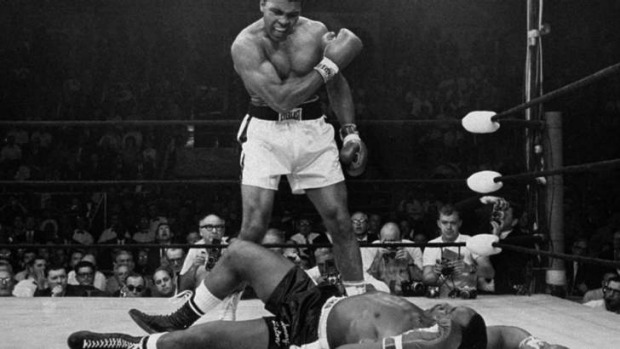
What If Muhammad Ali Ran for President?

As I listen to journalists and sports-talk radio hosts talk about the greatest fighter of all time, I keep thinking I understand the appeal of Donald Trump.

Just look at some of these juicy quotes:

Clay was 18: bounding, fearless, leading with his mouth.

“I’m not only a fighter. I’m a poet; I’m a prophet; I’m the resurrector; I’m the savior of the boxing world. If it wasn’t for me, the game would be dead,” he said.

Young Clay made boxing an art form. He was an original, a heavyweight who didn’t move around the ring — he danced. He’d thrill the crowd with his quick scissor-step shuffle. On defense, he’d slip and slide, Dundee said, and then flick that jab.

“He had a jab that was like a snake,” he said.

Float like a butterfly, sting like a bee; rumble, young man, rumble. Boxing reporters never had so much fun.

So Ali, though seemingly a good guy on numerous fronts, was a tad egotistical. Did that cost him with the media?

And then he could be pretty divisive:

After the Liston fight, Ali revealed he was a member of the black separatist movement Nation of Islam. He wanted to be called Muhammad Ali, a name he said was given to him by the group’s leader, Elijah Muhammad.

“That’s my original name; that’s a black man name,” Ali said. “Cassius Clay was my slave name. I’m no longer a slave.”

Muhammad, the Nation of Islam leader, preached that integration and intermarriage were wrong and that white people were devils. It was an idea Ali defended in a 1971 TV interview.

“I’m gonna look at two or three white people who’re trying to do right and don’t see the other million trying to kill me? I’m not that big of a fool, and I’m not going to deny it,” he said. “I believe everything he [Muhammad] teach, and if the white people of a country are not the devil, then they should prove they’re not the devil.”

Ali became a polarizing figure in America.

Again, did that cost Ali his reputation?

So I wander as I wonder.

Make Christianity Pretty Good Again

That is more or less the idea that Donald Trump (on America) inspired Chris Gerhz to ponder. Here is an indication of when Trump supporters thought/think the nation was greatest (compared to other voters):

In general, Republican respondents favored the Eisenhower and Reagan eras. Democrats looked to the much more recent past: the 1990s, or even later. 2016 was the second most popular choice among Democrats.

Even among Trump supporters, the year 2015 was one of the 10 most popular choices. But there was no discernible pattern: 1955, 1960, 1970, and 1985 were all mildly popular, and the single most common response (8%) was the year 2000.

And that was true in general for Americans, regardless of party or other variables. Sanger-Katz observed that “The year’s popularity may partly reflect people’s fondness for round numbers. But many voters explained their choice by referring to a greater sense of security. The Sept. 11 attacks occurred the following year.”

The vast majority of votes were cast for years since the end of WWII, and almost no one opted for a year before 1900. (1776 did get some support.)

So I’ll ask Gerhz’s question: when was the church at its best? I imagine Protestants will not select dates between 350 and 1515. I’ll also wager that Roman Catholics (who read here) will not choose dates between 1965 and 2015. But in light of recent discussions about Mary, will Roman Catholics and Eastern Orthodox pick a date when the virgin lived on earth. In the realm of sectarian Protestantism, I suspect that Orthodox Presbyterians will not choose from the 1936 to 2016 era but prefer instead the time of the Puritans, Westminster Assembly, John Knox, or John Calvin’s Geneva.

My own preference is the antebellum period (after 1837) when Old School Presbyterians was at its height. The church was pretty sound, liturgy was sensible, theologians knew to be on the lookout for compromise, and Presbyterians were not tempted by the status (and loss of independence) that comes with ecclesiastical establishment.