
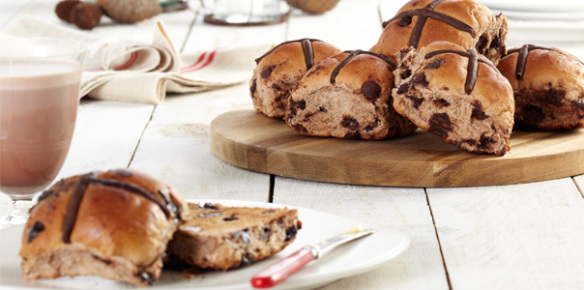
Now that Christians are polishing off the chocolate cross remains and stripping lilies arrangements of their liturgical ribbons for weekday household decor, they may want to remember how recent the Protestant observance of Easter is. Eric Leigh Schmidt’s Consumer Rites helps:
Easter, even more than Christmas, remained under a Puritan and evangelical cloud in the antebellum United States. Though various denominations preserved the holiday — most prominently Episcopalians, Roman Catholics, Lutherans, and Moravians — their celebrations were, until the middle of the century, local, parochial, and disparate. The festival only became a nearly ubiquitous cultural event in the decades after 1860 as low-church Protestant resistance or indifference gave way to approbation and as Episcopalian, Roman Catholic, and new-immigrant observances became ever more prominent. Middle-class Victorians, as fascinated as ever with the romantic recovery of fading holiday traditions and the cultivation of new home-centered festivities, discovered lush possibilities in this spring rite. . . .
In an article on Easter published in 1863, Harper’s New Monthly Magazine suggested the growing embrace of the feast in American culture. “It is one of the obvious marks of our American religion,” the article related, “that we are noticing more habitually and affectionately the ancient days and seasons of the Christian Church.” Easter, following Christmas’s rising popularity, showed “unmistakable signs that it is fast gaining upon the religious affection and public regard of our people.” “We have carefully noted the gradual increase of observance of the day,” the journal continued, “and can remember when it was a somewhat memorable thing for a minister, not Catholic or Episcopal, to preach an Easter sermon.” What the magazine found most revealing of “this new love for Easter,” however, was the increasing use of elaborate floral decorations for the festival. “Easter flowers are making their way into church of all persuasions,” the magazine applauded. “One of our chief Presbyterian churches near by decked its communion-table and pulpit with flowers for the third time this Easter season.” . . .
In lauding Easter flowers, the Harper’s piece was celebrating the expanding art of church decoration. As a liturgical movement, this art bloomed in England and the United States in the middle decades of the nineteenth century. An outgrowth of the ritualist or Catholic turn within Anglican and Episcopalian circles, the new forms of church decoration meshed with the Gothic revival in Victorian church architecture and ornament. (195, 196)
It took another thirty years for candy makers to catch up with the spirit of the times: “In the 1880s and 1890s the material forms of the modern Easter — chocolate rabbits, mass-produced eggs, greeting cards, baskets, toy chicks, and the like — settled snugly into place as fixtures of the holiday” (234)
 Old Life