What's Up With Oaths and Vows?

Historians may not be rocket scientists, but they can generally outwit the smartest of their interlocutors simply by knowing the origins of an idea, event, person, or argument. This is not to say that those who talk to historians understand when historical knowledge trumps philosophy, exegesis, or ideology. Some people are so committed to abstract truths that their ideas are impervious to concrete facts. But historians enjoy an advantage in debate thanks to clay feet that all historical actors (short of being divine persons) have.

For instance, knowing that w— v— thinking began at a certain date in the modern era, or that dramatic conversions are not much older, has an effect on claims that these are timeless truths revealed in holy writ. This historical awareness even extends to ideas that Old Lifers promote such as the spirituality of the church. The historical origins of an idea or truth doesn’t mean it is wrong. It only means it is not timeless and so perhaps its connections to the Bible are less certain.

Current reading and teaching has made me aware of the peculiar strains and tendencies of Puritanism both in Old and New England. For instance, it does look to me like chapter eighteen in the Confession of Faith on Assurance is a direct result of debates among the Puritans about the relationship among good works done in preparation for conversion, justification, and how to evaluate good works after conversion. These debates may have absorbed other Reformed churches, but the Westminster Divines’ willingness to explore the interior dimensions of Christian experience does seem to reflect the turn of experimental Calvinism or practical divinity that in the 1590s surfaced in England and caught fire in the Netherlands.

Another feature of the Confession of Faith that seems to reflect its British setting is the twenty-second chapter on Lawful Oaths and Vows. It is not a brief chapter and discusses the topic as follows:

1. A lawful oath is a part of religious worship, wherein, upon just occasion, the person swearing solemnly calleth God to witness what he asserteth, or promiseth, and to judge him according to the truth or falsehood of what he sweareth.

2. The name of God only is that by which men ought to swear, and therein it is to be used with all holy fear and reverence. Therefore, to swear vainly, or rashly, by that glorious and dreadful Name; or, to swear at all by any other thing, is sinful, and to be abhorred. Yet, as in matters of weight and moment, an oath is warranted by the Word of God, under the new testament as well as under the old; so a lawful oath, being imposed by lawful authority, in such matters, ought to be taken.

3. Whosoever taketh an oath ought duly to consider the weightiness of so solemn an act, and therein to avouch nothing but what he is fully persuaded is the truth: neither may any man bind himself by oath to anything but what is good and just, and what he believeth so to be, and what he is able and resolved to perform.

4. An oath is to be taken in the plain and common sense of the words, without equivocation, or mental reservation. It cannot oblige to sin; but in anything not sinful, being taken, it binds to performance, although to a man’s own hurt. Nor is it to be violated, although made to heretics, or infidels.

5. A vow is of the like nature with a promissory oath, and ought to be made with the like religious care, and to be performed with the like faithfulness.

6. It is not to be made to any creature, but to God alone: and, that it may be accepted, it is to be made voluntarily, out of faith, and conscience of duty, in way of thankfulness for mercy received, or for the obtaining of what we want, whereby we more strictly bind ourselves to necessary duties; or, to other things, so far and so long as they may fitly conduce thereunto.

7. No man may vow to do anything forbidden in the Word of God, or what would hinder any duty therein commanded, or which is not in his own power, and for the performance whereof he hath no promise of ability from God. In which respects, popish monastical vows of perpetual single life, professed poverty, and regular obedience, are so far from being degrees of higher perfection, that they are superstitious and sinful snares, in which no Christian may entangle himself.

My point in bringing up this chapter is not to challenge the Confession. I don’t find anything objectionable in this chapter. And the counsel about monastic vows has merit and reflects the genuine challenges that confronted Protestants. Still, I wonder when the last time a pastor taught his congregation about oaths and vows. I also wonder when the last time was that a candidate for ministry had to answer questions about oaths and vows. These questions are all the more pressing when we remember that none of the other Reformed confessions have such extensive comments on oaths and vows. Could it be that the background of the National Covenant in Scotland and the Solemn League and Covenant of Parliament and the Scots had more to do with this chapter than the development of Reformed teaching?

I am just asking.

Orthodox Presbyterians Rival Gospel Co-Allies Enthusiasm for Enthusiasm

General Assemblies are not always like this but the recent OPC GA did assume more the character of a national preaching conference (of course, minus the celebrity pastors) than a regular meeting of the church’s highest judicial body. All of the presentations from the OPC’s standing committees included historical overviews as well as substantial edification and exhortation from God’s word. Don Poundstone, a retired minister and home missionary, rounded out the proceedings with his address at the Saturday night banquet in which he argued, based on Christ’s responses to Pilate (John 18), that the OPC at its best had been a witness to the truth of Scripture and had affirmed that Christ’s kingdom is not of this world. Video recordings of most of the presentations are available here. (Foreign missions talks are unavailable because of the sensitivity of information regarding several fields of ministry.)

Arguably, one of the most moving parts of the Assembly came on Saturday morning during the presentation by the Committee on Christian Education. Part of the proceedings included a talk by Rev. John P. Galbraith, a 98-year old minister who actually studied at Westminster when Machen was still teaching and went on to serve in a variety of capacities, including General Secretary of both the Committee on Home Missions and the Committee on Foreign Missions. Even before speaking — which revealed a man with a mind still sharp and a tongue still eloquent — Galbraith received a standing ovation from commissioners and guests. The first words out of his mouth were those of the apostle Paul, “I do not understand what I do. For what I want to do I do not do, but what I hate I do.” Galbraith then added, “And you applaud me?”

As near as I could tell, Galbraith’s deflection of applause characterized the week of presentations, devotionals, and sermons. Orthodox Presbyterians were glad to have reached the seventy-fifth birthday, but but they also knew that their history was not sensational or the product of their own faithfulness. (Self-promotion alert: see this point expressed in a different way here.) As cliched as it may have sounded, the truth that human accomplishments were less responsible than God’s grace for the OPC’s “success” was overwhelming sense among all those gathered. Part of the reason must have been that the last time the OPC met to throw a birthday party — in 1986 at Tony Campolo’s Eastern University — the church also voted itself out of existence. That is, the OPC accepted the invitation from the PCA to join and be received into the newer Presbyterian denomination. The proposal did not receive the super-majority of votes needed to be sent to the presbyteries for ratification. But a majority of commissioners in 1986 were willing to hitch their own and longer story to a communion that was less than fifteen years old. After twenty-five years of developments in both denominations, hardly anyone, at least in the OPC, regrets the rejection of J&R.

And so with quiet resolve and restrained joy Orthodox Presbyterians reflected on their past and heard preachers and missionaries recount the mighty deeds of God throughout redemptive history. It was by most accounts a time of great blessing for all who attended, and even prompted some to think that the OPC should sponsor its own national conference. Its speakers, like its history, would not be famous. And so the turnout would be light, insufficient to cover expenses. But those preachers would know their Bibles. Perhaps, just as important, they’d know their place — that the power of their words depends not on their own accomplishments or celebrity but on the God who gave them the word to proclaim.

Is Edwards' Question Even the Right Question?

Yes, I may be OCD but my apparent fixation on Edwards has as much to do with current writing projects as taking the pulse of experimental Calvinists. Edwards’ biography David Brainerd has occupied a few mornings this week for a chapter on Calvinism and foreign missions. So sue me.

If Edwards’ defenders are still reading, and if they still think the First Pretty Good Awakening great, then perhaps they could help us all figure out what Edwards was thinking when he wrote this about Brainerd’s conversion and piety:

His first discovery of God, of Christ, at his conversion, was not any strong idea of any external glory or brightness, or majesty and beauty of countenance, or pleasant voice; nor was it any supposed immediate manifestation of God’s love to him in particular; nor any imagination of Christ’s smiling face, arms open, or words immediately spoken to him, as by name, revealing Christ’s love to him; either words of Scripture or any other: but a manifestation of God’s glory, and the beauty of his nature, as supremely excellent in itself; powerfully drawing, and sweetly captivating the heart; bringing him to a hearty desire to exalt God, set him on the throne, and give him supreme honor and glory, as the king and sovereign of the universe; and also a new sense of the infinite wisdom, suitableness, and excellency of the way of salvation by Christ; powerfully engaging his whole soul to embrace this way of salvation, and to delight in it.

Okay, so this is the standard starting point of Christian hedonism. Genuine faith begins with the convert being enraptured with God. Self-interest is forbidden. The aim of faith is to glorify and exalt God, and to deny the self and renounce pride. This description is, for that matter, close to Edwards’ own account of his own conversion.

But Edwards goes on to contrast Brainerd’s conversion with either an inferior or illegitimate kind:

His first faith did not consist in believing that Christ loved him, and died for him in particular. His first comfort was not from any secret suggestion of God’s eternal love to him, or that God was reconciled to him, or intended great mercy for him; by any such texts as these, “Son be of good cheer, thy sins are forgiven thee. Fear not I am thy God,” &c. or in any such way. On the contrary, when God’s glory was first discovered to him, it was without any thought of salvation as his own. His first experience of the sanctifying and comforting power of God’s Spirit did not begin in some bodily sensation, any pleasant warm feeling in his breast, that he (as some others) called the feeling of the love of Christ in him, and being full of the Spirit. How exceeding far were his experiences at his first conversion from things of such a nature! (Life of David Brainered, (1835], 249)

Hence, the question “what must I do to be saved” is the wrong question to ask for someone seeking salvation. Instead, Edwards seems to prefer “how must I glorify and hedonistically enjoy God?” But as close as that question is to the start of the Shorter Catechism, it is several steps removed from “What is effectual calling?” “Effectual calling is the work of God’s spirit whereby, convincing us of our sin and misery, enlightening our minds in the knowledge of Christ, and renewing our wills, he enables us to embrace Christ freely offered to us in the gospel.”

The Shorter Catechism would appear to be describing something close to the beginning of genuine belief in a Christian, and it says very little about the glory of God. It says much about the sinner’s need, and Christ’s remedy for sin, not to mention the work of the Spirit.

So I wonder what Edwards was thinking, and why so many evangelical Calvinists find his devotion appealing.

Huh?!?

Over at Ref21, Ligon Duncan supplies a drive-by quote from Herman Bavinck that the Mississippi pastor directs against John Williamson Nevin. Here is the the Bavinck quote:

In a comparatively sound church life, it is possible to assume that as a rule the children of the covenant will be born again in their youth and come to faith and conversion ‘in stages and gracefully.’ But when the world penetrates the church and many people grow up and live for years without showing any fruits worthy of faith and repentance, then the serious-minded feel called to warn against trusting one’s childhood regeneration and one’s historical faith in Christian doctrine and to insist on true conversion of the hearts, and experiential knowledge of the truths of salvation. Against a dead orthodoxy, Pietism and Methodism, with their conventicles and revivals, always have a right to exist. (Herman Bavinck, Reformed Dogmatics, 3:583)

Then comes this pithy postscript:

And, yes, I know I’m being provocative with the title. But Nevin is not the answer to what ails us.

The post has no links, and as is Ref21’s wont, no place for comments (no peace, no justice!).

So I wonder what made Duncan think of Nevin in connection with Bavinck. Was the Dutch theologian writing against his American counterpart directly? The quotation doesn’t suggest so. Or did David Strain, from whom Duncan obtained the Bavinck quotation, have a recent reading session with the Mercersburg Theology? (I actually follow David’s blog and have not seen activity there in some time. Of course, the Internet is not the only way for David and Ligon to communicate since they both minister in the PCA in Mississippi.)

But even more mysterious is what Ligon means by Nevin not being the answer. The only folks in conservative Presbyterian circles who advocate Nevin regularly are the Federal Visionaries. I know I myself may be charged with such an accusation, but the record is pretty clear that my prescriptions for our communions run more toward Machen than Nevin (as much as I respect the latter’s critique of revivalism).

Still, the funny thing is that the Federal Visionaries’ efforts to blur the lines between faith and faithfulness are very similar to those of the Methodists and Pietists whom Bavinck commends against a dead orthodoxy. After all, the point of turning faith into faithfulness is to get people to take seriously not just the sacraments but all those endeavors to create Christendom and establish the rule of Christ and God’s law. Federal Vision may be wrong orthodoxy but it is hardly dead. In which case, their recommendation of Nevin is a way to obtain exactly what Bavinck wants — “fruits worthy of faith and repentance,” that is, lots of godliness of a experimental Calvinist kind but rooted in the church (where pastors wear clerical collars of odd pastel hues). Federal Vision is no faith for slouches.

At the same time, Bavinck may want to consider Nevin’s critique of revivalism because sometimes children of the covenant are already showing fruits that don’t measure up to the enthusiasts’ standards or their constant laments about dead orthodoxy. As I read Nevin, the point of Christian devotion is not to stick out like a sore thumb but to wear one’s faith organically, or quietly, peacefully (or in Presbyterian parlance, decently and in order). The reason is that calling attention to one’s devotion can readily destroy devotion with selfishness and pride. Even more pressing for Bavinck and recommenders like Duncan is to consider the oxymoronic assertion that a child of the covenant, not in open rebellion, but attending the means of grace and trying to trust the Lord in family devotions and private prayer, and still submitting to godly parents, needs to convert. Convert from what? Pious ways?

As I say, Huh?!?

With A Little Help from Our Experimental Calvinist Friends

Some of the critics of 2k have created the impression that it is a radical or non-mainstream position in the history of Reformed teaching. David VanDrunen’s recent publications suggest otherwise. Sometimes it seems that the debates are merely conflicting interpretations of history, with theology and exegesis, not to mention the church’s confession, waiting on the sidelines for their turn to enter the match.

Often lost in the discussions is the point that the neo-Calvinist understanding of Christ and culture is confused and confusing. Kuyperianism is long on inspiration but it fails on a number of fronts – what is a Christian view of the election of 1828? or what is the Christian interpretation of As You Like It? or what is the Reformed position on national health care? The lack of obvious or even complex answers to these questions does not stop, however, lots of evangelicals and New School Presbyterians from appealing to the PRIME MINISTER!!!! of the Dutch Republic for justification to go out and vote, raise heart rates, conduct experiments, lobby Senators, and fix toilets.

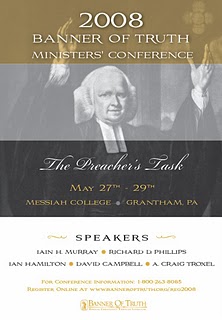
The difficulties of neo-Calvinism have not been lost on other Calvinists. I do not presume to know where Geoff Thomas, a pastor in Wales and regular contributor to Banner of Truth, stands on 2k. I still recall and have a very kind letter he wrote to me upon the publication of my book on J. Gresham Machen. But since I only believed in the spirituality of the church then, and had not blossomed into a full-blown 2k proponent, perhaps Geoff did not notice 2k implications of my biography and so wrote a gracious note.

No matter his assessment of 2k, he did write a series of articles for Banner of Truth on Klaas Schilder, the hero of Dr. Kloosterman and often the standard by which 2k is brought up short for not having a Reformed world-and-life-view. What is interesting to see in this four-part series is that Thomas not only offers some pointed reservations about Schilder, but he sees similar defects in Kuyper. For instance, here is Thomas’ take on the debate between Kuyper and Schilder over common grace:

Schilder opposed the concept of common grace. After man falls into sin life in a fallen world goes on and there is music, poetry and various skills mentioned in the line of Cain. Kuyper says that that is due to God’s goodness to all mankind, and is not that, we ask, God’s common grace? Is the phrase that inaccurate or offensive? Schilder does not accept the phrase but simply accepts that some men in the Cainite civilisation, as God’s servants, used their time wisely and others did not. Dr Jan Douma gently differs from Schilder in places, and, though he does not support Kuyper, he commends going back to John Calvin and his view of common grace. But the actual difference between Schilder and Kuyper in their attitude to the achievements of the non-Christian is confusing. According to Kuyper there cannot and should not be a Christian culture. Christ adds his particular grace to the culture of Greece or Rome as a result of common grace. Therefore Christians should not try to make a specific Christian culture. They should further ‘Christianise’ Western culture. Schilder says that there should be Christian culture, for Christ regenerates people to renewed obedience to the original mandate and this results in a Christian culture. But what of all the work in which we are involved with people who are not Christians? Schilder states that we are building different pyramids, but are we not often co-operating with unbelievers in building the same pyramid, but from different convictions? Think of a non-Christian and a Christian scientist who co-operate together in a research programme and the publication of a joint-paper. It frequently happens. What of the two women in Matthew 24:41:- “Two women will be grinding with a hand mill; one will be taken and the other left”? Are they not co-operating in the same cultural work even though one believes while the other does not?

Then Thomas follows with a comment on the small difference between Kuyper and Schilder, with speculation on the Dutchness of the entire matter:

Our concern with Schilder is that he did not go far enough from Kuyper’s views. In practical terms there was scarcely a membrane between those leaders. The views of both men tended to externalise the doctrines of grace, especially justification and regeneration. Schilder shared in the judgment of Kuyper that the pietists had a too rigid view of the Christian’s separation from the world. The Reformed faith as a result of theie convictions became more hollowed out. They did not give enough attention to the needs of the individual heart and soul. This lob-sided emphasis on culture was encouraging a Christianity that was speculative and abstract, rather than one that focused upon the sovereign, spiritual, inward working of the Word. Almost a hundred years ago Herman Bavinck wrote an introduction to a Dutch translation of sermons by the Erskine brothers of Scotland, and he said, “Here we have an important element which is largely lacking among us. We miss this spiritual soul-knowledge. It seems we no longer know what sin and grace, guilt and forgiveness, regeneration and conversion are. We know these things in theory, but we no longer know them in the awful reality of life” (quoted by Cornelis Pronk in “Neo-Calvinism”, Reformed Theological Journal, November 1995, pp.42-56). Those sermons are still revered in Holland today. Whether it was in the name of ‘common grace’, or ‘Christ and culture’ the ‘Christianising’ of the cosmos became the deeply optimistic enterprise on which both men and their followers set out. There is a triumphalistic note in Kuyper’s Stone Lectures at Princeton on ‘Calvinism.’ It seemed to be saying, “look what we’ve done in Holland. Next … the world!” That is a fantasy. Twenty years later began the first of two world wars which came in quick succession, and the rise of Marxism and humanism which was to devastate Europe and make the Netherlands known as much for being the home of moral anarchy as it is for the European centre of the doctrines of grace. The drug culture of Amsterdam would have been something which Kuyper could never have envisaged. Yet his doctrine of the dreadful wickedness of the heart of man, the hostility of the world to Christ and his church, and the activity of the powers of darkness should have made him alert to the bleakness of the future.

I hope that by mentioning this fine series Dr. K. will not take it upon himself to open up a thirteen-part series on Christ and culture in Great Britain through the lens of the Banner of Truth. But if he does, he may also wake up to the possibility that it is more than a few kooks in the OPC or at a certain California institution of higher learning that have reservations about neo-Calvinism.

What's A Lay Person To Do?

One of the problems that Protestantism addressed at the beginning of the sixteenth century was the gap between monastic piety and the lives of ordinary Christians. The expectations in the Roman church were for the laity, without the support or environment of a monastic order, to maintain levels of holiness that monks and clergy supposedly embodied. So what Lutherans and Reformed did was to devise a piety for the laity that did not bind them to artificial and unbiblical priestly standards. An important piece of this new lay piety was the doctrine of vocation – the idea that secular work was valuable for serving God.

Later in the sixteenth century came a body of practical divinity that appears at times to micro-manage the life of the ordinary Christian. Folks like Lewis Bayly and William Ames and Richard Baxter wrote guides for holy living (available on line at Calvin College’s ethereal library) that walk lay folk through the ordinary parts of daily life and infuse these activities with religious significance. It is not unlike the efforts of neo-Calvinists, under the banner of world-and-life-views, drenching every thought with sacred purpose.

What experimental Protestants sometimes forget is that Roman Catholics and pietist Lutherans were engaged in similar enterprises at roughly the same time – endeavors to make Christianity practical and to make ordinary life extraordinarily devout. According to Philip Benedict, “the tradition of practical divinity . . . may be seen, as it has been by German historians of spirituality, as simply the Reformed manifestation of a larger phenomenon of these years: a ‘new piety’ illustrated as well by the vogue for Granada and de Sales in Catholic lands and by the publication in 1605 of Johann Arndt’s True Christianity, a staple of Lutheran devotion for centuries to come.” (Christ’s Churches Purely Reformed, p. 319)

When you compare these manuals of devotion to biblical teaching on the ordinary life of believers the differences are stunning. Here for instance are the final instructions (ch. 13) to lay folk from the author of Hebrews:

1Keep on loving each other as brothers.

2Do not forget to entertain strangers, for by so doing some people have entertained angels without knowing it.

3Remember those in prison as if you were their fellow prisoners, and those who are mistreated as if you yourselves were suffering.

4Marriage should be honored by all, and the marriage bed kept pure, for God will judge the adulterer and all the sexually immoral.

5Keep your lives free from the love of money and be content with what you have, because God has said,
“Never will I leave you;
never will I forsake you.”

6So we say with confidence,
“The Lord is my helper; I will not be afraid.
What can man do to me?”

7Remember your leaders, who spoke the word of God to you. Consider the outcome of their way of life and imitate their faith.

8Jesus Christ is the same yesterday and today and forever.

9Do not be carried away by all kinds of strange teachings. It is good for our hearts to be strengthened by grace, not by ceremonial foods, which are of no value to those who eat them.

10We have an altar from which those who minister at the tabernacle have no right to eat.

I submit it is hard to find here (or in similar passages in the New Testament) walking papers for the kind of comprehensive piety or outlook that experimental and neo- Calvinists promote. The authors of Scripture seemed to be content with covering the important parts of faith and practice, and let the laity make the rest up as they went along. (A similar pattern seems to exist in the Old Testament which goes into great detail about religious practices but says almost nothing about how pottery or bread signify the creator of the universe, or how the choice produce bespeaks God’s electing purposes, or how the best practices for managing sewage say something about holiness and profanity – let alone how to think Judaically about math or grammar.)

I will also admit that I like order and instructions for achieving it as much as the next anal person. I understand that some of the instruction for piety and thinking is appealing to people who want to know how to serve God. The motives are indeed usually wholesome. But the question is whether they are necessary (or biblical). If you judge by the New Testament writers, they are willing to allow for great freedom in ordinary life without micro-managing the saints.

Calvin on Lloyd-Jones

Writing on Luke 12:14, Calvin argues:

Secondly, our Lord intended to draw a distinction between the political kingdoms of this world and the government of his Church; for he had been appointed by the Father to be a Teacher, who should divide asunder, by the sword of the word, the thoughts and feelings, and penetrate into the souls of men, (Hebrews 4:12,) but was not a magistrate to divide inheritances This condemns the robbery of the Pope and his clergy, who, while they give themselves out to be pastors of the Church, have dared to usurp an earthly and secular jurisdiction, which is inconsistent with their office; for what is in itself lawful may be improper in certain persons.

David Bayly agrees:

And of course, to all this I say, “Amen and amen.” Yes, absolutely. I have no quarrel with such a two-kingdom approach, in fact I emphatically agree with Calvin that is it wicked for pastors of the Church “to usurp an earthly and secular jurisdiction.”

So I guess if Calvin was 2k and Bayly agrees with Calvin, then Calvin must have praised Lloyd-Jones and Jonathan Edwards. Ba dop bop.

When This and That Comes Home


The best college basketball coach in the United States works in Philadelphia and no one knows about him. Congratulations to Herb Magee for winning his 903rd game at Philadelphia University. His closest competitor is Duke’s Mike Krzyzewski with 856 wins. But does Herb get to do ads for American Express? I don’t think so.

Rabbi Bret almost makes up with the Bayly Bros. when he writes the following against 2k (amazing how unifying 2k thinking is):

. . . there are other preachers out there who do raise their voices against R2Kt. Doug Wilson does a fine job revealing its weaknesses. Also, the Bayly Brothers came out with guns blazing against it in the past week. A gentleman named Rev. Ken Pierce also spoke out strongly against it. Now, at least as concerns the Bayly’s and Rev. Pierce they are not as consistent as they might be on the subject given their disavowal of theonomy, theocracy and a bold optimistic eschatology, but still in many respects, they acquitted themselves well in speaking out against R2Kt. I think more and more people are slowly awakening to the danger that R2Kt represents and I fully expect, in the near future, that you’ll hear more Reformed ministers raising their voices against it.

But then Rabbi Bret blows it when he takes on the experimental Calvinism in ways that make the Bayly Bros. wild about the evils of 2k (isn’t this the point of Scott Clark’s Recovering the Reformed Confession?):

There is a strain in Reformed theology that emphasizes the kind of subjectivism that Alexander warns against. This kind of subjectivism would have us find assurance of faith by examining our faith, or our repentance, or our love for God, or our performance in order to discern whether or not our faith, repentance, love or performance are genuine and not spurious. The problem with this is that when scrupulously honest regenerated people dwell in a concentrated way in examining these realities the more likely they are to conclude that they are unconverted. When we seek to anchor our faith in the quality of our faith, repentance, love, or performance we are sure to be ruined from one of two directions.

If we examine ourselves and find assurance because of the quality of our spiritual virtues we run the danger of being ruined from the sense of a self-satisfaction that may easily give way to self righteousness. We also run the danger of developing a spiritual inertia that does not allow us the capacity to see our real sin since our assurance becomes wrapped up in our ability to convince ourselves of the thorough genuineness of our spiritual virtues.

On the other hand if we examine ourselves and don’t find assurance because of the real lack of quality of our spiritual virtues – thus becoming convinced that our faith, repentance, love, works, etc. are spurious – we run the danger of concluding that God’s genuine work in our lives is false. When sinners such as ourselves turn our gaze inward in order to examine our spiritual virtues what else should we expect to find except the reality that our spiritual virtues are not so virtuous?

Here are a couple of thoughts for the front porch republican heart that beats within the average Old Lifer.

Thanks to John Fea I have new reasons for thinking myself superior. It’s because Ann and I live with Cordelia and Isabelle.