
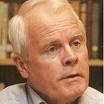
Gordon McDonald, the evangelical pastor and now Leadership editor at large (do editors ever work at medium?) has written in support of the Obama health care bill (hat tip to John Fea). His reasoning has nothing to do with politics and everything to do with Jesus. McDonald is glad for the bill “not because I am a Democrat or a Republican but because I think that Jesus, who seemed to take great interest in health issues, is glad. Looking back on his life among people like us, he often acted as a healer. He seemed to delight in curing diseases, restoring disabled people to wholeness, and rewiring damaged minds. You cannot divorce these encounters from the rest of his public ministry. Health-care was in his frame of reference.â€
Methinks McDonald’s humanitarianism gets in the way of his reading of the New Testament. Sure, Jesus healed people. Had he lived longer and not gone to the cross, he could have healed a lot more. And had he yielded to Satan’s temptation to reign over everything, he might have instituted a health care plan better than our president’s. It very well could be that his healings, like his raising of Lazarus, weren’t the point of his ministry but only a sign of the everlasting wholeness and well being that will come in the new heavens and new earth for all who trust in him – healthy and sick, insured or not, Republican and Democrat.
At the same time that McDonald’s compassion clouds his reading of the New Testament, it also harms his discernment about American government. He concludes the piece with several points, numbered presumably to give the effect of policy items:
1. Any effort that is made to bring health benefits to more people (especially the weak, the poor, the children) is an effort with which I want to identify.
2. Anyone whose argument is based simply on the notion that we cannot afford making medical benefits available to more people does not get my ear. The fact is that our country—we the people—can afford it, even if it means that each of us surrenders a few more bucks that we would have spent on things for ourselves. We just have to conclude that compassion in the face of human need is a greater value than accumulating more stuff.
3. Any initiative that makes it possible for the common person to have the same access to medical science as the rich appear to have is one I want to hear about.
On the surface, these ideals look benign. But does he really mean “any†in each of these cases? Certainly, he would not countenance legalizing prostitution as a way to pay for health care insurance. Some restrictions will obviously need to come from the moral law.
And does McDonald really mean to say that the price tag is no object? Has he no sense of the debt that his and my generation is passing on to the next? Usury used to be a sin. Can printing money to balance the books – or at least reduce the debt – be a virtuous enterprise, or healthy for a government that depends on the assent of the governed?
And can McDonald really mean he is willing to level the wealth playing field so that I enjoy the same medical care as Ryan Howard, all-star first baseman for the Phillies? Um, either Howard gets easy access to orthopedists and the Phillies make the playoffs, or he and I both wait in the same waiting room, my knees get the same attention as his elbow, and the Phillies miss the playoffs? That’s an easy decision.
But whatever the difficulties in McDonald’s idealism, his haste to evaluate political events by the What-Would-Jesus-Do standard obscures the political and economic realities of universal health care within an American form of government. A better measure of Obama’s policies – or any president’s – is what would Abe do, or what would Jefferson do, or what would Wilson do? Only by asking secular and political questions first, can believers be faithful to their ultimate Lord. Conversely, by asking the religious and ethical questions first, evangelicals wind up, in Christ’s name (of all things) making a mess of this world.
 Old Life