What's The Difference Between the Gospel Coalition and the PCA?

If this were a joke, the punchline might be, “only Tim Keller’s hair dresser knows for sure.” Ba dop bop!

I understand that this question might wind up some readers, especially those who think the Gospel Co-Allies do no wrong. But it is one that need not be pejorative. It could say good things about the Gospel Coalition, for example, that it resembles the PCA. Since the latter is still a Reformed church and Reformed churches are good things, a comparison between the Coalition and a Reformed church could be possitive. Of course, the answer to the question could go the other way and liken the PCA to the Gospel Coalition, a parachurch agency that fancies itself Reformed.

The reason the question could go either way is the lengthy explanation that Tim Keller and D. A. Carson gave (though the text uses the first person singular several times) to the recent imbroglio over James MacDonald’s invitation to T.D. Jakes. They distinguish between a “boundary-bounded set” and a “center-bounded set,” and claim that the Coalition has always been a center-bounded institution. I’m still scratching my head over these concepts. They sound more like sociology than ecclesiology and I tend to be skeptical when ministers or theologians employ jargon outside their own expertise. Be that as it may, the use of these concepts does not necessarily clarify the difference between a parachurch agency like the Coalition and a Reformed denomination like the PCA.

First, the nature of a boundary-bounded body:

. . . you establish boundaries to determine who is “in” and who is “outside” the set—whether the set of true believers, or the set of faithful Presbyterians, or the set of evangelicals, or any other set. For the boundary to have any hope of doing its job, it has to be well defined. If the definitions are sloppy, the boundary keeps getting pushed farther and farther out.

What makes this definition odd, especially in reference to Presbyterians, is that Keller has been involved in the recent debates over subscription within the PCA in ways that have expanded the boundaries. Even if someone wanted to interpret the recent changes in the PCA’s constitution in a conservative manner, it would be hard to read Keller’s understanding of the PCA or his presence in those debates as placing him on the side of tightening the PCA’s boundaries. In which case, I wonder if Keller really sees that big a difference between boundary- and center-bounded identities.

Next comes the center-bounded conception:

. . . center-bounded sets don’t worry too much about who is “in” and “out” at the periphery. Instead, there is a robust definition at the center. For TGC, the center is defined by our Confessional Statement (CS) and Theological Vision for Ministry (TVM) and sustained by the Council members. There we expect unreserved commitment to these foundation documents.

This still sounds to me like a boundary-bounded set up. But what makes this different is that no one can join the Coalition.

Individuals and churches may choose to identify themselves with us and use the thousands of resources on our site, but Council members do not fall into paroxysms of doubt as to whether or not this individual or that church truly belongs to TGC: we are not a denomination, and we do not have the resources to engage in the kind of vetting at the periphery that a boundary-bounded set demands. At the margins there are many who love part of what we stand for and not other parts.

So it would seem that the big difference here is membership. The PCA has members and the Coalition doesn’t. This gets confusing because Keller and Carson, among others, are “Council Members” of the Coalition. Why some parts of the Coalition have membership and others don’t is a mystery. Yet, the same thing — that some in the PCA love, Keller included, parts of what the denomination stands for and not other parts — can be said of a denomination or a boundary-bounded set. In fact, it is true of most Reformed churches. In which case, Reformed churches may actually be much more center-bounded than the Coalition, except that the center of confessional Reformed Protestantism happens to be much bigger than the Coalition’s center, and for that matter, more biblical because the Reformed confessions try to do justice the whole word of God, not simply the bits about which guys from different denominations might agree.

One last similarity comes when Keller and Carson describe the diversity of ministries that exist outside the Coalition among the various “members'” activities:

Within these bounds, Council members discharge ministries that are highly diverse, with their own networks, specific aims, and relationships with many people outside the Council. Sometimes these relationships make other Council members uncomfortable. A Council member may choose to participate in discussions with an organization known for its laxness in doctrine and practice. He may do so in order to serve as a voice for faithful Christian confessionalism within that organization. Looking at this ministry, other Council members might evaluate things differently and warn the participating Council member that he is merely being used: it would be wiser for to avoid the association. But those are judgment calls. TGC does not normally take any position on whether a Council member’s associations are wise or expedient, even though there are not a few Council members who will offer their private judgments out of genuine affection and concern for gospel fidelity and clarity.

“Within these bounds”? I thought the Coaltion was center-bounded, not boundary-bounded. Be that as it may, this description of ministry diversity could also well apply to the PCA where the ministers who belong to the denomination have any number of ministries beyond the denomination’s. Think of New Life Presbyterianism and the different agencies that this wing of the PCA sponsors. Think of the Perimeter Church of Atlanta. Or how about Briarwood in Birmingham, Alabama? But speaking of Elephants in Rooms, what about Keller’s Redeemer Presbyterian Church? What about all of the networks that Keller has established?

Which leads to the question that I asked at the outset: how different is the Gospel Coalition from the PCA? Judging by the Tim Keller’s involvement in the Gospel Coalition and the PCA, not much.

P.S. I might actually have received more counsel on these musings from the Coalition if the Keller-Carson post had been open for comments, but not even Justin Taylor’s post about the statement permitted discussion. I guess the indirect rebuke to MacDonald was all that the Coalition could bear.

Hearing (all about) Me Speak

As Zrim has already indicated, pronunciations matter. If you say the word evangelical with a long e in the first syllable, as in “egads,” then according to popular wisdom you are one, that is, a born-again Protestant. If you pronounce it with the short e in “whatever,” then you aren’t ehvangelical.

The same goes for conservatism. If you slip in an extra syllable, as in “conservativism,” then you are likely unfamiliar with the discussions about what it means to be a conservative. But if you say the real word, “conservatism,” then you’re in the ball park of knowing something about the American Right even if you are not a card-carrier.

A twist on correct pronunciation came for me as my wife and I were driving to Washington, D.C. last week for the Round Table on the future of evangelical politics hosted by Brian Lee and the saints at Christ Reformed Church (URC). Scanning the dial in hopes of finding a voice different from Sean’s, we stumbled upon the local affiliate of the EWTN radio network which broadcasts the Al Kresta show weekdays at 4:00. This particular day found the host away at a conference and the show re-airing the “best of” Al Kresta. Imagine my (all about me) surprise when my wife and I heard Al introduce the hour-long interview I did about From Billy Graham to Sarah Palin on September 20, live in the Ann Arbor studio. Imagine my (all about me) further surprise to hear me babble on like a surfer dude. Which raises the question, if you sound goofy, can you really call yourself a confessional Protestant or a political conservative?

But misgivings about my voice and diction did not prevent a thoroughly enjoyable event with Michael Gerson and Terry Eastland thanks to the great hospitality and event planning of Brian and Sara Lee. The audio for the event is here (though you will need Quick Time to listen). Future events still include David VanDrunen this Thursday night (October 20), and Dave Coffin preaching(Sunday, October 23).

I believe the biggest difference to surface between Mike Gerson and me was his willingness to appeal to higher law (justice and human dignity) in thinking about a Christian understanding of politics and my reluctance to jump over existing laws, institutions, and powers for the sake of a higher good. I also believe this is one of the most profound difference between evangelicals and confessional Protestants in the sphere of religion, and between evangelicals and conservatives in matters political.

Consider, for instance, the willingness of revivalists to circumvent ordained clergy in order to bring the gospel to people (some of whom are already church members). George Whitefield and Gilbert Tennent did this. The Gospel Coalition is still doing it. Think too of the way that evangelicals will appeal to the Bible to circumvent the authority of creeds or confessions with Scripture functioning as a higher law above man-made doctrines.

In politics evangelicals will appeal to Christian morality usually without considering such matters of state sovereignty. This happens when evangelicals look to the federal government to implement laws that state or local governments have not adopted, or when born-again Protestants seek to intervene internationally without doing justice to the existing governments in place. I know, I know, these matters are difficult and the complexity of the situation can lead to pacifism or even indifference. I also concede that folks like Thomas Jefferson and Martin Luther King, Jr., neither of whom used a long e when saying the word evangelical, also appealed to the higher law for the Declaration of Independence and Civil Rights. Still, evangelicals appear to me to be largely indifferent to existing governmental structures and laws when political forms get in the way of eternal truths. And every conservative (both religious and political) knows that this is a recipe for revolution.

This is not to say that Gerson espouses such radicalism, but only to point out that implicit in the appeal to a higher law is an impulse that makes evangelicals insufficiently aware of the restraint and stability that conservatives hope to preserve.

Why I Love My (all about me) Denomination

The Young Restless and Reformed may be surprised to learn that some Reformed Protestants do not consider the young and restless to be very Reformed. They might even be surprised to know that Reformed Protestantism exists outside Desiring God Ministries, The Gospel Coalition, and Acts 29 (but that is another matter). But the Old Settled and Reformed keep tabs on the younger crowd and the reviews are not encouraging.

Brent Ferry is an OPC minister who is not particularly old and since he is a husband and father is fairly settles. But as an avocation he plays drums for a band and has a feel for youth and restlessness. Despite his demographical profile and musical talent, he is not much impressed with the recent Crossway book by Mark Driscoll and Gerry Breshears, Doctrine: What Christians Should Believe (2010). The recent issue of the OPC’s magazine, New Horizons, has Ferry’s review of Driscoll and Breshears. Here is an excerpt:

Driscoll is sometimes identified as part of evangelicalism’s resurgent Calvinistic movement. Besides puffs and quotes from Reformed authors, however, the book does not reflect the contours of Reformed thought at all.

For example, the authors omit the covenant of works (p. 177). They argue against limited atonement in favor of hypothetical universalism (p. 267). They condition regeneration upon faith and repentance (pp. 317, 436). There is no clear affirmation of unconditional predestination. The book excludes the fourth commandment from the abiding moral law (pp. 198-99), yet has a high view of the Lord’s Day (pp. 381-84). It also contains pictures of Christ (pp. 208, 244). . . .

In short, Doctrine is a hodgepodge of various theological trajectories. When the authors compare Noah’s drunkenness to “a hillbilly redneck on vacation” (p. 184), they reveal the nature of their contextualization project, which is to promote a Christianity that embraces irreverent adolescence. Theologically, this book does does rise above that standard, but not by much.

Fair and Balanced

From our Canadian correspondent comes word of a 1926 New York Times headline that reported on one of J. Gresham Machen’s sermons about the condition of American Protestantism.

Church Teaching Scored–Professor Machen Says the World Is Full of
Quack Remedies For Sin–Calls for More Pessimism

Not many people — believers or not — find pessimism inspiring. But at Old Life pessimism is our bread and butter because, as Machen observed, Christianity is the religion of the broken heart. Maybe the sentimentalists over at the Gospel Coalition would have a better read on angry Calvinism if they understood better the depressing disposition that animates Protestants who belong to Reformed churches.

Shooting Fish in a Barrel

Back around the time that Justin Taylor was yet again calling attention to Calvinist anger issues, Pat Robertson made some embarrassing comments about people suffering from Alzheimer’s. No need to repeat those words here since so many made sure that so many more did not miss Robertson’s embarrassment.

What is noteworthy about the recent Robertson kerfuffle, especially from the perspective that sees sappiness afflicting evangelicals, is discerning what prompts sunny-side up bloggers at the Gospel Coalition to exchange a happy-faced button for one with a frown. Since Justin linked to Russell Moore’s piece on Robertson for Christianity Today, we have one example. Since Justin also went on record against Rob Bell even before he had read the book on hell, we have another. And then we have the posts about angry Calvinists.

That tallies up to Pat Robertson, Rob Bell, and angry Calvinists as all worthy of Gospel Coalition opposition. If I do my math aright, that means that TGC is against extremism and for moderation (read: nice). My calculations may be off. But I’m reasonably confident of my findings.

Which is why I would find more instruction from TGC bloggers and writers if they took on not so easy targets, that is, if they could show discernment in situations requiring tough calls rather than simply condemning what is obviously worthy of condemnation. (What makes Downfall a great movie is that Hitler and the Nazis emerge as three-dimensional figures.) Do they not see that even the good guys sometimes are wrong? And do they not see that you might help out the good guys not by linking to their latest inspiring video but by actually criticizing said guy of goodness when he goes bad.

To that end, I have an instance of good evangelicals going off the rails in ways that surely would have benefitted from a court room more than an echo chamber. It’s from a while ago, so it is of no real relevance to today’s conversations, except to note that evangelicals can be a fickle lot and in need of hectoring

What I am referring to is “A Protestant Affirmation on the Control of Human Reproduction,” a statement originally published in 1968 in Christianity Today with Carl Henry’s and Harold Lindsell’s blessing. I only know about this because one of my colleagues at Hillsdale, Allan Carlson, is coming out soon with a book on evangelicals and contraception, which is a fascinating and troubling read. Here is what the nice and orthodox evangelicals (remember, they didn’t want to be mean like fundamentalists) thought was biblically permissible and evangelically acceptable in 1968:

The Bible does not expressly prohibit either contraception or abortion;

The prevention of conception is not in itself forbidden or sinful providing the reasons for it are in harmony with the total revelation of God in the individual life;

The method of preventing pregnancy is not so much a religious as a scientific and medical question to be determined in consultation with the physician;

There may be times when a Christian may allow himself (or herself) to be sterilized for compelling reasons which appear to be the lesser of two evils;

About the necessity and permissibility for [abortion] under certain circumstances we are in accord;

The prescriptions of the legal code should not be permitted to usurp the authority of the Christian conscience as informed by Scripture;

Changes in state laws on therapeutic abortion that will permit honesty in the application of established criteria and the principles supported in this statement should be encouraged;

Much human suffering can be alleviated by preventing birth of children where there is a predictable high risk of genetic disease for abnormality; [and]

This Symposium acknowledges the need for Christians’ involvement in programs of population control at home and abroad. [quoted in The Family in America, Fall 2010]

Sometimes, even the nice guys, like the mean, wrong, and crazy guys, go off the rails.

Update: for the entire piece by Allan Carlson which includes the affirmation above, go here.

Echo Chamber?

Thanks to the Viking I see that Tim Keller has some posts about polemics (forthcoming) over at the Gospel Coalition and that Justin Taylor has aggregated part of Keller. I do go to TGC’s sites periodically and so would have likely seen these without the Viking’s help. Part of what makes TGC so effective is that it is the network for the largest celebrities in the world of non-charismatic Protestantism (aside from that awkward presence of Sovereign Grace Ministries and the anointing that sometimes drenches Driscoll). Think of how hard it would be to keep up with the respective fiefdoms of Piper, Keller, Driscoll along with the writings and pursuits of Carson, Dever, and DeYoung. It’s like trying to watch Jay, Dave, Conan, and Jimmy every night (sorry for the talk-show reference, but I’m reveling in Larry Sanders these days). You would have to stay up late and also record the different shows since they are all on different channels and times, sort of the way that each of TGC figures has his own website, congregation, and “ministries.” But now thanks to the Internet — voila — I can go to one place and keep up with all major players in the world of Baptists-and-Calvinists-Together.

I do wonder, though, what outsiders would think of TGC’s website and I have recently speculated on this in the case of neo-Calvinism’s political theology. What I have in mind is whether those who disagree with TGC would find much material or discussion that is challenging, that actually produces new or hard thought (as opposed to deep feeling or moral inadequacy). Or is the nature of such an endeavor that relies upon the fame of its evangelical pastors and speakers to offer up inspiration and affirmation, thus raising the question of whether evangelicals or their vehicles are sappy?

But what is curious about Keller’s concession that polemics is necessary as a form of medicine is whether the folks at TGC think that what they are doing through the coalition is offering a well-rounded diet. Keller says, “Polemics is medicine, not food. Without medicine we will surely die—we can’t live without it. This is why polemical theology must be a required part of every theological curriculum. Yet we cannot live on medicine.” I understand this. And it can also be said of candy, except that candy isn’t nearly as beneficial as medicine, nor is it the case that we could not live without it. Still, as I’ve asked before, what does TGC do that churches do not already do? The churches have the recipes and ingredients for a healthy spiritual diet. And sometimes they engage in polemics with those institutions that offer up prepackaged-food as the wholesome article.

So perhaps the folks at TGC need to look in the mirror and ask whether they are doing something that instigates polemics. In which case, it wouldn’t be a personality defect of Calvinists to disagree with and point out the weaknesses of a project such as TGC.

The Problem of Sappy Evangelicals

One of the arresting aspects of marriage is that if a husband tells his wife she should watch her weight the wife gets angry. And then if hubbie tells wifey that she is angry — as if that’s a bad thing — for some reason the wife does not calm down but gets angrier. The reason for such humdrum recounting of marital relations is yet another post over at the Gospel Coalition about angry Calvinists. Justin Taylor, with lots of help from John Piper, speculates on the traits that cause Calvinists to be an angry lot (and not to be missed, make the young Calvinists at TGC look so incredibly nice).

According to Taylor:

Angry Calvinists are not like unicorns, dreamed up in some fantasy. They really do exist. And the stereotype exists for a reason. I remember (with shame) answering a question during college from a girl who was crying about the doctrine of election and what it might mean for a relative and my response was to ask everyone in the room turn to Romans 9. Right text, but it was the wrong time.

This is an odd observation because Taylor never identifies a single angry Calvinist. He has engaged in a form of stereotype that would be politically incorrect if applied on the lines of race, ethnicity, gender, or sexual orientation. You’d think that the nice Calvinists at TGC would be more sensitive about theological profiling.

You’d also think that if Taylor believes Calvinists are prone to anger then a pastoral response might be to avoid winding them up — as in not mentioning the problem. Does he refer to alcoholic Christians as those “dipsomaniac Protestants”? Does he make a habit of calling attention to questionable character traits in his readers?

As for the diagnosis, he cites Piper who writes (in part):

So the intellectual appeal of the system of Calvinism draws a certain kind of intellectual person, and that type of person doesn’t tend to be the most warm, fuzzy, and tender. Therefore this type of person has a greater danger of being hostile, gruff, abrupt, insensitive, or intellectualistic.

Piper doesn’t seem to consider the type of person that can’t handle people who are insensitive, or the kind that has to publicly broadcast that a certain slice of Christians are insensitive. Profiling works both ways. Hence sappy evangelicals.

Which is why it is possible that the problem afflicting the evangelicals at the Gospel Coalition is one of sentimentality. That is, they value feelings more than doctrine. This is what Ken Myers called orthopathy instead of orthodoxy. This does not mean that the folks at TGC ignore doctrine. Obviously, they promote it. But they never let it function in a way that might make leaders, readers, or bloggers uncomfortable — that is, doctrine will never be offensive, especially to the co-allies. But they seem to have no problem patrolling the Christian world for incorrect emotions.

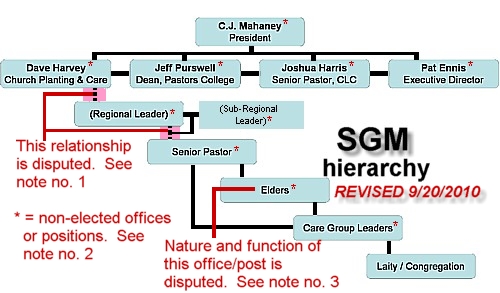
This would apparently explain why the bloggers at TGC have yet to mention the two six hundred pound gorillas in the TGC parlor — C. J. Mahaney and Mark Driscoll. The former has at the very least created a ruckus about the kind of pastoral leadership within SGM circles, which would seem to undermine TGC’s commitment to promoting gospel-centered churches. And then there is Dricoll’s clairvoyance which in sixteenth-century Geneva would have gotten him drowned. I understand that these situations are delicate and that friends want to stand by friends. But to call Calvinists — yet again — angry when TGC has its own image problems is well nigh remarkable unless, that is, you remember the importance of feelings, affections, passions, and hedonism. A co-ally may not be able to spot Mahaney’s or Driscoll’s errors but can FEEL their pain.

Maybe the problem is one of discipline. When I was a boy and got in trouble my dad would take out the belt and give me a wallop or two across my behind. I thought he was angry. I also thought he was mean. Never mind that he always shed a few tears while executing his duties. His tears could not compare to mine since I was the one who really felt pain and he was the one inflicting it.

Could it be that Calvinists look mean to Gospel Co-Allies in the same way that disciplining dads do to wayward children? Maybe. But if you want direction and counsel that prevents you from wandering off the right path, would you rather go to a Presbyterian pastor or leave a message with one of the Gospel Coalition’s celebrities and wait for one of his assistants to respond?

Postscript: Ross Douthat has a post about the reign of niceness among Harvard University undergraduates. He writes: “The pursuite of niceness and the worship of success can complement one another as easily as they can contradict. But the kind of culture that’s created when they combine — friendly and deferential on the surface, boiling with resume-driven competitiveness underneath — isn’t one that a great university should aspire to cultivate.” I wonder if a similar combination could be responsible for the culture of niceness over at TGC.

If You Can't Stand the Polemic, Get Out of the Calvinist Kitchen

An arresting little wrinkle in the current popularity of Calvinism among those who don’t baptize their infants and sometimes speak in tongues (and don’t belong to a Reformed church — redundant, I know), is the notion that Calvinists are mean. Justin Taylor is apparently on vacation and has bloggers filling in for him. Jared Wilson’s number came up on Wednesday and he tried to explain the stereotype of the “graceless Calvinist” (would Mr. Wilson actually refer to Americans of Polish descent in such a stereotypical manner?). Such exhibitions of pride are exceedingly disappointing to Wilson:

. . .gracelessness is never as big a disappointment, to me anyway, as when it’s found among those who call themselves Calvinists, because it’s such a big waste of Calvinism. Why? Because it’s a depressing irony and a disgrace that many who hold to the so-called “doctrines of grace” are some of the most graceless people around. The extent to which your soteriology is monergistic—most Calvinistic nerds know what I’m talking about here—is the extent to which you ought to know that your pride is a vomitous affront to God.

What is odd about this comment is that Wilson seems to show a similar gracelessness in calling out Calvinists. (Hasn’t every husband figured out a euphemism for observing a weight gain in his wife?) Wilson knows that gracelessness is wrong and so apparently doesn’t need to be gracious in pointing it out. He does not seem to consider that some Calvinist polemics may stem from a sense of error as deeply felt as Wilson’s. If Wilson knows that gracelessness is obviously wrong, maybe Calvinists also know that Arminianism is profoundly wrong. In which case, Wilson attributes Calvinist gracelessness almost entirely to character, not the most flattering or gracious interpretations of Reformed orneriness.

Also odd is Wilson’s perseverance in identifying with Calvinism, since the man to whom that moniker points was no slouch when it came to invective. For instance, here’s an excerpt from Calvin on the relationship between the Old and New Testaments:

. . . although the passages which we have collected from the Law and the Prophets for the purpose of proof, make it plain that there never was any other rule of piety and religion among the people of God; yet as many things are written on the subject of the difference between the Old and New Testaments in a manner which may perplex ordinary readers, it will be proper here to devote a special place to the better and more exact discussion of this subject. This discussion, which would have been most useful at any rate, has been rendered necessary by that monstrous miscreant, Servetus, and some madmen of the sect of the Anabaptists, who think of the people of Israel just as they would do of some herd of swine, absurdly imagining that the Lord gorged them with temporal blessings here, and gave them no hope of a blessed immortality. Let us guard pious minds against this pestilential error, while we at the same time remove all the difficulties which are wont to start up when mention is made of the difference between the Old and the New Testaments. By the way also, let us consider what resemblance and what difference there is between the covenant which the Lord made with the Israelites before the advent of Christ, and that which he has made with us now that Christ is manifested. (Institutes II.10.1)

Hide the Anabaptists and their unbaptized children.

Of course, we could chalk this type of polemic up to the parlance of Calvin’s time, when such vituperation was common in the academy and the church. But if that’s the case, why does Wilson not give modern-day Calvinists a similar benefit of the doubt? He concedes that other groups of believers exhibit gracelessness. And if he watches CNN or Fox News, he may also become familiar with invective in the culture at large, all of which might suggest that Calvinists don’t have a corner on meanness.

Or maybe if the young Calvinists actually read Calvin, they would come to understand that some doctrines and practices really are worthy of polemics, and some faulty ideas and forms of devotion really are harmful.

Either way, it is clearly odd to identify with Calvin who was capable of getting agitated and then object to Calvinists when they become animated. Calvinism would appear to be the wrong label. Again, why not Particular Baptist?

I could take some comfort from Wilson’s explanation of Calvinistic gracelessness:

. . . the problem is not the Reformed theology, as many of my Arminian friends will charge; it’s not the Calvinism. No, the problem is gospel wakefulness (which crosses theological systems and traditions), or the lack thereof. A joyless Calvinist knows the mechanics of salvation (probably). But he is like a guy who knows the ins and outs of a car engine and how the car runs. He can take it apart and put it back together. He knows what each part does and how it does it. A graceless Calvinist is like a guy who knows how a car works but has never driven through the countryside in the warm spring air with the top down and the wind blowing through his hair.

This is a curious analogy since it suggests that nice Calvinists conceive of the Christian life as a joy ride. This is not exactly the way that Calvin thought of our life in this world, which he likened to being on look out at a sentry post. But jarring analogies aside, what happens to the guy with the wind-blown hair when the universal joint goes on his Thunderbird? Or a little less dramatic, does the fellow who likes to take the car out for rides through the country need to worry about filling up the tank (or even about the environmental consequences of fossil fuel)? Maybe Wilson’s analogy is entirely apt. The young and restless ones don’t want to be bothered with fixing cars or refilling the tank, and as stereotypical youngsters they regard parents who say that teens should attend to these things are mean. That difference might go along way to explaining the difference between a gospel coalition and a Reformed communion.

Why Do Reformed Think They Are Evangelical?

If Reformed Protestantism is basically evangelical then how do you account for the major divisions that have occurred among American Presbyterians? The fundamentalist controversy apparently has nothing at stake for the Reformed/evangelical consensus since Machen and other conservative Presbyterians were fighting liberalism and EVERYONE knows that liberalism is bad. (Of course, the problem here is that Machen’s evangelical colleagues at Princeton were some of his biggest opponents – the revival friendly Charles Eerdman and Robert Speer.)

According to this consensus the Presbyterian opposition to revivalism during the Second Pretty Good Awakening is also easy to explain. Charles Finney and company were delinquent on theology and possibly practice (revivalism and new measures instead of just plain revival). So the Second Pretty Good Awakening proves nothing.

Then there is the First Pretty Good Awakening where Calvinists promoted revivals. This is the golden-age for the Reformed/Evangelical consensus. But what about the Old Side critics? Well, as I learned at Westminster and from Leonard Trinterud, the Old Side were proto-liberals, propounding a rationalistic theology with Enlightenment echoes, and they were drunks, falling off their horses on the way home from presbytery thanks to a heavy elbow.

In the recent exchange with Ken Stewart over at the Christian Curmudgeon I came across another explanation for the apparent tension between Reformed Protestants and evangelicals – which is, blame the Dutch. In response to differences of interpretation about revivalism, Stewart wrote to the Curmudgeon:

I think we disagree is in our estimation of the danger posed by Hart and his school of writers. Westminster Escondido, in a strange continuity with Calvin Seminary Grand Rapids (these schools are usually at loggerheads) are centers from which revival is disparaged. So important a church historian as George Marsden (raised in the OPC) termed Darryl Hart’s book on American presbyterianism “anti-evangelical” because of its steady misrepresentation of the Great Awakening. So, while from your vantage point, you are aware of Hart, from mine – I think he and his allies represent a danger so great that it needs to be countered.

When pushed on the fact that George Marsden, who studied with Cornelius Van Til, who was very critical of evangelicalism, Stewart responded:

I don’t dispute CVT’s anti-evangelical posture; in fact I would suggest that the influx of CRC faculty into WTS in the 1930’s fundamentally shifted the young WTS away from its Princeton heritage, which had been decidedly the other way. When one stands back from this, it makes us realize that the whole conservative Reformed tradition in this country has been influenced far more by Grand Rapids theology than is generally acknowledged. I am not demonizing the CRC in this particular respect; I am simply highlighting the fact that throughout the 20th century, there have been rival versions of the Reformed faith jockeying with one another for dominance.

What is fairly amusing about this reply is that the Dutch-Americans at Calvin Seminary were responsible for printing a review that Stewart wrote of Recovering Mother Kirk, which was hardly flattering of the book’s author or his interpretation of the Reformed tradition. If the Dutch-American Reformed mafia wanted to enlarge their control of the interpretation of American Protestantism, they fell asleep when reading Stewart’s submission.

Stewart and others who reject the argument that Reformed and evangelical are at odds gain a lot of traction by suggesting that Reformed critics of evangelicalism construe Reformed and evangelical Protestantism as fundamentally at odds or separate entities. The proponents of an evangelical-friendly Reformed faith also like to point out that Reformed churches have made lots of room for evangelicalism and even revivalism. So both conceptually and historically, supposedly, the Reformed critics of evangelicalism are flawed.

But for this critic, it is obvious that evangelicals and Reformed are both Protestant and so overlap at certain points, both religiously and historically. Experimental Calvinism arose in the context of Reformed churches (especially when the prospects for reforming the national churches were looking bleak) and Reformed and Presbyterians churches have been friendly to evangelicalism (though I wish they were not).

What the proponents of the consensus are incapable of doing is accounting for the splits that have occurred within Reformed churches over evangelicalism (even without the presence of Dutch Reformed). The Old Side and the Old School split from their Presbyterian peers because the pro-revivalists believed subscription and polity were secondary to conversion and holy living. And so it has always been with evangelicalism. It is inherently anti-formal in the sense that forms to not matter compared to the experience of new birth or ecstatic worship. Evangelicals are also inherently inconsistent about this because since we exist as human beings in forms (i.e., bodies that are either male or female), we cannot escape formalism of some kind. Either way, on the matter of forms – creeds, worship, and polity – those who promote revivals or consider themselves evangelical are indifferent. The Spirit unites, not the forms. The same goes for different shades of evangelicalism: for the Gospel Coalition it is the gospel not the forms that unite; and for the Baylys and other “do this and live” types, it is the law not the forms that unites. Sticklers for the regulative principle, the system of doctrine, or presbyterian procedure are simply ornery obstacles to uniting Protestants on what is truly important.

What should not be missed either is that when Presbyterian particularists insist that forms matter, that the word reveals forms, and that the word and the Spirit work in conjunction, the response is invariably that the particularlists are mean and lack the fruit of the Spirit. Why? Because they do not recognize the presence of the Spirit.

And so to bring a little more light on the matter from one of those nefarious Dutch-Reformed types (though he is actually German), here is a useful reflection from Richard Muller on the impulses within evangelicalism that lead away from the insights of the Reformation(if only he had been editing the Calvin Theological Journal when Stewart reviewed Recovering Mother Kirk):

Even more than this, however, use of the language of personal relationship with Jesus often indicates a qualitative loss of the traditional Reformation language of being justified by grace alone through faith in Christ and being, therefore, adopted as children of God in and through our graciously given union with Christ. Personal relationships come about through mutual interaction and thrive because of common interests. They are never or virtually never grounded on a forensic act such as that indicated in the doctrine of justification by faith apart from works – in fact personal relationships rest on a reciprocity of works or acts. The problem here is not the language itself: The problem is the way in which it can lead those who emphasize it to ignore the Reformation insight into the nature of justification and the character of believer’s relationship with God in Christ.

Such language of personal relationship all too easily lends itself to an Arminian view of salvation as something accomplished largely by the believer in cooperation with God. A personal relationship is, of its very nature, a mutual relation, dependent on the activity – the works – of both parties. In addition, the use of this Arminian, affective language tends to obscure the fact that the Reformed tradition has its own indigenous relational and affective language and piety; a language and piety, moreover, that are bound closely to the Reformation principle of salvation by grace alone through faith alone. The Heidelberg Catechism provides us with a language of our “only comfort in life and in death” – that “I am not my own, but belong – body and soul, in life and death to my faithful Savior, Jesus Christ” (q. 1). “Belonging to Christ,” a phrase filled with piety and affect, retains the confession of grace alone through faith alone, particularly when its larger context in the other language of the catechism is taken to heart. We also have access to a rich theological and liturgical language of covenant to express with both clarity and warmth our relationship to God in Christ.

Even so, the Reformed teaching concerning the identity of the church assumes a divine rather than a human foundation and assumes that the divine work of establishing the community of belief is a work that includes the basis of the ongoing life of the church as a community, which is to say, includes the extension of the promise to children of believers. The conversion experience associated with adult baptism and with the identification of the church as a voluntary association assumes that children are, with a few discrete qualifications, pagan-and it refuses to understand the corporate dimension of divine grace working effectively (irresistibly!) in the perseverance of the covenanting community. It is a contradictory teaching indeed that argues irresistible grace and the perseverance of the saints and then assumes both the necessity of a particular phenomenology of adult conversion and “decision.” (“How Many Points?” Calvin Theological Journal, Vol. 28 (1993): 425-33 posted at Riddelblog)

Why Does Mahaney Get More Slack Than Nevin?

The answer appears to be that if you I have spoken at conferences with C.J., shared a meal with him after one of those sessions, or sung Sovereign Grace Music songs on stage with him, then it is possible to stand in the gap with C.J. in the current difficulty that SGM is experiencing. But if you have not done any of those relationship-building things with J.W., then it is not possible to give Nevin the benefit of the doubt.

This is another way of saying that personal knowledge and friendship appear to be significant elements in the reactions from famous evangelical Reformed figures to the news about C. J. Mahaney and the difficulties besetting SGM. Al Mohler has issued a statement of full confidence in Mahaney and so Ligon Duncan has recently issued a statement over at Reformation 21 which includes this:

It is clear that far from a scandalous cover up, our brothers at Sovereign Grace are taking these matters with utter seriousness and are endeavoring to walk in Gospel repentance and humility and fidelity. C.J. knows of my complete love and respect for him. And my brethren at Sovereign Grace know of my support and prayers for them. . . . I want to emphasize that we fully respect the process that SGM is taking to review the entire situation and that we have no intention whatsoever of joining in the adjudicating of this case in the realm of the internet – a practice as ugly as it is unbiblical.

Here’s the problem. For schlubs like me, who have had no personal interaction with Mahaney, the only information I have to go on are those formal statements that describe SGM’s work. And when I go to the website of SGM I discover that Sovereign Grace churches are weak on the sacraments, have no presbyterian polity, and also include statements friendly to charismatic views of the Holy Spirit. These official teachings and practices have nothing to do (as far as any of us know) with the current difficulties at SGM. C.J. may be guilty or innocent no matter what SGM teaches and does.

But those formal statements would be enough for me not to have personal knowledge of C.J., at least the kind that comes from parachurch conferences, networks, and alliances. All serious Reformed church members and officers, of course, may and do participate with non-Reformed in a host of voluntary organizations. You cannot exist in civil society and not participate with Baptists, Mormons, or Roman Catholics at the Parent Teachers Association, or at the committee for expanding the local library, or on the Chamber of Commerce. You might even participate with non-Reformed in religious endeavors like a college or a magazine.

But if an association or organization calls itself a ministry, I am not sure how such cooperation can exist. The reason has to do with the word “ministry” itself. It invariably goes with “the word” as in minister the word of God (except for the neo-Calvinist/evangelical clutter of “every member ministry”). And when we talk about ministry in this way, we are in the ballpark of ordination, ecclesiology, sacraments, worship, and doctrine. Ministry as such should be confessional. Cross-confessional ministries undermine confessionalism. (And if an organization has the word “gospel” in its name and does not call itself a ministry then it should cease its activities because ministering the gospel is of the essence of ministry.)

So again, I am in a dilemma regarding the current situation at SGM. I have a knowledge of C.J. that only comes from formal statements that would prevent me from entering into ministry relationships with him. And not having those ministry relationships I have no personal knowledge that he is a worthwhile friend and colleague. At the same time, I have friends and acquaintances who are assuring me that everything is basically okay with C.J. and this advice stems from personal knowledge that is grounded in a cross-confessional ministry. Reassurances about C.J. would not be coming from evangelical Reformed types if those Reformed and Baptist figures were as particular in their understanding of ministry as anyone who takes seriously the visible church should be.

Of course, it is commendable for people to stand by their friends and I commend Duncan and Mohler for not doing the self-righteous thing of throwing Mahaney under the bus simply at the accusation of misconduct. Innocent until proven guilty works in both kingdoms.

But if friendship is really a function of fellowship and such fellowship is misbegotten on confessional grounds, then standing by one’s friend may really be a form of standing by a fellow minister while having no ecclesiastical basis or status for doing so.

So I remain ignorant of C.J.’s personal charms because I remain separate from Sovereign Grace Ministries.