Feed My Sheep — With Fast Food?

Over at Mere Orthodoxy a couple of posts have tried to identify two wings of the Young, Restless, and Reformed “movement” by applying the labels Old School and New School. Since many members of the PCA and OPC would even be unaware of this nineteenth-century division among American Presbyterians and what it meant, I was naturally intrigued by the diagnosis. I am also unpersuaded.

Both posts start from the premise that in an age of Facebook and blogging, social institutions and structures have become radically voluntary. I am not sure if this is true, especially when it comes to Christianity in the United States. Ever since the Constitution and ecclesiastical disestablishment, faith in America has been voluntary. Granted, the suppliers of religious services have expanded considerably and the golden age of Protestant denominationalism is no more. But even during the first half of the twentieth century, conservative Protestants were awash in a cornucopia of religious institutions, from Bible schools (as graduates of BIOLA should know, rights?) and faith missions, to independent congregations and celebrity revivalists.

Then comes the application of Old and New School categories by Kevin White to the Young, Restless, and Reformed:

The “Parachurch” or “New School” prefer more informal church networks and more emphasize the big conferences as the anchor points for the movement. They are more likely to identify as missional and to be part of independent churches or newer church connections. (e.g., Sovereign Grace Ministries, Acts 29, Mohlerite Southern Baptists) The parts of Reformed Theology that they emphasize are sovereignty and the doctrines of grace. You might call them the “Evangelical Reformed.”

The “Church” or “Old School” have a stronger emphasis on confessionalism and formal church polity. They more emphasize the visible church as a covenant community. The conventions are more of a supplementary fellowship opportunity. Like the 19th century Old School Presbyterians, they think revivalist, pietistic evangelicalism is a good thing, that can go hand-in-hand with the best of Protestant scholastic theology. They are more likely to emphasize Reformed ecclesiology as the context for the doctrines of grace and election. You might call them “Reformed Evangelicals.”

I sure would have thought that Acts 29 or Sovereign Grace were about as churched as the Young, Restless, and Reformed get. Those are communions of some kind. Together for the Gospel or The Gospel Coalition would appear more New School than Old School compared to the networks of congregations headed by Driscoll or Mahaney. In other words, I’m puzzled by this notion that an Old School element exists among the Young, Restless, and Reformed. Neither post mentions any examples of such an Old School contingent, a figure, or set of churches. I even wonder if the authors know about the communions that comprise the North American Presbyterian and Reformed Churches.

Mind you, the hope for a well grounded account of the church to counteract voluntarism is a welcome sign. White writes, for instance:

Once entered, membership and fellowship become a holy obligation and a familial bond, not to be broken lightly. The visible fellowship of the church is made (ideally) a living critique of unstable, self-defined voluntary culture.

Matthew Lee Anderson adds:

. . . voluntary associations of an arbitrary sort simply do not provide the stability and depth that we need for human flourishing. For that, we must look elsewhere, to God Himself, which is the first movement of the church and the fountainhead of virtue.

But when Anderson talks about the dangers of localism as a kind of nostalgia, I am not sure he understands the nature of the church. He says:

It would be easy to dismiss voluntarity and pine for a return of immobility and a small patch of land with a picket fence. But the promise of localism needs to be tempered by the perils as well. The soil is just as fallen as the pavement, and electing to reject the easy, voluntary associations of our late modern world for the involuntary ones of the local community may offer just as false a hope as the social networks did.

Well, actually, when it comes to food production, a patch of land is much better than pavement, superior in every respect. And spiritual food is best produced locally rather than corporately. It is easy to sound elitist when promoting the values of slow food over McDonald’s, and the work of a pastor is much closer to that of a slow food chef than a teenager flipping burgers at the local store of an international company. But closer to the truth is the similarity between a local pastor’s work and a mother’s. These officers prepare food (whether spiritual or physical) with a sense of what is good for the eaters. They use good ingredients and do so with a sense of what the sheep or children need nutritionally.

In which case, when Jesus told Peter to feed his sheep, our lord likely did not have in mind Peter going to the spiritual equivalent of McDonald’s to purchase burgers for the flock. Care, discernment, and preparation were as important to the feeding as the actual cooking. That leaves the megaconferences like TGC or T4G or even the Philadelphia Conference on Reformed Theology much more in the position of providing fast food than a home cooked meal since the cooks are not dining with the eaters, or spending time in between meals to see how the digestion is going or if the diet needs to be modified.

I an very glad to know that some Young, Restless, and Reformed are aware of Old School Presbyterianism. But I’d sure like to know which cooks they have in mind and what authorities are overseeing the kitchens.


Orthodox Presbyterians Rival Gospel Co-Allies Enthusiasm for Enthusiasm

General Assemblies are not always like this but the recent OPC GA did assume more the character of a national preaching conference (of course, minus the celebrity pastors) than a regular meeting of the church’s highest judicial body. All of the presentations from the OPC’s standing committees included historical overviews as well as substantial edification and exhortation from God’s word. Don Poundstone, a retired minister and home missionary, rounded out the proceedings with his address at the Saturday night banquet in which he argued, based on Christ’s responses to Pilate (John 18), that the OPC at its best had been a witness to the truth of Scripture and had affirmed that Christ’s kingdom is not of this world. Video recordings of most of the presentations are available here. (Foreign missions talks are unavailable because of the sensitivity of information regarding several fields of ministry.)

Arguably, one of the most moving parts of the Assembly came on Saturday morning during the presentation by the Committee on Christian Education. Part of the proceedings included a talk by Rev. John P. Galbraith, a 98-year old minister who actually studied at Westminster when Machen was still teaching and went on to serve in a variety of capacities, including General Secretary of both the Committee on Home Missions and the Committee on Foreign Missions. Even before speaking — which revealed a man with a mind still sharp and a tongue still eloquent — Galbraith received a standing ovation from commissioners and guests. The first words out of his mouth were those of the apostle Paul, “I do not understand what I do. For what I want to do I do not do, but what I hate I do.” Galbraith then added, “And you applaud me?”

As near as I could tell, Galbraith’s deflection of applause characterized the week of presentations, devotionals, and sermons. Orthodox Presbyterians were glad to have reached the seventy-fifth birthday, but but they also knew that their history was not sensational or the product of their own faithfulness. (Self-promotion alert: see this point expressed in a different way here.) As cliched as it may have sounded, the truth that human accomplishments were less responsible than God’s grace for the OPC’s “success” was overwhelming sense among all those gathered. Part of the reason must have been that the last time the OPC met to throw a birthday party — in 1986 at Tony Campolo’s Eastern University — the church also voted itself out of existence. That is, the OPC accepted the invitation from the PCA to join and be received into the newer Presbyterian denomination. The proposal did not receive the super-majority of votes needed to be sent to the presbyteries for ratification. But a majority of commissioners in 1986 were willing to hitch their own and longer story to a communion that was less than fifteen years old. After twenty-five years of developments in both denominations, hardly anyone, at least in the OPC, regrets the rejection of J&R.

And so with quiet resolve and restrained joy Orthodox Presbyterians reflected on their past and heard preachers and missionaries recount the mighty deeds of God throughout redemptive history. It was by most accounts a time of great blessing for all who attended, and even prompted some to think that the OPC should sponsor its own national conference. Its speakers, like its history, would not be famous. And so the turnout would be light, insufficient to cover expenses. But those preachers would know their Bibles. Perhaps, just as important, they’d know their place — that the power of their words depends not on their own accomplishments or celebrity but on the God who gave them the word to proclaim.

Alliances, Ecumencity, and Being Reformed

The OPC’s 75th anniversary also coincided with the regular meeting of General Assembly. My pastor, whose energy consumes more calories in a day than I devour in the course of a week, wrote the daily report and perusing his summary reminds me of an important point about communions like the Orthodox Presbyterian Church. The pastor’s notes on Friday’s sessions included the report from the OPC’s Committee on Ecumenicity and Inter-Church Relations (CEIR), with a list of the various denominations with which the OPC has a relationship.

The OPC reserves the category of ecclesiastical fellowship for fifteen different churches, which include:

The Associate Reformed Presbyterian Church (ARPC)
The Canadian Reformed Churches (CanRef)
The Christian Reformed Churches in the Netherlands (CRCN)
The Evangelical Presbyterian Church of England and Wales (EPCEW)
The Evangelical Presbyterian Church of Ireland (EPCI)
The Free Church of Scotland (FCS)
The Presbyterian Church in America (PCA)
The Presbyterian Church in Korea (Kosin) (PCKK)
The Reformed Church in Japan (RCJ)
The Reformed Church of Quebec (ERQ)
The Reformed Church in the United States (RCUS)
The Reformed Churches of New Zealand (RCNZ)
The Reformed Presbyterian Church of Ireland (RPCI)
The Reformed Presbyterian Church of North America (RPCNA)
The United Reformed Churches in North America (URCNA)

According to the OPC’s rules for ecclesiastical relationships:

Ecclesiastical Fellowship is a relationship in which the churches involved are Reformed in their confessional standards, church order and life though there may be such differences between them that union is not possible at this time and there might be considerable need for mutual concern and admonition. It is to be implemented where possible and desirable by:

Exchange of fraternal delegates at major assemblies
Occasional pulpit fellowship (by local option)
Intercommunion, including ready reception of each other’s members at the Lord’s Supper but not excluding suitable inquiries upon requested transfer of membership, as regulated by each session (consistory)
Joint action in areas of common responsibility
Consultation on issues of joint concern, particularly before instituting changes in polity, doctrine, or practice that might alter the basis of the fellowship
The exercise of mutual concern and admonition with a view to promoting Christian unity
Agreement to respect the procedures of discipline and pastoral concern of one another
Exchange of Minutes (Acts) of the major assemblies
Exchange of denominational church directories (yearbooks)
Exchange of the most recently published edition of the confessional standards
Exchange of the most recently published edition of the (Book or Manual of) Church Order
Exchange of the most recent denominationally published edition of hymnals or Psalters

Runner up to ecclesiastical fellowship is a corresponding relationship, an OPC category into which eleven churches fall:

The Africa Evangelical Presbyterian Church
Free Church of Scotland Continuing
The Free Reformed Churches of North America
The Heritage Reformed Congregations
Independent Reformed Church in Korea
The Reformed Churches in the Netherlands (Liberated)
The Presbyterian Church of Brazil
The Presbyterian Church of Eastern Australia
The Presbyterian Church in Japan
The Bible Presbyterian Church
The Reformed Churches of South Africa

According to the rule book, a corresponding relationship is one in which:

. . . mutual contact with another church is undertaken to become better acquainted with one another with a view towards entering into Ecclesiastical Fellowship at some time in the not-too-distant future. It shall be implemented where possible and desirable by:

Exchange of official representatives at major assemblies
Joint action in areas of common responsibility
Consultation on issues of joint concern, particularly before instituting changes in polity, doctrine, or practice that might alter the basis of the relation
Exchange of Minutes (Acts) of the broadest assemblies
Exchange of denominational church directories (yearbooks)
Exchange of the most recently published edition of the confessional standards
Exchange of the most recently published edition of the (Book or Manual of) Church Order
Exchange of the most recent denominationally published edition of hymnals or Psalters

Finally, the last level of relationship is ecumenical contact and the OPC puts ten churches into this category:

Confessing Reformed Church in Congo
Presbyterian Free Church of India
Free Church in Southern Africa
Free Reformed Churches in South Africa
Gereja-Gereja Reformasi Calvinis
Gereja-Gereja Reformasi di Indonesia
Reformed Churches of Brazil
Reformed Churches of Spain
Reformed Presbyterian Church of India
Reformed Presbyterian Church North-East India

An ecumenical contact is a status reserved or denominations that belong to the International Council of Reformed Churches and .reflects an effort to follow the ICRC’s stated d purpose, “to encourage the fullest ecclesiastical fellowship among the member churches.”

It shall be implemented, as appropriate, by:

Meetings, both formal and informal, of delegates to the quadrennial meeting of the Conference
Welcome of official observers at the broadest assemblies
Communication on issues of joint concern
Mutual labors as members of the Conference in discharge of the purposes of the Conference

A couple of matters are worth highlighting about these lists and terms: 1) The OPC is often characterized as narrow and idiosyncratic but her ecclesiastical relationships extend well beyond the United States and (even) North America to places which U.S. parachurch agencies and alliances have no presence. 2) The list and definitions extend not to celebrity pastors but to actual churches.

All the more reason to associate the word, “reformed,” with another word, “church.” Without church, reformed makes no sense.

The Law Coalition

While working on a talk for a conference last week hosted and attended by academic conservatives, I revisited the Manhattan Declaration. My point was that so many who think themselves conservative think they also take religion seriously by injecting faith into public affairs. But what ends up happening most often is that the complexities and depth of faith are sacrificed for the sake of a common cause, and that commonality is almost exclusively moral and comes from the Second Table of the Decalogue. Listen, for instance, to the way that the Manhattan Declaration’s writers (and the Baylys and Rabbi Bret may well want to follow along) turn the sanctity of human life, traditional marriage, and religious liberty into “the Gospel.”

We are Christians who have joined together across historic lines of ecclesial differences to affirm our right—and, more importantly, to embrace our obligation—to speak and act in defense of these truths. We pledge to each other, and to our fellow believers, that no power on earth, be it cultural or political, will intimidate us into silence or acquiescence. It is our duty to proclaim the Gospel of our Lord and Savior Jesus Christ in its fullness, both in season and out of season. May God help us not to fail in that duty.

Which gospel would that be exactly? The one professed by Southern Baptists, Roman Catholics, or Eastern Orthodox? J. Gresham Machen, in one of the quotations I used recently, might have a very different understanding of such joint endeavors:

I am bound to say that the kind of discussion which is irritating to me is the discussion which begins by begging the questino and then pretensd to be in the interests of peace. I should be guilty of such a method if I should say to a Roman Catholic, for example, wthat we can come together with him because forms and ceremonies like the mass and membership in a certain definite organization are, of course, matters of secondary importance – if I should say to him that he can go on being a good Cathoilc and I can go on being a good Protestant and yet we can unite on comon Christian basis. If I should talk in that way, I should show myself guilty of the crassest narrowness of mind, for I should be shoing that I had never taken the slightest trouble to understand the Roman Catholic point of view. If I had taken that trouble, I should have come to see plainly that what I should be doing is not to seek common ground between the roman Catholic and myself but simply to ask the Roman Catholic to become a Protestant and give up evertyhing that he holds most dear.

In other words, if Trent still matters, or the the Westminster Confession still matters, the signers of the Manhattan Declaration were in serious denial about the gospel.

What is also important to observe, though, is that they are also in mega-denial. For the law that they affirm, merely calling it the gospel, is only a few brief rules outlined in Scripture. For starters, God’s law also says a fair amount about worship and church polity that again would drive Roman Catholics and Protestants not together but apart — can you say the Mass, or how about apostolic succession? (The same can be asked of the Gospel Coalition — are they ignoring the means of grace, or ecclesiology in order to affirm a meager understanding of the gospel?)

So why is it conservative to affirm the law as revealed in holy writ during public debates if you don’t affirm all of the law? And how conservative can it be to rename the law “gospel”? This is not conservative. It is actually liberal and may border on being modernist.

But saying so makes you an antinomian and a secularist? Shazam!

Al Mohler, the Gospel Coalition, and Me (about whom it always is)

Name-dropper alert: Al Mohler and I have been friends for over two decades. (The Harts used to be on the Mohler’s Christmas card list until the former’s nomadic way of life prompted USPS to stop forwarding those attractive greetings from the president’s house in Louisville.) Al and I met when we were participants in a Lilly Endowment project for young Protestant leaders. Because Lilly has historically been most interested in mainline Protestant communions, the religious leaders in Al’s and my group were mainly from the mainline. But because Lilly was aware of the growing prominence of evangelicalism in the United States, they included so-called conservative Protestants, which left Al and me the beneficiaries of mainline Protestant affirmative action. We held hands (not literally) and commiserated over the social justice orthodoxy that continued to prevail among mainliners, and we expressed mutual surprise at how little the Trinity of race-class-gender had come in for revision among those Protestants ever looking for excuses to revise. When a couple years later I was looking for a co-editor for a book on evangelical theological education, Al who had been recently appointed president of Southern Baptist, the flagship seminary of the Southern Baptist Convention, was a natural for the book project.

All of this is to say that Al and are friends, we are co-authors, and we also affirm the five points of Calvinism.

But all of this coalition potential would not generate a second look at my candidacy if Southern Seminary had an opening in church history and I applied for the job. As Calvinistic as SBTS may be, it is also an agency of one of the conventions (Southern Baptist polity is so Byzantine) within the SBC. That means that my membership and identity as an Orthodox Presbyterian is a non-starter at Southern Seminary. What may be strike-two against me is my disbelief in evangelicalism. Strike three is a less than winning personality (though the Harts’ felines, Cordelia and Isabelle seem to enjoy my ornery companionship). Even aside from these other drawbacks, not being Southern Baptist is enough of a strike to count me out – like those backyard wiffle ball versions of home run derby which dispense with all three strikes.

So big an obstacle is my ecclesiastical identity that even if I joined the Gospel Coalition Al would still not have enough approving material in my dossier to recommend me to his board for a faculty appointment. Indeed, joining TGC would arguably deconstruct my efforts to deconstruct evangelicalism, and might even send the message that I am a kinder and gentler warrior child of J. Gresham Machen. But Gospel Coalition status still would not be enough for me to clear the hurdle of Southern Seminary’s faculty requirements.

For what it’s worth, when I was academic dean of Westminster California, if we had had an opening in theology and if Al had been interested in a change of scenery, his Calvinism and courageous and commendable stands against various theological and cultural ills would not have been enough to get him to the interview stage. His Southern Baptist credentials would have failed to meet the requirements for Westminster faculty. And in case this is not obvious by now, Al’s identity as a Southern Baptist would also disqualify him from holding office in the Orthodox Presbyterian Church.

This leaves us with the following set of memberships and identities:

The Southern Baptist Convention rejects D. G. Hart because he is Orthodox Presbyterian.

The Orthodox Presbyterian Church rejects Al Mohler because he is Southern Baptist.

The ‘Gospel Coalition accepts Al Mohler and D. G. Hart no matter what their ecclesial identities (if they choose to join).

This picture would seem to make the Gospel Coalition a commendable organization in that it looks aside from seemingly petty ecclesiastical differences in order to unite seemingly conservative Protestants together in promotion of Christ as revealed in the gospel. And set of allegiances would also seem to depict the Southern Baptist Convention and the Orthodox Presbyterian Church as narrower and more divisive than the simple gospel of Jesus Christ and its proclamation.

Beneath this picture’s warm and alluring hues is the downside of the Gospel Coalition, namely, that they run their affairs as if the church does not matter, as if the gospel is independent of every church affiliation and membership (Protestant, that is). That may sound strong but ecclesiastical membership and ordination pose no apparent barrier to working with, attending, or speaking at the Coalition. The reason for setting up an organization free from denominational norms apparently is to get around the difficulty that confronts administrators at denominational seminaries and officers in churches: ecclesiastical standards are divisive and the creators of the Coalition seem to think that the gospel should not nurture such separation. For a confessional Protestant, this logic is a huge problem since confessionalists believe that the gospel not only inevitably produces good works but also is inevitably embodied in a disciplined ecclesiastical body. This is not, by the way, simply the oddity of hard-core Missouri Lutherans or vinegary Orthodox Presbyterians. It is also the outlook of Southern Baptist institutions like Southern Seminary (such as I understand it).

But an even deeper problem for the Gospel Coalition is that its cultivates its appeal through religious stars who have established their reputations not in parachurch ministries but through the churches themselves. In which case, the Gospel Coalition wants the results of the hard work of ordination and pastoral ministry in church settings without the baggage that comes in those ecclesiastical institutions. (And as long as the Gospel Coalition is an exclusively Protestant outfit, it will implicitly rely on differences that divided the Eastern and Western branches of the church, and on the churches that broke with Rome in the sixteenth century. Short of the new heavens and new earth, we can’t have Christianity in this world apart from the visible churches who translated the Bible, interpreted its teaching, established forms of worship, and determined qualifications for membership and office.)

Most if not all of the figures who attract the hearers and viewers of TGC materials and events are ministers. Their credentials come either from denominations or congregations. These communions are responsible for creating the spiritual capital that gives credibility to the Coalition’s speakers and authors. These pastors in turn add value to this capital by conducting successful ministries (leaving aside that thorny question of what constitutes success in the kingdom of God). The Coalition then assembles the most successful pastors, shorn of their denominational or congregational ties, either during the minutes it takes to conduct a Youtube video or over the course of several days at a conference. The Gospel Coalition adds no inherent value to the capital that these pastors and their churches have created and invested. No offense to Justin Taylor or Colin Hansen, but American evangelicals are not signing up to attend the Coalition conference because those young and restless editors and bloggers are speaking.

This leaves the Coalition with a product that is worth only a percentage of the ecclesiastical currency that the ministers (and the communions they represent) have created. To be sure, the gospel is of incomparable value. But Christ did not complete the gospel merely by his death, resurrection, and ascension. The last I checked, he commissioned apostles, inspired authors of sacred writings, ordained means of grace, gave instructions for planting churches, and included rules for those churches’ government and discipline. The reason would apparently be that sheep need shepherds, that believers need to hear the gospel longer than an evangelistic sermon lasts and learn of its implications for a longer time than at a two-day conference. They need to hear the gospel their entire life, and that means they need pastors and overseers who will be faithful, hence all the mechanisms to insure the creation and maintenance of sound pastoral ministry, and the rules governing how those ministers conduct worship and oversight.

Yet, the Gospel Coalition seems to regard all of this ecclesiastical work as incidental to the gospel, as a mere appurtenance. How else can one explain the indifference to the communions from which their speakers and leaders come? How else to explain that those speakers and leaders could not hold jobs or receive calls in the other speakers and leaders’ communions? For the sake of the Gospel Coalition’s gospel, those differences and separations are unimportant compared to the gospe.

But at institutions like Al Mohler’s Southern Baptist Seminary they do. For that reason, I’d rather live in the real world of respectful differences between the SBC and the OPC in their diverse efforts to follow all of Christ’s Great Commission (word, sacrament, and discipline) rather than the la la land of the Gospel Coalition where speakers and audiences act as if such differences don’t matter and where members of different communions are tempted to forget about the ecclesiastical vows and think that what happens in Chicago stays in Chicago.

Postscript on fellowship: Readers may be thinking that the point here about the church and the parachurch here make sense, but is there no room for pastors and members from different churches and denominations to fellowship together? Should the Banner of Truth stop offering conferences?

Part of the answer depends on what we mean by fellowship. If a Southern Baptist pastor cannot minister in the OPC without rejecting his former views on baptism and polity (for starters) and subscribing the OPC’s confession of faith, then it is fair to conclude that the OPC and the SBC are not in fellowship. And if a Southern Baptist transferring his membership into the OPC has to go through the same examination as someone who is a recent convert, then again fellowship is not the word we would use to describe this relationship.

Was it fellowship that I had with my parents when we prayed before meals, even though they were Baptists and I an Orthodox Presbyterian? Probably, but not in an ecclesial sense.

In which case, why do paraecclesial ideas about fellowship trump ecclesial ones? Why is a gathering of ministers at a Banner of Truth Conference more “sweet” than the relations among pastors and elders at a presbytery meeting? Or why is a Gospel Coalition conference (or a Philadelphia Conference on Reformed Theology, for that matter) more moving and invigorating than an ordinary Lord’s Day sandwiched by two preaching services?

It could be that the conferences are subjectively more moving than worship. Or it could be that spiritual standards, like the decline of cultural standards from watching too much television, have declined thanks to the prevalence of revivals, conferences, and retreats – all of those man-made devices for generating devotional excitement.

Of course, it is a free country. We do not have a federal agency regulating spiritual life (I don’t think they have one even in Moscow, Idaho). So parachurch agencies are free to have their conferences and American evangelicals are free to flock to them and feel warm and filled. At the same time, confessional Protestants are free to wonder what good these extra-ecclesial forms of fellowship are doing to the means that we do know God ordained through the clear teaching of his word. If the experiential Protestants are really serious about biblical inerrancy, wouldn’t you think they would want to be faithful to what God has inerrantly revealed about the means he has promised to use to save his people (even when they don’t feel “it”)?

The Gospel Coalition's Thin-Skinned Long Arm

I did not see Kevin DeYoung’s post at his Gospel Coalition blog about confessionalism and pietism — and for good reason. Between the time you opened the page and blinked it was gone. (And it promised to be the first of a three-part series.)

(UPDATE: For those old enough to remember the Tonight Show when Johnny Carson was the host, and Doc Severinson was the band leader, Doc was not always present, often playing other gigs. Johnny regularly said to Ed McMahon, “Doc is here? Doc is not here.” In that same vein, Kevin’s post was not here. It is now here.)

Why it vanished from the Gospel Coalition website is a mystery. At the risk of shameless self-promotion, the reason may have to do with DeYoung’s decision to interact with The Lost Soul of American Protestantism, a book written by this blogger. Seemingly, any attention given to the Old Life case for confessionalism is improper at the Gospel Coalition because that case has uncomfortable implications for the gospel Allies.

And at the risk of seeing the Gospel Coalition administrators purge DeYoung’s thoughtful comments altogether from the Internet (they are currently available at his Facebook page), I am preserving his piece here below. Unlike the Gospel Coalition, where disagreements about polity, the sacraments, and even the eternal decrees, are not permitted to surface for the sake of fighting the Axis powers of inauthentic Christianity, I regard a blog as simply a place to discuss and kvetch. (I imagine that several days worth of Prozac and Prilosec comes with the registration packet at the Gospel Coalition conference to keep the conferees in good humor and free from indigestion.)

Here is DeYoung’s post (reaction to follow):

Can Pietism and Confessionalism Be Friends? (Part 1 of 3)

by Kevin DeYoung on Friday, April 8, 2011 at 12:27pm

Those outside Presbyterian circles may not be aware (and may not care), but there has been a lot of discussion over the past few years about the dangers of pietism and how it differs radically from the older (read: better) model of confessionalism. Pietism, it is said, emphasizes dramatic conversions, tends toward individualism, pushes for unity based on shared experience, and pays little attention to careful doctrinal formulation. Confessionalism, on the other hand, is a more churchly tradition, with creeds and catechisms and liturgy. It emphasizes the ordinary means of word and sacrament and prizes church order and the offices. It is pro-ritual, pro-clergy, and pro-doctrine, where pietism, it is said, stands against all these things.

I am sympathetic with much of this critique of evangelical pietism. I agree with Darryl Hart’s contention in The Lost Soul of American Protestantism that American evangelicalism has tried too hard to be relevant, has largely ignored organic church growth by catechesis, has too often elevated experience at the expense of doctrine, has minimized the role of the institutional church, and has worn out a good number of Christians by assuming that every churchgoer is an activist and crusader more than a pilgrim. Confessionalism would be good tonic for much of what ails the evangelical world.

Concern for Confessionalism

And yet, I worry that confessionalism without a strong infusion of the pietism it means to correct, can be a cure just as bad as the disease. Is there a way to reject revivalism without discounting genuine revival in the Great Awakening? Can I like Machen and Whitefield? Is there a way to say, “Yes, the church has tried too hard to Christianize every area of life” while still believing that our private faith should translate into public action? Hart argues that after revivalism Christian devotion was no longer limited to “formal church activities on Sunday or other holy days,” but “being a believer now became a full-time duty, with faith making demands in all areas of life” (13). Given the thrust of the book, I think it’s safe to say Hart finds this troubling.

Further, Hart clearly sides with the Old Side in New England that opposed the Great Awakening, its emphasis on inner experience, and the insistence that ministers be able to give an account of God’s work in their hearts (32-42). While I agree wholeheartedly that experience does not a Christian make, I wish the strong confessional advocates would do more to warn against the real danger of dead orthodoxy. It is possible to grow up in a Christian home, get baptized as an infant, get catechized, join the church, take the Lord’s Supper, be a part of a church your whole life and not be a Christian. It is possible to grow up in an Old World model where you inherit a church tradition (often along ethnic lines), and stay in that church tradition, but be spiritually dead. There are plenty of students at Hope College and Calvin College (just to name two schools from my tradition) who are thoroughly confessional as a matter of form, but not converted.

I have no hesitation in commending confessionalism. My concern is that pietism–with its private Bible study, small group prayer, insistence on conversion, and the cultivation of “heart” religion–is frequently set against confessionalism. For example, Hart agues, “Confessional Protestantism invites another way of evaluating the making of believers. Its history demonstrates the importance of inheritance and the way that believers appropriate faith over a lifetime through the sustained ministry and counsel of pastors as opposed to the momentary crisis induced by the itinerant evangelist or the pressures of sitting around a fire at summer camp” (184). I like the first sentence, but why so negatively caricature the work of itinerant evangelists and the real conversions that may come at summer camp? I could be misreading Hart. Maybe he has no problem with any of these things. But when he says, “the central struggle throughout Protestantism’s history has been between confessionalism and pietism, not evangelicalism and liberalism” (183), I worry that committed Presbyterians will steer clear of anything that gets painted with a broad brush as “pietism.”

A Confessionalism with Deep Piety

We all feel and respond to different dangers (for example, see Ligon Duncan’s post and William Evans’ post, both of which I like). No doubt, revivalistic, hyper-experiential, adoctrinal, deeds-not-creeds, tell-me-the-exact-moment-you-were-born-again, go-conquer-the-world-for-Christ Christianity has a load of problems. If that’s pietism, then I want no part of it.

But I want a certain kind of confessionalism. I want a confessionalism that believes in Spirit-given revival, welcomes deep affections, affirms truth-driven experience, and understands that the best creeds should result in the best deeds. I want a confessionalism that believes in the institutional church and expects our Christian faith to impact what we do in the world and how we do it. I want a confessionalism that is not ashamed to speak of conversion—dramatic conversion for some, unnoticed conversion for many.

I want a confessionalism that preaches and practices deep piety. Whether this is labeled “pietism” or just part of our rich confessional tradition doesn’t matter to me. What matters is that we have ministers and parishioners who realize there is an external and internal dimension to the faith. I want Christians to know that going to church, hearing the word, reciting the creeds, singing the hymns, and partaking of the sacraments is not peripheral to the Christian life; it our lifeblood. And I also want Christians who do all those things every week to pray in “their closets,” look for opportunities to share the gospel with the lost, submit to Christ’s lordship in every area of life, and understand that true faith is not only a knowledge and conviction that everything God reveals in his Word is true; it is also a deep-rooted assurance” that not only others, but they too “have been made forever right with God, and have been granted salvation” (Heidelberg Catechism Q/A 21).

Okay, I can’t resist one quick comment. Why does piety have to be “deep”? I understand that deep piety is good, and better than shallow piety. But what company makes the piety meter to detect whether it is deep or shallow? And what about those days when my piety is shallow? Am I less elect or justified? In other words, the word “deep” encourages an interest in me, not the gospel or God’s saving work.

This is not a reason to say, let’s have more shallow piety. But it may be a reason to be careful about the words we use lest we fall prey to the pride of thinking our own piety is deep. You’d think that folks who desire God and his glory might see how their piety standards nurture desires less theocentric and glorious.

WWDED? (Defenders of Edwards)

So here I am, a revived Reformed Protestant, sitting in an average Presbyterian worship service and I am not comfortable. Granted, they are singing hymns and so not guilty of that strange insistence on psalm-singing that plagued Calvin and Knox. But these tunes and words just don’t resonate with my soul.

Then there is the long pastoral prayer. I know my good friend at church wishes the pastor would pray the “long” prayer after the service. He seems to think the pastor could apply the sermon better by praying for the needs of the congregation in light of what the sermon covered. My problem is that the prayer is too long and doesn’t use the language I use in my own quiet times. The pastor feels distant from me and the way I approach God.

And the sermon itself is way too long on exposition and short on application and relevance. I get it that we need to enter into the world of the human authors and their audiences. But I have my needs and the pastor really could do a better job of bringing it down to the sort of temptations and problems I face.

But the biggest problem is the lack of emotion and energy in the service. This place is way too laid back. Talk about God’s frozen chosen. This worship needs to go up tempo, with room for the people to express their own feelings of joy, sorrow, gratitude, and praise. Why not let a praise band lead us in more vibrant songs? Why not let members of the congregation pray? And why not have some testimonies? This service is far too remote from my own experience of God and the way I express my trust in him.

So it looks like I’ll be heading down the street to the non-denominational church where the worship is far more compatible with the way I know and love God.

Okay, maybe I don’t have the logic and feelings quite right, but I’d bet that millions of Americans have left Reformed churches precisely with objections like these. And this would-be kvetch illustrates precisely the problem with efforts to balance the subjective and the objective in Reformed piety. When Edwards’ defenders talk about the need for more emotion or love or affections, and they worry about the dangers of formalism, then how do they respond to a believer like this? We are not talking about the ordo salutis. We are not talking about individual experience in relation to effectual calling, or the place of love in sanctified obedience. We are talking about something as basic as Lord’s Day worship: when people get a strong dose of experience, they invariably want that experience affirmed and empowered in worship.

The Old Life answer is – surprise – take the objective highway to true religion: worshipers really should have their private piety conform more to public worship. They should let the nature and cadence of prayers, the exposition of Scripture, and the idiom and content of hymns (preferably psalms) inform the way they express their own devotion, even in the hot and congested confines of their prayer closet.

If we don’t ask church members to conform their personal experience to corporate devotion, they we are walking with the time bomb of charismatic members putting a lid on it in Sunday worship.

And people wonder I stress the objective or why the subjective looks so threatening. Do they have a clue about the worship wars and who won?

Hello, Rob Bell

According to one news story I read, Rob Bell’s embrace of God’s love has landed the Grand Rapid’s religious entrepreneur in Desiring God Ministries hell. The ultimate kiss off in the evangelical world is for John Piper to tweet, “Farewell Rob Bell.”

But I am wondering why all the hoopla over Bell. If you do some searches over at the Gospel Coalition blogs, where the exposure of Bell’s errors have been fast and furious, the gospel co-allies didn’t seem to pay much attention to Bell prior to his recent book. I found one review of Bell’s videos, a link from 9-Marks that is now dead. But Bell was a basic no-show prior to March 2011.

The best explanation of why someone might care comes from Kevin DeYoung who has a personal account (and one that appeals to me now that I am a Michigander). He wrote:

This issue is especially pertinent to me because I grew up where Rob Bell lives (Grand Rapids) and live where Rob Bell grew up (Lansing). I know the church he grew up at (it’s a normal evangelical church with some fine people there). And I remember buying baseball cards at the mall where Mars Hill now meets. I have people at my church that used to go to his church, and people from my home church that now go to his. Small world. Over the years, I’ve known many people that have attended Mars Hill at one time or another. Rob Bell’s influence stretches across Michigan. It seems that most people I talk to have some family member or friend or second cousin that’s gone to Mars Hill or loves Rob Bell’s books. Although few, if any, in my congregation would say they are Rob Bell fans, many interact frequently with those who are. Clarity on the important issues he raises (and misunderstands) is absolutely necessary. Especially in the Mitten.

So if you’re from or live in Michigan, concerns about Bell may make sense (though how does anything hip come from Michigan?). But what kind of threat is Bell to the Gospel Coalition or my friends in the Southern Baptist Convention? I mean, American Protestantism does not lack for low hanging fruit in the orchard of bad theology and inappropriate ministry. Just turn on the Trinity Broadcasting Network and go to one of the pastor’s websites if you’re in the mood to expose pernicious teaching.

So again, why all the fuss over Bell? And why especially all the Gospel Coalition resolve to pounce on Bell? I may need to get out more and meet people who read Rob’s books and watch his movies (though I did sit through an uncomfortably fawning interview with Bell at the Calvin College Writer’s conference a few years ago). I understand he is a celebrity. And I understand he is supposed to be cool. But do the believers who go to Gospel Coalition churches really need counsel on the dangers of Rob Bell? If they are reading Piper or Keller or Carson, shouldn’t they be able to spot good theology from bad?

Or could it be the case that we are always hardest on those who are closest to us, such that to show that our position is correct we need to expose the errors of someone close to our position? But is Bell really close to the Gospel Coalition? I wouldn’t have thought so, except that the Gospel Coalition seems to be open to emerging churches (hello, Mark Driscoll). The other exception is that Bell has the kind of religious celebrity that cements the Gospel Coalition’s celebrities. But doesn’t all this exposure increase Bell’s celebrity?

As I say, hello, Rob Bell, I hadn’t thought about you much before the allies said farewell.

Toxic Religious Assets

Americans don’t pay much attention to the National Council of Churches anymore. In my classes when I ask students if they have heard of the NCC I usually receive blank stares. (For what it’s worth, not many students or Americans pay much attention to the National Association of Evangelicals.) Back in the day, memos from the NCC were even more important than blog posts at the Gospel Coalition are today. After all, the NCC’s membership consisted of all the largest and historic Protestant denominations, and most of the nation’s political officials, corporate executives, and professors were members of those denominations.

One NCC publication that still merits attention is the annual Yearbook of American and Canadian Churches. It not only contains useful information on denominations — their history, location, contact data — but also it reports the latest membership statistics for practically all denominations (someone needs to buy a copy to see if they include Networks).

Here are the latest figures on the top 25 denominations in the United States:

1. The Catholic Church, 68,503,456

2. Southern Baptist Convention,16,160,088

3. The United Methodist Church, 7,774,931

4. The Church of Jesus Christ of Latter-day Saints, 6,058,907

5. The Church of God in Christ, 5,499,875

6. National Baptist Convention, U.S.A., Inc, 5,000,000

7. Evangelical Lutheran Church in America, 4,542,868

8. National Baptist Convention of America, Inc., 3,500,000

9. Assemblies of God, 2,914,669

10. Presbyterian Church (U.S.A.), 2,770,730

11. African Methodist Episcopal Church, 2,500,000

11. National Missionary Baptist Convention of America, 2,500,000

13. The Lutheran Church– Missouri Synod (LCMS), 2,312,111

14. The Episcopal Church, 2,006,343

15. Churches of Christ, 1,639,495

16. Greek Orthodox Archdiocese of America, 1,500,000

17. Pentecostal Assemblies of the World, Inc., 1,500,000

18. The African Methodist Episcopal Zion Church, 1,400,000

19. American Baptist Churches in the U.S.A., 1,310,505

20. Jehovah’s Witnesses, 1,162,686

21. United Church of Christ, 1,080,199

22. Church of God (Cleveland, Tennessee), 1,076,254

23. Christian Churches and Churches of Christ , 1,071,616

24. Seventh-Day Adventist Church. 1,043,606

25. Progressive National Baptist Convention, Inc. 1,010,000

Two observations:

1) So much for transformationalism: the next time the emergents, hipsters, missionals, urbanists, and neo-Calvinists want to talk about how they are change-agents in both the church and society they should look at the numbers and sober up.

2) Trust but verify: how many of these figures are accurate? I mean, how do you have a nice round number, like 5 million in the case of the National Baptist Convention, and expect people to suppress doubt? In fact, one of the consequences of the separation of church and state is that no government agency keeps statistics on churches. That means that compilers of data like the NCC depend on churches to supply accurate figures. As if.

Not only is it possible for churches to inflate their membership statistics for the sake of self-justification, but how many communions actually purge their membership rolls, let alone practice discipline? Even on my session we find we have members still on our rolls who have moved and either have not sent in new church information or have moved on because they are no longer active in church. Since erasing someone from the roll is a serious matter, we make every effort possible to inquire with someone about their current church affiliation or level of religious observance before erasure. But since finding a member after several moves and changes of address is very difficult, church rolls tend to be larger than the real number of members even in congregations where officers try to have accurate numbers.

One can only imagine the bloat that afflicts membership in denominations like the United Church of Christ that claim the mixed heritage of John Winthrop, Lyman Beecher, John Williamson Nevin, Reinhold Niebuhr, and Jeremiah Wright.

Mark Dever Needs to Start His Own Gospel Coalition

This frank and open conversation about multi-site churches among Mark Driscoll, James MacDonald, and Mark Dever is, from this Old Schooler’s perspective, down right scary. (Thanks to one of our readers.) It shows how words like “missional” and “video-campus” have undermined any clear understanding of ecclesiology at the Gospel Coalition. For instance, if I were an overseer at GC, I would have spiked this video and not let it go public. It is not fit for aspiring pastors or evangelical congregations if only because the views are so far from a biblical understanding of the church and — ding, ding, ding, ding — worship. But for some reason the folks at GC believe this is a valuable exchange about the work of the local church. Who’s in charge of quality control, or does a celebrity’s presence make it good?

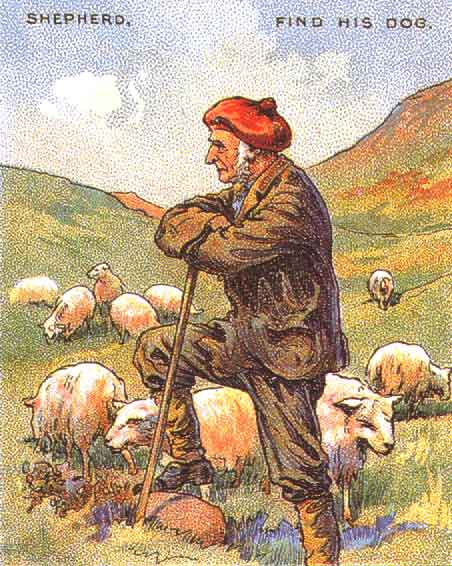
Props go to Dever, though, who around minute 6 asks the question that should haunt all celebrity preachers — “What happens when you die?” That is a concern about which an ordinary pastor does not have to worry, as long as he has a good set of elders and as long as his congregation belongs to a presbytery. Shepherding is not rocket science since the objects of ministry are — well — sheep. Feeding a flock certainly has its challenges. But God calls other men, he equips a variety of teachers and pastors to provide training, and the recipes for sheep food are basic — word, sacrament, and discipline.

I do not know how you feed or care for a real live human being through a television screen. MacDonald and Driscoll not only need to read the pastoral epistles. They need to read Wendell Berry on how to care for sheep and for human beings.