The Return of The PCA Back in the Day

This is the third in a series of pieces – inspired by the PCA General Assembly assembling in Chattanooga – that appeared in the Spring 2010 issue of the Nicotine Theological Journal in light of the PCA’s approval of its Strategic Plan. This one comes from Wes White, who was then pastor at New Covenant Presbyterian Church in Spearfish, South Dakota.

Why I Voted “No”

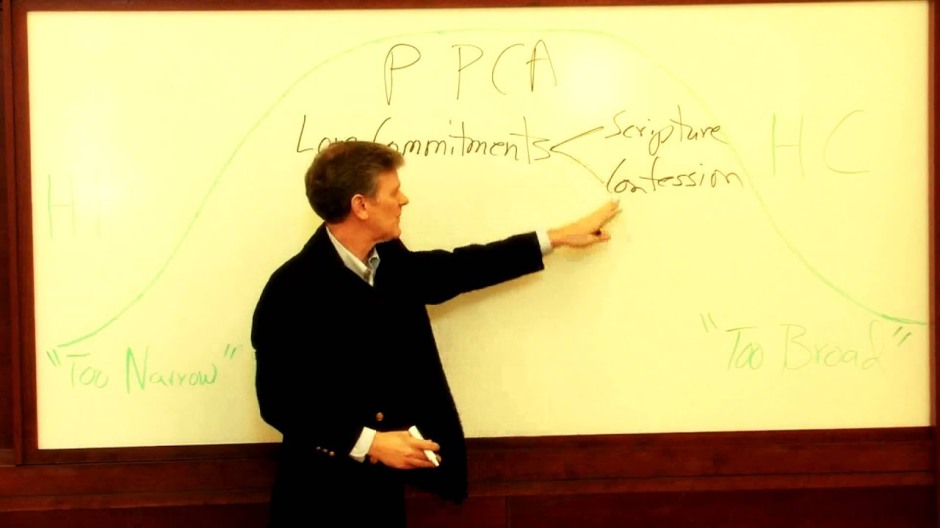
How can you be against “civil conversations,” “more participation in General Assembly,” and “God’s global mission”? Many people have asked this question about the opponents of the PCA’s so-called SP. I believe that there are two ways in which we can view the PCA’s SP, either in the abstract, simply in terms of what the words say, or in the concrete in terms of what those who put the plan together actually want to accomplish. I think the latter way of viewing it is the more appropriate one, but, in either case, I would have voted “no” on every single point.

In the abstract, the SP may seem quite harmless. The problem is that we need to begin by asking, why do we need a strategic plan at all? What are we trying to accomplish? What the PCA calls “strategic planning” has been going on for a while. In the year 2000, the nine Coordinators of the Committees and Agencies of the PCA thought we needed a plan for the future. The result was a 24-person Strategic Planning Steering Committee. They reported at the 2003 GA with a booklet entitled Being Revived + Bringing Reformation. This report outlined the mission, vision, and strategic priorities of the committee.

The second phase of strategic planning began in 2004 with the re-constitution of the SP committee. Its task was three-fold: engaging ruling elders, preparing the next generation, and organizing resources to better serve our corporate mission. The re-constituted committee proposed to changes to church life. The first was the restructuring of General Assembly to limit parliamentary options on the floor of General Assembly and place a much greater emphasis on the committees of commissioners and especially the overtures committee. The second was the creation of the Cooperative Ministries Committee (CMC), a body where the various committees and agencies of the PCA could communicate with one another and “facilitate” further strategic planning. Both of these items were proposed at the 2005 General Assembly and passed at the 2006 General Assembly.

While I do believe that the changes to the PCA’s Rules of Assembly Operation (RAO) have been helpful, one thing is rather obvious. Little progress has been made on the major goals set forth by the 2004 committee. The proportion of Ruling to Teaching Elders is about the same as it was in 2006. The next generation is doing roughly the same thing as it was in 2006. Missions aren’t that much different either.

What have we really accomplished in these areas? Not much, it seems to me. What makes us think that this will be any different? We may feel good about passing these things, but I don’t see any evidence that it will make any difference.

One problem is that little to no research has assessed the perceived problems. In his talk to the Administrative Committee (AC), TE Bryan Chappell, president of Covenant Seminary and author of the informational part of the plan, noted that the number of candidates to the ministry had dropped from 599 in 2004 to 298 in 2008. I asked him in committee if anyone had conducted research to assess this drop. His answer was “no,” and, in his opinion, he didn’t think you could do research on who was not there, but he did suggested that the lack of civil conversations was responsible. This is precisely the problem. Until we figure out why these figures are the way they are, I do not know how good a plan can be. (By the way, in 2009, the numbers were back up to around 550 candidates for ministry. What happened? That would be a good study for strategic planners.)

In sum, I opposed this plan in the abstract because it will not accomplish anything. But two additional problems are worth mentioning.

First, the SP came to the floor in a way that was contrary to the RAO. The CMC cannot present anything directly to the General Assembly. According to 7.3.c. of the RAO, strategic planning must include matters that normally come under the work of our other committees and agencies. Any action must be presented through the “appropriate” committee, which clearly means the committee or agency that normally presents such matters to the Assembly. Instead, the CMC presented it all through the AC, even though the matters in the plan related to Covenant College and Seminary, Mission to North America, and other committees. This point was part of a protest against the Assembly’s action in passing the SP.

Second, the AC included a funding plan that basically involves of tax on congregations. They must pay and if they do not for one year, they will owe back taxes plus the current year’s assessment. They will also lose their vote at GA until the local church and all their pastors pay what they owe to AC. This funding scheme is being proposed through an amendment to Book of Church Order 14-1. The problem is that the amendment says that General Assembly may “require” contributions for the support of General Assembly; whereas, BCO 25:8 states, “The superior courts of the Church may receive monies or properties from a local church only by free and voluntary action of the latter.” The Amendment is contrary to other parts of the Constitution and should have been ruled out of order.

In the concrete, the trouble with the SP is that revisions to language at the Assembly may not actually change what the planners originally intended. I am not confident that CMC and AC have corrected for the errors of their first proposal.

For example, the first theme of the SP was “safe places.” They changed the wording to “civil conversations,” but does that really change what the authors intended when they wrote “safe places”? Moreover, in these safe places (and this is in the latest version of the SP), it says that one way that it will be safe is that there will be “nothing chargeable in this context.” This is clearly contrary to the discipline of the church.

Another example is the idea that our missions would focus on “Gospel eco-systems.” This is a term apparently invented by Tim Keller to describe his model for planting churches in “city centers.” According to the SP, this means not only planting PCA churches but that we will fund research on “how to multiply them beyond the PCA.” I believe that our goal should simply be to plant churches. We should do this wherever God leads us and not set a priority as to where we are to work. However, according to Tim Keller, “If you have an…effective, contextualized way of communicating the gospel and embodying the gospel for center city residents, you’re actually going to win large numbers of them, it’s just going to happen.” Thus, it should be the PCA’s priority to multiply Gospel eco-systems, since they are certain to work. The logic behind this model contradicts the sovereignty of the Holy Spirit.

It is interesting to note that one of the persons who spoke in favor of “God’s Global Mission” was a missionary to the Indians in northern Alberta, Canada. He argued passionately for the “global mission” part of the plan, and I appreciated much of what he said. However, he should realize that “Gospel eco-systems” was changed to “centers of influence.” Does he think that Atlanta will view northern Alberta as a “center of influence”?

So, of course, I am for God’s global mission but do not believe in Gospel eco-systems. I’m not interested in establishing “centers of influence.” I am interested in personal evangelism and church planting. I did not see that as an emphasis in this plan, and thus I voted against this whole section because it was clear to me that our “leaders” were leading us in a different direction.

Why did I vote against the SP? I voted against it because the SP lacks real strategy, because it was passed in a way that was contrary to our BCO and RAO, and because I do not agree with the priorities of those who put this plan together and who will be in charge of its implementation.
Have Senior Christian Market Pastors Served the PCA Well?

If Tim Keller is someone to read for political philosophy, what about urban design and planning? It turns out that much Christian reflection on the city is similar to Christian thought about government and society — it is pietistically utilitarian. The city or politics are ways to evangelize or carry out God’s will for me and others, not a common arena of human life that relies on the sorts of human inquiry that may involve both sides of the antithesis.

Here is one of Tim Keller’s typical briefs for the city:

social scientists tell us that across the whole planet there are at least 5 million people moving into cities from the countryside every month. The number of churches per capita in the country and towns dwarfs the number of churches in cities. People are moving to cities with fewer places of gospel witness for the population, and that situation is worsening by the day. For example, New York City will be gaining a net of 1 million people over the next 25 years. That’s bigger than Charlotte, North Carolina. Yet will we be planting as many new churches here as there are churches in Charlotte? Probably not.

So put the balance like this: we need churches everywhere there are people—but the people of the world are moving into cities much faster than the church is. Jesus told us to go into the world to make disciples (Matt 28:18–20). If we fail to go where the world is going, then we aren’t heeding our Lord’s command. Certainly we must never insist that everyone should do city ministry, nor that gospel ministry in one place is intrinsically better than in another, but we shouldn’t shrink from emphasizing city ministry as never before.

Don’t romanticize or demonize or shrug at the city. Love the city, as Christ loved you.

Treat cities like a mission field.

But if you are going to transform a city with a gospel ecosystem, you may need to read urban designers and planners. And if you read the history of the cities, you may encounter a less than onward-and-upward understanding of the city. Cue James Howard Kunstler:

The city is perhaps the greatest cultural artifact of the long-running human project, which now faces an array of predicaments at a larger scale than at any previous inflection point in our history. These include population overshoot, the fossil-fuel quandary, competition over dwindling resources, an unsound banking system, climate uncertainty, and much more. These dynamics are expressing themselves currently in political disorders and cultural hysterias, and the anxiety over what happens next appears to be driving us crazy. . . .

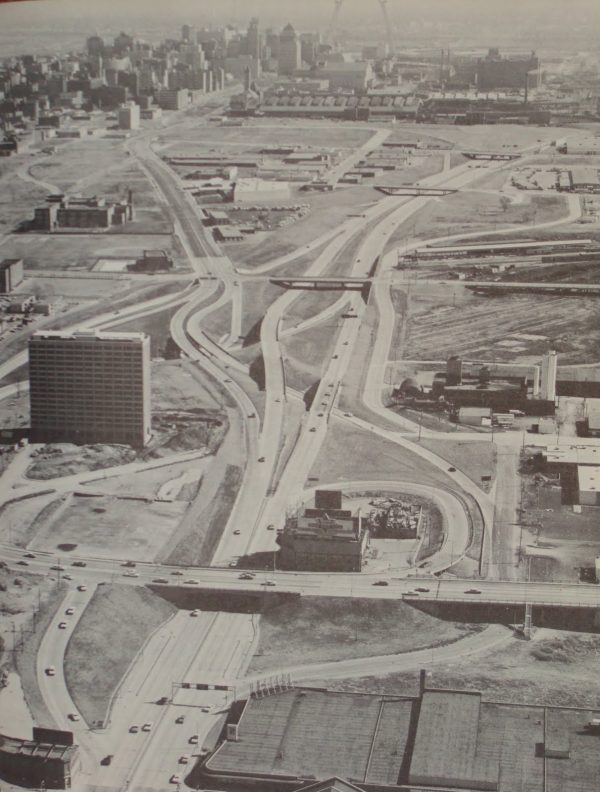
The urban metroplexes of the U.S. have assumed a scale and complexity of operation that cannot be sustained in the coming disposition of things. They will contract substantially. Some of them in especially unfavorable locales—Tucson, Miami, Houston—may disappear altogether, but the rest will have to become a lot smaller and the process is liable to be messy as various groups fight over who gets to inhabit the districts that retain value: for example, riverfronts and original urban cores. This will occur against the backdrop of more generalized political disorder and the failures of national government, especially where fiscal management is concerned. State governments, too, may be broke and impotent. (That implies a devolution of political power from the grand scale to the local level, where decisions and action will matter.)

Cities that are overburdened with skyscrapers and megastructures face an added degree of failure. These buildings will never be renovated in the coming era of resource and capital scarcity. Professional observers like Krieger’s colleague, Edward Glaeser of Harvard’s Kennedy School of Government (author of Triumph of the City, 2011), is exactly one of those who expects only more-bigger-higher-denser cities in the years ahead. That will be another disappointment for the wishful-thinking techno-narcissists of this land. More likely we will see skyscrapers and megastructures convert from being assets to liabilities in very short order. We may not even have the financial mojo to pay for their disassembly and the salvage of their modular materials.

The places in our country that stand a chance to carry on are the very places that have gone through the most catastrophic failure and disinvestment the past 50 years: the small towns and small cities that are scaled to the capital and resource realities of the future—especially the ones that have a meaningful relationship to food production. Many of these places lie along America’s inland waterway system (the Ohio, Mississippi, Missouri, Great Lakes, including the Hudson River estuary and the Erie and Champlain Canals). As the trucking system collapses, we will have to move more things by boat. The conventional futurists don’t even see this coming.

But you don’t read about this side of the city when you see descriptions of gospel ecosystems:

When a gospel movement is underway, it may be that the Body of Christ develops to the point that a whole city tipping point is reached. By that I mean the moment when the number of gospel-shaped Christians in a city reaches critical mass. The Christian influence on the civic and social life of the city—on the very culture—is recognizable and acknowledged. That means between 10 and 20 percent of the population.

. . . In New York City, some groups have a palpable effect on the way life is lived when their numbers reach at least 5 to 15 percent and when the members are active in public life. . . . In other words, something is going on in New York that goes beyond one church, one network, or any one denomination. It goes beyond any particular race or ethnic group. It’s a movement.

We’re a long way from getting to the place we need to be, a city tipping point, when 10 to 20 percent of the population goes to those churches, and you begin to realize that the whole city, the whole culture is going to change because of the impact of Christians in a place like New York.

That’s what we’re after. It takes a movement to reach a city, and that’s more than just planting a church, or even seeing your denomination growing.

Someone needs to ask, what will remain of the city when the movement arrives?

Border Patrol with Big Green Letters

Joe Carter wants us to be cautious about attributing “cultural Marxism” to AN NEE BODEE!!

Over the past decade online culture and political tribalism have combined to bring ideas once relegated to the margins into the mainstream. We can add the tendency of politicized terms to be used in ways that have one or more connotations for a non-tribalized audience and quite another for those committed to tribalism.

A prime example is the term “cultural Marxism,” which is included in Earnest’s grievances for which “every Jew is responsible.” … When those on the political right make claims about the people at the Frankfurt School conspired to bring down Western culture or equate cultural Marxism with multiculturalism, they are—whether they recognize it or not—using the redefined and racialized meaning given by Lind.*** Of course most Christians who uses terms like cultural Marxism are not kinist. Many of them are merely repeating a term they heard used by fellow Christians and are unaware of the anti-Semitic and racialist origin. Yet it’s disconcerting when conservative Christians use language that originated from a racist worldview perpetuated by anti-Semites.****

. . .Because the term CM has become tainted its continued use by Christians undermines our ability to warn about the dangers of concepts like Critical Theory. We should invent a new term or use words already commonly accepted to refer to the concepts we are discussing. Doing so will help us to be better communicate what intend in a loving manner.

At Tablet Magazine, Alexander Zubatov is not so sure:

A short tour through some notable landmarks should suffice to show how 19th-century Marxism evolved into 20th-century “cultural Marxism” and the culture war of our present day: . . .

It is a short step from Gramsci’s “hegemony” to the now-ubiquitous toxic memes of “patriarchy,” “heteronormativity,” “white supremacy,” “white privilege,” “white fragility” and “whiteness.” It is a short step from his and Marcuse’s reconceptualization of the role of radical intellectuals to our sensationalized and politicized media outlets playing the part of a self-styled progressive vanguard riling up the allegedly oppressed and turning their incoherent rage loose on the rest of us. …It is a short step from the Marxist and cultural Marxist premise that ideas are, at their core, expressions of power to rampant, divisive identity politics and the routine judging of people and their cultural contributions based on their race, gender, sexuality and religion — precisely the kinds of judgments that the high ideals of liberal universalism and the foremost thinkers of the Civil Rights Era thought to be foul plays in the game. And it is a short step from this collection of reductive and simplistic conceptions of the “oppressor” and the “oppressed” to public shaming, forced resignations and all manner of institutional and corporate policy dictated by enraged Twitter mobs, the sexual McCarthyism of #MeToo’s excesses, and the incessant, resounding, comically misdirected and increasingly hollow cries of “racist,” “sexist,” “misogynist,” “homophobe,” “Islamophobe,” “transphobe” and more that have yet to be invented to demonize all those with whom the brittle hordes partaking in such calumnies happen to disagree.

Whatever the merits of phrases like cultural Marxism, I do find it peculiar that Joe Carter has not objected to pet categories by the Gospel Allies’ most celebrated members.

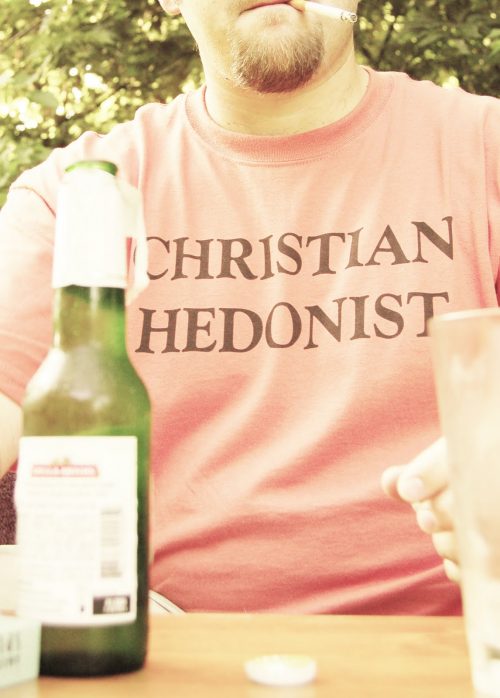
For instance, is Christian hedonism a very good way to describe sanctification?

What about Gospel Ecosystem? Why wouldn’t something like — well — church or communion work? And what’s up with using organic metaphors for urban locales? (Wendell would not approve.)

Can we produce a gospel city movement? No. A movement is the result of two sets of factors. Take for example, a garden. A garden flourishes because of the skill and diligence of the gardener and the condition of the soil and the weather. The first set of factors—-gardening—-is the way we humanly contribute to the movement. This encompasses a self-sustaining, naturally growing set of ministries and networks, which we will look at in more detail below.

If we “should invent a new term or use words already commonly accepted to refer to the concepts we are discussing,” why are some celebrity pastors immune?