Prostitution: A Modest But Entirely Reformed Proposal

From the Archives: Nicotine Theological Journal (October, 1997)

Prostitution: A Modest But Entirely Reformed Proposal

In all of the discussion in Reformed circles about the role of women in modern society, one topic has been sadly neglected. This topic relates to a profession occupied by women for centuries, but for which their contribution has never been recognized or appreciated, especially by Reformed people. Indeed this profession has usually been vilified even though the women practicing it, themselves had often been victims of the worst sort of brutalization. I speak of the profession of prostitution.

The church for centuries, in an oppressive and patriarchal manner (I may be guilty of redundancy here), has censured prostitution. But have we ever carefully examined this traditional stance of the church? In this modern time may not the spirit lead us into some new examination of the Scriptures and some new understanding of this complex issue? Have we taken seriously the testimony of women that they feel called to and fulfilled by this work? For many the money is good. Just as we have learned that making money on the Sabbath is good in the modern world, so in the matter of prostitution we may need to rethink.

Three Pillars
Let me suggest that the case for prostitution rests on three pillars. The first pillar is the key text of Scripture: “Whatever you do, do it all for the glory of God” (I Corinthians 10:31). The second is the clear parallel between slavery and prostitution. The third is understanding properly those texts that seem to condemn prostitution.

THE FIRST PILLAR IS CRUCIAL. I Corinthians 10:31 shows that Paul has completely broken with old forms of ethical thinking and made ethics radically teleological. Actions must be judged solely by whether the intention is to glorify God or not. Paul says that what appears to be an act of idolatry -eating meat offered to idols- is not idolatry if the intention is to glorify God. This radical reorientation of ethics has been largely missed by the church through the centuries, but it is time to allow this seminal verse to have its full weight in our thinking. It is not actions but intentions that determine whether something is right or wrong. Our children have been trying to help us see this point for a long time with their oft repeated observation, “I didn’t mean it.”

Once this text really grips us, we cannot help but see its application to prostitution. It is not the action, but the intention that is crucial in evaluating any human activity. If one feels called to glorify God in the calling of prostitution, then it surely is the Bible-approved thing to do.

The Bible itself gives clear application of this great principle in the case of Rahab. Rahab the prostitute is a model of faith, courage, and devotion. Scripture nowhere condemns her for being a prostitute or says that she ceased to be a prostitute. Obviously she continued to be a faithful prostitute.

THE SECOND PILLAR IN THE defense of prostitution is the obvious parallel to slavery. Prostitutes, like slaves, have often been treated like chattel. They have been abused, victimized and oppressed. They have been controlled by heartless pimps as slaves were by cruel masters.

Historically the church has sought to remedy prostitution by urging prostitutes to stop being prostitutes. But isn’t that like suggesting to slaves that the problem with slavery was the work rather than the bondage? Prostitutes do not need to stop working; they need to be liberated. They need to have their work honored and properly compensated. They need freedom to practice their profession when, where and how they choose. That kind of liberation was the solution to slavery and is clearly the only responsible solution to the enslavement of prostitutes.

The third pillar relates to biblical texts that seem to oppose prostitution. Indeed some may feel at the outset that the biblical position is so obvious that no further examination is necessary. But the history of the church teaches us that there are always alternative perspectives and interpretations of every text in the Bible. We must not feel bound to any traditional interpretation- which is, after all, just the work of men- but must be open to new ideas and the leading of the spirit. (See Jeremiah 42 and 43.)

Two kinds of texts have been used to oppose prostitution. First are the OT’s warnings about harlotry. While these texts are numerous, they are not meant to be universal in their application. In OT times prostitutes were associated with pagan temples and pagan worship. The harlotry condemned in the OT is the harlotry that links sex to idolatry and false religion. Modern prostitution has nothing to do with idolatry and so is not condemned in these texts.

The second set of texts that seems to condemn prostitution are those related to the seventh commandment, “You shall not commit adultery.” Some of you will think that this text is crystal clear. But think again. Adultery is a violation of the spiritual-physical union of a marriage. But prostitution has nothing to do with spiritual unions. It is a purely physical relationship, and so it cannot effect the personal union of marriage. Moreover many social scientists believe that prostitution has beneficial social consequences. Therefore we should recognize that prostitution is not condemned by the seventh commandment.

Now some may think that there is a still clearer biblical condemnation of prostitution. Paul did say, “Do you not know that your bodies are members of Christ himself? Shall I then take the members of Christ and unite them with a prostitute? Never!” (I Corinthians 6:15). But let us not approach this text as if we were fundamentalists. We must recognize that Paul has not given full play to his basic teleological ethics in this text. (Perhaps he even intended that I Cor 10:31 be a correction of his statement here in I Cor 6:15.) Paul seems confused about the relation of the physical with the spiritual in this one place- a confusion which he avoids in the main thrust of his writing. He probably wrote this way to encourage us to use our ingenuity to figure out his real, full meaning. In any case it is clear that Paul cannot mean what he says.

THE CONCLUSION WE MUST reach is that prostitution is not condemned in the Bible. If it is not condemned, then it must be legitimate. Indeed the general thrust of the Bible not only permits it, but rather tends to encourage it- if done to the glory of God. We may well be disobedient to God if we oppose prostitution.

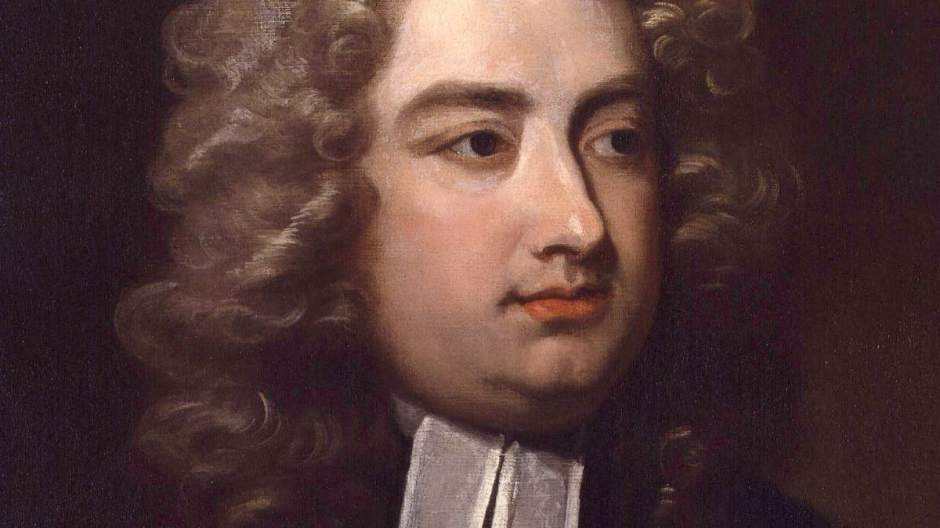
My modest proposal will not, I expect, gain immediate, universal support. Such proposals seldom do. Jonathan Swift experienced that with his original “Modest Proposal” when he suggested during a famine in Ireland that parents should eat their children. Yet the reasonableness and practicality of this proposal have stood the test of time. There can be no doubt that fewer adults would have died if they had eaten their children.

My conclusion that prostitution is not only legitimate, but that it is one more profession to be redeemed by earnest Christians, may seem radical at first glance. But, thoughtful reader, I want to assure you that this conclusion has been reached following the hermeneutical principles laid down by Louis Berkhof. Indeed, this conclusion was in many ways anticipated by the great Reformer Martin Luther. He once said, “All callings are honorable with the possible exceptions of burglary and prostitution.” This great student of the Scriptures was already beginning to see the radical implications of teaching that every profession is a calling.

SO WHEN YOUR DAUGHTER comes to you with tears in her eyes and asks, “Mom and Dad, why can’t I be a prostitute?”, don’t be harsh, judgmental or old-fashioned. Don’t undermine her self-esteem. Don’t stand against the work of the Spirit to break down oppression and to redeem another area of life. Encourage her to use all her gifts. Encourage her to pursue her calling.

Thanks to the new hermeneutic, whoring has become honorable in the church.

I. M. Free

How Small Are Your Ten Commandments?

Jake Meador addresses the question of whether to support impeachment of President Trump on the basis of the Decalogue (as the Christianity Today editorial did implicitly). After all, if you argue that Trump lied and broke the 9th commandment, what about other presidents who were not exactly truthful about intelligence and wars?

He goes on to say that the Ten Commandments are the basis of Protestant political reflection:

First, the Ten Commandments are central to traditional Protestant political theology. Indeed, the Reformed political theorist Johannes Althusius says that you destroy all possibility of symbiotic human community if you remove the Ten Commandments from public life. (In as much as many of our arguments about symbiotic communal life today depend on structuring our economy in such ways that human selfishness is ingeniously twisted to promote mutual material prosperity, I think Althusius is almost certainly correct.)

Likewise, many early Protestants, Melanchthon included, would argue that the Ten Commandments are simply a distillation of the Natural Law and so to remove the Ten Commandments from all consideration in public life is to render public life lawless; it is to make the norms of public life equivalent to the wishes of the powerful, who have the ability to wield the power of government to their own ends and who, apart from the law, have no mechanism to limit their power. This, of course, is an echo of Augustine’s much-cited line when he says that kingdoms without justice are but little robberies. Given the state of our republic, I, once again, find this line of thought highly persuasive. Therefore, any attempts to push the Ten Commandments to the center of Protestant political thought is quite welcome, for it is an attempt to return Protestantism to its historical roots.

… The magistrate’s responsibility is to preserve the peace of society through protecting the good and punishing the bad. So while I might sin in my inner life through impure thoughts, coveting, or some other vice, these things are not crimes, properly speaking, because they are strictly internal; if these thoughts are externalized in my conduct then they could become subject to civil law.

But what about the sins of the First Table that, as Protestant political theology teaches, magistrates are supposed to enforce? Don’t people remember the original Westminster Confession?

The civil magistrate may not assume to himself the administration of the Word and sacraments, or the power of the keys of the kingdom of heaven: yet he has authority, and it is his duty, to take order that unity and peace be preserved in the Church, that the truth of God be kept pure and entire, that all blasphemies and heresies be suppressed, all corruptions and abuses in worship and discipline prevented or reformed, and all the ordainances of God duly settled, administrated, and observed. For the better effecting whereof, he has power to call synods, to be present at them and to provide that whatsoever is transacted in them be according to the mind of God. (23.3)

That might be a good idea — having the magistrate (as long as it’s not Donald Trump or Anthony Weiner) evaluate worship — if the church is struggling with veneration for POTUS:

For Rose Ann Farrell, 74, from Florida, the claim rang true. “I really believe he was sent to us,” she said. “From one to ten, he’s a ten. He lives in a Christian world and we needed a strong Christian, somebody who is not afraid. He speaks for us, has the guts and courage to speak what we want to say. His actions, his intentions, are Christian.”

But is it such a good idea to enforce the First Table of the law on Muslims and Mormons?

Plus, why do Protestants concerned about public life so often reduce the Decalogue to the Second Table? That was not the way old Protestant political theology had it. Not only did the First Table restrict religious expression and worship, but the magistrate — maybe someone like Barack Obama — was supposed to enforce worship and morality. It doesn’t get much older for Protestant political theory than Calvin:

no man has discoursed of the duty of magistrates, the enacting of laws, and the common weal, without beginning with religion and divine worship. Thus all have confessed that no polity can be successfully established unless piety be its first care, and that those laws are absurd which disregard the rights of God, and consult only for men. Seeing then that among philosophers religion holds the first place, and that the same thing has always been observed with the universal consent of nations, Christian princes and magistrates may be ashamed of their heartlessness if they make it not their care. We have already shown that this office is specially assigned them by God, and indeed it is right that they exert themselves in asserting and defending the honour of him whose vicegerents they are, and by whose favour they rule. Hence in Scripture holy kings are especially praised for restoring the worship of God when corrupted or overthrown, or for taking care that religion flourished under them in purity and safety. (Institutes, IV, 20. 9)

I understand Meador wants to promote the common good and to do so as a self-conscious Protestant. I don’t understand, though, in a nation that prizes freedom — even religious freedom — how that common good is going to come from the Decalogue if the whole of it is in view.

Moderate Presbyterians, Irish or American

Seeing the looks on Ben Preston and Craig Lynn’s faces last week while recording a session on J. Gresham Machen, I worried not only that American indelicacy had run up against Irish sensitivities, but also that the Orthodox Presbyterian habit of being opinionated had offended the moderate sense of the Presbyterian Church of Ireland ministers.

As it happens, while waiting for a meeting with staff at Union College (Ireland’s equivalent of Princeton Theological Seminary), I found a copy of the Presbyterian Herald, the Irish equivalent of New Horizons. I read an article about church attendance that I am not sure could have been published in the OPC’s magazine. The author wrote this:

Christian ought to be encouraging of and encouraged by para-church organisations which seek to spread the gospel. Being committed to such enterprises, however, before the local church is idolatry, for God will not share the glory of his church with another (Isaiah 42:8).

Shazam!

Membership of and support for para-church organisations, whether mission agencies, evangelicist bands or cultural/religious institutions must all come after commitment to the local church and never before.

Imagine what American Protestantism would look like if The Gospel Coalition adopted that set of priorities.

If Peter Can Deny Our Lord Three Times (dot dot dot)

In the current climate of Roman Catholic discontent about sexually abusive and active priests, bishops, cardinals, and a church structure that made cover-up possible, it may not be the best time to raise questions about sexual infidelity among pastors. But a dinner with old friends and colleagues this summer at General Assembly and now reading about what to do about priests who have fallen has me thinking (always dangerous to do in public).

The thought is this: why is sexual infidelity worse than other sin? As the title of the post indicates, Peter did something that was pretty rotten. He denied his Lord three times. At certain times in church history (persecution in N. Africa in the third century and in Korea in the twentieth century), that kind of infidelity could get you booted from the ministry. But you could add lying and stealing as big deals. How do you trust a pastor who commits those sins? And perhaps not as obviously wicked, but what about idolatry or blasphemy (never mind keeping the Lord’s Day holy)? Why do we zoom in on the seventh commandment to adopt a one-strike and you’re out?

Here is how Robert George put it this week:

In short, what the Church (and by “the Church” I am referring to the lay faithful as well as to the Church’s hierarchical officials) should demand—that is, absolutely insist upon without exception—of its clergy is what the clergy should preach to the people, namely, fidelity. Fidelity, fidelity, fidelity. Priests must believe and preach what the Church holds as true about God and man—and must practice what they preach. Am I advocating a zero-tolerance policy toward grave sexual sins, such as fornication, adultery, and sodomy (even when committed by consenting adults)? Yes, I am. It is not because I think these sins are unforgivable, or even that they are the worst sins. (In fact, they are forgivable and, though grave, they are not the worst sins.) It is because the infidelity expressed by and embodied in these sins, and because the scandal—undermining of the faith (including the faith of the sinning priest and the faith of the person with whom he sins)—they occasion, is simply intolerable. These sins are toxic to the priestly ministry. Priests who cannot or will not avoid them cannot effectively carry out their mission.

So there is the logic from a conservative Roman Catholic:

Sexual infidelity undermines the faith corporately and personally.

Therefore, sexual infidelity is intolerable.

I understand it but the argument is not exactly airtight since you could insert idolatry, lying, and stealing into the premise and come to the same conclusion.

I am not trying to excuse sexual infidelity (or lying and stealing). I am curious though if our revulsion at sexual sin reveals more about those judging the sin than it does about the nature of the sin. I understand that according to our standards, some sins in themselves and by reason of several aggravations are more heinous in the sight of God than others. But that catechetical language gives room for what may only be “like your opinion, man.”

Be Careful for What You Pine

If you want the world to be sacramental:

Living a sacramental worldview means, quite simply, viewing the world as sacrament. A redundant definition it might be, but often times the simplest explanations are the best. If we do truly believe that the Sacraments are moments in time where the invisible grace of God is made visible and tangible then seeing this same grace working constantly in and through our daily lives would only beg that we see the sacramental nature of daily life. This is not to say that every blade of grass is truly the transubstantiated body of Christ, but it does substantiate St. Ignatius’s charge to see God in all things.

You may wind up with the market as God:

In his most recent book, The Market as God, Harvey Cox argues that the market economy has become deified in our contemporary world. In formulating this argument, he identifies many parallels between the structures of Christianity and those of the capitalist economic system.

Why Is it Godly Patriotism When We Do It, and Jihad When They Do It?

Making the world safe for Julia Ward Howe (thanks to our Iowa correspondent):

Holy war can seem like something that happened long ago or that happens far away — the Crusades of medieval Europe, for example, or jihadists fighting secular forces today. But since their country’s founding, Americans have often thought of their wars as sacred, even when the primary objectives have been political.

This began with the American Revolution. When colonists declared their independence on July 4, 1776, religious conviction inspired them. Because they believed that their cause had divine support, many patriots’ ardor was both political and religious. They saw the conflict as a just, secular war, but they fought it with religious resolve, believing that God endorsed the cause. As Connecticut minister Samuel Sherwood preached in 1776: “God Almighty, with all the powers of heaven, are on our side. Great numbers of angels, no doubt, are encamping round our coast, for our defense and protection.”

Several founding fathers were more theologically liberal than the typical evangelical Protestant of their day. Still, few were anti-religious, and the nation’s architects often stated that religion supported virtue, which was essential to patriotism. “A true patriot must be a religious man,” wrote Abigail Adams, wife of America’s second president.

George Washington believed so strongly in the religious case for patriotism that he demanded chaplains for the Continental Army. He appealed to the Continental Congress for higher pay for chaplains, and when one chaplain impressed the general, Washington went to great lengths to retain him.

That chaplain was Abiel Leonard, of Woodstock, Conn. Washington wrote letters to the governor of Connecticut and to Leonard’s church, hoping they would support the pastor’s extended service in the Army. In his letter to the governor, Washington wrote that Leonard had proved to be “a warm and steady friend to his country and taken great pains to animate the soldiers, and impress them with a knowledge of the important rights we are contending for.”

For Washington, chaplains not only supplied moral guidance but appealed for God’s support in battle, which was vital. He believed that the war’s outcome rested in God’s hands, and he ordered his soldiers to attend “divine service, to implore the blessings of heaven upon the means used for our safety and defense.”

We cannot fully understand the revolution without recognizing such appeals for God’s favor on the battlefield. Both the founders and ministers understood these ideas because they knew scripture, one of the major sources of American patriotism.

No problem here, though, because it’s a wonderful day in the neighborhood:

Talk of glorious causes has persisted from the revolution through the war on terror. Some Americans think of the United States as “God’s New Israel,” a nation on a divine mission, its wars blessed by God. Sometimes rhetoric makes this view obvious: Soon after Sept. 11, 2001, for example, the White House apologized after President George W. Bush used the word “crusade” to describe the battle against terrorism.

But references to religion can be subtler, or even obligatory, in political speeches. Consider President Obama’s July 4 speech from last year, in which he praised military sacrifices and ended with: “God bless you. God bless your families. And God bless these United States of America.”

We pass over such niceties as commonplace, almost dutiful, in political speech, but they are religious statements. Their roots go back to the revolution, when colonists — from evangelical preachers to founders such as Washington — asked for God’s blessing. Whatever century it is, our leaders often include some suggestion of the same biblical themes that filled revolutionary-era sermons, including sacrifice, courage for the fight and appeals for God’s providential blessings on America. We are, it seems, one nation under God after all.

Perhaps the reason American Christians permit blasphemy in their worship services is that the idolatry of U.S. civil religion has made them immune to it.

No peace, no justice.

Whose Ox, Which Gore?

A-View-of-World-from-9th-Avenue-Map_mediumthumbTim Keller continues to impress, not only with his wisdom, but also with his productivity. He has a new book, this time on idols, and as the darling Presbyterian pastor of Christianity Today’s editors, he answers questions about Counterfeit Gods: The Empty Promises of Money, Sex, and Power, and the Only Hope that Matters. (That’s almost an early modern mouthful of a title.) The interviewer at CT asks Keller, “Do Christians have blind spots when it comes to false idols?”

Keller responds:

An idol is something you rely on instead of God for your salvation. One of the religious idols is your moral record: “God accepts me because I’m living a good life.” I’m a Presbyterian, so I’m all for right doctrine. But you can start to feel very superior to everyone else and think, God is pleased with me because I’m so true to the right doctrine. The right doctrine and one’s moral record are forms of power. Another is ministry success, similar to the idol of achievement. There are religious versions of sex, money, and power, and they are pretty subtle.

This is a curious answer. Keller could have opted for a version of an idol that was close to home or one that was easier to give up. For instance, if I were asked this question, I could respond with something about the idolatry of Christian contemporary music and its outlet in P&W worship. That would be no skin off my back, and I could score a point against my liturgical enemies. But if I offered up the Philadelphia Phillies as a form of idolatry, this one would hurt since I’d hate to abandon for God’s service what may be the best team in Philadelphia sports history. My answer would then go something like this:

I’m a Philadelphian, so I’m all for Ryan Howard. But you can start to feel very superior to everyone else and think, God is pleased with me because I’m so true to the best slugger in contemporary baseball. Home runs and RBI’s are forms of power. Another is winning the N.L. pennant two years in a row, similar to the idol of achievement. There are sports fan versions of sex, money, and power, and they are pretty subtle.

All of which is to say that the illustration one uses to answer a question about idolatrous blind spots may reveal something about the tenacity with which you cling to earthly and even spiritual goods, and which ones may be let go.

So what does it say that Pete Enns quotes Keller favorably at his blog? If Keller had identified either the Yankees or OT studies or Ancient Near Eastern Studies as possible idols, would Enns have been so ready to quote approvingly?

For that reason, Keller’s response would have been more impressively costly had he substituted “city” for “right doctrine”:

I’m a New Yorker, so I’m all for urban ministry. But you can start to feel very superior to everyone else and think, God is pleased with me because I’m so true to the Big Apple. Urban ministry and cultural transformation are forms of power. Another is church planting success, similar to the idol of achievement. There are religious versions of sex, money, and power, and they are pretty subtle.

So here’s a deal: I’ll consider giving up my potential idols of Machen and confessional Presbyterianism, if Keller is willing to put urban ministry on the altar and Enns is willing to sacrifice Ancient Near Eastern studies.