
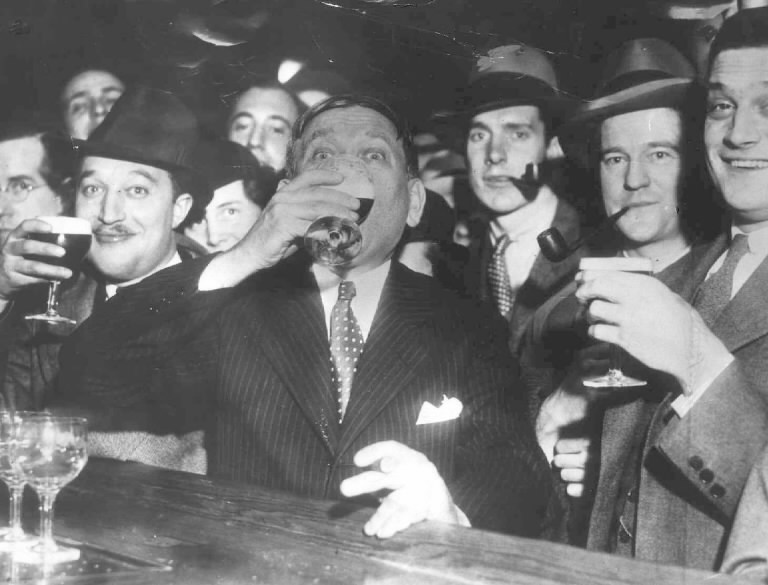
And the politicians come out poorer:
Locke has first dibs:
In advocating tax dodging you forget the Social Contract. Is it decent for a citizen to evade his fair obligations to other citizens? Suppose everyone did as you recommend? What would become of the State?
That’s a problem for Kant to solve:
An interesting objection–if only because it proves that the corpse of the late Dr. Immanuel Kant is still dancing. But though it may thus dance, it is nevertheless indubitably dead—and with it the crazy doctrine of a universal moral law. There is, of course, no such thing. Nothing is ever moral for all men—at all events, not with equal horsepower—and by the same token nothing is ever immoral. It may be wrong for a rich man, with so much money that he doesn’t know what to do with it, to dodge his taxes, but it is certainly not wrong in the case of a man whose family must suffer if he pays them. An individual’s first and paramount duty is to himself and his second duty is to his children. Then, in order, come his duties to his wife, his parents, his friends. his brothers and sisters, his creditors, his nieces and nephews, his uncles and aunts, his cousins, his second cousins, his third cousins and so on. Finally come his duties to his enemies, his wife’s relatives and the community in general.
Mencken tries to get the last word:
If the Social Contract were really a free contract, made in cold blood by autonomous principals, then it would lay upon every man a plain duty to pay his taxes in full. But it is really nothing of the sort. On the contrary, it is a contract forced upon him without his leave, and one which he couldn’t evade if he would, and what is more, its terms are grossly unfair and extortionate. The State, in brief, is a professional swindler. Its incessant effort is to make every taxpayer pay $2 or $3 or even $10, for something worth but $1. Theoretically, it collects only enough money each year to pay the actual expenses of government—not a cent more. But actually it collects enough in addition to pay a handsome profit to thousands of men—men who are theoretically servants of the State, but in sober truth are private individuals engaged in the universal human business of getting as much money as possible for as little work as possible.
Certainly, it is no crime for a taxpayer to refuse to submit to this brigandage, and to oppose it with whatever means are at hand. The members of the so-called Government, it is obvious, enter the contest with all of the advantages on their side. Not only have they the police power of the State behind them, to enforce their extortionate demands, but they are also supported by the indifference and superstition of the vast majority of taxpayers, some or whom are too lazy or too ignorant to protect themselves, and others of whom think it would be wrong to try. Therefore, it is perfectly moral, in warring upon such unfair assaults, for the intelligent taxpayer to use devices which, in themselves, may be frowned upon by his private code. In brief, it is moral for him to meet brute force with guile, with chicanery, with downright mendacity—to lie like an anti-vivisectionist whenever the truth would expose him to indefensible and ruinous robbery.
Kant won’t let Mencken have it:
But hark! the corpse of old Immanuel rises to ask a question, to wit: What would happen if every taxpayer swore off most of his takes? How could the State exist? A silly question—like most of those asked (and answered) by that cadaver—for it must be obvious that the majority of taxpayers are so poisoned by moral ptomaines that they will never get the courage to save themselves. The average man is, and always will be, a born sucker. What with his stupidity on the one hand and his morality on the other, he is paralyzed from birth, and so he goes through life a chronic victim. The temptation to rob him is irresistible. Even his wife, his pastor and the policeman on the beat can’t keep their hands off him. He almost begs the world to take his money.
But Mencken persists:
But, supposing the question to be intelligible, it may be answered quickly. And here is the answer: If every taxpayer refused to pay more than, say, 50 per cent. of his taxes, the efficiency of government would not only suffer no diminution, but would probably be vastly augmented. Economy, which is now a mere abstraction, would then become a reality, a necessity. And in the business of cutting down expenses, thus suddenly made the chief concern of the State, nonessentials would go first. If, by any unyielding stupidity of the heads of the State, they didn’t go first—if essentials were thrown overboard to protect supernumeraries and grafters—then the people would rise against the Government and take things into their own hands, and for the first time in the history of the Republic the State would be run as honestly and as economically as the average coal yard, or newspaper, or building association.
The curse of our present scheme of government lies in the fact that it puts no limitation upon taxation. The men who run the State are able to rob us as they will. Naturally enough—since their one aim is to get all they can for themselves and their friends—they lay on all the traffic will bear. The present tax rate on realty in Baltimore, counting in direct and indirect taxes, is fully $3 on the $100—a rate wholly indecent and proposterous. In the absence of legislation reducing it to $1—which rate, if constantly maintained, would be ample to pay all the legitimate expenses of the government—it is the supreme duty of every self-respecting taxpayer to reduce his own bill himself, and in that endeavor he is justified in employing any means, however “immoral,” that may achieve the desired end. Every time he pays a cent more he hands over his good money to meet the costs of pediculine debauchery.
And Mencken wrote this before the states ratified the sixteenth amendment.
 Old Life