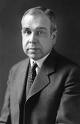
Regeneration, or the new birth, therefore, does not stand in opposition to a truly scientific attitude toward the evidence, but on the contrary it is necessary in order that that truly scientific attitude may be attained; it is not a substitute for the intellect, but on the contrary by it the intellect is made to be a trustworthy instrument for apprehending truth. The true state of the case appears in the comprehensive answer of the Westminster Shorter Catechism to the question, “What is effectual calling?†“Effectual calling,†says the Catechism, “is the work of God’s Spirit, whereby, convincing us of our sin and misery, enlightening our minds in the knowledge of Christ, and renewing our wills, He doth persuade and enable us to embrace Jesus Christ freely offered to us in the gospel.†That does justice to all aspects of the matter; conviction of sin and misery as the prerequisite of faith, the enlightening of a mind blinded by sin, the renewing of the will; and all these things produced by the Spirit of God. (What is Faith? pp. 135-136)
Tag: J. Gresham Machen
The Corporate Gullibility of the Church
Call it harmonic divergence, but I couldn’t help but read the transcript Tim Keller’s remarks on “gospel ecosystems” in the light of J. Gresham Machen’s remarks about the corporate responsibility of the church. I happened to be teaching on the latter during adult Sunday school and reading the former after a holy day feast and the evening service. Maybe reading Keller and Machen in such close proximity is unfair to both men, but odd combinations like this regularly come with the turf of contemporary conservative Presbyterianism in the United States.
For those uninitiated, Keller’s notion of a gospel eco-system is an infelicitous (because it presumes scientific status just like Charles Finney’s New Measures) way of describing the sort of church planting efforts in which Redeemer Presbyterian Church is engaged (yes, by now it should go without saying) in New York City. According to Keller:
. . . an ecosystem is a dynamic balanced set of forces and energies that grow each other. Now the question I want to talk to you about today, is how do you start a gospel movement in your city, or how can you see a gospel movement develop in your city? . . . .
A gospel movement is this: a gospel movement happens in a city when across churches, across multiple denominations and networks, and beyond any one key leader or any one command center, or any one denomination, you actually have the body of Christ in the city geometrically growing, not just reconfiguring. The vast majority of what we consider, you know, “good things happening in that city,” is a reconfiguration of the body of Christ, not an actual growth of the body of Christ against the overall population. When the body of Christ is growing from 1% to 5% to 10% of the population, because its growing faster than the population, its actually growing.
Machen’s notion of corporate witness of the church refers to the obligations that everyone within a communion (especially one with presbyterian connections) has for anyone, like Keller or Machen, who preaches on the basis of the communion’s approval. He wrote:
The corporate witness-bearing of the Presbyterian church is carried on especially through the pulpit. Under Presbyterian law, no man can permanently occupy a pulpit of the church without the church’s endorsement; the preacher therefore speaks not only for himself, but for the church. That does not mean that the church seeks to impose any beliefs upon any man simply on the ground that they are beliefs of the church; it does not mean that there is the slightest interference with the right of private judgment. But it means that if a man is to speak in a Presbyterian pulpit, and obtain the endorsement which is involved in that position, he must be in agreement with the message for which the propagation of which the church, in accordance with its constitution, plainly exists.
The obvious implication for Keller’s gospel ecosystem is that all members of the PCA (along with those in churches that have fraternal relations with the PCA) are responsible for Keller’s ideas and practice. Of course, if his scheme is desirable and faithful, then everyone in the PCA gets to bask in the positive contribution of Redeemer New York. At the same, if Keller’s proposal is undesirable and unfaithful, then for starters members of the PCA have an obligation to walk Keller away from the ledge of this flawed measures.
Several reasons exist for questioning Keller’s idea of gospel ecosystem. At the level of Reformed theology and church polity, Keller’s notion of participating with non-Reformed churches in a church planting effort runs directly up against the problem of Calvinists cooperating with Arminians in evangelism and discipleship. It also conflicts with any notion of jure divino Presbyterianism, that is the idea that presbyterian polity is revealed in Scripture as the way to govern the church and oversee its ministry of word and sacrament. Nor is it entirely clear how Keller’s form of cooperation squares with the rules governing the PCA’s fraternal relations.
But while these concerns are part and parcel of an oldlife church-and-life view, Keller’s talk raises additional questions about the wisdom of those who apparently think the New York City pastor is the guy who hung the moon on contemporary Reformed ministry. His argument fails at any number of points and raises the possibility that those who find his arguments compelling have the same kind of critical skills as those who insist upon a young earth (despite the speed of light and the age of planets) or who believe in a Christian America (while still holding to liberty and justice for Jews, Mormons, and unbelievers). For when you look even in a cursory manner at Keller’s idea and supporting reflections, you wonder why the PCA would take the idea of developing gospel eco-systems sufficiently seriously to include them in a strategic plan and potentially devote human and financial resources to it.
1) Why would anyone heed a pastor with ideas about urban life if they were at all familiar with the history of cities, schools of urban planning, and the politics and economics that drive modern American urban centers? At the same time, why should anyone take my complaining about Keller’s lack of expertise on urban life seriously since I am also without street cred as an urban theorist? This is a fair question but skeptics of me would then need to be skeptical about Keller’s claims to read the tea leaves of urban life.
I would feel a whole lot better about Keller’s assertions about cities if he referred to names I do know about, like Jane Jacobs who singlehandedly saved neighborhoods in New York City from awful urban design, or Howard Kunstler who has argued repeatedly and voraciously against the suburbanization of the United States, or fellows at the Manhattan Institute who regularly comment on all sorts of aspects of New York’s public policies and institutions.
I’d feel even more comfortable if I thought that Keller had once rented and viewed the entire HBO series, The Wire, which may be bleak but offers a remarkably realistic assessment of the factors at play in modern American cities, circumstances that pose real barriers to church planting for starters and ultimately to urban redemption (if the salvation of non-human realities were possible).
2) Why use the metaphor of ecosystem when the Bible already provides an organic and less lethal metaphor? According to Keller, an ecosystem is “where you have a set of forces that sustain each other, interact with each other, stimulate each other. So organism A eats organism B, and it’s a good thing for organism C, because if organism B’s numbers weren’t tamped down, organism C wouldn’t exist because organism B eats C. And, organism A eats C, which means, if there wasn’t enough organism C there wouldn’t be any organisms A, but because they are all eating each other, because they are all, you might say, in a sense sustaining each other, you’ve got an ecosystem.” He glides pretty effortlessly from this organism-eat-organism world into a vision of churches in a city where they are cooperating to plant churches and gain new converts, and usher in a world of Protestant harmony. Keller prefers ecosystem to a denominational pattern where Christians simply circulate among different denominations depending on the stage of their spiritual life.
But an ecosystem would actually call for Presbyterians to eat Pentecostals who would eat Baptists who in turn would eat Lutherans, with these different denominational groups living with the others simply as necessary food for existence.
A better organic model, of course, is the body of Christ. I guess it would be less attractive than ecosystem because it might mean that Presbyterians are the brain and Pentecostals are the soul. But at least a body would be less Darwinian.
2a) How can an ecosystem be a movement? An ecosystem is a biological concept, a movement is a sociological category, and yet Keller has no trouble using the imagery of ecosystem as the basis for a movement. Maybe I am bound too much by academic categories, but I think church planters would have much more to learn from sociologists than from biologists when it comes to the place of congregations in a city. At the same time, I am not persuaded that describing Christianity as a movement is all that valuable. Movements, sociologically speaking, connote people who come together for certain political or economic ends. To speak of a Christian movement raises the specter – look out! – of the Religious Right.
3) Is New York City really comparable to a prison? I know many Americans would answer yes given the city’s reputation for worldliness and economic elitism. But when Keller speaks of a “city tipping point” and uses the experience of Prison Fellowship as an example, I’m not sure he thought through the potential problem:
what Chuck Colsen says, that there’s a, that when more than 10% of the population of a prison get involved in Christian ministries, get converted or get involved Christian ministries, he says that before that 10% place, obviously people’s lives are being changed, but you don’t seen much different in this prison, the prison doesn’t look any different than any other prison. But when you get to a certain spot where, there’s maybe 10%, its not a science, its not wooden, but there’s a spot at which the whole prison begins to change. The relationships between the guards and the prisoners begins to change, the culture of the prison begins to change, and even the look of the prison begins to change. And we also know it’s the same thing with neighborhoods, by the way.
Actually, I think sociologists and political scientists might be in a better position than a man who is working on sermons all week to say with certainty what happens in neighborhoods when populations change. But how will New Yorkers feel when they hear that a neighborhood in their city is like a prison population before ten percent of its residents become a Christian? The answer is probably the way they would feel if they ever talked to my fundamentalist parents about the desirability of living in the city.
3a) Will New York become like Wheaton, Illinois if Keller is succeeds?
The reason for asking is that Wheaton is actually a city – it really is a city according Illinois’ calculations – with a population of roughly 56,000. The city also has 63 churches, which ranks as one of the highest level of churches per capita in any American city. That sounds like Wheaton might qualify as a gospel ecosystem.
If so, does Keller’s vision for New York City involve turning the Big Apple into a Mid-western city of middle class and evangelical Protestant sensibilities? That would not be the worst thing. Having spent four years in the evangelical Jerusalem, I can vouch for Wheaton’s charms. At the same time, my preference is for the grit, grime, crime, and headaches of a big city because with those circumstances come the arts, universities, cultural experimentation, major league sports, and hustle and bustle.
In which case, would New York City have the hipness that makes Redeemer NYC attractive to Gen Xers in the PCA if it hosted a gospel ecosystem? Or would New York become as white-bred as a community like Wheaton, with its stability, standards, and restraint? I am not sure, though, how you hold on to urban chic while being evangelically earnest is a mystery. Maybe New York would turn into Omaha or Minneapolis. Then, would Redeemer NYC be cutting edge?
These questions do not exhaust my problems with Keller’s talk. Granted, it was only a talk and not an academic paper. But if the PCA is going to adopt the language of gospel ecosystem in its plan for missions, should Presbyterian Church in Americans ask for the fine print and supporting studies? Wouldn’t even common sense say that what works in New York City won’t fly in St. Louis or Atlanta? So if members of the PCA won’t fulfill the responsibilities that come with the corporate witness of the church, are they prepared to bear the burend of corporate gullibility?
Yet, if the PCA follows Keller, it won’t be the first time that Presbyterians have put evangelism ahead of theology and polity. New Siders did that in Keller’s region a long time ago when they believed that Presbyterian doctrines and church government had little to do with the Great Commission. So it wouldn’t be the first time in church history that a church — especially in New York City — was Presbyterian in name only. But if these guys are the smartest ones in NAPARC, they should be able to see through the holes in Keller’s strategy.
Ideas Have Consequences for Genes
The following was originally intended to appear in the next issue of the Nicotine Theological Journal. But when my father died on April 28th, the timing for tributes changed. Since today is the birthday of Ellen Marie Hart (nee Jones), it seems a fitting day on which to run it.
Within thirty-six hours of my mother’s death on March 26th, 2010, I was responsible for teaching a lesson in Sunday school on J. Gresham Machen. Since this was the second of a thirteen-week series, I needed to cover his upbringing, education, and church background. This meant that I was going to be talking about Machen’s relationship to his mother, Mary Gresham Machen, aka Minnie. In turn this involved talking about her background as a native of Macon, Georgia, her father’s business and political activities, the townhouse of the Greshams, now a four-star Bed and Breakfast – the 1842 Inn – that still features photographs of young J. Gresham Machen attired in a dress (the custom of the day), and Minnie’s own literary pursuits; she wrote The Bible in Browning and was published by MacMillan – the same company that published her son’s Christianity and Liberalism two decades later.
As I prepared and taught I became aware of a major problem in my own existence, namely, that I know more about Machen’s mother and family than I actually do about mine. This reality became all the more glaring on the day of my mother’s burial when one of her sisters and one sister-in-law traveled to Bucks County, Pennsylvania, from Green County, North Carolina for the service. I had not seen these aunts for almost four decades. They seemed to revel in catching my brother, wife and me up on family news. And through it all they let us know, not in a didactic way, but simply as part of the ordinary quality of their lives, that all of my mother’s siblings had remained in North Carolina, reared their families there, and that most of their grandchildren were still in the Tar Heel state. Not only was I jealous of this side of my humanity – after all I am as much a Jones as a Hart. But the Jones and the Crawfords and the Murphys and the Sullivans and the Pridgeons – the other families with whom they had bonded in marriage – were practically the embodiment of the localism, agrarianism, and family ways that I have come to admire and be haunted by in the writings of Wendell Berry.
One of the most pressing questions I have had about my mother which bears directly on my growing up in the suburbs of Philadelphia rather than in the land of Jesse Helmes, is why she decided after graduating from high school in 1941 to move to Washington, D.C. and work first as a telephone operator and then for the federal government in the accounting office. It made no sense that a woman, the oldest of ten children, would leave a farm and nine young siblings to work in the “big†city. Since she was a born-again Christian, it made even less sense, given the fears that evangelicals generally have of cities, combined with the unwritten code governing a young single woman’s opportunities. My aunts, however, made some sense of the move by explaining that mother had moved to Washington with her oldest sister, and that they lived with one of their future aunts. So it was not a career move but a family connection that brought my mother to the nation’s capital during wartime.
But that move was decisive for her and me because she met a man in a Marine’s dress-blue uniform at a Baptist church (Mark Dever’s, by the way) and fell in love. That man, my father, hailed from southeastern Pennsylvania and after he served in the Pacific and then attended college at Bob Jones University, thanks to the G.I. Bill, they bypassed North Carolina on the way to “go†in Levittown, Pennsylvania, the armpit of Bucks County and the horror of post-war suburban development. But much like my Jones relatives in the South, my parents didn’t know any better. They hadn’t read Jane Jacobs or Howard Kunstler or Wendell Berry or Russell Kirk. They simply did the best they could to rear a family. For the Harts that meant finding affordable housing near a good church and close to kin; for the Jones that meant rearing families and supporting them in the opportunities provided by ditch digging, tobacco farming, auto sales, and real estate brokering.
Unlike my kinfolk, I am a deracinated academic who knows how to find literature on family ties or who devoted a good portion of his life to the life and writings of one man and became so enamored of those ideas that he found out more about Machen than about either of his grandfathers, Robert Jones or Clyde Hart. I suspect that this is a problem that afflicts many aspiring intellectuals – the lure of some author or thinker from the past whose writing has changed their outlook on the big questions. In turn object of intellectual desire directs and guides the student more than the pupil’s own parents and family. Ideas do have consequences. They help to define our understanding of ourselves, and our situations, and become the motive for action. They even tempt us to discount the influence of parents and the legacy of families.
In my own case, I continue to regard Baltimore as more of a home than either Levittown or Greenville, North Carolina. Part of that owes to spending six years there while in graduate school. But a good chunk of it also stems from the subject of my studies during that time – Machen, whose family residence was four blocks from our first apartment, not to mention the reading and writing I did on H. L. Mencken, the bard of Baltimore whose home was only two blocks away from our grad school dwelling. Some of us eggheads get so caught up in a historical figure’s life that we actually place ourselves in their narrative. Meanwhile, the real story to which we belong lies strewn across the informal conversations and fading memories of aging aunts, uncles, cousins, and grand parents.
One way to try to justify this identity confusion is to portray myself as the victim of declining family ties. Whatever the legitimate reasons my parents may have had for moving to Levittown, they did not choose a place that would sustain links to kin (for starters). Again, they were not in the habit of considering pedestrian-friendly streets, interconnected street grid networks, mixed-use zoning, increased density, or “green†transportation when looking for a place to live. They had experienced a depression and a war. Having survived Iwo Jima my father had freedom to buy a home where he darned well (humanly speaking) wanted. He and mother didn’t need some guilt-ridden baby boomer historian of a son to come along and claim his rights as a victim of poor parental housing choices and the accompanying industrial military complex.
That said, as soon as I saw the city I knew I wanted to get out of Levittown as fast as I could because it had none of the interest or energy that people living together in one relatively self-sustaining polity had. And once that switch flicked on, gone were circumstances that would sustain identification at least with the Harts, not to mention the Jones.
Then again, maybe my loss of roots stems from my mother’s own decision to leave the farm in Green County where her grandmother Jones (nee Crawford) was born and move to Washington. Is it too tidy to think that she passed on to me through her egg the appeal of urban life and the dislocation that cities yield? After all, when she moved to D.C. her life would not be the same as her siblings. (The one sister who moved with her married a soldier from North Carolina, thus making easier a return to her native state.)
And what of my mother’s temperament and interests that might have predicted my interest in Machen? Mother’s disposition was toward stubbornness and contrariness, attributes that many have attributed to the Presbyterian “bad boy of Baltimore.†Mother was also militant about the Christian faith in modest ways that resemble Machen. At the same time, she was generous to a fault, something that she also shared with Machen. As difficult as my relationship could be with her – she was the bad cop always telling me to cut my hair, wear a tie to church, and hang around more with Christian friends while my dad was the good cop (except for the execution of corporal punishment, a decidedly male activity), always telling my mother to relax and not be overbearing – she was always sending me back to college stocked with food, clean clothes, and a couple of extra ten dollar bills shoved in my coat pocket.
Of course, it is a stretch of cosmopolitan proportions to attribute my intellectual interests to my genetic inheritance. Too easy is it to let myself off the hook for following ideas more than family. But from the perspective of providence, the gap between ideas and genes is not terribly great. If God could take a privileged, smart, and indecisive son of an urbane and hospitable southern lady from Baltimore and turn him into one of the giants of American Presbyterianism, he can also take the shy, sports-absorbed and sometimes bookish son of a southern exile in the Philadelphia suburbs and turn his life around through studying the kid from Baltimore.
God works in mysterious ways, his wonders and horrors to perform.
P.S. Mother’s birthday is actually June 15th. Having been in Maine for an OPC affair, the sense of the heavenlies caused me to lose track of time on planet earth.
Lillback on Machen on Beck

(Or, why isn’t Christianity and Liberalism outselling Sacred Fire at Amazon?)
PCA pastor, Peter Lillback, invoked J. Gresham Machen the other night on the Glenn Beck show to clear up the host’s confusion about social justice and the churches. Beck, of course, thinks “social justice” is code for liberalism, big government, and Obamanian tyranny. But Lillback, who belongs to a communion where social justice in the form of “word and deed” ministry are prevalent, thinks a better, kinder, gentler, orthodoxer version of such justice exists. And on the show he did so by turning to, Machen, the most articulate defender of the doctrine of the spirituality of the church. Unfriggingbelievable!
Here is an excerpt from the interview:
BECK: OK. I wanted — let’s start at the beginning.
And, Peter, maybe you can help me. Just on — first of all, never happened — this is not in any founding document, social justice or any of that stuff, right?
LILLBACK: The phrase “social justice” cannot be found in Constitution or the Declaration of Independence.
BECK: OK. It also isn’t — it’s not found in the Bible.
LILLBACK: No.
Mr. Snerdling, stop the tape. God is not found in the Constitution, nor is Jesus Christ mentioned in George Washington’s deistical piety, but does that prevent folks from attributing Christianity to America’s founding documents and fathers?
BECK: OK. Give me the origins of social justice.
LILLBACK: Well, let’s start in the context of Westminster Seminary. The man who started the school where I’m the president, J. Gresham Machen, wrote a book that revolutionized the 20th century. It was called “Christianity and Liberalism.”
And basically what he said is, is that liberals claim to be Christians, they use all kind of Christian vocabulary, but they give them different meanings. And that Christianity and liberalism are two different religions.
And that is the core of what you deal with now, really, a century after Dr. Machen started Westminster Seminary. The words are Christian, but they have been redefined. . . .
LILLBACK: Well, let’s put it this way: Going back into the late 1800s, there were others that were wrestling with social problems.
BECK: Right.
LILLBACK: And we think of the name Washington Gladden or Walter Rauschenbusch. These were great theologians that were trying to address problems of orphanages and lack of education.
Stop the tape again! Gladden and Rauschenbusch, the leaders and theorists of the Social Gospel were “great” theologians? If so, in what class does that put Warfield and Hodge?
BECK: Right.
LILLBACK: And there have always been social problems that need to be addressed and they were calling the church to do it.
But what had happened is that they begin to lose focus in the truth of the Bible. They stopped believing — as you called it — the individual character of salvation. Instead of one coming to the cross to find Jesus Christ as a crucified, buried and risen savior, the one who saved sinners, they started to turn to society. And they said salvation is when the society feeds you, when it gives you clothes, when it gives a better hospital.
BECK: Right.
LILLBACK: When it keeps your house from burning.
Now, all of those things were good, but that’s not the gospel. Those are implications of the gospel.
And what liberalism did is that it said, we no longer can believe in Jesus as God or Jesus crucified and risen and coming again. We can’t believe that. So, what we’ve done is we kept all the language and we’ve changed its meaning.
And that is social justice thinking: It’s liberalism in the cloak of Christianity. That was Dr. Machen’s fundamental insight.
This is a very confused reading of Machen, Christianity, and liberalism, and we shouldn’t fault the Mormon Beck for not being able to raise the right questions. Lillback seems to be saying that liberals abandoned the notion of salvation in Jesus Christ for a salvation by society (whatever that means – “nation” or “state” or “government” would be more precise since there is no Department of Society Office where I obtain my food stamps). By implication, Lillback also suggests that Machen is in line with his own and the PCA’s (unofficial) understanding of word and deed Christianity. On this view, word (gospel) and deed (social activism or justice) must go together and as long as they do the church is being faithful to its calling. The error is when you abandon the word and only retain the deed.
It should go without saying that bad things always happen when you abandon the word. But Lillback doesn’t seem to consider that word and deed ministry may also be the start of a process of abandoning the word that allows deed ministry to color the reading of the word. This certainly seems to be Machen’s point in articulating and defending the doctrine of the Spirituality of the Church, a teaching that reflect’s Calvin’s own view about the spiritual nature of the kingdom of redemption, reaffirmed in chapters 25 and 31 of the Confession of Faith, developed by subsequent theologians and stated succinctly by Machen. When asked to give a talk to the American Academy of Social and Political Scientists in 1933, a time when lots of deeds were needed in the United States, Machen refused to take the social justice bait:
There are certain things which you cannot expect from such a true Christian church. In the first place, you cannot expect from it any cooperation with non-Christian religion or with a non-Christian program of ethical culture. . . .
In the second place, you cannot expect from a true Christian church any official pronouncements upon the political or social questions of the day, and you cannot expect cooperation with the state in anything involving the use of force. Important are the functions of the police, and members of the church, either individually or in such special associations as they may choose to form, should aid the police in every lawful way in the exercise of those functions. But the function of the church in its corporate capacity is of an entirely different kind. Its weapons against evil are spiritual, not carnal; and by becoming a political lobby, through the advocacy of political measures whether good or bad, the church is turning aside from its proper mission. . . .
The responsibility of the church in the new age is the same as its responsibility in every age. It is to testify that this world is lost in sin; that the span of human life — nay, all the length of human history — is an infinitesimal island in the awful depths of eternity; that there a mysterious, holy, living God, Creator of all, Upholder of all, infinitely beyond all; that He has revealed Himself to us in His Word and offered us communion with Himself through Jesus Christ the Lord; that there is no other salvation, for individuals or for nations, save this, but that this salvation is full and free, and that whosoever possesses it has for himself and for all others to whom he may be the instrument of bringing it a treasure compared with which all the kingdoms of the earth — nay, all the wonders of the starry heavens — are as the dust of the street. (“The Responsibility of the Church in the New Age,” Selected Shorter Writings, pp. 375-76)
What Lillback needed to educate Beck about was the reality that evangelicals, like Charles Erdman and Robert Speer (who were effectively New School Presbyterians), and who like Lillback regarded humanitarian good deeds as an implication of the gospel, were opposed to Machen and what he was doing at Westminster. One reason is what Machen was telling graduates of Westminster about the source of the only real justice and satisfying righteousness, namely, the kind that comes through the work of Christ and the church’s ministry of reconciling sinners to God, like when in 1931 he told WTS graduates:
Remember this, at least – the things in which the world is now interested are the things that are seen; but the things that are seen are temporal, and the things that are not seen are eternal. You, as ministers of Christ, are called to deal with the unseen things. You are stewards of the mysteris of God. You alone can lead men, by the proclamation of God’s word, out of the chrash and jazz and noise and rattle and smoke of this weary age into the green pastures and beside the still waters; you alone, as ministers of reconciliation, can give what the world with all its boasting and pride can never give – the infinite sweetness of the communion of the redeemed soul with the living God. (“Consolations in the Midst of Battle,” Selected Shorter Writings, p. 205)
Perhaps Westminster Philadelphia needs a refresher course on its founder? I know. Beck can include Machen in his Founders Friday segments. Watch the sales of Christianity and Liberalism soar.
Forensic Friday: More Machen
Very different is the conception of faith which prevails in the liberal Church. According to modern liberalism, faith is essentially the same as “making Christ Master†in one’s life; at least it is by making Christ Master in the life that the welfare of men is sought. But that simply means that salvation is thought to be obtained by our own obedience to the commands of Christ. Such teaching is just a sublimated form of legalism. Not the sacrifice of Christ, on this view, but our own obedience to God’s law, is the ground of hope.
In this way the whole achievement of the Reformation has been given up, and there has been a return to the religion of the Middle Ages. At the beginning of the sixteenth century, God raised up a man who began to read the Epistle to the Galatians with his own eyes. The result was the rediscovery of the doctrine of justification by faith. Upon that rediscovery has been based the whole of our evangelical freedom. As expounded by Luther and Calvin the Epistle to the Galatians became the “magna Charta of Christian liberty.†But modern liberalism has returned the old interpretation of Galations which was urged against the Reformers. . . . it has returned to an anti-Reformation exegesis, by which Paul is thought to be attacking in the Epistle only the piecemeal morality of the Pharisees. In reality, of course, the object of Paul’s attack is the thought that in any way man can earn his acceptance with God. What Paul is primarily interested in is not spiritual religion over against ceremonialism, but the free grace of God over against human merit.
The grace of God is rejected by modern liberalism. And the result is slavery – the slavery of the law, the wretched bondage by which man undertakes the impossible task of establishing his own righteousness as a ground of acceptance with God. It may seem strange at first sight that “liberalism, of which the very name means freedom, should in reality be wretched slavery. But the phenomenon is not really so strange. Emancipation from the blessed will of God always involves bondage to some worse taskmaster. (Christianity and Liberalism, pp. 143-44)
Good point here on why the forensic is prior to moral renovation, not to mention the ricochet against the legalism inherent in the “Lordship of Christ†over all things without first establishing the saviorship of Christ.
The Spirit of Machen Lives at Westminster California
To honor and mark the thirtieth anniversary of the seminary where police do enforce jaywalking laws, to offer some encouragement to the faculty and staff who labor and the students who study there, and to remind readers about the point of Westminster Seminary come the following paragraphs from the institution’s first convocation. Of course, J. Gresham Machen was the author and speaker, the date was September 25, 1929, and the place was downtown Philadelphia (woot!). The ceremonies took place at the Witherspoon Building on Walnut Street, which was the home of the Presbyterian Board of Publication and Sabbath School Work (one of downtown Philadelphia’s more ornate facades). The school itself was located at 1528 Pine Street.
Westminster Theological Seminary, which opens its doors today, will hardly be attended by those who seek the plaudits of the world or the plaudits of a worldly church. It can offer for the present no magnificent buildings, no long-established standing in the ecclesiastical or academic world. Why, then, does it open its doors; why does it appeal to the support of Christian men?
The answer is plain. Our new institution is devoted to an unpopular cause; it is devoted to the service of one who is despised and rejected by the world and increasingly belittled by the visible church, the majestic Lord and Savior who is presented to us in the Word of God. From him men are turning away one by one. His sayings are too hard, his deeds of power too strange, his atoning death too great an offense to human pride. But to him, despite all, we hold. No Christ of our own imaginings can ever take his place for us, no mystic Christ whom we seek merely in the hidden depths of our own souls. From all such we turn away ever anew to the blessed written Word and say to the Christ there set forth, the Christ with whom then we have living communion: “Lord, to whom shall we go? Thou hast the words of eternal lifeâ€. . . .
[The] pathway of sacrifice is the pathway which students and supporters of Westminster Seminary are called upon to tread. For that we can thank God. Because of the sacrifices involved, no doubt many have been deterred from coming to us; they have feared the opposition of the machinery of the church; some of them may have feared, perhaps, to bear fully the reproach of Christ. We do not judge them. But whatever may be said about the students who have come to us, one thing can certainly be said about those who have come – they are real men.
No, my friends, though Princeton Seminary is dead, the noble tradition of Princeton Seminary is alive. Westminster Seminary will endeavor by God’s grace to continue that tradition unimpaired; it will endeavor, not on a foundation of equivocation and compromise, but on an honest foundation of devotion to God’s Word, to maintain the same principles that the old Princeton maintained. We believe, first, that the Christian religion, as it is set forth in the Confession of Faith of the Presbyterian church, is true; we believe, second, that the Christian religion welcomes and is capable of scholarly defense; and we believe, third, that the Christian religion should be proclaimed without fear or favor, and in clear opposition to whatever opposes it, whether within or without the church, as the only way of salvation for lost mankind. On that platform, brethren, we stand. Pray that we may be enabled by God’s Spirit to stand firm. Pray that the students who go forth from Westminster Seminary may know Christ as their own Savior and may proclaim to others the gospel of his love.
Where is Justin Taylor When You Need Him?
Some bloggers use their page as a clearance house for what others are saying – sort of like Matt Drudge does the news. So if you want to know what John MacArthur thinks about the Manhattan Declaration, you could go here. Such places allow you to keep tabs on the doings and whereabouts of certain evangelicals with star power.
Others use the blog to promote their own appearances, merchandise, and ideas published elsewhere. Of course, Oldlife promotes the views of its editors and sometimes reprints material first published in the Nicotine Theological Journal (a subscription would make a nice stocking stuffer, by the way). But we have resisted using this e-space to publicize current activities and duties. This is supposed to be a place to discuss what it means to be Reformed – not a vehicle to learn about the Muether or Hart family vacation plans.
All of this is a way of explaining the awkwardness of what follows: I have posted a piece over at Front Porch Republic on the Manhattan Declaration. Because some of the comments in recent weeks have asked for my impressions of the statement, this notice is a tad more understandable. And because the specter of J. Gresham Machen hovers over the keyboards of the NTJ’s editors, and because my study of Machen has clearly informed my take on the Declaration, mentioning that post here also makes sense. But self-promotion still feels odd.
And so to complete the circle, readers may also be interested to know that I will be dining today (dv) at lunch on hot pork sandwiches purchased at Reading Terminal Market while watching – I haven’t yet decided – either Barton Fink or Blood Simple. This is less a Thank-God-It’s-Friday moment than it is a reaction to the end of the semester at Temple University. Later today, my wife and I will be watching films from Temple’s city archives at the program of Secret Cinema, a wonderful cultural resource in Philadelphia. On Sunday, we will be worshiping with the saints a Calvary OPC, Glenside.
Question: Who cares? Answer: I do and my wife does sometimes. It’s hard to tell if our cats, Isabelle and Cordelia, even think.