The Trump Will Set You Free

Free to criticize that is.

In 2014 when Charles Marsh’s highly acclaimed biography of Dietrich Bonhoeffer came out, the author avoided taking on Eric Metaxas. In an interview with John Fea, this is the worst he could do:

I’m pleased that Eric Metaxas has inspired such a spirited and intense conversation on Bonhoeffer’s life and legacy. Nevertheless, I wanted to tell the story anew by relying primarily on a treasure of recent archival and scholarly discoveries, on letters, journals, and other documents, as well as my own interviews. I spent a lovely afternoon in the home of Eberhard Bethge, shortly before his death, talking candidly about aspects of Bonhoeffer’s character that had been largely ignored. Metaxas’s book also offered me a cautionary tale on the political misuses of biographical writing; had I not been able to see what havoc his own heavy-handed political agenda wreaked on the telling of Bonhoeffer’s life I might have been inclined to tweak it in the direction of my partisan biases.

In his review of Marsh’s book for the Wall Street Journal, Christian Wiman even faults Marsh for failing to correct Eric Metaxas’ popular biography of Bonhoeffer:

Mr. Marsh does not even mention the Metaxas book or the enormous attention it brought to Bonhoeffer. He is a scholar, and Mr. Metaxas is a popular biographer, and it’s possible that Mr. Marsh found no new information in the Metaxas book that he needed for “Strange Glory.” Still, though Mr. Marsh deals quite well with the intractable contradictions of Bonhoeffer’s beliefs and actions, he misses the chance to situate the theologian and his ideas more clearly within the contemporary context. A simple preface would have helped.

That is why Marsh’s recent post about Metaxas was a surprise:

WRITTEN WITH BUT the slightest familiarity with German theology and history, Metaxas’s best-selling Dietrich Bonhoeffer: Pastor, Martyr, Prophet, Spy was published by Thomas Nelson in the spring of 2010 and launched at the Young Republicans Club of New York City. Christians in the United States needed to learn some very important lessons from Bonhoeffer’s story, and Eric Metaxas, who some followers call “the American Bonhoeffer,” had been called by God to deliver these lessons in our own hour of decision: It is not the role of the state to take care of people. America is the greatest nation in the world. People can take care of themselves; small government is the best government. Germans turned to Hitler to do the things that other people ought to be doing, and we in America are in danger of the same mistake. People who like big government don’t believe in God; they’re secularists and can be compared to the Nazis. We need Bonhoeffer’s voice today—Metaxas told an interviewer—“especially in view of the big government ethos of the Obama administration.”

With a literary background that includes a popular biography of the abolitionist William Wilberforce and the VeggieTales children’s series, Metaxas said that his purpose in writing the book was to save Bonhoeffer from the liberals, from the globalists, the humanists, and the pacifists. His Bonhoeffer was a born-again Christian who espoused traditional family values.

This is complete nonsense.

What explains the change? Metaxas has endorsed Trump and Marsh disapproves. The Trump will set you free.

But the editors at Religion & Politics and Dr. Fea should remember that just because Marsh is agreeable about Trump, it doesn’t make him right about Bonhoeffer. In fact, both Marsh and Metaxas may reflect their own “American” perspective. Ferdinand Schlingensiepen, a German biographer of Bonhoeffer, sure thought so:

Marsh and Metaxas have dragged Bonhoeffer into cultural and political disputes that belong in a U.S. context. The issues did not present themselves in the same way in Germany in Bonhoeffer’s time, and the way they are debated in Germany today differs greatly from that in the States. Metaxas has focused on the fight between right and left in the United States and has made Bonhoeffer into a likeable arch-conservative without theological insights and convictions of his own; Marsh concentrates on the conflict between the Conservatives and the gay rights’ movement. Both approaches are equally misguided and are used to make Bonhoeffer interesting and relevant to American society. Bonhoeffer does not need this and it certainly distorts the facts.

Years ago Charles Marsh described his Bonhoeffer biography project. This reviewer remembers a passage about him wanting to approach the topic in a more ‘writerly’ way than Bethge, using a talent for storytelling for which the Southern States are famous. It is true that his book surpasses that of Bethge in terms of writerly skill, but is has become ‘A Life of Bonhoeffer’ that never existed in this form. A number of mistakes found in Marsh’s book have been referred to above. There are more, but I have deliberately concentrated on those that do most to distort the picture of Bonhoeffer.

I have no doubt that Schlingensiepen would disapprove of Trump. I do doubt he would let his view of Trump inform his understanding of the past.

One of the Two Kinds of People is Dead Wrong

Thanks to John Fea for truth:

Think of the left lane as filled with hot coals. If you use it, do so quickly (and get out of the way!).

Historians Against Trump (sort of)

The study of the past is supposed to be good for nurturing empathy. I (mmmmeeeeEEEE) personally think history is good for preventing celebratory dances after scoring a touchdown. History teaches what it feels like to have been here before — which is how players who score touchdowns might want to act.

Today’s homily on history:

“History offers a critical perspective on the present and satisfies a natural longing most people have to situate themselves in a larger context and stream of time,” they write. And “a historical consciousness fosters perspective taking and empathy.”

In the wake of a recent spate of police shootings, historian John Fea reflected on history and empathy. The study of history isn’t just about learning facts, Fea pointed out. It’s really about fostering empathy. Fea included a powerful quote from Cold War historian John Lewis Gaddis: “Getting inside other people’s minds requires that your own mind be open to their impressions—their hopes and fears, their beliefs and dreams, their sense of right and wrong, their perception of the world and where they fit within it.”

Okay. I’m agreeable.

But then why doesn’t this ever seem to apply to Donald Trump? Shouldn’t historians, because they have seen this stuff before, not be surprised or outraged by Trump? Might they even imagine through empathy what it feels like to find Trump attractive? Not saying I do, mind you. I just like to point out how one-sided his opponents can be and how they don’t seem to learn the lessons of history. Like this?

But can evangelicals really trust Trump to deliver on his Supreme Court promises? According to the bipartisan website PolitiFact, 85 percent of the claims Trump has made on the campaign trail (or at least the statements PolitiFact checked) are either half true or false. (Compare that with Clinton, at 48 percent).

Of course many evangelicals will respond to such an assertion by claiming that at least they have a chance to change the court with Trump. Though he may be a wild card, evangelicals believe that Clinton would be much more predictable. A Clinton presidency would result in a crushing blow to the Christian right’s agenda — perhaps even a knockout punch.

So this is where many evangelicals find themselves. They want the Supreme Court so badly they are willing to put their faith and trust in someone who is nearly incapable of telling the truth.

Let’s remember that choosing the lesser of two evils is still choosing evil.

Fair enough. But when oh when will that point also be used against Hillary who seems to have a little trouble with the truth?

The people are calling. Historical understanding doesn’t seem to be answering.

What History is Supposed To Do (which is different from blogging)

More thoughts today on the outlook that historical knowledge cultivates.

First comes the pietist version — the past as pointer to what’s true and right:

In the introduction the authors offer five reasons to study church history: 1) It continues to record the history of God’s faithful dealings with his people and it records Christ’s ongoing work in the world. 2) We are told by God to remember what he has done and to make it known to those who follow us. 3) Church history “helps to illuminate and clarify what we believe” and in that way allows us to evaluate our beliefs and practices against historic teaching. 4) It safeguards against error by showing us how Christians have already responded to false teaching. 5) And finally it gives us heroes and mentors to imitate as we live the Christian life. In this way it promotes spiritual growth and maturation.

History as a means of grace? I’m not sure.

Second, history as perplexity:

… we developed an approach we call the “five C’s of historical thinking.” The concepts of change over time, causality, context, complexity, and contingency, we believe, together describe the shared foundations of our discipline. They stand at the heart of the questions historians seek to answer, the arguments we make, and the debates in which we engage. . . .

One of the most successful exercises we have developed for conveying complexity in all of these dimensions is a mock debate on Cherokee Removal. Two features of the exercise account for the richness and depth of understanding that it imparts on students. First, the debate involves multiple parties; the Treaty and Anti-Treaty Parties, Cherokee women, John Marshall, Andrew Jackson, northern missionaries, the State of Georgia, and white settlers each offer a different perspective on the issue. Second, students develop their understanding of their respective positions using the primary sources collected in Cherokee Removal: A Brief History with Documents by Theda Perdue and Michael Green.7 While it can be difficult to assess what students learn from such exercises, we have noted anecdotally that, following the exercise, students seem much less comfortable referring to “American” or “Indian” positions as monolithic identities.

Third, history as empathy:

I hope that the young adults who study history with me find themselves cultivating five interrelated values: comfort with complexity, humility, curiosity, hospitality, and empathy. I don’t think Donald Trump is unusual among Oval Office aspirants in his utter lack of humility (here’s a conservative critique of him on that point), his disinterest in learning (see his recent comments on his reading habits), or his impatience with complication and nuance. But if I’m going to tell my students that historical study exists to a significant extent to help them be more hospitable and empathetic to those of a different culture, ethnicity, religion, ideology, etc., I can hardly stay silent about a candidate who has demonized immigrants and Muslims.

So I think the open letter’s authors are right to characterize the Trump candidacy as an attack not only on the “constructive, evidence-based argumentation” we try to practice in our profession, but on “our values, and the communities we serve.”

What is striking is how even professional historians can make history be what they want it to be.

But why is it that professional historians don’t recognize that the way they frame the historical enterprise winds up making not a scholarly but a political point. If the aim of history is to empathize with others (among other things), where have historians been about developments in Turkey or the real complexity of issues that inform the current discussion of police and crime in the United States? (For some academics, there’s not much complexity about cops shooting people.) I’m sorry, but to be so outspoken about a guy like Trump just doesn’t take all that much insight or courage. Most people who work outside history departments know he is egotistical, bombastic, clownish, and a jumble of assertions and passions. Even supporters see that. Are students so desperate?

Or is it that historians want to present as being on the “right” side?

The thing is, the responsibilities necessary to be president are not the same as the virtues that historical study cultivates. In the case of empathy, a president does need to be empathetic. But that’s not all. Just think back to episode 2, season 4 of West Wing where President Bartlet approves the assassination of a Qumar state official suspected of terrorism. Sometimes prudence trumps empathy. And that’s something that history actually teaches. Or it should. (Why should Aaron Sorkin get all the good lessons?)

To John Fea’s credit, he excerpts Jonathan Zimmerman’s reasons for not signing the letter:

I won’t join Historians Against Trump, which indulges in some of the same polarized, overheated rhetoric used by Trump himself. In a statement released on July 11, the new group warned that Trump’s candidacy represents “an attack on our profession, our values, and the communities we serve.” But that claim is itself a repudiation of our professional values, which enjoin us to understand diverse communities instead of dismissing them as warped or deluded.

I speak, of course, of the millions of people who have cast ballots for Donald Trump. According to the signatories of the statement, there’s only one historically grounded opinion on Trump: their own. By that definition, then, Trump supporters are uninformed. When he accepts the Republican nomination this week, the historians’ statement concludes, the party will have succumbed to “snake oil.”

Of course, there are plenty of ignoramuses and bigots in the Trump camp. But surely there are reasoned, knowledgeable people who back him.

The “lessons of history” — to quote the historians’ manifesto — can be read in different way, by equally informed people. And it strains credulity to imagine that all Trump supporters have had the wool pulled over their eyes.

One consolation in all this: it’s not only Reformed Protestants or social conservatives who traffic in outrage.

Move Over David Barton, Make Room for Eric Mataxas

Donald Trump has struck a nerve. Why even I had a hard time not thinking of the presumptive GOP presidential nominee when last week reviewing a book about nineteenth-century Protestantism in the U.S.

Trump is the nearest reason I can fathom for the pronounced attention Eric Mataxas has received from two prominent evangelical historians. Because Metaxas endorsed Trump, because evangelicals seem to be moving their support increasingly to Trump, and because evangelical historians identify with evangelicalism but evangelicals not as much, some professors may feel the need to create distance between their public persona and the larger evangelical feng shui.

Now it turns out that one of those historians has joined other historians in signing a letter opposing Trump’s candidacy. That same historian, John Fea (don’t mean to pick on you today, big fella), wonders about the intellectual chops of Metaxas when he writes that Metaxas’ book is “an intellectual mess” that demonstrates the ongoing validity of Mark Noll’s lament about the scandal of the evangelical mind.

What about the intellectual coherence of the historians who oppose Trump? They start this way:

Today, we are faced with a moral test. As historians, we recognize both the ominous precedents for Donald J. Trump’s candidacy and the exceptional challenge it poses to civil society. Historians of different specialties, eras and regions understand the enduring appeal of demagogues, the promise and peril of populism, and the political uses of bigotry and scapegoating. Historians understand the impact these phenomena have upon society’s most vulnerable and upon a nation’s conscience. The lessons of history compel us to speak out against a movement rooted in fear and authoritarianism. The lessons of history compel us to speak out against Trump.

Do these historians really want to invoke morality when it is evangelicals and the social conservatives who regularly complain about America’s moral decline? Invoke morality selectively? Like when it’s about professional duties but not about what happens sex happens. And is the work of historical understanding really a moral enterprise? Did we somehow go back to the days of the academic Protestant establishment when Jews and people of color were scarce on university and college campuses? Those were times when professors sometimes talked about morality.

But let morality go. What about the intellectual prowess that historians bring to assess Trump? What part of the past do these historians draw upon to show the dangers of populism (or even fascism)? I read the letter and I don’t see any — ANY!!! — historical references. Believe it or not, it’s all about Trump:

Donald Trump’s record of speeches, policies and social media is an archive of know-nothingism and blinding self-regard. Donald Trump’s presidential campaign is a campaign of violence: violence against individuals and groups; against memory and accountability; against historical analysis and fact.

The Trump candidacy is an attack on our profession, our values, and the communities we serve. No less than his sham “Trump University,” Donald Trump’s contempt for constructive, evidence-based argumentation mocks the ideals of the academy, whether in the sciences or the liberal arts. Academia is far from the only profession endangered by Trumpism. Donald Trump bullies and suppresses the press, and seeks to weaken First Amendment protections as President. Trump singles out journalists for attack and mocks physical disabilities. Both the judiciary and individualjudges face public threats from Trump. Non-white, non-male professionals and civil servants are irredeemably compromised in Donald Trump’s eyes.Judges are disqualified from service because of their ethnicity; women Presidential candidates succeed only because of their gender; the President of the United States is under suspicion as illegitimate and alien because of his skin color and heritage.

Those are all fair points. But it doesn’t take a Ph.D. or tenured job in history to notice those defects in Trump’s candidacy. So what gives? Why is Trump so much inside so many’s heads?

To John Fea’s credit, he tries to explain why he signed:

I signed this document because I believe that historians, as historical thinkers, have a LOT to offer when it comes to critiquing political candidates. The emphasis in the letter on evidence-based arguments, the respect for the dignity of all humanity, the importance of context, the uses of the past in political discourse, the commitment to a civil society (rooted, presumably, in the kind of empathy that historical thinking brings), and the very fact that making America great AGAIN is ultimately a statement about the past. Trump runs roughshod over all these things.

But all the letter says about context and evidence is to say that historians affirm that stuff and they do so in a not so self-deprecating way:

We interrogate and take responsibility for our sources and ground our arguments in context and evidence.

And if historians are so good at context, where have they been on the context for relations between blacks and police? It’s not like cop shootings and cops being shot has not been in the news.

Like I say, Trump changes everything (and I’m still not voting for him).

The Original Evangelicals aren’t Evangelical?!?

Just noticed this in John Fea’s odds making for the evangelical vote this November:

Some evangelicals continue to oppose Trump and have not made it clear what they will do in November. I am thinking here of Nebraska Senator Ben Sasse (if you can call a Missouri-Synod Lutheran an “evangelical”) and Southern Baptist leader Russell Moore. Perhaps some of these folks are praying that something might happen in Cleveland next week that leads the GOP to pick another candidate. Others might be praying that an independent candidate will arise at this late date. These are long shots, but let’s remember that evangelicals believe in miracles.

Now, regulars at Old Life know that Ben Sasse, despite having grown up in the Missouri Synod, is actually a Reformed Protestant — even an elder in the United Reformed Churches I believe. That may be too much insider 2k baseball for John Fea. But there it is.

The main point pertains to John’s parenthetical remark about whether we can call Lutherans “evangelical.” For starters, the original Protestants, the followers of Martin Luther, were and still are known as evangelical. So don’t Lutherans have the copyright on being evangelical?

A related concern is if a good historian has enough sense to wonder about classifying a Lutheran as evangelical, why are the same historians so ready to put put Presbyterians in the same round hole as Pentecostals and Wesleyans? I mean, if you have the slightest hesitation about Lutherans, shouldn’t you also wonder about Protestants who didn’t like Billy Graham (for his pro-choice theology)?

From Goldwater to Trump

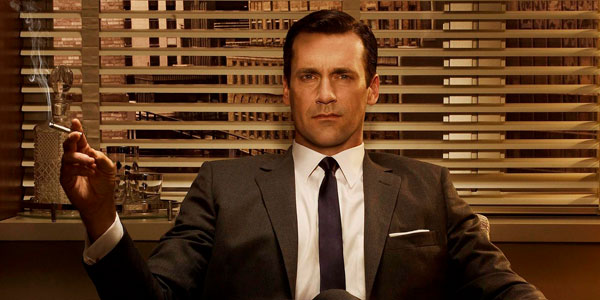
John Fea found an old LBJ ad that shows moderate Republican discomfort over ideological conservatives like Barry Goldwater, the 1964 Republican presidential nominee. If Don Draper had worked for the Democrats, this is how it would have looked:

Drawing parallels between Trump and Goldwater are somewhat overdone since the Arizona Senator had a distinguished record of public service and even vowed to support Nixon in 1960 to the dismay of political conservatives. But the parallels do contain an element of truth in the sense that since the 1950s conservatives (and I count myself as one) have stressed ideological purity over political pragmatism. Maybe it’s the effect of turning 39, or maybe it’s the Trump phenomenon, but compromise for the sake of not blowing things up looks a lot more appealing these days than fidelity to “the movement.”

And here’s the kicker for Roman Catholics reading, some of the most articulate and intellectually rigorous supporters of Goldwater were Roman Catholics like Brent Bozell and William F. Buckley, Jr. (the latter of whom during the 1964 campaign had to distance himself from Robert Welch, the leader of the John Birch Society). In fact, Brent Bozell was the man who put Barry Goldwater’s political convictions into words — The Conscience of a Conservative (as I understand it, the book was entirely Bozell’s effort — see below).

All of this to say, Trump may be much more the fruit of the conservative movement and its anti-establishment ways than conservatives are wont to admit.

Postscript: a little background on Goldwater, Bozell and the conservative conscience:

Goldwater and Bozell were incongruous collaborators: The easygoing Westerner and the intense Midwesterner; the college dropout and the Yale law graduate; the Jewish Episcopalian and the Roman Catholic convert; the principled politician and the activist intellectual (Bozell had run for public office in Mary-land). But they shared a Jeffersonian conviction that that government is best which governs least. They looked to the Constitution as their political North Star. And they were agreed that communism was a clear and present danger.

Goldwater gave his final approval of the manuscript in late December, and Clarence B. Manion, the moderator of a highly popular weekly radio program “The Manion Forum” and the former dean of the Notre Dame Law School, undertook the publication and promotion of a book he was convinced would “cause a sensation.” Indeed it did. Before The Conscience of a Conservative appeared, Barry Goldwater was an attractive but controversial senator from a small Western state who was at best a long-shot vice presidential possibility. After the publication of The Conscience of a Conservative, Goldwater became the political heir to Robert Taft, the hope of disgruntled Republicans, partyless Independents, and despairing Democrats, and the spokesman of a new national political movement—conservatism.

What had Goldwater—and Bozell—wrought? The Conscience of a Conservative was an original work of politics and philosophy, a vision of the nation and the world as it should be, not a compromise with the world as it was. It was a fusion of the three major strains of conservatism in 1960—traditional conservatism, classical liberalism or libertarianism, and anti-communism. It was a book by a conservative for conservatives at a time when conservatives were beginning to realize the potential of their political power.

It's Not A Reason to Re-Think Islam but to Wonder about Graham

John Schmalzbauer has an intriguing point about the kerfuffle at Wheaton over Christians and Muslims worshiping the same God. Previous administrators (before Phil Ryken) had signed a statement affirming solidarity between Christians and Muslims:

In November 2007 Wheaton’s president, provost, and chaplain signed a major statement on Christian-Muslim understanding that appeared in The New York Times. Calling for peace between the two religions, the document affirmed “our common love for God and for one another.” The 300 signatories included megachurch Pastor Rick Warren, Fuller Seminary President Richard Mouw, and the president of the National Association of Evangelicals. In January 2008, the statement drew strong rebukes from Minnesota Pastor John Piper and Southern Baptist educator Albert Mohler. Though Wheaton’s leaders later retracted their signatures, they continued to embrace the goal of peacemaking.

Schmalzbauer also adds details to Dr. Larcyia Hawkins’ decision to wear a hijab during Advent. A visit to a local Islamic center greased the skids:

On December 10 a group of faculty visited the Islamic Center of Wheaton. As they noted in a handwritten card: “We were inspired by another to also bring these flowers as a sign of our love and friendship. Our Scriptures and the teachings of Jesus show us that everyone is a brother and sister created in the image of God. We are glad you are part of the community.” That evening Larycia Hawkins announced her decision to wear a hijab on Facebook.

But rather than using this precedent to advise Dr. Hawkins to follow suit and retract her statement, Schmalzbauer hopes that Wheaton will follow one of its most famous alumni and board members, Billy Graham, who wrote:

He’s calling people out of the world for His name, whether they come from the Muslim world, or the Buddhist world, or the Christian world, or the non-believing world, they are members of the Body of Christ because they’ve been called by God. They may not even know the name of Jesus, but they know in their hearts that they need something that they don’t have, and they turn to the only light that they have, and I think that they are saved, and that they’re going to be with us in heaven.

As has been the case with many who side with Hawkins, Schmalzbauer thinks that theological rejections of Islam as false or of Muslims as non-Christian (well, duh) are akin to nativism and anti-Semitism:

Reverberating through history, these questions are at the heart of a recent dustup at my alma mater, Wheaton College. Swirling around the school’s relationship with American Muslims, they summon the ghosts of evangelicalism’s past, including some of my own. Known as the Harvard of the evangelicals, Wheaton College has often struggled with the problem of who is in and who is out. From the pugnaciousness of the World Christian Fundamentals Association (the source of Wheaton’s 1926 statement of faith) to the irenic spirit of Billy Graham (an anthropology major from the class of 1943), the college has shaped the boundaries of modern evangelicalism. Far from static, these lines have shifted over the course of the past century. So has the relationship between evangelicalism and other religious traditions. Once plagued by nativism and anti-Semitism (still a problem in some quarters), evangelicals have reached out to Catholics and Jews. Now some are befriending their Muslim neighbors, leading others to reassert the boundary between Christianity and Islam.

With a name like Schmalzbauer and with a chair in Protestant studies, you might think author had come across two-kingdom theology somewhere along the line. If he had, Schmalzbauer should know that keeping Muslims (or Jews or Roman Catholics) from membership in a Protestant congregation is not the same thing as restricting their movements either as immigrants or citizens. Which is more important is another matter. But without 2k, as we so often see, Christians both on the left and the right tend to collapse theology and political theory such that Christianity becomes a function of how you conceive of the United States.

Hawkins and Schmalzbauer are right to empathize with Muslims legally in the United States and to stand against expressions of Islamophobia. John Fea thinks it’s the best piece yet written about Wheaton, Hawkins, and Islam. I wonder: why do you need to be a Christian to stand up for the civil rights of Muslims? More pointedly, what happens if a devout Muslim thinks your solidarity is condescending (think men saying women are just as good as men)?

Postscript: it looks like not even the Billy Graham Evangelistic Association would endorse Schmalzbauer’s quotation from Billy Graham. Even before Charlie Hebdo, southern California, and Jerry Falwell, Jr., BGEA tapped Al Mohler to respond to Dr. Hawkins:

Does God care what we call Him? Do Muslims and Christians worship the same god? These are questions many Christians are asking these days, and for good reason.

For some time now, feminist theologians and a host of others have suggested that Christians should adopt new names for God. One denomination went so far as to affirm names like “Giver, Gift and Giving” in place of the “Father, Son and Holy Spirit” to be used in worship. Feminist theologians have demanded that masculine pronouns and names for God be replaced with female or gender-neutral terms. But to change the name of God is to redefine the God we reference. Changing the name of God is no small matter.

As a matter of fact, God takes His name very seriously, and the Ten Commandments include the command that we must not take the name of the Lord in vain. We are to use the names God has given for Himself, and we are to recognize that God takes His name seriously because He desires to be rightly known by His human creatures. We cannot truly know Him if we do not even know His name.

Moses understood this. When he encountered the call of God that came from the burning bush, Moses asked God, “If I come to the people of Israel and say to them, ‘The God of your fathers has sent me to you,’ and they ask me, ‘What is his name?’ what shall I say to them?” (Exodus 3:13). God answered Moses, “I Am who I Am” (Exodus 3:14). God told Moses, “Say this to the people of Israel, ‘The Lord, the God of your fathers, the God of Abraham, the God of Isaac, and the God of Jacob, has sent me to you.’ This is my name forever, and thus I am to be remembered throughout all generations” (Exodus 3:15).

As these verses make clear, we are not to tamper with God’s name. We are to use the names whereby God has named Himself, and we are to recognize that any confusion about the name of God will lead to confusion about the nature of God, if not to idolatry.

Christians must keep this central principle from the Bible constantly in mind as we consider some of the most urgent questions we face in the world today. We must certainly have this principle in mind when we think about Islam.

Several years ago, a bishop in the Netherlands attracted controversy when he argued that Christians should call God “Allah” in order to lower theological tensions. He also argued that calling God “Allah” would be commonplace in Christian churches within a century and that this would lead to a synthesis of Islam and Christianity.

More recently, an Islamic court in Malaysia ruled that only Muslims can use the name “Allah” in print publications. “The usage of the word will cause confusion in the community,” the chief judge ruled. Oddly enough, Christians may well agree with this Islamic judge. To call God “Allah” is to invite confusion.

In the Bible, God reveals Himself to us in many names. These names are His personal property. We did not invent these names for God. To the contrary, God revealed these names as His own.

We have no right to modify or to revise these names—much less to reject them. Jesus Christ made this abundantly clear. In the simplest way imaginable, Jesus teaches us to know God as Father, and to use this name in prayer. The Lord’s Prayer begins with the words, “Our Father, who is in heaven.” By the grace that God has shown us in Christ, we can truly know Him as Father.

This is America, not The United States of Monotheists

I am still trying to wrap my mind around the Christians who are rallying to Dr. Larcyia Hawkins from Wheaton College for her decision to wear a hijab during Advent to show solidarity with Muslims. During Advent? Whatever happened to the integrity of the church calendar!!!! What about the feelings of high church Anglicans? We’re not even supposed to sing Christmas carols before Christmas day, but an Islamic head covering in anticipation of celebrating Christ’s birth? Someone’s feelings are always going to be hurt.

The trouble I’m having is that such shows of solidarity with Muslims come most recently after the shootings in southern California, the shootings in Paris last month, and the Charlie Hebdo killings of over a year ago. And then there is ISIS and ISIL — hello. Are all Muslims guilty of all these circumstances? Of course, not. But why do some evangelicals have such trouble understanding why Americans (not to mention Frenchmen and women) are a tad worried about Islamism and don’t know for the life of them exactly how to tell the difference between a Muslim and an Islamist (especially when some of the Muslims most likely to turn radical are the least observant)? Why also is it so easy for evangelicals to know that Jerry Falwell, Jr. is unworthy of solidarity if he recommends carrying guns when some Muslims actually do carry guns and use them?

The best I can do is come up with two American traits. The first is the American habit of identifying with the underdog. We like to root for the team with a remote chance of winning (except for Roman Catholic converts). Muslims are a small percentage of the American population. That makes them an underdog (though resorting to acts of terrorism does not).

The second trait is tolerance. All Americans, both on the left and right, affirm freedom of religion and speech in some fashion. We have a Bill of Rights and everyone loves liberty. Christians don’t celebrate freedom for gay rights activists and gay rights activists don’t go out of their way to protect the freedoms of cake decorators. Consistency is not the point. America should not exhibit bigotry. We should welcome anyone and not profile on the basis of race, religion, economic status, or place. Profiling on the basis of political party (Hilary identifies Republicans as her enemy) is fine. But no one teaching at an institution of higher learning wants to be confused with Donald Trump.

Still, Dr. Hawkins’ decision about how to observe Advent and the Christian support for her seems to go beyond these basic American ideals. It suggests an identification with the exotic, opposition to bigotry, and displaying one’s own progressive credentials. After all, it’s the Fox News watchers who are worried about Islam. It’s Jerry Falwell, Jr., a fundamentalist, who is seeming guilty of Islamophobia. So the logic seems to go — I’ll run the other way to show that I am not like them. Why showing solidarity with Christians who are afraid of political Islam doesn’t also display love and empathy is not at all obvious.

For Pete Enns, it’s a classic case of inerrancy vs. xenophia:

People are watching, and they haven’t read Wheaton’s statement of faith or the Chicago Statement on Biblical Inerrancy.

They’re just interested in seeing how Christians respond to a global crisis right here at home.

They want to see whether the rumors are true and their suspicions accurate, that Christians are as bigoted and xenophobic as they accuse others of being.

They want to see whether our actions are different from those of any other ideology.

As if not identifying with killers in southern California is bigoted.

Miroslav Volf tries for an analogy between Islam and Judaism, as if to suggest Christians should grant the same breadth to Muslims that they do to Jews:

Why is the Christian response to Muslim denial of the Trinity and the incarnation not the same as the response to similar Jewish denial? Why are many Christians today unable to say that Christians and Muslims worship the same God but understand God in partly different ways?

Well, some Christians don’t think Jewish people and Christians are people of the same faith; they’ve read Paul (for starters).

John Fea, who quotes Volf, wonders if Hawkins is simply trying to say something generic by resorting to theology:

I think Hawkins is trying to say that we all belong to the same family–the human family. And there are times, even in the life of an exclusively Christian college, when those human connections should be acknowledged. And they should be acknowledged, and even celebrated, for Christian reasons–namely the Imago Dei. So I am not sure that someone saying that Muslims and Christians worship the same God is a statement that is necessarily out of bounds at a Christian college, but it must be carefully nuanced and explained.

Fea is on to something, more below, but should theology really function like this precisely when doctrine has historically divided people(even Christians)?

But here’s the thing. While many Christians are trying to distance themselves from xenophobia and bigotry, are they really prepared for the illiberality of Islam? After all, it’s not as if Islam is on the side of liberty, democracy, equal rights, and progress — all the things that those identifying with Muslims would likely affirm in the most whiggish of terms.

Consider, for instance, the current political footprint of Islam in nations where its followers have power. Again, I am not trying to engage in outrage porn. But consider the people who monitor liberal causes and then see if the Christians identifying with Islam are ready for everything involved with that identification.

For example, have these folks considered the significance of wearing a head scarf in Iran?

Women’s rights are severely restricted in Iran, to the point where women are even forbidden from watching men’s sports in stadiums. That ban includes Iran’s national obsession – volleyball.

Human Rights Watch is launching a new campaign, #Watch4Women, to support Iranian women fighting this ugly discrimination. What we’re asking is simple: that the International Volleyball Federation, known as the FIVB, uphold its own rules and agree not to allow Iran to host future tournaments – unless it allows Iranian women to attend. . . .

You see this played out across women’s lives. Women in Iran are forced to wear the hijab, the headscarf worn by some Muslim women, in public. This even applies to young schoolgirls, who are required to wear the head covering to attend elementary school.

Moreover, married women can’t even leave the country without their husband’s permission. In fact, in September the captain of Iran’s female football (soccer) team, Niloufar Ardalan, couldn’t play in an international tournament in Malaysia because her husband forbade her from traveling.

Iran does allow women to play sports, like football and volleyball. But none of these women are allowed to do something as simple as watch men play volleyball, even if their brothers, sons, or husbands are playing. In fact, Ghoncheh Ghavami, 25, a dual Iranian-British national, was arrested when she tried to attend a volleyball game in Tehran. Police are often posted around stadiums, in part to keep women out.

Or what about what’s going on in Saudi Arabia under the rule of an Islamic monarchy?

At last, Saudi Arabia’s dismal human rights record is getting media scrutiny, thanks in part to news that Saudi authorities plan to lash 74-year-old Karl Andree, a British cancer survivor, 350 times for possessing homemade alcohol. Flogging in the kingdom entails a series of strikes with a wooden cane, with blows distributed across the back and legs, normally not breaking the skin but leaving bruises.

This ruling comes after a year of bizarre and cruel punishments meted out by the Saudi judiciary, including the public flogging of liberal blogger Raif Badawi in January and a death sentence for Ali al-Nimr, a Saudi man accused of protest-related activities allegedly committed before he was 18 years old.

Or does identifying with Islam include the anti-blasphemy laws in Islamic Pakistan?

Earlier today, the Supreme Court agreed to hear an appeal of the death penalty conviction of Aasia Bibi, the first woman in Pakistan’s history to be sentenced to death for blasphemy.

Bibi fell afoul of the law in June 2009 following an altercation with fellow farm workers who refused to drink water she had touched, contending it was “unclean” because she was Christian. On November 8, 2009, the Sheikhupura District Court convicted her under Pakistan’s blasphemy law, and ruled that there were “no mitigating circumstances.” In January 2010, a security officer assassinated the governor of Punjab province, Salmaan Taseer, for visiting Bibi in prison and denouncing her conviction.

Do evangelical academics really want to show solidarity with Muslims now? Some journalists even question whether the progressive New York Times should sponsor tours to Iran because of the authoritarian character of the nation’s Islamic government. Do folks like Hawkins, Enns and Wolf read the news? Showing solidarity with Islam now seems as confused as identifying Woodrow Wilson as the most profoundly Christian statesman of the twentieth century at precisely the same time that people at Wilson’s university don’t share that opinion.

Once again, as is so often the case when Christians opine about matters of common interest, the real problem is a confusion of categories. So two-kingdoms theology again to the rescue. What’s wrong with showing solidarity with Muslims a little more narrowly than John Fea proposed? Why can’t we identify with Muslims living in the United States as Americans (or people who want to be citizens)? As such, Christians and Muslims would be people who support freedom of religion, speech, association, as well as laws against murder. The way to do this might be to wear the hijab or (for men) shemagh on Presidents’ Day, July Fourth, the three weeks of March Madness. What does Advent have to do with it? And such an identification allows us to affirm something that we really do have in common — the greatest nation on God’s green earth as opposed to the places of worship that actually keep Muslims and Christians separate.

But if you think that Christian identity goes all the way down, if you fear the dualism of the sacred and secular, if you want religion in the public square, if you think faith must inform your judgments even as you carry out duties as a citizen, then you will have to resort to something like theology to identify with Muslims.

This is all the more reason why recognizing the difference between the secular and sacred realms frees Christians to be Christians rather than having to smuggle it in to do something it was never designed to do — turn Islam into Christianity.
Did the Mainline Win or Did 'Merica?

John Fea has an interview with Peggy Bendroth about her new book, The Last Puritans: Mainline Protestants and the Power of the Past (The University of North Carolina Press, 2015). This exchange stood out:

JF: Why do we need to read The Last Puritans?

PB: Here’s one practical reason: since the 1980s, if we use George Marsden’s Fundamentalism and American Culture as the benchmark, historians of American religion have been working overtime to understand evangelicals. It has worked well, really well. The old stereotypes have been demolished and we now have a richly textured picture of evangelicalism in all of its aspects, from fundamentalist to Pentecostal.

We also have an assumption that there was no spiritual curiosity or zeal anywhere else, and that mainliners in particular were boring and feckless bureaucrats presiding over their own demise. Very few of us have actually worked through primary sources, however, and we know surprisingly little about what happened in mainline denominations for most of the twentieth century. That means that we cannot explain, as David Hollinger and others now argue, how mainline liberal values—tolerance and cooperation—have quietly come to define so much of mainstream American culture today. I’m thinking especially of Amazing Grace by Robert Putnam and David Campbell, a picture of American religiosity far different from the usual stereotypes of the culture wars. Mainline denominations may be disappearing, but this is, I think, more of an organizational problem than a failure of their ideals.

I’ve seen references like this to David Hollinger’s argument a lot of late. It is the perfect way to snatch victory from the jaws of defeat. The mainline churches didn’t lose. Instead, America became like the mainline. Mainline Protestants favored tolerance and cooperation and when America embraced those same ideals they were actually coming to Jesus even though they didn’t know it.

Huh?

Another way to think of this same process is Americanization. Consider Al Smith’s creed which he wrote for the Atlantic Monthly magazine in 1927 on the eve of his nomination as the Democratic candidate for president of the United States:

I believe in the worship of God according to the faith and practice of the Roman Catholic Church.
I recognize no power in the institutions of my Church to interfere with the operations of the Constitution of the United States or the enforcement of the law of the land.
I believe in absolute freedom of conscience for all men and in equality of all churches, all sects, and all beliefs before the law as a matter of right and not as a matter of favor.
I believe in the absolute separation of Church and State and in the strict enforcement of the provisions of the Constitution that Congress shall make no law respecting an establishment of religion or prohibiting the free exercise thereof.
I believe that no tribunal of any church has any power to make any decree of any force in the law of the land, other than to establish the status of its own communicants within its own church.
I believe in the support of the public school as one of the cornerstones of American liberty.
I believe in the right of every parent to choose whether his child shall be educated in the public school or in a religious school supported by those of his own faith.
I believe in the principled noninterference by this country in the internal affairs of other nations and that we should stand steadfastly against any such interference by whomsoever it may be urged.
And I believe in the common brotherhood of man under the common fatherhood of God.

Using Hollinger and Bendroth’s logic, does that mean that when the United States came to embrace the separation of church and state along with freedom of conscience the nation was actually channeling the Vatican?

Or, was it the case that Al Smith was simply doing what lots of Americanist bishops before had done — and the Vatican had mildly condemned — adapting Roman Catholicism to American realities?

Typically, when immigrant churches adapt to the host culture of the United States, we call that Americanization or assimilation. So why can’t we do that with mainline Protestants? If we did, we would conclude that mainline Protestantism and Americanist Roman Catholicism both share a willingness to let the aspirations and expectations of American society shape the teaching and practice of the church. That sounds modernist. It did to Piux X.