Forensic Friday: Antinomianism, False and True

One of the more arresting claims in recent theological discussions is that an emphasis on the forensic nature of justification can nurture antinomianism. This claim looks amazingly unreal given the traction that various forms of transformationalism have among conservative Reformed Protestants – from Doug Wilson’s defense of Constantinianism, the Baylys’ war with Reformed “pacifists” in the culture wars, to Tim Keller’s conception of word and deed ministry. If anything, the conservative Reformed world is awash with various expressions of neo-nomianism and legalism – not antinomianism.

What is even more amazing is that the concern with antinomianism would ever classify Lutheranism as a wing of Christianity that disregards the law. In point of fact, the real antinomians around the time of the Westminster Assembly were not Lutherans but Quakers. I know conservative Presbyterians (myself included) don’t get out much. But it is important to remember sometimes the wider setting in which the Reformed faith has grown. The people who believed they had the Spirit so truly – in Luther’s words, swallowing the Holy Ghost “feathers and all” – were not his followers in Germany but on the radical fringes of the Puritan movement.

For this reason, it may be useful to remember what Lutherans actually profess about good works and their importance for the Christian life, and compare those teachings with the musing of the Quakers.

How One is Justified before God, and of Good Works.

What I have hitherto and constantly taught concerning this I know not how to change in the least, namely, that by faith, as St. Peter says, we acquire a new and clean heart, and God will and does account us entirely righteous and holy for the sake of Christ, our Mediator. And although sin in the flesh has not yet been altogether removed or become dead, yet He will not punish or remember it.

And such faith, renewal, and forgiveness of sins is followed by good works. And what there is still sinful or imperfect also in them shall not be accounted as sin or defect, even [and that, too] for Christ’s sake; but the entire man, both as to his person and his works, is to be called and to be righteous and holy from pure grace and mercy, shed upon us [unfolded] and spread over us in Christ. Therefore we cannot boast of many merits and works, if they are viewed apart from grace and mercy, but as it is written, 1 Cor. 1:31: He that glorieth, let him glory in the Lord, namely, that he has a gracious God. For thus all is well. We say, besides, that if good works do not follow, faith is false and not true. (Smalcald Articles, XIII [1537])

And now for something completely different. This is from the 1655 letter of John Lilburn, a Quaker, held captive in England for the better part of a decade for his religious convictions and their legal and political implications.

. . . the contrariety is so great between the foresaid two Kings and Masters, that whatsoever in the King, or Ruler in the Kingdom of the world, (or fallen, or unrenewed man) and the Subjects thereof, is esteemed highly or excellent, is an abomination in the sight of God: And therefore this spiritual King having purchased all his Subjects and Servants with a glorious price, (as the greatest demonstration of love) of his own blood, by his spiritual Command requires them not to be the servants of men, but to glorify him both in body and soul; and therefore his grown up servant Paul, declares himself to be no man-pleaser, avowing himself that if he were a man-pleaser, he should, nor could not be the servant of Christ.

And therefore the same apostle, by the infallible spirit of the Lord, requires the spiritual Subjects of this spiritual King Jesus, to present their bodies a living sacrifice, holy, acceptable unto God, which (says he) is your reasonable service; and do not be conformed to this world (the kingdom of the Prince of darkness, but be you transformed by the renewing of your mind, that you may prove what is that good, and acceptable and perfect will of a God; and therefore when any man once becomes a spiritual subject of this spiritual King Christ, and dwells in him, he becomes a new creature, and old things in him are passed away, and all things in him are become new, spiritual and savoury, yes even his very thought and his words are found few and divine, his behaviour righteous and solid, his deeds upright, and free like God from all respect of persons: and although there be such a perfect and absolute contrariety between all the laws and constitutions of these two Kings or Masters, and a continual and perpetual war between the Subjects thereof, yet the weapons of the warfare of Christ’s Spiritual, Heavenly, and glorious Kingdom, handled and used by his Servants and true Subjects, who although they do walk in the flesh, yet do they not war after the flesh, and therefore their weapons of warfare are not carnal, but mighty through God, to the pulling down of strongholds, casting down imaginations, and every high thing that exalts itself against the knowledge of God, and brings into captivity every thought to the obedience of Christ. . .

Of course, this doesn’t sound very antinomian. In fact, it reads a lot like those anti-2k folks who wail and gnash their teeth over the moral failings of the United States, and also insist that Christians need to take back the nation for Christ because the antithesis between believers and non-believers is so great, and the moral gulf between the saints and pagans so wide, and the denial of Christ’s lordship so great, that we cannot trust civil affairs to the likes of Obama, Kerry, or Gore.

But what does make this quotation antinomian is that Quakers like Lilburne (along with Anabaptists) renounced by the sword and believed any government that used force was of the Devil. As such, they did not recognize the existing government as legitimate, thus making them antinomian (as in, against the established law and order).

Looks to me like there are lessons all around on the contrast between the true and false antinomians. In fact, it is hard to miss the irony that those who criticize 2k the most for being antinomian may harbor a good dose of the antithetical reading of humanity and civil authorities that put Quakers like Lilburne in jail.
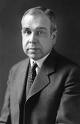
Forensic Friday: More Machen

Very different is the conception of faith which prevails in the liberal Church. According to modern liberalism, faith is essentially the same as “making Christ Master” in one’s life; at least it is by making Christ Master in the life that the welfare of men is sought. But that simply means that salvation is thought to be obtained by our own obedience to the commands of Christ. Such teaching is just a sublimated form of legalism. Not the sacrifice of Christ, on this view, but our own obedience to God’s law, is the ground of hope.

In this way the whole achievement of the Reformation has been given up, and there has been a return to the religion of the Middle Ages. At the beginning of the sixteenth century, God raised up a man who began to read the Epistle to the Galatians with his own eyes. The result was the rediscovery of the doctrine of justification by faith. Upon that rediscovery has been based the whole of our evangelical freedom. As expounded by Luther and Calvin the Epistle to the Galatians became the “magna Charta of Christian liberty.” But modern liberalism has returned the old interpretation of Galations which was urged against the Reformers. . . . it has returned to an anti-Reformation exegesis, by which Paul is thought to be attacking in the Epistle only the piecemeal morality of the Pharisees. In reality, of course, the object of Paul’s attack is the thought that in any way man can earn his acceptance with God. What Paul is primarily interested in is not spiritual religion over against ceremonialism, but the free grace of God over against human merit.

The grace of God is rejected by modern liberalism. And the result is slavery – the slavery of the law, the wretched bondage by which man undertakes the impossible task of establishing his own righteousness as a ground of acceptance with God. It may seem strange at first sight that “liberalism, of which the very name means freedom, should in reality be wretched slavery. But the phenomenon is not really so strange. Emancipation from the blessed will of God always involves bondage to some worse taskmaster. (Christianity and Liberalism, pp. 143-44)

Good point here on why the forensic is prior to moral renovation, not to mention the ricochet against the legalism inherent in the “Lordship of Christ” over all things without first establishing the saviorship of Christ.

The Two-Kingdom Case for Blue Laws

Rendell and Eagles
(Not to be confused with the “Blue Letter.”)

In 1933, the years the Philadelphia Eagles football club started (thank you Dan Borvan), the state of Pennsylvania considered reforming its laws prohibiting commercial activity on Sunday, the Christian Sabbath, so that football players and coaches could play in the afternoon. (How would the NFL make it without violating the fourth and eighth commandments?) J. Gresham Machen, then a resident of Philadelphia, wrote a letter to Gifford Pinchot, the governor of Pennsylvania and requested the retention of the Blue Laws as they were then written.

Machen’s reasoning in this letter is instructive for what it says about a recognition and acceptance of religious diversity, a commitment to religious freedom, and the tensions within a democracy between majority rule and minority protection. Perhaps most important for two-kingdom purposes is the place of an appeal to Scripture in public debate. In this case, Machen argues not for the magistrate to enforce divine law, but for the advantages that come to everyone when the law protects the practices of some citizens.

Not to be missed is what this letter says about the fourth commandment, and that keeping the whole day holy with two services is an occasion of Christian liberty. If only the Bible speaks to all of life crowd would take up the cause of the sanctity of the Lord’s Day. (Do we see a pattern here? Two kingdoms, two services?)

April 20, 1933

The Honorable Gifford Pinchot
Governor of Pennsylvania
Harrisburg, Pa.

Dear Sir:

Will you permit me to express, very respectfully, my opposition to the Bill designated “House Bill No. 1″ regarding permission of commercialized sport between the hours of two and six on Sunday afternoons?

It is clear that in this matter of Sunday legislation the liberty of part of the people will have to be curtailed. It is impossible that people who desire a quiet Sunday should have a quiet Sunday, while at the same time people who desire commercialized sport on Sunday should have commercialized sport. The permission of commercialized sport will necessarily change the character of the day for all of the people and not merely for part of the people.

The only question, therefore, is whose liberty is to be curtailed. I am convinced that in this case it ought, for the welfare of the whole people, to be the liberty of those who desire commercialized sport.

The curtailment of their liberty, through the existing law, does not, I am convinced, go beyond reasonable bounds. There is, it seems to me, a sharp distinction of principle between complete prohibition of some form of activity or enjoyment and reasonable regulation of it in the interest of other people. To ask that commercialized sport should dispense with one day out of seven for the benefit of that large part of our population that desires a quiet Sunday and believes that it is necessary to the welfare of the State does not seem to me to be unreasonable.

Of course it is perfectly clear that in a democracy the majority should rule in this matter as in other matters. I should be the last to advocate any attempt to make people religious or even to make people ordinarily moral or decent against their will by mere legislative enactment. I should also be the last to advocate any tyrannical imposition of the convictions of a minority upon the majority. But how shall the majority will be exercised? I think that it ought to be exercised through the ordinary processes of representative government. To allow commercialized sport on Sunday in Pennsylvania will be a radical change in the whole life of our people. It is a wise provision of representative government that such radical changes should not be hastily accomplished, as might be the case by the referendum vote, but that they should be accomplished only when it is quite clear that the majority of the people really and seriously and permanently desires the change. . . .

As to the merits of the question, I could hardly find words strong enough to express what my feeling is. It does seem to me that the profoundest dangers to our entire civilization are found in the constant rush of noise and jazz and feverish activity which is one of the great faults of the American people and which is a great barrier to true efficiency as well as to the cultivation of the deeper things.

Of course, my own cultivation of a quiet Sunday is based on considerations much more fundamental than these. I am a Christian, and it is quite clear that a commercialized Sunday is inimical to the Christian religion. There are many other Christians in Pennsylvania, and because they are Christians they do not cease to be citizens. They have a right to be considered by their fellow-citizens and by the civil authorities. But the reason why they can with a good conscience be enthusiastic advocates of the Christian practice in the matter of Sunday is that they regard it as right, and as for the highest well-being of the entire State.

Very truly yours,

J. Gresham Machen, Professor of New Testament in Westminster Theological Seminary, Philadelphia

Postscript: over at David Strain’s blog come a couple of helpful posts about sabbath observance. As a native Scot, Strain knows first-hand about patterns of sabbatarianism among Old World Presbyterians, both mainline and sideline. In fact, during a Hart expedition to Scotland a decade ago, Mrs. Hart and her husband were delighted to see that even the Church of Scotland congregations conducted morning and evening service. This contrasts with the practice of one service among conservative Reformed and Presbyterians in the United States where supposedly Reformed Christianity is doing better.

Strain also mentions one of the common complaints about sabbatarianism – that is it legalistic. Well here is one radical two-kingdom virus carrier who also fully supports the supposed legalism of sabbath observance. In fact, the critics of 2k ought to consider where the leading 2k voices are on matters like the fourth commandment and the regulative principle of worship (as in the second commandment). Antinomian? Reconsider.